
COMPANHIA DE DANCA AT CITY CENTER IN DEBORAH COLKER’S 4X4


Brazilian dance troupe Companhia de Danca just wrapped up a short run at NY’s City Center, performing Deborah Colker’s 4X4. Colker has choreographed sambas for some of the most prestigious schools to participate in the Rio Carnival, and she’s also the first woman to choreograph for Cirque du Soleil — she did their most recent show, Ovo.

You could really see the influence both of Carnival and Cirque du Soleil in 4×4. The whole program was very sexy, very acrobatic with the dancers performing feats that looked extremely difficult.


The title of the work refers to small spaces and how we humans try to adapt to them (which is very pertinent to my life right now as I try hard to tolerate the monstrous noises made by upstairs Godzilla and her mother…).

In the first piece, “Corners,” tall, thin, bare-legged, short-skirted and high-heeled women seem trapped in boxes, each within her own. Well, not really trapped though — just inside the box. Each woman climbs about her box, sometimes lying down on her back and tracing the box’s planes with her long legs, spider-like. Eventually men appear, climbing over the high backs of the boxes, then reaching down toward the women, pulling them up, eventually winding up in the box together, each couple performing a very gymnastic pas de deux that evoked a lot of oooh and aaahs from the crowd.


In the second piece, “Table,” a man and woman perform complicated lifts as a a conveyor-type belt runs atop the table, showing their impressive balancing skills.


In the third cutely funny piece, “Some People,” all the dancers take the stage. They dance and jump about joyously, full of life, while performing everyday gestures that may be natural but that you don’t really do in public — smelling, poking, grabbing / scratching your crotch — the men first, then the women almost in imitation of them.

Music to the first two pieces reminded me of Cirque du Soleil but with a Brazilian emphasis — electronics, some guitars, very percussive; music to the third was the song “Someday My Prince Will Come” by Larry Morey and Frank Churchill, which, given the crotch scratching, etc. was rather amusing.


The second half of the program consisted of one dance, “Vases,” with a short overture consisting of women dancing ballet en pointe (the only time in the show anyone’s in toe shoes) to Mozart, as played on an onstage piano by Colker herself (she’s also an accomplished classical pianist).

After the overture, several vases that appear to be made of china or another very breakable material are slowly dropped onto the floor. The vases appear to be set very close together and the dancers — now men joining the women —  must wend their ways around them — leaping, jumping, turning, partnering — at one point, the men push the women around like wheelbarrows, zigzagging in and around those crazy vases.

Soon, lights are dropped from the ceiling toward the vases and the dancers must weave around those as well. Eventually, the lights are dropped into the vases, and, each light still being attached to its wire and all the wires still attached to the ceiling, the dancers now have to dance around these delicate objects on the floor as well all these crazy wires strung from the ceiling. Talk about the need for nimbleness, agility, and amazing spacial sensibilities!

It was a sweet night. Though nothing seemed tremendously profound, I found all the dances to be humorous and cute, while involving difficult hurdles the dancers surmounted seemingly effortlessly.


Only thing, I was expecting and so looking forward to seeing Isabela Coracy (above), from this wonderful film, which I saw at Tribeca Film Festival earlier this year, but she doesn’t appear to be in the company any longer. The film’s producers were the ones who’d told us to expect to see her when Deborah Colker’s company came to town. Only When I Dance follows the lives of two dance students from the favelas (poor areas): Irlan Silva who is now with ABT’s studio company, and Isabela. I was so disappointed because she’s such a beautiful and talented ballerina, trained classically but very able to dance modern as well as the film showed, but the portions of the film devoted to her dance journey made clear how hard it is for black female ballerinas in Brazil — and, from what I’ve seen, elsewhere as well. She’s often told she doesn’t have the “right body,” she needs to diet, yadda yadda yadda — endlessly frustrating, even to you as the audience, because these criticisms seem to overtake any issues with her technique or artistry. And of course she’s not the least bit overweight.

Anyway, I was disappointed that she no longer seems to be with Companhia de Danca. I really wanted to see her dance live.

All photos except the one of Coracy taken from the company’s flickr page; the Coracy photos is taken from the film’s website.
CARLOS ACOSTA ON TRAVEL AND HOLIDAYS


Carlos Acosta is interviewed in the London Telegraph Travel section.

His worst traveling experience?:

“One of the worst was arriving in London to dance at just 18 and not being able to speak the language. I rented a room but didn’t know what anybody was talking about. I felt lost because I just couldn’t communicate. I wanted to see a movie, but everything was in English. When I went to a store to buy something I didn’t know what to say. I bought books and taught myself English, but it was six months before I was ready.”

Via tweet by the Ballet Bag.

Photo by Julian Andrews.

SO YOU THINK YOU CAN DANCE SEASON 6 TOP TWENTY

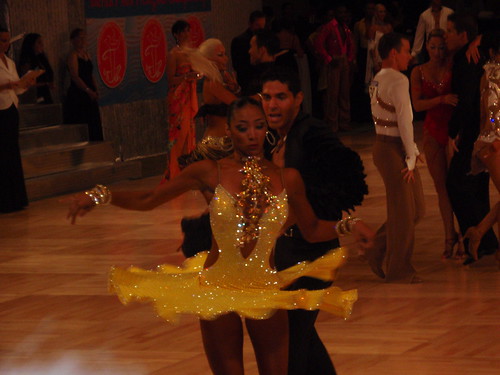
Well, I’m upset about Iveta Lukosiute not making it, but I am glad U.S. National American Rhythm finalist Karen Hauer did. Her husband, Matt, used to teach at my studio and they’d often perform there — and I’ve seen them many times in competition and they are very good. I’m not surprised the judges liked her. She has varied training and can dance — and perhaps just as importantly, she has the kind of body that looks good dancing — many styles.


Here are a couple of (rather bad quality — sorry!) pics I’ve taken of her and Matt at some of the comps.


We weren’t able to see a whole lot of dancing (which is what I despise about the auditions shows) but from what we have seen I’m loving this guy, Billy Bell, above. Early favorite!

Also liking these two: Victor Smalley (something about him — the way he looks anyway — initially reminded me of Tyler Angle)


and Jacob Karr


So far anyway… Apparently we’ll get to know a bit more about the dancers on a special broadcast this Monday night (8 / 7 Central Fox).

Here are the rest of the top 20.

CEDAR LAKE CONTEMPORARY BALLET OPENS ITS FIRST JOYCE SEASON


(Two top photos by Julieta Cervantes, third photo by Karli Cadel)

Small company Cedar Lake Contemporary Ballet opened their first season at the relatively large Joyce Theater in Chelsea Tuesday night to a nearly packed house. (Big kudos to them!) They performed an evening-length work by Sidi Larbi Cherkaoui, called Orbo Novo, which translates to “the new world” and kind of takes off from the book My Stroke of Insight by Jill Bolte Taylor, about her experiences suffering a stroke.

Large chunks of text are taken from parts of the book where Bolte Taylor talks about the onset of the stroke — feeling the searing pain behind her left eye, suddenly speaking gibberish while still understanding everything going on around her, hearing only gibberish out of the mouths of others (though she recognizes their voices over the phone), not being able to operate her right arm, seeing her body change form before her eyes, etc. etc. Immensely interesting — and frightening, and read very well by the dancers.

The dance, which (I assume) like the book, becomes a kind of meditation on right-brain versus the left. It is bookended by the dancers being trapped within a red structure (designed by Alexander Dodge), like prisoners, then eventually finding ways of crawling through the holes. At times the dancers wrap their legs around the holes in the structure, their bodies dangling down, hanging limply. At times, the structure is wheeled away and dancers take center stage — sometimes dancing in solos, sometimes in ensemble — their bodies at times writhing in a contorted manner, at times moving more fluidly to music (composed by Szymon Brzoska and performed live by the Mosaic String Quartet) that is at times mellifluous, at times sharp and discordant.

All of the dancers were wondrous, but as usual with this company, those who impressed me the most were the astounding  Acacia Schachte (in center of middle photo, and in bottom), Jason Kittelberger (top and bottom photos), and Ebony Williams. Fun too to see some faces that are familiar from other companies but new to Cedar Lake: Gwynenn Taylor Jones from Alvin Ailey and Manuel Vignoulle from Ballet du Grand Theatre de Geneve.

The company performs at the Joyce through October 25.

CAROLINA BALLET PAYS HOMAGE TO PICASSO


From now through Nov. 1, Carolina Ballet is putting on an evening-length set of dances in homage to Picasso, who designed sets for the legendary Ballets Russes. Sounds v cool.

“Picasso’s influence on 20th- and 21st-century dance was profound. His various strategies to evoke multiple perspectives simultaneously on the same body invoke the possibility of radical movement, potentially on the part of both the subject and the viewer. One can hardly call the subjects in earlier works like “Woman Playing the Mandolin” still: In shattering the human form into a complex aggregate of shifting planes, Picasso seems to be trying to capture a range of motion and a span of time in the single image.”

Top photo: Picasso’s Woman Playing Mandolin, taken from here; bottom, Carolina Ballet in Picasso from above linked to article.

"MEMPHIS" OPENS ON BROADWAY


“‘Memphis’ is not a comedy but it’s still a cartoon,” says Charles Isherwood.

I went on Friday night and I don’t disagree but I still liked it a lot. Excellent dancing, singing and acting — excellent performers and very good choreography (by Sergio Trujillo — who did chor for “Jersey Boys” as well). I found the basic story a bit facile and, unfortunately Danny Tidwell (my main reason for going) is not in it very much — he’s a dancer but has no speaking part — but still, it’s definitely worth seeing, especially if you like good singing, fun dance numbers that make you want to get up out of your seat, and a story that’s feel-good in a “Dirty Dancing” kind of way.

I’m out the door (Cedar Lake opens at Joyce tonight) but my review is coming soon — along with more pictures!

In the meantime, watch a good audio / slide show at the above NY Times link.

Above photos by Joan Marcus.

DANCING WITH THE STARS: NICKELS IN BUTTS AND OZZY OSBOURNE EYES

It could have been because I’ve had a crazy last few days — computer crashing, iphone dropping calls like mad, internet access intermittent, possessed cursor on computer I’m momentarily using, and now serious fights with upstairs Godzilla and her monster mother — we’ll call her Grendel or Mother Grendel rather — it ALL happens at once! Anyway, I watched DWTS last night but I honestly can’t remember much — just too much on my mind. 

Generally, I just can’t stand the Paso Dobles done on these group shows. I love the Spanish dance elements — the flamenco taps and the matador posturing and the cape and all — but I can’t stand it “modernized” and danced to pop music. People just go too crazy with it and it doesn’t make any sense.

Still, my two favorite moments of last night’s show (besides the costumes and wigs used in the group Hustle) were Kelly and Louis’s Paso to Ozzy Osbourne’s “Crazy Train” and Michael and Anna’s more traditional version of the dance (thank you Anna Demidova!) What I liked about Kelly and Louis though was mainly Louis’s eyes. They were done up to look like Ozzy (of the y 80s of course, not now) along with the hair. He was once so serious (Louis that is) and he looks like he’s having a lot of fun with dance these days, so good for him. He really makes me laugh. The dance though — she tried hard and he of course is excellent at everything he does, but you could tell she kept wanting to jump up and down and pound her fist into the air, mosh-pit-like. And who wouldn’t — “Crazy Train” is not Paso music! I understood why Louis chose it — and Ozzy in the audience looked like he was about to burst into tears of pride (what is happening to the world?)- but still. 

And I loved Michael’s attempts to attain correct Paso posture by placing a nickel between his butt cheeks (at Anna’s suggestion). And I agree with Len that it worked! It is a really odd posture — pushing your hips so forward like that and standing up so straight from the waist down but then with kind of rounded shoulders. It seems so unnatural — like you’re ultra aware of your shaping — unlike with the other Latin dances. And it ended up being Michael’s best dance.

I wasn’t that impressed with much else. I thought Mark’s Paso was strong and his movements sharp but something didn’t look quite right, and I’m not sure what it was. He looked too dainty or delicate or something even though he was trying hard not to. And did Lacey blow out of a cannon or something? What was that entrance about?

Oh — I also really liked Karina and Aaron’s Argentine  Tango. Really nice choreography and really intricate hooks with those legs. And complicated lifts with her legs wrapped every which way around his.

I thought it was rather funny when Joanna tripped in her A.T. I honestly thought it was Maks’s fault (who she danced with since Derek’s sick with flu, as is Mark Ballas — what’s up with those two?) Anyway, they recoverd nicely (Joanna and Maks that is) and seemed to score okay. In fact, I actually thought she did better after the flub. Her legs straightened and she had nicer lines and a really gorgeous ronde en l’air — whereas the first one was bent-kneed and rather blah.

Louie and Chelsie had some cute lifts but I think someone else needs to choreograph for them. Judges loved it but I think she’s not giving him  enough to do and he ends up being more like her escort around the dance floor than a dancing partner.

And Mya’s A.T. was really gorgeous, expectedly. I honestly can’t remember the other two blondes or much of Donny’s though I remember thinking Donny’s was decent. 

I’m sorry I’m so out of it you guys! No sleep in quite some time! What did you guys think?

Judges seemed to like everyone; I have no idea who’s going home tonight.

A FALL SMORGASBORD: CATHERINE GALLANT, EMIO GRECO, WILLIAM FORSYTHE, AND LUCINDA CHILDS

Reviewed by Christopher Atamian

In the past month I attended four very different performances that were all interesting for different reasons.  Readers will forgive me for giving brief overviews of each rather than the more in-depth analysis that they undoubtedly deserve, but lack of time and deadlines preclude me from doing them full justice!


On September 26, I had the pleasure of seeing Catherine Gallant/Dance present a series of rarely performed works at the Joyce Soho.  (Photo above of Gallant/Dance performing Isadora Duncan taken from Moving Arts Project.) These included works by Gallant herself, as well as José Limon, Isadora Duncan and Anna Sokolow.  Gallant’s company is rather unique because it is composed of dancers of all ages and body types—it was refreshing to see older women on stage (as in over 30!).  While they may not always have had the same power and lift as their younger counterparts, they displayed a welcome maturity, elegance and presence.  This was particularly true in the sublimely wistful 16 Waltzes Op. 39, choreographed in 1903, also referred to as “the many faces of love.”  Set to Brahms waltzes and as performed by Loretta Thomas, Eleanor Bunker, Michelle Cohen, Francesca Todesco, Marie Carstens and Gallant, the piece lulled the viewer into an almost blissfully intoxicated state.  It was also refreshing to see Anna Sokolow’s 1953 Lyric Suite, set to music by Alan Berg performed by Francesca Todesco, Eleanor Bunker, Michelle Cohen and Chriselle Tidrick.  Another highlight of the evening was the athletic Kristen Foote, a member of Jose Limón, interpreting Isadora Duncan’s Revolutionary (ca 1920-1924), with music by Alexandre Scriabin.  Foote displayed remarkable strength, vitality and grace in this simple but powerful piece.  That she could capture with each step and arm thrust the spirit of the October Revolution and spirit us, the audience, away to a Russia so distant in time and place, is a tribute to this remarkable young performer.  While one or two of the other pieces presented were arguably a bit lackluster, my only regret was that a larger audience hadn’t attend the performance, for Gallant is a historian and choreographer, a dancer and archeologist of dance history who brings to the stage pieces that we might never otherwise see.  We owe her a small debt for her good work and taste.


Emio Greco (photo above by Jean Pierre Moran) came to the Joyce in late September to present the second in his Dantesque trilogy, popopera[purgatorio]. I’ve already written a review of the performance for Dance Magazine which should be out in a few months so I won’t go into any detail here.  While I understand the issues that some critics may have had with the performance, Greco’s intellectual take on dance, the offbeat look of the dancers themselves, as well as the original, spasmodic movement vocabulary were interesting enough to me, although it wasn’t necessarily the most memorable show of the year. All told, the dancers gave a sexy, brassy performance. They also wielded and played the electric guitar-one for each dancer–with some panache.


I was rather surprised by the generally enthusiastic reviews of William Forsythe’s cacophonous mess Decreation (photos above by Julieta Cervantes) at BAM (October 7-10).   I am a huge fan of BAM, of their New Wave Festival and of William Forsythe who is obviously one of our great choreographers-in fact some of the most exciting performances that I have seen in the past years have been choreographed by Forsythe, including an outstanding Juilliard Spring Repertory Concert performance some years back of Limb’s Theorem III which included a wonderful, young Riley Watts contorting his body in the most fantastic ways, an amazing rotating globe and choreography that made the dancers appear almost super-natural or alien in their physicality.  But try as hard as I could, I couldn’t find anything noteworthy about Decreation, which is based on an essay by Canadian writer Anne Carson that examines lives unraveled by love: Sappho, Simone Weil and Marguerite Porete, a medieval mystic who was burned at the stake for not renouncing the views that she expounded in her book The Mirror of Simple SoulsDecreation begins with Dana Caspersen re-enacting a nasty spat with a past lover while George Reischl repeats her speech in German: they are both barely understandable and contort, grab at shirt, face and body in such visually unappealing ways that they look like two inmates in an insane asylum-perhaps an apt metaphor for something or other, but what is the relation to a failed relationship?  That it drives you mad? That’s it’s just exasperatingly distorting to the soul? And every time Reischl screams out “It’s a spiel” (so what’s new, love’s a game?) I wanted to reach out and well, slap him. At another point in the performance a women grabs her breasts with one hand and her crotch with the other, hanging on to her private parts as she is sandwiched between two male counterparts.  Decreation came off as a questionable mix of dance theatrical elements and surreal or post-modern theater-oh yes, and occasionally someone actually moved, as if to remind the audience that they were at a dance performance.  Certainly this work is complex, but in an abstruse and frankly ugly way: everyone on stage contorts in such odd and unappealing ways and David Morrow’s soundtrack is so grating that you aren’t quite sure how to enter the piece as a viewer. Forsythe received a standing ovation from a few people in the audience which proves, I suppose the old adage de gustibus non est disputandum. (Of the reviews that I have read so far only Tobi Tobias had the courage to call a spade a spade-so I will link to her review here, and to be fair, to Roslyn Sulcas’ altogether more positive New York Times review)


Finally, a redeeming, exquisite Lucinda Childs performance at the Joyce on October 6.  The highlight of the night was Childs’ Dance (photo above by Nathaniel Tilleston), which was accompanied by Sol Lewitt’s wonderful film projected onto a translucent screen, so that one could watch the dancers performing live with the original 1979 filmed performance simultaneously juxtaposed over them.  While this staging doesn’t work as well in a small theater like the Joyce, the dancers were simply exquisite as they performed relatively simple but quick steps (sideways jumps and turning jumps in arabesque) over and over again, mostly in straight lines, changing direction here or there, making absolutely exquisite patterns that have been likened elsewhere to Persian rug designs.  At first the execution seems almost identical, as do the dancers costumed in identical unisex black outfits, but each one actually added his or her own idiosyncratic head tilt or subtle interpretation. It’s not easy to choreograph to music as purposefully repetitious and as fast-paced as Phillip Glass but the dancers acquitted themselves famously, as if floating on a seemingly effortless ethereal cloud for close to an hour.  It was refreshing to see work of such distinction and quality: one felt transfixed as one should by great art.  (Childs, almost seventy, also danced a brief piece with less success, but how nice to see her up there anyway!)

{A random aside:  After another recent performance, I was discussing Ulysses Dove and his remarkable Red Demon with another dance critic (Dove passed away from AIDS in 1996) and about the past twenty years of choreography.  She gently reminded me that the generation that we lost to AIDS in the 80s and 90’s has left a large hole in our choreographic heritage-between older choreographers and the debatable quality of much of what we now see in contemporary dance.  I will go one step forward and say that while I am all for free expression and believe that anyone who wants to should try his or her hand at choreography, that we have way too many people of middling talent presenting dances today-which is neither good for dance nor for its reputation with the general public.]

LET’S HAVE AN "ELOQUENTLY VIOLENT" MAYERLING FOR ABT, MR. MCKENZIE


The Royal Ballet in London recently opened their fall season with a revival of Kenneth MacMillan’s Mayerling (MacMillan of course is a SLSG favorite choreographer). It’s based on the true story of the apparent suicide / murder in 1889 of Crown Prince Rudolf of Austria and his lover Baronness Mary Vetsera whose bodies were found in Mayerling, Rudolf’s hunting lodge. Prince Rudolf, sole son of Emperor Franz Josef of Austria, was heir to the thrones of Austria, Hungary and Bohemia.

Londoners seem to be loving the ballet. From Neil Norman’s Daily Express review:

“Like John Cranko and Michael Corder, MacMillan choreographs for full-blooded men. There is never any doubt about the masculinity and virility of his creatures. The brothel scene that opens Act II reeks of cigar smoke and a sense of political unease is brilliantly conveyed by the huddled quartet of officers who periodically grab Rudolf to whisper into his ear.

“As the tragedy slides inexorably towards its conclusion, Rudolf’s entanglement with his young mistress, Mary Vetsera (Maria Galeazzi) drives him into a paroxysm of violent frustration. Watson’s tortured solo as he clutches his head and writhes in a kaleidoscope of movement had me clutching my kneecaps until my knuckles were white.

“The denouement is terrifying. As Watson duets with Galeazzi in unhinged passion, the stage seems to smoke with some of the most eloquently violent moves in classical ballet. It really doesn’t get much better than this. If you don’t have a ticket, do something dangerous to get one.”

A few other reviews are here, here, and here. For a full list of reviews see here.

And this from our friends over at the Ballet Bag, which whom I was chatting on Twitter. They told me they think our Marcelo Gomes would make an excellent Prince Rudolf. I think maybe David Hallberg would as well — may give him a chance to get all of that aggression out of his system 🙂

Here’s a photo they posted of the Royal’s excellent Johan Kobborg in the role.


Photo of Kobborg by Bill Cooper; top photo by Tristam Kenton from the Financial Times.

What do you guys think? Would an American audience take to such “eloquent violence”? Haglund thinks so, as do I — we have with his other ballets. C’mon Kevin McKenzie, give us a Mayerling!

NO IT’S NOT THE TOE SHOES, CHRISTOPHER WHEELDON!


Here’s a Sarah Crompton interview with Christopher Wheedon in the London Telegraph. Morphoses is about to open their fall season there, debuting a new ballet by Wheeldon and one by Australian choreographer Tim Harbour. At the end of the month, New York audiences will get to see those premieres.

In the article, Wheeldon talks about trying to increase ballet’s appeal to new audiences. He surmises it may be certain ballet aesthetics, such as the toe shoes, that are a turn-off, that may make ballet inaccessible. I strongly disagree though. I think people are generally awed by the toe shoes and by the beauty and immense athleticism of the art form. They’re all the more awe-inspiring when you see them up close, a thought I had recently in the Guggenheim’s tiny theater watching ABT, their studio company, and the students at ABT’s Kennedy-Onassis School of Ballet perform in a Works & Process event there.

I really think people in general are drawn to stories. That’s what I hear anyway from other dance-goers, or would-be dance-goers (who patronize theater and opera but shy away from dance). I think abstract ballets can definitely be intriguing but I think if your repertoire consists of only the kind of story-less ballets Balanchine made it’s going to suffer. I’ll be very excited to see the Alice in Wonderland that Wheeldon’s doing for the Royal.

ROBERTO BOLLE MENTIONED IN SYTYCD REVIEW


Roberto Bolle (photo from here) is mentioned in a So You Think You Can Dance review in Entertainment Weekly. Kate Ward is a smart writer 😀

I agree with practically everything she says in that write-up. I watched this week’s show for the first time this season and I couldn’t believe how bored I was. I had to hop around my apartment downing Sauvignon Blanc in order to entertain myself and nearly didn’t make it through the hour-long episode. No dancing is right. It was an hour of all these people sobbing at the screen (whether they made it through or not) and saying things like “It’s not just waaaa… about dance; it’s about waaaaa … so much more; it’s about life!” OH GAWD…

I also agree with her that it was rather shocking that Iveta Lukosuite got booted, and for no apparent reason. That’s what I hate so much about the audition period — you really don’t get to see what the dancers did wrong (since you really don’t see much actual dance); you just suddenly hear your favorite was knocked off. Well, if my blog stats are any indication, she was hugely popular for the time she was on the show. Not so wise of the judges to eliminate her imo…

Anyway, back to Bolle. I just feel like posting this: