SLSG’s Dance Highlights of 2010

Instead of trying to remember which were my favorite performances of the year, I’m just going back through my blog archives from January of this year and linking to the most memorable posts. More fun that way! A lot happened in a year…

January

Pacific Northwest Ballet made their debut at the Joyce; it was my first time seeing them live.

The Post‘s Page 6 announced that you know who and you know who are dating, and the ridiculous homewrecker attacks began.

Baryshnikov and Annie Liebovitz starred in a very cool Louis Vuitton ad.

February

I totally fell for New York City Ballet’s Sleeping Beauty.

…and Mark Sanchez 🙂

I found myself quoted in Colin Jarman’s book, Dancing With the Quotes.

I also fell for Sara Mearns’s Odette in Peter Martins’s Swan Lake.

On a personal note, my former judge, the esteemed Honorable Sylvia Pressler, passed away.

The Kings of Dance came to town.

Morphoses shocked the ballet world by announcing that Christopher Wheeldon was leaving the company.

March

My friend’s organization, Art for Change, held a benefit for Haiti after the earthquake.

Rasta Thomas’s Bad Boys of Dance announced that Danny Tidwell and SYTYCD’s Jacob Karr were joining the company.

Corella Ballet Castilla y Leon finally made their NYC debut!

I found myself actually getting press for liking Kate Gosselin – or for not hating Kate Gosselin rather – on Dancing With the Stars.

I fell for Keigwin + Company’s Runaway.

I was delighted to receive an email from NYCB ballerina Yvonne Borree’s aunt regarding of all things, my novel.

April

I had my first experience as a dance writer panelist! Thank you, Marc, from TenduTV!

Tiler Peck appeared on Dancing With the Stars in a Travis Wall routine, which everyone was so excited about. But it ended up amounting to not a whole lot…

Roberto Bolle danced a naked Giselle, in Italy of course.

May

New York City Ballet opened their spring season with premieres of Millepied’s Why Am I Not Where You Are and Ratmansky’s Namouna, both of which I liked, though Ratmansky’s had to grow a bit on me.

Baryshnikov returned to the stage.

I greatly enjoyed ABT’s new production, Lady of the Camellias, though most critics panned it.

June

ABT celebrated Alicia Alonso’s 90th birthday with three all-star Latin American casts (plus Natalia Osipova) dancing in Don Quixote.

Yvonne Borree gave her farewell performance at NYCB.

Bill T. Jones won a Tony for best choreographer for Fela!

Philip Neal gave his farewell performance at NYCB.

Natalia Osipova was mugged right outside of Lincoln Center.

Two of the greatest ballerinas in Europe – Osipova, and Alina Cojocaru – gave back to back Sleeping Beauty performances at ABT.

Albert Evans gave his farewell performance at NYCB.

Tap great Savion Glover made headlines by voicing his annoyance with Alastair Macaulay’s NY Times criticism of him – onstage, during a show.

Conductor Maurice Kaplow gave his farewell performance with NYCB.

Darci Kistler officially ended the era of the Balanchine-trained dancer with her farewell performance with NYCB.

July

Carlos Acosta announced his retirement from ballet and his foray into modern dance.

Alex Wong, probably the second greatest contestant ever on SYTYCD was injured and unable to finish the show.

My friend, Taylor Gordon, was profiled as a freelance ballet dancer in a New York Times article 🙂

Alvin Ailey American Dance Theater’s beloved Denise Jefferson passed away.

Nilas Martins retired from NYCB oddly sans fanfare, sans criticism, sans a performance.

August

I interviewed tWitch about his role in the movie Step It Up. Fun fun interview!

I had a blast covering Ailey Camp.

I nearly fell over when Wendy Perron, esteemed E-I-C of Dance Magazine recommended Swallow on Twitter!

September

NYCB began their excellent “See the Music” series.

October

I loved Ashley Bouder’s Serenade.

Emerging Pictures’s awesomely exciting Ballet in Cinema series began with the Bolshoi’s Flames of Paris.

This cool new Lincoln Center-area street art sprouted up.

One of my favorite posts of the year, though it received no comments, was about Anne Fortier’s novel, Juliet. I jokingly daydreamed about it being made into a film, and which of my favorite ballet stars might take the lead.

November

ABT made an historic visit to Cuba and oh how I wished I could have gone with them.

I think I was the only person in the entire dance world to sympathize with Bristol Palin on Dancing With the Stars.

I had a blast covering New York So You Think You Can Dance auditions.

All of a sudden Black Swan was everywhere.

Nearly fell over again upon hearing Riccardo Cocchi and Yulia Zagoruychenko took the world Latin ballroom title – making them the first U.S. couple ever to do so.

December

My take on SugarPlumpGate.

Black Swan finally premiered which I didn’t love but was happy to have ballet brought back into the spotlight.

I was in awe of Alvin Ailey’s 50-dancer Revelations, staged in honor of the 50th anniversary of that dance. I also loved several other dances in their City Center season – Ailey’s Cry, Ronald K. Brown’s Dancing Spirit, and Geoffrey Holder’s The Prodigal Prince – just to name a few.

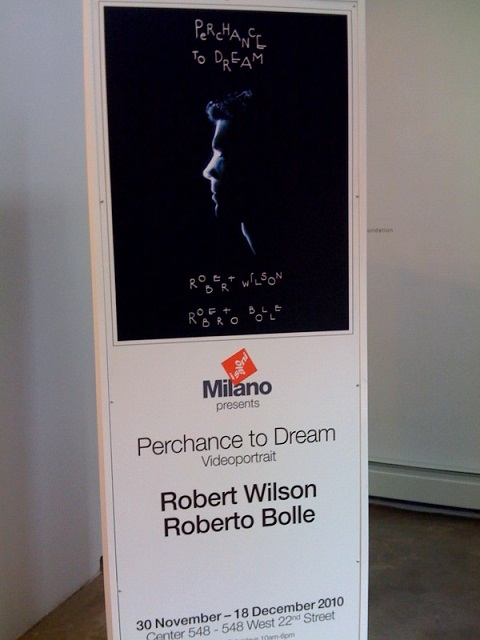
Robert Wilson / Roberto Bolle’s Perchance to Dream exhibit in Chelsea was a lot o’ frightening fun.

ABT’s new Nutcracker premiered, which I really enjoyed, almost as much as the Bolshoi’s.

Portman and Millepied revealed they are now engaged and expecting.

I had great fun, despite the crazy snowstorm, going down to Wall Street and covering Judith Jamison’s ringing of the closing bell at the NYSE.

Pretty busy year.

Happy New Year, everyone!
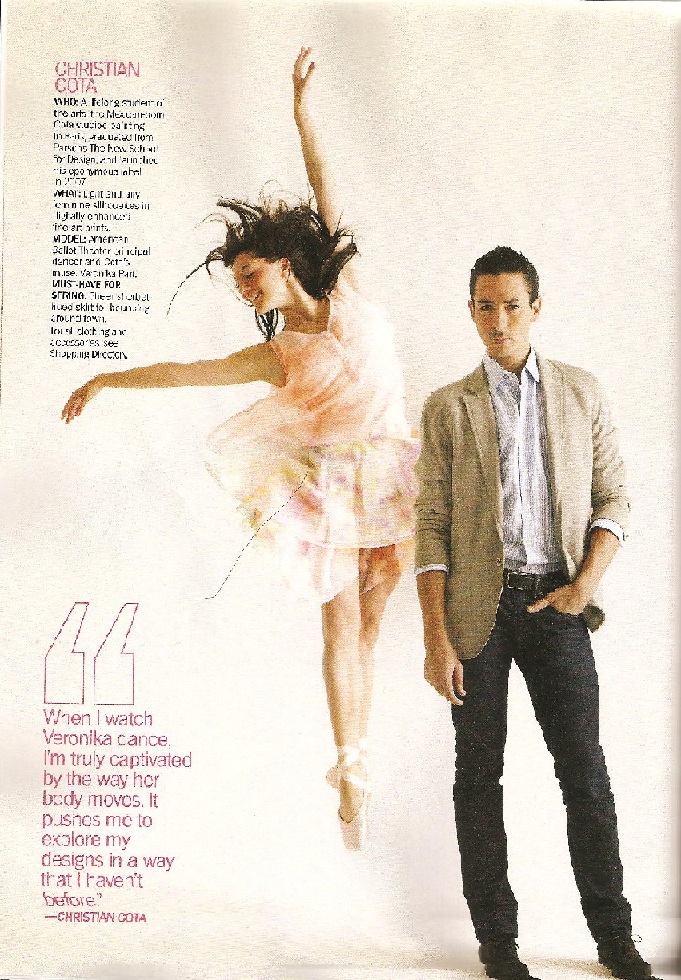
Veronika Part in the January 2011 Marie Claire

Sorry, I couldn’t get this magazine photo to scan very well, but, suffice it to say, SLSG favorite Veronika Part is in the January 2011 issue of Marie Claire! She’s not talking about weight or Black Swan; she’s featured simply because she’s a muse for young designer Christian Cota. He says, “When I watch Veronika dance, I’m truly captivated by the way her body moves. It pushes me to explore my designs in a way that I haven’t before.”

Cota is Mexican born and studied painting in Paris and fashion at New York’s Parsons School of Design. He launched his eponymous label in 2007. The magazine piece defines his style as: “Light and airy feminine silhouettes in digitally enhanced fine-art prints.”

Sure is an exciting time for ballerinas right now!

Roberto Bolle & Robert Wilson’s “Perchance to Dream” Scared the Crap Out of Me

My friend, Oberon, told me about this exhibit – a video installation by Robert Wilson showcasing Roberto Bolle, showing at Center 548 in Chelsea, as part of Milano New York Isaloni. So I went to check it out yesterday.

Scared the absolute crap out of me! I don’t really want to say too much or it will ruin the mystery for people who go, but I’ll just say, definitely go see it – I’ve never really seen a gallery exhibit, or even a museum exhibit quite like this before. Just try not to go alone. I think that’s partly why I was so spooked. It’s very dark in there; the first room is lit only by the small amounts of light emanating from some x-ray-like photos of light bulbs.

At the beginning there’s some nice classical music playing, but then the sounds get more ominous, and at points become quite harsh.

The second and fourth rooms really scared me the most – the rooms with three-dimensional art depicting scenes both classical and apocalyptic. Some of the three-dimensional art – well, it just looked too real… I’m not even sure if I saw the entire exhibit because I was just too nervous to go to the very end of the second big room and see if there was anything around the corner. It’s like a dark maze after you enter the first room. I almost couldn’t find my way out. I think if there are more people, though, if would be obvious where the entrances and exits were. As I was exiting, there was an art critic speaking with the curator and the critic said she thought this exhibit was really compelling and should be expanded to a museum, but then said the danger of doing that would be to diminish its mystery precisely because it would be more crowded.

Anyway, another thing that startled me – I kept forgetting it was a video installation because many of the projections looked like still photos … until Bolle would move ever so subtly. It’s like the moving eyes in the portrait effect… And I never realized how doll-like he can look…  And, had I not seen Black Swan, there are additional associations I probably would not have made but…

I’ve said too much! Just go see it! I do hope they someday expand it into a larger project.

For now, it’s at Center 548, which is at 548 W. 22nd Street in Chelsea. It’s only showing through December 18th so hurry.

Who Will Play Romeo in the Film Version of Anne Fortier’s “Juliet”?

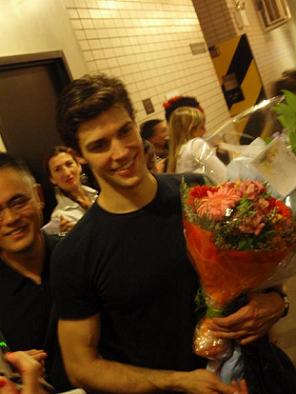
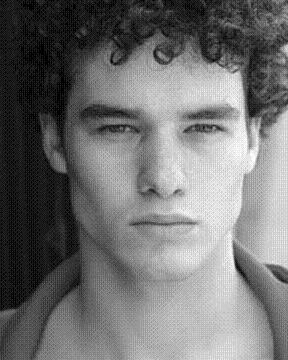
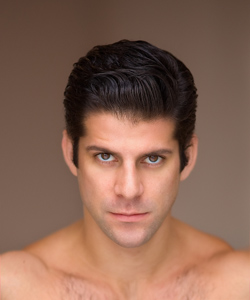
Haha, I don’t even think this book has been optioned yet for film! It should be though – it’s very cinematic. All throughout reading it, I kept “seeing” Romeo – and always as one of my favorite male dancers who’s danced the role. Roberto (top left) is of course the natural choice since he’s Italian and the book’s set largely in Italy. But I feel he may not have enough of the delicious cockiness in him; Roberto’s too nice, at least onstage. Ditto for Cory (top right). Marcelo of course would probably be best … although I don’t know if he has acting skills required for a speaking role in a film. He’s definitely a good stage dancer/actor.

I’m being goofy. I’m sure they would cast Andrew Garfield or Louis Garrel or someone.

Anyway, Anne Fortier’s Juliet, which I recently finished, is a really interesting read, especially for fans of Kenneth MacMillan, and I guess … Shakespeare 🙂

It’s part historical fiction, part romance, and part mystery / suspense and it shifts back and forth between the present day and the Siena, Italy of 1340, when the two people Shakespeare based his characters on – Romeo Marescotti and Giulietta Tomolei – actually lived. Of course in Shakespeare’s version, the lovers were from Verona, but according to this book, early stories – and there were many tales of Romeo and Juliet; Shakespeare’s was only one of many – had all the action happen in Siena.

The novel starts when 24-year-old American Julie Jacobs receives an inheritance after the death of her great aunt Rose, who raised her after her mother and father were suspiciously killed when she was a child. The inheritance is simply a key to a safe deposit box in Siena, which her mother had originally left with the aunt. Julie is told by her aunt’s butler and his lawyer that it contains a treasure, which she must go to Italy to find. So she sets off for Siena. There she encounters other, less savory types, who are equally interested in her treasure, and so begins the suspense part of the novel.

Julie soon discovers that at the time her mother died, she’d been researching the history of Romeo and Juliet, or Romeo and Giulietta. Julie’s mother’s last name was Tolomei, and it turns out Julie is related to the original Giulietta. I don’t want to give too much away, but the contemporary part of the story consists of the suspense and romance of finding the treasure – which is related to R&J – as well finding Romeo’s descendant.

Julie finds in her mother’s belongings in Italy the earliest version of the story of Romeo and Giulietta, and her reading of that accounts for the historical half of the novel, which was the most compelling and poignant to me. It’s different from the version we all know through Shakespeare. The warring families are the Tolomeis and the Salimbenis, with the Salimbenis being far more vicious and far more financially powerful. At the beginning of the historical story, the Salimbenis have just raided Giulietta’s house and murdered everyone but her. (She was in church at the time.) In a nutshell, Friar Lorenzo is able to sneak Giulietta out to her uncle Tolomei’s estate. Romeo, who is a Marescotti – a historically highly respected military family with connections to Charlemagne but who currently has no financial power – is a hopeless playboy. But once he sets eyes on Giulietta’s portrait, while he is having his own Marescotti-family portrait done, he is in love.

The artist tells Romeo that Giulietta resides at the Tolomei castle. He goes to a ball there in search of her, finds her (she’s a Helen of Troy type and stands far out from the crowd), and follows her into her chamber. She’s still traumatized by what’s happened to her family and so is immune to his flirting. She does tell him though that he can have anything he wants from her if he brings her the heart (or was it the head?…) of the master of the Salimbeni family, who ordered the execution. Romeo’s a bit taken aback, but tells her he’ll do anything.

The next day Friar Lorenzo brings Giulietta to the Marescotti estate and she tells Romeo she doesn’t know what came over her the other day to ask such violence of him; she doesn’t want him to get hurt. He kind of plays with her a bit, she softens, and over the course of this and several other meetings, they fall in love.

Romeo talks his father into asking Tolomei for her hand in marriage. For Romeo I mean. The father is reluctant because he doesn’t want to be seen as “getting involved” in the Tolomei / Salimbeni feud. But seeing how in love his son is, he agrees.

But just as he goes to approach Tolomei that night, old Salimbeni, smitten with Giulietta whom he spies in the distance, reveals that he wants her for himself. This will end the violence between the families once and for all, he claims. The whole crowd gasps, since Salimbeni is old enough practically to be her grandfather, not to mention married (although everyone also knows his wife will soon be dead, as he is starving her, as he’s done to prior wives… Medieval society must have been so lovely…) Of course Tolomei has no choice but to say yes – the Salimbenis are far more powerful – both physically and financially. Saying no to Salimbeni would be family suicide.

Poor Giulietta nearly collapses upon hearing she’s to be the wife of the man who slaughtered her family, and she begs Tolomei not to let the marriage happen. Tolomei refuses. Romeo declares that he will beat Nico, Salimbeni’s son, in the Palio (a Medieval-style horse race that continues to this day), and, if he does, he will win Giulietta’s hand.

At the Palio the following day, Romeo does win, but during the course of the race, Nico kills Tebaldo, Tolomei’s son, but with Romeo’s dagger, making it look like Romeo is the murderer. This is how Romeo gets banished. Although Romeo sneaks back to town with Friar Lorenzo and marries Giulietta in the back of the church where she is at worship, Salimbeni finds them and, well, things don’t go too well for Romeo…  Salimbeni’s wife finally starves and he marries Giulietta, then keeps her a prisoner in his country castle.

I should stop there! But the story goes on and there are all kinds of twists and turns. It’s a fascinating narrative and you can see all the same – or many of the same – elements Shakespeare included. But the theme in Shakespeare is the warring families or factions, gangs, what have you – and how innocent individuals get unfairly, tragically caught up in the fighting. In the original, it’s more about the viciousness of one evil, all-powerful man. I found it interesting to see how a great writer manipulated facts to craft a story with themes that would reach far beyond the time and place in which the story was set. I mean, Shakespeare’s version also contained beautiful poetry of course, but his basic story is more powerful and far-reaching than the original. The original does give you a sense of how violent and how absolutely awful Medieval society was for women though.

Anyway, the novel’s very good – at least the historical part. I highly recommend it for that. The contemporary part is cute romance-wise, and definitely suspenseful, but in my opinion not nearly as powerful from a literary perspective as the historical.


Funny, I didn’t really think of who would play Julie / Giulietta. Diana Vishneva or Veronika Part would be good – she has to be Helen of Troy beautiful! But they both have Russian accents and I don’t know if that would work… Hmmm, who else?…

(Photos above, clockwise from top left: Roberto Bolle, taken by me; Cory Stearns, from ABT’s website; and Marcelo Gomes, from ABT’s website.)

Roberto Bolle on the Intersection of Fashion and Ballet

Here’s an interview with Roberto Bolle backstage at Dolce & Gabbana’s 20th anniversary show in June. He talks about ballet and fashion, saying both have to do with the aesthetics of the body and movement, and that fashion is very important to Italy. I’ve never heard his voice before so this is fun! He struggles a bit with English and has more of an Italian accent than I expected. He seems really sweet.

Video via Global Internet Age.

MY FRIEND TAYLOR GORDON IN THE NEW YORK TIMES


There’s an interactive feature with my friend, dancer Taylor Gordon, in the New York Times today. She talks about her career as a freelance ballet dancer – from performing in Radio City Music Hall’s Christmas Spectacular to taking extra work in ABT Met season productions, to venturing into jazz and contemporary roles. Yay Taylor!

And here is the full article by Claudia La Rocco.

Photo above by Rosalie O’Connor, taken from Explore Dance.

CARLOS ACOSTA TURNING TO MODERN DANCE


I was just about to suggest – to beg rather – Kevin McKenzie to try to lure Carlos Acosta back to ABT since, in light of this season’s slew of principal injuries, we clearly need more big men; plus, I’ve never seen Acosta dance and am really dying to! But then my friend Susan sends me this.

WEEKEND VIEWING: JOSE MANUEL CARRENO


(Middle photo of Fancy Free – with Sasha Radetsky and Herman Cornejo – taken from Ballet.co; other photos from ABT website)

Jose Carreno is my dancer of the season this ABT season, mainly because I love him and am trying to see him in everything possible so in case, as people are surmising, he retires next year or the year after. I’m trying to get my fill. Not that you can ever really get your fill of a dancer like him. But it seems to be what everyone is doing — I’m hearing, “Oh, I’m trying to see Jose as much as I can!” everywhere around the Met right now.

This season, I’ve seen him in La Bayadere with Julie Kent, Sleeping Beauty with Alina Cojocaru, of course Don Quixote with Natalia Osipova (twice if you include the night honoring Alicia Alonso) and a host of mixed rep fare including Fancy Free — he’s by far my favorite cocky Latin sailor EVER, Tharp’s Brahms-Haydn Variations which would have been a great deal more boring without him, he was still a real standout among a cast full of huge principals the day I saw it, and what else have I seen him in? Seems like something else, but maybe it’s just that I’m looking forward to tomorrow night’s Manon pas de deux with Diana Vishneva.

If and when he retires I’m going to be a hysterical wreck. He’s 42 this year and dancing, in my eyes, as well as he ever has, so I don’t know why it even needs to be an issue at this point. But he’s said years ago that he planned to retire at 40, and it seems most ABT men stop dancing in their early 40s at the latest (Julio Bocca was only 39) so … whatever… He’s the most advanced artist at ABT, the most advanced artist I know of currently dancing; he’s a legend. And he’s the only dancer who’s ever brought me to tears (with his Romeo).

So, since this is a long weekend, here are some videos so you can enjoy him too:

Dancing with Irina Dvorovenko in Le Corsaire:

In Coppelia:

Diana and Acteon:

With Gillian Murphy in Don Quixote:

And rehearsing for a Kings of Dance performance with David Hallberg, Joaquin De Luz and Nikolai Tsiskaridze:

Happy 4th everyone!