
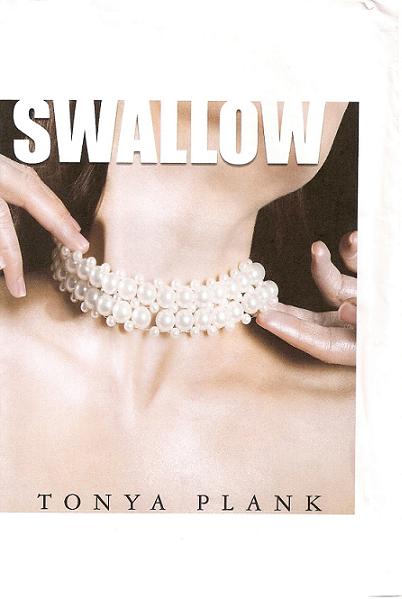
JUDGING A BOOK BY ITS COVER

scan0005

Sorry posting has been kind of lame over the past week. I’m working really hard on finishing the final read-throughs of my novel and, as always, it’s more involved than I expected. I have several exciting Fall For Dance programs still to write about — a puppet-performed Petrushka, Bronislava Nijinska’s Les Biches, the fabulous Trocks, Dance Brazil’s unique capoeira / samba / modern blend, Tiler and Gonzalo 😀 , the best Afternoon of a Faun (involving two fauns actually) I’ve ever seen — this is by far the best FFD Festival I can remember — and I plan to write about it all at the end of the weekend or early next week; after, hopefully, I’ve finished my rewrites.

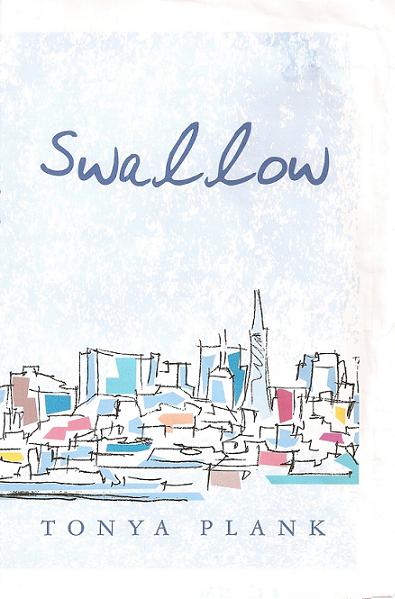
In the meantime, above is my final cover. Took me forever to okay something I was happy with. At first I was going to go with this one:
scan0006

But then I had dinner with a gay male friend, who said of this bottom one, “Okay. This looks like it’s about a girl who goes around New York giving blow jobs.”

Which my novel is NOT about! I sought others’ opinions — nearly drove all of my friends crazy — and most people agreed that, since it’s about a young woman with a disorder, the cover should indicate that. It’s just that the disorder she develops is due in part to her moving into the city — a city she feels largely alienated by — and so it’s partly about her ability to make her own home here. Which is why I thought an arty cityscape would work.

But apparently not with this title!
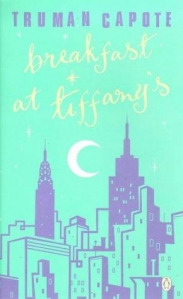
breakfast-at-tiffanys

I’d gotten the idea for the arty cityscape cover from my favorite Breakfast at Tiffany’s edition.

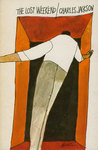
I also love this cover, for Charles Jackson’s The Lost Weekend:
the-lost-weekend-lg

This is as large as I could blow it up, but it’s one of my very favorite covers. I’d asked my design team to come up with something similar (with a woman looking into the abyss), and they couldn’t. I showed a friend and she kind of burst out laughing and told me I’d need to hire an artist to make me something wholly original if I wanted something approaching it. I have that Lost Weekend edition (which I found at a rare bookstore in Durham, NC) and the cover is an actual piece art — it’s actually painted onto the cover, which is made of a sturdier material than regular covers — the result being that once the years go by and the cover ages, you literally can’t open the book without breaking it. So, the irony is that that book is unreadable; it must simply sit on my bookshelf facing out, to showcase the piece of visual art that it’s now solely become.  In any event, even if I did want a book that could only be enjoyed for its cover, I don’t have the money to hire my own artist.

But I think my design team came up with something that works anyway.

My biggest problem with having a photo of a woman on the cover is that I was afraid it’d be taken for Chick-lit, a moniker I think every female writer has some kind of issue with, or at least thinks about. I thought an illustration would make it look like it’s about art — which it partly is: one of the protagonist’s friends is an artist and he’s an important character. And I thought a photo of a woman would alienate male readers. But then a friend who works as an artistic director of a magazine said illustrations don’t sell; you gotta have a photo, which she insisted was pertinent to books as well as magazines (and she has two published books of her own out). She’s one of four or five people (as I said, I drove all of my friends stark raving nuts) who helped me come up with the idea for my final cover.

…which I’m happy with — I think it hints at what the book is about and is dramatic and somewhat provocative without being over the top. I just hope it doesn’t alienate potential male readers. But then, as practically everyone I know (of both sexes) have told me ad nauseam, men don’t read anyway — especially fiction; women read and Chick-lit sells. So just embrace it.

Anyway, there are many other issues involved in the whole Chick-lit quandary, and in book cover art, but I’ve blabbered for too long. Have to get back to my rewrites… And I need to go out for my Friday cupcake.

Have a good weekend everyone!

FALL FOR DANCE ’09 PROGRAM 1


I’m on a tight schedule with my book rewrites, but here are some of the highlights of the Fall For Dance Festival (Program 1) thus far.

It’s always a delight to see Paul Taylor’s hilarious Offenbach Overtures with the would-be ballet dancers tripping all over each other, the muscly men first dueling then making up and swinging their way offstage in each others’ arms, the female cabaret dancers comically warring for attention. I was happy to see SLSG favorite Michael Apuzzo in my cast (he’s not in the photo above unfortunately, as he wasn’t in the first night’s cast) — he’s always very dramatic, full of character, and I noticed he had the highest, most straight-legged jetes as he and the other guys went sailing offstage at one point.

I was at this performance with my friend, Michael, and we hung out for a while in the lounge afterward (where they have $2 wine and beer and $4-$5 plates of food). I’m very shy, but I always seem to have really outgoing friends, and Michael went up to a woman with a bouquet and asked her what it was for — something along those lines. It turned out she was in Paul Taylor, and once I knew that, I recognized her as the striking Parisa Khobdeh, Michael’s partner (Michael Apuzzo that is, and partner in Offenbach that is). I then realized a bunch of the Paul Taylor dancers were hanging out in the lounge (except for that Apuzzo!) — so the FFD brochures  are not lying about the “come mingle with the dancers” parts of the adverts for the post-performance parties in the lounge.


Anyway, the other highlight of Program 1 was B/olero performed by the highly respected Israeli company, Batsheva, choreographed by their artistic director, Ohad Naharin, and set to the familiar Maurice Ravel music. Except this was a remix — at times the music would be slowed so that it would sound somewhat warped. The music would also veer from speaker to speaker, so it was like the sound was traveling around the auditorium.

Well, there are many Boleros around and Naharin’s was a more minimalist one in terms of the action, but not the emotion. It was a duet for two women dressed in black dresses. At times their movement was basic, at times still, at times spastic and chaotic, at times sexual and almost kinky, and at many times hypnotic. A common motif was the swinging back and forth of the arms, mechanically, like the arms of a clock, the rest of the body still. I always feel with his work that I have to see it several times to get the full effect, and I wished I could have seen this one again.


In celebration of the centennial of Ballets Russes, every night at FFD one company performs a piece on honor of that legendary company. Program 1’s was the Boston Ballet’s rendition of Nijinksy’s original Afternoon of a Faun. This was a real treat for me, as I’d never seen the Nijinsky version live and in full before. I’d only ever seen it on tape or, if I remember correctly, only the faun version (without the nymphs) performed by Royal Ballet star Johan Kobborg with the Kings of Dance.

Anyway, Nijinsky’s version is from 1912 and you can really imagine how shocking it must have been in its day, with the faun so overtly sexual, so taken with the nymphs, he ends up masturbating with a cloth left by one, which he recovers, takes up to his little rock perch, places it on the ground and begins rubbing his groin into it. You still don’t see much of that today onstage (at least not in ballet), so I think it’s still somewhat risque. And yet the faun, at least as portrayed by Altankhuyag Dugaraa, is so sweet and so endearing, and you feel for him after those nymphs tease him and you’re happy for him when he retrieves that cloth. I would so love to see a clip of Nijinsky in this. I would also love to see his Rite of Spring some day; I don’t think it’s been performed for eons though, I think because the choreography hasn’t really been preserved, sadly.


And completing Program 1 was Savion Glover, which I wrote about briefly in my previous post.

See the rest of Andrea Mohin’s NY Times slide show of Program 1 here.

FALL FOR DANCE 2009


It’s September — happy September everyone — and for New Yorkers that means Fall For Dance is just around the corner. Tickets go on sale 11 a.m. September 13th, so time to get thinking about what all you want to see. For people unfamiliar with this festival (which this year takes place from September 22 – October 3), three to four companies perform each night and tickets are only $10 a piece per night. A great opportunity for first-time dance-goers. Tix sell out out at the speed of light, though, so have your computer turned on and your browser pointing here by above said time on above said date.

In celebration of the centennial of Ballets Russes, many of the participating companies are performing BR classics like Nijinsky’s Afternoon of a Faun and Fokine’s Dying Swan and Spectre de la Rose. There are also several lectures in the City Center studio centered around BR and its influence today. Go here for the schedule and more info.


Don’t Miss the Jerome Robbins Doc on PBS Wednesday


Don’t miss — don’t fail to record so you have it forever — the Jerome Robbins documentary on PBS this Wednesday evening, February 18th at 9pm EST. It’s long — 2hours — and very extensive; includes discussion and excerpts of nearly all of his ballets and Broadway shows. There are interviews with many many people — Baryshnikov, Chita Rivera, Rita Moreno, Peter Martins, Violette Verdy (a former ballerina), Suzanne Farrell, Stephen Sondheim (who is not at all what I expected!), Jacques D’Amboise (who is quite the character!) writers Deborah Jowitt and Robert Gottlieb (the only two critics whose faces I’d never seen), and more — can’t even think of everyone who spoke. And there’s footage of interviews with Robbins himself both recently and further in the past.

He and others talk about his inspiration for and meaning of much of his work — The Cage, Fancy Free (one of my favorites, which was based on a Paul Cadmus painting, which I hadn’t known), Interplay, Dances at a Gathering, Glass Pieces, NY Export Opus Jazz, Afternoon of a Faun, West Side Story, Gyspy, the wonderful Fiddler on the Roof (Broadway) and Les Noces (a rather haunting ballet about a Russian wedding based on Fiddler, which I guess is kind of obvious, now that I know), Goldberg Variations, Watermill (lots of interviewees defending this pretty controversial work!), Suite of Dances, etc. etc. etc.

There’s brilliant footage of Tanaquil Le Clercq and Jacques D’Amboise dancing Afternoon of a Faun (and please tell me if you’ve ever seen anyone better than those two in those roles!), of Robbins himself dancing Fancy Free, of Barysh also dancing FF, Dances at a Gathering, and Other Dances (with Natalia Makarova), of Robbins and Balanchine dancing in a piece Robbins choreographed for the Stravinsky Festival, etc. etc. — there’s so much, I can’t remember it all, but I think they’ve got excepts of just about everything.

There’s also coverage of major events in his life — so upsetting when his ex-fiance talks about discovering one evening that he was in love with Montgomery Clift and was gay and trying hard to marry and be “normal”; his excruciatingly difficult decision that would forever haunt him to testify before the House Un-American Activities Committee; his visits to Eastern Europe that resulted in the making of one of his masterpieces — Fiddler; the quite nasty things he did to a Gypsy actress who couldn’t remember some important actions in the play…

And dancers and actors talk about how Robbins rehearsed them, which I found extremely interesting. An actor from West Side Story says he always made people do their own character sketches, which they’d have to present to him — which I love! He was a hardass to put it mildly, but only in a certain respect. He worked the dancers hard mentally (similar to one of his tutors, Antony Tudor), but when it came to the physicalities of the dance, he’d ease up considerably, ask dancers why they were working so hard — the opposite of Balanchine. At then end, Peter Martins remarks that it was mentally challenging to work with Robbins but physically relatively easy; it was the complete opposite with Balanchine.

This is honestly one of the best PBS specials on dance that I’ve ever seen. It does get slow in some points — especially early on when there are all these people talking and you can’t read the subtitles quickly enough to figure out who everyone is — and Robbins was so prolific that the film moves quite quickly and sometimes you can’t figure out which dance the interviewee is even talking about. So, I’d highly recommend taping it so you can watch it again and again. Believe me, you’ll want to. Go here to check local listings. (Type in “Jerome  Robbins: Something to Dance About”).