
SLSG’s Dance Highlights of 2010

Instead of trying to remember which were my favorite performances of the year, I’m just going back through my blog archives from January of this year and linking to the most memorable posts. More fun that way! A lot happened in a year…

January

Pacific Northwest Ballet made their debut at the Joyce; it was my first time seeing them live.

The Post‘s Page 6 announced that you know who and you know who are dating, and the ridiculous homewrecker attacks began.

Baryshnikov and Annie Liebovitz starred in a very cool Louis Vuitton ad.

February

I totally fell for New York City Ballet’s Sleeping Beauty.

…and Mark Sanchez πŸ™‚

I found myself quoted in Colin Jarman’s book, Dancing With the Quotes.

I also fell for Sara Mearns’s Odette in Peter Martins’s Swan Lake.

On a personal note, my former judge, the esteemed Honorable Sylvia Pressler, passed away.

The Kings of Dance came to town.

Morphoses shocked the ballet world by announcing that Christopher Wheeldon was leaving the company.

March

My friend’s organization, Art for Change, held a benefit for Haiti after the earthquake.

Rasta Thomas’s Bad Boys of Dance announced that Danny Tidwell and SYTYCD’s Jacob Karr were joining the company.

Corella Ballet Castilla y Leon finally made their NYC debut!

I found myself actually getting press for liking Kate Gosselin – or for not hating Kate Gosselin rather – on Dancing With the Stars.

I fell for Keigwin + Company’s Runaway.

I was delighted to receive an email from NYCB ballerina Yvonne Borree’s aunt regarding of all things, my novel.

April

I had my first experience as a dance writer panelist! Thank you, Marc, from TenduTV!

Tiler Peck appeared on Dancing With the Stars in a Travis Wall routine, which everyone was so excited about. But it ended up amounting to not a whole lot…

Roberto Bolle danced a naked Giselle, in Italy of course.

May

New York City Ballet opened their spring season with premieres of Millepied’s Why Am I Not Where You Are and Ratmansky’s Namouna, both of which I liked, though Ratmansky’s had to grow a bit on me.

Baryshnikov returned to the stage.

I greatly enjoyed ABT’s new production, Lady of the Camellias, though most critics panned it.

June

ABT celebrated Alicia Alonso’s 90th birthday with three all-star Latin American casts (plus Natalia Osipova) dancing in Don Quixote.

Yvonne Borree gave her farewell performance at NYCB.

Bill T. Jones won a Tony for best choreographer for Fela!

Philip Neal gave his farewell performance at NYCB.

Natalia Osipova was mugged right outside of Lincoln Center.

Two of the greatest ballerinas in Europe – Osipova, and Alina Cojocaru – gave back to back Sleeping Beauty performances at ABT.

Albert Evans gave his farewell performance at NYCB.

Tap great Savion Glover made headlines by voicing his annoyance with Alastair Macaulay’s NY Times criticism of him – onstage, during a show.

Conductor Maurice Kaplow gave his farewell performance with NYCB.

Darci Kistler officially ended the era of the Balanchine-trained dancer with her farewell performance with NYCB.

July

Carlos Acosta announced his retirement from ballet and his foray into modern dance.

Alex Wong, probably the second greatest contestant ever on SYTYCD was injured and unable to finish the show.

My friend, Taylor Gordon, was profiled as a freelance ballet dancer in a New York Times article πŸ™‚

Alvin Ailey American Dance Theater’s beloved Denise Jefferson passed away.

Nilas Martins retired from NYCB oddly sans fanfare, sans criticism, sans a performance.

August

I interviewed tWitch about his role in the movie Step It Up. Fun fun interview!

I had a blast covering Ailey Camp.

I nearly fell over when Wendy Perron, esteemed E-I-C of Dance Magazine recommended Swallow on Twitter!

September

NYCB began their excellent “See the Music” series.

October

I loved Ashley Bouder’s Serenade.

Emerging Pictures’s awesomely exciting Ballet in Cinema series began with the Bolshoi’s Flames of Paris.

This cool new Lincoln Center-area street art sprouted up.

One of my favorite posts of the year, though it received no comments, was about Anne Fortier’s novel, Juliet. I jokingly daydreamed about it being made into a film, and which of my favorite ballet stars might take the lead.

November

ABT made an historic visit to Cuba and oh how I wished I could have gone with them.

I think I was the only person in the entire dance world to sympathize with Bristol Palin on Dancing With the Stars.

I had a blast covering New York So You Think You Can Dance auditions.

All of a sudden Black Swan was everywhere.

Nearly fell over again upon hearing Riccardo Cocchi and Yulia Zagoruychenko took the world Latin ballroom title – making them the first U.S. couple ever to do so.

December

My take on SugarPlumpGate.

Black Swan finally premiered which I didn’t love but was happy to have ballet brought back into the spotlight.

I was in awe of Alvin Ailey’s 50-dancer Revelations, staged in honor of the 50th anniversary of that dance. I also loved several other dances in their City Center season – Ailey’s Cry, Ronald K. Brown’s Dancing Spirit, and Geoffrey Holder’s The Prodigal Prince – just to name a few.

Robert Wilson / Roberto Bolle’s Perchance to Dream exhibit in Chelsea was a lot o’ frightening fun.

ABT’s new Nutcracker premiered, which I really enjoyed, almost as much as the Bolshoi’s.

Portman and Millepied revealed they are now engaged and expecting.

I had great fun, despite the crazy snowstorm, going down to Wall Street and covering Judith Jamison’s ringing of the closing bell at the NYSE.

Pretty busy year.

Happy New Year, everyone!
MISSING ARIZONA


I haven’t been to Phoenix since early 2001 and I’ve been getting a bit homesick for the desert. Everything seems to be reminding me of the Southwest lately – even last night’s NYCB program with Melissa Barak’s new ballet, Call Me Ben, set in Vegas with its Santiago Calatrava-designed desert-themed backdrops, and then Balanchine’s Western Symphony with the cowboys, saloon girls and Old Tombstone-looking stage piece.


Albert Evans and cast in earlier NYCB Western Symphony production, taken from Explore Dance. Photo above that of the main street in Tombstone, AZ, taken from the city’s website.

I have to get out there soon.

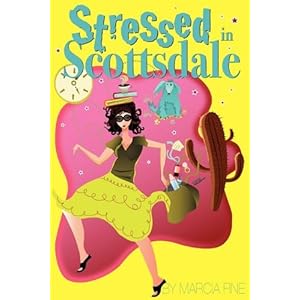
In the meantime, just ordered this book, which looks like the perfect proverbial beach read.

The photo of the little guy at the top of the post, by the way, is taken from the Facebook page of my childhood friend who operates a kind of traveling zoo featuring reptiles native to Arizona, exposing children to and creating respect for their unique little charms.

ALBERT EVANS FAREWELL


Photos by Paul Kolnik (top, of Albert Evans during final curtain call, bottom with Wendy Whelan in Herman Schmerman)

Sunday afternoon longtime beloved principal with NYCBallet, Albert Evans, gave his final performance. He danced two roles he is well-known for – the pas de deux from William Forsythe’s Herman Schmerman, with Wendy Whelan, whom he’s often been partnered with, and Balanchine’s The Four Temperaments (he danced the third variation – “Phlegmatic”). It was perfect – -a humorous, playful pas de deux and a very serious, emotionally moving classic Balanchine ballet. He danced both fabulously. I haven’t seen Herman Schmerman much, and he made me want to see it again. And he danced “Phlegmatic” so well, with such precision and intensity (honestly, better than I remember seeing it danced previously) it made me take notice of a Balanchine ballet I honestly haven’t much liked before.

Also on the program was La Source, a pretty in pink ballet by Balanchine set to Delibes and danced very well by Joaquin de Luz and Megan Fairchild in the pas de deux and Lauren King as leader of the ensemble. I have in my notes “dive!!!” which means Megan must have dove into Joaquin’s arms with brilliant gusto!

And in the middle was The Lady with the Little Dog, a newish ballet by Alexey Miroshnichenko that premiered last season, danced again very well by Sterling Hyltin and Andrew Veyette. I think they re-staged and / or re-thought it a bit because it seemed so much better this time. I remember liking parts of it last time; I really loved it this time. The lifts are stunning and it’s very emotionally moving with lots of climactic build-up. I think it’s more focused on the couple this time and the “angels” are more functional and less involved in the choreography and I think that made a big difference. I always love Sterling’s little dog. This time he (or she?) wanted to be picked up a lot.

Anyway, Albert Evans is quite the character and his curtain call was probably the most celebratory I’ve seen at City Ballet. I said on Twitter that it was of Julio Bocca-esque proportions! Of course everyone – audience and the dancers – loves him, and many of the female dancers came out and did a little dance with him when giving him their bouquet. He did several little goofy dances himself, with lots of Rocky Horror Picture Show-style pelvic thrusts. He picked up one of his bouquets and flung it out to the audience. Then, he took off his shoes. Oh and he had a glass of champagne, brought out by a group of male principals. See, what I mean – Julio Bocca all over again! Crowd went wild, and didn’t want to leave the theater.

Since it was a nice day, after the performance I sat outside on the benches near the stage door with Oberon and we waited for Albert to emerge. He never did! Well, he probably did after several hours – Philip and I imagined he was getting plastered with Wendy Whelan and Maria Kowroski (neither of whom emerged either during the time we sat there) and his other regular female partners. A good hour after we’d been sitting out, a dancer came out and talked with Philip a bit and told him she just saw Albert inside yakking it up with everyone and he was still in his ballet clothes. So we decided we’d be waiting all night and we’d better leave. Did get to meet a lot of dancers though — all very charming and immensely polite and gentlemanly! Amar Ramasar, Robert Fairchild, Troy Schumacher (who made me want to dig back into Proust – have the tomes of his work but have never gotten around to cracking them open), Craig Hall, Tiler Peck, Abi Stafford… those are the ones I can remember. Fun day!

For more on Evans’s career, Oberon has a really good write-up with lots of photos.

SARA MEARNS’ MOVING ODETTE, A TRIBUTE TO DARCI KISTLER, AND NEW ADAM HENDRICKSON BALLET


Photo of Sara Mearns in Swan Lake, by Paul Kolnik, taken from NY Times.

Last week was the first time I’d seen Peter Martins’ version of Swan Lake. Overall, I wasn’t in love with the production, but I was in love with the dancing, particularly Sara Mearns’ interpretation of Odette, which nearly moved me to tears, which just hardly ever happens with Swan Lake. She is the Veronika Part of New York City Ballet to me and I just love her. She inhabits whatever character she’s dancing with her entire being and she takes you to that place with her; she really creates another universe and she puts you right there and won’t let you leave it! I think here what I loved was that she humanized her Odette. So many ballerinas will focus on getting the fluttering foot just right, waving their arms about with just the proper fluidity that they look like actual wings, and of course totally nailing the chaines and fouettes in the second act. They make the White Swan all about the styling and the Black Swan all about the athletics. And they forget about the story.

But with Mearns — just the way she would wrap Prince Siegfried’s arms around her body, the way she’d nearly dive into an arabesque letting him catch her before turning her, or fall nearly to the floor and arch her back, wrapping herself around his kneeling knee — everything was about the tragic story, about Odette’s loving the prince and longing for him and her need for him, and then his inability to fulfill that need. I’ve honestly never been so moved before, and when she bourreed away from him at the end (there are no suicide swan dives into the lake here), leaving him, it just left me with such a emptiness. I couldn’t stop thinking about that — about her wrapping his arms around her in the pas de deux and then her sorrowful bourrees away from him at the end — for days; I still can’t get over it. I think those images will always be in my mind when I think of this ballet.

And she just had so much stage presence. Sometimes when all the swans are onstage together, I’ll lose Odette, but not with Mearns. I think that may partly be because she has a broad face, allowing her expressions to be more noticeable to the entire house. But of course she makes those expressions that not everyone does — her face, her body, she is always fully immersed in the role.

And Jared Angle was the absolute perfect partner. You can tell he’s a very strong guy and a very solid partner who’s easy to get along with. Because she’d really really throw herself into those arabesques and he’d catch her and she was so off her center of balance — she had to be in order to show the passion and emotion, and the full, expressive line – and he’d promenade her like that, and it was so incredible because you could tell he spent the better part of the ballet supporting a lot of her body weight.

And he acted it well too, and did perfectly on his solos. Very impressive performance by him!

The other cast I saw was on opening night with Maria Kowroski in the lead and Stephen Hanna making his debut as Siegfried. Hanna was very good — he’s a strong guy too, and that night, he performed a major save! Toward the beginning Kowroski went to jump into his arms, on her way into a shoulder-high lift, and she slipped before she ever got to him. He somehow reached out and caught her anyway, and took her up into that lift beautifully. The whole audience went “ahhhhhh”! I think it threw Kowroski a bit though because she seemed nervous and a bit shaky throughout the rest of the ballet. She might also have been a bit anxious because Hanna was debuting in the role, so they obviously hadn’t performed it together yet. At intermission, someone mentioned she might have been less nervous dancing with her usual Charles Askegard. Maybe that’s true. I thought Hanna did a very good job overall.

But I’m not in love with the production. Like Martins’ Romeo + Juliet, the sets are very modern, and the costumes for Siegfried and Benno and his friends are bright, color-coded, and basic with minimal embellishments. But the sets are the worst. In the beginning, you can’t even tell they’re in a palace. In the second act, the sets are not only minimal, but what’s there is so incredibly modern, just a few brown and beige slashes on some backboards. And yet, the people are dressed in Elizabethan costumes. Either set it in modern times completely or go with the historical thing, but don’t do half and half?…

And the production just moves way too fast, in my opinion. This worked for Sleeping Beauty (the paring down of all the miming and the boring court dances, in favor of getting right to the point and to those gorgeous variations), but it didn’t work here because there’s too much story up front missing. We see all these people dancing — we don’t know they’re in a palace, so we just see them all dance, and next thing we know, Siegfried’s all bouncing around with a bow and arrow. Then he runs offstage and a moment later, on comes Odette. Then Siegfried runs back out and they do a pas de deux, and after that’s over, Odette runs one way, Siegfried runs the other, and on come the swan ensemble. And — and maybe this is conductor Karoui’s doing — but you don’t even realize Odette’s run away from Siegfried because she’s afraid of Von Rothbart, and that now Siegfried is running around madly trying to find her. Instead, it just looks like a bunch of running. There should be pauses so that you know exactly what’s happening and why– the pacing is way way too fast. I never really did see Siegfried fall for her. I first realized there was something between them when Mearns’ Odette wrapped Siegfried’s arms around her in the White Swan pdd.

The other thing is the ending, which I both like and don’t like. In this ending, there is no suicide with the two loversΒ  ending up together in eternity. Instead, since Siegfried has betrayed Odette with Odile, they can’t be together. The problem is that Martins still has Von Rothbart die — he melts into a puddle and dies once he realizes their love is undying and real. But then, if he dies, the spell should be broken and Odette can resume human form. So, the ending then loses its mysticism and becomes a human ending — Odette leaves him because he’s betrayed her, and even though he’s horribly sorry, the damage is done and can’t be undone. So, basically she just can’t forgive him. But why not? It doesn’t really have the resonance to me that it should. I think Martins should just not have Von Rothbart die. That way the lovers can’t be together because of Siegfried’s betrayal. But she still loves him, so that when she bourrees away from him, letting go of him little by little, her arms still reaching out toward him as she disappears into the wings, it just makes you want to bawl your eyes out the same way as the Giselle ending.

One other thing: Martins has some children dance in the beginning courtly scene, which I love. It’s very Balanchine to put the children in, and they were very sweet. And I could tell the people around me thought the same.

Oh and one final other thing: there’s no real dancing for Von Rothbart — it’s really just a character part. But I missed the seductive Marcelo making all the women swoon with his sexy jumps, and then tossing his Odile all about!


Anyway — sorry, I’m behind on blogging and have to blog about these things all together — but earlier in the week, I attended a daytime tribute to retiring Balanchine ballerina Darci Kistler (above photo from the front of the program). She danced the Preghiera passage from Mozartiana beautifully, with some children from School of American Ballet, then the White Swan pas de deux with Jared Angle. And then Kathryn Morgan danced the Sleeping Beauty wedding pas de deux with Tyler Angle, which was sheer perfection. They also showed some excerpts of interviews with Kistler from a 1989 documentary, Dancing For Mr. B, and there was a short panel discussion where Bob Craft from the NYCB Board interviewed her. Later, the two were joined by Peter Martins, Philip Neal (who seems very polite and well-mannered), and the hilarious Albert Evans, who you can tell is the type of guy who puts everyone at ease. He got up there and immediately started reminiscing about a blue sweater Darci’d wear to rehearsals all the time and how much he wanted it (she ended up saying he could have it!) and some rather amusing (in retrospect) goof-ups they had together, and she just really burst into genuine laughter.

Oh and at the beginning, Kathryn Morgan presented Kaitlyn Gilliland with the 2010 Janice Levin Award (Morgan was the 2009 recipient). Both gave little speeches, and Gilliland (who seems like a natural speaker) prefaced hers by pronouncing Kathryn’s recent Sleeping Beauty debut “historical,” which nearly brought tears to my eyes. Can’t think of a more apt description!

And finally, earlier last week, I saw the debut of a new ballet by corps member Adam Hendrickson. It was presented in a small downstairs auditorium at Carnegie Hall and was part of a program featuring newly discovered Prokofiev music performed by students and faculty of Yale’s School of Music. Hendrickson’s ballet was set to his Music For Athletic Exercises, and it was fast, flirty, and fun. It was performed by three dancers — Matthew Renko (who is really a stand-out dancer — I kept wondering why he wasn’t with a major ballet company, and then realized later in the week he’s a corps member at NYCB), Elysia Dawn, and Colby Damon and one pianist — Boris Berman — and Hendrickson’s original, clever choreography had elements of Ratmansky’s Concerto DSCH as well as Jerome Robbins. At one point, Dawn’s feet are moving so fast and furiously, and the pianist just keeps at it and won’t let up, and she kind of stops and shoots him a look. It reminded me of Robbins’ Suite of Dances — it was cute and the crowd loved the joke. This is the second work I’ve seen of Hendrickson’s and I found both to be engaging and memorable. I think he may have a real future as a choreographer. Anyway, here is Philip’s account of the evening, and here is an article on the music.

PASHMINA LIFTS AND LITTLE DOGS WHO STEAL SHOWS: ALEXEY MIROSHNICHENKO’S "THE LADY WITH THE LITTLE DOG"


Last night at New York City Ballet was the world premiere of a new ballet by Alexey Miroschnichenko, The Lady with the Little Dog (photo above, of Sterling Hyltin and Andrew Veyette, by Paul Kolnik). The ballet is based on the short story by Anton Chekhov of the same name (which I haven’t read but now wish I had). Miroshnichenko made the ballet in honor of the 150th anniversary of Chekhov’s birth and he dedicated it to Maya Plisetskaya in honor of her 85th birthday.

I really liked the ballet — really enjoyed the whole evening. Though I didn’t know the story, The Lady with the Little Dog was very Chekhovian, very full of angst-ridden characters (danced by Hyltin and Veyette), along to a score by Rodion Shchedrin that went along well with the drama.

It began with Sterling Hyltin dressed in a gorgeous deep purple dress with a plush velvety top and romantic tutu, walking a little dog on its leash across stage. Veyette was in the back, bespectacled, and wearing a white suit, looking like a 19th Century Russian businessman. (The splendid costumes were by Tatiana Noginova). There were also several male dancers dressed in grey bodysuits writhing around onstage. I originally thought they were a kind of chorus that would echo or foretell the action of the “play” but then they had some very dog-like movements – holding their hands up, bent at the wrists, kind of like dog paws, lying on the ground and playfully kicking their feet in the air, rolling over. But the program called them “angels.” It soon became clear that their function was to control the events — get the lady and the gentleman to meet, sleep together, then tear them apart — perhaps one of them died? — then bring them in the end together again as they walked along a path toward heavenly light.

Anyway, back to the beginning: well, as Sterling walked that little dog across the stage (I’m not good with dog breeds, but he was small and fluffy, with straight shaggy hair), he kind of initially stole the show. He kept looking out at the audience, into the darkness, but he looked intrigued, not scared. Then, Sterling would lift her leg and he’d turn and look at her like she was a bit off her nut. Then a grey guy came up and wiggled around and the dog would take a step back, then try to go around him, but the leash preventing him from getting too far. It was too much. Finally, Sterling stopped, frozen in time, and a grey man took the leash and led the dog offstage. Right before he went into the wings, he took another inquisitive look out at the audience. There were several giggles. It was too cute and I was reminded of Melanie LaPatin once saying no performer ever wants to follow an act involving children or animals.

Anyway, fortunately the dog didn’t return (although I secretly kept wanting him to). It took a few seconds for the audience to calm down and re-focus, but eventually we did. They grey people set up what looked like a long rubber mat which separated Sterling and Andrew. Each principal danced separately, then with the grey men, then the grey men eventually brought them toward each other and they danced together. The only odd thing to me was the background set (along with that rubber mat; set designs were by Philipp Dontsov). The back wall looked very abstract, which seemed kind of out of place in a period drama, although maybe it was meant to universalize the emotion. It looked to me like the middle of an airplane, with slanted airplane-like windows lining the back wall. As the action unfolded, the windows got smaller and smaller until they eventually disappeared.

Anyway, in the second movement, Hyltin and Veyette danced this really gorgeous MacMillan-esque pas de deux with lots of beautiful sweeping overhead pashmina-esque lifts — which of course I’m always a sucker for! So that was my favorite part. Then, the grey men returned and helped the two principals out of their clothing, and they danced a rather beautiful sex scene in skin-toned underwear. I have to say, as I was watching I couldn’t help but think of a similar scene from Pascal Rioult’s Views of the Fleeting World, which was so slow and serpentine and tantalizing, yet beatific. This wasn’t the same; it was a little more frantic and angst-ridden, which I guess is more Chekhovian (I will have to the read that story).

Then, the grey people direct them to get back into their clothes, and soon we see Veyette doing a kind of mad dance, eventually running across the stage and disappearing into the wings, Hyltin running after him, but unable to catch him. Then she does a rather sorrowful solo.

Eventually Veyette returns, they dance together again. But this time it’s a more mature love, not as Romeo and Juliet balcony scene as the first. Eventually, they take off their clothes again, the mat is laid vertically across stage, running front the front of the stage to the back, and the two hold hands and walk together down the path, toward the back of the stage, toward a bright, golden light. The end. I wasn’t sure if Veyette died and they were coming together again in the afterlife, or if they just had a fight and this final scene represented them kind of going off into the sunset.

Of course Miroshnichenko came out for a bow during the curtain calls — and unbelievably, though the vast majority of the audience applauded, there were a few audible boos. It’s like some people were getting opera confused with the ballet. I mean, seriously, this wasn’t a new, iconoclastic production of Tosca; it was a brand new ballet…

Anyway, I liked it and would like to see it again.

The other two ballets of the night were Balanchine’s Agon, an abstract black and white leotard ballet set to Stravinsky’s unsettling score. The choreography was really brilliant, very original, and there were lots of pretzel-shapes in the duets (the main one danced by the hyper flexible Wendy Whelan, with Albert Evans), and it made me realize where Christopher Wheeldon gets his inspiration from πŸ™‚

The evening ended with Cortege Hongrois, basically Balanchine’s wonderful one-act version of Raymonda, which I’ve been going on about after seeing ABT II perform part of it at the Guggenheim recently. Sean Suozzi danced what I’m now calling the Irlan Silva part — the virile, folksy Hungarian lead — along with Rebecca Krohn. I haven’t noticed Suozzi much before this season, but he is really standing out to me. He danced the lead in this, one of the duets in Agon, and he did a lot of dancing in Who Cares? last week. He is really good! And Maria Kowroski and Jonathan Stafford danced the balletic leads and made me badly want to see Diamonds” again.

GONZALO GARCIA IS A ROCK STAR AND JANIE TAYLOR A GRACEFUL MURDERER


Those are my friend, Judy’s terms in the title, by the way! Friday night at New York City Ballet was one of the most exciting in recent memory. The dancers were all excellent, the ballets fun, the audience pumped (okay, a little over-pumped in places!) It was just one of those nights to remember. It was an all-Robbins program, consisting of four of his most diverse, but liveliest dances: Glass Pieces, The Cage, Other Dances, and The Concert.

First, of all, Wendy Whelan appears to be out with a minor injury, so it was announced before curtain rose that Janie Taylor would be dancing the lead in The Cage. If anyone heard some psycho girl shout “Yay!!!” — sorry. Didn’t mean for it to echo like that… πŸ™‚

Glass Pieces is always enjoyable with that rhythmic music, especially in the first and last sections with the intense strings and pulsating drums respectively, the dancers in the first walking across stage as “normal people,” every once in a while a “dancer” appearing and turning and /or jumping ‘dancer-like’ across stage — the most visible of whom is Tyler Angle. I can watch this ballet endless times just to see him in that first section. He’s beautiful in that golden unitard, and always breathtaking no matter what he’s doing.


The second, adagio section, was danced by Maria Kowroski and Philip Neal. Maria nailed this section like I’ve never seen anyone do before. Her body is of course so long and thin and she’s got such spidery limbs, she can really make wicked lines. I don’t know what the dance means, but every form she made was so pronounced and so full of intent, she was just mesmerizing.


Then, Janie’s Cage! Sometimes you just know that no matter who’s done the role in the past — Tanaquil Le Clercq — whoever — this is just the best; no one’s ever going to outdo that and no one no how has done better before. That’s how I felt Friday night watching Janie. It’s like this role was made for her, even though literally it wasn’t. It’s like she’s very mindful of how each shape she’s making is going to look from every vantage point in the house. You can tell how much she worked at this and thought about it. Maybe it comes from being a visual artist as well (she’s a cartoonist and a costume designer).

Anyway, The Cage is the heartwarming (not) story of a colony of female ants – or some kind of insect — who, like black widows, kill their male counterparts, after mating. (Where did Robbins get the idea? Ballet’s from 1951. Hmmm.) Janie was absolute wicked splendid perfection; she just looked like a spidery-limbed little arachnid as her tiny waify body descended on poor big muscly Sebastien, digging her tentacles into his sides, slapping and clawing him all about. And the way she’d flick her wrists and make those insect-like shapes with her hands at such speed and with such perfect definition, it looked like she was metamorphosing into some creaturely other right before your eyes. It was really rather terrifying.

At one point — either she’s on top of him or him on her, I think it’s the former since she’s killing him — their bodies each curve out from the other to make this big hollow O shape, and it looks like one of those human limb-eating plants (what’s the name?…) Crazy beautifully creepy! Of course the drama is that Janie’s the “novice” here and she doesn’t want to eat this man because she kind of falls for him, but she has to for group acceptance. The way she shows that, wanting to reject the rites, by caving in from her center, collapsing into herself, then rolling herself into a ball and letting the male bug hold her — is stunning as well.

Teresa Reichlin is the ideal Madame of the colony, or whatever you want to call her. Her long legs just beat the air on those battemants, like she is the queen and you don’t question her. I can’t find many pictures, but here is Wendy Whelan talking about the ballet, with some clips of it.


Then was Other Dances, starring (really, a very apt word) Tiler Peck and Gonzalo Garcia. This is a gorgeous ballet, full of sweetness and romance and virtuosic dancing with high leaps and jumps and spins and all, originally made for Baryshnikov and Natalia Makarova. I can’t imagine this one being done better either. Both dancers have such endearing stage presences. Tiler Peck is really growing on me — her obvious love for the music, her playful phrasing, her sweetness and freshness and innocent charm. She was beautiful on those overhead lifts where she lay on her side, her arm behind her head, looking down at him. And Gonzalo’s in love with his audience, and you can tell. He says in this article that he’s naturally shy, but he’s also a natural performer. As I said on Twitter, at the beginning of his second solo, two girls screamed “I love you!” Very very unusual for NYCB! “What is he, a rock star?” Judy asked me. Apparently. Gonzalo is turning NYCB into ABT πŸ™‚ What is it about these Spanish men?…


Tiler and Gonzalo work very well together. There was some weirdness between him and Ana Sophia Scheller, but these two are a very good partnership. I think they’re friends too — I see them together on the street sometimes. They danced the virtuosic leads in Donizetti Variations two days earlier and were equally stellar. I’m told he had a big fan base in San Francisco, where he came from. Well, he’s won me over. Ariel, who came with me on Donizetti day (and who comes with me to NYCB rather frequently), took one look at the program and said, “Wow, they have Gonzalo dancing a lot these days.” I said, “Yeah, particularly when I happen to have tickets. Funny that.”

And the evening ended with the comical The Concert, which Judy loved, as I knew she would. It’s cute and funny and no one does up the humor like Sterling Hyltin as the sweetly goofy music lover who can’t dance her way out of a paper bag, and Andrew Veyette and Gwyneth Muller as the cutely warring husband and wife. Andrew even took curtain calls with his ‘obnoxious husband’s’ pipe gripped firmly between his teeth.

The other highlight of the week to me was Balanchine’s Stravinsky Violin Concerto, danced spectacularly by Robert Fairchild, who I’m positive I will never ever tire of seeing. He’s got to be one of the hardest working young men in ballet these days and it really shows. He’s becoming a real David Hallberg. His movements are so precise and everything is so well-articulated. He bends from the waist more than anyone else (that I can see) and that gives him so much breadth and expansiveness. And he’s always making some sort of statement, even in abstract ballets, particularly in abstract ballets.

I love this Stravinsky choreography as well. There are so many stand-out moments, you just can’t mention them all. I love the part where the man of the first couple (here, the aforesaid Robert the spectacular) stands over the ballerina and turns her, or rolls her. She bends underneath him so he looks like her shadow. If this is the same ballet, I felt like Robert leaned in closer to her before and held his arms around her waist, held her more closely, and almost put his head on her back, and it looked so romantic, so tender and loving. It just melted me. He didn’t do that either night I saw him dance this this week. He still turned (or rolled her — don’t know what to call it) brilliantly, but I feel like someone told him not to lean in and make it tender like that. But I want him to do that again! Unless it’s another ballet I’m thinking of … is it? Does anyone know what I’m talking about??

I also love the rather acrobatic choreography for the second couple — first night I saw it danced by Maria Kowroski and Sebastien Marcovici, second night by Amar Ramasar and Kaitlyn Gilliland (filling in — and doing very well — for Wendy Whelan and Albert Evans). I love how she does backbends and handstands over and around him and he just looks at her with amazement, and follows.

Finally, I really liked Liebslieder Walzer earlier this week, which I wrote shortly about here. I know some think it’s slow, and it wasn’t very popular when Balanchine first showed it in 1960, but I really prefer the choreography here to that in his more popular Vienna Waltzes, which is mainly straight ballroom. The choreography is more complex here, and revealing of character. One man (the night I saw it, it was Jared Angle –who looked sharper and more gentlemanly than ever to me) circles around his lady and she circles the opposite way on the inside of him. It’s a lovely effect and I think it shows they are going in opposite directions, not meeting mentally. The couple danced by Sebastien and Janie seemed the most romantic, at one point approaching one another while making expansive circles with their arms as they entered into an embrace. I do agree with Sir Alastair, though, that the couples need to work on their differentiation from one another in order to amp up the drama. It’s choreographically beautiful though and I hope they keep doing it in future seasons – -maybe not with the equally slow and somber Les Noces though!

(By the way, that program — Liebeslieder and Noces — program 8 — is showing twice more this week and I found it not really to be a program for newcomers to ballet. I brought my friend, Jonathan (who I haven’t seen since law school, don’t want to say how many years ago now πŸ™‚ ) and if he wasn’t an opera fan who could latch onto the chorals (which feature heavily in both dances on the program), I fear he might have been bored. I think you have to really be into the intricacies of choreography to appreciate it. If you’re new to ballet, or bringing someone new, see Programs 9 and 10 this week — both containing more dramatic, lively dances.)

SEBASTIEN’S FOUR TEMPERAMENTS, ROBERTO’S DIVERTIMENTO, LA STRAVAGANZA ET AL


I have hardly any time to write — I don’t know how I always do this to myself, but I leave in just a few hours for a long train ride down south to visit Mom for Mother’s Day, and I haven’t really begun packing yet… — so I have to make this very short. But quickly, highlights of my NYCB week:

Sebastien Marcovici in Balanchine’s The Four Temperaments. This ballet, set to Paul Hindemith music, consists of a theme with four variations, each variation representing one of four physical /psychological types: Melancholic, Sanguinic, Phlegmatic, and Choleric. Sebastien danced that first variation with so much emotion and drama and all-out expression that Melancholy almost became a human character itself. I could have sat there and watched him do that variation over and over again. Also, I have to take back something I said last season, that he’d developed such muscle that his lines are a bit off. His lines were perfect this week, huge leg muscles or not! Funny, my friend even recognized how much larger he was than every other guy out there. But we both agreed his size makes him move a certain way, quite unlike anyone else. He’s a large, dark, exotic-looking guy and when he takes a role emotionally and expressively as far as he can, he is really spellbinding.

Continue reading “SEBASTIEN’S FOUR TEMPERAMENTS, ROBERTO’S DIVERTIMENTO, LA STRAVAGANZA ET AL”

NEW YORK CITY BALLET SPRING SEASON BEGINS! (PROGRAMS 1 AND 2)


NYCB’s Spring season began on Tuesday and I spent much of the weekend at the Koch theater. Friday night was my first time seeing Balanchine’s Divertimento No. 15, (set to Mozart), which Arlene Croce called one of his greatest ballets, and I can see why, particularly with all the complex, richly detailed variations. The ballet begins with an Allegro section danced by the whole ensemble, the women entering the stage first. But I have to say I felt like the dance properly began when the three male leads — Tyler Angle, Amar Ramasar, and Andrew Veyette– came onstage, particularly Angle and Veyette (I prefer Ramasar in the more dramatic roles but he always has a charisma that draws your eye). With the exception of Sterling Hyltin, who is becoming one of my favorite ballerinas, the men just stood out more. At one point, after executing a step perfectly on beat, Andrew looked out at the audience and flashed a knowing, mischievous grin that made me and my friend (and those around us) giggle, and that set the tone of the whole night for me.

Though all of the women seemed to keep time with the fast-tempo and execute all the intricacies of that insanely quick-footed choreography, Sterling’s dancing had the most dash and flair.

Continue reading “NEW YORK CITY BALLET SPRING SEASON BEGINS! (PROGRAMS 1 AND 2)”