AVI SCHER & DANCERS' FIRST FULL SEASON A SMASHING SUCCESS

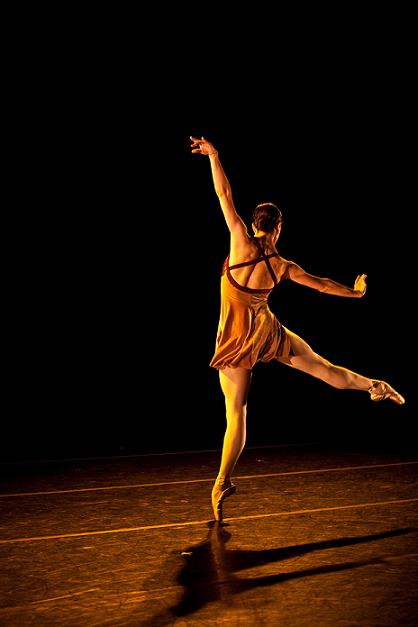
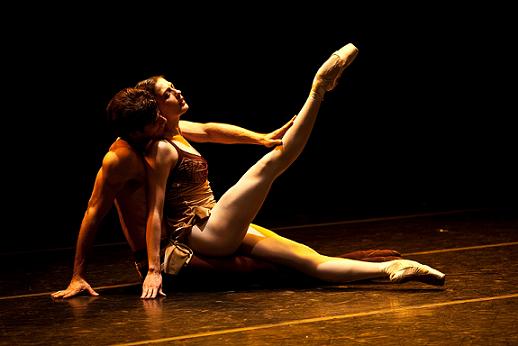
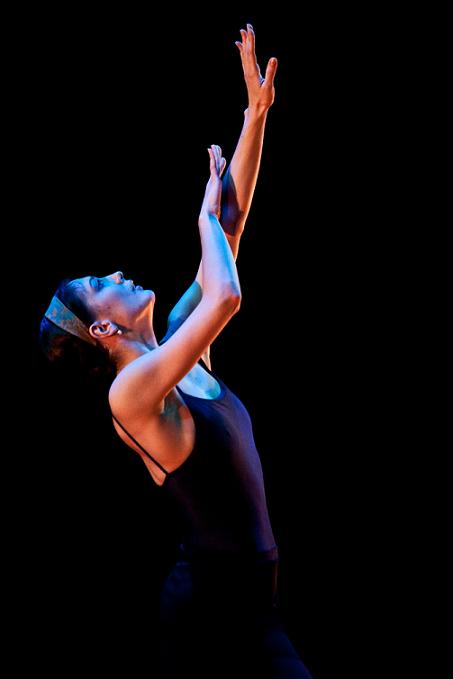
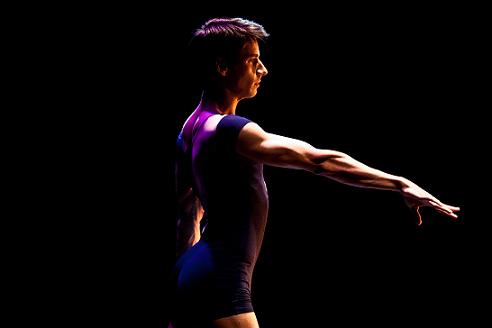
Here are some photos of Avi Scher’s first full season at Alvin Ailey theater, sent to me by the amazing ABT dancer-turned-photographer Matt Murphy. Visit Matt’s blog, and his photographer website.

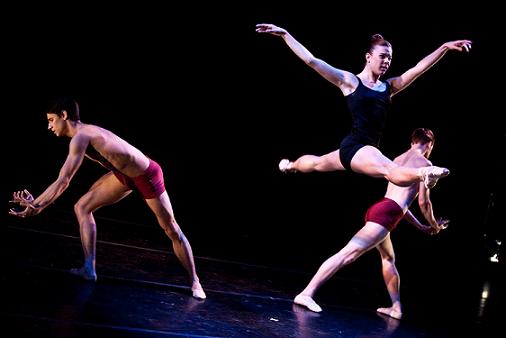
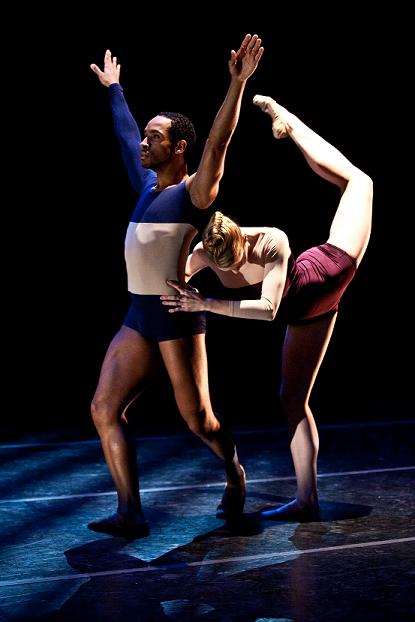
Savannah Lowery (from NYCB) who, for the first time, completely blew me away, flying over Ralph Ippolito (also from NYCB) and Eric Tamm (from ABT), in Touch.

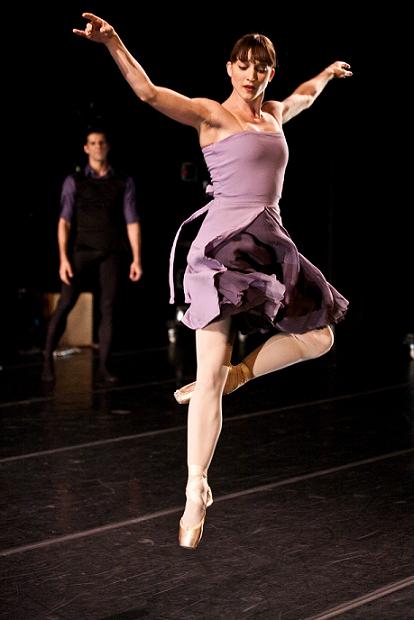
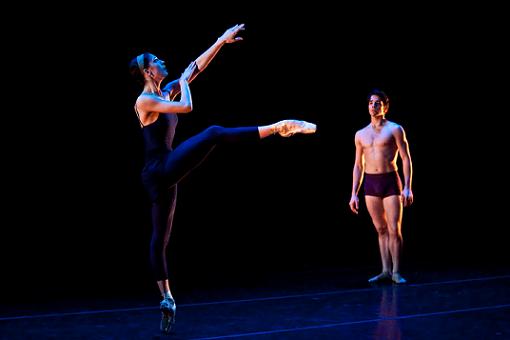
Ashley Bouder (NYCB principal), who replaced Sara Mearns, who had a minor foot injury. Marcelo Gomes (ABT principal, of course!) in the background. This was my second favorite piece of the evening, Utopia. It was interesting because as much as I love Sara Mearns and was disappointed I wouldn’t be seeing her, I couldn’t imagine this role being formed on anyone other than Ashley. There was so much quick-footed, high-spirited allegro dancing and Ashley is the queen of allegro. She and Marcelo were perfect together. She replaced Sara last minute and I can’t believe how quickly she learned that dance because the choreography was, like all of Avi’s choreography, rather complex and original.

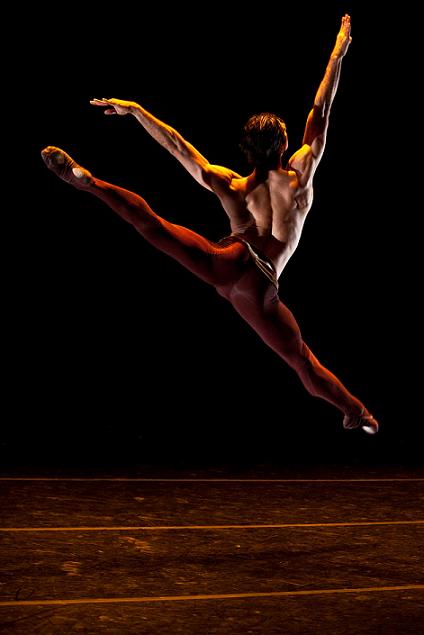
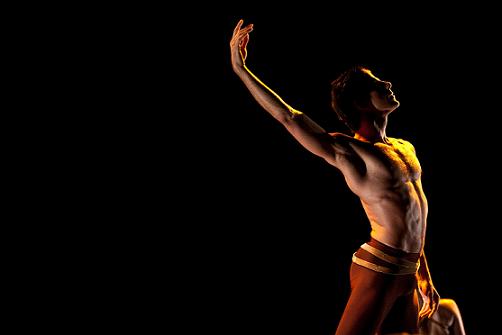
Marcelo in Mystery in the Wind, my favorite ballet of the evening. It was a neoclassical piece (Avi’s style ranges between neoclassical — like Balanchine — and contemporary), that reminded me a bit of Apollo, a bit of La Bayadere, with a main love story between Marcelo and Veronika Part, and three female dancers doing solo parts, and kind of acting as muses. In addition to Marcelo and Veronika I really loved watching Abi Stafford in this (I linked to her NYCB profile since I don’t have a picture of her for Saturday night). She had several solos, some of which were kind of sweetly folksy / flirtatiously tango-y, combined with these crazy fast balletic chaine spins across and around the perimeter of the stage. She did really well and she looked really beautiful. I brought my friend Alyssa with me, who doesn’t know much about ballet, and she said she could tell right away who all the big principals were (and she was correct in her guesses)– and Abi immediately caught her eye.

Marcelo again.

Veronika Part in that same piece. She was beautiful, it goes without saying. Every single part of her body makes such a perfect shape, my friend said, and she was so wholly into the character and the music (which is completely typical of Veronika!).

Marcelo and Veronika in Mystery again. I loved the central pas de deux – so sexy and passionate!

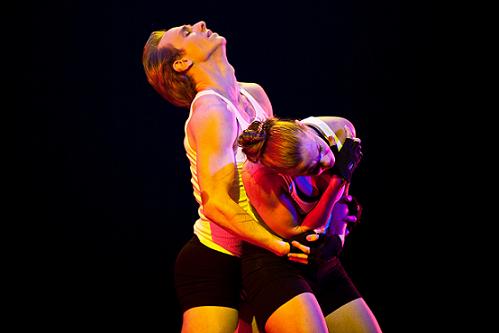
Another of my favorites: the “Our Love’s Defense” duet from Little Stories, with NYCB’s Christian Tworzyanski and, again, the kick-ass Savannah Lowery. Savannah has a very athletic body, she’s very muscular and toned, and she looked so good in these athletic costumes and in some of Avi’s more heavy-hitter choreography. (In this piece she and Christian have this fun, sexy wrestling match/ lovers’ quarrel.) I think more of the modern choreographers when they do work for NYCB should use her – Benjamin Millepied and Jorma Elo, etc. I think modern ballet suits her body and dance strengths more than Balanchine — I really felt like she came alive to me as an artist in Avi’s work like never before. And she’s a very good actor as well!

Veronika in Touch.

And with ABT’s Arron Scott in the same.

NYCB’s Ralph Ippolito in No Matter What. Ippolito is a corps member of NYCB and I’d never noticed him before, but he really stood out to me here. He’s very intent in everything he does, and he’s very good at using his body, his limbs, to express, to make meaningful, evocative shapes.

Ja’Malik and Victoria North in No Matter What.

The theater was completely packed on Saturday night, opening night, and I’m told it was the same at yesterday’s matinee, despite it being Easter. There’s one last performance of this short season tonight, at 8p.m. that I heard is pretty sold out as well. How excellent for this young choreographer!

Here are some of the many other reviews: Oberon’s Grove, the NY Times, Dance View Times.

AVI SCHER, VERONIKA PART, SARA MEARNS AND MARCELO THIS WEEKEND AT ALVIN AILEY THEATER!

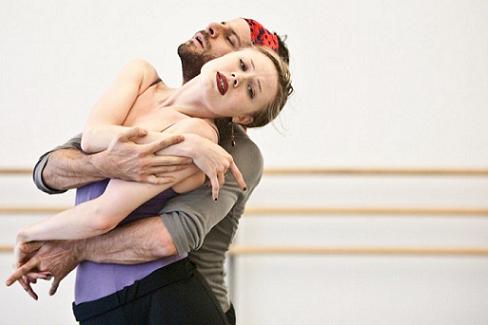
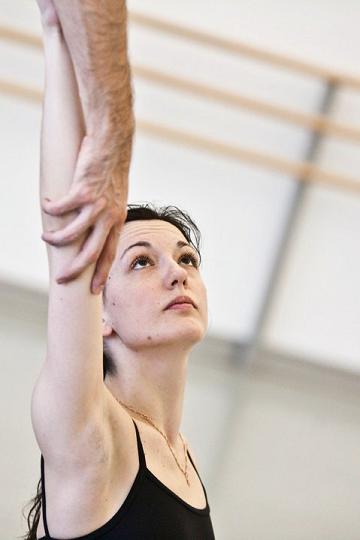
Isn’t this a gorgeous rehearsal photo of Marcelo Gomes and Sara Mearns, taken by the excellent Matthew Murphy! They are rehearsing for an upcoming performance of Avi Scher & Dancers, which you must go see if you’re in NY. I don’t know how ticket availability now stands, but this is an excellent opportunity to see some of the world’s greatest dancers up close in the small, intimate Citicorp theater in the Alvin Ailey studios. The show will star these two above as well as Veronika Part (below), and, amongst many others, Abi Stafford, Christian Tworzyanski and Savannah Lowery from NYCB, and Eric Tamm and Arron Scott of ABT. Readers of this blog already know how very much I love Marcelo and Veronika, and how I’ve been going on and on and on about Sara Mearns since last NYCB season. I have long been wanting to see Mearns partner with an ABT dancer — and no one more perfect than Marcelo! So, obviously, I can’t recommend this show enough. It’s this weekend, Saturday, Sunday and Monday.

(Veronika Part, by Matthew Murphy)

Here are the rest of Matt Murphy’s gorgeous rehearsal photos. And see Oberon’s Grove for photos by Kokyat of Veronika rehearsing with Arron Scott.

Visit the Avi Scher Facebook page for more photos and videos, and for more info on the show. For tickets, go here.

DEVIN ALBERDA IS HILARIOUS!


Headshot by Paul Kolnik, from NYCB website.

One of my Twitter followers, a law blogger go figure, sent me a link to this article, by Gia Kourlas in the NYTimes about how several ballet dancers, mostly from NYCB (apart from Maria Kochetkova and Daniil Simkin) are now actively tweeting. I found Alberda’s posts to be absolutely hilarious. Follow him!

Kourlas didn’t mention them, but David Hallberg, Marcelo Gomes, Drew Jacoby and Roberto Bolle are all on Twitter too. Roberto and Marcelo, unfortunately, don’t tweet much. Marcelo in particular cracks me up though. He started the account to tweet about ABT’s recent Culinary Pas de Deux. He had several tweets leading up to it: can’t wait for the culinary pas de deux, follow us as we tweet throughout, etc., then the two tweets the night of the event were something like: almost time for the culinary pas de deux!, then, wow that was a great culinary pas de deux! But no tweets throughout 🙂

It’s hard because dancers are so used to expressing themselves with their bodies, not their words and I know they’re encouraged to do this — blog and tweet — to reach out and try to gain new fans. My advice though: they have to make sure they remember they’re talking to a general audience, not an audience of already converted ballet fans, lest their posts be largely lost on most. They have to try to bring new people into their world, not exclude them with terminology that wouldn’t make any sense to an outsider. That’s why I think David Hallberg made the Winger so popular for the time that he was actively blogging there. He wasn’t just its biggest star; he had a way of communicating with people who don’t know everything there is to know about ballet, and of making them want to know more. I’ll bet he doesn’t have any dancers in his family and basically had to grow up doing that. His tweets are mostly about his travels guest starring all over the world.  His friend, Evan McKie, from the Stuttgart Ballet, who also used to blog on the Winger, is also on Twitter and it’s fun to keep up with him as well.

And those are only the ones I know of; there are probably many more. I don’t have time to search for people’s Twitter accounts, but just do as Kourlas suggests if you want to find them (or any other dancers): Google their name + Twitter and you should find them if they’re on there.

By the way, speaking of ABT’s Culinary Pas (see some photos of that here), my friend happened to go (she was invited by someone else, a patron, and didn’t even know it involved ABT until she got there!) She had a blast, said Marcelo and Craig Salstein (the organizers) were very nice, Craig in particular was very well spoken, which I’ve noticed before, that Marcelo and Gillian Murphy danced some duets from Dirty Dancing, including the mambo scene (said ballet dancers can’t move their hips properly for Latin dance 😀 ), and that Blaine Hoven was cutting up a rug on the dance floor along with Sascha Radetsky. I hate going to parties like this but love hearing about them afterward.

SMALL WORLD: BORREE'S CORNERS, ARIZONA!

You guys, last week I received this really sweet email from a woman who read my novel. I figured ballet lovers, particularly fans of New York City Ballet, would appreciate it:

“Hello.  I hope you don’t mind me writing.   But  as your email address is listed, I shall write you.

“I first came across you by cruising the Internet and bought your book, Swallow, because my dad’s family, Borree, lived in Florence AZ.  There is even a Borree’s Corners in AZ where the family owned a gas station and a grocery store.

“My thoughts about  your book.  I love NYC, and I have suffered from chronic anxiety all my life til treatment with medication.  So your  book was really greatly appreciated.  I do wonder how you settled on using Florence.

“You may recognize the last name as my mother loved ballet and gave my sister, Susan Borree, ballet classes.  Susan was with many different companies and her daughter is Yvonne.

“Out here on the other coast, I have a scholarship to benefit art students.  The scholarship is in honor of my mother and my sister who gave their children art and ballet lessons while their families faced great difficulties.

“Sincerely,
Jeanine Borree”

How coincidental — I love Yvonne Borree! And how much do I love that her aunt wrote me 🙂 And so excited to learn that part of her family hails from Arizona — and the same small town I wrote about no less — and that there is a Borree’s Corners, Arizona, which of course I will have to look for the next time I am out there. And I love that they owned a gas station and grocery store. I also love that someone who’s suffered from an anxiety disorder appreciated my book, which centers on a specific anxiety disorder called Globus Hystericus, or Globus Sensation. I’ve heard from some people who have either Globus or problems swallowing that emanate from another condition that they’ve had a hard time reading Swallow, because it’s too close to home.  So, I’m very glad to hear someone with another kind of anxiety was able to read and appreciate it.

When I asked Ms. Borree if I could mention the email on my blog and she wrote back, she added that her sister, Susan Borree (Yvonne’s mother) had danced with ABT and Jerome Robbins Ballet. I came to ballet too late, though, to see her dance with either company.

Anyway, I just wanted to share this with my readers since I know so many of you are NYCB fans:)  Sweet story, and small world, right!

CORELLA BALLET OPENING NIGHT NYC


Photos top to bottom: Angel and Carmen Corella in Solea, Herman Cornejo and Adiarys Almeida in Sunny Duet, and Corella Ballet cast in Christopher Wheeldon’s DGV. All photos by Rosalie O’Connor.

Last night Corella Ballet Castilla Y Leon made their U.S. debut. It was one of the best evenings I’ve had at the ballet since ABT ended their Met season last July. Angel Corella (beloved ABT principal and founder of this company) is known of course for his bravura dancing, his ability to form a character on the stage even in the few storyless ballets ABT does, his passion, his charisma, his sweetness, his charm, but mostly of course his virtuosity. And even though he himself only danced in two pieces last night (with only a small duet in the Wheeldon), the whole evening had that same overall brilliance. It’s like he managed to find a company of dancers exactly like himself. I don’t know how he did that because I thought there was only one of him, but even the corps members seemed to have all of those qualities.

The night began with Angel’s own String Sextet, his first piece of choreography, set to Tchaikovsky’s String Sextet “Souvenir of Florence.” It was very allegro, very fast-paced, with lots of brilliant partnering — a ballerina would spin at lightning speed into her partner, they’d go into assisted pirouettes or a supported arabesque penchee (with the ballerina’s legs always in a perfect split), another would jump into her partner’s arms and he’d catch her in a variety of positions. Kazuko Omori and Yevgen Uzlenkov completely blew me away, as did all of the couples but those two in particular. It’s like, where did he find these people and how did I not know they existed?! Omori is a brilliant allegro dancer but she also had the qualities of an adagio ballerina, with lots of expression in her upper body. Then, in the third movement, Joseph Gatti blew everyone away with his bravura, Angel-esque solo replete with jetes and fouettes and crazy high tornado jumps. The crowd went wild for him, as expected. Both the duets and solos and the ensemble parts were equally captivating. Toward the end everyone did a fish dive in unison and it’s so sweet. It was like all the best parts of classical ballet — or at least my favorites 🙂

Next was Walpurgisnacht, by Leonid Lavrovsky, which reminded me of the Corsaire pas de trois between Ali the slave, Conrad the pirate, and ballerina. Again the beautifully expressive, lightning-footed Omori and high jumping Gatti starred, and the stunning Kirill Radev danced the part that reminded me of Conrad. He had this series of scissor jumps but the splits were forward-facing, straddle position, rather than long-wise, like usual. And then he’d do these multiple pirouettes with these seemingly impossible held-out endings. The crowd was nearly screaming with applause, which doesn’t often happen in New York.

Then was Sunny Duet, from 1973, by Vladimir Vasiliov and Natalia Kasatkina, danced by our Herman Cornejo and Adiarys Almeida. Everyone applauded for Herman when he took the stage 🙂 This ballet was sweetly romantic, like man in adoration of his woman, with Arabian / Bayaderesque styling. Herman really blew me away last night with his partnering. The pdd began with this extended overhead lift where he looked up at her for what seemed to be minutes, in the end making it into a single-handed lift. I’ve always thought he was a brilliant soloist but that he had some trouble in the partnering, but not last night! He was also very dramatic, and, at one point, where they go into their bravura solos, he played off of her, giving her this “oh yeah, well this is how I feel!” look before doing a bunch of crazy turns or jumps. The original, archived music, by Arno Babajanyan, was played on tape. There was a note in the program stating, “The company is committed to the revival of worthy pieces that have had an important influence on classical ballet. The piece will be performed as it was originally created by the legendary Russian choreographers Natalia Kasatkina and Vladimir Vasiliov. The artists will be performing to Arno Babajanian’s archival recording, as this specially commissioned score no longer exists.”

Next was Solea, choreographed by Flamenco dancer and choreographer Maria Pages, and performed by Angel and his sister Carmen. I was happy to see Carmen back onstage; I was sad when she left ABT. This was an absolutely beautiful combination of ballet and Flamenco, though I often see Paso Doble in what people call Flamenco, being a ballroom person — still not sure of the difference… For example, at one point, they would come at each other, she swirling her long skirt about, cape-like, he coming at her like a matador — that’s Paso — but instead of rushing toward each other, hips thrust forward, they’d do chaine spins — she on pointe, spinning right past each other, balletically. Then they’d approach each other again, she’d retreat quickly back with supercharged bourrees. I love it! I’ve always wanted to see a Paso Ballet, but most ballroom dancers don’t seem to know how to choreograph such a thing, even if they have extensive ballet background. Then, during the Flamenco taps (which you can hear in the recorded music), Angel would do his trademark lightning fast fouettes, or else entrechats, or just crazy fast footwork; and she’d do the same on pointe. Flamenco taps on pointe! And each of them had the perfect Flamenco styling. And there was a kind of back and forth “competition”, which I guess is called “Bulerias” in the world of Flamenco, which was kind of like a set of “variations” or solos in ballet, with him doing the trademark jetes around the perimeter of the stage and she responding with her own thing. And at the end, they came together and she stood behind him and he wrapped her arms around him. Sweet. Audience gave them a standing ovation.

Last was Christopher Wheeldon’s DGV: Danse a Grand Vitesse, which was I think the most intense, spellbinding Wheeldon ballet I’ve ever seen. It was premiered in 2006 by the Royal Ballet and was nominated for an Olivier Award. Set to music by Michael Nyman, which was commissioned by the French railway company TGV in 1993 to commemorate their opening of a new high-speed train line, there were several large pieces of twisted metal in the background — between which the dancers would weave in and out from time to time. The music had a very “locomotive” rhythm to it and the whole thing — both music and movement — had a kind of eerie feel to it. Movement was trademark Wheeldon — very modern, lots of angularity, sharp jagged lines, unique partnering. Women were often carried overhead and upside down with their legs in a split or sideways with their knees bent outward and toes together, creating an intentionally awkward shape. At times the music would stop completely while the dancing continued — creating some of the most intense moments. This is the first time the piece has been performed outside of the Royal, the program notes say, and, with its intensity, it was a perfect choice for this company.

So, the evening was a celebration of classical ballet, fusing classical ballet with traditional Spanish dance, and contemporary ballet, which seems to be what this company is about. Excellently done!

There’s one other piece on the program, Epimetheus, which will show Saturday afternoon. It’s by a young choreographer / dancer with the company, Russell Ducker. Will report back as soon as I’ve seen it!

HELP, ALICIA ALONSO IS FLYING THIS PLANE!


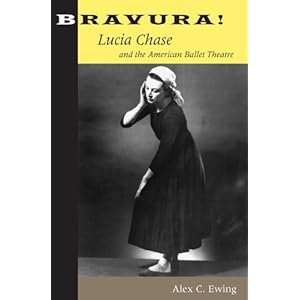
I’ve been reading this book, which was given to me by the publicist for purposes of review. It’s by Alex Ewing, about his mother, Lucia Chase, who basically founded what is now American Ballet Theater.

I’m about halfway through it now (I tend to read non-fiction a lot more slowly than fiction) and it’s very informative and very entertaining in places. I thought this following passage was particularly amusing. It’s 1950 and ABT (then called Ballet Theatre) is embarking on its first European tour when, unexpectedly, the Korean War breaks out, making a mess of, amongst other things, international travel:

“…Although the Air Force had officially agreed to provide the transatlantic travel, suddenly all government planes were diverted to the Pacific. The company took off instead on a commercial flight to Brussels, then proceeded on to Frankfurt where army buses transported them to Wiesbaden for their first performances. When it came time a few days later to fly behind the Iron Curtain to Berlin, an outpost city occupied by the four Allied powers, the approach into Tempelhof Airport had to be made through ‘the corridor,’ a narrow strip between Russian gun emplacements. The Russian government, in order to prevent spying on the surrounding sector that it controlled, required all arriving flights to come in at frighteningly low altitude, and the dancers were told to don heavy parachutes for the flight into Berlin.

“As recounted by Charles Payne, then editor and publisher of the Ballet Theatre Annual, the company was flown ‘in a transport plane equipped with bucket seats suspended from the inner walls, with parachute tracks leading to the escape hatches.’ Understandably, everything was much less formal than a standard commercial flight. The pilot even invited the dancers to visit the cockpit a few at a time, and at one point Nora Kaye emerged from up front, greenish-white in the face, to scream back at the others, ‘Do you know who’s flying this plane? Alicia Alonso! Do something about it!'”

Can you imagine?!

The great Alicia Alonso is turning 90 this year and ABT will honor her during the Met season, on June 3rd. ABT turns 70 this year. Image of Alonso above taken from here.

NYCB CLOSES ITS FIRST CLASSICAL SEASON WITH BALANCHINE AND ROBBINS


(photo of Liebslieder Walzer by Paul Kolnik, taken from Washington Post review).

New York City Ballet is closing out its Winter season — and first ever Classical season — this week. Tomorrow begins Balanchine’s masterpiece (imo), Jewels (which continues through Sunday); last week were two programs of mixed rep, which included Balanchine’s Liebeslieder Walzer and Tschaikovsky Piano Concerto No. 2, and Jerome Robbins’s Dances at a Gathering and West  Side Story Suite.


Making his debut in Liebeslieder was corps member Justin Peck (headshot above by Paul Kolnik, from NYCB website); he danced the part that Nilas Martins is dancing in the photo at top, along with Jennie Somogyi (who is also in that photo). I thought they really did well, and they stood out the most to me of the four couples.

This ballet is divided into two sections: it begins with the ballroom section where the women are in ballgowns and dancing in regular heeled ballroom shoes, and the section section where they are in long skirts made of tulle, and toe shoes. The men remain in tuxedos throughout. Balanchine has said that in the first section, it is the couples who dance; in the second it is their souls.

And that sentiment is really beautiful. But I don’t see a real difference, except for the obvious — the women’s costumes and shoes. I still thought each section was lovely though, particularly the opening ballroom section, but that could be because I’m trained in ballroom.

Critics have also said that each couple is supposed to represent a man and woman at a different stage in their romantic lives (one couple was supposed to be young love — which I thought would be Justin and Jennie; another more mature love, etc. — so I thought Darci Kistler and Philip Neal). But I didn’t really see that — I thought at points Justin and Jennie represented young, sprightly love, but then at other points their movement is slower and more deliberate and less scoop-me-off-my-feet — and at one point he picks her up and carries her horizontally, as if she’s collapsed, either from fainting or from sleep or perhaps sickness? It’s a beautiful lift whatever it means. And then at points Darci will run playfully and let Philip chase her. It’s sweet and made me fall in love with them momentarily and become involved in their story. But it didn’t seem then like they were this more mature couple. Not that you can’t run and jump and be excited and playful if you’re not “the young ones” of course, but I mean, the couples didn’t really seem different to me. And the fact that I couldn’t discern any particular story behind any of their actions made me less involved in the ballet than I wanted to be. But I still found the movement and the music (Brahms Opus 52 and 65) relaxing and engaging. Maybe I need to see it a few more times.

Every time I see Tschaikovsky Piano Concerto No. 2 on the program I think I’ve never seen this Balanchine / Tchiakovsky piece before, and then once it begins, I realize it is the ballet ABT calls Ballet Imperial. I think ABT has a set though, which resembles a palace, which makes it seem more “imperial.” At NYCB the stage is bare. This is the ballet with all the beautiful brises for the main man — the jumping from side to side with many beating together of the feet in the air. Here, that man was Stephen Hanna and he did an excellent job. Teresa Reichlen and Kathryn Morgan were the female leads. Hanna was most memorable to me though. Hanna partnered Reichlen very well, and I’m thinking he and Jared Angle are probably two of the strongest male partners in the company.

The Dances at a Gathering production on Sunday afternoon (Feb. 21) was the best I’ve ever seen of that ballet. SLSG favorite Gonzalo Garcia (!) was the guy in brown, and he did an excellent job. That character really sets the ballet in motion as, at the end of his opening solo, he looks out with a bit of nostalgia at the stage, surveying it, kind of preparing the audience for all of the characters who will appear on it — who seem to be people from his life, his memories. It’s like he’s taking you on a journey with him and Gonzalo set that up perfectly. And then everyone else was just so on! Maria Kowroski was the carefree, independent girl in green cutely shrugging off male onlookers, Jenifer Ringer and Abi Stafford were the younger, frolicking girls; when Jenifer partnered with Jared Angle those two did some of those lifts with the most sweep I’ve ever seen — the audience exclaimed practically in unison.

And Jared Angle was stunning with his tour jetes and his series of corkscrew jumps flowing right into the Russian folk-steps afterward. He is definitely one of the best men overall at NYCB right now — in terms of his technique, his form, his ability to both partner strongly and dance those bravura solos perfectly. You don’t think of him as a bravura dancer, and he’s not really — he’s more of a great partner, which is probably why I’m just now recognizing his brilliance, during this classical season where strong partnering is essential for being a successful romantic lead.

Sara Mearns was brilliant (again) as the dreamy, pensive woman in mauve, and I realized at one point what it is that makes her a favorite of mine. She was dancing alongside two other women — all three were partnered by men and they were all doing supported slides with the women in a dipped position, the men sliding the women across the floor like that. Well, the two other women immediately brought their free arm down at the beginning of the slide and held it in that position, which was pretty and created a nice line. But Sara brought hers down slowly and made a fuller, kind of half-circle motion, nearly brushing the floor with it. She doesn’t seem to strike poses so much as she is always moving and I think that’s what makes her so captivating — she’s always doing something, carrying out the line and extending the shape, and embellishing the music.

As for the other dancers: Antonio Carmena was very on with all of his jumps and turns, as was the fast-moving Megan Fairchild, and Jonathan Stafford and Amar Ramasar stood out in their roles as well. Amar always looks good in those strutting walks and that Russian folk-like movement Robbins uses in many of his ballets.

And that day ended with West Side Story Suite, which the audience went wild over. A woman behind me exclaimed that it was better than what she’d seen on Broadway. This ballet is always a romp, though I think it starts to lose some of its thrill the more times you see it. Still, I always love Andrew Veyette as the leader of the Jets and watching Georgina Pazcoguin do all those gorgeously high kicks and belt out the tune to America. I can’t imagine ever seeing anyone else in that role. And of course she gets loads of applause at curtain call. Benjamin Millepied danced Tony, which I’ve seen him dance before. He did fine, as always, but I wondered what Gonzalo might be like in this part?

Okay, on to Jewels!

KINGS OF THE DANCE SHOWS HOW DANCER-RICH BUT CHOREOGRAPHY-IMPOVERISHED BALLET IS IN THE BALANCHINE-INUNDATED U.S.


Photo of Desmond Richardson by Andrea Mohin, taken from NYTimes.

So, “Kings of the Dance” made the New York stop of its international tour this weekend at City Center. I was there Friday night. The last time this show toured here several years ago (it is produced by Russian dance promoter Sergei Danilian) there were only four male dancers — Angel Corella, Ethan Stiefel (both of American Ballet Theater), Johan Kobborg of the Royal Ballet in England, and Nikolay Tsiskaridze of the Bolshoi. This year, there were many more dancers and Tsiskaridze was the only one who returned (and, funny, but I totally didn’t recognize him). The others were: David Hallberg, Marcelo Gomes and Jose Manuel Carreno from ABT, Joaquin De Luz from NYCB, Guillaume Cote from Canada, Denis Matvienko from Ukraine, and Desmond Richardson from NY-based Complexions Contemporary Ballet (So You Think You Can Dance fans may recognize his photo above, since he has guest performed on the show a couple times).

What I liked about this program the last time it toured here was that there were fewer dancers, and that way you kind of “got to know” them better, by seeing them each perform several different pieces. Here, you basically only saw many dancers once, and a few twice. If you weren’t familiar with them (as my two friends who came with me weren’t), you could easily get them confused. They played a short movie at the beginning where each dancer (besides Desmond Richardson; I think he may have been a late addition to the American tour) talked a bit and you saw them dance. Jose’s cute Cuban accent seems to have gotten more pronounced 🙂 — I think he did it on purpose, knowing how many female fans would be in the audience! David’s voice somehow sounded a bit deeper than it does in person. Matvienko (who, for ballroom dancers, looks A LOT like former US champ Andrei Gavriline) and Tsiskaridze spoke in Russian and their words were translated.

What I loved about this program though was that there were so many solos that exposed us to so many different choreographers whose work I’d never seen (and some of whom I’d never even heard of) before. Every company in this country is obsessed with Balanchine, so it’s a wonderful wonderful change when we actually get a taste of something else. But more on that in a moment.

As with every Danilian production, there were lots and lots of Russians in the audience, and I think Desmond Richardson and Joaquin De Luz in particular grew a new fan base. Poor Joaquin — well, maybe: after the performance and during intermission I kept hearing, “That little guy was great!”, “That little guy was just incredible,” “Where can I see that little guy dance?” So, Joaquin is the great “little guy” whom everyone is seeking out now. And everyone went wild after Richardson’s solo, Lament, choreographed of course by Dwight Rhoden, an absolute master at presenting his friend’s spellbinding combination of gracefulness and masculinity. My friends were floored, along with the rest of the audience judging by the exclamations.

After the movie, they opened with Christopher Wheeldon’s For 4, for four dancers, which is a carry-over from the last performance. On the night I went it was performed by Matvienko, Carreno, De Luz, and Cote (but the cast varied each night). It’s an adagio lyrical piece, as with the vast majority of Wheeldon’s work, and I wished there would have been some more allegro parts with bravura solos. But that’s just not Wheeldon’s thing.

Then, after intermission, we saw a solo performed by each man, ending with a drop dead gorgeous duet danced by Cote and Gomes choreographed by French choreographer Roland Petit, from his Proust ou les Intermittances du Coeur. The men were dressed in skin-toned unitards, which almost made them look naked, and the duet to me seemed to be about a man obsessed with his reflection, or another side of himself, as each’s movement was mainly a reaction to the other’s. But at some points there was some really beautiful partnering, some really beautiful lifts and it seemed like a man dancing with his soul. Breathtaking!

Anyway, other highlights of the solo section were: a really beautiful solo for Marcelo choreographed by Adam Hougland, called Small Steps, which was like lyrical iron-pumping — a series of beautiful poses showing off his musculature interspersed with flowing lyrical movement; a beautiful, lyrical piece danced by David Hallberg from Frederick Ashton’s Dance of the Blessed Spirits; a fast, fun, more virtuosity-heavy solo by David Fernandez for Joaquin De Luz called Five Variations on a Theme; Jose Carreno dancing a gorgeous adagio to Ave Maria — a modern version — by Igal Perry (which I’d seen before and fell in love with it all over again); and Rhoden’s Lament for Richardson, which, like Marcelo’s solo, reminded me of lyrical iron-pumping (which I mean in a good way of course) highlighting as it did that seemingly incongruous combination of male elegance and virility.

The only ones that didn’t really work for me well were Boris Eifman’s Fallen Angel danced by Tsiskaridze, which I think just didn’t have enough context, and Vestris by Leonid Jakobson danced by Matvienko, which was by turns a comical and bravura piece first danced by Baryshnikov in 1969. I thought Matvienko was a lovely dancer with really beautiful lines who could really deliver on the jumps and especially turns, but I just think it needed to be better acted because there were some places where it almost seemed like he made a mistake, and then you realized it wasn’t a mistake by the dancer; it was supposed to be the character who humorously screwed up. I heard Baryshnikov was excellent and I wish I could see a video of that.

Then, we saw Spanish choreographer Nacho Duato’s Remanso, which I’d never seen live before, but saw in a video performed by ABT. It involves a wall with three dancers interacting with each other around it, climbing over it, looking around it. It’s sweet, flirtatious in places, and loving and romantic. The night I saw it it was danced by Gomes, Cote, and Hallberg, though this cast alternated each night as well.

The program ended with a bravura “Grand Finale” with each dancer coming out and doing jumps and turns, and all the big fancy “male things” of classical ballet.

But the thing I kept thinking throughout was, wow, that’s really cool choreography, who’s that choreographer? Oh,  I’ve never heard of him, or, oh I’ve heard of him, how cool that I finally got to see something by him! I mean: Roland Petit, Igal Perry, David Fernandez, Adam Hougland, Nacho Duato, Leonid Jakobson. We NEVER get to see choreography by these people here. Petit is a major choreographer. As is Duato (we really see his choreography only when his own company tours here, infrequently), ditto for Eifman, and the others I’ve never even heard of. Why don’t we see more variety here? Why don’t we see more Mats Ek and Pina Bausch and John Cranko? Why do we have to drown in Balanchine over and over and over again? Why do dance companies think that we want to see Balanchine? Why do they think Americans are into this man? As far as I’m concerned, his only truly great work is Jewels. The rest, okay, his footwork is more intricate and there are certain subtle little embellishments in the variations, but really, what was so great about his ballets in their entirety? What was so great that we have to be so completely inundated with him here in the US? I mean, it makes sense that NYCB does his work because they were founded by him but every other major company in the US is likewise obsessed – San Francisco Ballet, Miami City, Boston, Pennsylvania, even the Kirov and POB when they tour here they think we want more of this crap. And whenever ABT doesn’t do classical, there seems to be an overload of Balanchine. Does anyone consider that maybe, just maybe, we might get bored? That he doesn’t speak to younger generations of Americans AT ALL? Did someone tell POB and Kirov that Americans only understand Balanchine so you have to do Balanchine when you come here? I think ballet is dying in this country because of every artistic director’s completely inscrutable obsession with this boring boring man.

Anyway, I greatly thank Mr. Danilian for allowing Americans to see something else for a change.

For a completely different perspective, see Macaulay’s review.

MORE BEAUTIES


So, toward the end of last week I saw two more casts of Sleeping Beauty in New York City Ballet’s production. Above are the beautiful Kathryn Morgan as Aurora and Tyler Angle as her Prince Desire (Paul Kolnik is the photographer). Below are some photos of the other couple I saw, Tiler Peck (both she and Kathryn were making their Aurora debuts), with Gonzalo Garcia, albeit not from this ballet.


(in Four Bagatelles, photo by Paul Kolnik)


(and in the Christopher Wheeldon / Martha Wainwright collaboration over the summer, photo from NYTimes by Andrea Mohin; I like this photo because I think it shows each of their personalities well).

And then last week, I saw Ashley Bouder and Andrew Veyette.

I’ve been thinking about who I thought was best in what role but it’s actually really hard to do that. I honestly ended up liking everyone, though there were definite differences.

I do have a lot to say about Gonzalo Garcia though. I LOVED him as Prince Desire — he really melted me, he really completely stole the show that night and I feel like I’m not ever going to like anyone quite as well in that role now. I mean, you just have to see him in a classical ballet, as the romantic lead, and you realize why San Francisco audiences were so upset when he left SFB for NYCB a couple years ago. Some of those SFBallet fans were really devastated when he left. And I think it’s been such a puzzle to those fans that New Yorkers haven’t really fallen for him the same way. And I think it’s because he hasn’t had the chance to shine because NYCB is so Balanchine-heavy. He needs roles where he can act and become a character. He’s such the quintessential romantic prince.

You can really tell how differently he’s trained than the other NYCB dancers, who’ve nearly all come from SAB and been trained on Balanchine’s non-actable abstract ballets. I felt like with Gonzalo I was seeing someone from ABT — mainly Angel Corella (in terms of the body type, dramatic style and boyishly handsome face). The way he’d hold onto the music, draw it out while it crescendos, by for example in the vision scene holding out a finger to the princess and then leaning back, then looking out to the audience — not AT the audience but in the audience’s direction — to show how enthralled he is, how much he wants to catch her, all before then turning and running toward her. The other two — Tyler and Andrew — they didn’t do all that. They just kind of looked toward her standing more and more toward the tips of the toes, ready to run toward her when the music told them to. Gonzalo’s way was so much more Petipa and Tchaikovsky and Bolshoi and Romantic Russian and all that, and it might all seem overly melodramatic to audiences who aren’t used to that. But that’s what I’m used to with ABT — and that kind of stuff makes me swoon!– so that’s why I think I loved him so much. But I’m wondering what others who saw this cast thought?

And Gonzalo just knows what’s expected of him, as the prince. Later, when he went to do that crazy series of jetes, he was rested up and ready and he nailed them like I’ve never seen him nail anything. I’ve never seen his legs straighter, in perfect splits, and the whole way around the perimeter of the stage, without tiring. And it’s like he knew that was a very important part, and he had to do them perfectly because that’s just what the romantic hero does — that’s the way he shows his love for the princess, and that he’s worthy of her. The other two obviously took them seriously (because they’re crazy hard, you have to take them seriously), but it just was more of a difficult feat, instead of having the same meaning. You know what I mean? Like he looked out all across the stage wistfully, and then he just took off flying around it. It gave it a different meaning than just flying around.

It makes me wonder though if contemporary audiences understand that, or appreciate it. Or whether they prefer for the emotion to look more “natural”? I’m not saying Gonzalo was better than the other two, just different.

I wonder what Joaquin De Luz was like, since he’s not SAB trained either. Did anyone see him?

As far as partnerships, Kathryn and Tyler were my favorites. Tyler had a few flubs on some of his solo variations (but I still love him!), but he was always the perfect partner, he was always solid when supporting her. And the series of fish dives in the wedding pas de deux were some of the most breathtaking I’ve ever seen. Her legs were pointing completely up toward the ceiling! Magnificent! And the final hands-free fish dive was picture perfect.

I liked all of the Aurora interpretations, but they were different too. Kathryn was the most princess-like, the most regal, though that may just be the way she looks. She just kind of looks like royalty! Ashley and Tiler seemed more “real girlish”  – all smiles and sweetness and awe at the world and their cute suitors.

The rose adagios were all near perfect. (ABT’s Sarah Lane is still the queen of the balances to me — it seems like she could hold them for hours.) Kathryn had the most absolutely gorgeous extensions. Do I have to giggle every time Robert Fairchild comes out leading the cavalcade of suitors? I loved Craig Hall as the “African prince,” – I don’t know what exactly stood out about him but something did. And even though it wasn’t a dancing role, I loved Henry Seth as the King; he acted it really well. Chase Finlay was lovely as Gold in the wedding scene – -he’s a really beautiful dancer with exquisite lines. Everyone’s talking about him being the next romantic lead. I loved tiny Erica Pereira as the fairy of eloquence and Ana Sophia Scheller as the fairy of courage, thought Faye Arthurs and Adrian Danchig-Waring were brilliant as The White Cat and Puss in Boots, and Daniel Ulbricht is the quintessential gymnastic court jester.

And there’s NEVER been a better Carabosse than Georgina Pazcoguin! Nor has there ever been (or, perhaps, could there be) a better Lilac Fairy than Sara Mearns. I love how she arches her back so luxuriously and opens up her chest. And the rich, full-out port de bras. Such beautiful expansiveness, that, with her beatific face, makes her perfect for this angelic role. She reminds me of Veronika Part.

Okay, that’s all I can think of, for now!

This week begins the Swan Lakes. I’ve never seen Peter Martins’ version, so I’m really excited. In particular, I’ve heard wonderful things about Maria Kowroski as Odette and I’m psyched for Stephen Hanna’s debut as Prince Siegfried!

MARIE OSMOND NAMED WOMAN OF THE YEAR BY NEVADA BALLET THEATER


Nevada Ballet Theater, which recently held its annual gala in Las Vegas, honored former Dancing With The Stars contestant Marie Osmond as its “Woman of the Year.” Osmond credited her DWTS friend Wayne Newton with convincing her to start her own show in Vegas, and joked that though Donny did better than she on DWTS, he’d never be “woman of the year.” Also at the gala was ABT’s regal Cynthia Gregory, who, apparently recently moved there.