
MAURICE KAPLOW’S FAREWELL PERFORMANCE WITH NYCB


Thursday evening longtime New York City Ballet principal conductor Maurice Kaplow gave his final performance with the company. I had never been to a conductor’s farewell before, and, of course, part of what made this extra sensational was that the newishly mobile orchestra pit (photo above) was raised to stage level for part of the program.

There were four pieces in the program: Melissa Barak’s recently premiered Call Me Ben (the only piece Kaplow didn’t conduct), which was followed by Euryanthe, the Barber Violin Concerto, and ending with Western Symphony.

Euryanthe was only an orchestral piece – no dancing, by Carl Maria von Weber. When Kaplow first took the podium, everyone cheered, which grew into a standing ovation as the orchestra pit rose. One thing I didn’t realize (we’ve only seen the pit rise once before, during the first NYCB program following the Koch theater’s renovations last year) was that the conductor can’t stand at the podium while the pit is rising and falling; he must step down into the musicians’ area. When the pit was finally level with the stage and he climbed up to the podium, he looked out toward the applauding audience and took a grateful bow. Euryanthe was really beautiful, with a lovely, almost sentimental (given the occasion) violin section, followed by an exciting drum-heavy climax. It was nice to see the orchestra for once, and to be able to focus on the music.

Peter Martins’s Barber Violin Concerto really blew me away. I’d never seen it before, and I have to say it’s now one of my favorites of his.


Pictured from front to back: Megan Fairchild, Sara Mearns, Jared Angle, and Charles Askegard. There are two couples in this piece – one a classical ballet pair, the other a modern dance duo, and at first they dance each with their rightful partner, then the two members of the modern couple break apart and dance with the opposite sex ballet dancer. When I interviewed So You Think You Can Dance’s Billy Bell a while back, he’d laughingly said something to me I found funny, that as a hopeful choreographer he sought to “break” ballet dancers, meaning he wanted to get them to loosen up, not be so rigid and controlled with such straight, upright posture, and get them to really move. This piece reminded me of that. At first Sara Mearns’s classical ballerina in pretty satin pointe shoes wants nothing to do with this crazed barefoot Jared Angle, but eventually she realizes he’s not so bad and they do a quite nice pas de deux together.

Same with Megan Fairchild and Charles Askegard, except choreographically they were more fun, and Megan totally blew me away and made me think she is really a modern dancer. She was the most compelling person onstage and I couldn’t take my eyes off her, despite the fact that one of my big favorites, Sara Mearns, was up there with her. Megan looked like a real Paul Taylor dancer but even more stunning. Her character really taunted Charles Askegard’s classical danseur, jumping on his back, wrapping her flexed feet around his middle, darting in between his legs, really kind of climbing all over him. He looked tormented, then eventually relented and they danced a pas de deux together too. Interestingly, people giggled throughout this part – where Megan’s modern girl is taunting Charles’s classical man –  and the critic next to me who’d seen the ballet many times before said he’s never heard people laugh at that section, that he didn’t think it was supposed to be amusing but more raw. Maybe it was because of their size difference — Charles Askegard is the tallest dancer in the company (I think he’s 6’4) and Megan’s this tiny little thing who looks rather doll-like. I found it cute and flirtatious and now I don’t think I’d like it if I saw it done more raw, though I’d love to see other dancers do it. I’d love to see this ballet again.

Also, as the title of the piece would imply, there’s a really beautiful violin solo (played by Arturo Delmoni), where the violin almost sounds like a human voice.

Last on was Balanchine’s Western Symphony. Andrew Veyette danced the male “Rondo” role and after seeing Robert Fairchild in this role last week I thought I’d never be able to see another dancer do that part. But, whoa, Veyette completely floored me. He was on fire as he kicked his heels up high in the air, sexily do-se-doed toward Teresa Reichlen (who was stunning as well as the female lead in that section), then whipped her off into the wings where he pretend kissed her. She’ taller than he is and at first I thought they weren’t a good match, but they kind of played up their height differences. I loved it.

As usual during the curtain call, the maestro came out onstage and took a bow. But of course this time he didn’t merely motion down toward the orchestra, directing the applause at them, but took the stage alone, and, like the retiring dancers, was greeted by a row of dancers bearing bouquets. Eventually, the entire orchestra came up bearing flowers as well. Peter Martins came out onstage and hugged him. Very sweet. Then, Martins led the orchestra (joined by the audience) in singing “Happy Birthday,” so apparently it was Kaplow’s birthday as well. He’s been with the company for 20 years. I’ll miss seeing him in the house.

Photos by Paul Kolnik.
MISSING ARIZONA


I haven’t been to Phoenix since early 2001 and I’ve been getting a bit homesick for the desert. Everything seems to be reminding me of the Southwest lately – even last night’s NYCB program with Melissa Barak’s new ballet, Call Me Ben, set in Vegas with its Santiago Calatrava-designed desert-themed backdrops, and then Balanchine’s Western Symphony with the cowboys, saloon girls and Old Tombstone-looking stage piece.


Albert Evans and cast in earlier NYCB Western Symphony production, taken from Explore Dance. Photo above that of the main street in Tombstone, AZ, taken from the city’s website.

I have to get out there soon.

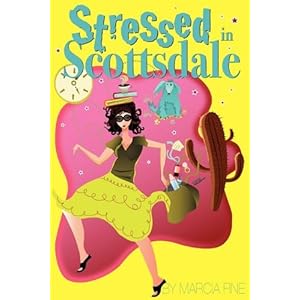
In the meantime, just ordered this book, which looks like the perfect proverbial beach read.

The photo of the little guy at the top of the post, by the way, is taken from the Facebook page of my childhood friend who operates a kind of traveling zoo featuring reptiles native to Arizona, exposing children to and creating respect for their unique little charms.

TWO MORE NYCB PREMIERES: "LUCE NASCOSTA" AND "CALL ME BEN"


It’s been a season of new ballets and principal dancer farewells at New York City Ballet, and, between that and all the goings-on at ABT, it’s hard to keep up! I realized when meeting a blog reader yesterday at Philip Neal’s farewell performance (so nice to meet you, Vanessa!) that I hadn’t yet written about the last two premieres and people were waiting. I was going to wait until I’d seen each once again, but at least with one of them I won’t get that chance since there was a programming change.


Anyway, Maura Bigonzetti’s Luce Nascosta (two photos above, cast in top, Teresa Reichlen and Adrian Danchig-Waring directly above. All photos by Paul Kolnik): I really don’t know what to think of it. The title is translated in the program notes as “Unseen Light”. The stage was very dark except for a Santiago Calatrava moon-like disc, which throughout the course of the ballet expanded into multiple discs. Everyone was in black (costumes by Marc Happel), the men in flare-legged pants and the women in tight black tops and big ruffled skirts that resembled trendy Latin ballroom costumes from a couple years back.

The dancing was at times in ensemble, at times in pairs, but the partnerships changed. It seemed that Tiler Peck and whoever she was partnered by were kind of the leaders, and Maria Kowroski and whoever was partnering her at the moment, kind of concluded the action, with everyone else in between.

The music was gorgeous – by Bruno Moretti, but I didn’t think it accompanied the choreography well at all. The music was like something you’d see in an action-packed movie, like Mission Impossible, at times dark and eerie, at times melodramatic with crescendos like you’d hear when the hero’s coming to save the day. Seriously, perfect for a big summer blockbuster. Here … dunno? And weird because they collaborated closely, the choreographer and the composer…

I thought there were some interesting moments and some original movement, but overall I didn’t feel it added up to much of a whole. My favorite part of the choreography was when all the men were dancing in ensemble. Craig Hall began this rather African-looking movement sequence, then Sean Suozzi joined him, making the movement look more balletically lyrical than African, which made it all the more interesting to me – how the same movement looked on different bodies. Then, other men began to join until it looked ritualistic and celebratory. The women had less interesting movement — one recurring theme was when the women went on pointe, their legs splayed intentionally awkwardly, and they’d hold the balance on pointe while the men kind of darted around them, like the women were frozen. In another recurring theme toward the end, the women went sliding across stage into the men’s arms. The several times Tiler Peck slid like this into Gonzalo Garcia it made a loud, slapping sound. But that didn’t happen with any of the others. I didn’t know if that was intentional or not. The whole thing had a kind of threatening vibe. At times it seemed the women were the threat to the men, at other times the opposite.

The whole thing made me think black widows in the moonlight…

I’m interested to know what others thought of this one. Any thoughts? Critics seem genuinely divided, which I find exciting – often they all hate or all love the same thing.

And the premiere before Luce was Melissa Barak’s Call Me Ben, a story ballet about Benjamin “Bugsy” Siegel, the gangster, and his founding of the Flamingo, the first Vegas nightclub.


Robert Fairchild played / danced the part of Bugsy or Ben – the ballet sought to humanize him, focusing on the person and his ideals rather than the gangster, and it did so simply by having endearingly sympathetic Fairchild play the lead! Jenifer Ringer, who looked like a true Hollywood leading lady throughout, played his girlfriend, the one who swindles him, making other gangsters think he’s taken the money himself and fled, eventually leading them to kill him.

I thought the duets were really beautiful. Robert and Jenifer looked really good together, like a leading romantic couple in a movie. And the ballroom-y period costumes (by J. Mendel) were absolutely gorgeous. I really liked the sets, again by Calatrava, as well. More than his sets for any of the premiere ballets I’ve seen thus far this season (well, with the exception of Wheeldon’s Estancia), these seemed particularly suited for this ballet, evoking warm starry nights, palm trees, the Vegas-y climate, basically.


I think where the ballet fell apart for me was with all the speaking. Barak has said in interviews that she didn’t think she could tell the story purely through dance so she used spoken word as well. But there was too much spoken word, and the dancers were often so out of breath from dancing it took them a while to begin their lines. And that didn’t look natural. Something like this would work in a movie, obviously, where there are separate takes of each scene, but onstage with seriously exhilarating dancing, it took away from the realism. Plus, besides Vincent Paradiso, none of the male dancers really evoked gangster. Tyler Angle and Daniel Ulbricht, great as they are as dancers, just did not convince me that they were hit men. And at the end, when Ulbricht came out for his bow, it was funny but it seemed like people began their usual hearty applause then let up when they realized they didn’t really see Daniel Ulbricht. He didn’t do Daniel Ulbricht things.

And that makes me think maybe she didn’t need to have any talking. Why couldn’t Ulbricht have done his usual pyrotechnics as his expression of his character’s murderous nature?

It seems from interviews Barak has given, that she was given a score (by Jay Greenberg) that she really didn’t know what to do with, and since the score had already been commissioned she had to come up with something in a short period of time. It’s interesting how these ballets are being commissioned because when I heard Benjamin Millepied speak about his new ballet at a Guggenheim Works & Process event recently, he mentioned that he and his composer, Thierry Escaich, worked together, talking about what the music evoked and how that would be visualized, but that Calatrava designed his set for that ballet independently. So, all throughout Why Am I Not Where You Are, I was wondering whether Millepied meant for his color-clad dancers to be hailing from another world, mainly because of that space-like object of Calatrava’s. But Millepied hadn’t meant for that at all — it was just the set he got, which had nothing really to do with his ballet.

Is this how collaborations used to work in Diaghlev’s day though? I just assumed Stravinsky and Balanchine and Chagall all worked together to create a work of performance art. I mean, how else could Firebird have been created?