
Here’s a new support network for parents of male dancers. Via Dance Advantage.
Differences Between East and West
Carded by snack car guy!

Harlem on Election Night
Wow, look at the streets of Harlem two nights ago. The Lower East Side was nothing like this, though there was a great deal of honking and small groups of people pumping their fists in the air and cheering as they passed you on the street. And people who didn’t know each other hugged in the subways. Which of course is not exactly how New York is often perceived. But looks like Harlem had a regular street party!
Holy Crappola
My neighborhood was nothing like this! At least not mid-day and I don’t think the line was that long in the morning…
Hehe, speaking of Mr. Marshall, I remember 16 years ago celebrating with him (among others) the results of another presidential election. We were both grad students in the same program. Ugh, 16 years ago… Anyway, hopefully hopefully hopefully we’ll both feel like celebrating again in a few hours…
It’s almost time for results to start coming in, you guys!
What Will This Day Bring?!
Great thing having a view of your voting place from your window! I was able to wait until there was no line (early afternoon) and sprint down there.
Ooooh, nervously excited…
Race and Dance and Politics and Literature
If you haven’t already, make sure to read (and listen to) Claudia La Rocco’s excellent WNYC post containing interviews with several NYC dance artists speaking about the role of race in their work and how they view the election. She apparently came up with the idea to do the interviews after an angry back and forth between Time Out editors and readers over the fact that the magazine’s list of top 40 New Yorkers who’ve made the most impact on the city over the last decade is, as Claudia put it, rather “monochromatic.”
At least things are different in the literary world. Check out the list of recent Whiting Award recipients. Also, Galley Cat is doing a series of author interviews about the election. Here’s one with poet Douglas Kearney over harmful language used in political speeches. His upcoming projects sound very cool.
Don’t Be a Loser; Register to Vote
Last night I was in Brooklyn, and, passing through the Atlantic Avenue subway station, I saw a group near the entrance to the Long Island Railroad registering people to vote. They were pretty busy. This, along with Counter Critic’s post today, reminded me to remind you all to register, if you’re not already. Tomorrow’s the last day in New York to do so for the upcoming election. Go here for info on how to do that; go here for other states.
Free Books!
Mefears in the age of the internet, soon writers and artists won’t make any money at all from their work. Still, far better than people not reading at all, right? (I love his line about the tree in the forest and the writer’s silent scream, and his Fedoku story.)
Anyway, some of these books do look pretty funny.
"The Story of Forgetting" by Stefan Merrill Block a Must Read!
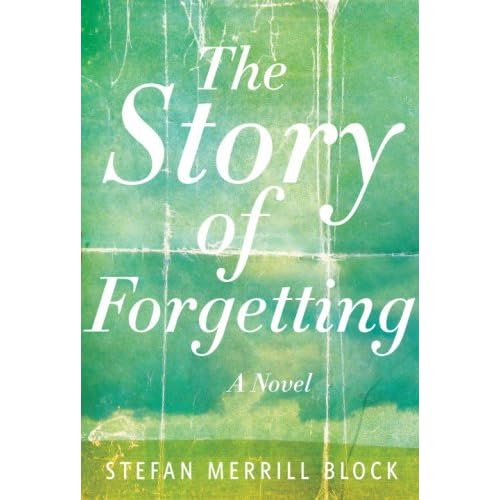
I absolutely loved this novel and highly recommend it. It’s about three generations of sufferers of early-onset Alzheimer’s (which can come on as early as 30, which I didn’t know). It’s partly a portrayal of the disease itself, partly a meditation on memory and its ramifications, but mostly it’s just a beautifully-written story about the need for human connection. I won’t be forgetting Abel Haggard for a long time.
Here is the author’s website. And here‘s a short autobiographical piece, equally compelling, that he wrote the Guardian.
Happy Bastille Day Everyone!
For some reason, this day always seems more fun to celebrate than our own 4th. Maybe just because it’s foreign, but also I think because the French Revolution signified much more historically and on larger scale than our own. Anyway, I seem to have been eating a lot of French food lately (Nice Matin, L’Express, French Roast) because I have a bagful of little postcards announcing tonight’s celebratory feasts at those restaurants. If you’re in NY and you’re so inclined, I recommend Nice Matin.
Why Thinking Lawyers Leave the Law
“Shortly after the article [in the New York Times, about murder convict Gary Gilmore] caught his eye, almost immediately in fact, Susskind’s old friend and associate Stanley Greenberg called, and they had a good conversation. Stanley had written a TV story fifteen years ago about a man awaiting execution. The man had been so long on Death Row that he changed in character, and the question became, “Who was being executed?” Metamorphosis the play had been called, and Susskind always felt that it had had some effect on the end of capital punishment in New York State, and maybe even a little to do with the Supreme Court decision that saved a lot of men’s lives on Death Row.”
From The Executioner’s Song, by Norman Mailer.
Intelligent lawyers leave the law because they know art produces social change, not legal arguments.