
Careening Down Mulholland Drive, and Blue Line-ing to Long Beach

Last weekend was so nice (temps reaching 80!), I had to put work aside and get out and explore more of L.A. Friday evening I took the snaky Mulholland Drive home, which, thanks to a short story by Michael Connelly, I will always think of as Mulholland Dive. (It’s also the title of a surrealist, rather haunting David Lynch film.)

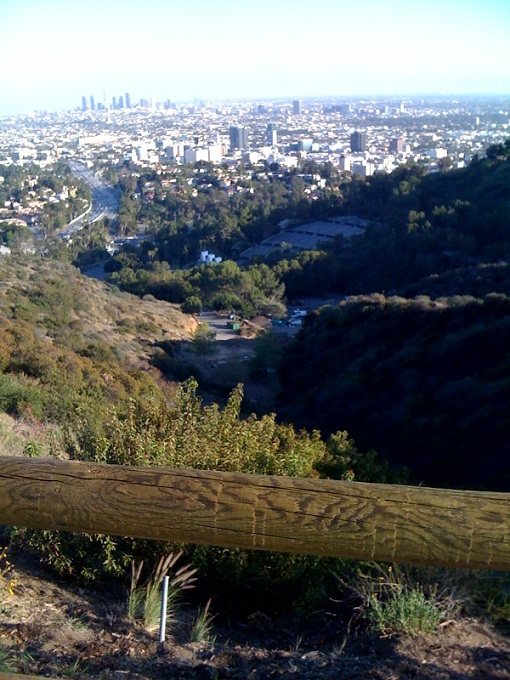
The street wends itself through the entirety of Hollywood Hills, from west to east L.A. and is the official dividing point between Los Angeles (to the south) and the Valley (to the north). Despite its reputation – and I did find it to be frightening at some points, especially when locals fly around some of those precipitous curves and intimidate you into doing the same – it’s more touristy than I would have thought. There are overlooks everywhere, inviting you to park your car and take pics. Which is what I did. Here are some from the east point, right above Hollywood, looking out over downtown.
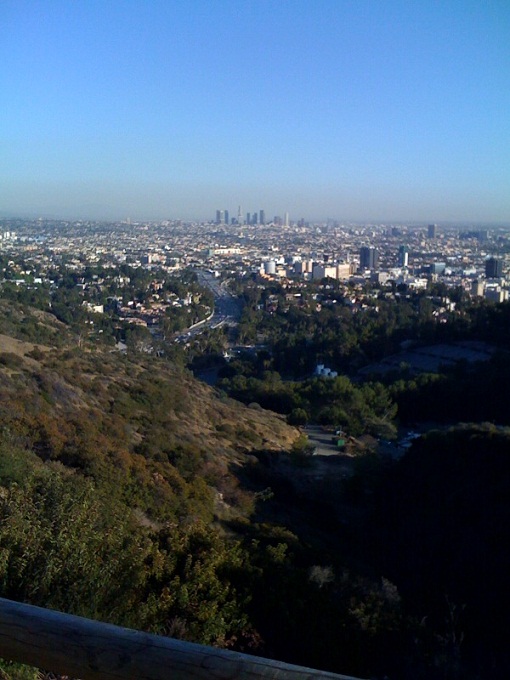
It kind of looks like Oz, right? Oz in the distance anyway, beyond the cliff.

On Saturday I wanted to go to a beach. I haven’t been to Laguna yet, but after researching it, thought it was something my mom might like to do when she comes to visit next month, so decided to save it. I haven’t been to Venice yet either but just didn’t feel like driving all the way across town again on my weekend. I get enough of the west side on my weekdays 🙂 Ditto for Malibu.

So, I decided to go down to Long Beach, and to take the Blue Line (one of the seven Los Angeles subway lines) to do it. I’m a rather proud rider of the Los Angeles subway. I guess it’s the New Yorker still in me… (It’s actually called the Metro rail but I like to call it the subway :)) I’ve now taken three of the lines: “my” line  – the Red line, which is probably the most popular, as it goes from the Valley down to Universal City (where Universal Studios is), down through the most touristy parts of Hollywood, then to the trendy Los Feliz, then on to downtown (one of the two big work hubs), and ends at the train station; the Purple line, which is a rather short line and goes to Koreatown; and now the Blue line, which I now know travels not below- but above-ground, and stops first at the Staples Center (which is like Madison Square Garden), then continues on to several more stops in downtown and south L.A., passing through Watts, Compton, and ending at Long Beach.
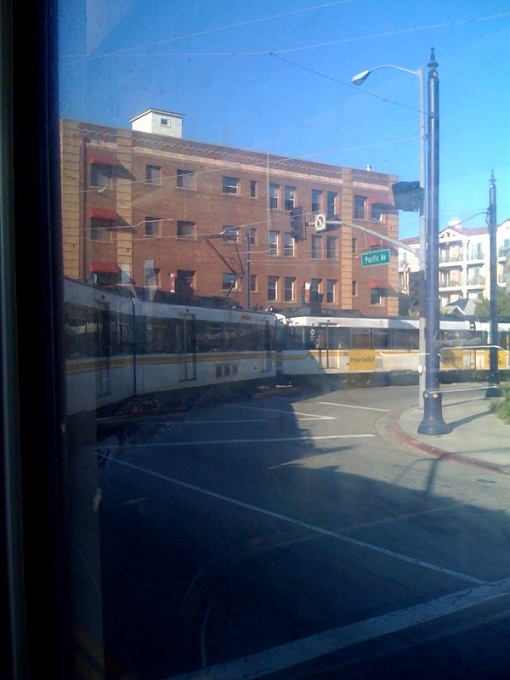
Curving upward as we leave Long Beach.
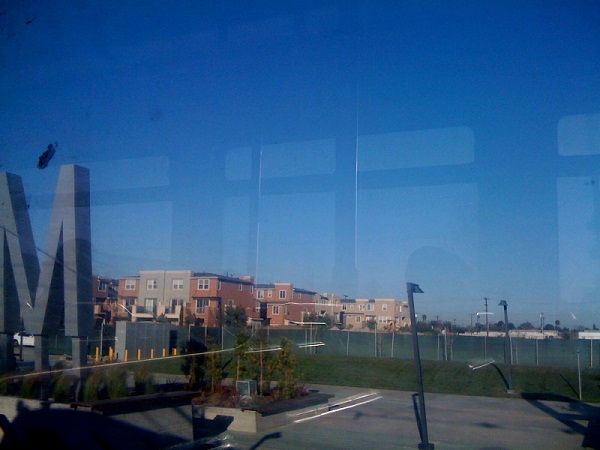
This is taken from the Compton station, which is lined with these these big, bold letters spelling the town’s name. I thought they were so artistic. Unfortunately, I couldn’t really get a good picture as the train rolled by, but here is part of the M. I’ve heard Compton is a poor part of town but, if that was ever true, it must have enjoyed a renaissance because it didn’t seem run-down at all. The train passed a big shopping center with a Best Buy and other electronics and high-end stores, and a very snazzy-looking casino.

I found the train ride more interesting than the destination though. I don’t think Long Beach has much of an actual beach; it’s more of a harbor.
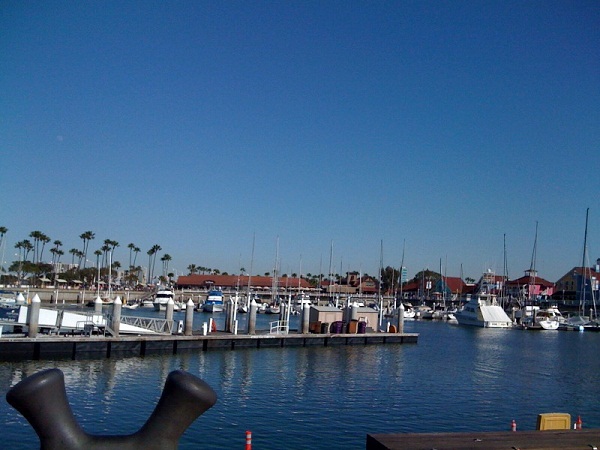
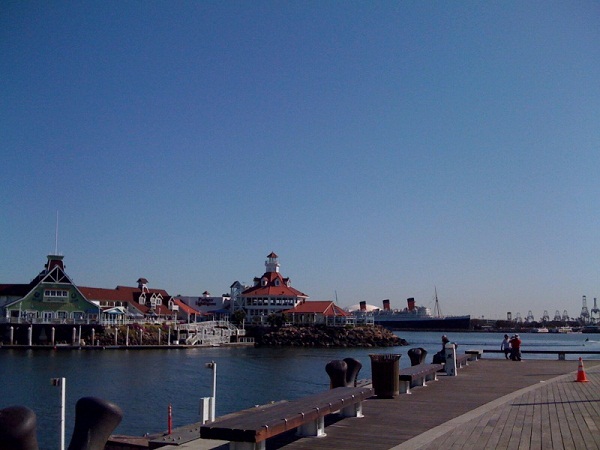
…with lots of restaurants and stores.
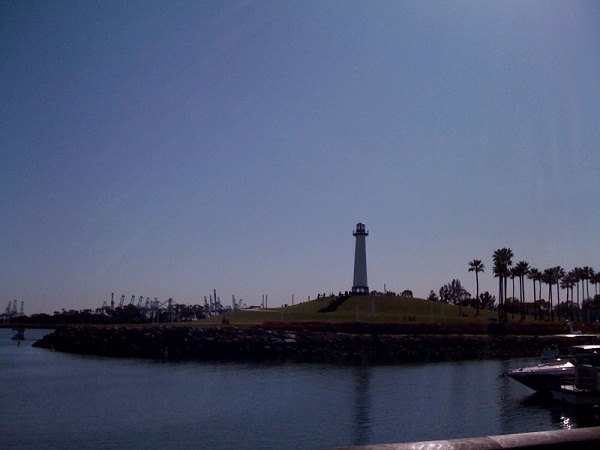
and a small lighthouse.
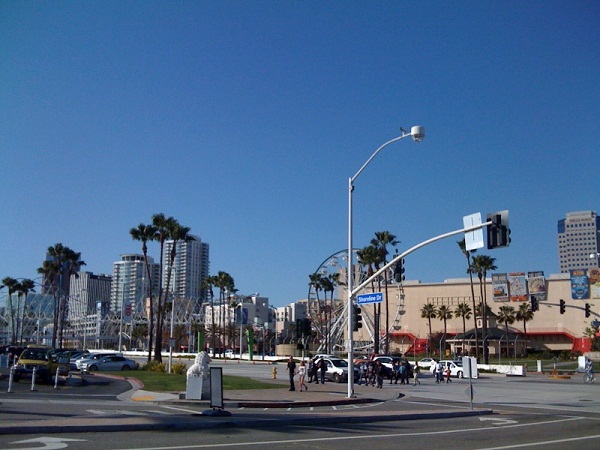
and a ferris wheel, which wasn’t being used.
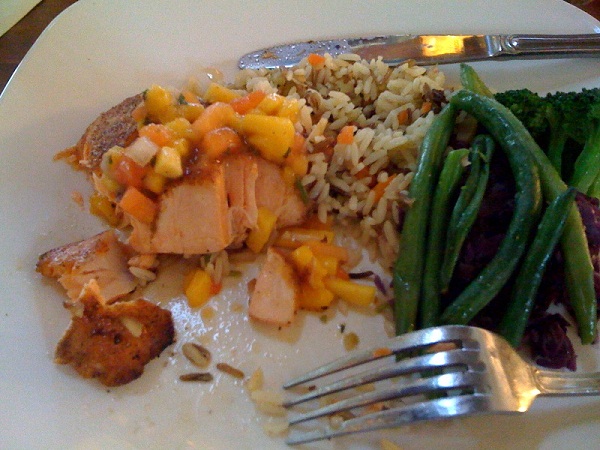
I am learning that much of the food in L.A. tends to be Mexican-ized (this is particularly true of Italian where pasta sauce tastes strangely like mild salsa and risotto like it belongs beside refried beans). I ordered “jerk salmon” at this dock-side restaurant. In New York that would mean the fish would be drenched in that mouth-watering Jamaican sauce that is somehow super spicy, tangy, and sweet all at once. But this was simply grilled salmon topped with mango salsa. Very well-prepared grilled salmon and delicious mango salsa, but IT WAS NOT JERK SALMON!!! Oh well.
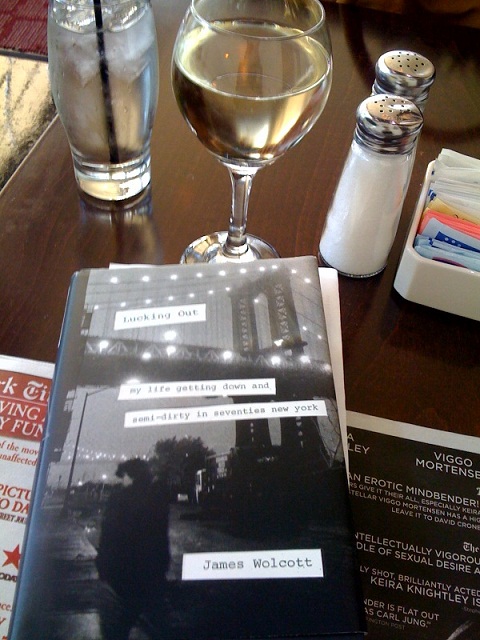
James Wolcott on Deborah Jowitt in the Seventies

I’ve been reading James Wolcott’s memoir, Lucking Out: My Life Getting Down and Semi-Dirty in Seventies New York (photo above taken at the ArcLight Hollywood Cafe). It’s about his life as a writer in New York and his years working at the Village Voice in the magazine’s early days. (He got a job there after sending Norman Mailer a copy of an essay he wrote about Mailer’s appearance on a TV show for his school newspaper and Mailer went wild over it. It’s so hard to believe there was a time in NY when careers were based on talent and not on pedigree and Ivy League schools…)

Anyway, at the beginning, Wolcott describes several of the writers who worked at the Voice back then. Of course I was very intrigued by his words about the magazine’s now legendary dance critic:

“The dance critic Deborah Jowitt had the fine-boned fortitude of a frontier settler with eyes forever fixed on future horizons; her merciful consideration of even the most flailing effort and her descriptive set pieces suitable for framing set her apart from the tomahawk throwers.”

Apart from his brilliant writing (those metaphors, and adjectives!) I found this interesting because it seems that the “tomahawk throwing” form of criticism is so in vogue these days. I guess because in the internet age, incendiary writing begets comments which beget more readers, or ROI or what have you… I’ve had several people (mostly writers) tell me the problem with my blog has always been that I’m not critical enough – I could never be a “real” critic because I’m too nice, and forgiving of crappy art. Those same people are also critical of other, professional critics for the same. But what’s wrong with “merciful consideration” and rich description? Sometimes it’s far harder to try and find the value in something – to try to figure out what exactly the artist is trying to do and to place that attempt in context and describe why it’s worthy than it is to ridicule it or tear it apart. And description – especially of a largely abstract art form – is damn hard.

I feel Wolcott’s words describe Edwin Denby as well, and when I read his small pieces about dance in the forties and fifties, read together in book form one article right after the other, it’s like they tell a story of that era. I wonder if that sense of narrative would be lost in writing that focuses more on attack than on giving the reader an overall picture of what happened.

Anyway, it’s a really good book – Wolcott’s that is – and makes me miss New York – even though that’s not the New York I know, unfortunately.

Now off to a Michael Connelly reading at a Barnes and Noble that is thankfully more centrally located than blasted Santa Monica (even though I love Santa Monica). I still have to drive though. Am still so not used to driving everywhere. Every time I go out I’m still so inclined to walk or take the subway or bus. You just can’t though. They run infrequently or not at all at night and walking is impossible unless the event you’re going to happens to be right in the same neighborhood – and then you still may be walking a mile or so.

Brooklyn Book Festival, Part Two

I had such a nice time at the Brooklyn Book Festival yesterday, despite the rain. I’ve gone to this festival for the past several years; they have readings, panel discussions, and other various quirky little things throughout the day. This year I was planning on listening to a crime fiction panel moderated by Michael Connelly, a set of debut author readings that included Sean Ferrell and Tanya Wright, another set of readings that included Elizabeth Streb – who is an  innovative choreographer and now an author too, and a panel discussion about the economic crisis and what to do about it, amongst other things.

But I ended up doing none of that because my friend, Goodloe Byron, and I ended up getting a last-minute table he’d requested earlier from the organizers. So, I sat outside all day with my books, meeting book lovers, chatting with them about my novel, and personalizing their books. It was my first time ever doing this and I had no idea what to expect, but people were so amazingly cool! People were congratulating me for publishing my debut novel, remarking on the cover, asking me about the novel’s plot, about the publication process. After a couple hours, I ran out of books and my friend, Nicole, graciously watched my half of the table while I ran home to get more. When I returned she told me she’d sold my last copy by telling people who’d approached the table about my awards and reviews, and kind of sweetly reprimanded me for not having that info on a sheet at the table. Methinks sometimes your friends are better sales-people for your books than you, the writer, are 🙂

Anyway, unfortunately at that point it began pouring, and I didn’t even want to take the additional books out of my bag so as not to ruin them (we didn’t have a table with a tent). And it ended up raining the rest of the day, pretty hard. So I left early. Still, I had one of the happiest publishing days of my life. I haven’t sold many print books – the vast majority of my sales have been on Kindle – and there’s something so incredibly cool about selling an actual, physical book — watching people regard the cover curiously, peruse the back, flip through it, and then being able to sign it for them, watching them walk away with it in their hands.

And just meeting people! I really had a blast. I want another festival. Soon.

Anyway, literary blogger Edward Champion has some interviews of BBF participants posted at his blog. The third one happens to be of my friend, Michael Northrop, talking not about his own novels but about his participation in a One Story magazine promotion at the festival. Fun!

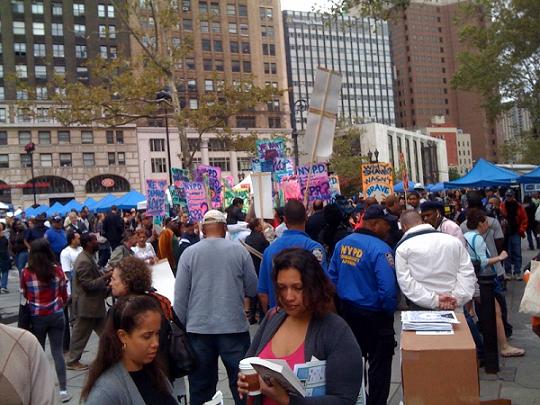
Oh and photo above, by me, is of a non-festival-related protest against police brutality that happened to take place on the courthouse plaza, where we were.