In a recent issue of the Italian magazine Corriere della Serra, Roberto Bolle (along with several other celebrities) revealed the contents of his refrigerators – both the one he keeps in his New York home, and the one in his Milan kitchen. The blogger Gramilano has nicely translated. (Above photo from Gramilano as well.)
So, he’s one of those dancers who’s a real health nut. He eats seitan 🙂 Seriously though, I think seitan is actually quite good. But I’m not sure what he means by not being able to buy mineral water in the United States…
Have you guys seen this? Dancing Atoms was created through a collaboration between Bolle and MIT researchers. Bolle’s movement was traced and then digitally replicated with a 3D laser scanner.
“Motion-capture technologies make it possible, for the first time, to analyse human movements in full 3D at very high resolutions.” says researcher and professor of human interaction, Pat Healey. “This unprecedented level of detail can help us understand what affects people’s perceptions of grace and beauty.”
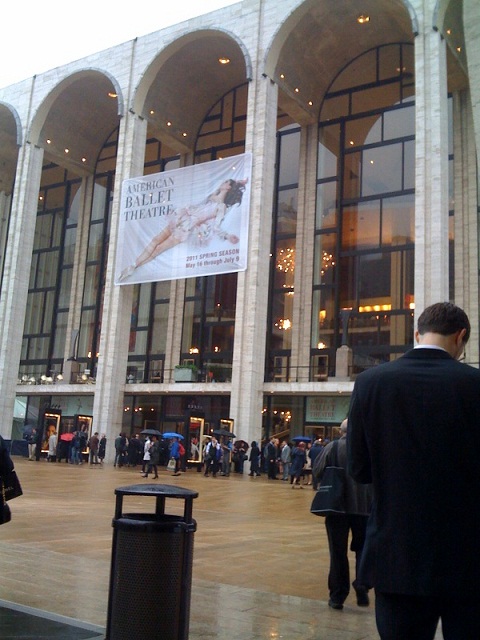
Last night was ABT’s Spring 2011 opening night gala. Dreary, rainy night … but what else is new for New York these days?
Once inside, I really enjoyed the show though. (I’m hoping to receive photos soon, which I’ll post). The program began with a short preview of Ratmansky’s The Bright Stream, which I’m excited to see next week. Seems to have a lot of humor, some bravura dancing, a cute storyline.
(Photo: The Bolshoi’s production of Bright Stream; Natalia Osipova is jete-ing).
Then, there were introductions by Rachel Moore, executive director of ABT, wearing a beautiful green dress, and Kevin McKenzie (AD), followed by Caroline Kennedy, who introduced the students of the Jacqueline Kennedy Onassis School of American Ballet as they danced a world premiere, Karelia March, by Raymond Lukens. The program says the students are Level 7, which must be the highest level, because some of those dancers looked like ABT principals. I’m not kidding, I swear. They really amazed me. That school is doing incredible things!
Next was Balanchine’s Tchaikovsky Pas de Deux, danced by David Hallberg and Gillian Murphy. Everytime I see David dance I think he must be the most perfect male dancer in the world. Gillian was stunning too.
Then came the Grand Pas de Deux from Ratmansky’s new Nutcracker, danced by Marcelo Gomes and Veronika Part. (No, they’re not performing that ballet during the Met season, but there seemed to be a few excerpts in the program from ballets they’re not performing). I missed seeing this couple – overall still my favorite – when the company premiered Ratmansky’s version in December. They were so sweet. Veronika danced with such wonderment in her eyes, such joy. And Marcelo was her perfect, adoring cavalier, all eyes on her. I don’t have kids, but I’d think they’re the perfect wedding couple to wow very young audiences.
Then came Majisimo, a classical ballet piece with Spanish flourishes created by Georges Garcia for the Ballet Nacional de Cuba in 1965 and set to Jules Massenet’s Le Cid. This piece was mainly meant to highlight Jose Manuel Carreno, who of course retires from ABT later this season. But it was really a dance for eight couples, and he danced only the male part of one of them – there were very few solos. He danced with Paloma Herrera. Xiomara Reyes was paired with Reyneris Reyes, guesting from Miami City Ballet. The other couples were comprised of Cuban dancers guesting from other companies as well: Lorena Feijoo and Joan Boada from San Francisco Ballet, and Lorna Feijoo and Nelson Madrigal from Boston Ballet. The dancers were spectacular, but I didn’t think that much of the choreography, which reminded me of a more bland version of an ensemble scene from Don Quixote. Jose had a series of turning jumps, and a really beautiful multiple pirouette that wowed the audience – drawing those turns out are what he’s most known for. And Xiomara really took my breath away with this crazy fast series of traveling turns in a diagonal down the stage. I’ve never seen her dance like that!
(Photo: Jose Carreno dancing with Polina Semionova in Diana e Acteon)
After intermission came two pas de deux from Swan Lake. A Twitter follower asked me why they needed to perform two scenes from the same ballet. I think that ABT, same as everyone else, is just trying to benefit from the Black Swan craze. They should have had Sarah Lane dance one of the pdd though! 😀 Anyway, first pas de deux – White Swan- was Paloma Herrera and Alexandre Hammoudi, which was good. But the second – the Black Swan – I found surprisingly magnificent! It was danced by Michele Wiles and Cory Stearns. There have been so many guest stars from Europe lately gracing ABT’s stage, I’d forgotten how perfect an Odile Michele Wiles is. And Cory really impressed me as well. Whatever he may lack in dance ability (I can’t imagine he’ll ever be a David Hallberg or Marcelo Gomes), he more than makes up for in acting and stage presence. He’s really good at bringing you into the world of the ballet and creating a character you can sympathize with.
Sandwiched in between the two SLs was Jessica Lang’s Splendid Isolation III, danced by Irina Dvorovenko and Maxim Beloserkovsky. I joked on Twitter that Max earned the hot guy of the night award for that, but seriously – he did! Irina was really beautiful as well. And her party dress, which she came out in for the final stage bow, was, as usual, gorgeous. She has such impeccable fashion taste, imo.
Following that was the highlight of the night, for me – Diana Vishneva and Marcelo Gomes in the Act I pdd from Manon. Such a perfectly choreographed pas de deux – beautifully romantic and full of love / lust but with so many breathtaking but capriciously executed, dangerous-looking lifts you sense something out of control. As beautiful as it is, this story isn’t going to have a happy ending. I am liking Diana Vishneva more and more. I’ve always thought she was a great dancer but she always seemed to play too much to the audience for the story ballets. She didn’t take me into the world of the character as much as I want an actor to. But the last two seasons she’s been doing just that: really developing the character and dancing to her partner – Marcelo here and in Lady of the Camellias last season, which is the first time she really blew me away – instead of the audience. This – the Manon pdd – was the audience favorite last night as well. The two got a storm of whoots and bravos at their curtain call, and practically had a standing ovation the audience was so loud in their applause. “So beautiful,” exclaimed the woman beside me. “Okay, we can go home now,” she joked.
(Couldn’t find a photo of Diana and Marcelo, but here is Diana dancing Manon with Manuel Legris. With all photos I post now, I’m linking to the original site via a click on the photo.)
Here are Marcelo and Diana in Lady of the Camellias:
Then, Alina Cojocaru, one of the European guest artists this season, danced the Rose Adagio from Sleeping Beauty. I’m not a huge fan of this ballet in general, but she was lovely. Patrick Ogle replaced Sascha Radetsky as one of the cavaliers.
Second to last was the Act II pdd from Lady of the Camellias danced by Julie Kent and Cory Stearns. Again, Cory did a very good acting job – and physically he fits the character perfectly, as Julie does hers, but I think some of those lifts are so difficult-looking… I just worry about the dancers. Isn’t that how Roberto Bolle got hurt last season – performing this role?
And the evening ended with another ensemble excerpt from Ratmansky’s Bright Stream. People who stood out most to me were Daniil Simkin and, again, Xiomara Reyes. I really am excited to see this ballet.
Tonight Don Quixote begins and runs through the beginning of next week. I’m excited to see Alina Cojocaru dance with Jose Carreno on Friday night, and Russian ballerina Polina Semionova guesting in the Saturday matinee with David Hallberg.
Happy President’s Day everyone! I’m spending the week in South Carolina at my cousin’s timeshare – I needed a few days away from New York and the ocean is my favorite place. (If I ever have money, I’m definitely buying a beach house somewhere. I could never be one of those New Yorkers who buys a country home up in the mountains. I don’t understand those people. Who wants to risk a run-in with a bear or coyote or jaguar? Not to mention deal with permanently cold temperatures…) Anyway, the light from last night’s full moon on the ocean was gorgeous. My iPhone is not so good at taking pictures at night, so you’ll have to take my word for it 🙂
The condo’s wireless connection is a bit off and on, plus, it’s unexpectedly nice weather here – 71 degrees today, plus I’m supposed to be working on my novel, so I don’t know how much time I’ll have to blog. But here are a few items of interest:
Also, here are some photos I just received of the magnificent Sara Mearns debuting as the Siren (opposite Sean Suozzi) in Balanchine’s Prodigal Son a couple weeks ago at NYCB:
Finally, if you haven’t seen Natalia Osipova dance yet, next Sunday, March 6th, will be your chance. She’ll be dancing Kitri in Don Quixote with the Bolshoi, in a performance that will be live-streamed direct from Moscow via Emerging Pictures’ Ballet in Cinema series. NY performance time is 11:00 a.m., at the Manhattan Big Theater, and she’ll be dancing opposite Ivan Vasliev. This is the role that made her famous, and she owns it, so try not to miss it if it’s showing at a theater near you. Check Emerging Pictures’ website for times and locations.
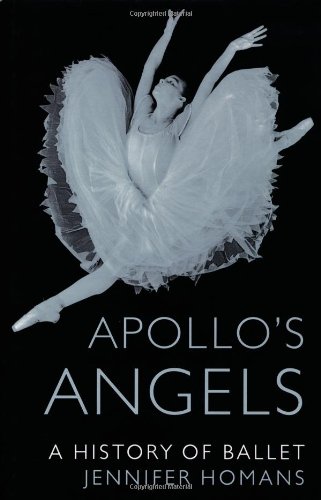
I must confess I haven’t yet read Jennifer Homans’ acclaimed but controversial history of ballet, Apollo’s Angels. I’m working hard on my second novel and have been knee deep in prison and cop memoirs and haven’t had time for much outside reading. I hope to read it soon though.
In the meantime, I have read some of the reviews, including Laura Jacobs’ in the WSJ and Toni Bentley’s in the NY Times. The two reviews focus on very different aspects of the book so it’s interesting to read both of them. Bentley says Homans is best on Balanchine (both Bentley and Homans danced with him). But Jacobs find the earlier sections enlightening as well.
The controversial aspects of the book seem to be toward the end when Homans argues that, for various reason (but according to Bentley many of them being that Balanchine has passed and his legacy is not being kept alive), ballet is a dying art.
I don’t want to go on too much since I haven’t yet read the book, but I will say that ballet seems to be alive and well in many European and Latin American countries. I do notice a real influx of visitors to my blog whenever the big European stars perform with ABT. I don’t think Roberto Bolle, Alina Cojocaru and Natalia Osipova fans think ballet is dying and certainly not because Balanchine is no longer with us. Ballet may be less popular in this country since the Baryshnikov era passed though, and it remains to be seen whether movies like Mao’s Last Dancer and Black Swan can do anything to revive it. I’m doubtful but want to be hopeful. I think it’s more likely that Natalie Portman marrying Benjamin Millepied will draw audiences to ballet than the actual movie will.
But then I recently ran across this interview with Homans over at the Ballet Bag, a London blog. At the beginning of the post, the writers say audiences there have been dwindling a bit and they’re worried about the future of the art form as well. Which scares me.
Anyway, has anyone read the book?
Another thing I wanted to call attention to is the book cover. The top one is the British cover, the second the American. Which do you guys like better, and think will sell more books? Just about every single time I see a European cover beside an American cover, I like the European better. But maybe it’s just me.
Instead of trying to remember which were my favorite performances of the year, I’m just going back through my blog archives from January of this year and linking to the most memorable posts. More fun that way! A lot happened in a year…
Tiler Peck appeared on Dancing With the Stars in a Travis Wall routine, which everyone was so excited about. But it ended up amounting to not a whole lot…
Roberto Bolle danced a naked Giselle, in Italy of course.
May
New York City Ballet opened their spring season with premieres of Millepied’s Why Am I Not Where You Are and Ratmansky’s Namouna, both of which I liked, though Ratmansky’s had to grow a bit on me.
One of my favorite posts of the year, though it received no comments, was about Anne Fortier’s novel, Juliet. I jokingly daydreamed about it being made into a film, and which of my favorite ballet stars might take the lead.
Nearly fell over again upon hearing Riccardo Cocchi and Yulia Zagoruychenko took the world Latin ballroom title – making them the first U.S. couple ever to do so.
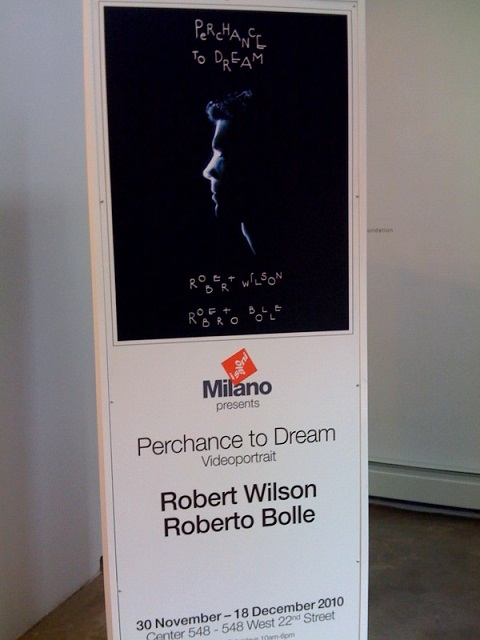
My friend, Oberon, told me about this exhibit – a video installation by Robert Wilson showcasing Roberto Bolle, showing at Center 548 in Chelsea, as part of Milano New York Isaloni. So I went to check it out yesterday.
Scared the absolute crap out of me! I don’t really want to say too much or it will ruin the mystery for people who go, but I’ll just say, definitely go see it – I’ve never really seen a gallery exhibit, or even a museum exhibit quite like this before. Just try not to go alone. I think that’s partly why I was so spooked. It’s very dark in there; the first room is lit only by the small amounts of light emanating from some x-ray-like photos of light bulbs.
At the beginning there’s some nice classical music playing, but then the sounds get more ominous, and at points become quite harsh.
The second and fourth rooms really scared me the most – the rooms with three-dimensional art depicting scenes both classical and apocalyptic. Some of the three-dimensional art – well, it just looked too real… I’m not even sure if I saw the entire exhibit because I was just too nervous to go to the very end of the second big room and see if there was anything around the corner. It’s like a dark maze after you enter the first room. I almost couldn’t find my way out. I think if there are more people, though, if would be obvious where the entrances and exits were. As I was exiting, there was an art critic speaking with the curator and the critic said she thought this exhibit was really compelling and should be expanded to a museum, but then said the danger of doing that would be to diminish its mystery precisely because it would be more crowded.
Anyway, another thing that startled me – I kept forgetting it was a video installation because many of the projections looked like still photos … until Bolle would move ever so subtly. It’s like the moving eyes in the portrait effect… And I never realized how doll-like he can look… And, had I not seen Black Swan, there are additional associations I probably would not have made but…
I’ve said too much! Just go see it! I do hope they someday expand it into a larger project.
For now, it’s at Center 548, which is at 548 W. 22nd Street in Chelsea. It’s only showing through December 18th so hurry.
Here are a couple of pix of Roberto Bolle with Italian model Mariacarla Boscono in HerculesMagazine. See more from the spread here. Photos by Paola Kudacki.
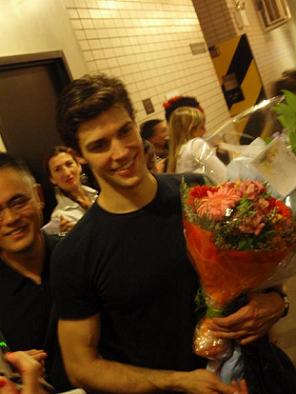
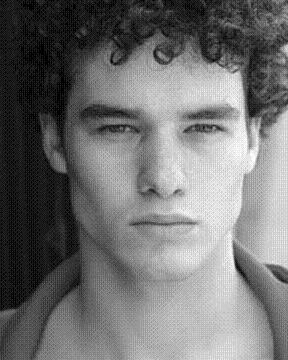
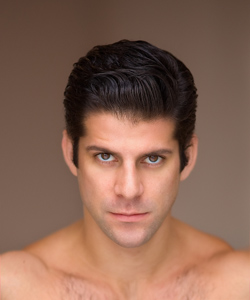
Haha, I don’t even think this book has been optioned yet for film! It should be though – it’s very cinematic. All throughout reading it, I kept “seeing” Romeo – and always as one of my favorite male dancers who’s danced the role. Roberto (top left) is of course the natural choice since he’s Italian and the book’s set largely in Italy. But I feel he may not have enough of the delicious cockiness in him; Roberto’s too nice, at least onstage. Ditto for Cory (top right). Marcelo of course would probably be best … although I don’t know if he has acting skills required for a speaking role in a film. He’s definitely a good stage dancer/actor.
I’m being goofy. I’m sure they would cast Andrew Garfield or Louis Garrel or someone.
Anyway, Anne Fortier’s Juliet, which I recently finished, is a really interesting read, especially for fans of Kenneth MacMillan, and I guess … Shakespeare 🙂
It’s part historical fiction, part romance, and part mystery / suspense and it shifts back and forth between the present day and the Siena, Italy of 1340, when the two people Shakespeare based his characters on – Romeo Marescotti and Giulietta Tomolei – actually lived. Of course in Shakespeare’s version, the lovers were from Verona, but according to this book, early stories – and there were many tales of Romeo and Juliet; Shakespeare’s was only one of many – had all the action happen in Siena.
The novel starts when 24-year-old American Julie Jacobs receives an inheritance after the death of her great aunt Rose, who raised her after her mother and father were suspiciously killed when she was a child. The inheritance is simply a key to a safe deposit box in Siena, which her mother had originally left with the aunt. Julie is told by her aunt’s butler and his lawyer that it contains a treasure, which she must go to Italy to find. So she sets off for Siena. There she encounters other, less savory types, who are equally interested in her treasure, and so begins the suspense part of the novel.
Julie soon discovers that at the time her mother died, she’d been researching the history of Romeo and Juliet, or Romeo and Giulietta. Julie’s mother’s last name was Tolomei, and it turns out Julie is related to the original Giulietta. I don’t want to give too much away, but the contemporary part of the story consists of the suspense and romance of finding the treasure – which is related to R&J – as well finding Romeo’s descendant.
Julie finds in her mother’s belongings in Italy the earliest version of the story of Romeo and Giulietta, and her reading of that accounts for the historical half of the novel, which was the most compelling and poignant to me. It’s different from the version we all know through Shakespeare. The warring families are the Tolomeis and the Salimbenis, with the Salimbenis being far more vicious and far more financially powerful. At the beginning of the historical story, the Salimbenis have just raided Giulietta’s house and murdered everyone but her. (She was in church at the time.) In a nutshell, Friar Lorenzo is able to sneak Giulietta out to her uncle Tolomei’s estate. Romeo, who is a Marescotti – a historically highly respected military family with connections to Charlemagne but who currently has no financial power – is a hopeless playboy. But once he sets eyes on Giulietta’s portrait, while he is having his own Marescotti-family portrait done, he is in love.
The artist tells Romeo that Giulietta resides at the Tolomei castle. He goes to a ball there in search of her, finds her (she’s a Helen of Troy type and stands far out from the crowd), and follows her into her chamber. She’s still traumatized by what’s happened to her family and so is immune to his flirting. She does tell him though that he can have anything he wants from her if he brings her the heart (or was it the head?…) of the master of the Salimbeni family, who ordered the execution. Romeo’s a bit taken aback, but tells her he’ll do anything.
The next day Friar Lorenzo brings Giulietta to the Marescotti estate and she tells Romeo she doesn’t know what came over her the other day to ask such violence of him; she doesn’t want him to get hurt. He kind of plays with her a bit, she softens, and over the course of this and several other meetings, they fall in love.
Romeo talks his father into asking Tolomei for her hand in marriage. For Romeo I mean. The father is reluctant because he doesn’t want to be seen as “getting involved” in the Tolomei / Salimbeni feud. But seeing how in love his son is, he agrees.
But just as he goes to approach Tolomei that night, old Salimbeni, smitten with Giulietta whom he spies in the distance, reveals that he wants her for himself. This will end the violence between the families once and for all, he claims. The whole crowd gasps, since Salimbeni is old enough practically to be her grandfather, not to mention married (although everyone also knows his wife will soon be dead, as he is starving her, as he’s done to prior wives… Medieval society must have been so lovely…) Of course Tolomei has no choice but to say yes – the Salimbenis are far more powerful – both physically and financially. Saying no to Salimbeni would be family suicide.
Poor Giulietta nearly collapses upon hearing she’s to be the wife of the man who slaughtered her family, and she begs Tolomei not to let the marriage happen. Tolomei refuses. Romeo declares that he will beat Nico, Salimbeni’s son, in the Palio (a Medieval-style horse race that continues to this day), and, if he does, he will win Giulietta’s hand.
At the Palio the following day, Romeo does win, but during the course of the race, Nico kills Tebaldo, Tolomei’s son, but with Romeo’s dagger, making it look like Romeo is the murderer. This is how Romeo gets banished. Although Romeo sneaks back to town with Friar Lorenzo and marries Giulietta in the back of the church where she is at worship, Salimbeni finds them and, well, things don’t go too well for Romeo… Salimbeni’s wife finally starves and he marries Giulietta, then keeps her a prisoner in his country castle.
I should stop there! But the story goes on and there are all kinds of twists and turns. It’s a fascinating narrative and you can see all the same – or many of the same – elements Shakespeare included. But the theme in Shakespeare is the warring families or factions, gangs, what have you – and how innocent individuals get unfairly, tragically caught up in the fighting. In the original, it’s more about the viciousness of one evil, all-powerful man. I found it interesting to see how a great writer manipulated facts to craft a story with themes that would reach far beyond the time and place in which the story was set. I mean, Shakespeare’s version also contained beautiful poetry of course, but his basic story is more powerful and far-reaching than the original. The original does give you a sense of how violent and how absolutely awful Medieval society was for women though.
Anyway, the novel’s very good – at least the historical part. I highly recommend it for that. The contemporary part is cute romance-wise, and definitely suspenseful, but in my opinion not nearly as powerful from a literary perspective as the historical.
Funny, I didn’t really think of who would play Julie / Giulietta. Diana Vishneva or Veronika Part would be good – she has to be Helen of Troy beautiful! But they both have Russian accents and I don’t know if that would work… Hmmm, who else?…
(Photos above, clockwise from top left: Roberto Bolle, taken by me; Cory Stearns, from ABT’s website; and Marcelo Gomes, from ABT’s website.)
Here’s an interview with Roberto Bolle backstage at Dolce & Gabbana’s 20th anniversary show in June. He talks about ballet and fashion, saying both have to do with the aesthetics of the body and movement, and that fashion is very important to Italy. I’ve never heard his voice before so this is fun! He struggles a bit with English and has more of an Italian accent than I expected. He seems really sweet.
Roberto Bolle and Friends are performing July 27th at the Piazza San Marco in Venice, as part of a gala to benefit the National Trust for Italy. The way the Italians talk about him, he must be so beloved there. Someday I must go see him dance in his native country…