American Ballet Theater Spring 2011 Opening Night Gala

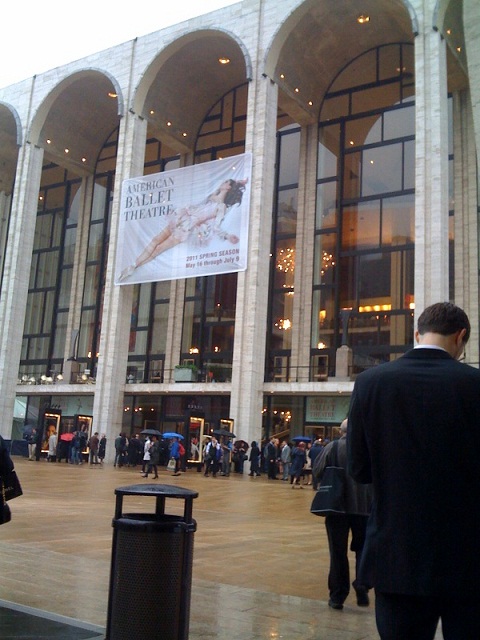
Last night was ABT’s Spring 2011 opening night gala. Dreary, rainy night … but what else is new for New York these days?

Once inside, I really enjoyed the show though. (I’m hoping to receive photos soon, which I’ll post). The program began with a short preview of Ratmansky’s The Bright Stream, which I’m excited to see next week. Seems to have a lot of humor, some bravura dancing, a cute storyline.


(Photo: The Bolshoi’s production of Bright Stream; Natalia Osipova is jete-ing).

Then, there were introductions by Rachel Moore, executive director of ABT, wearing a beautiful green dress, and Kevin McKenzie (AD), followed by Caroline Kennedy, who introduced the students of the Jacqueline Kennedy Onassis School of American Ballet as they danced a world premiere, Karelia March, by Raymond Lukens. The program says the students are Level 7, which must be the highest level, because some of those dancers looked like ABT principals. I’m not kidding, I swear. They really amazed me. That school is doing incredible things!

Next was Balanchine’s Tchaikovsky Pas de Deux, danced by David Hallberg and Gillian Murphy. Everytime I see David dance I think he must be the most perfect male dancer in the world. Gillian was stunning too.

Then came the Grand Pas de Deux from Ratmansky’s new Nutcracker, danced by Marcelo Gomes and Veronika Part. (No, they’re not performing that ballet during the Met season, but there seemed to be a few excerpts in the program from ballets they’re not performing). I missed seeing this couple – overall still my favorite – when the company premiered Ratmansky’s version in December. They were so sweet. Veronika danced with such wonderment in her eyes, such joy. And Marcelo was her perfect, adoring cavalier, all eyes on her. I don’t have kids, but I’d think they’re the perfect wedding couple to wow very young audiences.

Then came Majisimo, a classical ballet piece with Spanish flourishes created by Georges Garcia for the Ballet Nacional de Cuba in 1965 and set to Jules Massenet’s Le Cid. This piece was mainly meant to highlight Jose Manuel Carreno, who of course retires from ABT later this season. But it was really a dance for eight couples, and he danced only the male part of one of them – there were very few solos. He danced with Paloma Herrera. Xiomara Reyes was paired with Reyneris Reyes, guesting from Miami City Ballet. The other couples were comprised of Cuban dancers guesting from other companies as well: Lorena Feijoo and Joan Boada from San Francisco Ballet, and Lorna Feijoo and Nelson Madrigal from Boston Ballet. The dancers were spectacular, but I didn’t think that much of the choreography, which reminded me of a more bland version of an ensemble scene from Don Quixote. Jose had a series of turning jumps, and a really beautiful multiple pirouette that wowed the audience – drawing those turns out are what he’s most known for. And Xiomara really took my breath away with this crazy fast series of traveling turns in a diagonal down the stage. I’ve never seen her dance like that!


(Photo: Jose Carreno dancing with Polina Semionova in Diana e Acteon)

After intermission came two pas de deux from Swan Lake. A Twitter follower asked me why they needed to perform two scenes from the same ballet. I think that ABT, same as everyone else, is just trying to benefit from the Black Swan craze. They should have had Sarah Lane dance one of the pdd though! ๐Ÿ˜€ Anyway, first pas de deux – White Swan- was Paloma Herrera and Alexandre Hammoudi, which was good. But the second – the Black Swan – I found surprisingly magnificent! It was danced by Michele Wiles and Cory Stearns. There have been so many guest stars from Europe lately gracing ABT’s stage, I’d forgotten how perfect an Odile Michele Wiles is. And Cory really impressed me as well. Whatever he may lack in dance ability (I can’t imagine he’ll ever be a David Hallberg or Marcelo Gomes), he more than makes up for in acting and stage presence. He’s really good at bringing you into the world of the ballet and creating a character you can sympathize with.

Sandwiched in between the two SLs was Jessica Lang’s Splendid Isolation III, danced by Irina Dvorovenko and Maxim Beloserkovsky. I joked on Twitter that Max earned the hot guy of the night award for that, but seriously – he did! Irina was really beautiful as well. And her party dress, which she came out in for the final stage bow, was, as usual, gorgeous. She has such impeccable fashion taste, imo.


Following that was the highlight of the night, for me – Diana Vishneva and Marcelo Gomes in the Act I pdd from Manon. Such a perfectly choreographed pas de deux – beautifully romantic and full of love / lust but with so many breathtaking but capriciously executed, dangerous-looking lifts you sense something out of control. As beautiful as it is, this story isn’t going to have a happy ending. I am liking Diana Vishneva more and more. I’ve always thought she was a great dancer but she always seemed to play too much to the audience for the story ballets. She didn’t take me into the world of the character as much as I want an actor to. But the last two seasons she’s been doing just that: really developing the character and dancing to her partner – Marcelo here and in Lady of the Camellias last season, which is the first time she really blew me away – instead of the audience. This – the Manon pdd – was the audience favorite last night as well. The two got a storm of whoots and bravos at their curtain call, and practically had a standing ovation the audience was so loud in their applause. “So beautiful,” exclaimed the woman beside me. “Okay, we can go home now,” she joked.


(Couldn’t find a photo of Diana and Marcelo, but here is Diana dancing Manon with Manuel Legris. With all photos I post now, I’m linking to the original site via a click on the photo.)

Here are Marcelo and Diana in Lady of the Camellias:


Then, Alina Cojocaru, one of the European guest artists this season, danced the Rose Adagio from Sleeping Beauty. I’m not a huge fan of this ballet in general, but she was lovely. Patrick Ogle replaced Sascha Radetsky as one of the cavaliers.

Second to last was the Act II pdd from Lady of the Camellias danced by Julie Kent and Cory Stearns. Again, Cory did a very good acting job – and physically he fits the character perfectly, as Julie does hers, but I think some of those lifts are so difficult-looking… I just worry about the dancers. Isn’t that how Roberto Bolle got hurt last season – performing this role?

And the evening ended with another ensemble excerpt from Ratmansky’s Bright Stream. People who stood out most to me were Daniil Simkin and, again, Xiomara Reyes. I really am excited to see this ballet.

Tonight Don Quixote begins and runs through the beginning of next week. I’m excited to see Alina Cojocaru dance with Jose Carreno on Friday night, and Russian ballerina Polina Semionova guesting in the Saturday matinee with David Hallberg.

Jose Carreno in “Swan Lake” on Dancing With the Stars

Did you guys see it last night? I don’t know who choreographed but it’s obviously a version created for fans of Black Swan the movie, showing both black and white swans vying for Prince Siegfried’s attention, and shortened for the allotted time. Lorena Feijoo from San Francisco Ballet and her sister, Lorna, from Boston Ballet, danced the white and black swan. Interesting that they didn’t have Jose in tights. I hate it when male ballet dancers don’t wear tights. You can’t see the movement at all; it just doesn’t look like ballet. Still, I think our Jose looked better than Jose Martinez in pants.

Also, regarding yet more Black Swan controversy: E! is now positing that because Sarah Lane and Isabella Boylston are both in ABT, Lane’s statements to Dance Magazine about the amount of dancing she did for the film were motivated by sympathy for Boylston. This is becoming just a little absurdist.

New San Francisco-Based Ballet Blog, Odette’s Ordeal, Launching

Here’s a new ballet blog to add to your list of daily reads. It’s written by Teri McCollum, who’s a dedicated San Francisco Ballet-goer, so it’s largely based on that company and other dance goings on in San Fran. I’ve been subscribing to Ms. McCollum’s pre-launch emails for a while and can say she’s an excellent writer who comes up with lots of interesting stories. So, welcome to the ballet blogosphere, “Odette”!

MORE BEAUTIES


So, toward the end of last week I saw two more casts of Sleeping Beauty in New York City Ballet’s production. Above are the beautiful Kathryn Morgan as Aurora and Tyler Angle as her Prince Desire (Paul Kolnik is the photographer). Below are some photos of the other couple I saw, Tiler Peck (both she and Kathryn were making their Aurora debuts), with Gonzalo Garcia, albeit not from this ballet.


(in Four Bagatelles, photo by Paul Kolnik)


(and in the Christopher Wheeldon / Martha Wainwright collaboration over the summer, photo from NYTimes by Andrea Mohin; I like this photo because I think it shows each of their personalities well).

And then last week, I saw Ashley Bouder and Andrew Veyette.

I’ve been thinking about who I thought was best in what role but it’s actually really hard to do that. I honestly ended up liking everyone, though there were definite differences.

I do have a lot to say about Gonzalo Garcia though. I LOVED him as Prince Desire — he really melted me, he really completely stole the show that night and I feel like I’m not ever going to like anyone quite as well in that role now. I mean, you just have to see him in a classical ballet, as the romantic lead, and you realize why San Francisco audiences were so upset when he left SFB for NYCB a couple years ago. Some of those SFBallet fans were really devastated when he left. And I think it’s been such a puzzle to those fans that New Yorkers haven’t really fallen for him the same way. And I think it’s because he hasn’t had the chance to shine because NYCB is so Balanchine-heavy. He needs roles where he can act and become a character. He’s such the quintessential romantic prince.

You can really tell how differently he’s trained than the other NYCB dancers, who’ve nearly all come from SAB and been trained on Balanchine’s non-actable abstract ballets. I felt like with Gonzalo I was seeing someone from ABT — mainly Angel Corella (in terms of the body type, dramatic style and boyishly handsome face). The way he’d hold onto the music, draw it out while it crescendos, by for example in the vision scene holding out a finger to the princess and then leaning back, then looking out to the audience — not AT the audience but in the audience’s direction — to show how enthralled he is, how much he wants to catch her, all before then turning and running toward her. The other two — Tyler and Andrew — they didn’t do all that. They just kind of looked toward her standing more and more toward the tips of the toes, ready to run toward her when the music told them to. Gonzalo’s way was so much more Petipa and Tchaikovsky and Bolshoi and Romantic Russian and all that, and it might all seem overly melodramatic to audiences who aren’t used to that. But that’s what I’m used to with ABT — and that kind of stuff makes me swoon!– so that’s why I think I loved him so much. But I’m wondering what others who saw this cast thought?

And Gonzalo just knows what’s expected of him, as the prince. Later, when he went to do that crazy series of jetes, he was rested up and ready and he nailed them like I’ve never seen him nail anything. I’ve never seen his legs straighter, in perfect splits, and the whole way around the perimeter of the stage, without tiring. And it’s like he knew that was a very important part, and he had to do them perfectly because that’s just what the romantic hero does — that’s the way he shows his love for the princess, and that he’s worthy of her. The other two obviously took them seriously (because they’re crazy hard, you have to take them seriously), but it just was more of a difficult feat, instead of having the same meaning. You know what I mean? Like he looked out all across the stage wistfully, and then he just took off flying around it. It gave it a different meaning than just flying around.

It makes me wonder though if contemporary audiences understand that, or appreciate it. Or whether they prefer for the emotion to look more “natural”? I’m not saying Gonzalo was better than the other two, just different.

I wonder what Joaquin De Luz was like, since he’s not SAB trained either. Did anyone see him?

As far as partnerships, Kathryn and Tyler were my favorites. Tyler had a few flubs on some of his solo variations (but I still love him!), but he was always the perfect partner, he was always solid when supporting her. And the series of fish dives in the wedding pas de deux were some of the most breathtaking I’ve ever seen. Her legs were pointing completely up toward the ceiling! Magnificent! And the final hands-free fish dive was picture perfect.

I liked all of the Aurora interpretations, but they were different too. Kathryn was the most princess-like, the most regal, though that may just be the way she looks. She just kind of looks like royalty! Ashley and Tiler seemed more “real girlish”ย  – all smiles and sweetness and awe at the world and their cute suitors.

The rose adagios were all near perfect. (ABT’s Sarah Lane is still the queen of the balances to me — it seems like she could hold them for hours.) Kathryn had the most absolutely gorgeous extensions. Do I have to giggle every time Robert Fairchild comes out leading the cavalcade of suitors? I loved Craig Hall as the “African prince,” – I don’t know what exactly stood out about him but something did. And even though it wasn’t a dancing role, I loved Henry Seth as the King; he acted it really well. Chase Finlay was lovely as Gold in the wedding scene – -he’s a really beautiful dancer with exquisite lines. Everyone’s talking about him being the next romantic lead. I loved tiny Erica Pereira as the fairy of eloquence and Ana Sophia Scheller as the fairy of courage, thought Faye Arthurs and Adrian Danchig-Waring were brilliant as The White Cat and Puss in Boots, and Daniel Ulbricht is the quintessential gymnastic court jester.

And there’s NEVER been a better Carabosse than Georgina Pazcoguin! Nor has there ever been (or, perhaps, could there be) a better Lilac Fairy than Sara Mearns. I love how she arches her back so luxuriously and opens up her chest. And the rich, full-out port de bras. Such beautiful expansiveness, that, with her beatific face, makes her perfect for this angelic role. She reminds me of Veronika Part.

Okay, that’s all I can think of, for now!

This week begins the Swan Lakes. I’ve never seen Peter Martins’ version, so I’m really excited. In particular, I’ve heard wonderful things about Maria Kowroski as Odette and I’m psyched for Stephen Hanna’s debut as Prince Siegfried!

CONGRATS TO JEANINE MASON, "AMERICA’S FAVORITE DANCER"!


I’m happy for her — she definitely had her moments of brilliance, and I do think overall she did the best, most original solos of the season.

The rest of the So You Think You Can Dance results were: 4th Kayla, 3rd Evan, and 2nd Brandon.

Seeing Janette dance that Doriana Sanchez disco with Brandon made me want to see her again. I do hope we see some of these dancers again, and not just on the show but out in the world. As Jonathan commented on my Pasha & Anya Burn the Floor post, it seems like season three contestants have done well on Broadway, happily. I really liked Janette and Evan, so I hope I will see the latter on Broadway as well, and perhaps the former in a travelling ballroom show?… I will try to find out what’s going on with Sabra and Cedar Lake.


I think the other star of tonight was Louis van Amstel, with all of those routines he choreographed throughout the season — the waltz, the samba, the paso — being chosen by the judges for encore perfs. And yeah, they were all really memorable, now that I see them again. Let’s see him do a Broadway / travelling ballroom show in the near future! C’mon Louis.

I really wish they would have had other dancers / dance companies perform tonight rather than have so many encore performances. How about some Alvin Ailey, ABT or San Fran Ballet, and maybe some fun small modern dance companies like Keigwin + Company? And maybe some top ballroom dancers as well, or some more America’s Best Dance Crew winners? I loved seeing Desmond Richardson perform earlier in the season and then, bam, that was it — no more outside dance. I would think audiences would really want the chance to see what else is out there rather than see so many repeat routines, flashbacks to the dancers’ auditions and interviews, and previews of next season, right?

AVI SCHER & DANCERS

6a00e3982574bd88330115707be5ef970c-800wi

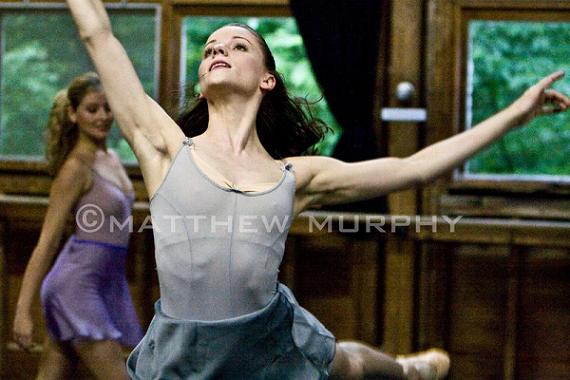
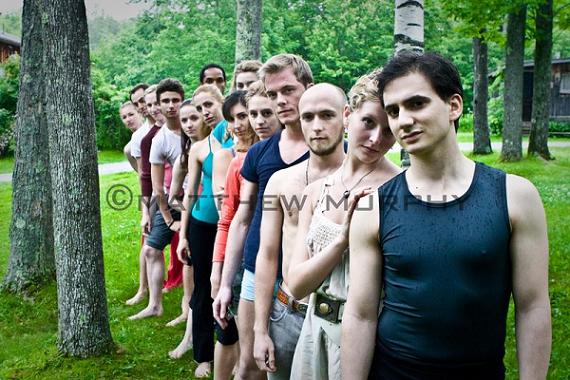
Photo by Matthew Murphy, of Avi Scher & Dancers when they performed recently up at Jacob’s Pillow. Choreographer and artistic director Scher is at the front of the group. All photos are taken by Matt Murphy and used with his permission. See more of his photos of Avi’s company here and here.

On Sunday, I went to Studio 5 in City Center to see the first full program by young choreographer Avichai Scher. I’d seen Scher’s work before, at one of the 92 Street Y’s Friday dance hours, and was very impressed, so I was excited to attend this program in the intimate Studio 5 space. I love the small space — you’re so close to the dancers, you can really see every little detail. I was also excited because Scher, who studied at the School of American Ballet (the school associated with New York City Ballet), uses a lot of NYCB dancers, and I’m still kind of missing them from the season ending two weeks ago!

I really loved the program. There were five pieces, four of which were choreographed by Scher, who I think is a very talented up and coming choreographer. His work is playful, humorous, lyrical, touching, and always meaningful and evocative.

First on the program was Last Dance, a ballet he choreographed in memory of Jenn Jansma, a 21-year-old ballerina with the Carolina Ballet who passed away of cancer. So horribly sad. The dance was really beautiful, very lyrical, with lots of wispy, flying, birdlike movements. There were eight dancers altogether here but Abi Stafford danced the lead, who I imagined to be Jansma, young and innocent, at the end, heavenbound. Abi, is, if you don’t know, a principal dancer with NYCB, and she gave such a touching performance. She is really such a compelling dancer, especially when you see her up close like this. She makes everything so real and personal.

I mean, you feel like you’re going through everything with her, if that makes sense. She is really starting to impress me lately. I’ve always noticed her superior dance ability, but I think she is beginning to come into her own artistically as well. There was also a really sweet duet between her and David Prottas in this piece. He is also a standout dancer with NYCB.

6a00e3982574bd88330115718f8e91970b-800wi1

Second on the program was Aquilarco, a duet from 1999, choreographed by Val Caniparoli, danced by Scher himself and Racheal Prince. Originally danced by San Francisco Ballet, this was a really cute piece — like a balletic Flamenco, very flirty and playful with lots of original movement and intricate partnering.

Next was a fun piece, just recently created by Scher, called Our Love’s Defense. It’s a duet, performed by Melissa Hough (a new principal at Boston Ballet) and NYCB’s Christian Tworzyanski. The music, by Jason Mraz, reminded me of ragtime, and the dance was about two lovers fighting and making up. They wore wrist supports that kind of resembled wrestling gloves and the movement in places looked a bit boxing-like, but playfully so. Toward the end, the dance became seductive, and they eventually ripped off their outer clothing, stripping down to their underwear, before embracing. Very sweet dance!

Next was a world premiere, No Matter What, for six dancers. The music, by Aphex Twin and Adam Lewis, was kind of new-agey and reminiscient of waves, as was the movement. It was interesting — it looked at times like the dancers were inside of invisible boxes, trying to work their way out. But the movement was more fluid than robot-like. At times, the dancers looked like creatures, with very fluid, waving limbs. This was the only dance that wasn’t on pointe. There were lots of interesting, Balanchine-like pattern changes among the dancers; at the end, they all stood in a huddle, looking up toward the light, as if they’d finally found their way out of whatever might have been imprisoning them.

Finally, we saw Mirrors, a work still in progress. It was my favorite! It involved seven dancers, and they were all mesmerizing. They would by turns, dance freely, playfully, then look as if they were catching themselves in a mirror, checking themselves, sometimes pleased but often not. Dena Abergel from NYCB did a tremendous acting job with this. She really blew me away. As did Abi again. At the end, it seems like the two are two sides of the same person. They turn in a circle, each her back toward the other, one seemingly content, the other not, one with her hands to her face, covering her eyes, the other her arms spread out.

6a00e3982574bd88330115709a5b6c970c-800wi1

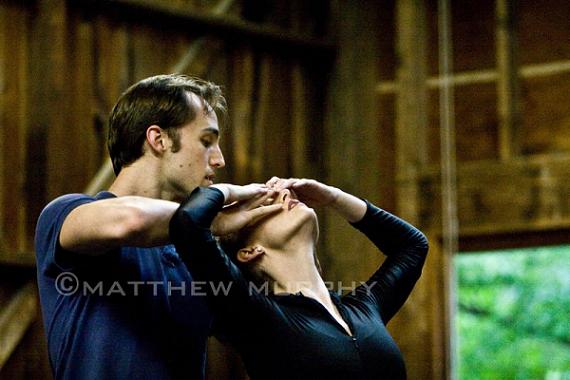
My favorite part of this piece though was a gorgeous duet between NYCB principal Jared Angle and the wonderfully willowy, rather bewitching at times, Alexsandra Meijer, a principal with San Jose Ballet. There were some lovely lifts, beautiful partnering, and one movement theme was his repeatedly covering her eyes with his hands, preventing her from looking, presumably at herself in a mirror. She reminded me a bit of Janie Taylor, really mesmerizing with loose, sometimes spidery limbs. And Jared is so gallant and such the perfect male partner, and such an excellent dancer. You can really see that up close. You can tell why he’s a principal; everything he does is perfection.

Anyway, I can’t wait to see more of this dance; I can’t wait until it’s finished. And I can’t wait to see more of Avi’s work in general.

Two Big Ballet Companies Begin Their Winter Seasons

Last night marked the start of Miami City Ballet‘s New York City Center season, which is very exciting because, not only is this that company’s Manhattan debut, but it marks the return of the company’s director, the famous Edward Villella, to the stage on which he began his career as a ballet dancer, in 1957, with Balanchine’s company — New York City Ballet. NYCB’s current home, the State Theater (now known, after recent renovations, as the David H. Koch Theater) wasn’t yet built then so City Center was the company’s main stage. I’ll be going to a couple of their performances later in the week and can’t wait. I especially can’t wait for Tharp’s In the Upper Room, one of my favorites. So psyched they’re doing it!

Last night was also San Francisco Ballet’s opening night gala. The co-founder of Twitter was there and he mobile tweeted that the event was like an unofficial Twitter headquarters. Most cool! Hopefully, we’ll be getting a full report of the evening from Jolene.

Superstars Night 2

Okay, so I made sure I saw it tonight. Eh, yeah agree with people saying it’s rather boring (see comments on first post, below). Something about the television just kills some forms of dance, unfortunately.

I loved Maria Kochetkova (who is currently with San Francisco Ballet) dancing the Kitri solo from Don Quixote, but it was so disappointingly short! And somehow ballet doesn’t always translate so well to the screen. But I loved that the judges recognized what a great technician she is and all gave her high scores. I thinks she was second of the solosists.

Continue reading “Superstars Night 2”

Superstars of Dance

Okay, I’m a dumbass and missed it last night. I thought it was premiering tonight. Did any of you guys catch it? What did you think? I just learned that San Francisco Ballet’s Maria Kochetkova will be on tonight, dancing as the ballet soloist for Russia! According to her blog, she’ll be dancing a Kitri solo from Don Quixote. Will definitely be taping and / or watching!

Nutcracker on PBS This Wednesday


If you don’t want to miss a Christmas classic, but don’t want to shell out the money in this crap economy, no worries. San Francisco Ballet‘s Nutcracker is going to be on PBS this Wednesday.

I viewed an advance copy and it’s really one of the better Nutz I’ve seen. San Francisco Ballet is one of the best ballet companies in the country, in the world really, and they’ve done a lovely production. Kristi Yamaguchi, Olympic gold medalist in figure skating and Dancing With the Stars champion last season, introduces. She’s from the Bay area and talks about how this company, which her mother would take her to see as a child, really made her fall in love with the beauty of movement and the thrill of performing. This production is set in San Fran, during the 1915 World’s Fair, so it’s a bit updated in terms of the costuming and sets (both of which are gorgeous), and Yamaguchi gives a nice little half-time historical talk.


And the dancers are spectacular. Davit Karapetyan is probably the hunkiest Nutcracker / Cavalier I think I’ve ever seen (remember how I was going on about him when I saw the company here in September!), and Maria Kochetkova is radiant as the grown-up Clara. Yuan Yuan Tan is a lovely Snow Queen. And of course the music — Tchaikovsky is the greatest composer ever. Okay arguably…

So, PBS Wednesday, the 17th at 8pm in NY. Go here for local listings.

Sunday Perusing

If you’re having a lazy Sunday afternoon, here’s some reading. Some of these links are a bit old; you may have read them already:

Joan Acocella on San Francisco Ballet (she likes at least two of the same dancers as I, and gives a good overview on the company and reasoning behind its repertoire);

Robert Gottlieb reviews a new book on Balanchine by Nancy Goldner (whose writing sounds comfortably accessible, almost bloggy!) in the NY Review of Books;

Apollinaire Scherr on how to view a Wheeldon ballet, and suggestions for Wheeldon’s future in this troubled economy;

James Wolcott, in his usual hilariously hyperbolical manner, recounts his experience with ABT’s new ballet Citizen;

Alex Ross explains what went wrong between the original Doctor Atomic and the Met’s version of the opera;

Claudia La Rocco laments Gerard Mortier’s decision not to take on the directorship of New York City Opera and wonders what will happen with the planned Brokeback Mountain opera (which I was really looking forward to);

Counter Critic reflects on the passage of Proposition 8 in California.

Happy Sunday, everyone. I’m off to cover my first dance class for Explore Dance. First, meaning, I’ve never written formally about a dance class before… Please wish me luck!

Guardian Angel, Chase Brock Experience, Three Movements, San Francisco Ballet, Cynthia Gregory, Doctor Atomic


Blah! I had a very strange dream last night in which this one basically told me in his own sweet way that I need to calm down and not stress over blogging like a mad fiend. I have no idea why Angel Corella was on my mind since, although my favorite ballet company begins their City Center season tonight, he, for the second CC season in a row now, is not participating (likely to work on his own company, in Spain). Which is probably why he invaded my dreams — I’ll be missing him badly these next two weeks.

I do know why blogging like a crazed nutter was on my mind. I’m trying to juggle way too much. I’m like a rabbit on speed these days. While I love blogging about dance, sadly, it doesn’t pay and I need to spend less time writing ridiculously long reviews (which I don’t think people appreciate anyway) and more time on paying work (and on writing the two novels I’m currently working on simultaneously, as well as revising my first, and on legal CLE courses so I can keep my license). I honestly think I was less busy when I was practicing law full time.

So, in the interest of shorter reviews (there will be a couple of longer ones in other publications, and I’ll link when they’re up), here goes my last, insane, week:

1) Chase Brock Experience:


Went to this last night. Was supposed to see Danny Tidwell perform as a guest artist but he didn’t show, nor did Neil Haskell. Edwaard Liang did, and he and Elizabeth Parkinson (Tony-nominated star of Tharp / Billy Joel project, Movin’ Out, pictured above in John Bradley photo, taken from here) were, by far, the highlights. Parkinson, in specific, showed me how a great dancer can make any choreographer look good. Everything she did had meaning, even basic choreography (and Brock’s choreography is very basic) like rising to the balls of her feet. The way she went on releve was heavenly.

I hadn’t heard of Brock, but he’s a 25-year-old choreographer who makes theater, modern, and ballet (non-pointe) dances. His modern and ballet were lacking — choreography was very basic, very unoriginal. It was like he was a Larry Keigwin but without the ingeniousness, originality, and sophisticated sense of humor. He’s young though, and can learn a lot by watching other, more sophisticated artists.

2) Three Movements

This is an off-off-Broadway play on Theater Row I saw on Sunday, about the Balanchine, Tanaquil LeClerq, Suzanne Farrell true-story melodrama. The characters were given different names, but playwright Martin Zimmerman made clear it was based the Balanchine story.

First, I finally got to meet (NYTimes writer and now blogger) Claudia La Rocco, in the elevator of all places! Fun fun – -by far the best part of the afternoon, as well as hanging out with my ballroom friend, Mika.

If you’re not a balletomane, story is basically this: Balanchine, the Russian / American choreographer, could only work, and could only fall in love (non-sexually, as many contend he was a closeted gay man) with ballerinas who could be his muse. He often married his muses, but of course, no sex. He married his muses, then obsessed over their bodies, every little flaw, and starved them (in the documentary Ballets Russes, many of the dancers remember him taking food away from his wife Maria Tallchief, because she was too “fat” — ie: large-boned; their marriage lasted approximately 5 minutes, because Tallchief had a brain). Is it obvious yet how much I like Balanchine as a person?

So, he married Tanaquil LeClerq, up-and-coming ballerina extraordinaire, his main muse, and therefore star of all of his ballets. After driving her hard in rehearsal — the choreographer comes across here as completely impossible to please — she collapses, tragically stricken with polio, unable ever to walk again. I don’t know why more writers don’t focus on her — her story seems the most awful, the most pathetic, the most heart-wrenching. Because she can no longer be his muse, he falls out of love with her. He must look for a new one, which he finds in 18-year-old Suzanne Farrell. Of course he falls in love with her, dumps bedridden LeClerq, and proposes to Farrell (he’s 60, mind you, and is dumbfounded when she doesn’t accept). But Farrell is in love with a male ballet dancer in the troupe, Paul Mejia. In a jealous rage, Balanchine fires Mejia (yes, the man is a walking advertisement for the need for sexual harassment law), fires Farrell, and threatens she’ll never be anything without him, etc. etc.

It’s very hard to make Balanchine likeable. Here, I could tell there were many in the audience who knew nothing about him, judging by all the snickers and harrumphs when the actor (Mike Timoney) recited his more misogynistic fare (telling Farrell her tiny thighs were too fatร‚ — which the dancer recounts at the beginning of her autobiography, so it’s not untrue — and screaming at her later when she tries to leave him, telling her he didn’t teach her, but “created” her — the man had a major God complex, to put it mildly). To me, this play did nothing to make me feel any sympathy toward Balanchine whatsoever. Nor did I feel what it was about him that made his work genius. But, then, I already knew the story and had preconceived notions of how I’d feel upon seeing it dramatized. Perhaps someone who didn’t already know the story is a better judge here?

It’s no mystery why writers choose to re-tell this story. It makes for great drama. Of the fictionalized accounts I’ve read though, I like Adrienne Sharp’s the most, and recommend it, particularly if you don’t know the story (it’s a short story contained in this collection, all about dancers). She most softened Balanchine’s edges, making him human, vulnerable, and to some extent, even forgivable.

The play runs through October 26th and tix are $18.

3) San Francisco Ballet


Went back for more on Saturday, and loved them again. Dancer-wise, they are one of the best companies in the world. Everyone, down to the most recently-hired corps member, is just flawless. Standing out to me again were the same ones as before — Lorena Feijoo, Davit Karapetyan, Pascal Molat (their bravura dancer), and the newbie Cuban guy Taras Domitro — probably because I was looking for them; they also had main roles though.

As far as the dances go, my favorites (I saw two out of three programs) were Concerto Grosso and On a Theme of Paganini, both by the company’s artistic director, Helgi Tomasson; Ibsen’s House, by Val Caniparoli, whose work I’d never seen before; and Balanchine’s The Four Temperaments. Sir Alastair did not like anything on that list besides the last and, though I disagree with him, I can see his point. Tomasson’s choreography is very basic, very classical ballet, nothing out of the traditional vocabulary, and nothing like the richness, the variety, the suspenseful development, and the engrossing intricacies of Balanchine. Seeing the Balanchine next to Tomasson makes you realize Balanchine’s genius (the way a play about him likely never could).

But what I like about Tomasson is that he knows how near-perfect his dancers are, and he showcases that to maximum, brilliant, spectacular effect. Concerto Grosso is basically a male ballet class, beginning with simple tendus, all the way up to the super-advanced ginormous leaps, barrell turns, and twisty, impossible-looking corkscrew jumps. These men are such excellence personified, I could sit there and watch that ballet repeat all day long. In fact, I recommend to anyone seriously trying to learn ballet to see this company, and watch very closely. The dancers are not only perfectly precise, every movement perfectly, fully executed, but they somehow add so much character and passion to every little thing they do. Even non-story ballets grow to have little narratives with this lot.

Which is why I liked Ibsen too. This is not so much a rendition of any of Ibsen’s plays as a kind of an expressionistic work of Ibsen’s universe. Women wearing richly hued fabrics in 19th Century designs, dance in solo, in units, and with their men, all of their stories fraught with drama, with anger, conflict, love. I didn’t know what exactly was going on in each little segment, and I don’t think the choreographer meant for you to, but watching the dancers lament, cherish, struggle both internally (which, brilliantly, could be read on both face in movement of the body, particularly with Feijoo) and with each other, was deeply engaging. And made me want to read up on my Ibsen!

Philip has some more great pictures of the company on his blog, here and here.

4) Cynthia Gregory at Barnes & Noble


On Friday night, I went to see the legendary ballerina give a talk with writer Joel Lobenthal at the B&N at Lincoln Center, basically to promote her new DVD, of her dancing with equally legendary Fernando Bujones (now deceased). We saw some clips of that DVD, particularly of her dancing Strindberg’s Miss Julie (had no idea there was a ballet made from that play!) and excerpts of her dancing Sleeping Beauty. She was a truly gorgeous dancer, moved with a great deal of emotion and purpose and fluidity, and with her size, seemed to devour the stage (kind of like a Veronika Part). And she was very dramatic, very expressive — would have been my kind of dancer, and I can see why Apollinaire loves her. Apollinaire’s also right about Bujones: he does resemble my favorite!

Gregory has a sweet, very charming personality. She talked about dancing with Bujones, and her various other partners, including Erik Bruhn, and Nureyev, whom she characterizes (unlike many who’ve worked with him) as very sweet and mild-tempered, albeit passionate, and said she was thinking of writing a book about all of her male partners — she danced with basically everyone who was anyone in the 70s and 80s. She was greatly encouraged to do so (write the book, that is) by the crowd (which pretty much packed the reading room).
One thing I found interesting, she said Bruhn taught her how to make up words to her movements and her miming gestures, which helped a great deal with her acting. Brilliant, Erik Bruhn! So, inside, she was singing words to herself while dancing. I think all dancers should do this, so they know what they’re trying to do, all the better to show us.

She talked about what she learned from other female dancers of her day, Carla Fracci (how to imbue her roles with humanity), Natalia Makarova (making the most of slow, dramatic developpes), how she coaches today, what it was like to work with big choreographers like Ashton, Tudor, and Balanchine (only worked with the latter once), traveling with the company, and just her life in general. She also mentioned she’s taken up painting and there will be a showing of her work in December at the Vartali Salon (yes her hair salon!), in NY.

5) Doctor Atomic


I saw this opera at the beginning of last week at the Met. It tells the true story of J. Robert Oppenheimer and his work in creating the world’s first atomic bomb, which we of course dropped over Hiroshima and Nagasaki, during WWII. The opera takes place before we bombed Japan, though, in July 1945 when Oppenheimer and his crew were testing it in New Mexico. It deals with the different personalities involved — Oppenheimer and his wife, his co-workers, the demanding military man who oversaw production — and each person’s internal conflicts and power struggles with the others.

Because I am tired and hungry — I started this post nearly 4 hours ago — I’m just going to refer you to Anthony Tommasini’s review for description, to scenes of the opera on the Times website, to the Met’s mini-site, and to Alex Ross’s blog where you can listen to one of the best arias in the work.

As I said before, I don’t have a lot of opera-going experience, but I liked this and think it’s definitely worth waiting in line for one of those $30 tickets, as I did. In particular, I liked: the sets — the mobile art-work suggesting pieces of debris hanging from the ceiling, the enormous bomb itself (anatomically correct, as the artist worked from a model), the cubicle-d office the physicists worked in, the posters of the actual people involved posted at times over the cubicle holes in place of their bodies, the gorgeous Native American katchina-like statues that at one point stand atop the the cubicles in warning; some of the choreographed movement — at one point singers are contorted in their cubicles, limbs askew, doing a prolonged handstand, their legs and feet bent awkwardly, shoved up against one side — in synecdoche of the effects of the blast; the libretto, comprised of actual documents from that period, writings and speeches of Oppenheimer, and the poetry of Baudelaire, John Donne, and Muriel Rukeyser, beloved by Oppenheimer; and of course the John Adams score itself, creating the whole atmosphere of horror, conflict, fear, and at the end, right before the blast, the drums just beat through your body — I was actually shaking — and this is followed by the voice of a Japanese woman searching for loved ones, for water, asking for help. The whole thing is spectacular, chilling, haunting.

Okay, I don’t know how well I obeyed, Angel, but it’s time to stop, time for my poached eggs & croissant ๐Ÿ™‚