
Benjamin Millepied’s “Plainspoken”

Last Thursday was NYCB’s Fall gala, during which they presented the New York City premiere of Benjamin Millepied’s Plainspoken (photo at left, of Teresa Reichlen and Sebastien Marcovici, by Paul Kolnik; the ballet originally premiered in Wyoming this August), along with Robbins’ fabulous homage to Fred Astaire and Rita Hayworth, I’m Old Fashioned, and Balanchine’s Tarantella and Western Symphony.

The evening began with the orchestra pit rising and the always lively Faycal Karoui leading the orchestra in a rendition of Leonard Bernstein’s Candide Overture. I love that movable orchestra pit – best thing, in my opinion, about the recent renovations to the Koch Theater.

I was hoping there would be introductions and short speeches, including one by Sarah Jessica Parker, who served as honorary chair for the after-performance party. But no such luck – I guess because it wasn’t the beginning of the season, like galas usually are. I didn’t even get to see Parker come down the red carpet, there were so many paparazzi blocking my view. I certainly heard her though – or, rather, the paparazzi, as they screamed her name like she was the Messiah. I didn’t recognize anyone else. Lots of good-looking people perfectly coiffed and dressed in black tie but no one I recognized. I didn’t see Natalie Portman, though I heard she was there. I never recognize famous people, though. I’m really bad that way.

Anyway, I’m Old Fashioned was, as always, enjoyable, albeit too long. No dance-maker needed an editor more than Jerome Robbins in my opinion- and Tyler Angle stood out to me in his solos and duets with Maria Kowroski. But my favorite part of the evening was the second half of the post-intermission, when Ashley Bouder and Daniel Ulbrich just nailed Balanchine’s super fast-paced bravura-heavy duet, Tarantella (Ulbrich smacked the tambourine so hard one of the little metal things came flying off) and then Sara Mearns just astounded me in the last section of Western Symphony. How in the world does she stand on pointe, on her own unsupported by a male dancer, and lift her other leg in the air into a perfect split, into practically a six o’clock penchee? How how how? She and Charles Askegard really put on a show as tart-y saloon dancer and cowboy. She is really just unbelievable.

Okay, so onto Plainspoken. Well, sometimes I like Millepied, and sometimes the work just falls a bit flat to me. I didn’t much care for this one, though I’ve liked his last several ballets for ABT and NYCB. This was very abstract, no story that I could find, and I’m just not a fan of purely abstract ballets that I can’t find any story in whatsoever. It was a ballet for four couples: Sterling Hyltin and Tyler Angle, Teresa Reichlen and Amar Ramasar, Jennie Somogyi and Sebastien Marcovici, and Janie Taylor and Jared Angle (the last were generally my and my friend’s favorite pair – I think because Janie always brings something dark to her roles, there’s always something beneath the surface with her even if you can’t put your finger on what it is). The couples sometimes changed partners though, and there would be different-sized groupings.

The music was by Pulitzer prize-winning composer David Lang – it was a commissioned score – but to me the music here wasn’t nearly as rich as, for example, that used by Morphoses recently. This was mainly strings and piano and each section seemed emotionally the same. There didn’t seem to be a lot of contrast between the movements or a build-up toward the end. The sections were each differently lit – by a different color and a background curtain that would rise and lower to reveal more or less light than the section before. But the set was nothing very dramatic and the different colors didn’t, for me at least, evoke a different mood.

Movement-wise, there seemed to be a swimming theme. At various points the dancers would sit on the floor and make motions evocative of swimming – sweeping arms through the air, paddling legs – backward, then forward, then all dancers lying on their backs with their feet in the air like a synchronized swim team. At other points, the women would be carried somewhat Chaconne-like across the stage. I remember a slide characterizing Janie’s section, and she made it seem as if she was being taken by the men who slid her, against her will, across the floor.

I also have in my notes that the movement toward the beginning, in the first section, was a combination of robotic and more casual walks, kind of like the ensemble walking across the back of the stage in the second part of Robbins’s Glass Pieces. This kind of movement was interspersed with the swimming-like motions. In later sections, dancers seemed to run in place.

Oh, and during Janie’s section, there was a point where the men all picked her up and hoisted her high above them, like in MacMillan’s Manon or the Balanchine ballet where the woman is carried around the whole time by a group of men and the lone man on the floor keeps reaching up for her (sorry, can never remember the name of that ballet). My friend loved this part, and I did as well, but couldn’t really figure out how it played into the rest of that section.

In general, my first impressions of this ballet were: some interesting movement reminiscent of other ballets that didn’t seem to add up to much and didn’t really make me feel anything.

At the end, Millepied, Lang and the costume designer (Karen Young) and lighting designer (Penny Jacobus) took the stage for a bow. The applause seemed more polite than hearty (in contrast to the crazy applause Wheeldon always gets!), but that could just be me projecting my own thoughts onto everyone else.

What about you guys? I saw some mentions on Facebook of people liking it. Who else saw it and what did you think?
MAURICE KAPLOW’S FAREWELL PERFORMANCE WITH NYCB


Thursday evening longtime New York City Ballet principal conductor Maurice Kaplow gave his final performance with the company. I had never been to a conductor’s farewell before, and, of course, part of what made this extra sensational was that the newishly mobile orchestra pit (photo above) was raised to stage level for part of the program.

There were four pieces in the program: Melissa Barak’s recently premiered Call Me Ben (the only piece Kaplow didn’t conduct), which was followed by Euryanthe, the Barber Violin Concerto, and ending with Western Symphony.

Euryanthe was only an orchestral piece – no dancing, by Carl Maria von Weber. When Kaplow first took the podium, everyone cheered, which grew into a standing ovation as the orchestra pit rose. One thing I didn’t realize (we’ve only seen the pit rise once before, during the first NYCB program following the Koch theater’s renovations last year) was that the conductor can’t stand at the podium while the pit is rising and falling; he must step down into the musicians’ area. When the pit was finally level with the stage and he climbed up to the podium, he looked out toward the applauding audience and took a grateful bow. Euryanthe was really beautiful, with a lovely, almost sentimental (given the occasion) violin section, followed by an exciting drum-heavy climax. It was nice to see the orchestra for once, and to be able to focus on the music.

Peter Martins’s Barber Violin Concerto really blew me away. I’d never seen it before, and I have to say it’s now one of my favorites of his.


Pictured from front to back: Megan Fairchild, Sara Mearns, Jared Angle, and Charles Askegard. There are two couples in this piece – one a classical ballet pair, the other a modern dance duo, and at first they dance each with their rightful partner, then the two members of the modern couple break apart and dance with the opposite sex ballet dancer. When I interviewed So You Think You Can Dance’s Billy Bell a while back, he’d laughingly said something to me I found funny, that as a hopeful choreographer he sought to “break” ballet dancers, meaning he wanted to get them to loosen up, not be so rigid and controlled with such straight, upright posture, and get them to really move. This piece reminded me of that. At first Sara Mearns’s classical ballerina in pretty satin pointe shoes wants nothing to do with this crazed barefoot Jared Angle, but eventually she realizes he’s not so bad and they do a quite nice pas de deux together.

Same with Megan Fairchild and Charles Askegard, except choreographically they were more fun, and Megan totally blew me away and made me think she is really a modern dancer. She was the most compelling person onstage and I couldn’t take my eyes off her, despite the fact that one of my big favorites, Sara Mearns, was up there with her. Megan looked like a real Paul Taylor dancer but even more stunning. Her character really taunted Charles Askegard’s classical danseur, jumping on his back, wrapping her flexed feet around his middle, darting in between his legs, really kind of climbing all over him. He looked tormented, then eventually relented and they danced a pas de deux together too. Interestingly, people giggled throughout this part – where Megan’s modern girl is taunting Charles’s classical man –  and the critic next to me who’d seen the ballet many times before said he’s never heard people laugh at that section, that he didn’t think it was supposed to be amusing but more raw. Maybe it was because of their size difference — Charles Askegard is the tallest dancer in the company (I think he’s 6’4) and Megan’s this tiny little thing who looks rather doll-like. I found it cute and flirtatious and now I don’t think I’d like it if I saw it done more raw, though I’d love to see other dancers do it. I’d love to see this ballet again.

Also, as the title of the piece would imply, there’s a really beautiful violin solo (played by Arturo Delmoni), where the violin almost sounds like a human voice.

Last on was Balanchine’s Western Symphony. Andrew Veyette danced the male “Rondo” role and after seeing Robert Fairchild in this role last week I thought I’d never be able to see another dancer do that part. But, whoa, Veyette completely floored me. He was on fire as he kicked his heels up high in the air, sexily do-se-doed toward Teresa Reichlen (who was stunning as well as the female lead in that section), then whipped her off into the wings where he pretend kissed her. She’ taller than he is and at first I thought they weren’t a good match, but they kind of played up their height differences. I loved it.

As usual during the curtain call, the maestro came out onstage and took a bow. But of course this time he didn’t merely motion down toward the orchestra, directing the applause at them, but took the stage alone, and, like the retiring dancers, was greeted by a row of dancers bearing bouquets. Eventually, the entire orchestra came up bearing flowers as well. Peter Martins came out onstage and hugged him. Very sweet. Then, Martins led the orchestra (joined by the audience) in singing “Happy Birthday,” so apparently it was Kaplow’s birthday as well. He’s been with the company for 20 years. I’ll miss seeing him in the house.

Photos by Paul Kolnik.

MISSING ARIZONA


I haven’t been to Phoenix since early 2001 and I’ve been getting a bit homesick for the desert. Everything seems to be reminding me of the Southwest lately – even last night’s NYCB program with Melissa Barak’s new ballet, Call Me Ben, set in Vegas with its Santiago Calatrava-designed desert-themed backdrops, and then Balanchine’s Western Symphony with the cowboys, saloon girls and Old Tombstone-looking stage piece.


Albert Evans and cast in earlier NYCB Western Symphony production, taken from Explore Dance. Photo above that of the main street in Tombstone, AZ, taken from the city’s website.

I have to get out there soon.

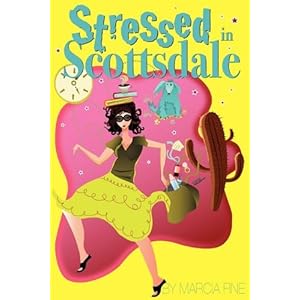
In the meantime, just ordered this book, which looks like the perfect proverbial beach read.

The photo of the little guy at the top of the post, by the way, is taken from the Facebook page of my childhood friend who operates a kind of traveling zoo featuring reptiles native to Arizona, exposing children to and creating respect for their unique little charms.