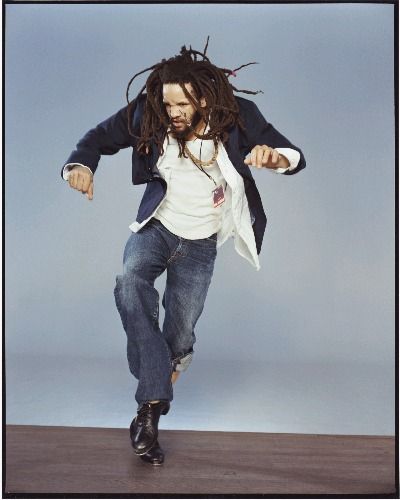
NILAS MARTINS QUIETLY RETIRES FROM NYCB


According to the New York Times Arts Beat blog, Nilas Martins, longtime principal with New York City Ballet (and son of Artistic Dir. Peter Martins) has retired. Without a farewell performance, without flowers, without fanfare. The story is that he has a knee injury and suffered continuing problems with that, and ended up getting a job with the DeVos Institute of Arts Management at Kennedy Center and just didn’t feel up to coming back and giving a final performance. I can’t say I blame him. He’d received so much criticism the past couple years he probably just didn’t want to see the onslaught of newspaper articles. I want to write a larger post about this, but I received a recent comment on one of my prior posts on a NYCB retirement (that I now can’t seem to find) about how the critics were too negative with  the retirements, writing about the dancers’ faults toward the end instead of their entire career.

It’s a real issue.

I do believe, as Arlene Croce famously said, that a critic’s duty in a democracy is to be critical. But on the other hand, I feel like maybe different standards should apply for the retirement performances. The person is retiring, do their current weaknesses at the end of their long career and the fact that they’re not dancing as well as they did in their twenties and early thirties really need to be focused on? It’s probably easily assumed by the public that they’re not dancing as well as they once did.  And poor Yvonne Borree – the critic assigned to cover her farewell was the youngest on staff; too young to have seen Borree dance in her prime, so all she could say, apart from describing the performance, was that she as a viewer couldn’t ever connect with her. And she should have said what she felt without buttering it up; she’s a journalist not a publicist. But couldn’t they have found someone who’d followed Borree’s career and saw what had been so special about her cover her final performance?

Anyway, more thoughts on this later. For now, I wish Nilas a successful arts management career in DC.

Above photo from the Daily News.

IS SO YOU THINK YOU CAN DANCE "CULTURALLY RADICAL"?

Here’s an interesting perspective from the Huffington Post’s Miles Mogulescu on So You Think You Can Dance:

“Here, the culture wars of the past 30 years appear over, at least for an hour or two, and the progressive side–which has stood for racial equality, gender equality, and gay rights–is the undisputed winner, without the need even to overtly comment about it. I’m not sure what Glenn Beck, Sarah Palin, or the editorial page of The Wall Street Journal would have to say if they were watching. But then, Rupert Murdoch has never been known to let his conservative political views get in the way of making a buck.”

I’m not sure that I agree with him that the show represents a huge but unspoken triumph for women’s or gay rights but I find the race issue interesting because I’ve had several people comment on my own Huffington Post pieces on the show saying how great it is that blacks and whites and Asians and Latinos are all dancing together without issue. I guess I never even noticed because it’s so ridiculous to think that it should be any other way. And it’s not, in New York. Is it still in other parts of the country??? I mean, really, both on the concert dance stage and in social dance clubs there just doesn’t seem to be a race issue, unless I really have my head up my butt…

OSIPOVA AND HALLBERG IN ROMEO AND JULIET

Here are a couple of photos of Natalia Osipova and David Hallberg at curtain call yesterday after her debut as Juliet, taken by Len Zernov from The Faster Times. I’m hoping to receive more photos soon and will post them asap! Read Marina Harss’s review of Osipova (she compares Osipova with Paloma Herrera) here.

MORE PHOTOS OF CALATRAVA’S AWESOME MIRAGE SET


Above are a couple more photos of Peter Martins’ new Mirage ballet, which I wrote about here, that better showcase Santiago Calatrava’s stunning architectural set. I’d described how it closed at one point, and you can see that in the bottom photo, and I’d forgotten to mention that in the end it radiated a rainbow of color (top photo). Photos are by Paul Kolnik and are taken from Marina Harss’s excellent write-up in The Faster Times.

Funny, I recently discovered The Faster Times (I know Marina but I know her as a New Yorker writer) and was really amused to see that my very first ballroom teacher (the one who’s ultimately responsible for the title of this blog) is their ballroom critic!

THE INFLUENCE OF SO YOU THINK YOU CAN DANCE ON DANCE STUDIOS


Interesting article by Claudia La Rocco in the NY Times about the influence of SYTYCD on studios. (I missed SYTYCD this week; had really wanted to watch Thursday night but was at New York City Ballet all settled in my seat excitedly waiting for the premiere of Mauro Bigonzetti’s Luce Nascosta when I realized I’d forgotten to tape it).

Anyway, regarding this article: I have noticed in the last few Dance Times Square performance showcases that there have been several student / pro hip hop and lyrical routines (lyrical there meaning balletic modern, without shoes, like a contemporary routine on SYTYCD), which is odd given that it’s a ballroom / Latin studio. And the students are dancing with their same teachers, which means that ballroom / Latin specialists are teaching performance-level hip hop and modern dance. Perhaps in the future ballroom instructors will have to show fluency in more styles to get their jobs.

Broadway Dance Center (mentioned in the article), where I’ve taken ballet and jazz is an excellent studio by the way, if you’re in NY. So is Alvin Ailey extension, where I’ve taken Samba (Brazilian social / Carnival, not ballroom samba). They have everything at AA now, including Salsa and other ballroom dances, though I think they’re more geared toward social than competitive. But I think the attraction to Dance Times Square (aside from the fact the studio owners are now celebrities thanks to SYTYCD) is that they put on performances in real NY theaters, which gives students the chance to dance on a real stage. Alvin Ailey extension does too now; the students are performing in the theater inside AA studios, and Broadway Dance Center has its student showcases in the Martin Luther King Jr. High School auditorium, but it just feels different when it’s on a Broadway stage.

Anyway, I’m getting off track. But I do think dance styles are merging. You see more ballroom routines both in studios’ student showcases and on Dancing with the Stars that are looking lyrical these days, and more Latin routines that are looking very hip hop. And, as is mentioned in the article, some dance styles – like tap – are not visible on SYTYCD at all and are losing popularity in studios as well. I guess no one wants to bother learning an “unpopular” dance style… Nigel Lythgoe told La Rocco he didn’t think tap worked for the show because it’s so specific – it’s too hard to train general dancers in tap at such a level as to get performance-quality work out of them. Obviously it’s the same with ballet. It takes years, decades, to learn proper ballet technique, to even try going on pointe.

I really hope though that Lythgoe will continue trying to introduce general audiences to those styles not in competition on the show. Savion Glover and Jason Samuels Smith will sufficiently wow audiences (one of them has been on before, can’t remember which one), and all he has to do to make the masses swoon over ballet is to have Natalia Osipova on the show. I think the fun of ballroom and hip hop is in large part to learn them yourself, but the excitement of ballet is just watching.

Photo above of Mandy Moore and students by Stanley Kranitz, taken from the Times.

WEEKEND READING: BALANCHINE, DIAGHLEV AND WHAT'S WRONG WITH BALLET TODAY

I know it’s not the weekend yet – and I still have another post or two I need to get up before it happens – but I haven’t had time really to devour this article like I’ve wanted to and so wanted to link to it so you all can read it without waiting for me to become unbusy with never-ending book stuff. It’s from the New Criterion and is by Laura Jacobs. It’s about Diaghlev and all the excellent collaborations he engendered at his Ballets Russes – between Balanchine and all the brilliant artists who worked with BR – and it examines what might be different about today’s collaborations. I think it’s particularly compelling in light of all the new ballets being premiered this season at New York City Ballet, many of which just don’t seem to have the same substance as those Balanchine ballets despite the fact that there are some really brilliant visual artists and composers working with the choreographers. And I don’t think I’m the only one with those feelings.

Anyway, read the article and let me know what you think. I’m still trying to articulate my thoughts on the new Melissa Barak ballet that premiered last week. And, tonight is the second to last of the premieres – this one by Mauro Bigonzetti. We’ll see how that one fares…

THE STATE OF CRITICISM, PART ONE

I’m sure I’ll have much more to say on this over time, so I labeled the post Part One.

Here are a couple of write-ups from The Dance Enthusiast on the panel discussion on dance criticism two weeks ago that I took part in.

I was going to wait for the video to go up online so I could embed that or link to it but it hasn’t gone up yet. I usually take notes at such things, but since I was on the panel didn’t — and I feel lost doing a write-up without my notes.

Anyway, these two write-ups are good. We talked about how there are virtually no paying jobs for dance writers now, in the internet age, how there’s only one full-time dance critic in the country (no one was allowed to speak his name — but it’s Alastair Macaulay of the NY Times of course), and the situation is only getting more dire as newspapers let go more and more of their arts critics and close down entire arts sections.

Robert Johnson, esteemed longtime dance critic, currently at the New Jersey Star Ledger but he’s written and / or edited for practically every dance publication in existence (Dance Magazine, Pointe, etc.) was on the panel as well, and he was probably the person most knowledgeable about dance history and the history of writing about dance of anyone in the room. He’s a very nice man as well and I was glad to finally meet him. As Jowers points out in her write-up, when Marc Kirshner of TenduTV (the moderator) asked how newspapers got into this situation, Johnson pointed to an intriguing-looking book by Dolores Hayden and said it likely has a great deal to do with the suburbanization of American culture. Newspapers are local and most of them serve their urban communities, and with people leaving those urban centers and spreading out, there’s just not as much interest in what goes on in the cities anymore — like dance and classical music performances, art openings, etc.

That definitely resonated with me since many of my readers here found my blog through my writing on the dance TV shows and aren’t located anywhere near New York. I’ve tried to write about the local dance performances I see in a way that makes those people interested in seeing a performance,

Continue reading “THE STATE OF CRITICISM, PART ONE”

SOLUTIONS FOR SUSTAINABLE DANCE WRITING


I am going to be part of a panel discussion (my first time being on a panel) next Monday evening, April 12th, at 6 p.m. at the Joyce SoHo. The event will be in a town hall format (so discussion, rather than lecture-oriented) and is organized by Marc Kirshner of TenduTV. We’re going to discuss how to brand yourself as a dance writer, how to make money writing about dance, how bloggers can attract and retain the largest audience possible, how new media writers can maintain journalistic standards of integrity, etc. — basically issues pertaining to dance writing and new media. It’s for anyone interested in or concerned about this new world of arts criticism that we find ourselves a part of. To learn more about the meeting and to rsvp, visit the event’s Facebook page.

BRITISH SO YOU THINK YOU CAN DANCE


The esteemed Guardian critic Judith Mackrell tackles the British version of SYTYCD. And damn, their show looks so much better than ours!:

“Who knew we’d be seeing choreography by Henri Oguike, Rafael Bonachela and Mark Baldwin on prime-time Saturday TV, or hearing serious discussion of brisés volés? So You Think You Can Dance may have some of the naffest production values on the box, but it’s actually done the job of getting dance – other than ballroom – into the mainstream. And so far, I’m hooked.”


REVISITING BATSHEVA'S MAX

I just got an interesting comment (scroll down to last comment) on my post on Batsheva’s MAX, from someone who recently saw that performance in Bruges (one of my favorite places in the world, btw). I just point to it because I often find myself trying very very hard to appreciate a dance performance that bills itself as avant garde. And I often have a hard time not ending up with the same thoughts as that commenter…