James Wolcott on Deborah Jowitt in the Seventies

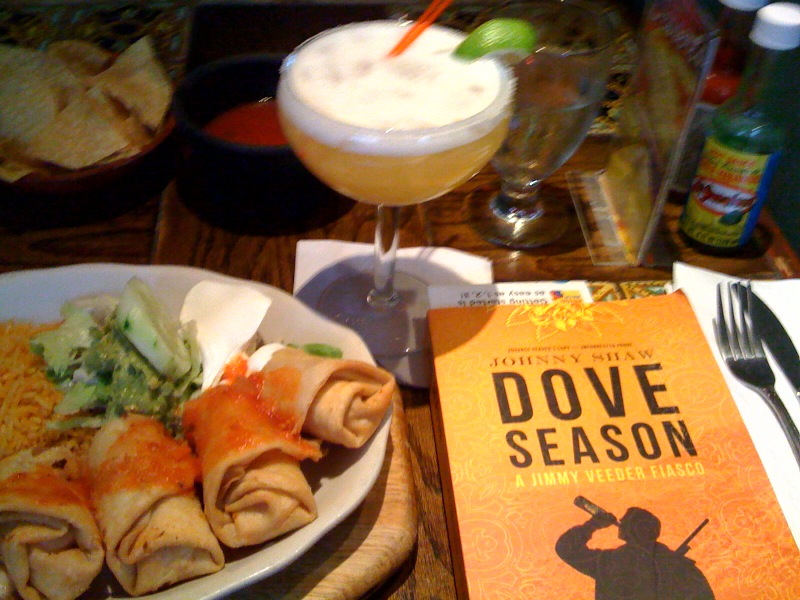
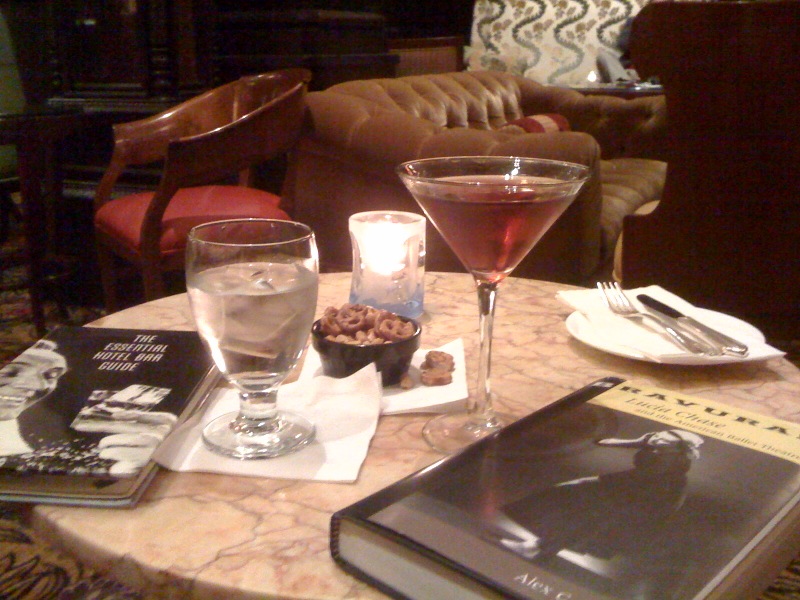
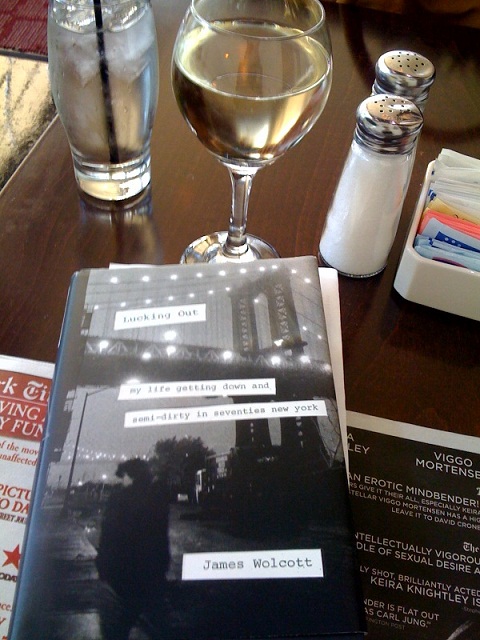
I’ve been reading James Wolcott’s memoir, Lucking Out: My Life Getting Down and Semi-Dirty in Seventies New York (photo above taken at the ArcLight Hollywood Cafe). It’s about his life as a writer in New York and his years working at the Village Voice in the magazine’s early days. (He got a job there after sending Norman Mailer a copy of an essay he wrote about Mailer’s appearance on a TV show for his school newspaper and Mailer went wild over it. It’s so hard to believe there was a time in NY when careers were based on talent and not on pedigree and Ivy League schools…)

Anyway, at the beginning, Wolcott describes several of the writers who worked at the Voice back then. Of course I was very intrigued by his words about the magazine’s now legendary dance critic:

“The dance critic Deborah Jowitt had the fine-boned fortitude of a frontier settler with eyes forever fixed on future horizons; her merciful consideration of even the most flailing effort and her descriptive set pieces suitable for framing set her apart from the tomahawk throwers.”

Apart from his brilliant writing (those metaphors, and adjectives!) I found this interesting because it seems that the “tomahawk throwing” form of criticism is so in vogue these days. I guess because in the internet age, incendiary writing begets comments which beget more readers, or ROI or what have you… I’ve had several people (mostly writers) tell me the problem with my blog has always been that I’m not critical enough – I could never be a “real” critic because I’m too nice, and forgiving of crappy art. Those same people are also critical of other, professional critics for the same. But what’s wrong with “merciful consideration” and rich description? Sometimes it’s far harder to try and find the value in something – to try to figure out what exactly the artist is trying to do and to place that attempt in context and describe why it’s worthy than it is to ridicule it or tear it apart. And description – especially of a largely abstract art form – is damn hard.

I feel Wolcott’s words describe Edwin Denby as well, and when I read his small pieces about dance in the forties and fifties, read together in book form one article right after the other, it’s like they tell a story of that era. I wonder if that sense of narrative would be lost in writing that focuses more on attack than on giving the reader an overall picture of what happened.

Anyway, it’s a really good book – Wolcott’s that is – and makes me miss New York – even though that’s not the New York I know, unfortunately.

Now off to a Michael Connelly reading at a Barnes and Noble that is thankfully more centrally located than blasted Santa Monica (even though I love Santa Monica). I still have to drive though. Am still so not used to driving everywhere. Every time I go out I’m still so inclined to walk or take the subway or bus. You just can’t though. They run infrequently or not at all at night and walking is impossible unless the event you’re going to happens to be right in the same neighborhood – and then you still may be walking a mile or so.

Settling into LA II: Santa Monica, Rose Bowl Flea Market, NoHo Arts Festival, and Universal Studios

Here are some more of my recent LA photos. I guess before really settling in, there’s a period where you just have to be a tourist 🙂

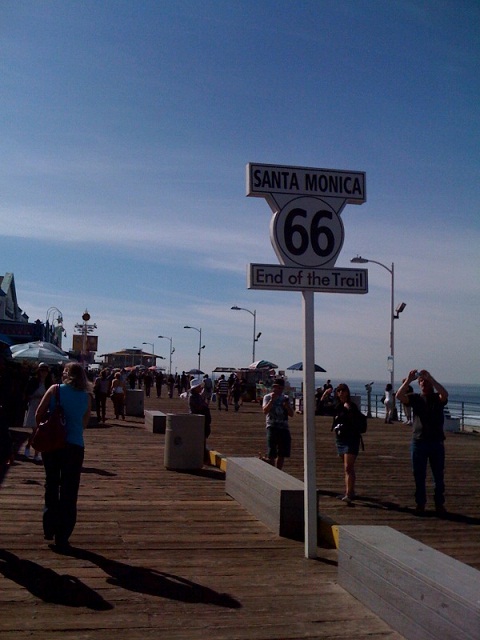
Most of my friends seem to live near Santa Monica, so I’ve been spending a good amount of time out there. Above is the Pier, where Route 66 officially ends.
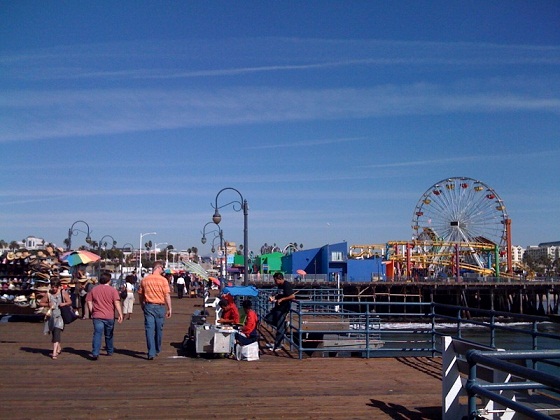
It’s a bit Coney Island-esque with the ferris wheel and all (which is lit up at night). Not nearly as fascinatingly cheesy though 🙂 And no Nathan’s hot dogs.
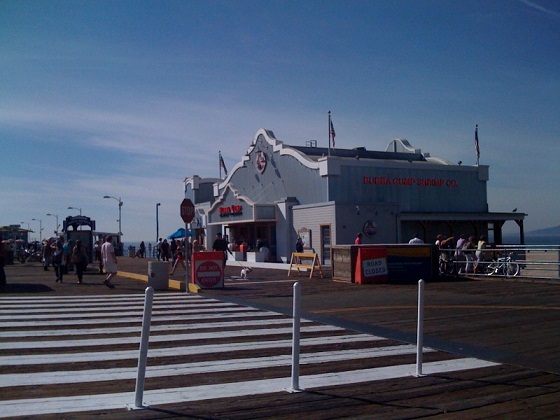
The Pier’s very touristy – mainly filled with souvenir shops and restaurants like this one, called Bubba Gump, and named after the movie, Forrest Gump, and specializing in seafood of course.
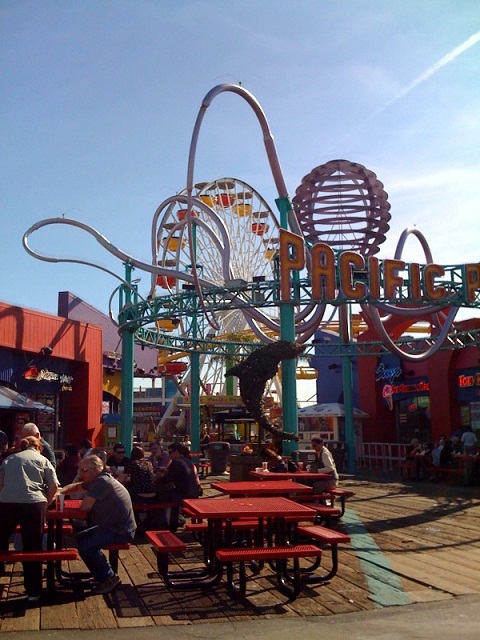
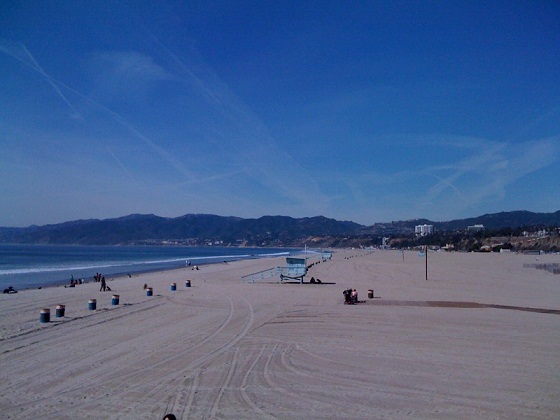
Here’s the beach.
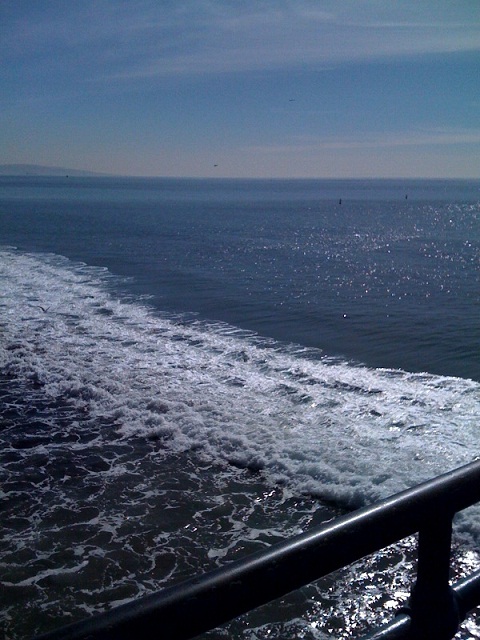
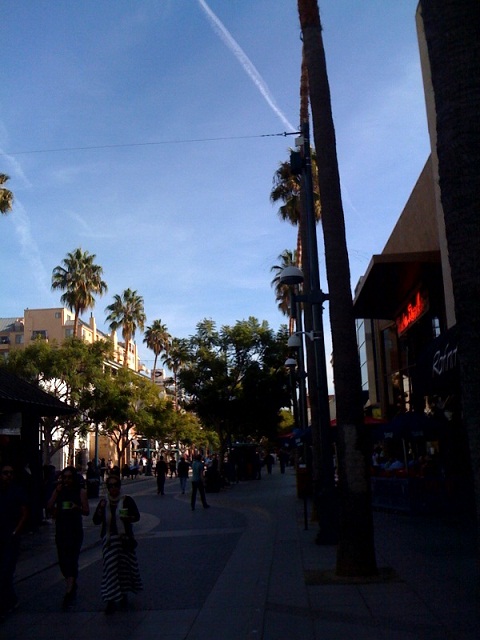
And here’s the Third Street Promenade (so named because its cobblestoned street, which goes on for three blocks, is vehicle-free), which is also pretty touristy, with lots of chain stores like Banana Republic and Barnes and Noble and Starbucks.
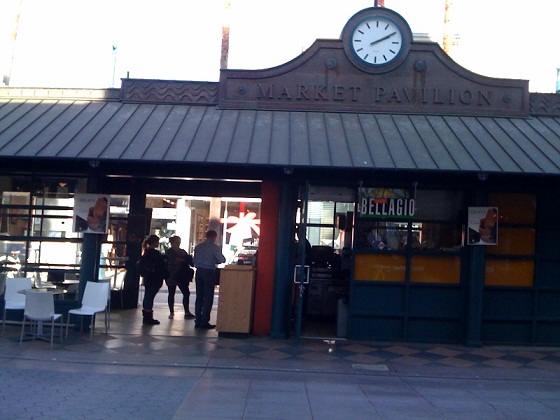
In places though it kind of reminded me of Vienna, with little cafes and wine bars in the middle of the street.
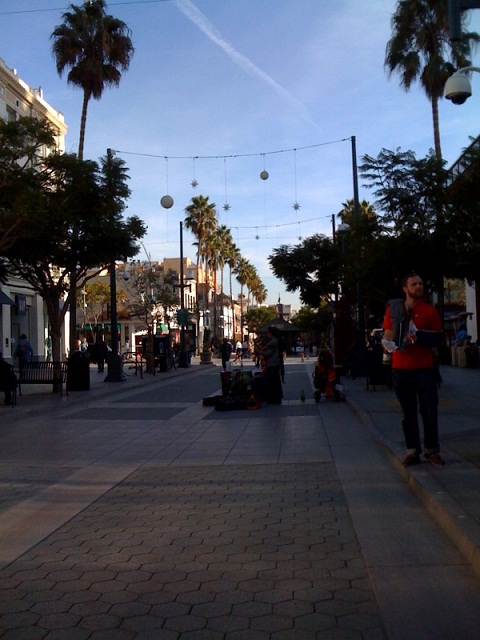
There were also some street musicians.
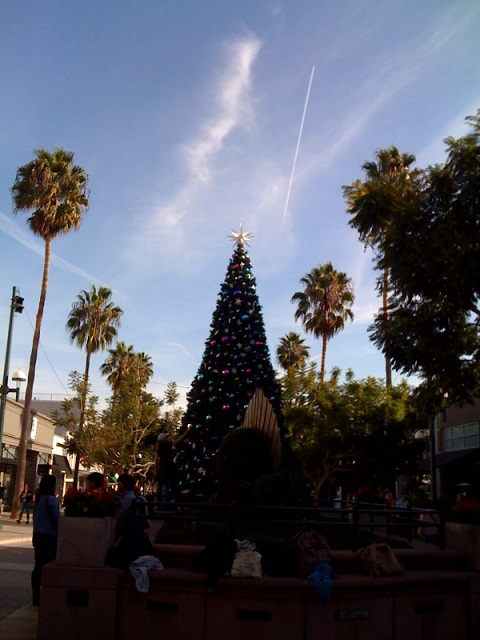
And a Christmas tree.
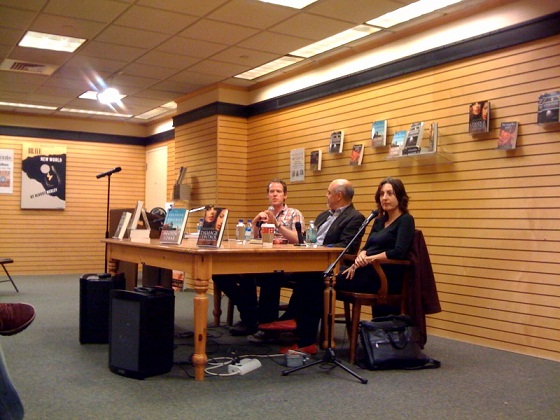
I went to Barnes and Noble for a discussion of LA Noir by three novelists of the genre: Denise Hamilton, Hector Tobar, and Scott O’Connor. It was really pretty interesting and made me feel that LA and NY have more in common than not. It made me feel at home, like readings often do, and made me want to pick up where I left off several weeks ago now with my own writing project.
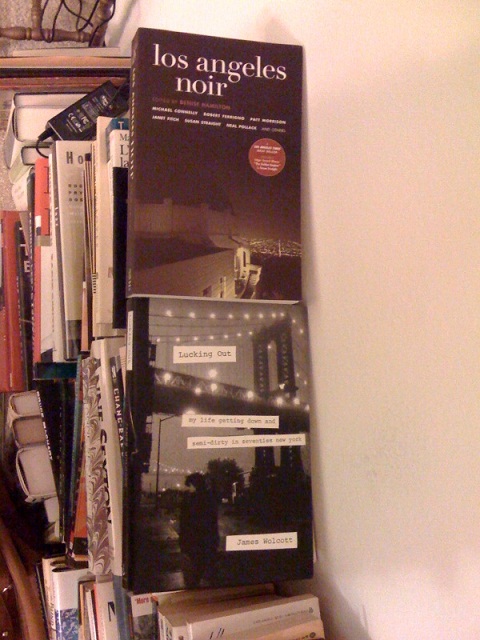
I picked up one of the short story compilations that the writers contributed to, Los Angeles Noir, and also James Wolcott’s new memoir, Lucking Out: My Life Getting Down and Semi-Dirty in Seventies New York, which I’ve been meaning to get since I first heard about its release. Unbelievably, I hadn’t been in a bookstore since Borders closed a couple months ago.

I have to say, visiting bookstores used to be one of my favorite things to do. They’ve always made me feel safe and warm and un-alone, if I was feeling lonely. But they just don’t make me feel that way anymore. This one was pretty empty, sadly, even on an event night – empty both of people and books. It was also pretty dimly lit – making it hard to find the books you’re looking for; it was as if the salespeople just wanted everyone to leave so they could close and go home. I don’t know, this bookstore actually depressed me.
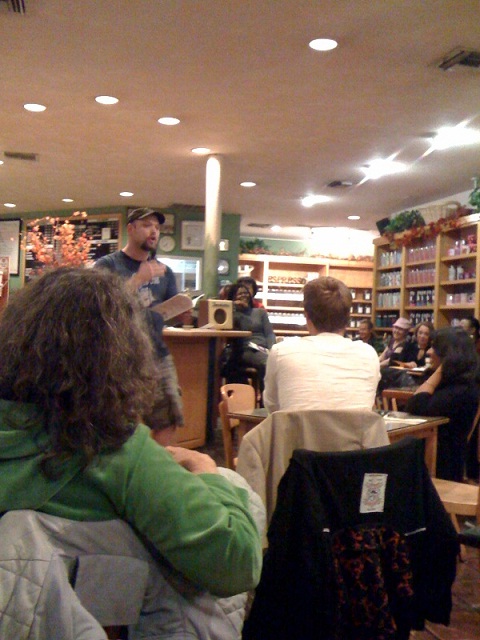
But hopefully cafes and bars will take over in celebrating and spreading literary culture. Here’s a lively poetry reading at a coffee shop called Priscilla’s back in my hood.
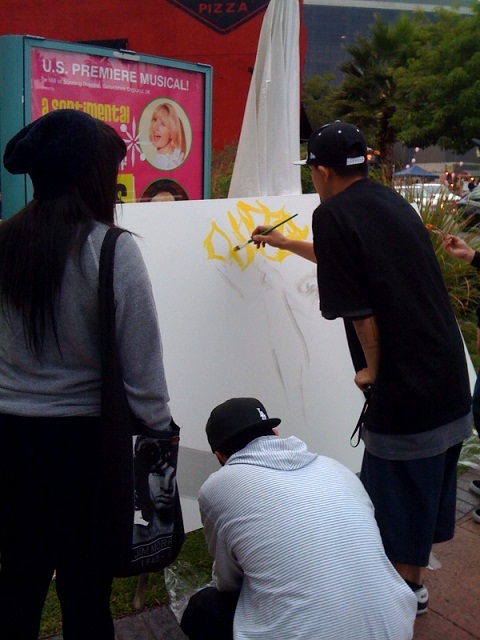
Here are a few photos of my trip to the NoHo Arts Festival last weekend. NoHo (North Hollywood) is kind of a bohemian area that, to New Yorkers, I’d liken to Bushwick. There are lots of dance studios (mainly teaching hip hop and jazz, some ballet), acting studios, very small theaters (as in off, off-Broadway), and a few galleries. For the festival, they had these little stations around town where all passersby could contribute to a work of art.
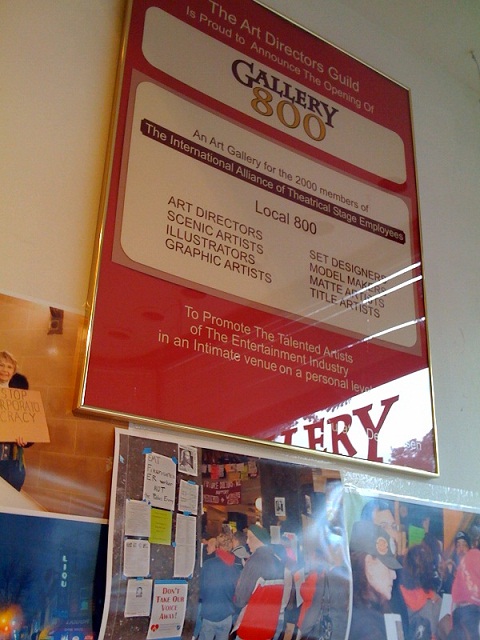
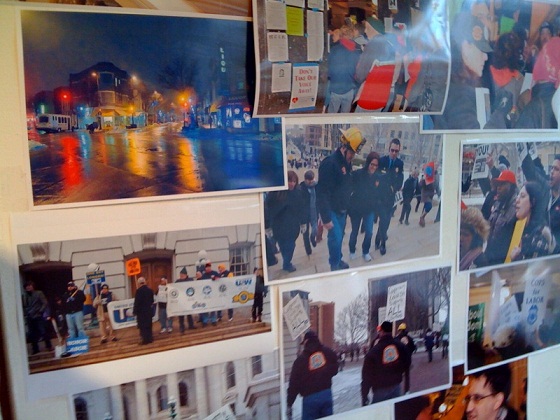
One of the galleries, showcasing art by those working in theater, and some photojournalism.
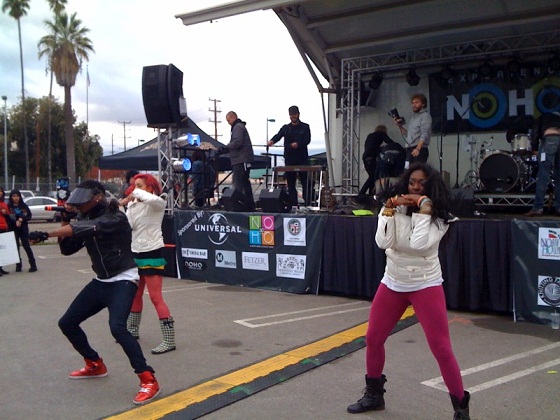
Here’s a hip hop singer, Brooklyn J., performing on the mainstage with several female backup dancers.
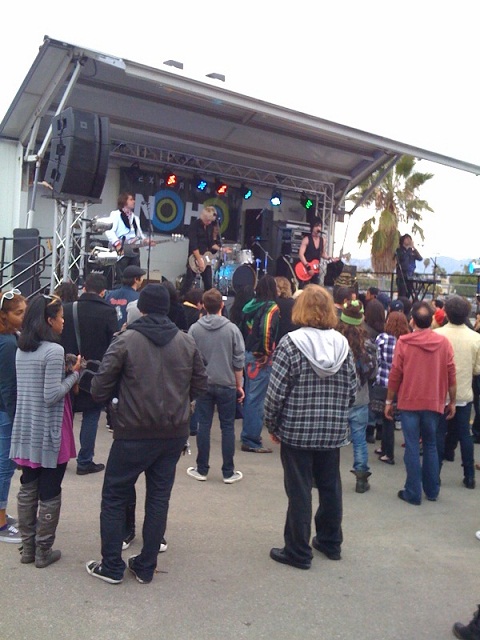
Here’s a band. Music seemed to be mainly punk and grunge.
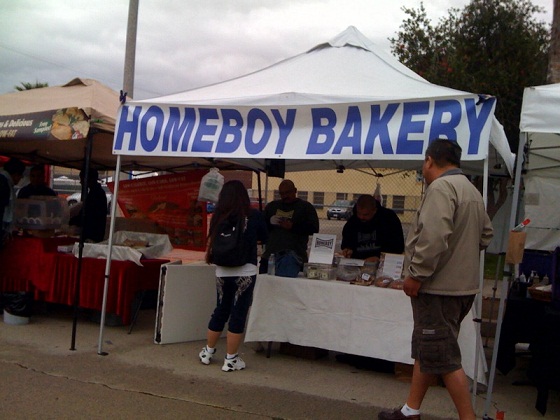
The arts festival coincided with a little farmers market, which I guess happens every Saturday near the subway. I was particularly intrigued by this vendor, Homeboy Bakery, who has several lines of products (bread, desserts, tortilla chips and salsa, etc.) for sale at both farmers markets and in local groceries, and whose mission is to help young people from troubled backgrounds stay out of trouble by keeping them employed with creative jobs.
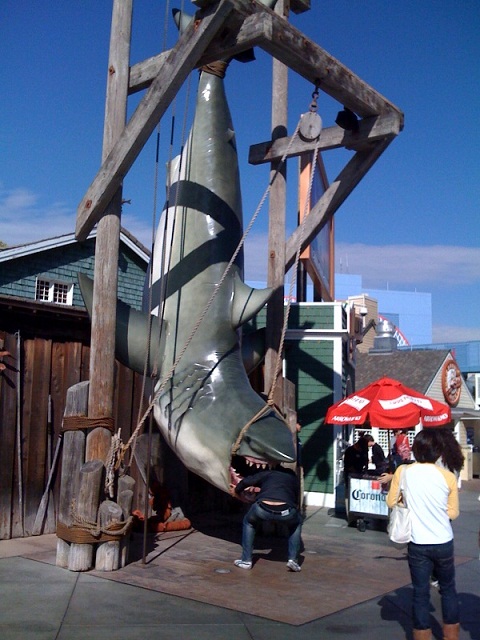
I spent Veteran’s Day at Universal Studios. I’m such a tourist! I couldn’t help it. I hadn’t been there in over thirty years. I think the only parts of the studio tour that are still in existence from then are the Jaws and Psycho exhibits!
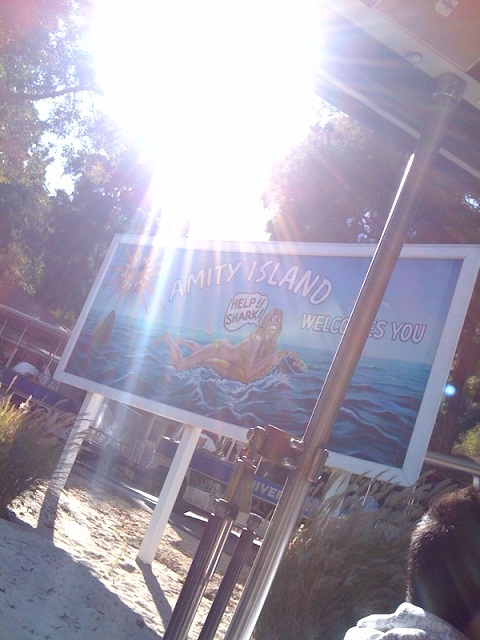
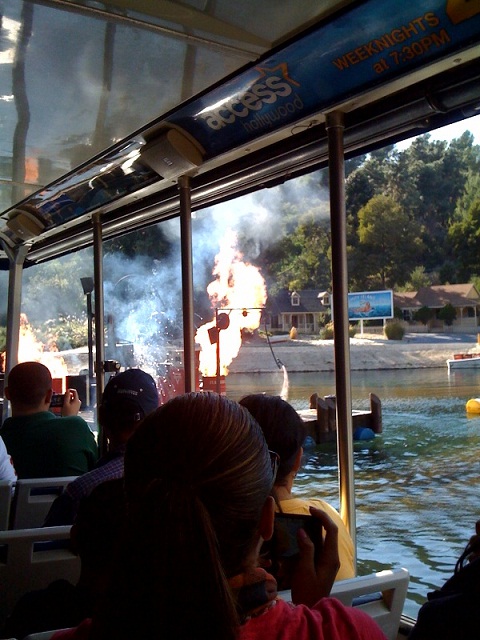
I couldn’t get a good shot of the phony shark coming up to attack the tour trolley. In this photo, he’s just set off some explosive device and is now coming for us.
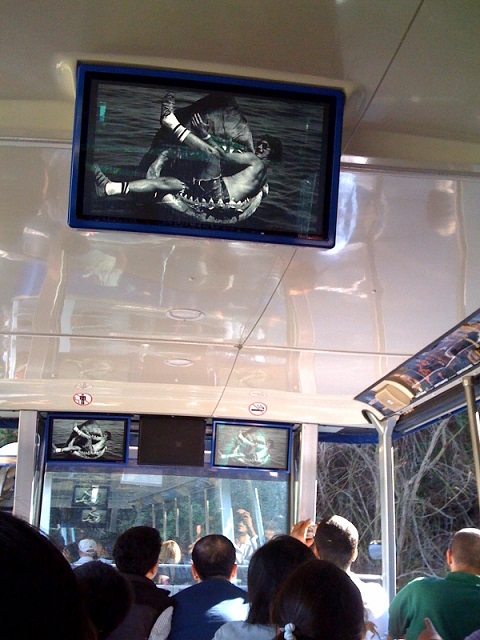
On the ride, they show you via the overhead monitors what the scenes that were shot on the sites you’re visiting looked like in the finished movie. Here’s a photo of the actor from Jaws messing about with the mechanical shark.
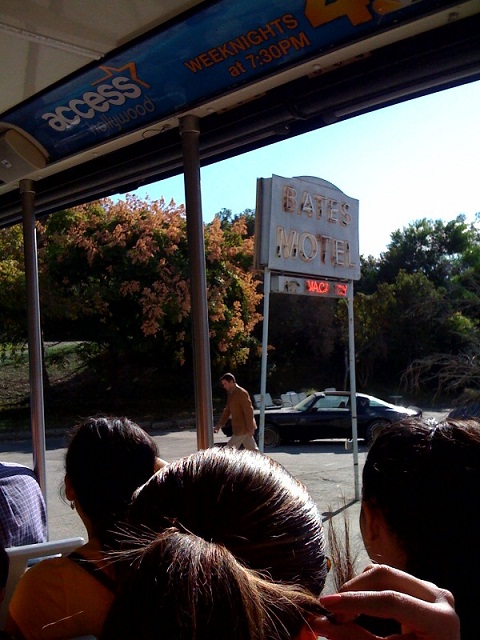
Here’s the Bates Motel, where they have an actor playing Norman come out, drag his mother’s body about, and eventually threaten guests on the ride.
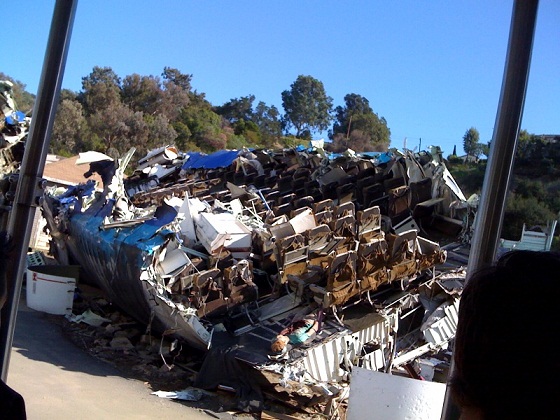
Here’s part of a set from a plane crash. I forgot the movie… but this is from an actual plane.
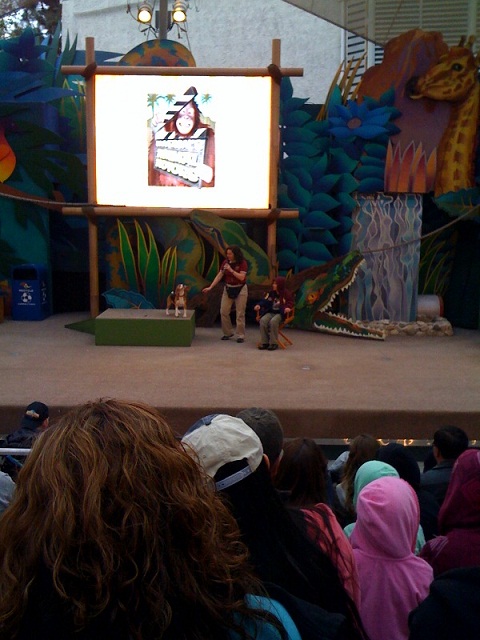
I also sat in on a little demo on how they train animals to “act” in the movies. These animals – dogs, cats (cats are the hardest of animals to train because of their independent nature), birds, an adorable little fox, a little monkey, and a chimpanzee, were so sweet and amazingly well-behaved; kind of made me want to be a trainer…
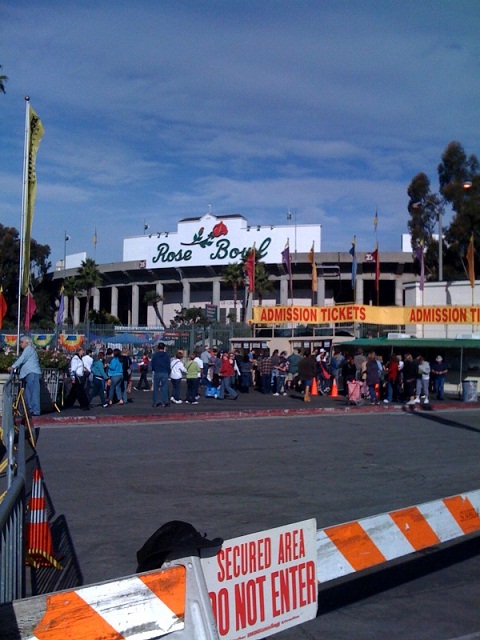
And on Sunday, I went to the Rose Bowl Flea Market in Pasadena, which takes place on the second Sunday of every month. I’d read a lot about this, so just had to check it out. Plus, I needed to get a few things for the apartment.

The amount of crazy stuff there – it was a hoot! Like these old fire hydrants…
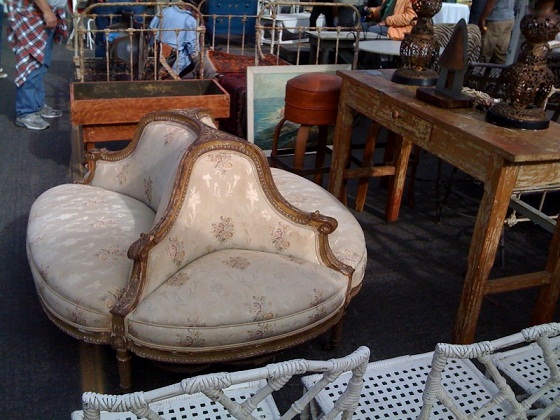
And this piece of furniture that looks like it once sat in a museum, or maybe a hotel lobby.
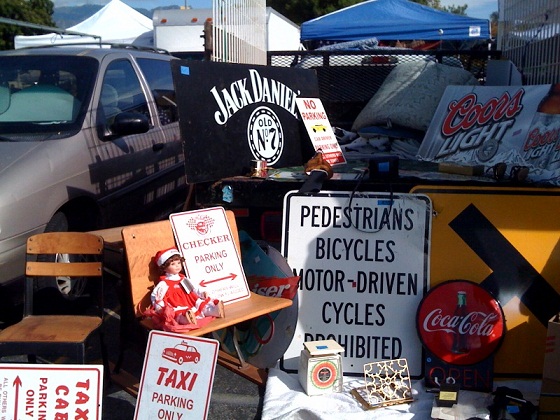
And all these signs. A couple behind me became quite excited over the Jack Daniels one.
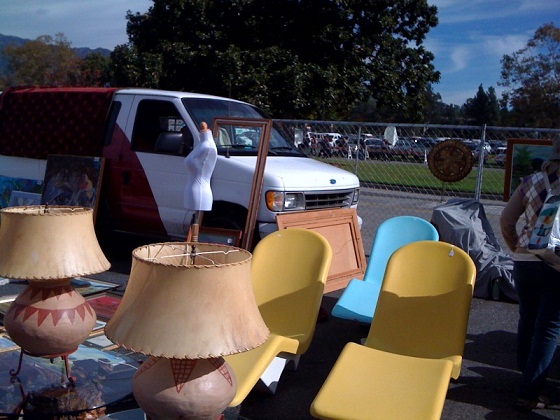
I badly wanted one of these Sixties era yellow lounge chairs! But nowhere to put them…
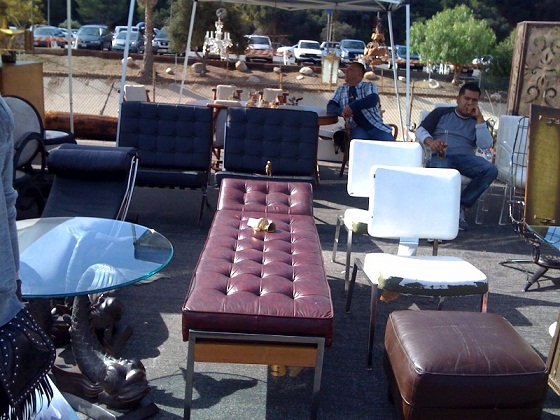
Or this Freudian-looking burgundy couch.
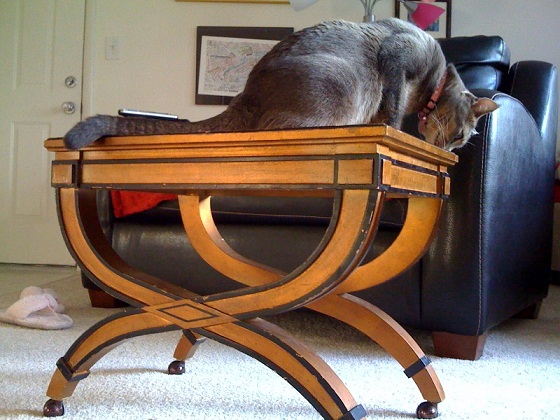
I needed a couple of end tables, so ended up getting this very art deco-looking piece (whose scent Rhea has approved),
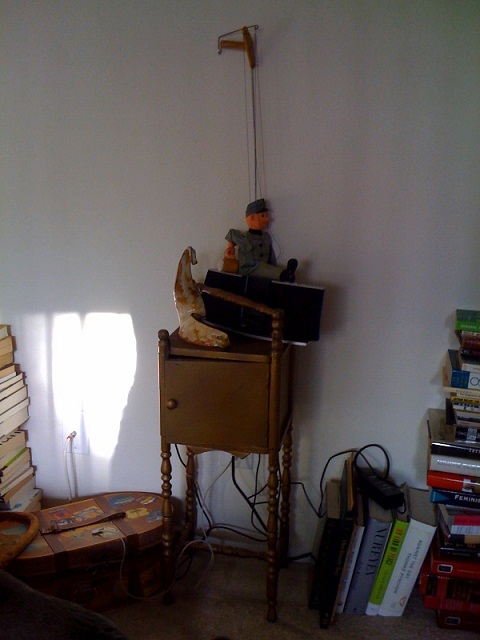
and, though I really have no idea what it is, this piece. All I know is it’s small and has an ornate top handle for carrying that matches its legs, and it has a little door that opens up and provides a little container for books, or in my case a CD player and old CDs. I thought it was fun and very very old.
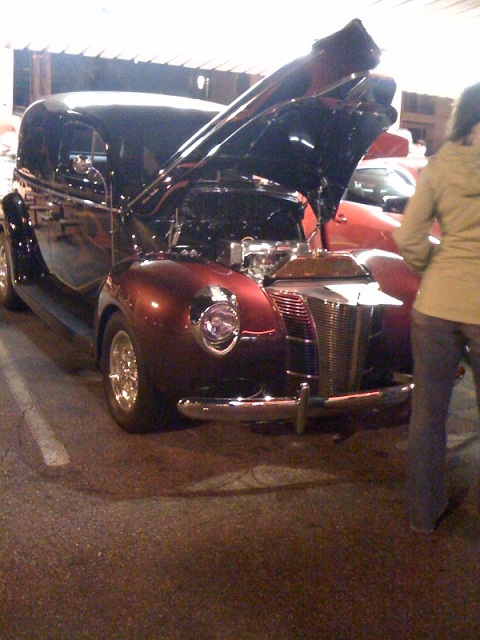
Finally, back in Burbank, here are some cars at the antique car show held in the Bob’s Big Boy parking lot every Friday night.
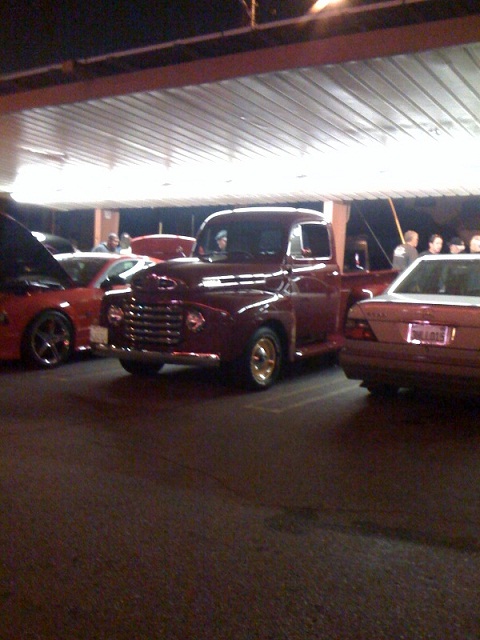
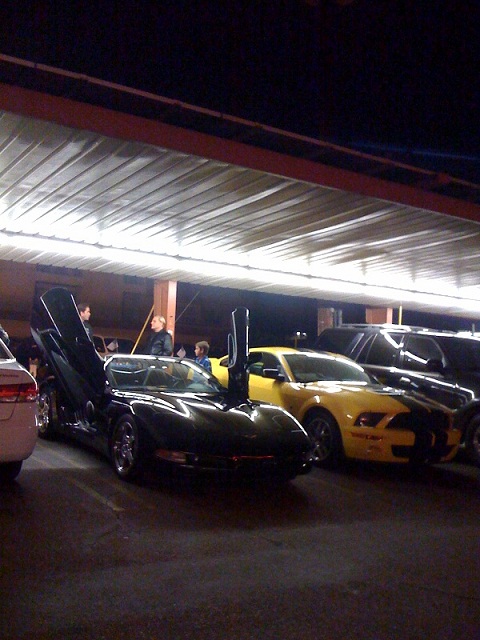
Okay, that’s all for now. Next, I hope to visit Hollywood Hills… hopefully to see Stravinsky’s house (see Ballet Lover’s comment on my last post!) And on Sunday, I’ll be going to a dance performance – an actual ballet performance – finally! I’ll be the guest of LA Times writer (and Arts Meme blogger) Debra Levine for the live-streaming of the Bolshoi’s Sleeping Beauty starring our David Hallberg. Can’t wait!

“You Are a New Yorker When What Was There Before is More Real and Solid Than What is Here Now”

It’s time for me to post a link to the Colson Whitehead essay that I link to every day this year, from the 11/11/01 “Rebuilding New York” issue of the New York Times Magazine. I can’t resist. It will always be my favorite essay about New York, and it always makes me cry. Usually makes me bawl actually. I don’t think I should read it this year though. It’ll make me not want to leave New York…

Self-Published Success Turned Amazon Poster Girl, Maria Murnane

For you writers and fiction-lovers out there who read this blog, I wrote a profile for the Huffington Post on author Maria Murnane, who originally self-published her novel, Perfect on Paper: the (Mis)adventures of Waverly Bryson (a sweet romantic comedy). After tirelessly promoting the book, and using very clever and original marketing methods, the novel had so much buzz that Amazon picked it up and published it through its publishing arm, AmazonEncore. The book has since been published in Hungarian and German, through Random House, and a film agent is scouting for a film deal. Amazon is also publishing her sequel, It’s a Waverly Life, this November. Ahhh, the success every indie author hopes for 🙂 Here is an earlier review I wrote of Perfect on Paper. And here is my HuffPo profile on Murnane.

My Own “Goodbye to All That”

I copied this post from my lit blog, Literary Aperitif (hence the mention of the Sweet Melissa :)). I decided to copy it here to explain (kind of) my decision to leave New York this fall. More on that later. I still plan to cover the dance scene, just the L.A. one!

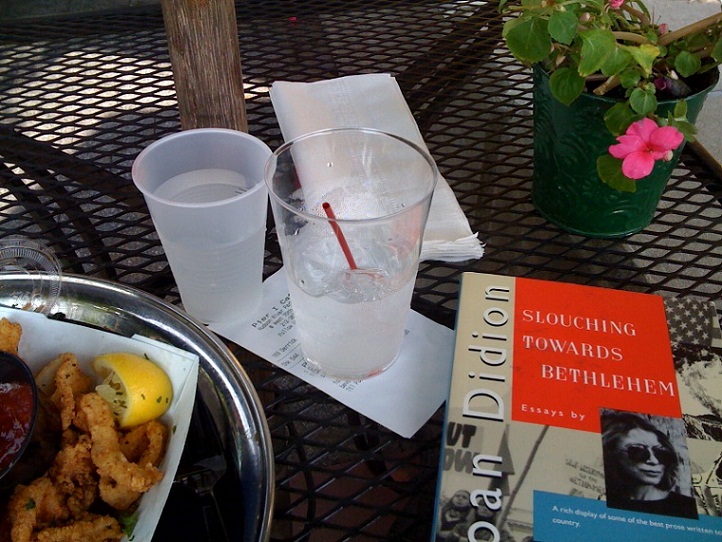
Not that Joan Didion’s writing could ever really be characterized as “sweet” but Pier 1 Cafe on the Upper West Side, at the Hudson River, is one of my favorite places in NYC (or at least it used to be), and thus seemed to be the perfect place for me to go when I wanted to re-read her 1968 essay “Goodbye to All That,” about her decision to leave New York. I needed to contemplate my own reasons for wanting to leave this city, that I once found so electrifying. The Sweet Melissa (prosecco, peach schnapps, and a splash of orange stoli) is simply what I always have there (though the bartenders seem always to forget how to make it).

When I first read “Goodbye” (which is in her essay collection Slouching Toward Bethlehem), I was new here, and very in love with New York. I really couldn’t understand a word of that essay – emotionally, I mean. It’s funny, but re-reading it, I still don’t understand her exact reasons for becoming so disenchanted. Nor do I understand my own. She opens with the words:

It is easy to see the beginnings of things, and harder to see the ends. I can remember now, with a clarity that makes the nerves in the back of my neck constrict, when New York began for me, but I cannot lay my finger upon the moment it ended, can never cut through the ambiguities and second starts and broken resolves to the exact place on the page where the heroine is no longer as optimistic as she once was.

She goes on to talk about that exact moment when NY began for her. I remember my moment with clarity too. It was May 1993. I’d just received my masters from a school in New England and I’d decided not to continue on with the PhD. But I didn’t really want to go back to Phoenix, where I’m from. I didn’t know what I wanted to do, just knew that academia was not for me. A friend of mine from grad school had a summer job on Wall Street and invited me to stay with him. We sublet his friend’s East Village railroad-style apartment.

We drove down from Providence, Rhode Island. My belongings consisted of two suitcases of clothes and a backpack of books. After we unpacked the car, we walked around the corner of Avenue A to St. Marks Place, the busiest street in the hood, in search of food. We ended up at a cozy-looking fifties-style diner called Stingy Lulus, with shiny red glitter-covered seats and the most beautiful entertainer I’d ever seen – a statuesque black drag queen with sky-high cheekbones and a gorgeously rich, deep voice. And he wore bright red pumps that reminded me of Dorothy in the Wizard of Oz. And, cliche as it is, I did have a little laugh to myself: you’re not in Kansas anymore! My New York began with that drag queen.

Nowadays, you might, might find such a thing in a tourist spot. Probably not. But this was not a tourist spot. The park at the end of the block – Tompkins Square – was gated shut at night and surrounded by police in riot gear. There’d recently been a squatter’s riot in the area. People sold crack on our doorstep. My friend suggested we abide by Abbie Hoffman’s dictum and be polite and say “no thank you” to them. He also gave me strict warnings not to walk any direction but west – we were surrounded by very bad neighborhoods: Alphabet City, the Lower East Side, and Kips Bay. Only the west village was safe to venture into. I was simultaneously terrified and thrilled.

Eighteen years and eight apartments later, both of those feelings are gone. My only real fear is that I’ll get hit by a car. Seriously. It seems there are more drivers in Manhattan than ever before and they have no respect for the law – not to mention human life – whatsoever. I subscribe to the Gothamist daily and it seems that every other day there is a report of a pedestrian death due to a vehicular assault. In doing research on NYPD for an upcoming book, I read Paul Bacon’s memoir, Bad Cop, and he said something like 75 percent of all drivers he stopped as a traffic cop turned out to be driving with suspended licenses. I dunno, to my mind that’s pretty astounding.

But the bigger problem is there is no thrill for me anymore. Haven’t seen any theater, any dance, been to any restaurants – haven’t really experienced anything for the better part of a decade that really made me feel the way that drag queen did. Which leaves me complaining ad nauseam about things that bother me – noisy neighbors, lack of space, lack of peace and quiet, year-round unpleasant weather (freezing all winter, rainy and humid all summer), exorbitant rents that skyrocket even during a serious recession, once New York phenomena – like the Halloween parade – overtaken by tourists and thus beyond borified. (I don’t know if it’s a word but if it isn’t, I just made it up.)

A friend recently asked me whether I think it’s more me or the city that’s changed. I’m not sure. Probably both. I don’t remember drivers being so horrible for one thing. This is, of course, the most pedestrian-friendly city in the U.S. I also don’t remember neighbors being so noisy. Everyone in my building used to abide by the 85 percent carpet rule (or, if they didn’t, they at least didn’t stomp around in hard-soled shoes all night) and no one blasted music after 11:00 on week nights. Of course this building used to be filled with young professionals who worked 14 hours a day and then partied outside at bars in their free time. Our shoe box apartments were just for sleeping. Now it seems all the studios in my building are inhabited by couples – and even one by a family with two children (which makes no sense to me at all) – instead of single people. Because there are so many more people here, it’s all the noisier. But a lot of the things – like noise and lack of space – probably didn’t bother me as much at the beginning because I was just so excited to be a New Yorker. They came with the package. The fascination far outweighed the annoyances.

All I know is that I need a break. At least for a while. I have two months before I leave and I’m already having bouts of sadness. New York will always be the place where I first felt inspired and then compelled to write. I’ll continue to write about this city, just from L.A. As one friend said, “perspective.”

Literary Aperitif

Hi guys – I’ve just begun a new Tumblr blog, called Literary Aperitif, pairing two of my loves (other than dance of course): books and booze. I wanted to call the blog something along those lines but didn’t realize there were about 100,000 websites, meetups, blogs, books, book clubs, webzines, and what have you, all with variations of that name… Anyway, I plan for that one to be photo-heavy, minimalist on words (unlike this blog :S)

Sorry once again that I’m so behind here. Part of the reason for that is that I write so many review-style posts, and it really takes a long time (as opposed to posting pics and doing mini photo-based essays, which takes virtually no time at all). And I haven’t had a lot of time since I began working full time plus again. Nevertheless, I maintain fantasies of spending this weekend blogging about: the Mariinsky at the Lincoln Center Festival, the Royal Danish Ballet’s recent visit to NY, the Paris Opera Ballet’s Children of Paradise (streamed live via Emerging Pictures’ Ballet in Cinema series), the Bolshoi’s Swan Lake (ditto), a wrap-up of American Ballet Theater’s Met season, a wrap-up of So You Think You Can Dance thus far (including what’s been said during some of the Friday afternoon over-the-phone press conferences I’ve participated in each week with the eliminated contestants), and the Manhattan Dancesport Championship held in Brooklyn last weekend. Okay, I’m obviously not going to get to it all this weekend – especially when I have more Mariinsky to see tomorrow and Saturday – but I’ll have material for the rest of the summer, if you can bear with me that long 🙂

I Am Reading at POETRY UNLEASHED

I know it’s short notice, but tonight (Friday, June 3rd), I’ll be reading at Art for Change’s Poetry Unleashed, a spoken word event focused on literature about the displaced or economically disadvantaged, accompanying the gallery’s current Voices of the Economy exhibit. Although it’s mainly poets who will be reading, I’ll be reading a short excerpt from Swallow. The gallery’s in East Harlem – Lexington at 103rd. Visit the AFC website for more info about the ongoing exhibit and tonight’s event.

Former NYCB Dancer Sophie Flack Signs Her Debut Novel, BUNHEADS, at BEA

My apologies for my lack of blog posts this week. I spent Monday through Thursday at Book Expo America, the largest book industry trade fair in North America, held every year in NY at the Javits Center. (Nevertheless, I did manage to go to ABT’s night of premieres on Tuesday, which I’ll blog about soon.)

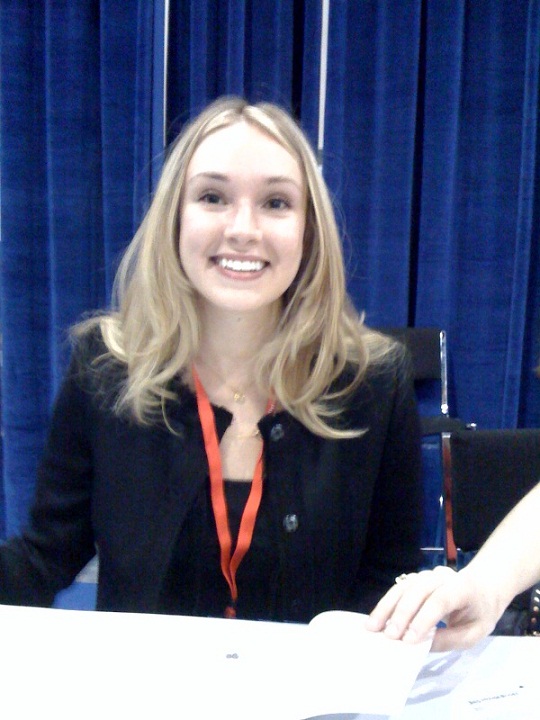
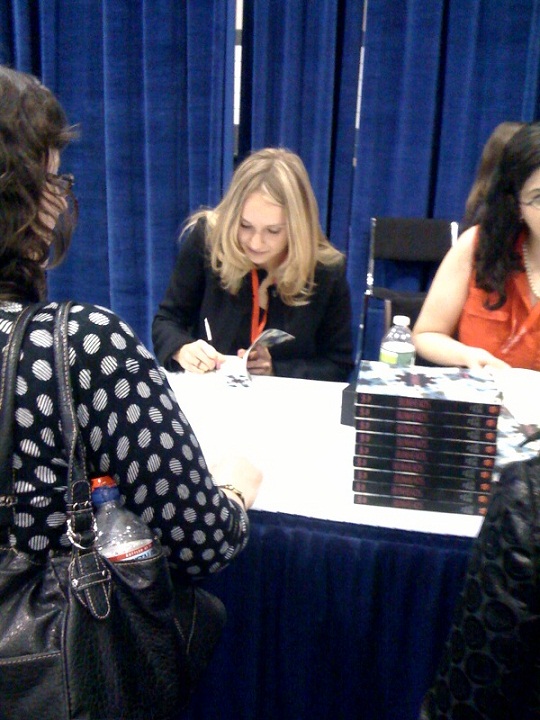
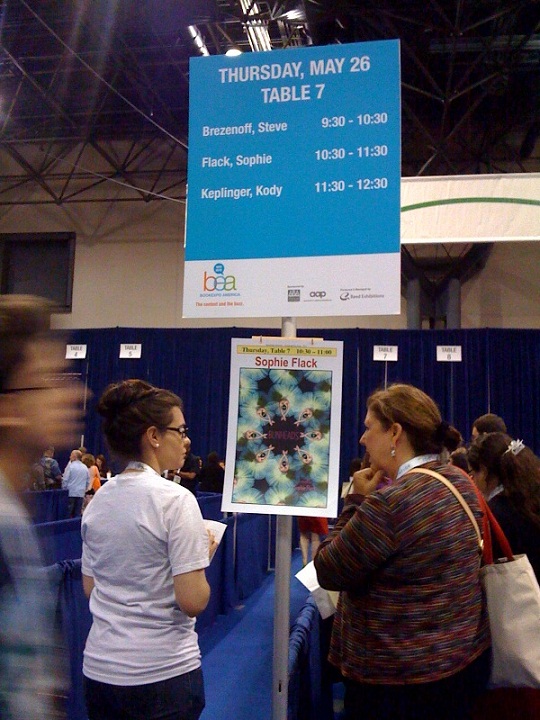
Anyway, I was so excited to see in the BEA program that former New York City Ballet dancer (and Winger contributor), Sophie Flack, was to sign from her debut young adult novel, Bunheads, about a teenage dancer  who’s in the corps de ballet of the “Manhattan Ballet,” and who, after meeting a handsome musician named Jacob, must decide whether she wants to continue in the competitive world of ballet or strike out on her own in “the real world.” The novel will be available in October, but I picked up an advance review copy and so am reading it now. It goes without saying that NYCB fans are going to LOVE it! But I think it has a far larger audience as well.

The Bunheads signing line was rather long, and I think Michael and I were the only ones who really knew anything about the author. I heard some young women behind me say they liked ballet and really wanted to read more about it. I heard someone else in line say they loved the cover; it reminded them of Black Swan (that’s the cover on the poster in the above photo). Some were saying they took ballet as a child and were still enamored of it and were really excited to see a book out about it. Basically, for all the pessimists out there, ballet most definitely is not dead.

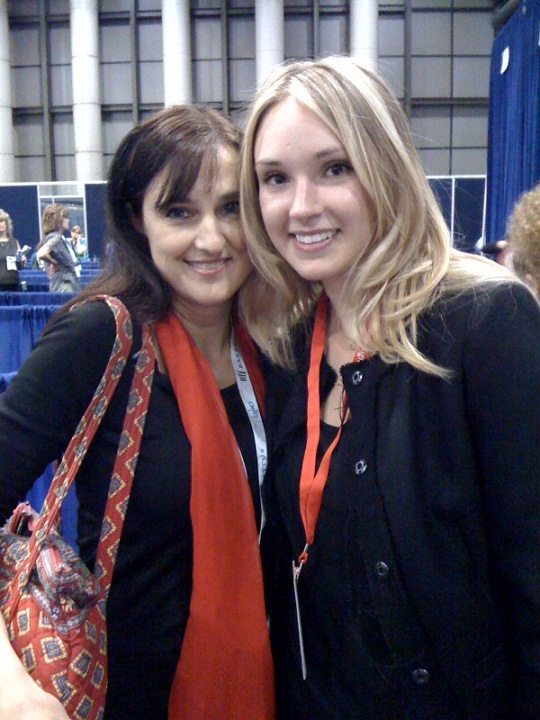
It was so cool finally meeting Sophie! I felt so sweaty and gross walking all over the Javits Center for hours on end, so was hesitant to have my picture taken with her. That’s why I’m kind of hiding behind her!

Also, for my ballroom readers, I noticed this book:

It’s a memoir written by an amateur competitive ballroom dancer named Patrice Tanaka (who, from the photos inside the book, looks very familiar to me and who’s danced with my former teacher, Emmanuel Pierre-Antoine, whom I’ve blogged a bit about). According to the book cover, Becoming Ginger Rogers is about how ballroom helped Tanaka to become a better partner and business person (she runs an award-winning PR agency). I picked up an advance review copy of that as well, and will write about both books soon. Click on the book cover image above to find out more about the book and Tanaka.

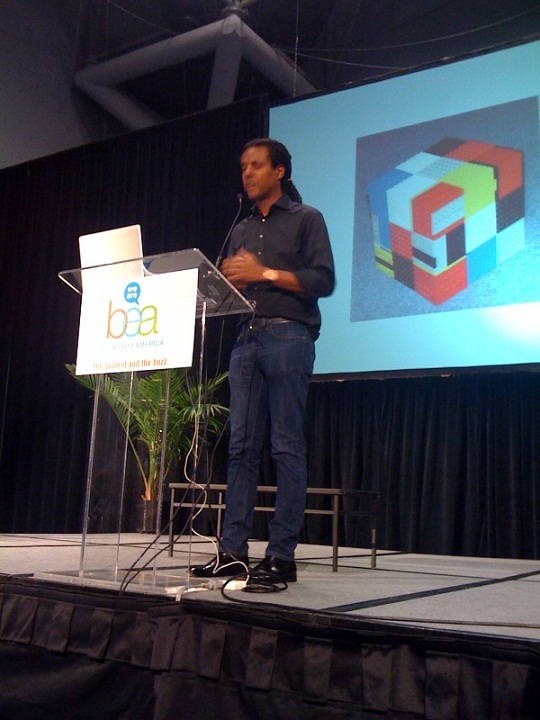
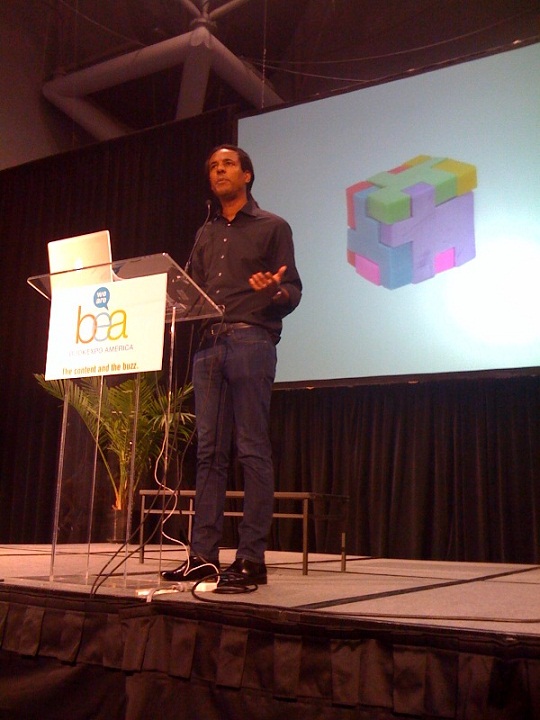
Finally, just because I know some balletomanes who like him 😀 , here are a couple of photos of Colson Whitehead, who has a novel involving zombies (but it’s not a “zombie book,” he’s said on Twitter) out later this year. He didn’t read from that at BEA but from a humorous essay about the constantly changing “in” genres in publishing and what an author can (not really) do about it.

LEAP by Jodi Lundgren

I recently finished this sweet, very honestly written young adult novel by Canadian author Jodi Lundgren.

Leap is a coming of age story about a teenage girl, Natalie, living in British Columbia with her mother and younger sister. Natalie deals with many of the problems teenagers do – a boyfriend who pressures her into sex, a difficult friendship with a destructive classmate, and just fitting in and figuring out who she is. In addition, her father has recently divorced her mother and moved across the country to Toronto. She hardly ever sees him and feels abandoned by him. Her mother, who often seems more interested in books than her daughters, has begun a romantic relationship with another woman. Natalie takes after school dance classes with her friends and her teacher, Ms. Kelly, doesn’t much like her and seems to enjoy really picking on her. The classes consist of several types of dance, including ballet, but the group is working mainly on a jazz routine for an end of the year performance. Natalie feels uncomfortable with the choreography, which the way it’s described, sounds very Fosse-esque, very sexed-up.

Along comes a young co-teacher, Petra Moss, whom Ms. Kelly has hired to choreograph a ballet for the final show. Love the name! Kept picturing Petra Murgatroyd from Burn the Floor. Much to Natalie’s surprise (and Ms. Kelly’s) Petra immediately takes a liking to Natalie. Petra’s choreography is actually more modern than ballet and there’s a humorous little tiff between Ms. Kelly and Petra about whether toe shoes will be used, but suffice it to say, modern feels much more comfortable to Natalie’s body. Petra encourages Natalie to feel the movement, to make it organic and natural, so as to really express herself through it. She invites her to improvise. From Ms. Lundgren’s descriptions of Petra’s classes, they even sound a bit Gaga-esque.

Basically, through dance Natalie learns to deal with all of the confusing things happening in her life. One of my favorite parts of the novel is when Natalie’s parents attempt to support her by attending her first professional performance. She’s thrilled. But then it becomes clear that they don’t really understand her commitment, or her art. An older gay male dancer who befriends her tells her it’s okay; family and friends won’t always understand you. So, you can create a new family of those who do.

It’s a sweet story that teenage girls in general, and anyone who’s ever danced, will appreciate.

Maira Kalman at the Jewish Museum

Last week my friend, Alyssa, who’s an independent art curator, invited me to an art / law celebration at the Jewish Museum. The Jewish Museum really knows how to put on a party! They had the most splendid array of hors d’oeuvres, two big carving and sushi stations, and a full bar (not just wine and champagne). I hadn’t been to the Jewish Museum since I saw a Marc Chagall exhibit there I don’t know how many years ago. So, in between nibbling on mini Tuscan pizzettes and sipping Glenmorangie, I wandered into the main exhibit, which is currently featuring the work of Maira Kalman.

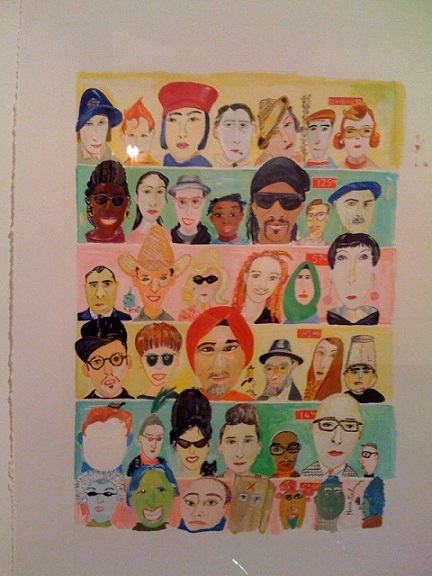
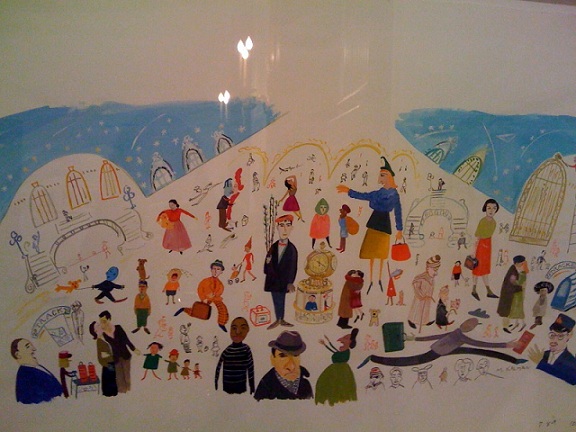
Kalman’s mainly a painter and illustrator but is also an essayist and performance artist; kind of an artist at large. She illustrates a lot for the New Yorker. The top picture is from an illustration from that mag.

I really love this one, though. It’s called Grand Central Station. I love it because it evokes the kind of sentiment I was going for in the closing line of Swallow (which I’m not giving away 🙂 )

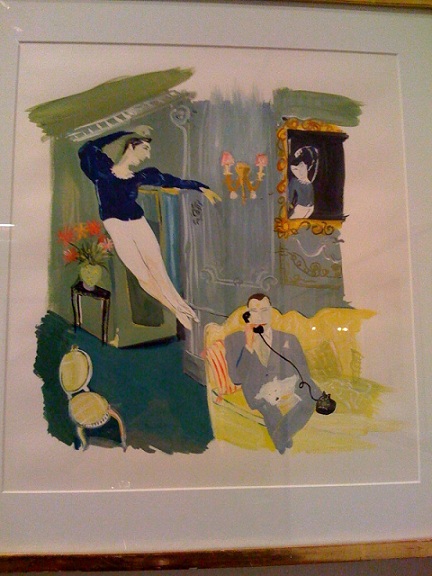
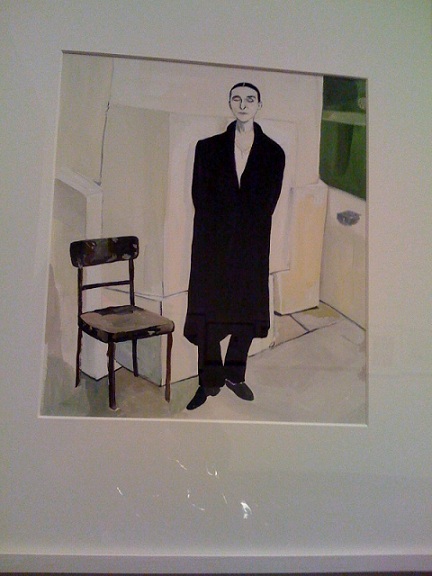
Then I came across a couple of illustrations of dancers, which of course excited me.

I don’t know who the dancer in the first illustration is, but the bottom is of Pina Bausch. The little explanatory caption below the illustration said that Kalman had a deep admiration for Bausch, got along well with her, and, before Bausch’s death, had wanted to collaborate with her on a dance.

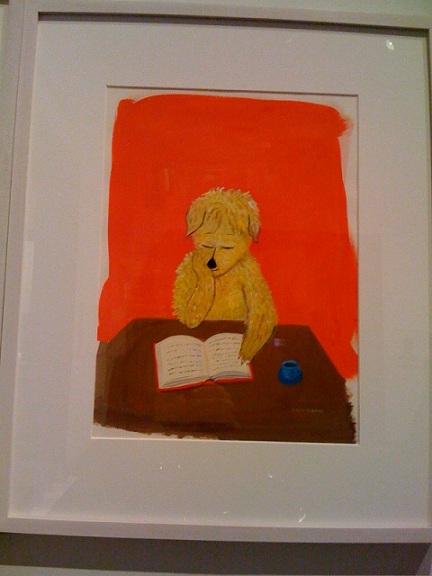
As I walked through the exhibit, I happened upon a couple of sets of videos. In one Kalman, who seems to be quite a character, was collaborating on a performance piece with Nico Muhly and an opera star (whose name I forgot). Muhly was his usual slightly whacked self. Fun! Kalman’s also been involved in a lot of social projects, such as helping to design and create art work for a new library in Harlem. And, much of her work features her dog (below).

Hehe, I was so excited when I saw this. I actually have this picture, clipped from a old New Yorker copy, hanging above one of my bookcases at home. That’ll teach me to look at the name of the illustrator more often!

Anyway, it’s a very good exhibit, and I recommend it. It’s at the Jewish Museum through the end of July.

Baryshnikov in Japan


Here’s a video of Baryshnikov and Gabriella Komleva performing Don Quixote in Japan when the Kirov toured there in 1971. Thank you to “Ballet Lover” for finding it and posting it in the comments of my Bolshoi / Don Quixote post.

What a treat! (there’s another one of him dancing the same pdd even earlier, in 1969, in that same comment). It’s interesting because the athletics exhibited by today’s dancers are so much more astounding (one thing I’d forgotten to mention about the Bolshoi’s DQ is that in those thrilling one-handed overhead lifts, Vasiliev would not only stand on one leg when doing them, but would go on releve as well, making the audience go nuts with applause) but this older version is still so glorious. In a way that I can’t exactly put my finger on it seems to have even more grandeur. You know what I mean? I’ll post the other video “Ballet Lover” linked to as well, so you can see what I mean. (This one’s with Lyudmila Semenyaka.) I wonder where they’re performing in this one?


Also in regards to Japan, my friend Marie, who comments here frequently and has begun writing a lot about ballet on her own blog – her family owns and operates a Buddhist monastery in Northern Japan. So please keep her in your thoughts right now. She wrote a really beautiful book, Picking Bones From Ash, which recently came out in paperback and Kindle, which takes place largely in Japan. I read it before I knew Marie very well, and I really loved the book; it really made me want to visit Japan.

UPDATE: Marie has an OpEd in today’s New York Times about her memories of Northern Japan, and about her family’s temple (I was wrong to call it a Buddhist monastery – it’s a Buddhist temple).