TONIGHT IS ALMOST HERE!: ABT AT AVERY FISHER AND FORSYTHE AT BAM


Finally, ABT’s Contemporary season is here; it opens tonight at Avery Fisher Hall, at Lincoln Center, with premieres by choreographers Azsure Barton, Alexei Ratmansky and Benjamin Millepied (pictured above, left to right). Plus, there’s a special addition — a performance of Michel Fokine’s Ballets Russes classic, The Dying Swan, by SLSG favorite Veronika Park! (top photo, by Jade Young)


Another important dance event that opens tonight is William Forsythe’s company performing the U.S. premiere of his Decreation, at Brooklyn Academy of Music. Unfortunately, their performances are the exact same nights as ABT’s shortened season so most big dance fans are probably going to be at Lincoln Center for the next few days. But Forsythe is a very important choreographer and I strongly encourage all New Yorkers to try to make it out to BAM for at least one of the perfs between tonight and October 10th.

There’s a post-performance talk with Forsythe tomorrow night at BAM (October 8), and another talk between Forsythe and philosopher Alva Noe about consciousness as a kind of dance at the New York Public Library the following day. I find Forsythe to be brilliant and it’s always fascinating to hear him talk.

I’M SAD TO SEE TOM DELAY GO!


You guys are going to kill me but I’m actually sad to see him go (for those who didn’t see the show last night, he didn’t get booted off but announced he had to quit because of a serious stress fracture in his foot). I thought his presence on the show kind of de-politicized (or disempowered) politics — his “why can’t we just get along”-themed Samba with Cheryl this week with her dressed in the blue dress with the donkey insignia on the skirt and him in the red with the elephant patch on the back was hilarious. And he was a surprisingly good dancer — particularly for someone his age with no prior dance training who’d devoted his life to something entirely different.


I also liked his reason for leaving the show. He didn’t say he couldn’t perform but that he couldn’t practice, and the way he said it made it clear just how much he valued practicing. He realized how hard it is to learn to dance and to dance well, and how hard you have to work at it. And the thought of going out there without being adequately prepared is what he couldn’t handle. As should no one, in anything in life really. There are a lot of people who’d just wing it, who just wing it in everything they do. To me last night, whatever his politics, the man stood for serious work ethics.

But I know people hated him for his politics (which I honestly don’t know much about and frankly don’t want to know at this point!) So now everyone can watch the show in peace.

I’m also sorry to see Debi Mazur go. She wasn’t doing well but I still think she could have improved and I would have liked to see her try. Oh well…

CAN WE ALL JUST IMAGINE BEING SLAVES?: DWTS'S SAMBA AND RUMBA NIGHT

I don’t have much time to write about this week’s Dancing With the Stars, but quickly, I was pretty disappointed overall, as I guess I usually am with the Samba and Rumba. They seem often to put the two on the same night for some reason. I think Latin is generally harder than Standard and I think these are the two hardest Latin dances, so it’s no wonder they don’t come out so well.

But, honestly — it’s partly because I think the dancers aren’t really teaching the celebrities how to ground their hip movement properly, so that it comes from the movement in the shoulders and lats (back muscles). One of my co-students once told me, when I was first learning Rumba, that the dance originated with the slaves. Rumba walks — the basis of the dance, and the basis of all Latin ballroom dances really — are supposed to stem from the way that slave women would carry heavy loads atop their shoulders. As the woman took a step, the weight coming from her shoulder would push down on that lat muscle, which would eventually bear down on the hip, causing it to settle into the hip socket. When the weight fully settled, she’d start the next step with the other foot, shifting her weight. Those changes in weight are what account for that now sexy-looking shifting of the hips.

But if you’re not taught how to shift the weight properly, how to make it originate from the shoulders — and I think it helps to be given the above visual — then you end up trying to produce that hip shifting only using the hips. And then you get that un-grounded, feathery, hip swaying look which doesn’t look right at all — it looks like the person is just shaking his or her butt. It looks goofy.

I thought basically everyone, with the exception of Mya, had that problem last night. I thought somehow some looked a bit better than others — Natalie, Melissa, and Joanna all somehow managed to look cute even if too light and airy (even for samba, though there’s a bounce, it’s still weighted — it’s not supposed to look like you’re dancing on your toes, like ballet), and Louie looked okay as well (though that might have been because he was partnering Chelsie so well — being such a sturdy support for her and making her look good). And I hate to say it, but Tom was pretty decent too. He has a sense of rhythm I didn’t expect him to have. Even that body roll — I would never in a bizillion years have thought that guy could do a full-body spiraling samba shake like that! But, still, no one but Mya had any semblance of proper grounding, and with the others, it just wasn’t there at all.

Still, everyone tried hard and everyone had the proper character of the dance; everyone had fun. It just shows you how blasted hard Latin actually is.

MET MY FAVORITE TROCK, JOSHUA GRANT, LAST NIGHT

…after the Fall For Dance finale in the FFD lounge.


Top photo from the Trocks’ website; bottom photo (Grant is in back) by Sascha Vaughn, courtesy of City Center.

I was actually pretty proud of myself for recognizing him without his makeup on! After seeing them perform in the festival last weekend — they were my favorites from Program 3 — I did some research, particularly on Grant / aka Katerina Bychkova and found this interesting article, which happened to contain the only photo I could find of the guys not in costume (scroll down, on the right side); it wasn’t hard to figure out which one was him.

Anyway I was with my friends Michael and Taylor in the FFD lounge and, when I noticed him walking around I pointed him out to them. Michael initially wouldn’t believe me that he was the “big guy” — it’s really crazy how dancers DO always look so much smaller in person!! — but I was pretty sure. So of course outgoing as he is, Michael was soon off to confirm whether I was correct! After he did so, he made me and Taylor (both of us very very shy) go over and talk to him and some of the company people at his table.

And I’m happy we did. Mr. Grant was sooo nice! I love it when favorite dancers are all warm and fuzzy 🙂 He’s the type of guy you feel like you could talk to forever.

Anyway, I liked all of the dancers — all of whom have superb classical technique and of course immense acting skills — but because Grant is the largest and had a main role, he stood out, and his body is naturally the most subversive for this kind of gender parody. At the festival, they performed Go For Barocco, one of the troupe’s earliest ballets, from 1974, a light spoof of several Balanchine ballets, including Concerto Barocco, after which the ballet is named. Here are some clips of it (which Grant isn’t in; he’s too new to the company):

I love their intentional humor — the way they present pretty, innocent ballerina faces to the audience but then get into little cat-fights with each other — but I also think in a way it’s more subversive when they dance seriously, especially when they dance Balanchine, who idolized / objectified women in so fervently declaring that “ballet is woman.” Ballet to him may have been woman, but of course one with a certain body type. When they do that, what I call a “group grapevine” so ubiquitous in Balanchine ballets (clip one around the 4:42-4:57 mark), of course their bodies are going to get all twisted around each other; that weaving in and out of each other in complicated patterns requires skinny, lithe little bodies. And those kind of showgirl-ish “strutting hip juts” (clip one: 3:56-4:12)– they don’t even need to give them any oomph; with their male bodies, they’re  going to look different, and funny in a way you never noticed on, for example, the ballerinas in “Rubies.” I just can’t stop laughing at the 5:18 point on clip one — it’s so Balanchine taken to a hilariously ridiculous extreme. And I love the wrapping of the hands atop each other (clip two: 2:21-3:01) that here takes on lesbian undertones, which in Balanchine’s similar patterns and gestures looks innocuously sweetly girlish. They mean everything in good fun, but because it’s not completely off the wall, it makes you think, it makes you see things in a different way.

Anyway, unbelievably I haven’t seen this troupe since college. I don’t know how I’ve missed them all these years in New York but I’m definitely going to see them more often now.

More Fall For Dance reviews coming this week.

ABT OPENS AT BARD


…to rave reviews, particularly Benjamin Millepied’s latest:

“Receiving its world premiere performance, Benjamin Millepied’s “Everything Doesn’t Happen at Once” was a knockout.  Contrary to its title, there was a lot happening all the time, as the full compliment of 24 dancers often filled the tight performance space with a busy but ordered beauty.  Solos and lifts popped up like little tornados.  A sensual pas de deux featured Stella Abrera and Marcelo Gomes.  Near the conclusion, lines of dancers moved in a militaristic lock step.

During the final movement Daniil Simkin – a 22 year-old blonde Russian – stole the show. As the other men flung him up and about, he balanced in their raised hands and posed like a bare-chested god. And in solos that went by in a flash, Simkin seemed to tumble in midair, as strong as a gymnast yet light as a bird.

To the kinetic music of David Lang and the stark but effective lighting of Brad Fields, Millepied’s choreography was propulsive and contemporary. After making a strong impression with a new work at SPAC last summer, Millepied showed an even steadier hand here and with a larger compliment of dancers to boot.  Move over Christopher Wheeldon, Millepied is now the ballet choreographer to watch.”

ABT begins its four-day NYC season at Avery Fisher Hall this Wednesday. Can’t wait!


JUDGING A BOOK BY ITS COVER

scan0005

Sorry posting has been kind of lame over the past week. I’m working really hard on finishing the final read-throughs of my novel and, as always, it’s more involved than I expected. I have several exciting Fall For Dance programs still to write about — a puppet-performed Petrushka, Bronislava Nijinska’s Les Biches, the fabulous Trocks, Dance Brazil’s unique capoeira / samba / modern blend, Tiler and Gonzalo 😀 , the best Afternoon of a Faun (involving two fauns actually) I’ve ever seen — this is by far the best FFD Festival I can remember — and I plan to write about it all at the end of the weekend or early next week; after, hopefully, I’ve finished my rewrites.

In the meantime, above is my final cover. Took me forever to okay something I was happy with. At first I was going to go with this one:

scan0006

But then I had dinner with a gay male friend, who said of this bottom one, “Okay. This looks like it’s about a girl who goes around New York giving blow jobs.”

Which my novel is NOT about! I sought others’ opinions — nearly drove all of my friends crazy — and most people agreed that, since it’s about a young woman with a disorder, the cover should indicate that. It’s just that the disorder she develops is due in part to her moving into the city — a city she feels largely alienated by — and so it’s partly about her ability to make her own home here. Which is why I thought an arty cityscape would work.

But apparently not with this title!

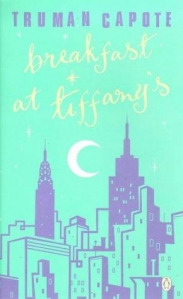
breakfast-at-tiffanys

I’d gotten the idea for the arty cityscape cover from my favorite Breakfast at Tiffany’s edition.

I also love this cover, for Charles Jackson’s The Lost Weekend:

the-lost-weekend-lg

This is as large as I could blow it up, but it’s one of my very favorite covers. I’d asked my design team to come up with something similar (with a woman looking into the abyss), and they couldn’t. I showed a friend and she kind of burst out laughing and told me I’d need to hire an artist to make me something wholly original if I wanted something approaching it. I have that Lost Weekend edition (which I found at a rare bookstore in Durham, NC) and the cover is an actual piece art — it’s actually painted onto the cover, which is made of a sturdier material than regular covers — the result being that once the years go by and the cover ages, you literally can’t open the book without breaking it. So, the irony is that that book is unreadable; it must simply sit on my bookshelf facing out, to showcase the piece of visual art that it’s now solely become.  In any event, even if I did want a book that could only be enjoyed for its cover, I don’t have the money to hire my own artist.

But I think my design team came up with something that works anyway.

My biggest problem with having a photo of a woman on the cover is that I was afraid it’d be taken for Chick-lit, a moniker I think every female writer has some kind of issue with, or at least thinks about. I thought an illustration would make it look like it’s about art — which it partly is: one of the protagonist’s friends is an artist and he’s an important character. And I thought a photo of a woman would alienate male readers. But then a friend who works as an artistic director of a magazine said illustrations don’t sell; you gotta have a photo, which she insisted was pertinent to books as well as magazines (and she has two published books of her own out). She’s one of four or five people (as I said, I drove all of my friends stark raving nuts) who helped me come up with the idea for my final cover.

…which I’m happy with — I think it hints at what the book is about and is dramatic and somewhat provocative without being over the top. I just hope it doesn’t alienate potential male readers. But then, as practically everyone I know (of both sexes) have told me ad nauseam, men don’t read anyway — especially fiction; women read and Chick-lit sells. So just embrace it.

Anyway, there are many other issues involved in the whole Chick-lit quandary, and in book cover art, but I’ve blabbered for too long. Have to get back to my rewrites… And I need to go out for my Friday cupcake.

Have a good weekend everyone!

BILLY ELLIOT’S STEPHEN HANNA RETURNS TO NEW YORK CITY BALLET


Stephen Hanna is returning to NYCB this winter season. Apparently he’s going to be listed as a guest for the upcoming season, but he’s resuming his principal rank. He leaves the Billy Elliot Broadway cast at the end of this month.

I’ll be excited to see him on the NYCB stage again, especially since the Billy Elliot production, ridiculously, didn’t give him enough to do.


His Billy Elliot replacement hasn’t yet been determined.


KANDINSKY’S BLUE RIDER IN PERFORMANCE AT COLUMBIA U


Over the weekend I saw the second of the two experimental performances sponsored by the Guggenheim in celebration of the museum’s current Kandinsky exhibit. (The first was the Isabella Rossellini reading / light show I wrote about earlier). This one, which took place at Columbia University’s Miller Theater, sought to honor the ideals of the early 20th Century Kandinsky-led Blue Rider movement, which advocated the bringing together of visual, music, and literary artists to produce art that would engage all of the senses.

So, this production, The Blue Rider in Performance, combined poetry/opera libretti, music, dance, and paintings and other visuals. During the first half of the program, soprano Susan Narucki sang libretti by various composers including Arnold Schoenberg, Thomas de Hartmann, Arthur Lourie, and Anton Webern, while Sarah Rothenberg (who also conceived and directed the show), played piano.

Both women were brilliant. I also loved the images projected onto the back wall during the singing and piano playing. Sometimes a vibrant full-blown painting by Kandinsky would appear, at other times the wall would go blank and a black line would slowly begin wending its way across that wall — a painting in progress. At other times, there would be no painting, but instead a kind of light show of shadow play of what was happening onstage. The lights would catch Rothenberg as she played. She’d sometimes appear rather ghostlike, sometimes macabre, sometimes threatening, as she’d hunch over her piano, creating a rather wicked shadow, while swaying her body rather violently about as her hands flew back and forth across the keys, producing an equally violent-sounding melody.


I didn’t know that much about Kandinsky, and so, after these performances did some research. Art  historians and critics have used his painting, The Blue Rider (above), to show how he used color. Kandinsky was considered the father of abstract art. He wasn’t as interested in painting figures realistically as he was evoking an emotional response in the viewer through color and shadow – -blue being the color of spirituality to him. In the image above, your eye is drawn to the movement of the rider. But the movement is depicted through a series of colors– the blue of his jacket is lighter than that cast on the ground by his shadow — rather than specific details. Is he carrying a child in his arms or not? It’s not really clear. But you get the sense that the rider is moving very fast toward something; you feel an urgency.

I felt that as well with the way they used the lights to shadow Ms. Rothenberg as she played piano. You couldn’t see details in her movement, which was illuminated in large shadows on the back wall, but she was moving across that keyboard madly, her movements blending into one another. She looked like a mad scientist at times. The sometimes chaotic melody, along with these shadows, combined to create this feeling of frenzy, or of being haunted by something.


In the second half of the program, the piano was removed and the Brentano String Quartet took the stage and played Schoenberg’s String Quartet No. 2 in F-sharp minor, Op. 10 (Arnold Schoenberg was a member of the Blue Rider Group as well). During the first part of this second half, four dancers from Armitage Gone! Dance performed choreography by former “punk ballerina” Karole Armitage. Opera Chic informs that Schoenberg wrote this piece during a rather trauma-filled period in his life, when his wife left him for another man – an artist Schoenberg had hired to teach him to paint — then returned home, upon which the artist committed suicide and destroyed all of his artwork.

The four dancers — two male, two female — in broad strokes portrayed this story, the two women initially beginning as companions, then fighting, breaking into couples with the two men. The couples would mirror each other — one would struggle, performing tension-filled lifts and supported stretches, while the other would be more at peace with one another. Then it would change. At one point, one of the couples was engaged in this really sadly beautiful statue-like embrace where the woman leaned toward the man, putting her weight into his chest, seemingly needing him, while he, considerably taller than she, rested one elbow atop her shoulder, and held his hand to his forehead, as if his mind was full of turmoil, trying to decide what to do about her. It was such a mesmerizing pose, especially with the way they held it for a considerable time, I almost couldn’t take my eyes off of them to watch the other couple dance.

During the second half, the dancers exited and the soprano returned. So there wasn’t a whole lot of dance. But, despite that, I really enjoyed these two experimental performances the Guggenheim put on. More please!

The Kandinsky exhibit continues through mid-January.


BAZ LUHRMANN SHOULD REPLACE BRUNO ON DWTS

No, I shouldn’t say that. Not after tonight, when Bruno actually behaved for once! Baz was sweet. And young! He must have been 20 when Strictly Ballroom came out?… I’m glad that movie’s mention received the most cheers by the audience. Makes me feel like viewers really do respect ballroom; like this show’s not all about celebrity.

Anyway, I thought all of the dancers did a little better tonight than last week; some — like Melissa — were greatly improved. I think my favorites overall were still Donny Osmond and Kym — he’s just too much fun and so cute! He had all that fast footwork in the Jive so down, from the tricks, the flicks, the kicks, the slides, the character — all of it.

Other favorites were Mark and Lacey’s Quickstep — wow, he can really dance: that high jete in sync, that leapfrog over her head, the runs, the footwork. Very polished, and very athletic. I didn’t expect that from a chef…

I also liked Mya and Dmitry’s Jive. I think she is a natural. She did those turns like a pro

Continue reading “BAZ LUHRMANN SHOULD REPLACE BRUNO ON DWTS”