Happy New Year 2023 From Rochester, NY!

Happy 2023, Everyone!

It’s been ridiculously long since I last posted.

2022 was a rather big year for me. I sold my house in Arizona and moved cross-country with my dogs back to New York. But not the City this time; I moved to Rochester, up in Western New York. I was offered a job as an appellate attorney in the Monroe County Public Defender’s office. This is very similar to my old job in New York City. I’d thought often of moving back to NYC since leaving it in 2011, but since living in LA and Phoenix where I became accustomed to space and became mom to two dogs – one rather large – it just didn’t seem like I could fit back into my old lifestyle in my tiny Manhattan apartment very easily. So, when several friends moved to Rochester, I came to visit and fell in love with its charm, its history, its proximity to beautiful nature, and its affordability. Plus, for a small city, it has a pretty thriving arts scene. There are many museums and art galleries – this one is a favorite, a small arthouse film theater, two playhouses, a gorgeous music hall with a world-class philharmonic orchestra, a lovely ballet company, and an African-based modern dance one. It just seemed like a good fit.

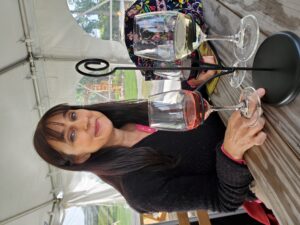
So in January 2022 Sofia, Irina, and I moved, right after a pretty big snowstorm dumped quite a bit of snow in the area no less – hadn’t seen any real snow in 10 years, so that was an experience! I bought a sweet colonial in historical Swillburg, and spent much of the year fixing it up, acclimating myself back to my job as a criminal appeals attorney, and exploring my new home. I visited Toronto (about 2.5 hours away by car), my old neighborhood in NYC (about 5.5 hours by car, 7 by train), and took multiple trips to various beach parks on Lake Ontario and in the beautiful Finger Lakes region (about 45 minutes to a couple hours away depending on which lake you visit). The Finger Lakes soon became one of my favorite summer destinations, with gorgeous lake views, many, many wineries, and a couple of farm sanctuaries, including a new one, which made its own cross-country trek this year from California. At top is a pic is of me at Dr. Konstantin Frank winery on Keuka Lake.

I am loving my new area, and my new/old job. I am lucky to have a great boss that understands that writing briefs is an art form, which makes me feel fulfilled in my day job, something I haven’t experienced in a very long time. It’s also good to be back in the state in which I am barred to practice law, so I can do side work on behalf of animals and their protectors. I promptly joined a state bar association’s animal law committee and am helping organize panel discussions on animal law.

Now that I am finally settled, I am returning to my creative writing. I had to take the past year off from my WIP – a paranormal cozy mystery series set in a cat cafe and adjoining dog bar. It had been set in Sedona, AZ, but I’m so inspired to write about my new home, I am working on relocating it here. I’m hoping to release it later this year, with two other books in the series to follow shortly.

I am so very thankful to everyone who has enjoyed my writing, written reviews of my books, joined my newsletter, and continued to follow me on social media for the past several years. I haven’t produced new fiction in a while, and I am so grateful to readers who have stayed with me. I wish everyone a wonderful 2023 filled with lots of engaging reads!


Bella Italia Romantica!

This year has been one of the busiest of my life. I moved from the city to the desert, bought a house that needed more significant work than I’d thought, and started a new job. Adjusting to a very different lifestyle has been more challenging and time consuming than I ever would have thought, and I didn’t have a lot of time to write this year. But I took a short trip to Italy at the end of the summer and it really re-invigorated my desire to return to the dance romance I’d begun at the end of last year. Crowded and touristy as it was in late August – try not to go to Europe in August; wait till September if possible!! – Italy was so beautiful, so romantic. It just got me in the mood to write again, even if the house isn’t all done πŸ™‚

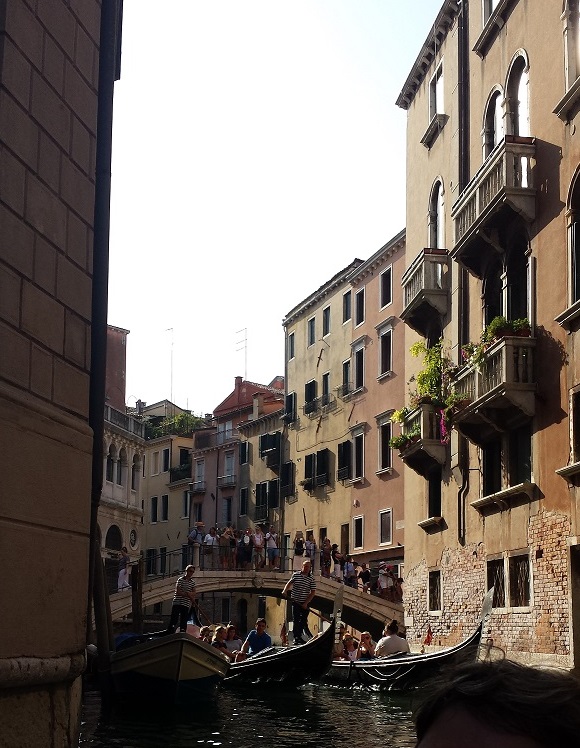
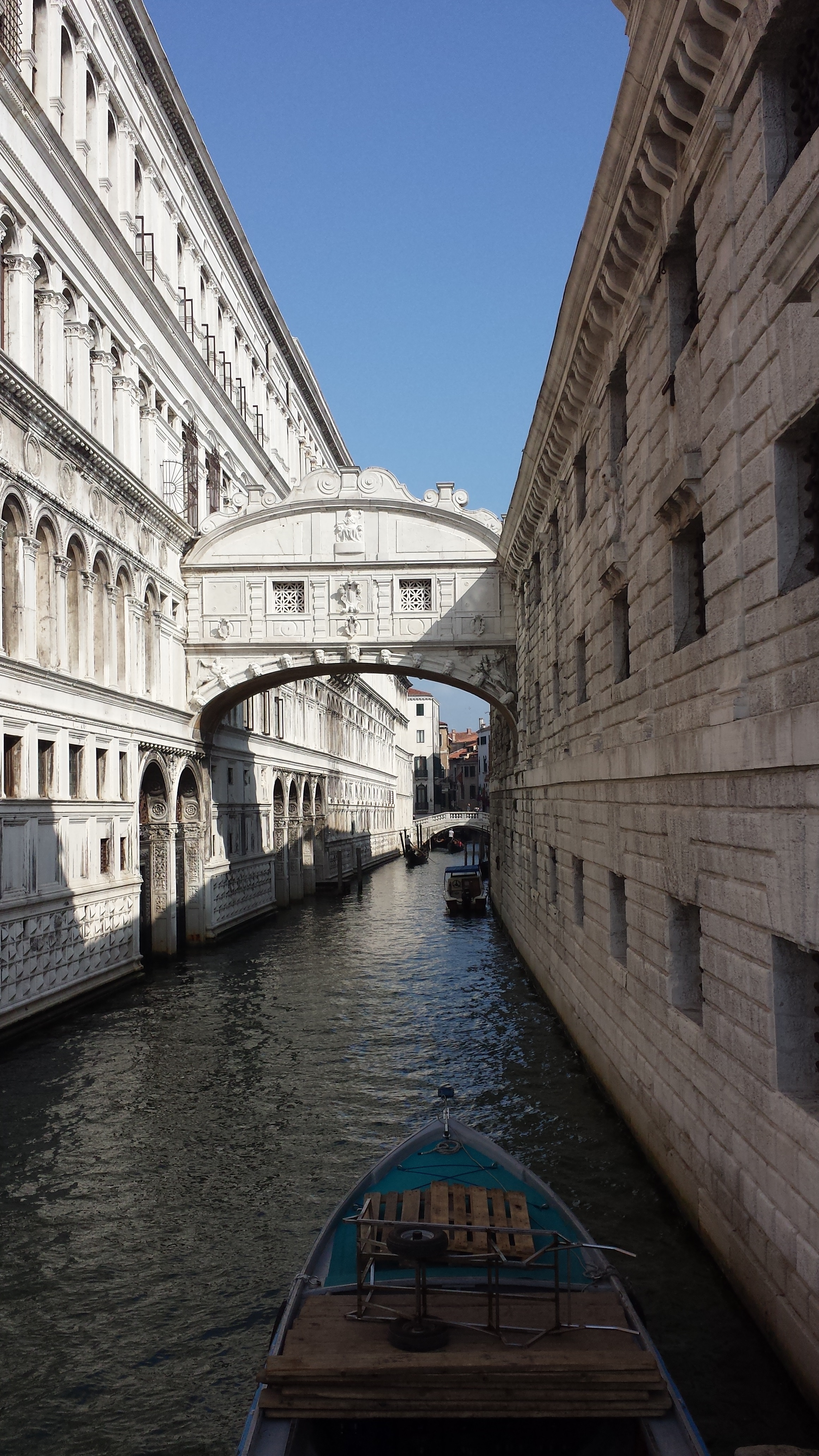
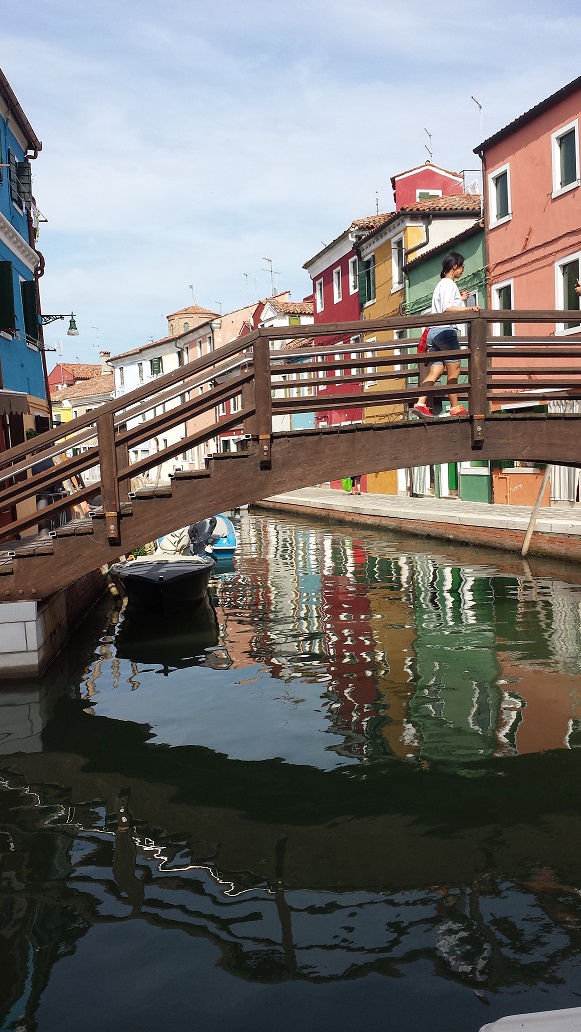
At top is one of my favorite pics, in Venice. We had to be tourists and take a gondola ride of course! It was truly beautiful. I hadn’t been to Italy before and I’d heard so many stories of how smelly and dirty Venice is, and I didn’t find it to be that way at all. I guess maybe because I studied history in grad school, I couldn’t stop thinking of what a gorgeous human creation the whole city structure was, the beautiful old buildings, how it must have looked in the eighteenth century, what it must have been like to walk through the mysterious, narrow, winding streets, and stroll along the canal. I’m a water person – I love all kinds of bodies of water, but mostly rivers and canals because they’re often found in urban areas, and they serve as vital part of the modern cities.

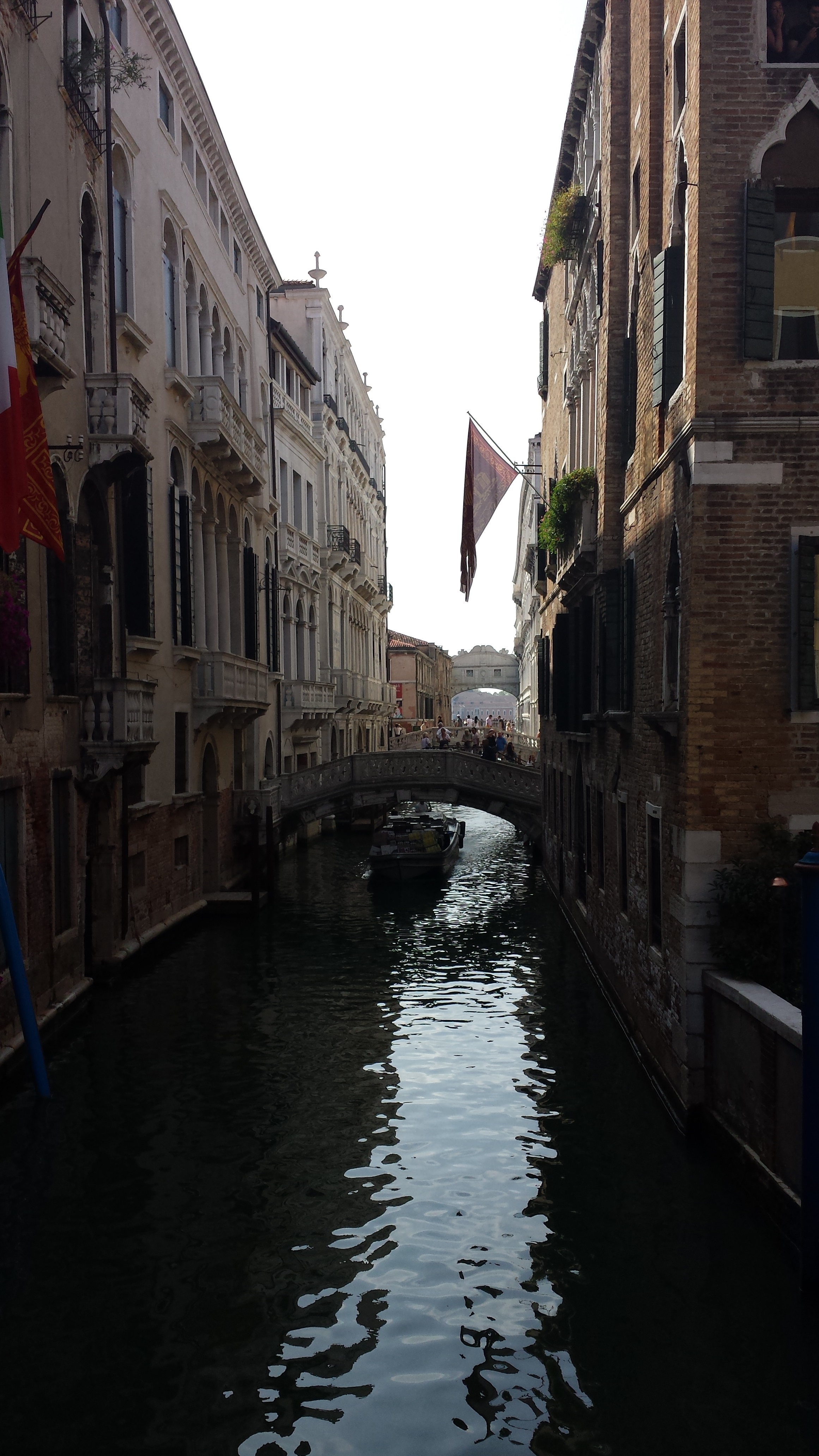
I was just so enchanted with Venice. Here are a few more pics:

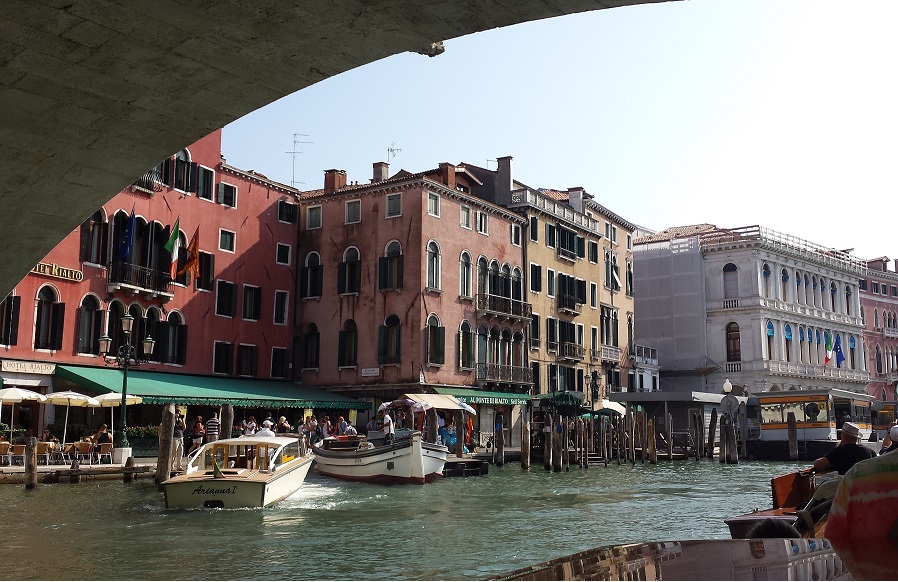
Above is the Grand Canal.

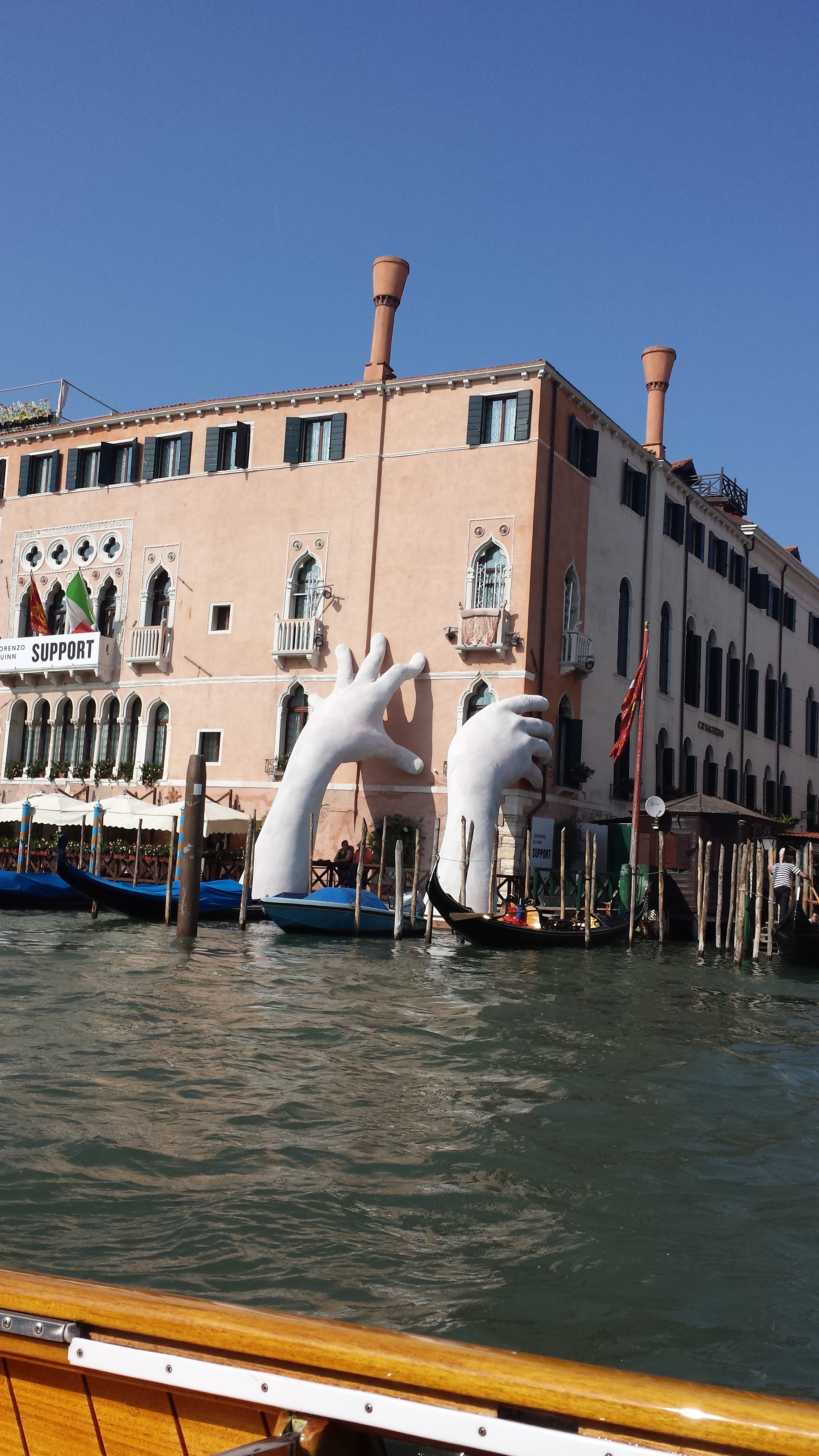
A very interesting piece of art as part of the upcoming Venice Biennale exhibit. So, it’ll be taken down after Biennale ends in November.

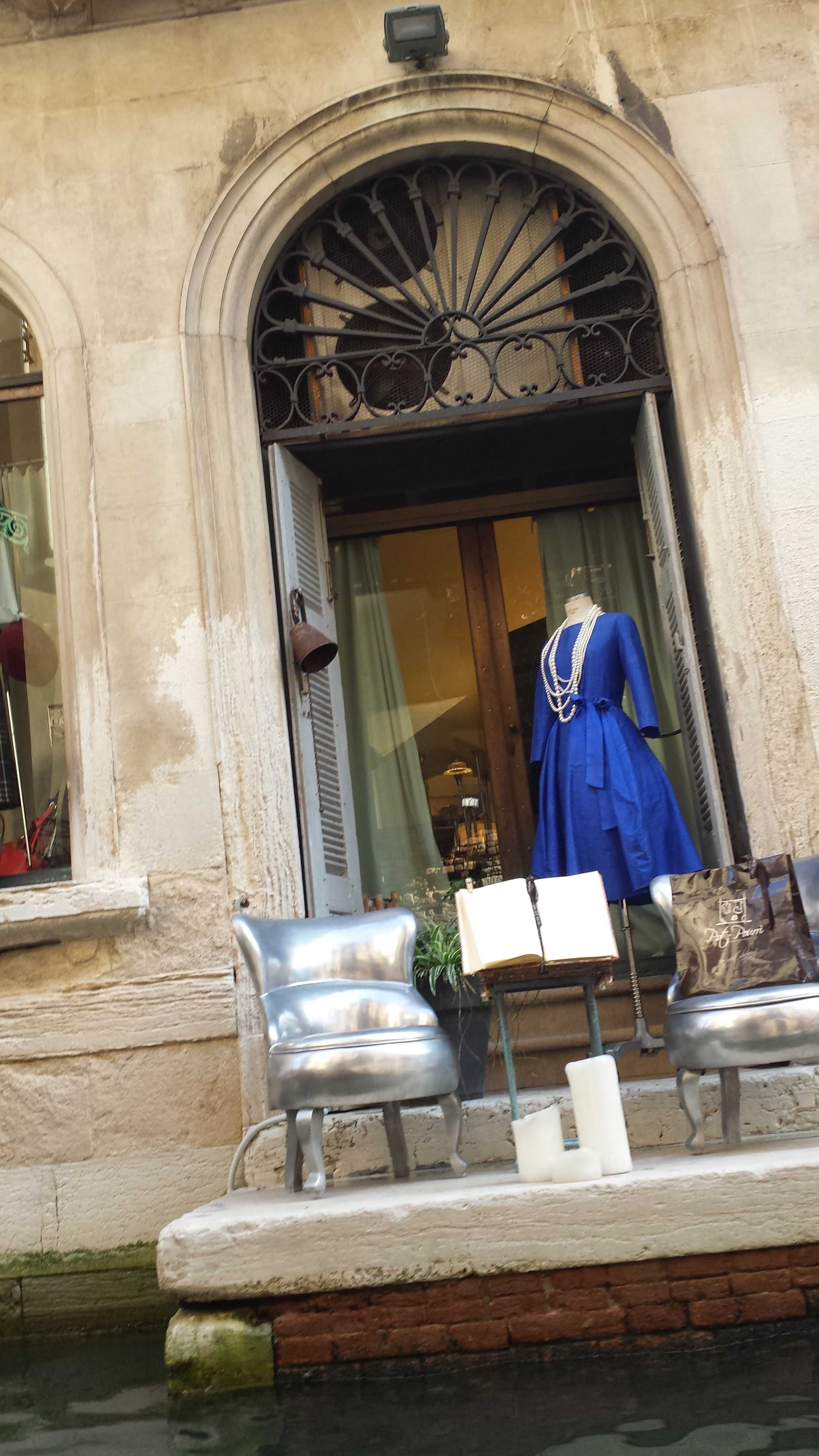
A quaint little boutique along a canal. There are boutiques everywhere. I wished more of them sold original things, like this one, but most sold only souvenirs. Enchanting as they were at first, by about my third hour there, I felt like if I saw one more cheap face mask I might just jump in the canal.


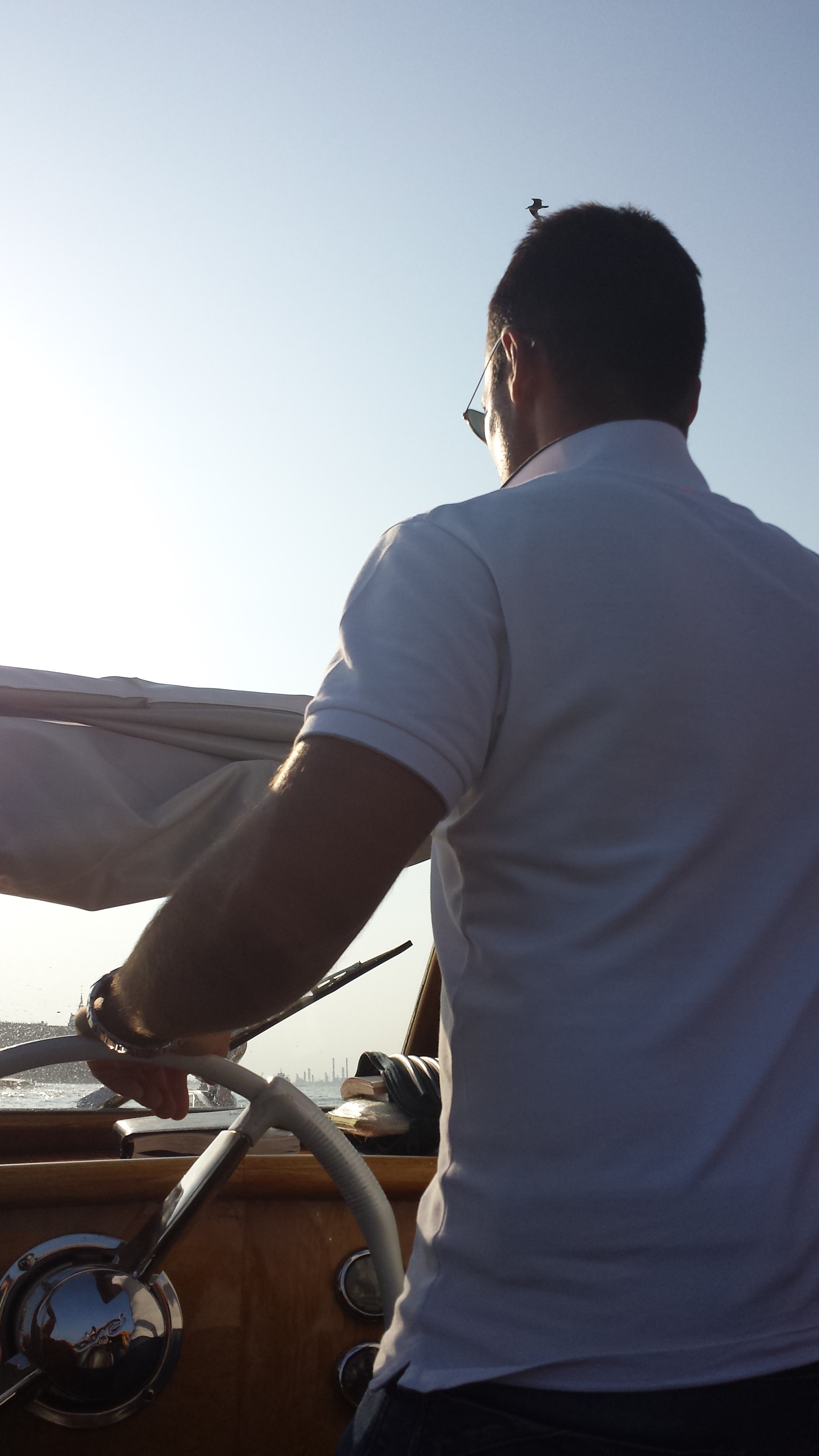
Okay, I can’t help but include a pic of the back of our hot water taxi driver πŸ™‚

This is the island of Murano, off of the big island in the Venice lagoon. The smaller islands were much less crowded. I loved the buildings here. Their colorfulness reminded me a bit of San Juan, Puerto Rico.

Below, is Rome. Rome was super packed with tourists – because of the Sistine Chapel, the Vatican, the Colosseum, etc., but beautiful as well.

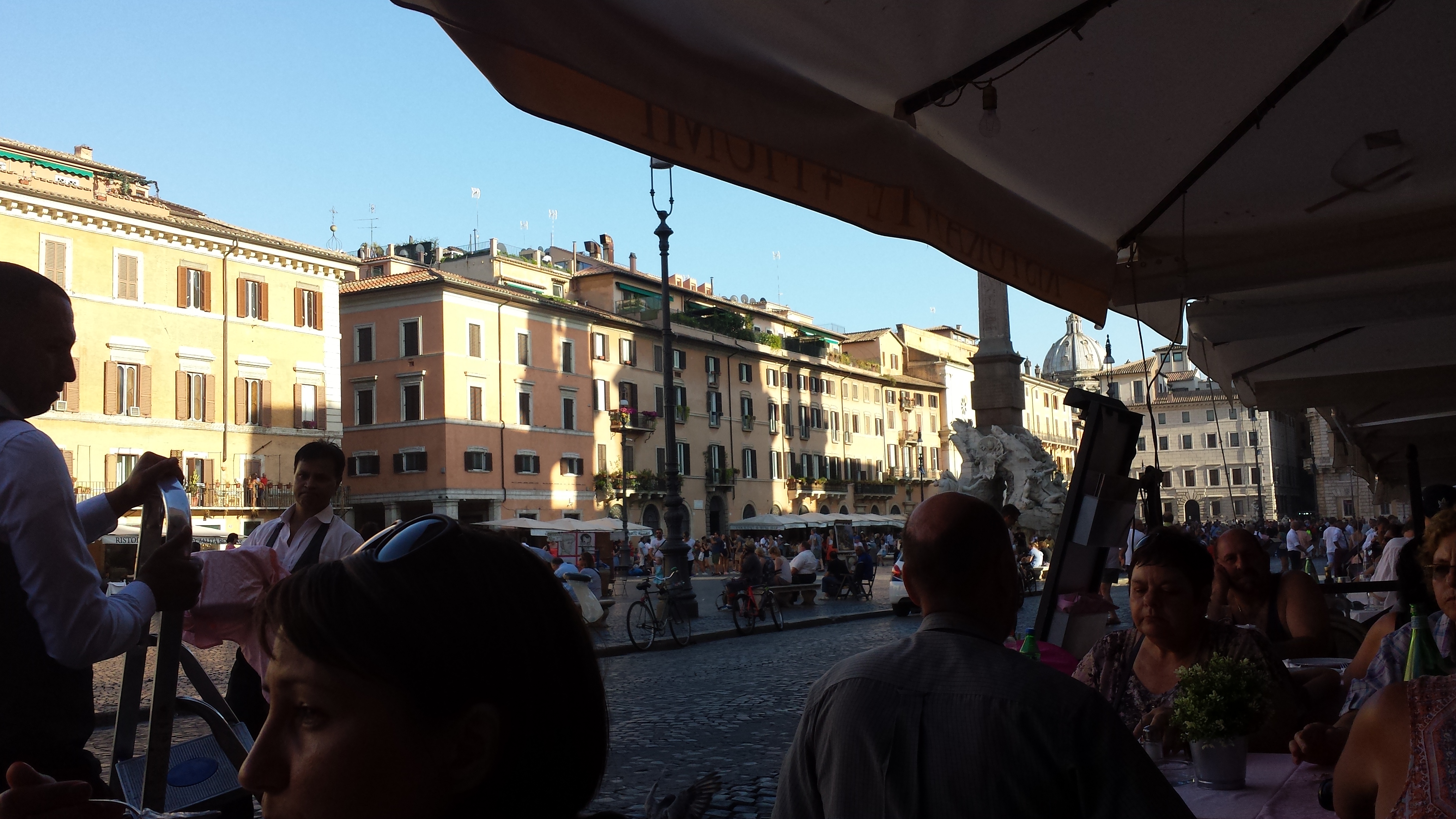
A restaurant across from a piazza where we had dinner.

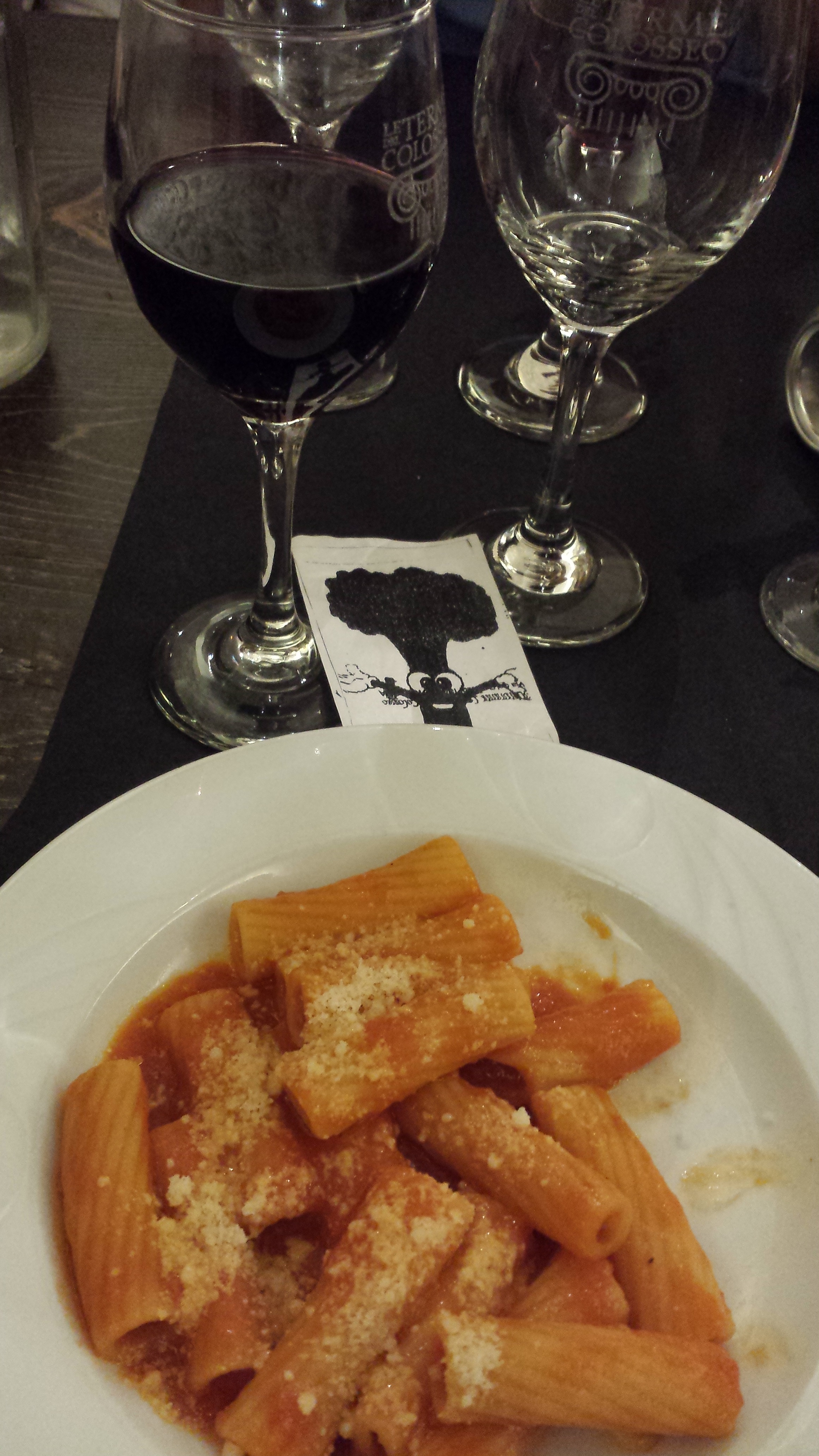
The vegetarian secondi portion of my dinner at a restaurant near the Colosseum. The red wines don’t have sulfites there, unlike ours. So, I could relax and drink without fear of a migraine!

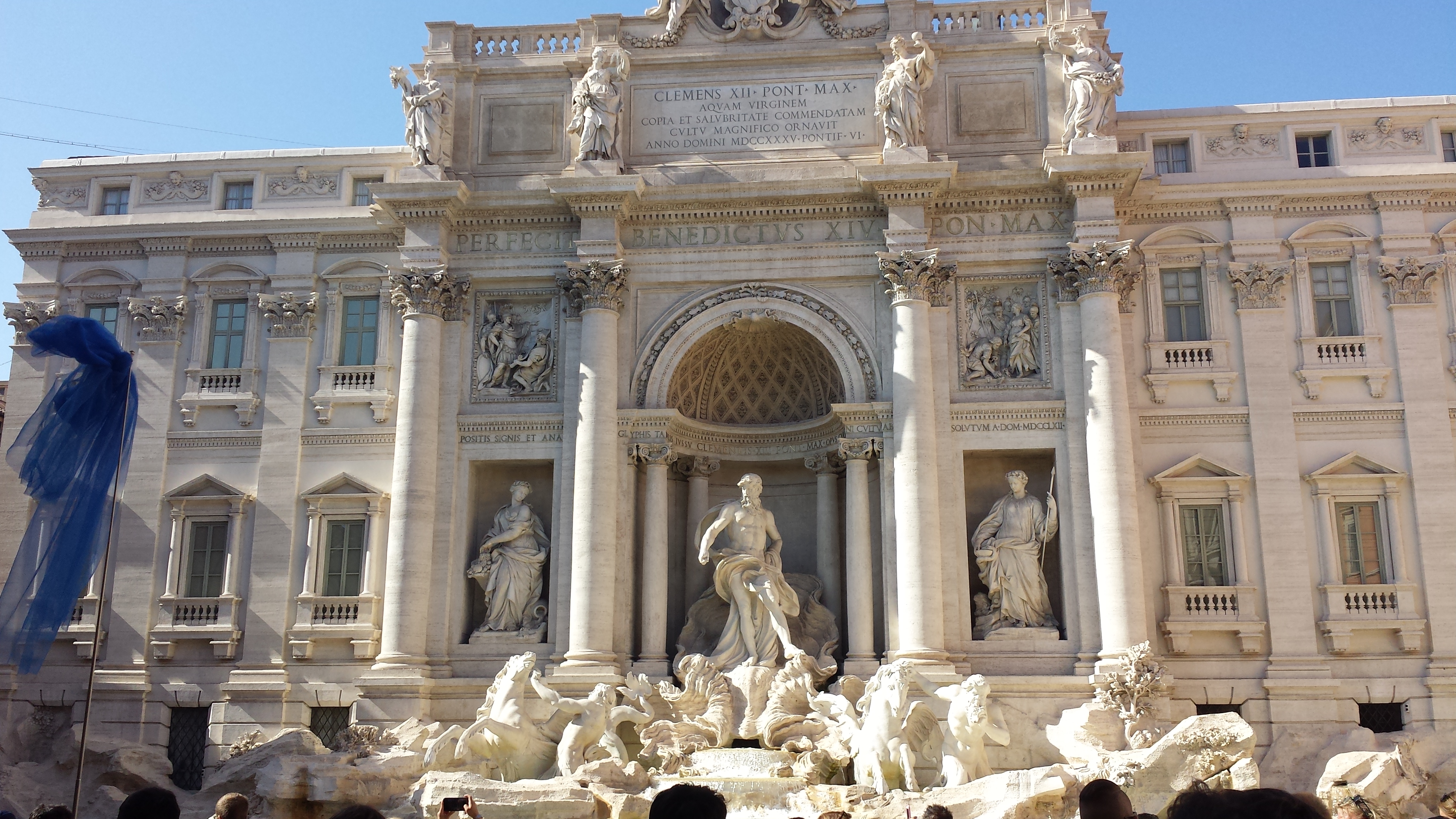
The Trevi Fountain.

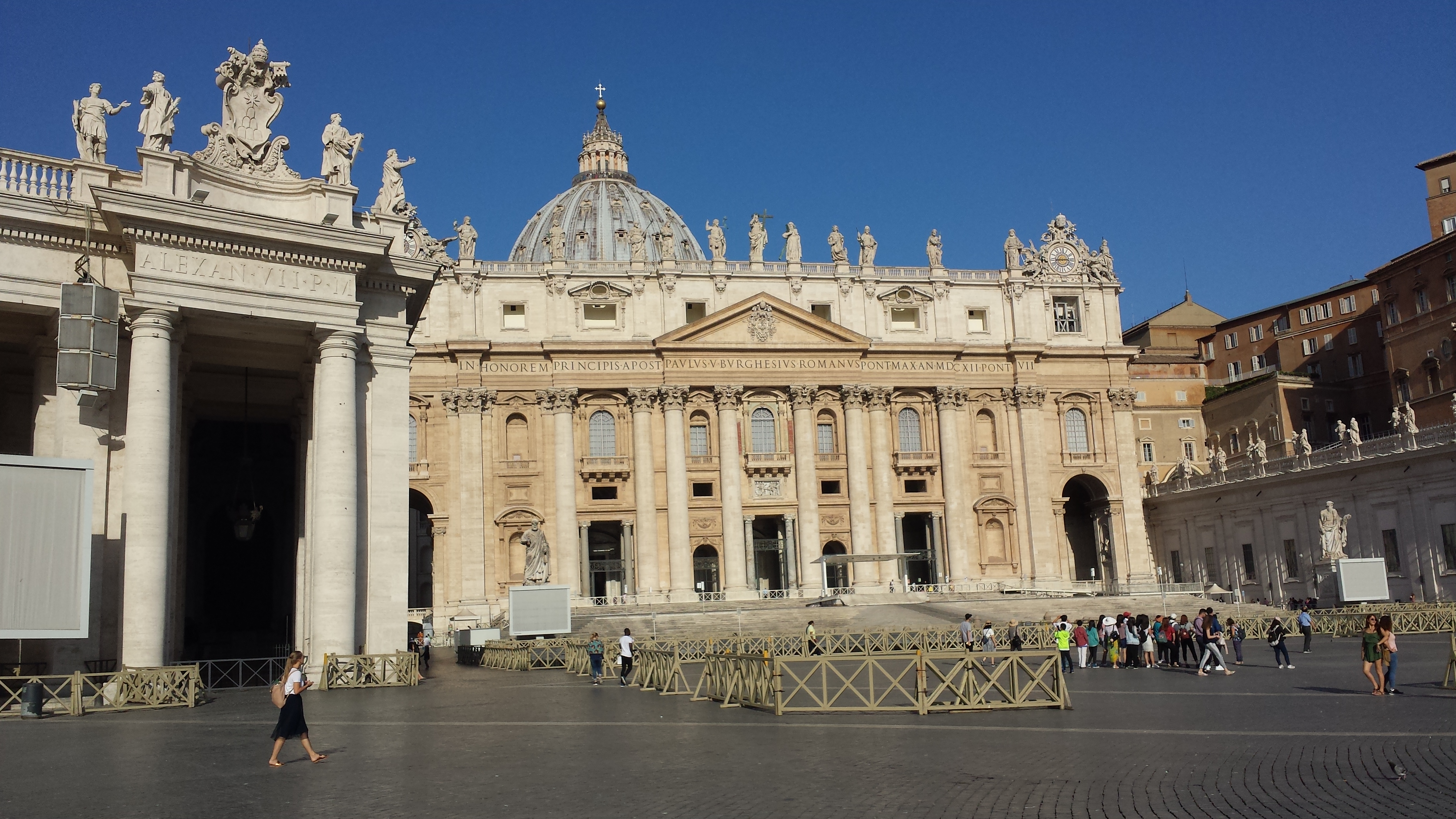
The Vatican, which is far more huge than I ever thought. I was there right after the terrorist attack in Barcelona and security was super tight.

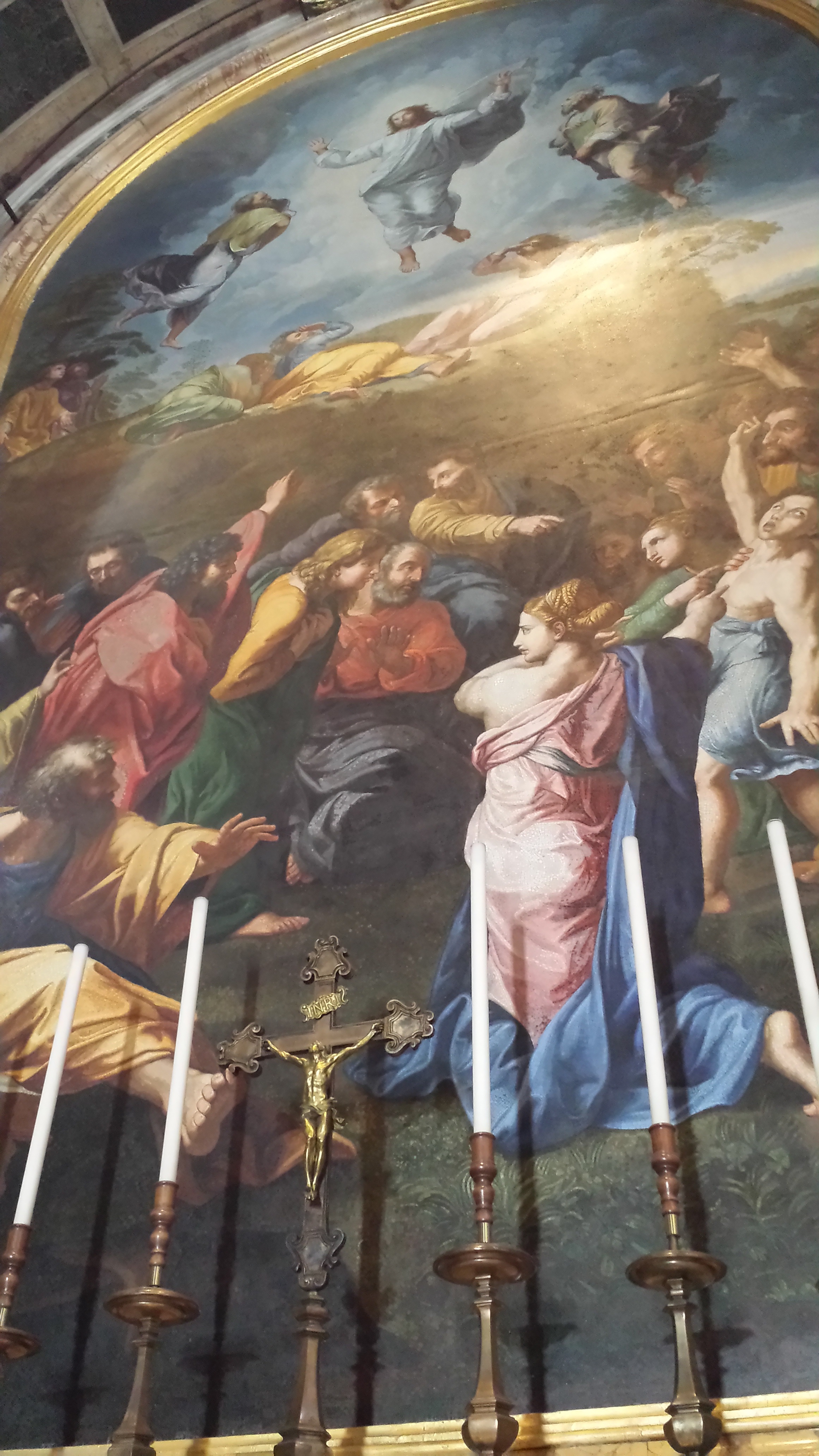
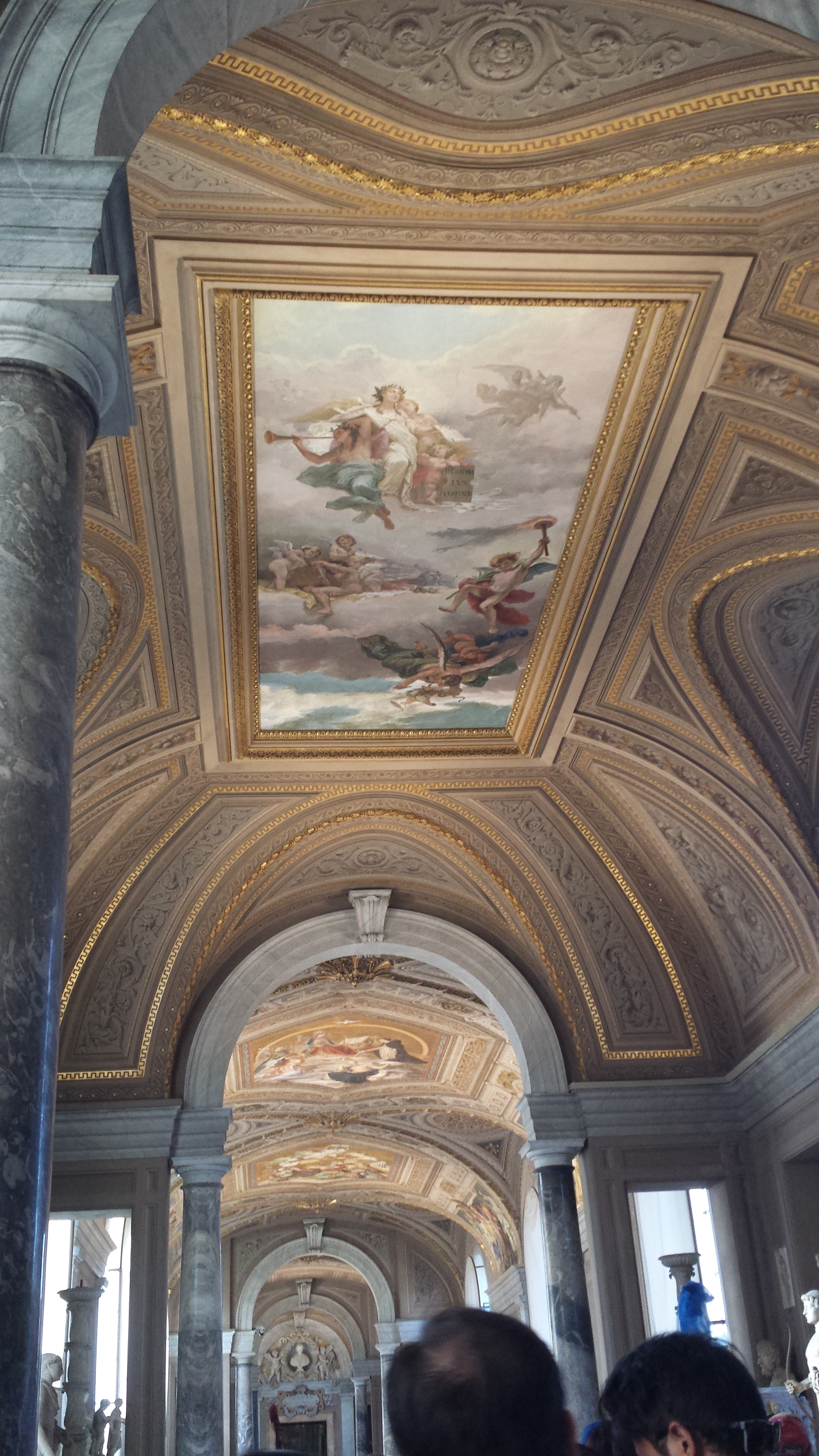
Gorgeous art work in the Vatican Museum. We weren’t allowed to take any pictures in the Sistine Chapel, which of course was breathtaking, albeit a little smaller than I’d imagined. But we were allowed to take flash-free photos in the other Vatican museums.

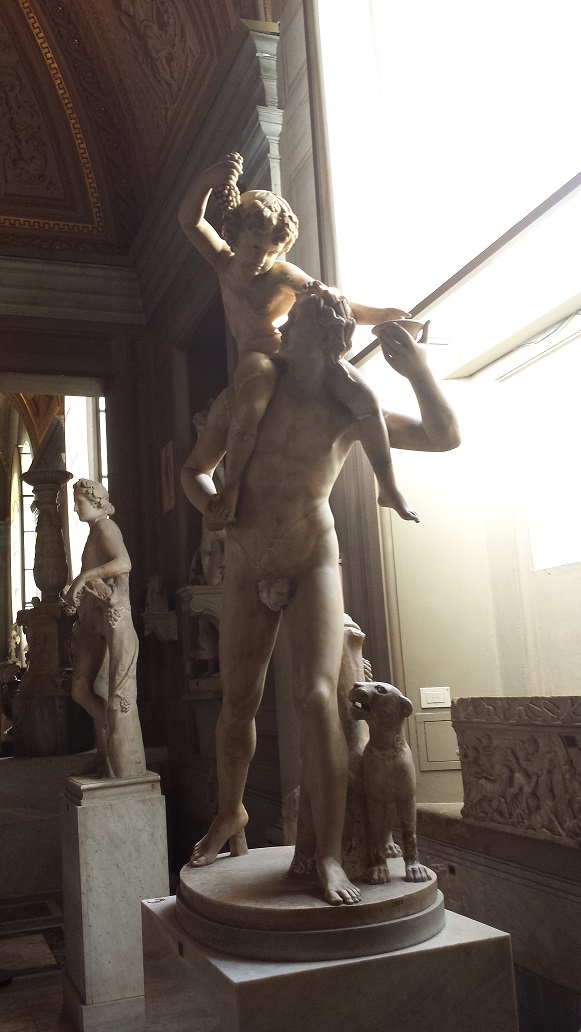
Bacchus, the god of wine – my favorite statue in the Vatican Museum πŸ™‚

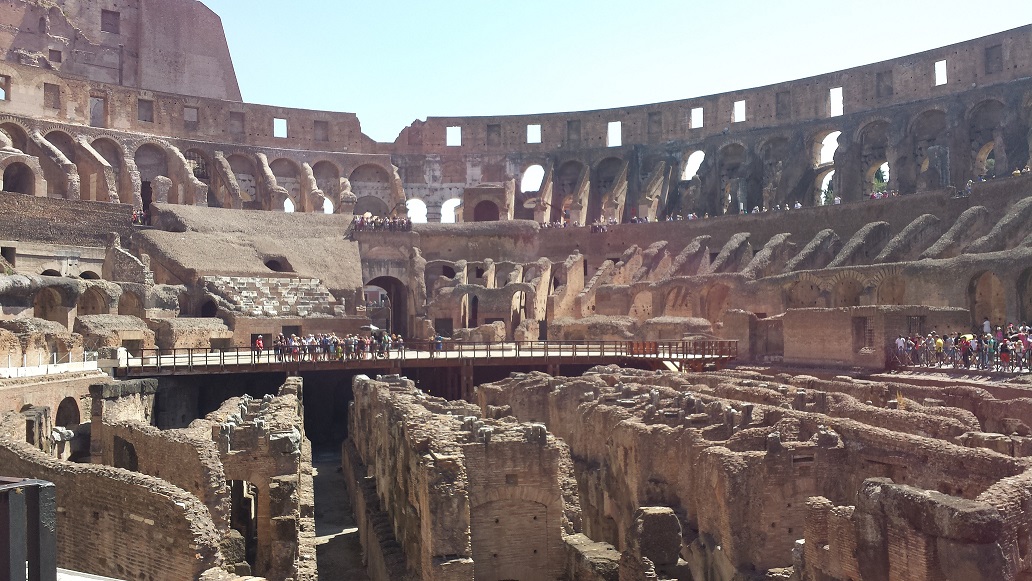
The Colosseum, which was far more huge than I’d imagined. It was packed! At first I was a little worried about a terrorist attack, especially after what had just happened in Barcelona, but soon I was so carried away by the history, the marvel, the grandeur of it all, it was impossible to even let your mind go to bad things.

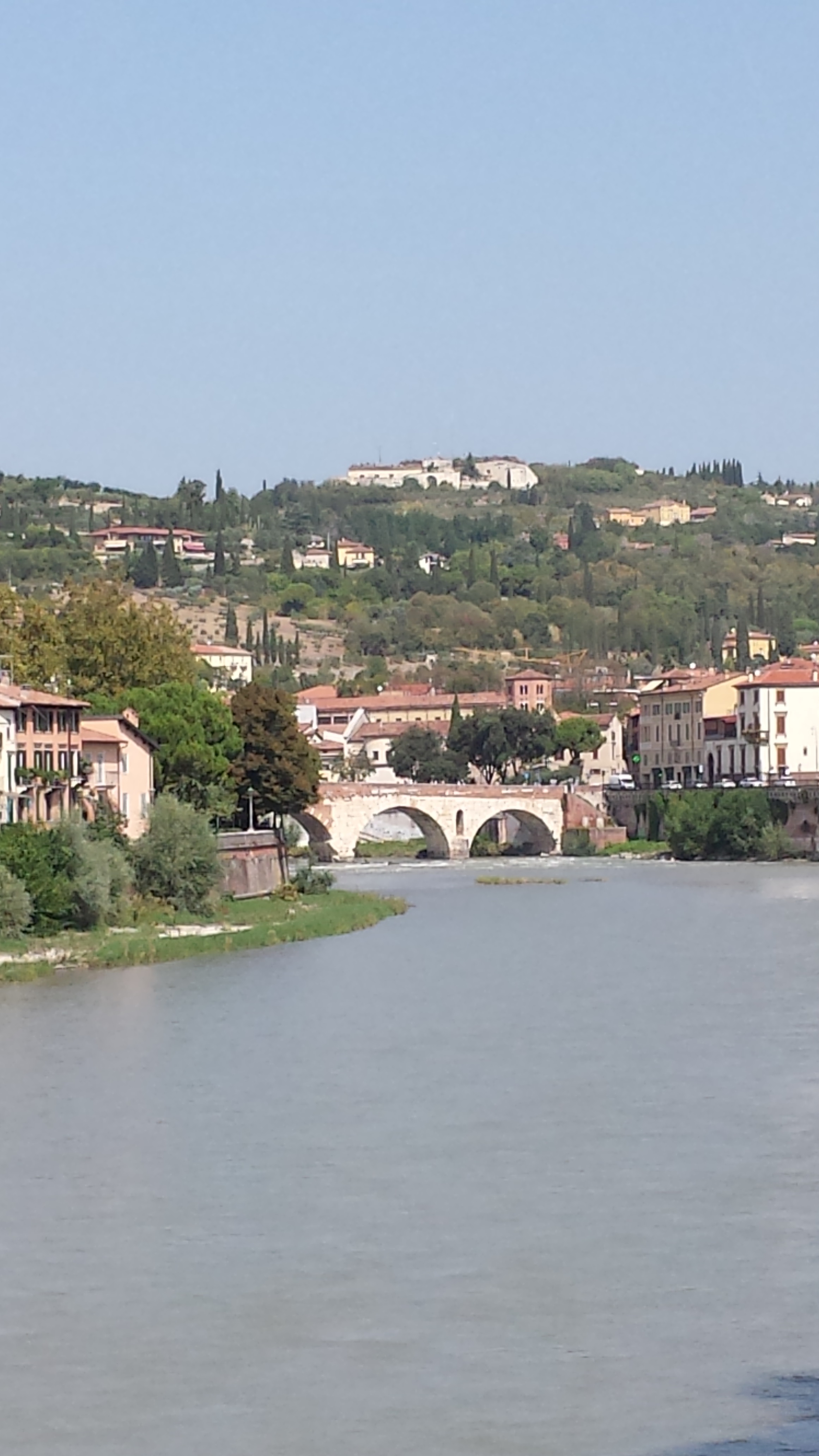
We also visited Verona, where Shakespeare set Romeo and Juliet. Lovely little city.


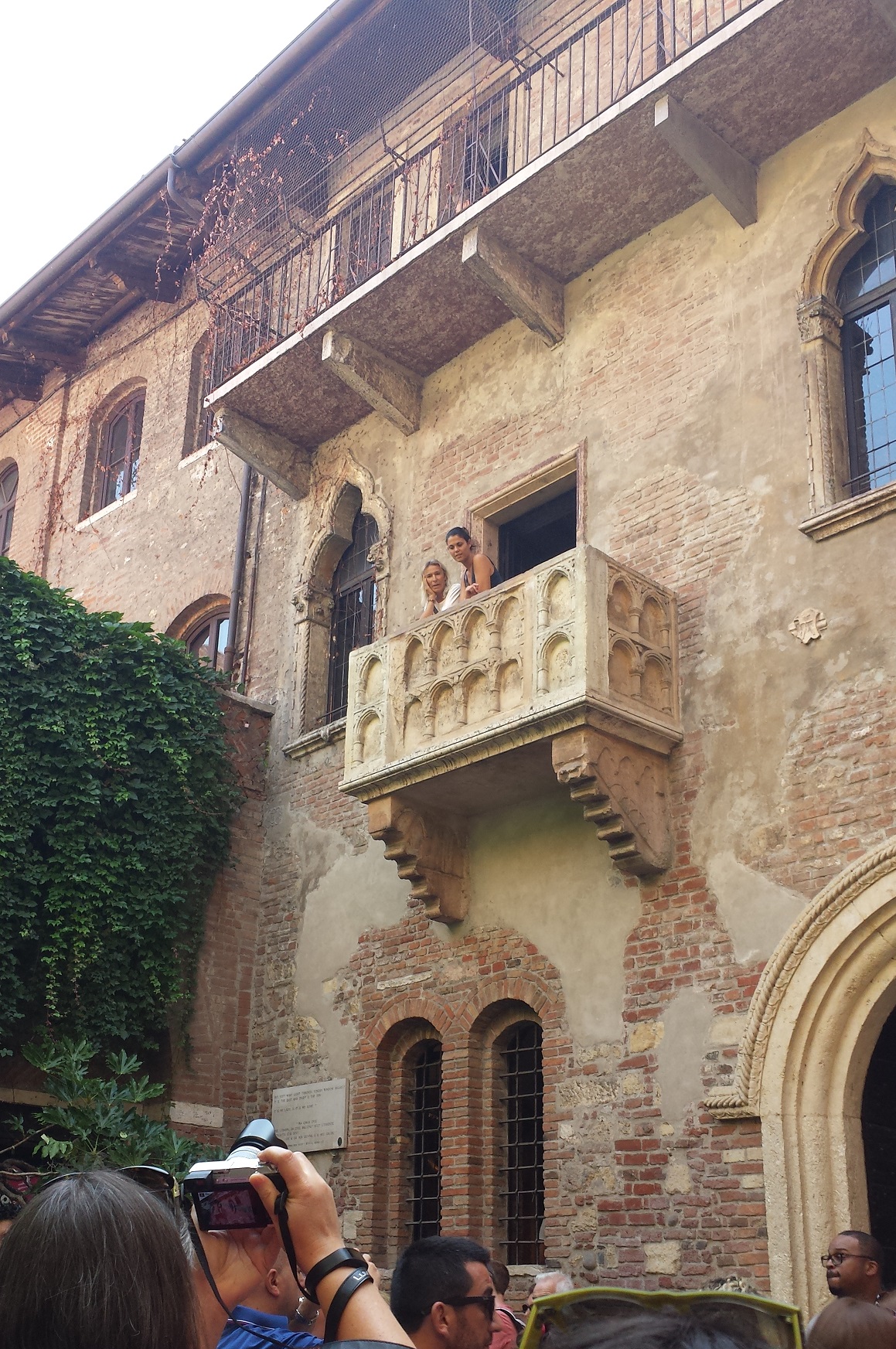
“Juliet’s balcony.” This house belonged to a family called the Capulets. According to JULIET, a really engaging novel by Anne Fortier, the oldest known telling of the story of Romeo and Juliet (Shakespeare’s was not the first) took place in Siena, in Medieval times. So this balcony generally serves as a tourist attraction πŸ™‚

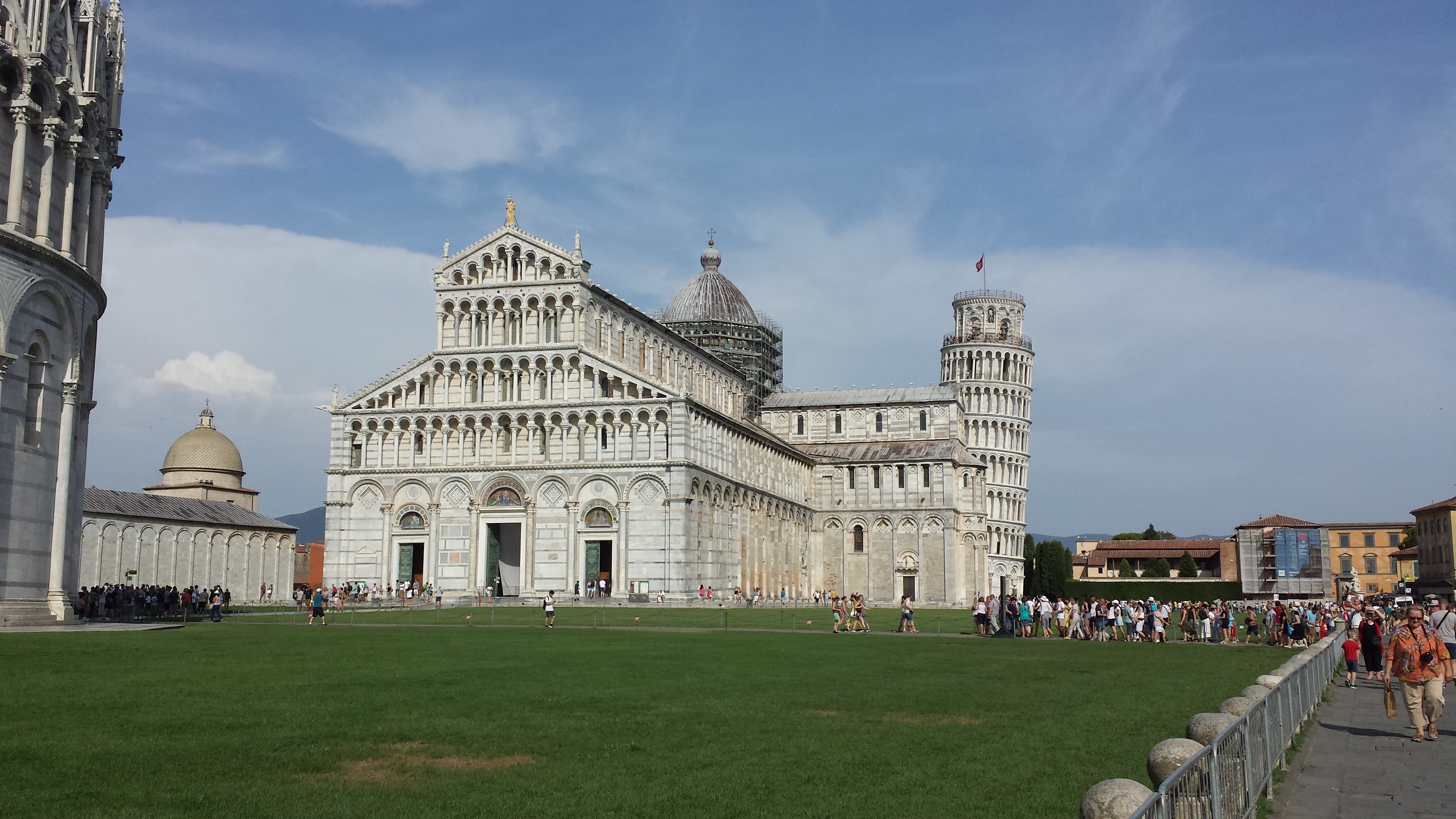
What would a trip to Italy be without visiting the Leaning Tower of Pisa! Although, this building didn’t seem to be any more leaning than others I saw throughout. It’s just the most famous. And man was that place touristy. I did have just about the best gelato I had in Italy, outside of a little gelato shop adjacent to the Trevi Fountain.

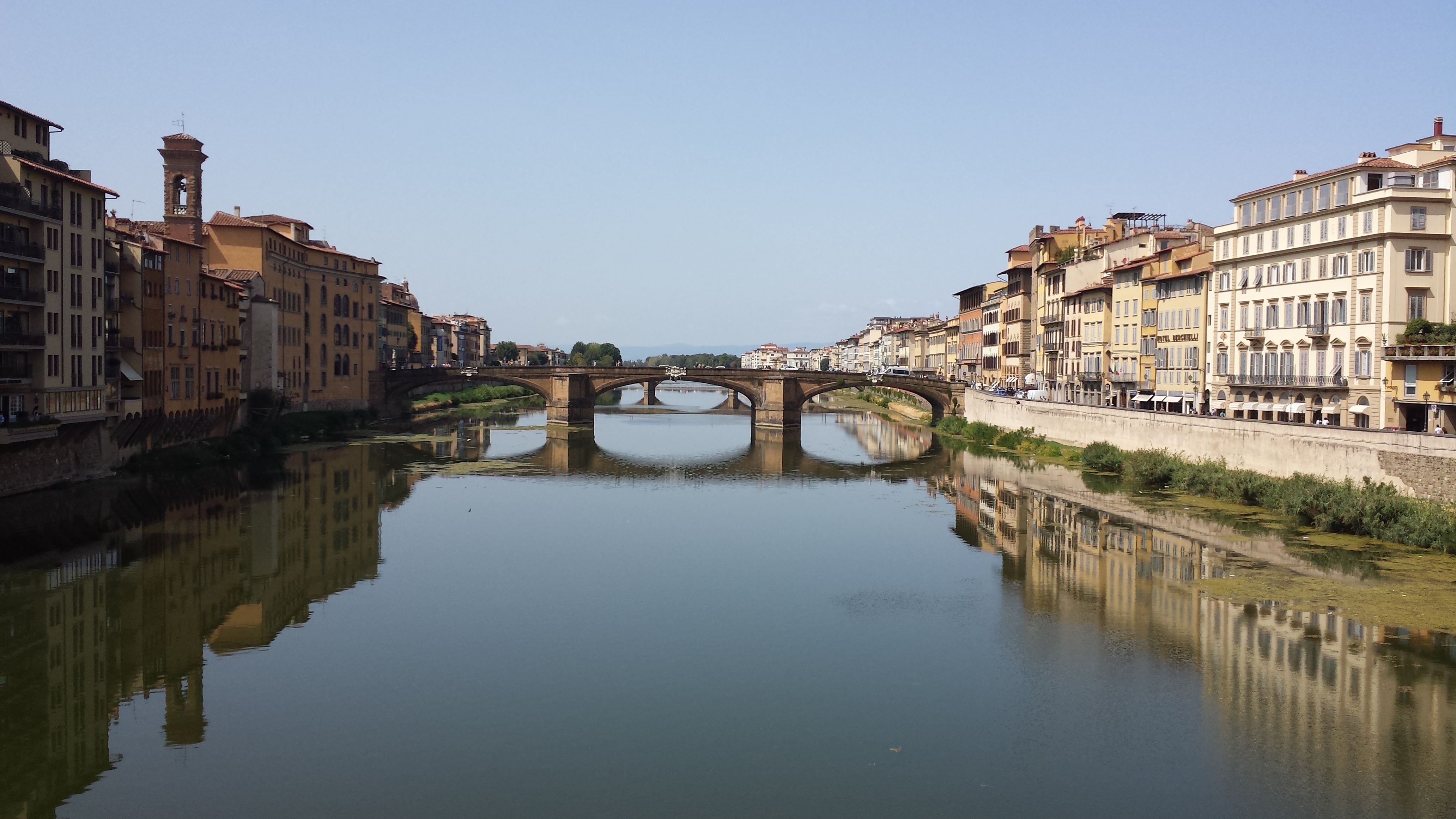
My absolute favorite place we went, though, was Florence. I love art, and I love walkable cities with history and interesting architecture, and lots of water, and Florence had all of the above in absolute spades.

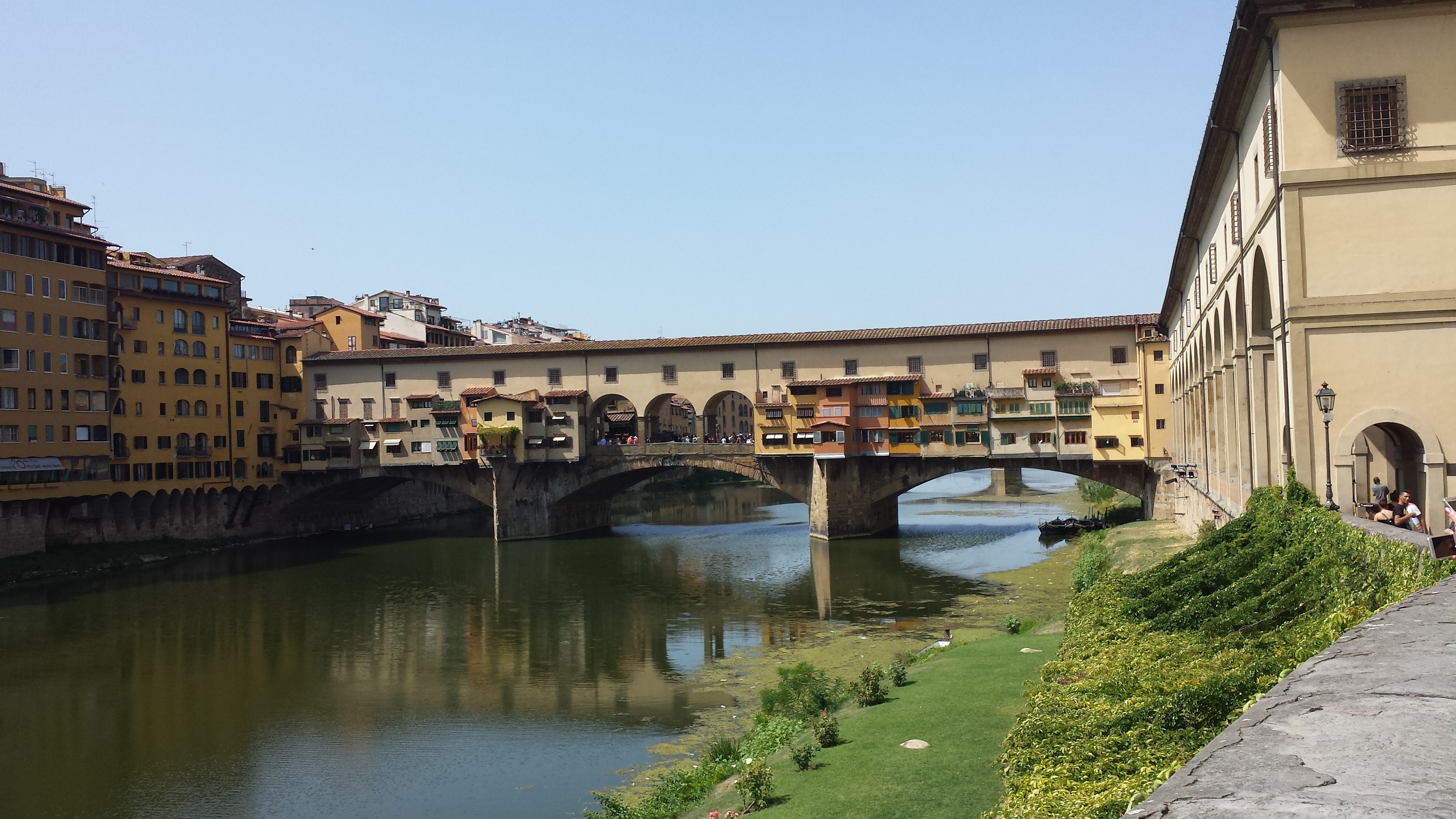
The Ponte Vecchio covered bridge, which crosses the Arno River. So many shops inside the little buildings along the bridge!

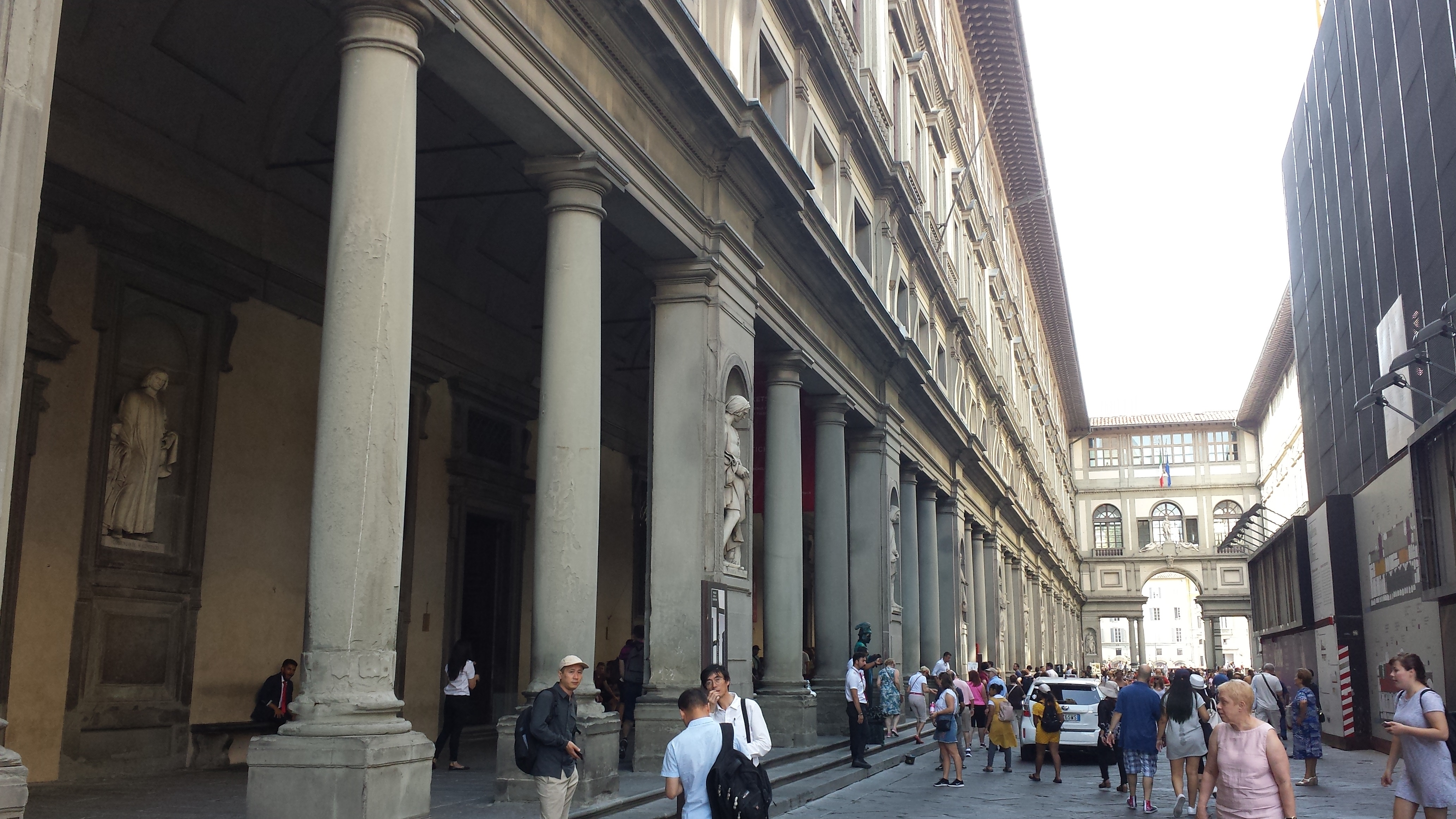
The Uffizi museum. The street leads down to the Arno River. We didn’t get to go into the Uffizi, shamefully, because we hadn’t bought tickets ahead of time and the line would have taken all day. Next time I go, I will remember to get all my tix online well ahead of my visit!

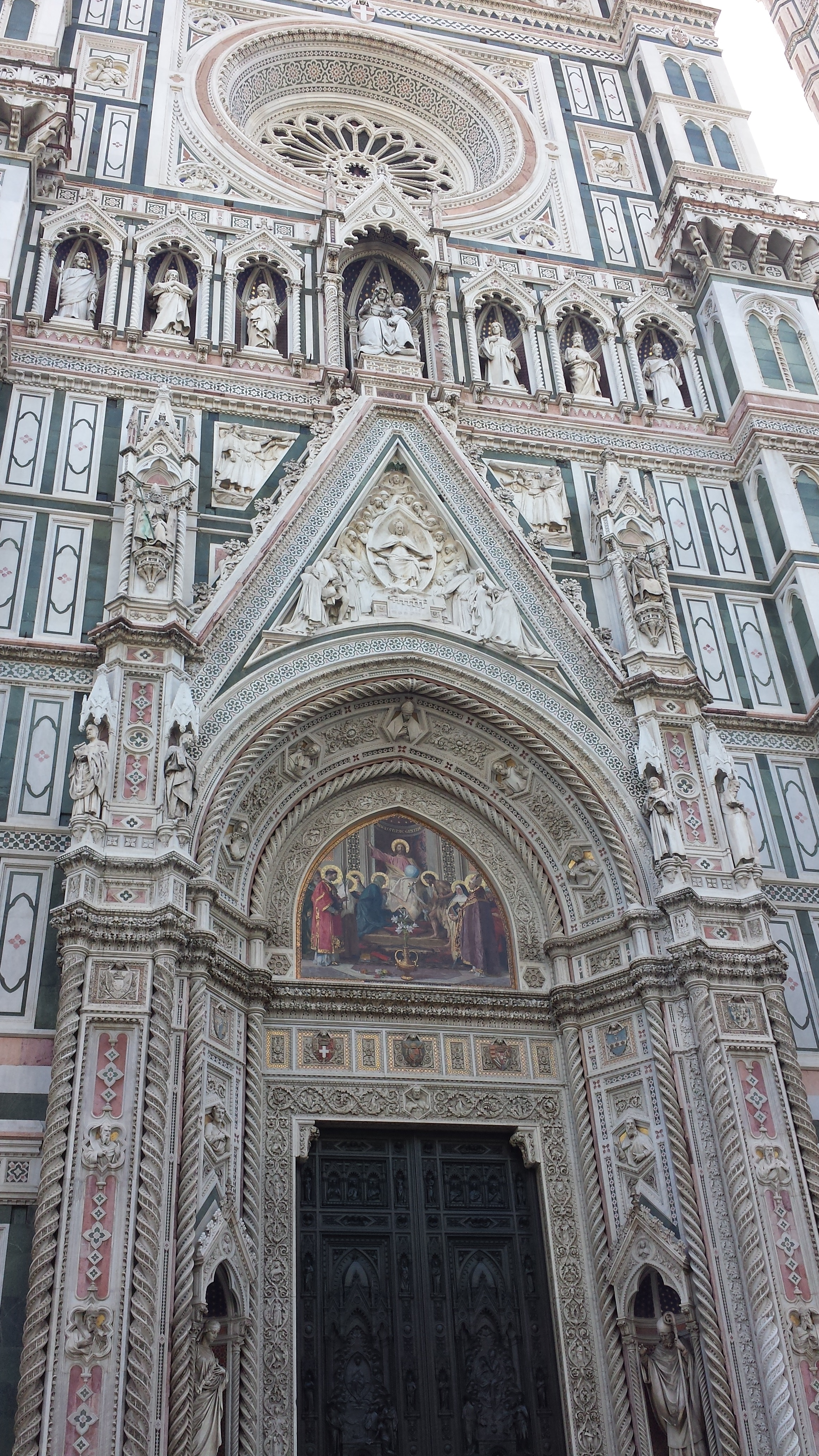
The breathtaking Duomo (cathedral). It you read the opening pages of my old novel, SWALLOW, main character Sophie compares her little Arizona town, named Florence as well, to the real thing, noting sarcastically that while the famous Florence boasts the Duomo and the Uffizi, her little town houses the Arizona State Penitentiary πŸ™‚

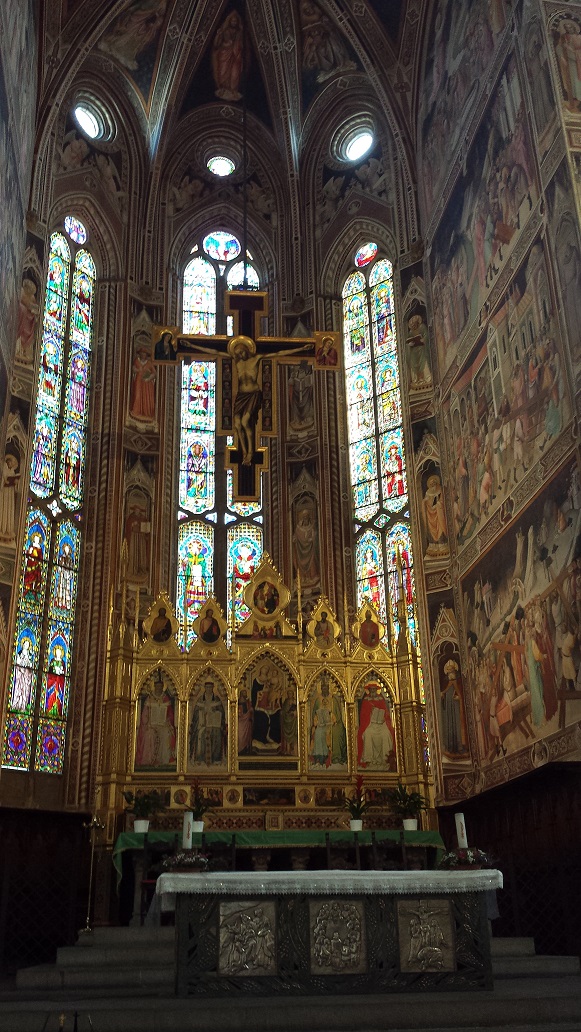
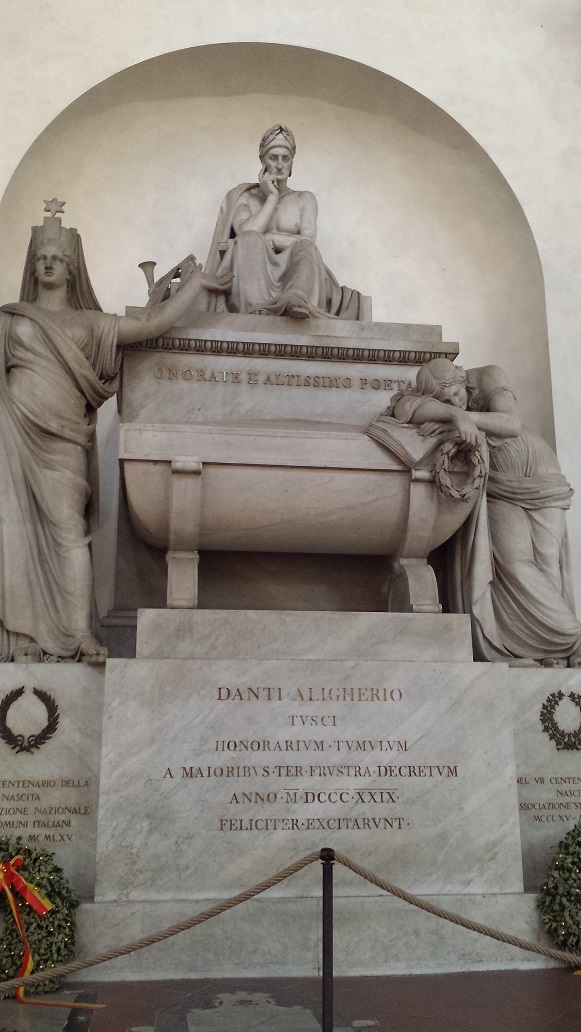
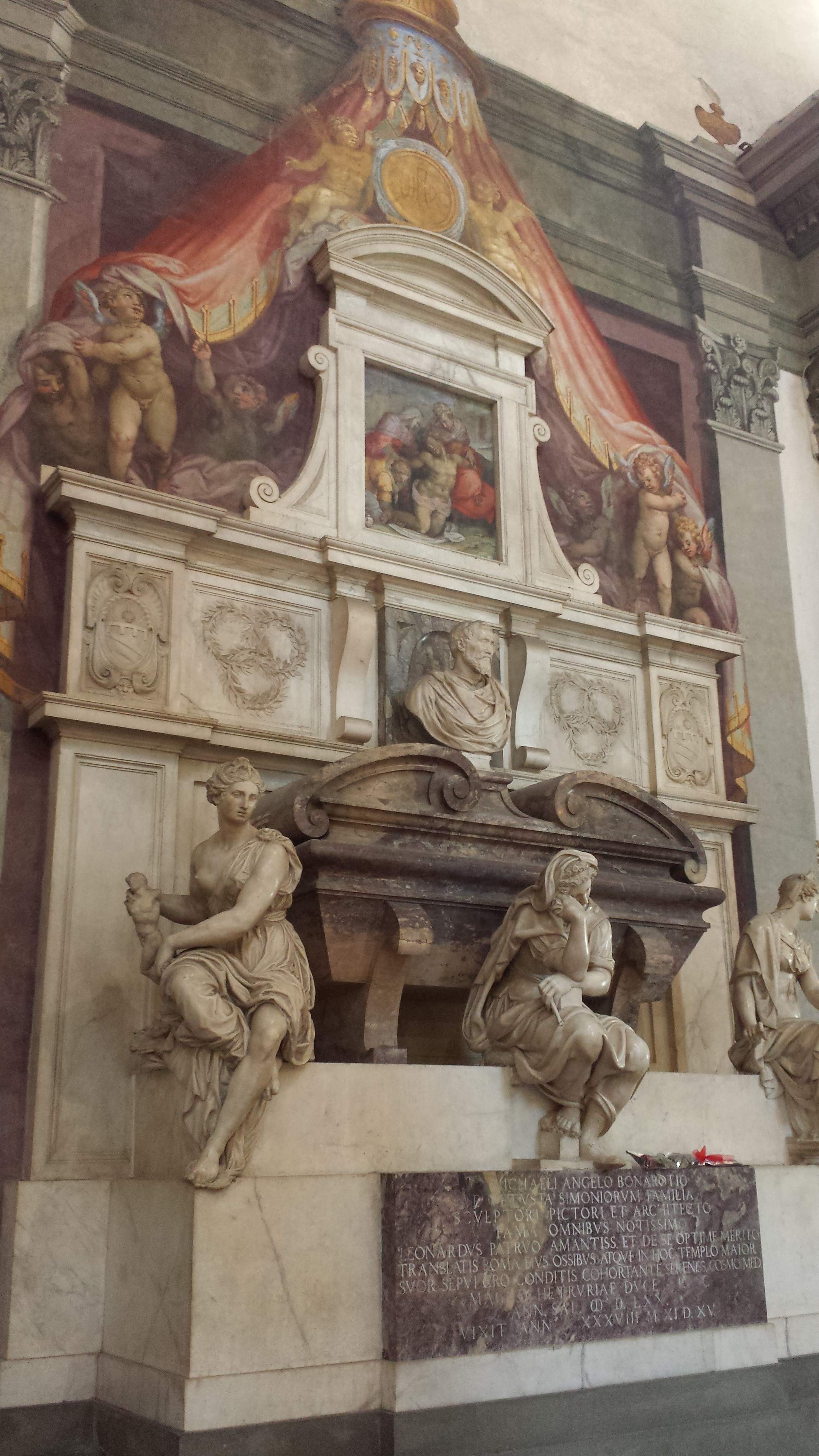
The inside of the Santa Croce cathedral, which is like the Pantheon in Paris, and houses many of the tombs of Italy’s most revered such as Dante, Michelangelo, Galileo.

Dante’s tomb.

And the tomb of Michelangelo.

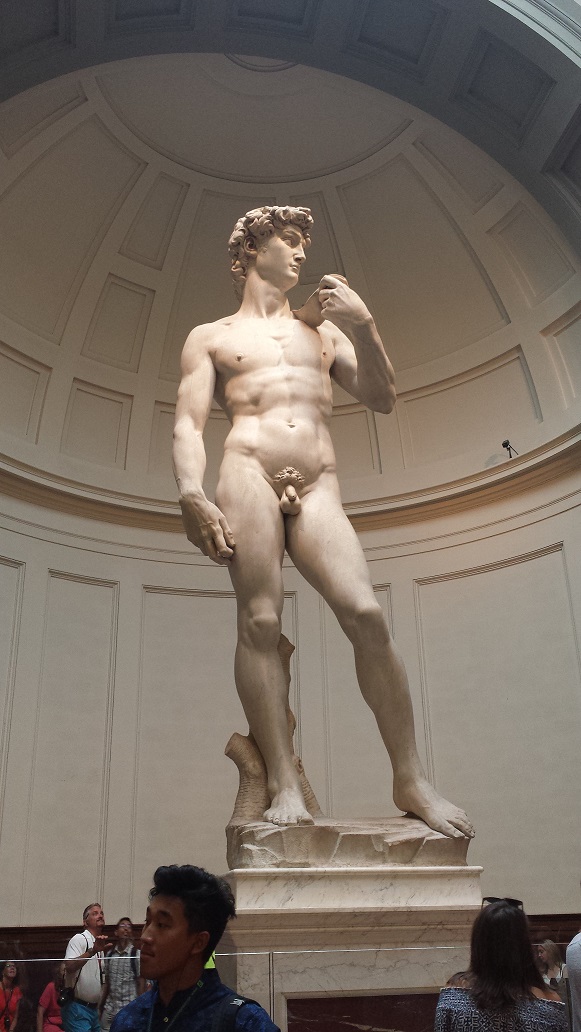
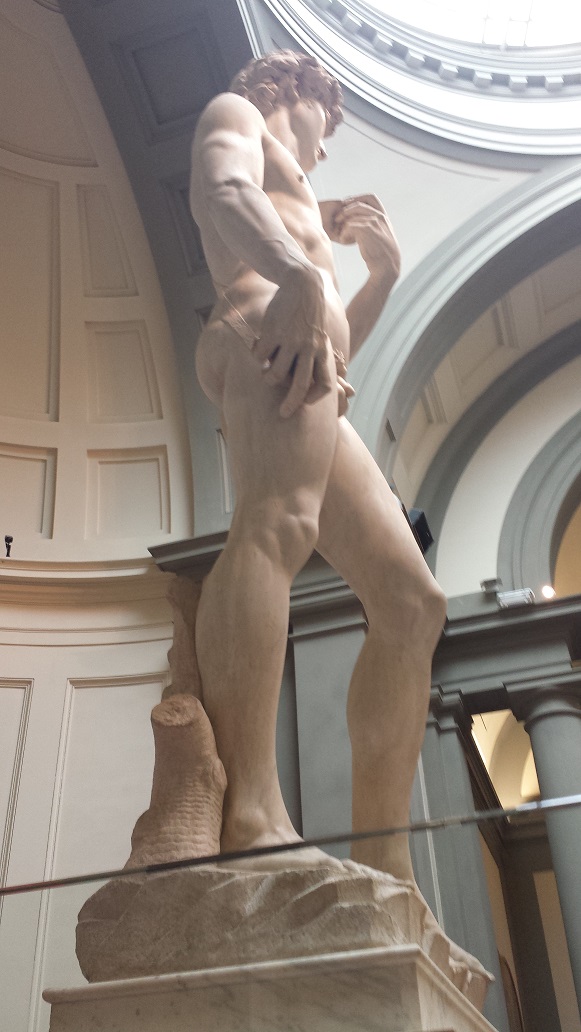
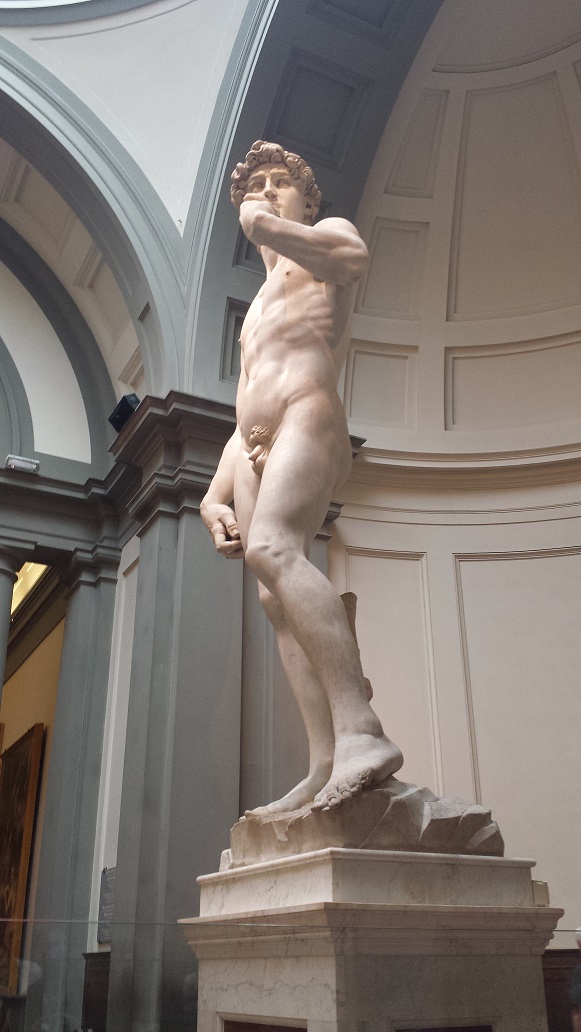
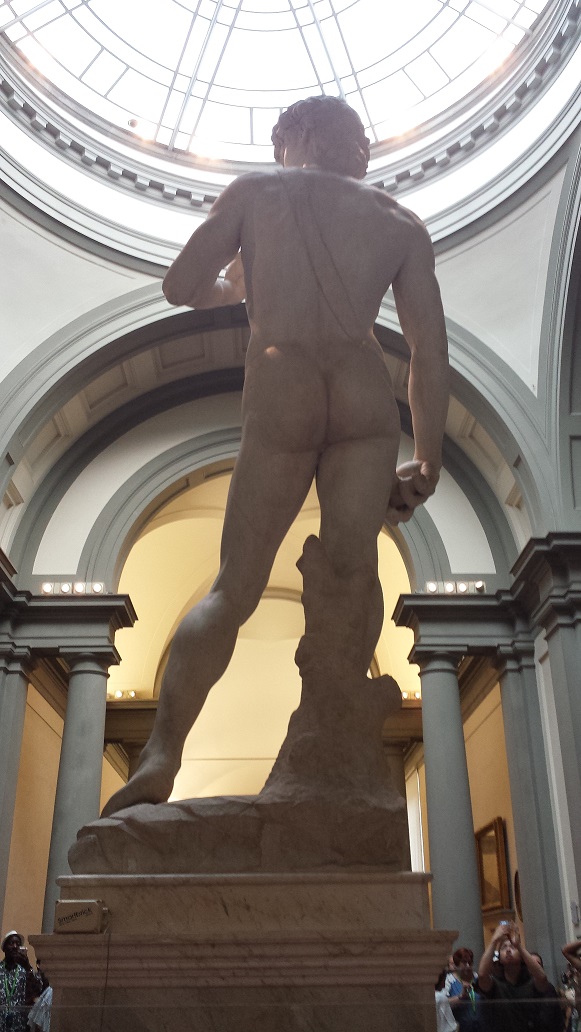
Of course we had to visit The Accademia Gallery, which now houses many of Michelango’s statues, including David πŸ™‚

Okay, I kind of went crazy with David pics πŸ™‚ I couldn’t help it!

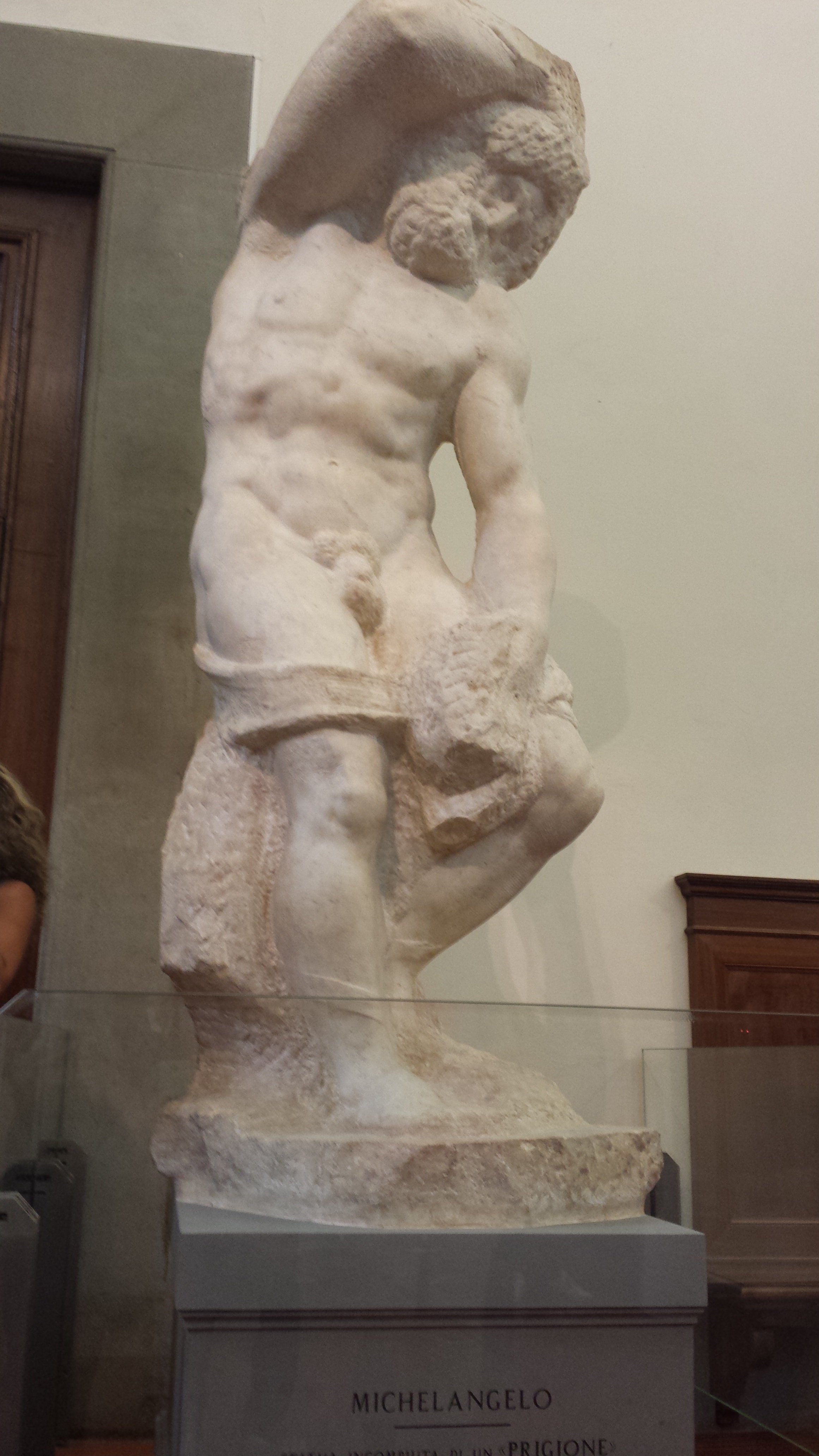
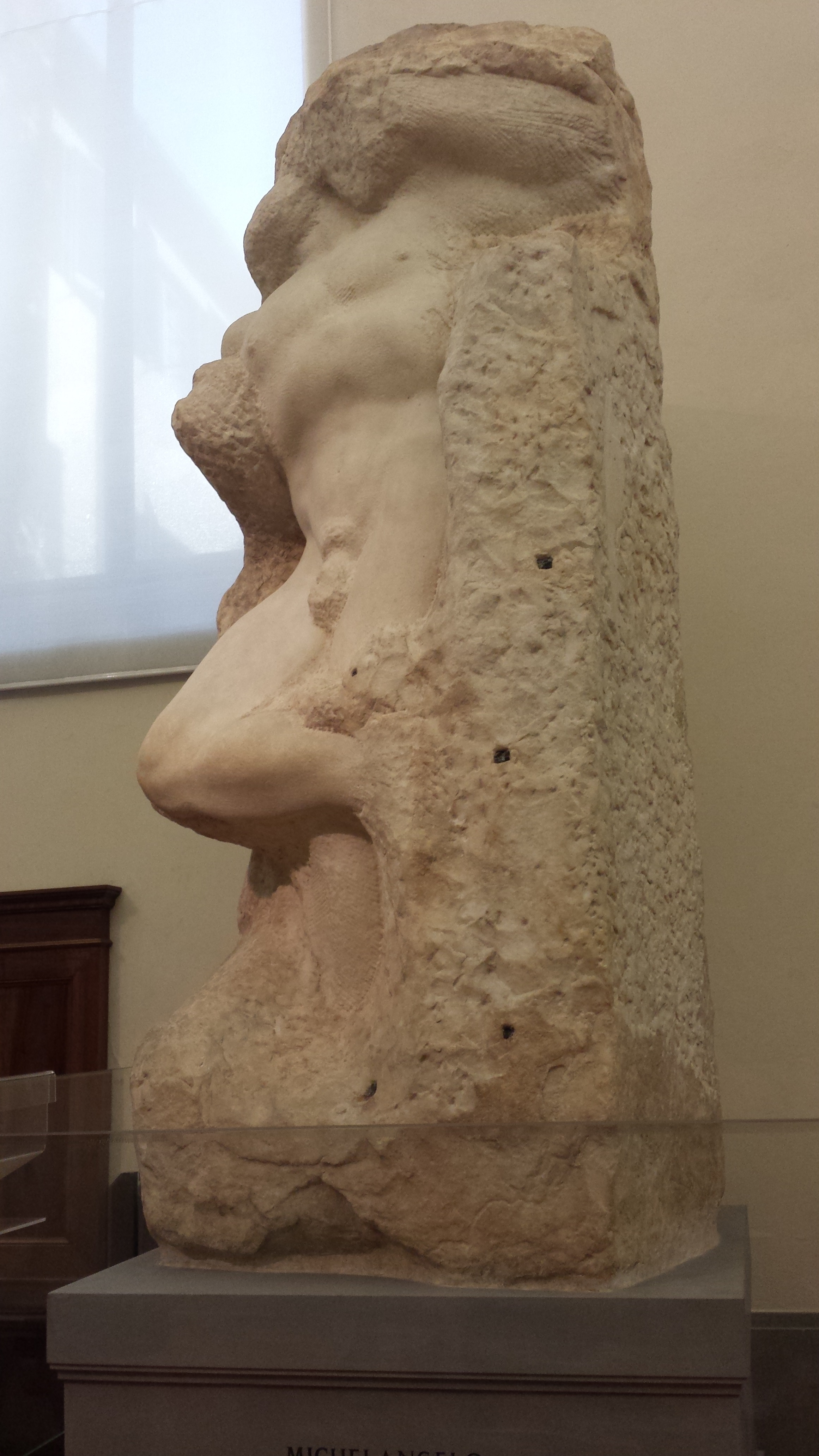
Here are a couple of lesser-known Michelangelos.

Anyway, off to work on TREMOR, my next dance romance, which I am hoping to have out by the end of this year, or early next year at the latest. Thank you so much for your patience and continued support! In the meantime, I hope you enjoyed my mini pictorial tour of Italy πŸ™‚

Save

Save

Save

Of Pretzels and Pashminas

When, in todayÒ€ℒs ballet, you see a man express his feelings for his lady by hurling her into the air, catching her upside down, and wrapping her around his neck like a pashmina, you are seeing the legacy of the Bolshoi.

— this from Joan Acocella in her latest New Yorker article, analyzing Morphoses (whose NY season just wrapped up) and trying to place Christopher Wheeldon in the pantheon of choreographers.

I burst out laughing when I read this quote because that’s a perfect (albeit hyperbolized) description of my favorite partnering moves in my favorite of all dance scenes, the balcony pas de deux from Kenneth MacMillan’s Romeo and Juliet — the scene that made me fall in love with ballet. (See Julio Bocca and Alessandra Ferri go at it here.) Acocella says MacMillan is a disciple of the Bolshoi style with its sweeping expressivity, its Romanticism, its high-theater dramatics.

But:

When, on the other hand, you see a woman in a leotard merely hold the manÒ€ℒs hand as she flashes her legs out in eighty-two fabulous, clean ballet steps, and then, in a change of heart, fall into his arms and do something hair-raisingly sexy, like a front-facing split, you are seeing a child of Ò€œAgon.Ò€

“Agon” being one of George Balanchine’s masterpieces, Balanchine style being the antithesis of Bolshoi / MacMillan (aka “the pashmina”).

Acocella goes on to say Wheeldon’s choreography contains a bit of both styles. I hadn’t really seen that though. I saw him as more a follower of Balanchine with everything abstract, subtle, understated, and focused on steps, on movement rather than on creating character or bringing about an emotional response in the audience. Which is probably why I’m not an enormous fan of Wheeldon, though I do value seeing his work from time to time. On the other hand, I can’t imagine ever tiring of a pashmina.

The article is very interesting, as all of Acocella’s writings are. She always makes me see something I hadn’t before, makes me reconsider, want to see a piece again. Here, she finds in some of Wheeldon’s original, intricate partnering (which people have, aptly I think, referred to as pretzel pas de deux) something actually rather unsettling, even sinister in a way. I hadn’t thought of those twisty, undefined shapes that his dancers make with each other that way before. I always spent my time at a Wheeldon dance playing the inkblot test, trying desperately to figure out what exactly the odd, contorted shapes evoke. But maybe they’re not meant to evoke a specific image at all, yet still charge you with feeling, the same as a pashmina but in a less over-the-top way, without the drama. I will look at the partnering in his ballets anew now. (I couldn’t find a video of such a pdd, but here’s a Wheeldon sampling for comparison to the MacMillan.)

In any event, I dearly hope Mr. Ratmansky brings some of the Bolshoi with him to ABT. And I hope Mr. Wheeldon can let loose some more of his inner pashmina πŸ˜€ What is life without passion?…

Seriously, here is the full Acocella.

And, while on the subject of the New Yorker, for people interested in books and art and the artistic life and all, here is an interesting article by Malcolm Gladwell, on the different types of artistic genius and how each is cultivated, which I think could just as easily be titled, “Why This Country Will Never Produce a Cezanne”… Interestingly, Gladwell seems to locate young novelist Jonathan Safran Foer’s genius in the fact that he was a “best-seller” in his twenties rather than the critical acclaim he received. We’re so accustomed to equating success with money in this country, which is part of Gladwell’s point about the Cezanne issue.

Oh, one last thing: I’d written earlier about Acocella interviewing Ratmansky as part of the New Yorker festival. I was extremely sick that weekend and unable to attend, but Evan was there; here is her report. And here is reportage from Lori Ortiz on Explore Dance.

Democracy in America

I don’t have time to write a full review but yesterday I went to the Democracy in America exhibit at the Park Avenue Armory (Lex between 67th and 66th). It’s free and definitely worth seeing. Runs only through this Saturday though. Go here for more info.


I’d gone mainly to see Steve PowersWaterboard Thrill Ride, which had premiered at Coney Island over the summer; I wrote about it here. There really wasn’t much to it; you put your dollar bill into the slot and for just a number of seconds watch a life-sized robot/puppet aim the spout of a flower pitcher at a supine man’s face, which was covered with a wet cloth. The water just kind of dripped out, as if he was delicately watering flowers. I’m thinking perhaps there were too many viewers and the water supply was getting low because I’d have thought it would be coming out a little more rapidly. Still, I found the exhibit pretty frightening and don’t know how Coney Island tourists could have found otherwise.


There are a few other interesting installations too, most of them on the main floor in the big room. There’s one by John Hawke of a make-shift shelter constructed with wood. Inside are a series of journal-like entries and pictures documenting where all the shelter was placed — usually busy city streets — who all used it — people waiting for the bus, the homeless, people needing a little place to eat, especially when it rained — and how it was treated by police and other authorities — usually taken down, dragged out to the street.

There’s another exhibit, all of photos, aligning the side wall, by Greta Pratt. The pictures, taken throughout the country between 2007 and 2008, are of various pictorial renditions of the American flag — on bumper-stickers, on sides of buildings, on the cover of a magazine, on someone’s t-shirt, on someone’s mailbox, on the face of a grocery bag, etc. Sometimes the subject paraded the flag with intent, others seemed completely unconscious of it, just happening to don a t-shirt bearing such an emblem for the day. There are hundreds of pictures and it can take you all day to look at them. What I found interesting was that they show such an expansive view of middle America, one that is somehow neither ironic nor nostalgic, or perhaps rather a combination of both.

Third piece of art I had a very visceral reaction to was at the back of the ground-floor room, by Jon Kessler. A big installation involving numerous barbie dolls and tiny video cameras that were projected onto several TV screens aligning the back wall. Barbies (or Ken dolls, rather) depicted men at war, men being tortured. Just imagine all the things you can do with little plastic bodies to show the horrors… It was visually stunning, compellingly, thought-provokingly disgusting.

There are several video exhibits on the mezzanine and second and fourth floors that I found less interesting, except for one, by Carlos Motta, though I can’t say I liked it. The artist is a young Colombian man who shot a bunch of videos of Latin Americans talking about their governments. They are projected onto about ten or so screens throughout the room. On one screen, however, there is simply a starving dog looking desperately for food, nearly unable to stand up. He licks the dirt ground for water. It’s so horribly upsetting, and as a viewer sitting at a remove from the dog on the screen, you’re completely helpless to do anything for him, which is perhaps the point. A shop woman finally throws the dog a chicken wing, which he gobbles down, but still, he’s all bone and fur. It’s so upsetting.

I feel like there’s got to be something legally wrong with this kind of art — with hurting, sometimes killing defenseless animals for artistic aims. Human beings can make the decision to starve themselves for a movie, etc., but non-human animals cannot. I don’t know if Motta found this dog on the streets and just decided to film him, or if he starved the dog himself in order to use him for his little film, but it really shouldn’t be legal. Animal cruelty is a felony, at least in New York, and the artwork is being distributed here.

Plus, I’m not sure that watching a starving or victimized animal or human (the artist has done other projects on human victimization) really leads the average person to think, to be more compassionate. At least public executions in the past haven’t seemed to have that effect.

We Need More Artists On Whom You’ve No Choice But To Form an Opinion


Here’s a very nice collective tribute to writer David Foster Wallace. And here’s one literary agent’s homage. I was struck by one line of the agent’s in particular: “Whether you liked his work or not, he was at the very least the kind of writer you had no choice but to form an opinion on, and we need more writers like that.” I think we need more artists in general like that. What’s the point of making art if you’re not going to really say something, if you can’t be fearless?

I went to the bookstore last night to get a copy of Infinite Jest but there was a big hole in the section of shelf where his books should have been.

Kenn Duncan Exhibit at NYPL

There’s a very good exhibit right now at the New York Public Library’s Performing Arts branch of photographer Kenn Duncan’s work. Duncan (1928-1986) was a dancer and champion roller skater in the fifties and became a photographer in the seventies. As a dance photographer, he worked for Dance Magazine and After Dark (a 70s NY weekly apparently covering theater and dance), and later photographed celebrities for various national mags including Vogue, Harpers Bazaar, Time, and Life.

He published several collections in book form, many of nudes, mainly with male dancers as subjects. Many of those are included here, likely the reason for the big viewer discretion sign posted on the gallery door. Most of the dancers in that collection I didn’t know, except for Sir Anthony Dowell and Ivan Nagy, but there’s one of a man named Eivind Harum, who kept reminding me of David Hallberg (whom I had to banish from my thoughts for the time being); actor Sal Mineo (from Rebel Without a Cause) is also included in that section. There are some highly creative poses — some poking fun (I think) at beefcake, others very artful.

There are also sections on dancers, dance companies, and choreographers — including photos of a young Twyla Tharp (who I think looks her absolute best right now — I definitely wanna age like her), the Alvin Ailey company in its youth (which looked very different than today — lots of excellent afros, and mainly white female dancers, interestingly), the Houston Ballet, and of course all the greats — Carmen de Lavallade, Baryshnikov, Nureyev, Gelsey Kirkland, Suzanne Farrell and Paul Mejia, Natalia Makarova, Peter Martins, Alexander Godunov, Cynthia Gregory, etc. etc. I also spotted a dance belted Lar Lubovitch jeteing artfully over a sash.

Included in the celebrity section are a young, doe-eyed Dianne Keaton, Bette Midler, Maxwell Caufield (remember him, from Grease II was it?), Morgan Fairchild and her then male-cohort in a series of rather hilarious (now anyway) sexed-up poses for some Tarzan and Jane-like TV series they must have been doing, Eartha Kitt, Angela Lansbury, and a very young and almost frightfully innocent-looking Christopher Walken.

Duncan also did some Broadway photos (Hair, The Wiz, Equus, etc.), and some of those are up, as well as several of his fashion ones — mainly a Gucci spread — one of the most fun parts of the exhibit, the 70s being what they were! The ambient music is most evocative (sometimes comically) as well.

It’s a great trip through recent history that ends up making you think about what it is that makes a piece of art either timeless, period, or dated.

The exhibit, at Lincoln Center’s Library For the Performing Arts, continues through October 25th and of course it’s free.

Waterboard Thrill Ride

Sorry for the posting hiatus! It’s been a long time since I’ve gone half a week without blogging… There’s just nothing much going on in New York right now, and I’m trying to get a couple of writing projects done before the fall is officially underway.

Anyway, this post is about a piece of installation art that I didn’t actually get to see, but just read about via Claudia’s latest Culturist post. Apparently, artist Steve Powers had a small exhibit, called Waterboard Thrill Ride, out on the Coney Island boardwalk, among all the amusement rides and hot dog and cotton candy stalls. Like a peep show, you put a dollar into a slot and peeked through a small window covered with bars to see a couple of hooded “interrogator” robots perform waterboard torture to a robot dressed in orange prisoner garb, in imitation of a Guantanamo Bay detainee. The interrogators pour water onto the prisoner’s head for a number of seconds while his body convulses and he yells out things like, “I think I’m dying.” On the outer wall of the exhibit is a cartoon of Sponge Bob having water poured onto his head saying, “it don’t Gitmo better.” Powers said he created the installation in part to make people aware of the controversial form of torture currently used by our military. The writer of this NYTimes article went out to Coney Island on the day the installation premiered and describes onlooker response.

Most annoying thing to me is that it only seemed to be up — by design not because of public response — for one week, from August 6-15. On the 15th, apparently Powers and a couple of lawyer friends subjected themselves to waterboard torture conducted by actual trained officers, in front of the exhibit. This is just the kind of thing I would love to have seen — both in terms of the art itself, how it makes its presentation, how it questions, how it fits within its surroundings — particularly these surroundings — and how the public reacts. It’s now moved to the Park Avenue Armory on the upper east-side, a private museum and collection of antiques that you need an appointment to visit. Seems kind of ridiculous to have a public art exhibit in a private collection, but apparently it is to be part of a larger exhibition at the Armory called Democracy in America, sponsored by the public art fund Creative Time, which will take place September 21-27. Go here for deets. Unfortunately, I likely won’t be in town that week. So, looks like I’m going to miss out. But if anyone goes, or if anyone saw it on Coney Island, please give your thoughts!

How I managed to miss the exhibit while it was here is another issue, for which I’m royally pissed at myself. I have GOT to stop relying on blogs and websites for all my info; I must return to good old fashion newspapers and magazines… And I mean hard copy. You don’t always see everything on the website; you’ve got to make sure you click on every heading, every subheading, every little box. It’s just not the same as flipping through actual, physical pages.

Olafur Eliasson’s Intriguing But Controversial "Waterfalls"


When I was downtown on Monday I finally had a chance to walk over to the eastern seaport to see the newish public art installation by Olafur Eliasson, Waterfalls. It’s a series of four man-made waterfalls set up at various points on the East River.

There’s been some controversy over the high expense of the project, whether it’s a waste of a precious natural resource, and even what the purpose of public art is, for example, how the installation compares to The Gates in Central Park a couple years ago. Go here for a good discussion of those issues led by blogger / NYTimes writer Claudia LaRocco.

And go here for Claudia’s updated post on the falls in which she sites some other artists’ “ironic” responses to Eliasson’s work.


I actually found them pretty breathtaking. Above are the two I could see from where I stood on the Manhattan side of the river. There are two more, one further uptown, and another by Governor’s Island. Of the two I saw, the one under the Brooklyn Bridge was shorter and wider, its proportions made to fit right underneath the structure of the bridge as if it was an outgrowth of its architecture. The other one, along the Brooklyn side of the river, was taller and more narrow, also seemingly in alignment with the height of the buildings behind it.

What was interesting to me was how the waterfalls are obviously man-made, obviously fake, yet they completely blend in with their environment, almost in a Frank Lloyd Wright-ish way. Or maybe it’s kind of a reverse of Lloyd Wright: his buildings blended in with the natural environment — the desert, the surrounding rock formations; whereas these supposedly naturally-occuring phenomena are artificially constructed to be part and parcel of our vast steel high-rises, what we’ve come to know as our “natural” environment.

And they complement the environment not just visually but figuratively as well. Practically all of New York is man-made, including even the very land most Manhattanites live and work on. Ralph Fiennes (don’t ask me how in the world I know, or remember this) once gushed about this city, on his first viewing of it, as being this breathtaking visual testament to what human beings are capable of building, and the British actor is not exactly known for his love of America. So, sure they’re industrial-looking, but why not celebrate that? Ingenuity in industry and commerce are what NYC is, right?

And I think there is a certain natural beauty, particularly the way the water falls. With the high structure, the water looked almost like feathers at the top, foam near the bottom.


And the shorter one looked really cool when a breeze picked up; looked almost like a head of long, cascading hair billowing about in the wind.

As for the argument that the falls are destroying a precious natural resource, maybe I don’t understand the machinery very well, but it seems that they’re only recycling the river water (and according to the information on the website, there are nets to keep fish from getting caught in the spokes).

Anyway, if you’re in NY and happen to go out and see them, let me know what you think. They’re on display through October 13. If you want an up-close view, there are Circle Line boats that are giving little tours, complete with headsets bearing the artist’s mission statement and other information. Or, if you’re a ‘traveler’ and not a ‘tourist’ :), according to the press release, the free Staten Island and Governor’s Island ferries will take you pretty close to the southernmost two falls.

Happy Bastille Day Everyone!


For some reason, this day always seems more fun to celebrate than our own 4th. Maybe just because it’s foreign, but also I think because the French Revolution signified much more historically and on larger scale than our own. Anyway, I seem to have been eating a lot of French food lately (Nice Matin, L’Express, French Roast) because I have a bagful of little postcards announcing tonight’s celebratory feasts at those restaurants. If you’re in NY and you’re so inclined, I recommend Nice Matin.

Russian Roots and French Cuisine at New York City Ballet

Ballet season has officially begun in New York! So, I have spent the last two nights at NYCB.


Wednesday night’s program was called “Russian Roots” and last night’s “French Cuisine” — I’m loving these titles, which are named after the nationalities of the composers to whose music Jerome Robbins, the American choreographer they’re honoring this season, choreographed his works.

So, the Russians:

First on on Wednesday night was “Andantino,” a short duet, by turns cute and flirty, and soft and romantic, set to Tschaikovsky’s First Piano Concerto, Second Movement.


It was danced by Joaquin De Luz, whom I’m very happy to see again — he’s been out for a while, I heard with an injury — and Megan Fairchild. No one dances with Megan like Joaquin, and I love how he can give a thrilling bravura performance that is still artistic. He can jump fast and leap high but you’re not just watching spectacular athletic feats; he makes everything part of the character of the dance.


Next was one of my favorites of the night, “Opus 19 / The Dreamer,” set to music by Sergei Prokofiev. I like Prokofiev so much I think because his music is full of dramatic tension, it can be very unsettling. It can go from dulcet and mellifluous to angst-filled and foreboding in just a few measures. In this piece a man, danced here by the very charismatic Gonzalo Garcia, looks rather lost but enchanted, trying to find his way to … somewhere … amidst a chorus of dancers, all in blue, who resembled to me at times, I guess because of the blue backdrop, Matisse’s painting “The Dance.”


Eventually Wendy Whelan emerges as their somewhat mischievous leader and he has some interesting pas de deux with her. She seems at times to help him, at times to taunt him. The end is, as Deborah Jowitt says in her program notes, “enigmatic,” as they fall in each other’s arms, but not necessarily in a romantic way. She could be holding him up, he’s so exhausted. I felt there was a lot to this piece and there’s no way you can thoroughly comprehend it on one viewing. It’s the kind of dance you need to see again and again and every time you’ll find something more than you saw before.

Oh, also, at the beginning of each evening, they’re showing a clip of Robbins working with a dancer or dancers on one of the pieces performed in that night’s program. Wednesday night they showed Robbins working with a dancer (who’s name I didn’t get — he looked like Baryshnikov but had a completely American accent) on Opus 19, and they repeated a section over and over again. When Garcia did that section you immediately recognized it and got so much more out of it. It was kind of funny trying to discern how well, Garcia, who’s far too young to have ever worked with Robbins, did as Robbins had instructed the other dancer. I personally think he did well with the traveling steps, but the lunges were not entirely there πŸ™‚ But I wish there would be more of this in the ballet world in general — allowing audiences to witness process.


Next on was “Piano Pieces,” my other favorite of the evening, set again to Tschiakovsky. This work reminded me of one of Robbins’ masterpieces, “Dances at a Gathering.” It opens with an ensemble performing a cute Russian peasant-like polka dance, then the charming Antonio Carmena has an impish, quick-paced, high-jumping solo that looks near impossible to perform but of course he breezily pulls it off, followed by the first duet, “The Reverie” in which a man seems to try to comfort a day-dreaming woman. Next, Carmena returns for another frisky solo, followed by another couple, danced by some of my favorites Amar Ramasar and Abi Stafford, who do a flirty, Don Quixote-esque, Spanish-flavored pas de deux that I loved. Then there are some solos by each of the pas de deux dancers, some dreamy, some searching, some soft and forelorn, some high-spirited, and in the end, Carmena leads the whole cast in a final, fun, folkish polka.


All I can say is whenever Amar Ramasar, Abi Stafford, and Kathryn Morgan are onstage, I become completely emotionally involved in their worlds. Amar pulls you in in large part through his superb dramatic abilities — he’s a great actor. He’s a great dancer too, but often it’s his facial expressions combined with the way he moves that make me unable to take my eyes off him. The other two, I don’t know what they have (and I don’t always even recognize Abi right off the bat since from afar she looks like a lot of the other dancers, but I do once she gets into her solo!), but they just have a kind of expressiveness, everything they do has such thought and purpose behind it, it really pulls you in and compels you to stay with them. They’re both so young too; it’s amazing they have so much artistry this early on. I also feel this way about Andrew Veyette, but more in the Robbins ballets, which he strongly excels at, than Balanchine.


Anyway, last on was Les Noces, a dramatic ballet with a narrative storyline choreographed to Igor Stravinsky. This is a ballet I have a feeling many will roll their eyes at because there’s not a whole lot of pointe and traditional balletic movement, but I liked it. It was very very intense. It depicts the wedding of two young Russian peasants, a ceremony that seems to make marriage something more to be feared than enamored, like a very painful rite of passage. The aforementioned Kathryn Morgan is the poor young bride, Allen Peiffer her very teenage-looking groom. There is a chorus onstage, in back of the dancers, who sing beautifully. The piece begins when Kathryn’s assistants load bundles of wrapped-up cord atop her shoulders, and, at the banging start of the music, a soprano screams out, as Kathryn releases each bundle her mouth open imitating the soprano, in immense fear and agony. The whole thing proceeds this way, with this same emotional undercurrent. Much of the folk dancing by the men consists of flexed-footed, bent-kneed jumps up and down, their weight creating a thump as they land. It’s a perfect portrayal of masculine aggression and seems to forebode the wedding night.

Andrew Veyette danced the part of the groom’s father here, and, as I said above, I think he is such the quintessential Robbins dancer. While most others look a little uncomfortable with some of the non-balletic movement — like these loud, weighty, thumping Russian peasant jumps, or the modern jazzy moves from New York Export Opus Jazz and the bravado swaggering walks of West Side Story Suite — he looks perfectly at home.

I generally liked better Russian night, but briefly, “French Cuisine” consisted of “Mother Goose: A Fairy Tale For Dancers” set to Maurice Ravel music (who, embarrasingly, I actually thought was American because some of his musical flourishes can sound a bit Sousa-esque), Robbins’ very well-known “Afternoon of a Faun” to Claude Debussy, “Antique Epigraphs” set to the same composer, and “In G Major” again to Ravel.

In “Mother Goose” dancers in work-out clothes — leotards and tights — don different kinds of theatrical hats, as if they are play-acting a fairy-tale just for the fun of it. The story begins with a tutu-ed Sleeping Beauty being cursed to a life of sleep after pricking her finger while jumping rope. In her dreams, dancers enact three fairytales, Beauty and the Beast (Beauty was danced again by mesmerizing Kathryn Morgan), Hop o’ My Thumb, and “Empress of the Pagodas.” Eventually, Prince Charming wakes Sleeping Beauty and all is happy in the make-believe world the fooling-around dancers have constructed.


“Afternoon of a Faun” was originally choreographed by Nijinsky, but in his version, which takes place in a forest, a male faun is smitten by several wickedly enchanting nymphs. Robbins re-set the ballet in a dance studio. It begins with a male dancer fawning over his own reflection in the mirror, which looks out toward the audience (so the dancer is actually looking out at you, but seeing his own reflection, which he, amusingly, adores). A female dancer then enters, equally taken with her own reflection. Part of their self-interest lies of course in their being dancers, who are of necessity looking at themselves in the mirror to correct technique flaws, but I also see a lot of narcisissm. Jowitt says in her Playbill notes there is no self-absorption, but I see it. I think Robbins is perhaps saying a certain amount of self-obsession with one’s physicality is necessary to being a dancer? Anyway, I actually think this piece is quite funny, as you watch the dancers, so absorbed with their own reflections suddenly notice another person is present and manage throughout the course of the ballet to engage in a kind of contact with that other. This was danced by the bewitching Janie Taylor, whom I love but seem to hardly ever see, and Damian Woetzel, who will be retiring later this season.


“Antique Epigraphs” consisted of several women, all dressed in nude-colored body-stockings covered with brilliant-sheened, diaphanous, ankle-length tunics. The dancers usually danced as a unit, often in sync, but at times would break off into a solo or duet. It looked very Greek, hence the name, I guess. This shortish piece really resembled a painting, or a group of Greek statues come to life. It retained that air of pieces of artwork come to life.


Finally, last night ended with “In G Major” a work from 1975, whose main appeal to me was the jazzy movement combined with the costumes and set, designed by the artist Erte. The background set is simple but stunning in its sharp lines. It depicts a sun, clouds and ocean waves, so the dancers are clearly at the beach. Their Roaring 20s-style beach clothes are dress swimsuits with the cute little skirts, which bear sharp large horizontal lines, some red, some blue (except for the main female lead, which is solid white); the men’s costumes bear wavy lines, as you can see above. The dancing, often in pairs, is evocative of Twenties-style jazz and Swing, like a celebratory frolic on the beach.

In closing, I just have to say, hehehe, I think NYCB is becoming a bit like ABT — when star principal dancer Wendy Whelan, who danced the female lead here, made her entrance some people began clapping. But this is not customary at a non-star-driven company like NYCB, so others, confused, clapped, but then didn’t know if they were supposed to but felt like they should follow the others’ lead… It was hilariously confusing. People should just clap, IMO!

Anyway, much more ballet to come in the following weeks πŸ™‚

At party & showing for armen danilian

At party & showing for armen danilian

Originally uploaded by swan lake samba girl via mobile.


Danilian photographs dancers with the Kirov Ballet based in St. Petersberg, Russia.

Danilian has just released a new book of his photographs called “Behind the Curtain.” It sells for $50. Some of the photos were on display in the gallery last night. One of my favorites was of the dancer in the top picture (sorry my picture is crappy; I only had my cell phone camera with me because I came from court and cameras are strictly forbidden in the courtroom). Unfortunately, I don’t know this dancer’s name since they didn’t have any captions at the gallery.

Fun event; lots of Russians there πŸ™‚ And, they had a string quartet playing that Ariel noticed had instrument cases marked “Kirov”, and a table loaded with Russian chocolates, breads, and wine. Very nice evening!