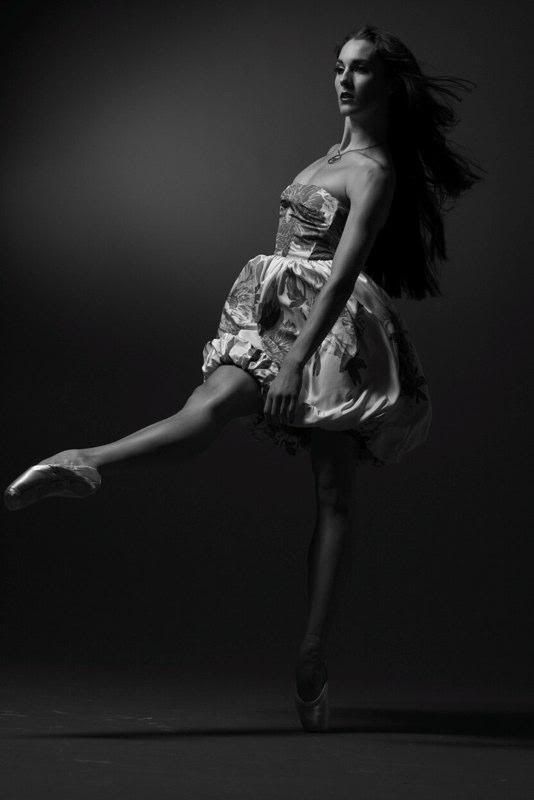
Benjamin Millepied, Christopher Wheeldon, and Alexei Ratmansky Premieres at ABT


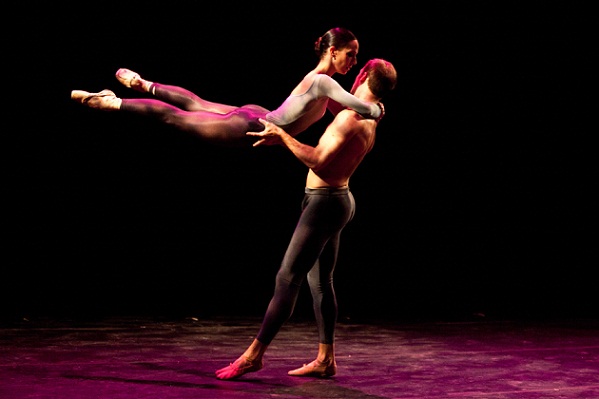
Above: Isabella Boylston and Marcelo Gomes in Christopher Wheeldon’s Thirteen Diversions, which premiered at American Ballet Theater two weeks ago. (Photo by Rosalie O’Connor.)

Once again, I’m behind on posts. May was a crazy month, filled with family emergencies, last minute travel, and trying to juggle paying legal work with book industry stuff and blogging. Hopefully June will be a bit quieter, though not likely at the rate it’s going thus far…

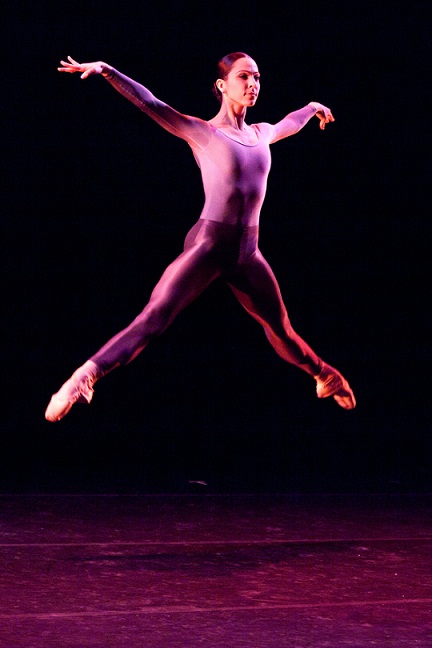
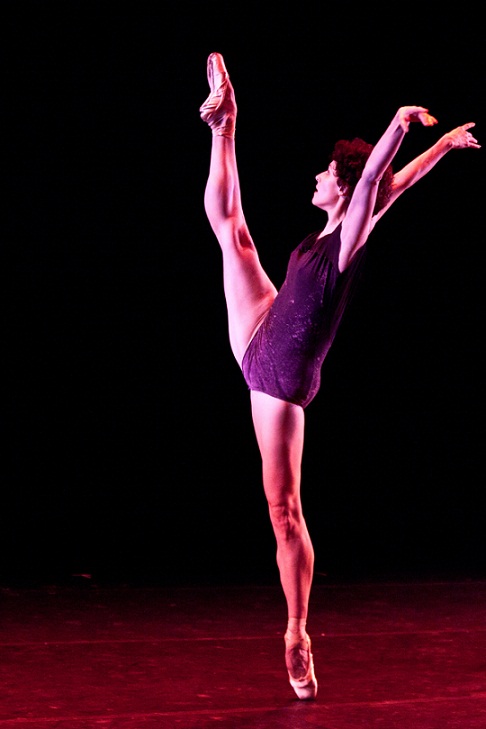
Anyway, on May 24th, ABT held a night of premieres, showing three new works by today’s “in” choreographers. Wheeldon’s Thirteen Diversions, set to Benjamin Britten’s Diversions for Piano and Orchestra, was overall my favorite. It seemed to have the most going on in terms of emotions, the most developed sections, the most varied movement, and interesting lighting design (by Brad Fields) to boot, though I know others were bothered by that. Background was lit with different colors each section and began with part of the back darkened, with light slowly encroaching. It created an atmosphere of mystery. I also felt like Wheeldon’s dance allowed the dancers to shine the most. Gillian Murphy and David Hallberg were a duo whose dancing had a sweet, light feel to it, like a relationship in bloom, while Marcelo Gomes and Isabella Boylston kind of went back and forth, with more depth and nuance to their relationship. She’d go from peaceful to needy to wanting to escape him back to needing him. They danced it well.


Above: Michele Wiles and Thomas Forster in Ratmansky’s Dumbarton, which I liked as well. (Photo by Rosalie O’Connor.) Dumbarton, set to Stravinsky’s Dumbarton Oaks, was mostly light and lyrical, with dancers clothed in light-colored contemporary costumes (by Richard Hudson). At times, though, the dance took on a more mournful tone, as the music would grow slower and Misty Copeland would collapse, then be carried off by a group of men. But then she’d reappear again in the next, lighter scene, as if nothing had happened. Then, it would happen again. I wasn’t sure if we were going back and forth in time or if there was a continuity of life kind of motif at play.


Millepied’s Troika was a relatively short dance, for three men, set to Bach.Β  Above are Sascha Radetsky, Alexandre Hammoudi, and Daniil Simkin (being thrown) in photo by Mikhail Logvinov. I started out really liking it but it kind of lost steam. I thought each man would have a different personality or embody a different mood: Simkin more playful, Radetsky more masculine, Hammoudi more soft and lyrical. To an extent it was danced that way, but then mid-way through they each seemed to be doing the same things. They started to blend into one another. Maybe that was the point. At the end, there was a series of lifts where Radetsky and Hammoudi kind of threw Simkin. He’d playfully try to escape them, but they’d catch him, scoop him up, and toss him. Someone remarked that this reminded them of Tharp. It also reminded me of Millepied’s earlier work for ABT, where Simkin was tossed in the air by a group of men in the midst of trying to escape a group of women. So Millepied repeats his themes over a few times.

Also on the program was a revival of Tudor’s Shadowplay with Craig Salstein and Xiomara Reyes in the leads. Created in 1967 and set to Le Livre de la Jungle by Charles Koechlin, it had a very dated feel and many have noted this is not one of Tudor’s better works. To me, it had a kind of Rite of Spring meets Prodigal Son feel to it. Salstein plays a poetic, monk type of figure who wants to be alone to meditate. But he is constantly bothered by this group of beings who appear to be half human, half primate who swing around gymnastically on a set of tree branches. Eventually they bring to him a woman, who’s very Siren-like, and whose sinister charms the protagonist is ultimately able to ignore. That’s what I saw in it anyway.

I felt a bit underwhelmed by the evening overall. It’s always exciting to see new dances though. And it could just be me and my penchant for full-length story ballets πŸ™‚

One other thing: some of the gossip blogs stated that ABT had stricken Sarah Lane from the performance because of Natalie Portman’s presence. I didn’t know Lane was supposed to be dancing that night so have no idea if that’s at all true. Can’t imagine it is. Boylston still danced, and, as I said, I thought she danced very well.
Avi Scher & Dancers, Photos

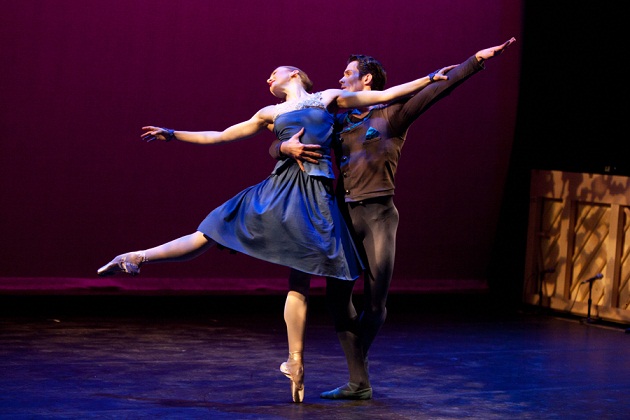
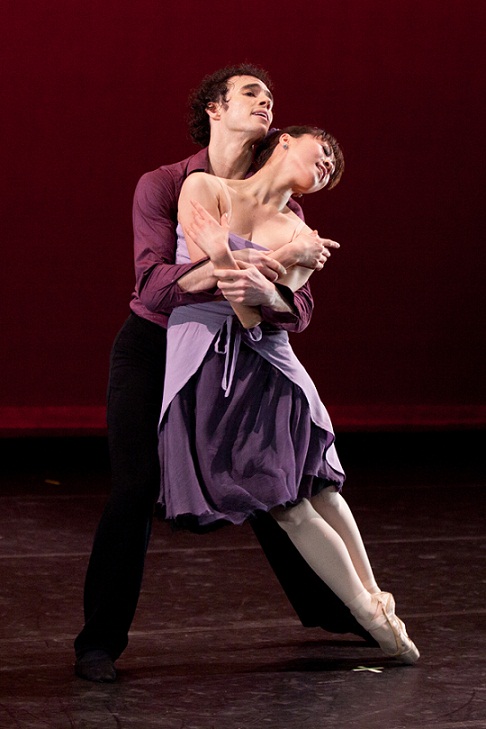
Ack, you guys I’m working 13-hour days right now and have virtually no time for anything but working, eating, and sleeping, but I wanted to get some photos up of the recent performance by Avi Scher & Dancers that I saw at the Alvin Ailey Theater on Sunday afternoon. All photos are by fabulous dancer-turned photographer, Matthew Murphy.

I don’t have much time to write, but as always, I really enjoyed Avi’s choreography, combined with the excellent dancers he gets to perform his work. As always, it’s incredible – really truly incredible – to be able to see such renowned dancers on a small stage in a small, intimate theater.

Above are Carla Korbes and Seth Orza, principal dancers formerly with NYCB, now with Pacific Northwest Ballet, in Scher’s Mirrors, a somewhat Jerome Robbins-like piece (it reminded me a bit of Dances at a Gathering anyway), that had its premiere this weekend. Korbes and Orza beautifully danced the romantic pair at the heart of the piece. Also in that piece, ABT’s always entertaining Craig Salstein danced a comical duet with ABT’s Nicole Graniero. I love Craig. I do. As huge a crush as I used to have on Seth when he was with NYCB, I have to say Craig stole the show πŸ™‚

Ooooh, I really loved this couple. It’s Joseph Gatti and Misa Kuranaga from Boston Ballet and they danced the second piece, Utopia. I loved both – and initially couldn’t figure out where I’d seen Gatti before but now I’m thinking it was a Wheeldon Morphoses piece. (Sorry, I don’t have time to look it up!) Kuranaga really took my breath away in this. She was really striking. She had such beautiful lines and danced with such passion. In the end, she threw herself at him ecstatically and he caught her. Sweet.

This is Ana Sophia Scheller, NYCB soloist, in Dreamscapes, the fourth piece of the night, which was also having its premiere. She had a fast-moving part up front and she did very well with it. She’s standing out to me more and more lately.

Scheller with Tyler Angle (NYCB principal, and one of my faves of that company). I thought the dancing in this last piece was spectacular. So many really top notch dancers… Sofiane Sylve, formerly of NYCB and now a principal with San Francisco Ballet, was stunning in a late section where she danced an insanely fast-footed allegro duet with with NYCB’s Savannah Lowery. Lowery always amazes me when I see her dance with Avi’s group on a small stage like this. She’s got such an athletic build and Scher always makes her look so good. He gives her choreography and costumes that really suit her. (NYCB’s Janie Taylor did the costumes).

Sofiane Sylve. It was nice to see her in NY again. And Orza πŸ™‚

Scher is a very likable young choreographer who studied at the School of American Ballet. He has lots of NYCB connections and you can see influences of Balanchine, Robbins, and Christopher Wheeldon in his work (the third piece was called Classroom Fantasy, was danced by students of the Manhattan Youth Ballet, and reminded me a bit of Wheeldon’s early Scenes de Ballet albeit more comical). I think Scher is definitely a choreographer to keep an eye on for the future.

Alice in Wonderland and Twitterland


Photo of Lauren Cuthbertson as Alice, by Johan Persson of the Royal Ballet, taken from here.

Christopher Wheeldon’s Alice in Wonderland premiered tonight at the Royal Ballet in London. BalletNews has already posted a detailed review. And the Ballet Bag ladies live-tweeted the event on behalf of the Royal. They had backstage privileges and were privy to all kinds of insider info so definitely check out the hashtag they tweeted under, #AliceInWonderland – they’ve got pictures, reviews, etc. etc. I was also told NYCB’s Maria Kowroski was in attendance. I’m currently searching the hashtag tweets for the photo of her.

I’ve been really excited about this ballet since I first heard about it. Can’t wait for it to tour!

For the Love of Duke


On Friday night Susan Stroman’s For the Love of Duke premiered at NYCB. Photos above by Paul Kolnik. Top: Tiler Peck, Sara Mearns, and Amar Ramasar; bottom: Mearns and Ramasar. Stroman is primarily a Broadway choreographer (I think her most famous work is probably Contact), and it shows both in her ballets’ strengths and limitations.

For the Love of Duke is divided into two parts. In the first, entitled “Frankie and Johnny … and Rose,” Tiler Peck and Amar Ramasar are Johnny and Rose, a couple in love. They perform a lovely lyrical pas de deux. Then along struts Sara Mearns – Frankie – and Johnny’s attentions are completely lost on her, to the disappointment of Rose. Johnny and Rose are snuggling on a bench together, and when Frankie comes prancing along, Johnny pushes Rose right off the bench, behind it, as if to hide her. Then he does a snazzier dance with Mearns / Frankie, she disappears, and he’s back with Rose … until Frankie comes strutting along again. And so on. At one point, Rose becomes the seductress, and Johnny pushes Frankie off the back of the bench. It was cute, and everyone danced spectacularly, but it got a bit old to me after a while.

The second part – “Blossom Got Kissed” – Stroman had actually choreographed before, creating it for NYCB in 1999. I liked this one better. Both parts, by the way, are choreographed to Duke Ellington and Billy Strayhorn, which is where the title of the whole comes from. Anyway, “Blossom” begins with a bunch of girls all dressed in sassy, jazzy red sitting on a bench tapping their feet to Ellington’s rhythm. Along comes Savannah Lowery as Blossom, dressed in a frilly ballet tutu. She sits alongside them on the bench and tries to tap with them. But she has no rhythm and is horribly off. Then they stand and do a jazzy dance, and, again, she tries to join, but just can’t get the hang of it. She is simply too classical ballet. Lowery was hilarious though and it was funny to see her continually try to get the rhythm and technique of jazz dance right by taking a foot and pounding it down flat on the floor. Then, a group of tux-clad men come along and do some swing dancing with the red-clad women. Blossom again tries hard to fit in but just can’t. Finally, a musician in the band (which was onstage), in the person of Robert Fairchild, comes out from the back of the stage, orders the music changed, and does a sweet lyrical ballet pas de deux with her.

I feel like I’ve seen “Blossom” before because Lowery’s hilarious flat-footedness looked familiar. I liked it better than the first part because to me it was funnier, and the story went a little further.

I think Stroman is very good at creating a story through dance, and that’s what I like about her. You can tell she’s not really a ballet choreographer though. Compared to the first two pieces of the night – Ratmansky’s Concerto DSCH and Wheeldon’s Polyphonia – the actual dance just wasn’t that rich. Still, I think she complemented the program well. It can never hurt to include in an evening of ballet a cute narrative dance with music that’s not usual ballet fare.

As always, I loved Concerto DSCH. Ratmansky was in the audience. I felt the music was played a bit too fast though (conductor was Ryan McAdams, Elaine Chelton the pianist). It looked like Ashley Bouder had a slight mishap, though I’m not sure because I was busy watching Joaquin DeLuz do a sequence of crazy fast steps into a somersault at the speed of light. Andrew Veyette again replaced Gonzalo Garcia, who I am really missing. I hope he’s okay. Veyette is doing a fine job as one of the two playful guys in blue, but there’s this repeating series of throws – where they each kind of propel the other into the air, and I love how Garcia always gets such height when he bounces off the other two.

Tyler Angle replaced Benjamin Millepied, and did wonderfully. I always notice things with Tyler that I haven’t noticed before – like how when he and the girl in green (Wendy Whelan) make their entrance, he’s spinning her around and around, and she looks like she’s hanging on to him for dear life. It kind of sets the tone of their relationship. I always notice the music much more when he dances as well.

Christopher Wheeldon’s Polyphonia is definitely one of my favorites of his. I love the musicality of it, and the originality of the combinations. It’s set to ten piano pieces by Ligeti, who, the program notes, developed micropolyphony – a type of music involving sustained dissonant chords that shift slowly over time. You can really see that “micropolyphony” in the dancing, as the sets of dancers (eight all together, divided into four pairs) begin dancing together in a line but each pair doing something completely different. Then, they eventually come together and dance in unison, but then they drift apart again later. There’s some very clever, almost humorous partnering throughout, but particularly in the second movement, Arc-en-ciel, Etudes pour piano, danced by Maria Kowroski and Jared Angle. I haven’t seen this ballet as often as I would like to. I was going to say I wish he’d include this one more often in Morphoses programs, and then I remembered

SLSG’s Dance Highlights of 2010

Instead of trying to remember which were my favorite performances of the year, I’m just going back through my blog archives from January of this year and linking to the most memorable posts. More fun that way! A lot happened in a year…

January

Pacific Northwest Ballet made their debut at the Joyce; it was my first time seeing them live.

The Post‘s Page 6 announced that you know who and you know who are dating, and the ridiculous homewrecker attacks began.

Baryshnikov and Annie Liebovitz starred in a very cool Louis Vuitton ad.

February

I totally fell for New York City Ballet’s Sleeping Beauty.

…and Mark Sanchez πŸ™‚

I found myself quoted in Colin Jarman’s book, Dancing With the Quotes.

I also fell for Sara Mearns’s Odette in Peter Martins’s Swan Lake.

On a personal note, my former judge, the esteemed Honorable Sylvia Pressler, passed away.

The Kings of Dance came to town.

Morphoses shocked the ballet world by announcing that Christopher Wheeldon was leaving the company.

March

My friend’s organization, Art for Change, held a benefit for Haiti after the earthquake.

Rasta Thomas’s Bad Boys of Dance announced that Danny Tidwell and SYTYCD’s Jacob Karr were joining the company.

Corella Ballet Castilla y Leon finally made their NYC debut!

I found myself actually getting press for liking Kate Gosselin – or for not hating Kate Gosselin rather – on Dancing With the Stars.

I fell for Keigwin + Company’s Runaway.

I was delighted to receive an email from NYCB ballerina Yvonne Borree’s aunt regarding of all things, my novel.

April

I had my first experience as a dance writer panelist! Thank you, Marc, from TenduTV!

Tiler Peck appeared on Dancing With the Stars in a Travis Wall routine, which everyone was so excited about. But it ended up amounting to not a whole lot…

Roberto Bolle danced a naked Giselle, in Italy of course.

May

New York City Ballet opened their spring season with premieres of Millepied’s Why Am I Not Where You Are and Ratmansky’s Namouna, both of which I liked, though Ratmansky’s had to grow a bit on me.

Baryshnikov returned to the stage.

I greatly enjoyed ABT’s new production, Lady of the Camellias, though most critics panned it.

June

ABT celebrated Alicia Alonso’s 90th birthday with three all-star Latin American casts (plus Natalia Osipova) dancing in Don Quixote.

Yvonne Borree gave her farewell performance at NYCB.

Bill T. Jones won a Tony for best choreographer for Fela!

Philip Neal gave his farewell performance at NYCB.

Natalia Osipova was mugged right outside of Lincoln Center.

Two of the greatest ballerinas in Europe – Osipova, and Alina Cojocaru – gave back to back Sleeping Beauty performances at ABT.

Albert Evans gave his farewell performance at NYCB.

Tap great Savion Glover made headlines by voicing his annoyance with Alastair Macaulay’s NY Times criticism of him – onstage, during a show.

Conductor Maurice Kaplow gave his farewell performance with NYCB.

Darci Kistler officially ended the era of the Balanchine-trained dancer with her farewell performance with NYCB.

July

Carlos Acosta announced his retirement from ballet and his foray into modern dance.

Alex Wong, probably the second greatest contestant ever on SYTYCD was injured and unable to finish the show.

My friend, Taylor Gordon, was profiled as a freelance ballet dancer in a New York Times article πŸ™‚

Alvin Ailey American Dance Theater’s beloved Denise Jefferson passed away.

Nilas Martins retired from NYCB oddly sans fanfare, sans criticism, sans a performance.

August

I interviewed tWitch about his role in the movie Step It Up. Fun fun interview!

I had a blast covering Ailey Camp.

I nearly fell over when Wendy Perron, esteemed E-I-C of Dance Magazine recommended Swallow on Twitter!

September

NYCB began their excellent “See the Music” series.

October

I loved Ashley Bouder’s Serenade.

Emerging Pictures’s awesomely exciting Ballet in Cinema series began with the Bolshoi’s Flames of Paris.

This cool new Lincoln Center-area street art sprouted up.

One of my favorite posts of the year, though it received no comments, was about Anne Fortier’s novel, Juliet. I jokingly daydreamed about it being made into a film, and which of my favorite ballet stars might take the lead.

November

ABT made an historic visit to Cuba and oh how I wished I could have gone with them.

I think I was the only person in the entire dance world to sympathize with Bristol Palin on Dancing With the Stars.

I had a blast covering New York So You Think You Can Dance auditions.

All of a sudden Black Swan was everywhere.

Nearly fell over again upon hearing Riccardo Cocchi and Yulia Zagoruychenko took the world Latin ballroom title – making them the first U.S. couple ever to do so.

December

My take on SugarPlumpGate.

Black Swan finally premiered which I didn’t love but was happy to have ballet brought back into the spotlight.

I was in awe of Alvin Ailey’s 50-dancer Revelations, staged in honor of the 50th anniversary of that dance. I also loved several other dances in their City Center season – Ailey’s Cry, Ronald K. Brown’s Dancing Spirit, and Geoffrey Holder’s The Prodigal Prince – just to name a few.

Robert Wilson / Roberto Bolle’s Perchance to Dream exhibit in Chelsea was a lot o’ frightening fun.

ABT’s new Nutcracker premiered, which I really enjoyed, almost as much as the Bolshoi’s.

Portman and Millepied revealed they are now engaged and expecting.

I had great fun, despite the crazy snowstorm, going down to Wall Street and covering Judith Jamison’s ringing of the closing bell at the NYSE.

Pretty busy year.

Happy New Year, everyone!

Janie Taylor Debuts in Millepied’s “Why Am I Not Where You Are” Etc.

I’ve been remiss in my New York City Ballet posts! Last week I saw two programs: one featuring three dances to three different violin concertos – Peter Martins’s Barber Violin Concerto, Robbins’ Opus 19 / The Dreamer, and Balanchine’s Stravinsky Violin Concerto. And the other program was another in the “See the Music” series but was also dedicated to Santiago Calatrava, who designed sets for all three of the ballets performed – Benjamin Millepied’s Why Am I Not Where You Are (pictured above, photo by Paul Kolnik), Christopher Wheeldon’s Estancia (pictured below, photo also by Kolnik), and Mauro Bigonzetti’s Luce Nascosta, all of which premiered last season and which I wrote about here, here, and here.

Calatrava was in the theater, and after encouragement by Peter Martins, he rose and took a bow.

Then, as with the first “See the Music” program, before the performance began, the orchestra pit rose and conductor Faycal Karoui gave a humorous little explanation of various parts of the Thierry Escaich score from Millepied’s Why, the first ballet performed.

These explanations are really interesting to me, I have to say. I only took one classical music class in college and now wish I’d taken more. Karoui talked about how there were four main parts to the score: a waltz, a tango, a disco, and a final climactic part, and he talked about the differences in tempo between them, and between them and a typical waltz, tango, etc.. He also talked about how the ballet has a central male character (danced very well by Sean Suozzi – in top picture, being carried by the group of men), and how you can hear that central character’s theme – or voice – throughout each section of the music. But the voice changes with each section: at first, he’s shy and mysterious (and his voice in the first section is portrayed by a violin solo), then as the orchestra grows sharper and stronger in the second, tango, section, so did the character, etc.

When we got to the “disco” section (it sounded nothing like disco to me but just slightly more mechanical and percussive than the preceding sections), Karoui really began rocking out as he led the orchestra. It was like he was actually dancing in a disco, and I nearly cracked up. I’m not sure if that’s what he normally does down in that pit – if he regularly starts to embody the music literally like that, or if he was just being a goof for the audience. He didn’t seem to be hamming it up at that point, though – oddly – so who knows. Anyway, he is very entertaining and I find his musical explanations very educational as well. What more can you ask than to be both entertained and educated, right?

Anyway, Janie Taylor debuted in the Millepied. She was supposed to have debuted when the ballet did last season but she was out with injury and so Kathryn Morgan had filled in. Character-wise I thought she played it the same as Morgan. Except with Morgan it seemed to have a West Side Story feel to it; with Janie it was darker and more La Valse-like. Both were tragic, but in a different way; Kathryn’s character seemed more innocent. Anyway, this was my second time seeing the ballet and it grew on me. It’s very dramatic, not a dull moment in the whole thing, and you’re really on the edge of your seat, both because of the intensity of the music – maintained throughout each section – and the dramatic story of the poor innocent guy who’s drawn into another world by his enchantment by this ethereal creature, only to get trapped and ultimately destroyed, along with her.

To me, Sara Mearns and Amar Ramasar, with their bravura roles, largely stole the show – I think I remember thinking the same last time. She with those crazy fast chaine turns all around stage that almost make you sickly dizzy, and he with his virtuosic leap sequence – they are kind of the sinister characters, seducing Suozzi but also the audience.

Then came Estancia, and it was my first time seeing Ana Sophia Scheller and Adrian Danchig-Waring (pictured above) in the leads. I’m not a huge fan of this ballet – well, I like the ensemble sections, particularly the dancing and taming of the “horses” – but I nearly fall asleep during the middle, romance part, where city boy wins country girl over. I think it’s just the choreography in that middle section (that I found relatively bland) that slows it down – along with the music – but I liked Scheller and Danchig-Waring just as much as the first pair of leads – Tiler Peck and Tyler Angle. In fact, they seemed to fit the roles a bit more. Scheller reminded me of the main character of Agnes de Mille’s Rodeo and there was something more sweetly, playfully tomboyish about her look than Peck’s. And Danchig-Waring perfectly suited the city boy trying to woo her. He acted his part very well. And his movement is always very sharp. Andrew Veyette and Georgina Pazcoquin as the horses who are eventually tamed, were fabulously entertaining.

And lastly was Bigonzetti’s Luce Nascosta (picture at left by Kolnik), which I’ve seen now three times and which I like but think is too long. I missed seeing Craig Hall in the middle section that seems to be softer and looser than the other sections, where the movement is more marked by those extreme shapes with the flexed hands, splayed fingers, and angular balances and slides on pointe. Hall seems to have the ability to move in a more undulating, kind of serpentine way than most of the others and it seems to me to suit that middle section well.

In the previous program, I loved Megan Fairchild again as the “modern” dancer in Barber Violin Concerto, and, as always, Gonzalo Garcia as “the dreamer” in Robbins’ Opus 19!

First Day of Bryant Park Fall Festival Rained Out

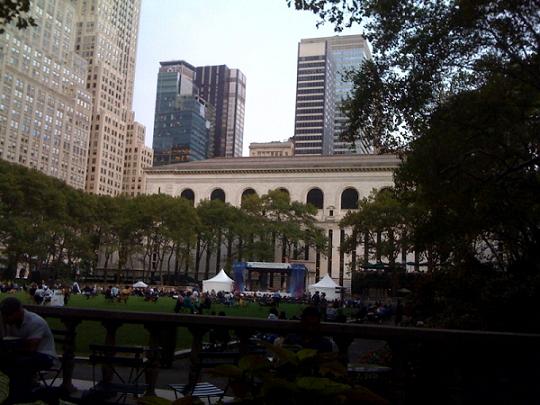
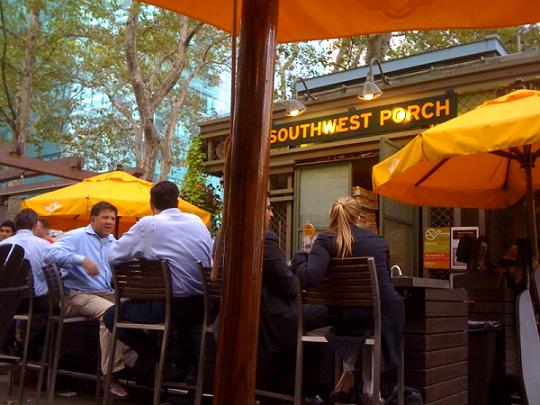
After hearing via Gothamist that New York City Ballet was opening the first Bryant Park Fall Festival, I trekked down to the park last night, scored a perfect seat at the Southwest Porch – well, maybe not perfect; it’s a little far from the stage, ordered a drink and snack and waited for my friend to show up and the public rehearsal / performance to begin.

Unfortunately it never happened. About ten minutes before 6, the waitress came rushing to my table, asked me if I could pay now as it was about to thunderstorm badly. Thunderstorm? At the beginning of the day, there was no such thing in the weather forecast. I almost didn’t believe her until about two minutes later a man came out onstage and announced that, due to the weather, the performance would be canceled. And the waitress and announcer were right: about five minutes later the thunder erupted, the rain began. New York weather has been crazy like this for a while now, like the past two / three years. I guess it’s the ozone. You just can’t plan an event outdoors anymore.

Anyway, I did get to see Wendy Whelan and Sebastien Marcovici (I think) rehearsing Christopher Wheeldon’s After the Rain (I guess, in retrospect, an apt title), which is one of the ballets they were supposed to perform. And NYCB begins their first ever fall season tonight, inside, at the Koch Theater.

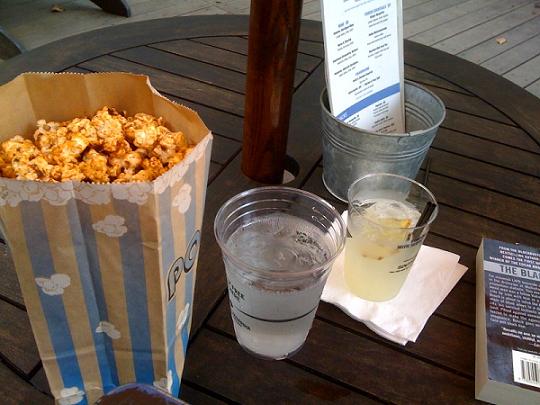
I do really like Southwest Porch during the summer. Their ginger margaritas are excellent; their S’mores are a lot of fun (though you usually need to ask for extra graham crackers). But I discovered last night that I am not a fan of their flavored popcorn. I had the ancho chile / lime flavor and it was just way too much seasoning. You couldn’t even taste the popcorn. My mouth was on fire.

YVONNE BORREE’S FAREWELL PERFORMANCE


On Sunday afternoon, principal ballerina Yvonne Borree gave her farewell performance at New York City Ballet. I always find farewell performances so sad, especially for the ballerinas, for some reason. And Yvonne just doesn’t seem old enough to retire! At all.

Anyway, it was a really lovely program and she looked beautiful. She danced the third, “Andante,”Β  movement in Balanchine’s Brahms-Schoenberg Quartet. She was partnered by Benjamin Millepied, a very good partner for her, as she looks very comfortable dancing with him, and when they first took the stage, the audience really went wild with applause — and really wouldn’t let up! That’s uncommon for NYCB fans – even with a farewell performance; they usually save their applause until the very end. And the applause wasn’t just clapping; people were really whooting and screaming and calling out “Yvonne, Yvonne!” I think I am not the only one who will miss her. At the end of each section, she got more applause and at the end of Brahms, she and Millepied got three curtain calls. She deserved it. And he did too — I think Natalie Portman is giving him some acting lessons because he’s really doing much better, not just dancing (he’s always been a good dancer) but really projecting as well.

Then came Wheeldon’s new Estancia, which grew on me. I think the dancers found the humor in it — or maybe they did before and I was paying too much attention to the choreography to notice, but it seemed they really vamped it up, with Tyler Angle failing hilariously miserably at taming Andrew Veyette’s “horse,” letting Veyette get away after Tiler Peck roped him all up nicely, then Tyler being felled and rolling around the floor, nearly sweeping Tiler off her feet (in a bad way). It was really cute. And the dancing is really marvelous.

Then, the performance ended with Yvonne doing a pas de deux with Jared Angle — another good partner for her (for everyone really) – Balanchine’s Duo Concertant, which I love.


I love how the couple interacts with the onstage violinist and pianist, with the music, and with each other, and yet it is at times a very abstract ballet with lots of angular shapes. And the end is gorgeous but bittersweet, as the stage darkens and the spotlight begins to highlight only her, her head, then various parts of her body, ending with her arm, in the air, reaching upward and outward. It almost made me cry.

And of course the applause went on and on, and all of her partners (besides Nikolaj Hubbe unfortunately) came out onstage to give her a bouquet. Damian Woetzel and Peter Boal got the most whoots.

I’ve only been coming to New York City Ballet regularly for about the past three or four years and I feel I didn’t get to see enough of her. My favorite performances of hers are the delicate, ethereal sleepwalker in Balanchine’s La Sonnambula, which I think she danced with Sebastien Marcovici, and in that ballroom-esque ballet with the art deco mirror of Peter Martins that I love but no one shares my feelings about … πŸ™ Can’t think of what it’s called right now but she was always Nilas Martins’s partner. I loved it. And now, my other favorite of hers is Duo Concertant, which I’d never seen her dance before.

Apparently, she’ll still be around. According to Oberon, she’ll stay at NYCB’s School of American Ballet and teach.

Photos by Paul Kolnik.

CHRISTOPHER WHEELDON’S ESTANCIA


Last Saturday night was the premiere of Christopher Wheeldon’s new ballet, Estancia, at New York City Ballet. Everyone in the audience seemed to go wild over it. When it ended, I overheard people saying they didn’t want it to end, and others saying they thought it was his best work, and in the lobby, several of my friends said they really liked it. I thought it was so so. And definitely a departure from Wheeldon’s usual.

Estancia is a story ballet, set to to music by Alberto Ginastera, that takes place on a ranch (Estancia is Spanish for ranch) in the Argentine Pampas (countryside). A young city man (Tyler Angle) is smitten with country life, and a girl he meets there (Tiler Peck), particularly after he watches her tame a horse (Andrew Veyette). The ballet is his attempt to woo her, and of course at the start she wants nothing to do with him and his annoying urbanity (he wears a suit throughout), but eventually she overcomes her prejudices and lets herself fall for him. He ends up proving his adroitness at being a rancher by taming another horse (Georgina Pazcoguin).

The dancing was all very good — Pazcoguin and Veyette were wonderful as the wild horses, and the T(i)ylers were perfect for these roles. Tyler Angle is always so good at those deep longing romantic lunges toward his partner. For the most part, though, the choreography was a bit blah, I thought. Except for some interesting backwards walks, that looked at bit like moonwalks, performed by the “horses,” the choreography seemed like nothing I hadn’t seen before, which is unusual for Wheeldon. The romantic pas de deuxΒ  between the leads were pretty but the lifts were rather basic.

The Ginastera score was originally commissioned in 1941 by Lincoln Kirstein for a ballet to be made by Balanchine to be shown when Kirstein’s American Ballet Caravan toured Buenos Aires. But the Caravan disbanded and the ballet was never made. I feel like Wheeldon, or someone at NYCB, felt the need for closure on the project. It had the feel of something out of a bygone era, particularly with the horses – you really don’t see dancers galloping around stage these days in horse costumes. But it doesn’t seem as corny if you think back to Firebird, for example, with all the forest creatures.

The sets were designed by architect Santiago Calatrava (and NYCB is showing a short film about his work and his collaboration with the choreographers every time his sets are used this season). They consisted of water-color-looking paintings displayed on the back wall, one of a countryside, another more abstract one of horses (I think – because of the storyline, but maybe they were bulls … they seemed to have horns).Β  Anyway, all in all, it was a fine ballet but didn’t blow me away like it did many others.

Two other ballets were performed, both by Balanchine — Danses Concertantes, with my favorite, Gonzalo Garcia and Sterling Hyltin in the leads, and Brahms-Schoenberg Quartet in which Yvonne Borree danced particularly well partnered by Benjamin Millepied. It’s going to be sad to see her retire this Sunday afternoon.

Above photo by Paul Kolnik.

DREW JACOBY’S DANCE PULP LAUNCHES ON HULU VIA TENDUTV


Since following her on Twitter, I’ve been waiting for magnificent ballerina Drew Jacoby’s DancePulp to launch. (photo of her above taken from here) And I just received a press release that it has — on Hulu, via TenduTv. DancePulp is a series of interviews with movers and shakers in the world of dance — don’t know when it’ll air but remember her tweeting that she was interviewing David Hallberg — conducted with Jacoby herself. Click on the “continue” link below to read the full press release.

Continue reading “DREW JACOBY’S DANCE PULP LAUNCHES ON HULU VIA TENDUTV”

CORELLA BALLET OPENING NIGHT NYC


Photos top to bottom: Angel and Carmen Corella in Solea, Herman Cornejo and Adiarys Almeida in Sunny Duet, and Corella Ballet cast in Christopher Wheeldon’s DGV. All photos by Rosalie O’Connor.

Last night Corella Ballet Castilla Y Leon made their U.S. debut. It was one of the best evenings I’ve had at the ballet since ABT ended their Met season last July. Angel Corella (beloved ABT principal and founder of this company) is known of course for his bravura dancing, his ability to form a character on the stage even in the few storyless ballets ABT does, his passion, his charisma, his sweetness, his charm, but mostly of course his virtuosity. And even though he himself only danced in two pieces last night (with only a small duet in the Wheeldon), the whole evening had that same overall brilliance. It’s like he managed to find a company of dancers exactly like himself. I don’t know how he did that because I thought there was only one of him, but even the corps members seemed to have all of those qualities.

The night began with Angel’s own String Sextet, his first piece of choreography, set to Tchaikovsky’s String Sextet “Souvenir of Florence.” It was very allegro, very fast-paced, with lots of brilliant partnering — a ballerina would spin at lightning speed into her partner, they’d go into assisted pirouettes or a supported arabesque penchee (with the ballerina’s legs always in a perfect split), another would jump into her partner’s arms and he’d catch her in a variety of positions. Kazuko Omori and Yevgen Uzlenkov completely blew me away, as did all of the couples but those two in particular. It’s like, where did he find these people and how did I not know they existed?! Omori is a brilliant allegro dancer but she also had the qualities of an adagio ballerina, with lots of expression in her upper body. Then, in the third movement, Joseph Gatti blew everyone away with his bravura, Angel-esque solo replete with jetes and fouettes and crazy high tornado jumps. The crowd went wild for him, as expected. Both the duets and solos and the ensemble parts were equally captivating. Toward the end everyone did a fish dive in unison and it’s so sweet. It was like all the best parts of classical ballet — or at least my favorites πŸ™‚

Next was Walpurgisnacht, by Leonid Lavrovsky, which reminded me of the Corsaire pas de trois between Ali the slave, Conrad the pirate, and ballerina. Again the beautifully expressive, lightning-footed Omori and high jumping Gatti starred, and the stunning Kirill Radev danced the part that reminded me of Conrad. He had this series of scissor jumps but the splits were forward-facing, straddle position, rather than long-wise, like usual. And then he’d do these multiple pirouettes with these seemingly impossible held-out endings. The crowd was nearly screaming with applause, which doesn’t often happen in New York.

Then was Sunny Duet, from 1973, by Vladimir Vasiliov and Natalia Kasatkina, danced by our Herman Cornejo and Adiarys Almeida. Everyone applauded for Herman when he took the stage πŸ™‚ This ballet was sweetly romantic, like man in adoration of his woman, with Arabian / Bayaderesque styling. Herman really blew me away last night with his partnering. The pdd began with this extended overhead lift where he looked up at her for what seemed to be minutes, in the end making it into a single-handed lift. I’ve always thought he was a brilliant soloist but that he had some trouble in the partnering, but not last night! He was also very dramatic, and, at one point, where they go into their bravura solos, he played off of her, giving her this “oh yeah, well this is how I feel!” look before doing a bunch of crazy turns or jumps. The original, archived music, by Arno Babajanyan, was played on tape. There was a note in the program stating, “The company is committed to the revival of worthy pieces that have had an important influence on classical ballet. The piece will be performed as it was originally created by the legendary Russian choreographers Natalia Kasatkina and Vladimir Vasiliov. The artists will be performing to Arno Babajanian’s archival recording, as this specially commissioned score no longer exists.”

Next was Solea, choreographed by Flamenco dancer and choreographer Maria Pages, and performed by Angel and his sister Carmen. I was happy to see Carmen back onstage; I was sad when she left ABT. This was an absolutely beautiful combination of ballet and Flamenco, though I often see Paso Doble in what people call Flamenco, being a ballroom person — still not sure of the difference… For example, at one point, they would come at each other, she swirling her long skirt about, cape-like, he coming at her like a matador — that’s Paso — but instead of rushing toward each other, hips thrust forward, they’d do chaine spins — she on pointe, spinning right past each other, balletically. Then they’d approach each other again, she’d retreat quickly back with supercharged bourrees. I love it! I’ve always wanted to see a Paso Ballet, but most ballroom dancers don’t seem to know how to choreograph such a thing, even if they have extensive ballet background. Then, during the Flamenco taps (which you can hear in the recorded music), Angel would do his trademark lightning fast fouettes, or else entrechats, or just crazy fast footwork; and she’d do the same on pointe. Flamenco taps on pointe! And each of them had the perfect Flamenco styling. And there was a kind of back and forth “competition”, which I guess is called “Bulerias” in the world of Flamenco, which was kind of like a set of “variations” or solos in ballet, with him doing the trademark jetes around the perimeter of the stage and she responding with her own thing. And at the end, they came together and she stood behind him and he wrapped her arms around him. Sweet. Audience gave them a standing ovation.

Last was Christopher Wheeldon’s DGV: Danse a Grand Vitesse, which was I think the most intense, spellbinding Wheeldon ballet I’ve ever seen. It was premiered in 2006 by the Royal Ballet and was nominated for an Olivier Award. Set to music by Michael Nyman, which was commissioned by the French railway company TGV in 1993 to commemorate their opening of a new high-speed train line, there were several large pieces of twisted metal in the background — between which the dancers would weave in and out from time to time. The music had a very “locomotive” rhythm to it and the whole thing — both music and movement — had a kind of eerie feel to it. Movement was trademark Wheeldon — very modern, lots of angularity, sharp jagged lines, unique partnering. Women were often carried overhead and upside down with their legs in a split or sideways with their knees bent outward and toes together, creating an intentionally awkward shape. At times the music would stop completely while the dancing continued — creating some of the most intense moments. This is the first time the piece has been performed outside of the Royal, the program notes say, and, with its intensity, it was a perfect choice for this company.

So, the evening was a celebration of classical ballet, fusing classical ballet with traditional Spanish dance, and contemporary ballet, which seems to be what this company is about. Excellently done!

There’s one other piece on the program, Epimetheus, which will show Saturday afternoon. It’s by a young choreographer / dancer with the company, Russell Ducker. Will report back as soon as I’ve seen it!