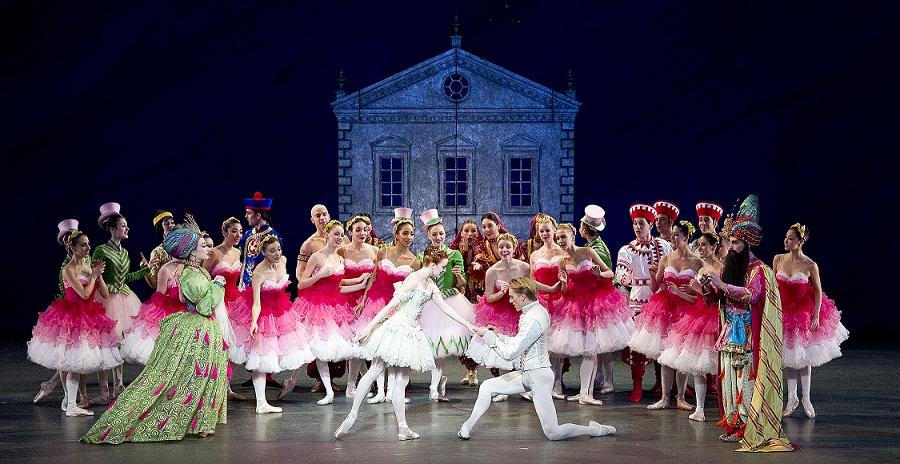
Ratmansky’s Fantastically Funny, Tim Burton-Esque New FIREBIRD

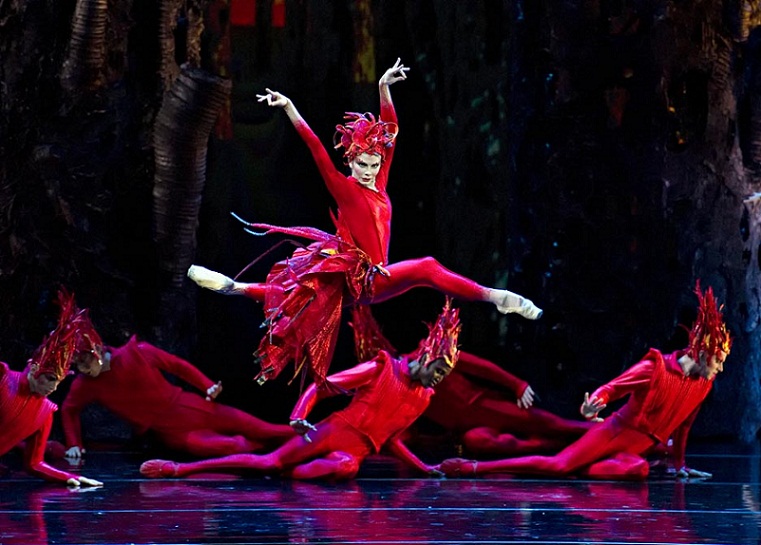
Thursday night I went down to Costa Mesa for ABT’s premiere of Ratmansky’s FIREBIRD at the Segerstrom Center for the Arts. I’m so glad I braved the nearly three hour drive (with traffic; without about fifty minutes) from west L.A. because it was an excellent evening. This is I think Ratmansky’s most theatrical, spectacular ballet – certainly of those he’s done for ABT – and I loved it. (Photo above of Natalia Osipova in the lead role, by Gene Schiavone, courtesy of Segerstrom.)

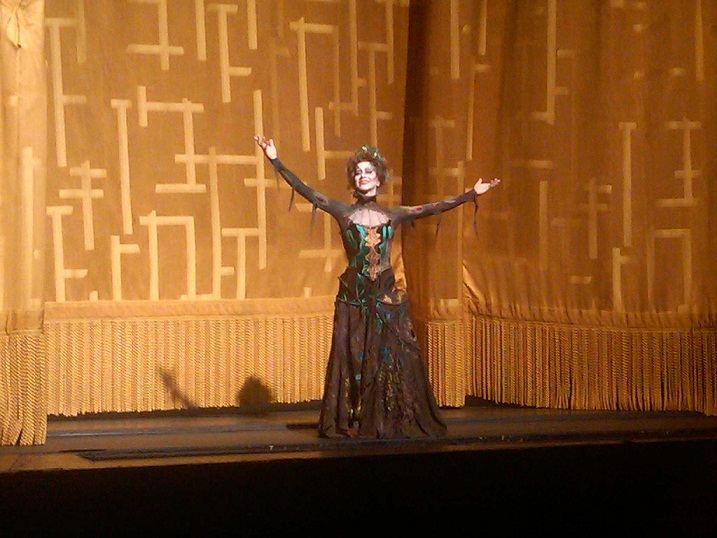
The curtain opened onto this magnificent set. The prince is supposed to be in a forest searching for his lost beloved, and so strewn about the stage were these fantastically creepy dead tree-trunks with spindly branches that magically sprouted blood red blossoms. I was so enchanted with those tree trunks, which to me resembled a witch’s hand, and the crimson blossoms bright red fingernails. It all had a very fantastical Tim Burton feel.

Then behind a scrim we see the prince, Marcelo Gomes, dressed all in white, searching about frantically for his lost maiden. At one point, he bumps his head into a branch on one of the creepy witch-hand trees. The audience seemed really to appreciate the humor in this; they laughed at this, and laughed pretty frequently throughout.

Soon, a flock of red birds devoured the stage, and Natalia Osipova emerged as their leader, or the most remarkable one, whom the prince became taken with. This was the one problematic part for me. It makes sense to have a flock of birds with a leader rather than one bird, as in I think most versions of this ballet – but the stage here was really too small. Natalia went to take one of her famous leaps but then seemed to hesitate and took it down several notches. There were too many birds, and as she turned to run to one side of the stage, she almost smacked into one of them. I think that set the note for the rest of her performance, because unfortunately, she just seemed to be holding back throughout the whole thing – not only in her solos but also in her pas de deux with Marcelo after her firebird is captured by his prince. I didn’t really see her struggling to be set free, and when she gave him her magical feather, it seemed more an afterthought than in barter for her freedom. Marcelo is ABT’s most dramatic male principal and he kept up the act well, being enthralled with the firebird, but ultimately feeling sympathy for her and setting her free, but you could tell he was also concentrating on making his dance partner feel as assured as possible. I’m sure as they iron out the kinks, Natalia will be perfect though.

Simone Messmer actually stole the show to me. Well, she shared it with David Hallberg (who, judging by the cheers, has quite the fan base in L.A!) Simone danced the role of the maiden who captures the prince’s attention, and she danced it with a really wonderful sense of humor, as she alternated between being controlled puppet-like by a sorcerer’s spell, being annoyed by the prince’s intrusion, then falling for him, then being fought over by him and the sorcerer, who keeps trying to retain his spell on her.

Ditto for David, who danced the part of the sorcerer set on keeping the prince and maiden apart. We first see David’s wicked magician in shadow form, from the back of the stage, which looked both malevolent and funny at the same time. When David emerged, he sported this big green bouffant, and Ratmansky had him chasing the maidens about the stage in this bent-legged run (almost like a Russian folk dancer). He was really both creepy and funny at the same time.

The comedy continued when the firebird returned (after the prince, threatened by the sorcerer, summoned her protection) and compelled everyone to dance themselves silly. It was particularly interesting to watch David here. Ratmansky gave him these rather crazed lightning fast steps danced in place that reminded me of a sequence he danced as the mentally unstable boyfriend in Ratmansky’s earlier ballet, On the Dnieper. There they were meant to convey extreme anger and were frightening because it meant the character was about to become unhinged and violent; but here they’re more funny than scary, and I think that’s what Ratmansky intended. I think Ratmansky is making an actor out of David Hallberg 🙂 He certainly got a great brilliant comedic performance out of Simone.

I wasn’t really a fan of the ending. Prince and maiden danced, sorcerer and firebird, then they switched partners, but the sorcerer tried to reclaim the maiden. Finally the firebird shattered the egg containing the sorcerer’s power and prince and maiden were sweetly reunited. The last scene is of the firebird being held up high by a group of men, in a group lift, heroizing her. I don’t remember the firebird appearing at the very end of other productions, and it felt a little too cutesy to me, or a little too ‘good triumphs over evil.’ I realize that’s the theme of a lot of ballets but I was expecting a bit of a twist here since the whole was more comical and different in tone than other versions.

Other dancers appearing as the firebird later this week are Misty Copeland and Isabella Boylston. I can’t make the trek to Orange County again this weekend unfortunately, but will be really interested to hear what others think of the other casts.

The other two dances performed were Christopher Wheeldon’s Thirteen Diversions and Merce Cunningham’s Duets. At first I’d forgotten I’d seen Thirteen Diversions – it premiered during ABT’s Met season last year. I was charmed by it all over again; definitely one of my favorite Wheeldon ballets. Misty Copeland, Stella Abrera, and Craig Salstein stood out to me. Misty really made that ballet she was so spellbinding as the girl who seems to struggle with herself and her partner. What I like about this Wheeldon dance is that he really allows the dancers to create characters; it’s not just about musicality and creative patterns (although that’s there as well). Craig Salstein was sweetly funny as he kind of flicked his partner off stage and into the wings, so he and his male cohort could have the stage all to themselves.

Duets was first on the program, and it was new to me. It got off to a slow start. It seemed the first two couples were stiff and nervous and just going through the steps without giving them much meaning. But the fourth couple – Xiomara Reyes and Arron Scott – changed the tone when they took one look at each other, as if to say, “let’s go, let’s do it!” and took off on a quick paced, very precisely and charmingly danced sequence of steps. After that, everyone else seemed to unwind and perform more full out and with intention. I’m really beginning to like Xiomara. She and Arron were my favorite couple, but Julie Kent and Jared Matthews got the most applause. At the end of the whole program, David got the most applause – people really love him there.

This was my first time at Segerstrom Center for the Arts. The building is so interesting. The orchestra is on the right half of the theater (if you’re facing the stage) and the mezzanine is a raised portion on the left half. And then the balcony is up above. It’s definitely not as big as the Lincoln Center stages or City Center, but it was packed full of a very enthusiastic audience. It made me wonder if most lived around there or if people often drive down from L.A. I’m sorry, I’m still this stunned New York expat unable to fathom how people can drive three hours a day in gridlock and not go insane!

It was kind of unsettling seeing my favorite N.Y.-based dancers in L.A. I looked around the press section thinking there must be some N.Y. critics there to cover a premiere, but I didn’t recognize anyone and a Facebook friend later told me Macaulay was with her at a N.Y. performance Thursday night. And the one L.A. critic friend I have wasn’t there either. It made me sad. I really miss spotting the writers in the audience, wondering who’s going to write a review, who’s covering for the Times, who’s thinking what, who’ll write what. And most dearly I miss hanging out with my N.Y. dance-goer friends on the Koch Theater promenade during intermissions, or at Ed’s Chowder House or Fiorello’s afterward to discuss a performance, especially a premiere. I guess I’ll eventually make those friends here…
ABT is Coming to Orange County with Ratmansky’s New FIREBIRD

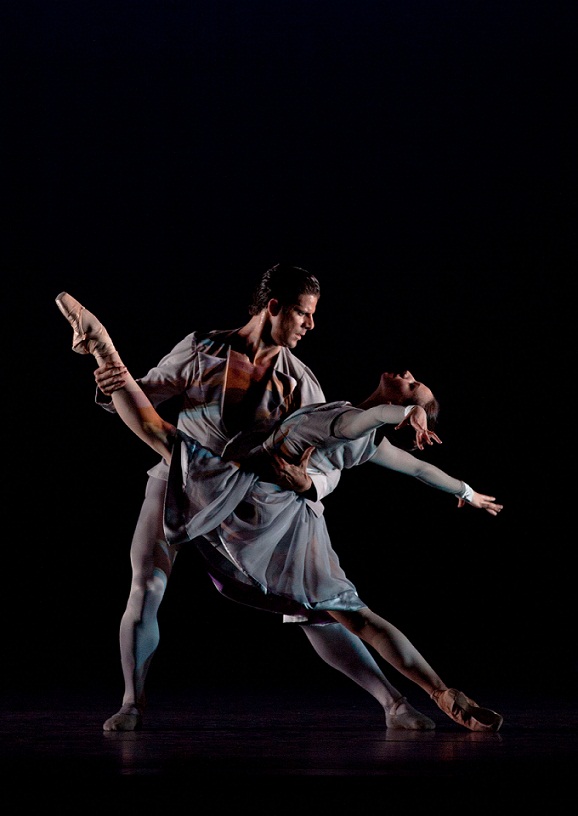
How excited am I! This Thursday through Sunday, my beloved ABT will be performing at the Segerstrom Center for the Arts in Orange County. They’re premiering Ratmansky’s new Firebird – and none other than SLSG faves Marcelo Gomes and Natalia Osipova are scheduled to star! (David Hallberg and Simone Messmer are co-starring.) The two other dances on the bill are Wheeldon’s Thirteen Diversions (photo above, by Rosalie O’Connor, of Marcelo with Isabella Boylston) and Merce Cunningham’s Duets. The latter two I haven’t seen yet since I missed the company’s City Center season last year.

Read a preview of Firebird by Joseph Carman here.

This will be my first time at Segerstrom / Orange County. If any of my Angeleno or former Angeleno readers would like to give me advice on the best way to get down there from Century City on a weeknight, I’d be most thankful 🙂 I will most definitely report back, particularly on the new Firebird!


Settling into LA II: Santa Monica, Rose Bowl Flea Market, NoHo Arts Festival, and Universal Studios

Here are some more of my recent LA photos. I guess before really settling in, there’s a period where you just have to be a tourist 🙂

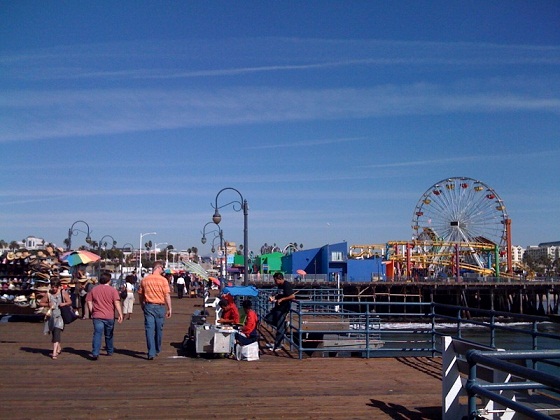
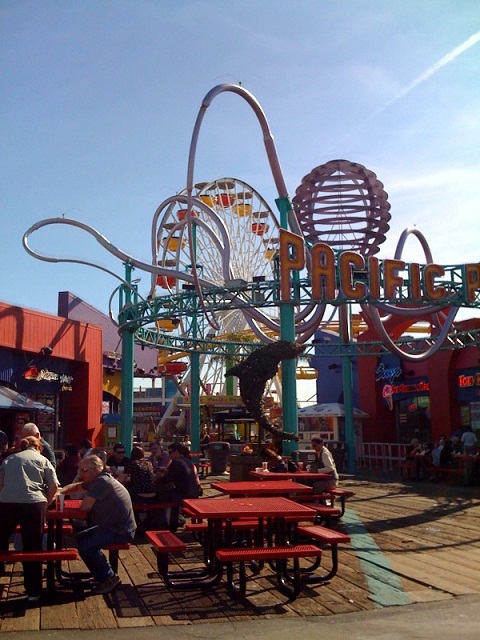
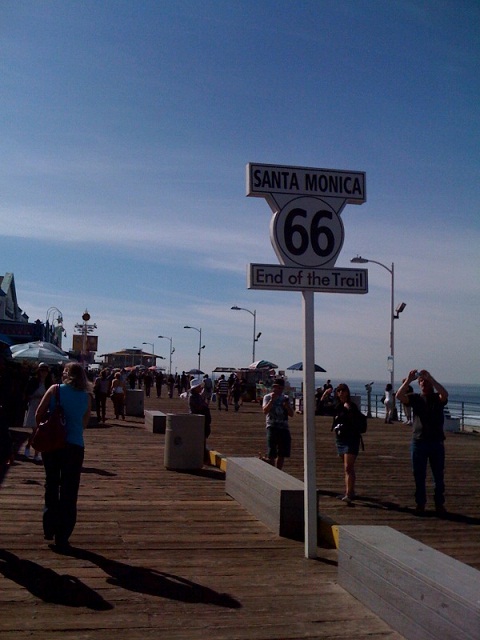
Most of my friends seem to live near Santa Monica, so I’ve been spending a good amount of time out there. Above is the Pier, where Route 66 officially ends.

It’s a bit Coney Island-esque with the ferris wheel and all (which is lit up at night). Not nearly as fascinatingly cheesy though 🙂 And no Nathan’s hot dogs.

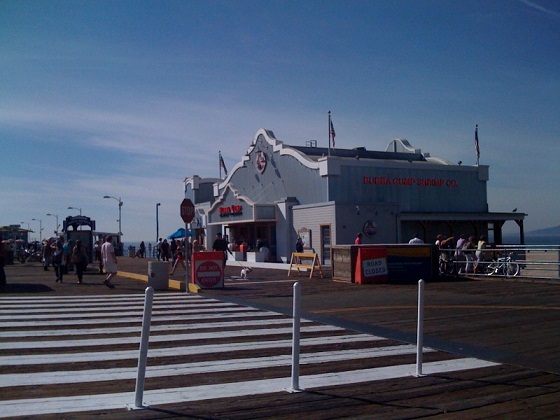
The Pier’s very touristy – mainly filled with souvenir shops and restaurants like this one, called Bubba Gump, and named after the movie, Forrest Gump, and specializing in seafood of course.

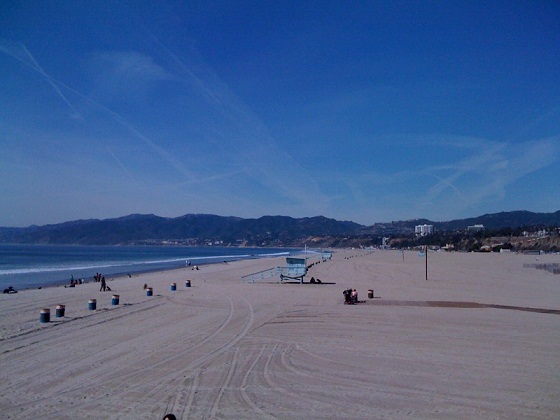
Here’s the beach.

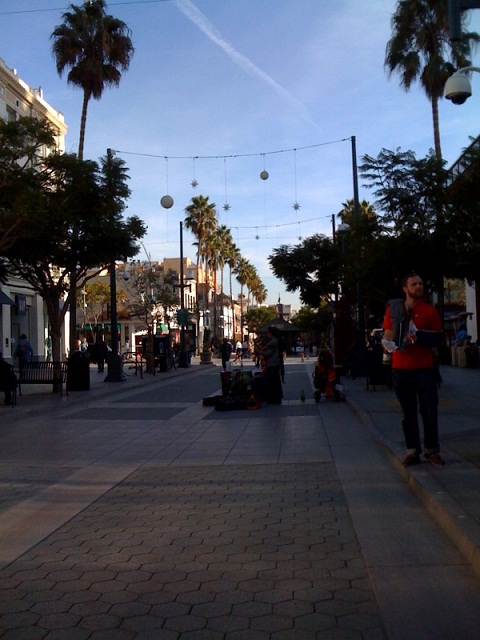
And here’s the Third Street Promenade (so named because its cobblestoned street, which goes on for three blocks, is vehicle-free), which is also pretty touristy, with lots of chain stores like Banana Republic and Barnes and Noble and Starbucks.

In places though it kind of reminded me of Vienna, with little cafes and wine bars in the middle of the street.

There were also some street musicians.

And a Christmas tree.

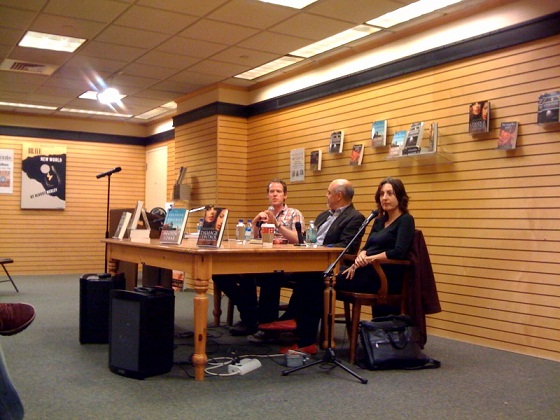
I went to Barnes and Noble for a discussion of LA Noir by three novelists of the genre: Denise Hamilton, Hector Tobar, and Scott O’Connor. It was really pretty interesting and made me feel that LA and NY have more in common than not. It made me feel at home, like readings often do, and made me want to pick up where I left off several weeks ago now with my own writing project.

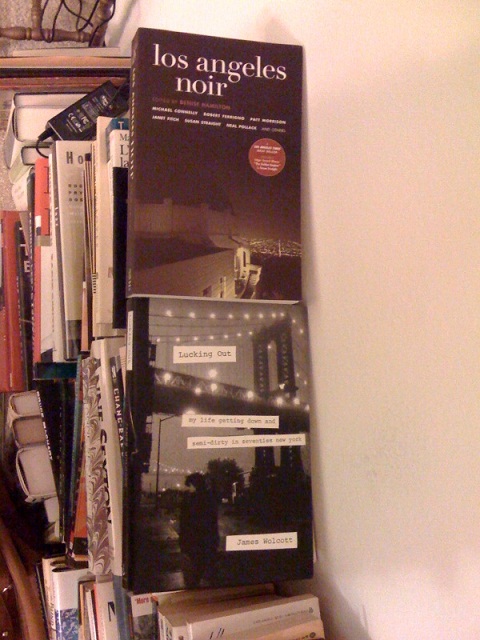
I picked up one of the short story compilations that the writers contributed to, Los Angeles Noir, and also James Wolcott’s new memoir, Lucking Out: My Life Getting Down and Semi-Dirty in Seventies New York, which I’ve been meaning to get since I first heard about its release. Unbelievably, I hadn’t been in a bookstore since Borders closed a couple months ago.

I have to say, visiting bookstores used to be one of my favorite things to do. They’ve always made me feel safe and warm and un-alone, if I was feeling lonely. But they just don’t make me feel that way anymore. This one was pretty empty, sadly, even on an event night – empty both of people and books. It was also pretty dimly lit – making it hard to find the books you’re looking for; it was as if the salespeople just wanted everyone to leave so they could close and go home. I don’t know, this bookstore actually depressed me.

But hopefully cafes and bars will take over in celebrating and spreading literary culture. Here’s a lively poetry reading at a coffee shop called Priscilla’s back in my hood.

Here are a few photos of my trip to the NoHo Arts Festival last weekend. NoHo (North Hollywood) is kind of a bohemian area that, to New Yorkers, I’d liken to Bushwick. There are lots of dance studios (mainly teaching hip hop and jazz, some ballet), acting studios, very small theaters (as in off, off-Broadway), and a few galleries. For the festival, they had these little stations around town where all passersby could contribute to a work of art.

One of the galleries, showcasing art by those working in theater, and some photojournalism.

Here’s a hip hop singer, Brooklyn J., performing on the mainstage with several female backup dancers.

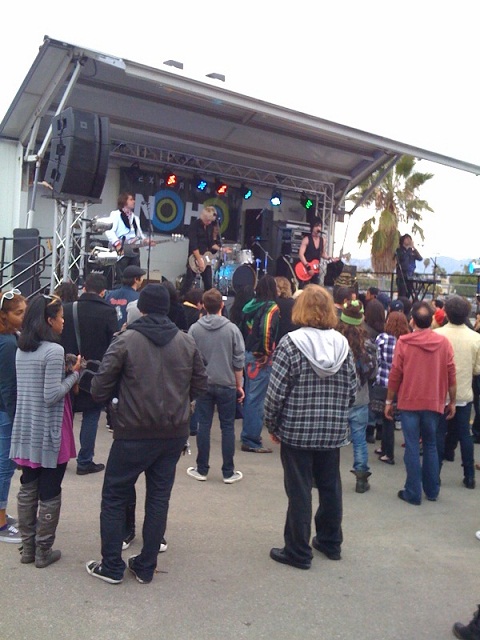
Here’s a band. Music seemed to be mainly punk and grunge.

The arts festival coincided with a little farmers market, which I guess happens every Saturday near the subway. I was particularly intrigued by this vendor, Homeboy Bakery, who has several lines of products (bread, desserts, tortilla chips and salsa, etc.) for sale at both farmers markets and in local groceries, and whose mission is to help young people from troubled backgrounds stay out of trouble by keeping them employed with creative jobs.

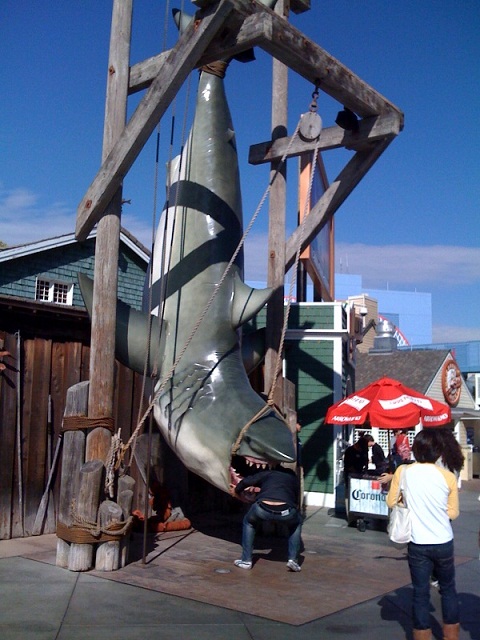
I spent Veteran’s Day at Universal Studios. I’m such a tourist! I couldn’t help it. I hadn’t been there in over thirty years. I think the only parts of the studio tour that are still in existence from then are the Jaws and Psycho exhibits!

I couldn’t get a good shot of the phony shark coming up to attack the tour trolley. In this photo, he’s just set off some explosive device and is now coming for us.

On the ride, they show you via the overhead monitors what the scenes that were shot on the sites you’re visiting looked like in the finished movie. Here’s a photo of the actor from Jaws messing about with the mechanical shark.

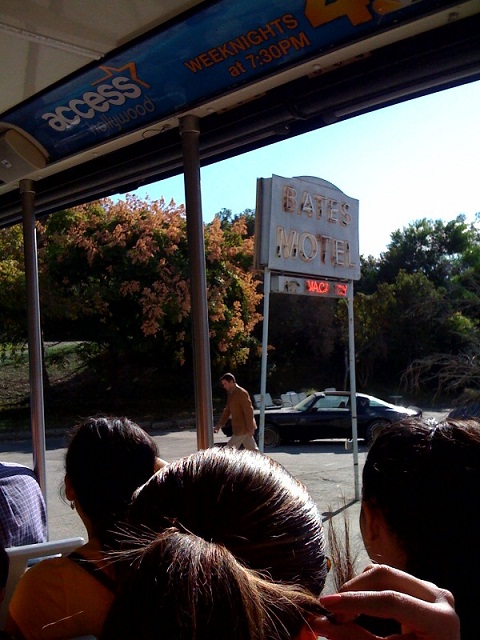
Here’s the Bates Motel, where they have an actor playing Norman come out, drag his mother’s body about, and eventually threaten guests on the ride.

Here’s part of a set from a plane crash. I forgot the movie… but this is from an actual plane.
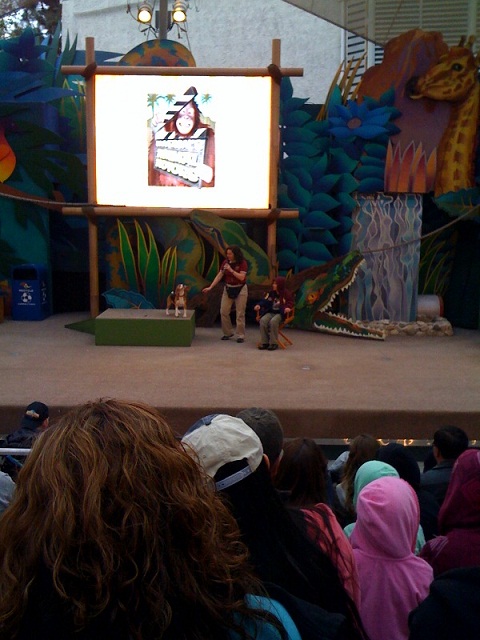
I also sat in on a little demo on how they train animals to “act” in the movies. These animals – dogs, cats (cats are the hardest of animals to train because of their independent nature), birds, an adorable little fox, a little monkey, and a chimpanzee, were so sweet and amazingly well-behaved; kind of made me want to be a trainer…
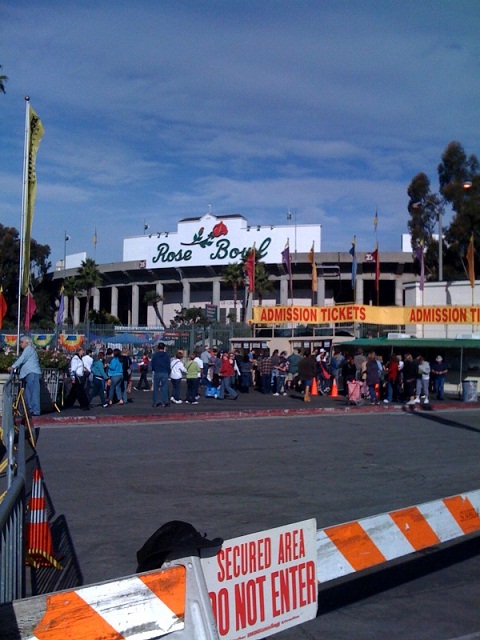
And on Sunday, I went to the Rose Bowl Flea Market in Pasadena, which takes place on the second Sunday of every month. I’d read a lot about this, so just had to check it out. Plus, I needed to get a few things for the apartment.

The amount of crazy stuff there – it was a hoot! Like these old fire hydrants…

And this piece of furniture that looks like it once sat in a museum, or maybe a hotel lobby.

And all these signs. A couple behind me became quite excited over the Jack Daniels one.

I badly wanted one of these Sixties era yellow lounge chairs! But nowhere to put them…

Or this Freudian-looking burgundy couch.

I needed a couple of end tables, so ended up getting this very art deco-looking piece (whose scent Rhea has approved),

and, though I really have no idea what it is, this piece. All I know is it’s small and has an ornate top handle for carrying that matches its legs, and it has a little door that opens up and provides a little container for books, or in my case a CD player and old CDs. I thought it was fun and very very old.

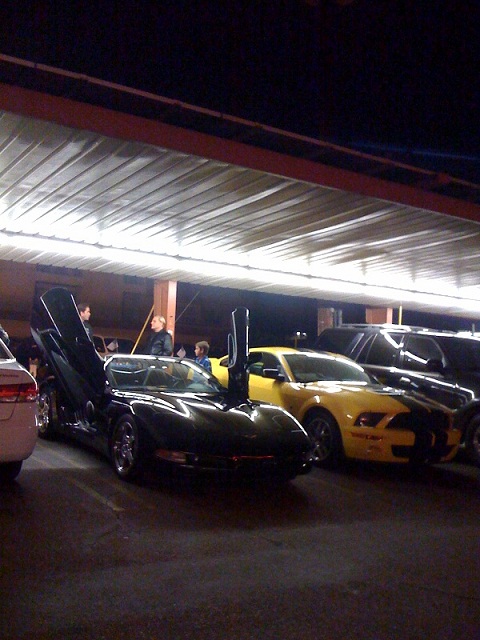
Finally, back in Burbank, here are some cars at the antique car show held in the Bob’s Big Boy parking lot every Friday night.

Okay, that’s all for now. Next, I hope to visit Hollywood Hills… hopefully to see Stravinsky’s house (see Ballet Lover’s comment on my last post!) And on Sunday, I’ll be going to a dance performance – an actual ballet performance – finally! I’ll be the guest of LA Times writer (and Arts Meme blogger) Debra Levine for the live-streaming of the Bolshoi’s Sleeping Beauty starring our David Hallberg. Can’t wait!

Alina Cojocaru and Johan Kobborg Guest Star in ABT’s SLEEPING BEAUTY

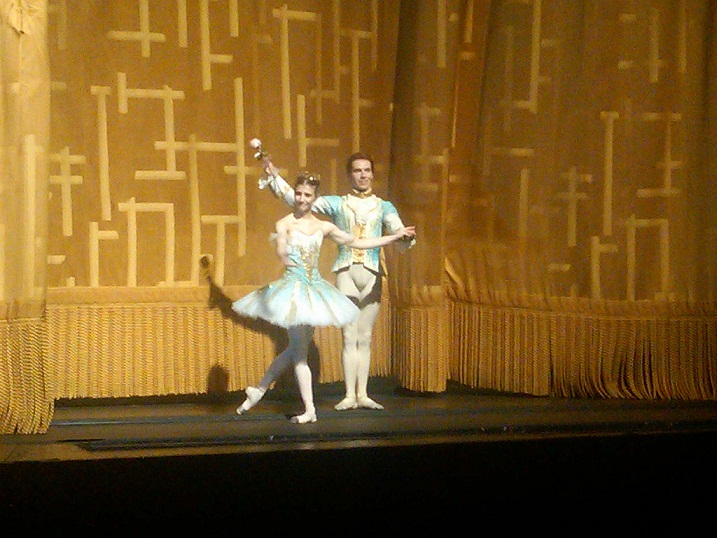
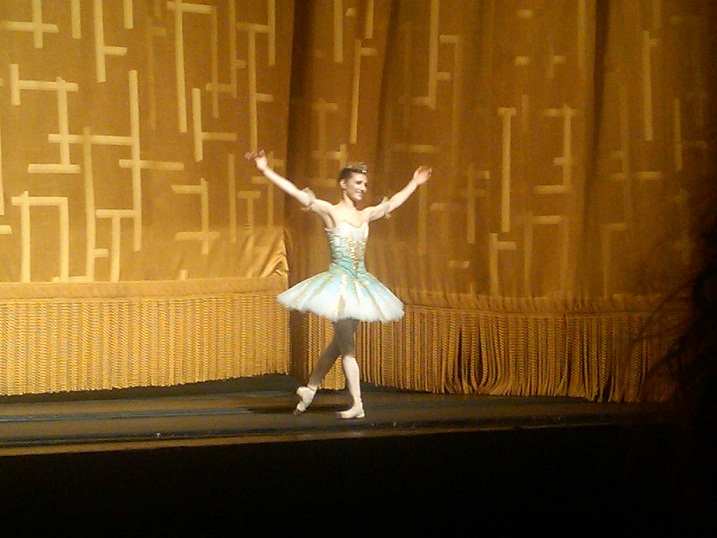
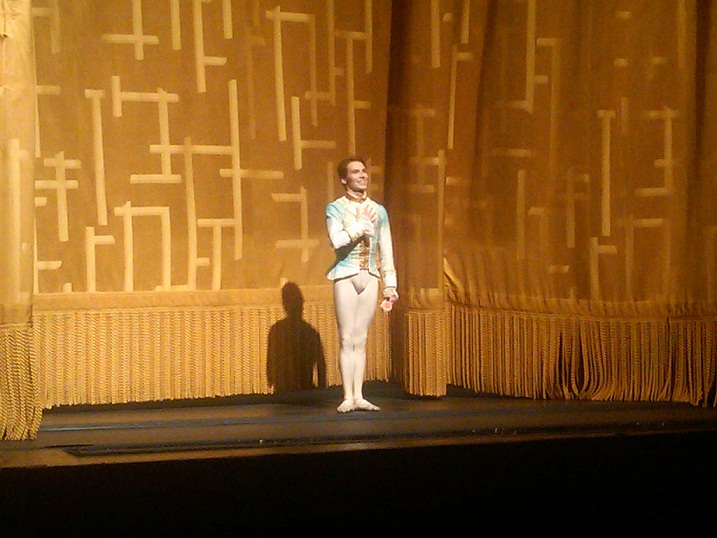
Curtain calls photos taken by my new balletomane friend, Andrea.

I have to confess, Sleeping Beauty is probably my least favorite ballet. I like the Aurora / Prince Desire wedding pas de deux, with all the gorgeous fish dives, in the last act but I could do without the rest. I just don’t have a big appreciation for sustained balances on pointe and all of the fairy variations and all that.

BUT, I have to say, Alina Cojocaru and Johan Kobborg, guest starring from the Royal Ballet in American Ballet Theater’s Met production showed me this ballet in a new light. As I said on Twitter, I feel like I now know how Sleeping Beauty is really supposed to look!

I did see Cojocaru last year (without Kobborg), but I think because I was sitting in orchestra and because it was my first time seeing her and was just getting used to her, I couldn’t stop focusing on piddly things like her feet / shoes.  Now that I’m used to them, and because I was farther up, in dress circle (my friend, Marie, gave me her tix because she had to fly last minute to Japan and couldn’t use them – thank you Marie!) I just focused on her brilliant dancing. She’s somehow so precise and does such stunning things and makes such stunning lines while making it not about doing these stunning things but about the character and about bringing her sweet story to life. That’s a crazy run-on sentence but you know what I mean? In the “Rose Adagio,” while circling around in those repeated turns while being passed from cavalier to cavalier, she’d just flick her leg up so high and so fast whenever a cavalier took her hand. I was so awed. And she has the most stunning arabesque in attitude while she’s being promenaded about by those cavaliers. To me, those fast, high, perfectly done lifts of the leg and her gorgeous arabesque were more magical than the sustained balances on pointe (which is what most hardcore ballet fans seem to adore in this ballet).

And during the wedding pas de deux, when Kobborg dipped and dropped her into a fish dive, her legs went up so high in the back. And they were perfectly crossed. And the dip was so fast. It was stunning! Sorry I keep using that word; it’s just the word that best expresses how I felt the whole night. The other dancers – the American trained ones – don’t do those fish dives that way. They take their time raising the ballerina and then fluidly taking her down into the dive. I think that’s the influence of Balanchine, where every movement’s supposed to seamlessly melt into the next and nothing is supposed to look “posey.” But I like it so much better the way Kobborg and Cojocaru did it. So much more … stunning! Okay, I’ll stop…

But my friend Natalie and I weren’t the only ones wowed. This is what I love about sitting up higher. I feel like the orchestra is filled with people who fall asleep and with critics. Higher up is where the real fans sit, and Natalie and I were sandwiched in between these giggly twenty-something girls who nearly blasted out of their seats every time a lightning speed develope or fish dive happened, and this tattooed construction-worker looking guy who was there on his own and who followed Cojocaru’s every movement with his binoculars and nearly burst my left eardrum with his applause at the end. I so love these people 🙂

Kobborg totally reminded me of NYCB’s Gonzalo Garcia, who, everyone who reads this blog regularly knows is one of my favorites. His expressiveness, his devotion to his partner, his immense charm and the way his personality really shines through from far away – I really loved his Prince Desire. On the way out one of my friends said he loved Cojocaru but found Kobborg to be not as stellar as some of the ABT men like Marcelo Gomes. That’s totally true, but what I loved about Kobborg was how he let her have her night, how everything he did was to showcase her. I love Marcelo and David Hallberg and all the ABT men of course (of course!) but sometimes it’s nice when the guy doesn’t steal the show and just lets the ballerina shine. But it wasn’t like he wasn’t as good as she was, just that he was letting it be all about her. Of course they’re now engaged so a little romantic sentiment could be at play 🙂

Anyway, a few more pictures:

Martine Van Hamel was perfect as the wicked fairy Carabosse. And, I think I’m the only one who feels this way, but damn do I love that costume! It’s very Helena Bonham-Carter / Tim Burton… Actually it’s very Helena Bonham-Carter at the Oscars…

The whole cast. Thank you again to Andrea for the first-row pics!

The rest of the cast was very good as well. In particular I loved Yuriko Kajiya as the Lilac Fairy (she was a last-minute replacement for Maria Riccetto). She stood out to me more than she ever has before; for once I realized that she has a real stage presence. Maybe it was being up higher?… All the fairies were very good – Misty Copeland, Simone Messmer, Luciana Paris, Renata Pavam, and Hee Seo (who should be promoted to principal soon!), and Daniil Simkin and Sarah Lane were, as expected, a lot of fun as Bluebird and Princess Florine. I think they tried to give Kobborg and Cojocaru the best supporting cast possible.

Anyway, that’s it for New York. ABT season is now over. The company is on to L.A. and Japan. And here in N.Y., we’re on the Mariinsky next week at the Lincoln Center Festival. And then ballet season is over for the summer.

Jose Manuel Carreno’s ABT Farewell


Thursday night at the Met, Jose Manuel Carreno, a longtime favorite of mine, gave his farewell performance with American Ballet Theater. (He will dance a few more performances with the company as they tour Los Angeles and Japan later this month, and he ended up filling in unexpectedly for an injured dancer in Saturday’s matinee, but Thursday was the night ABT celebrated his illustrious career).

He danced Swan Lake with Julie Kent as Odette and Gillian Murphy as Odile. Of course Odette and Odile are danced by the same ballerina but this was a special performance and so he chose to have not one but two ballerinas he’s often partnered throughout his career as alternating white and black swans.

Above photo is of the white swan pas de deux with Julie Kent. Below is of the black swan pdd with Gillian Murphy. All photos are by Rosalie O’Connor.


And below, of his curtain calls.


The performance was spectacular but not flawless. Jose danced wonderfully. I’ve personally been more moved by his performances in Romeo and Juliet and Manon, but then I’m more a fan of modern ballet choreographers like MacMillan, than classical ballet. I wish he would have danced one of those as his farewell but I totally understand why he chose Swan Lake – it’s only the quintessential ballet after all 🙂

The best part was Act III, with Gillian as the black swan. It was just amazing feat after amazing feat. I swear I’m pretty sure I saw Gillian put a quintuple pirouette in between her fouettes; there were definitely quadruples in there. I wonder sometimes if Natalia Osipova has not substantially raised the bar for this kind of thing. I feel like everyone’s trying so hard to do as many athletically stunning things as they can. I honestly almost screamed when she threw in the quintuple. Can you imagine someone actually screaming in the audience in the middle of the performance? Glad I managed to hold it in 🙂 Suffice it to say Gillian was definitely a thrill, and Odile is her forte. She did have a tiny stumble toward the end, coming out of the fouette sequence, but I’m not one to care about things like that. I personally care more that a dancer takes chances than plays it so safe she fails to move or wow the audience (as I think I’ve said a few hundred times by now on this blog). Then Jose followed her crazy fouettes with a turn sequence of his own, with more multiple pirouettes thrown in. It also seemed that some of their assisted pirouettes went on for, like, five minutes! At the end of the pdd, the applause went on for quite some time.

I should say, every time Jose did any kind of solo, no matter how small – a few turns, a few jumps, anything – the audience went crazy with applause. As they did when his Siegfried first entered the stage. I thought for a minute the orchestra was going to have to stop the story for him to take a bow, but he kept on going with the action, in character.

So, Julie Kent’s white swan: well, I think she is an absolutely beautiful dancer, and she does things that Sara Mearns and Veronika Part and other ballerinas I love as Odette either can’t or don’t do – like the fast tiny fluttering of the feet that really make her look swan-like, or the super quick changes of the feet between her traveling passees that make it look like she is really a swan about to take off in flight. Her legs and feet are super strong and she can attain really surprising speed and precision at certain points. And I was sitting in the back of the orchestra and I could still see that incredible footwork. And yet somehow I’m not nearly as moved by her as by Sara and Veronika. She doesn’t make me feel her pain or take me into her world the way they do. Maybe she’s just not as powerful an actress, although I thought she was very good in Lady of the Camellias. I thought Jose generally partnered Gillian better, which is interesting because she’s a larger ballerina. He lifted Julie high above his head just beautifully, but then there were some moments that the assisted pirouettes that went on forever and a day with Gillian were more problematic with Julie. At one point, Julie veered sharply to one side and I worried she’d fall. But she didn’t.

Still, it was a beautiful performance all in all.

This was my first time seeing David Hallberg as von Rothbart. (You can see him in one of the curtain call photos above, in the purple). He’s a beautiful, beautiful dancer. Seriously, I don’t think any man can dance as beautifully as David Hallberg, and I’ll go to any ballet with him in (with good choreography for him of course), just to see that. But. I like Marcelo Gomes better. I know that’s controversial, and I’ve been thinking a lot about how I’m not really a fan of classical ballet partly because of this (judging by the difference of opinion between myself and my classical ballet-fan friends), but I just don’t like black and white. I prefer sexy, charmingly dangerous von Rothbarts, not pure evil von Rothbarts. And David was evil. The way he masterfully whipped around that purple cape, the way he worked his facial muscles into a hard hard look, the way he approached the queen and each woman at the ball with intention, the way he pointed straight at poor Siegfried when he first arrived with Gillian. He scared the hell out of me. And I guess if you think von Rothbart is pure evil and should be portrayed as such, then there’s no one more perfect than David to dance him. The evil is tempered a bit by David’s beautiful dancing, which made him the second best von Rothbart in my opinion, just because it added a nuance that otherwise wouldn’t have been there. But Marcelo’s v.R.’s sexiness, his irresistible charm, his deviousness, make him so much more deliciously dangerous.

I was a slight bit disappointed in the curtain calls. I think I was spoiled by Julio Bocca’s farewell being my first at ABT. That man was such a prima, his curtain calls went on forever, ending with him in underwear (well, tights), taking his time drinking a beer, then dousing himself with it. Or was it champagne he poured all over himself? (Will have to look back at my old blog post.) Anyway, it was all as if to say, I’ve had a blast here, I’ve worked my arse off, and now I’m so so ready to let loose. This all would have been inappropriate for Jose though, especially since his two daughters came out onstage with him at the end, sharing his bows. So sweet. But yeah, no getting plastered and prancing around in underwear for him. Marcelo, David, and Cory did hoist Jose over their heads, as David and Marcelo did Julio.

A couple ballerinas from the past – Alessandra Ferri, Susan Jaffe – presented him with bouquets. And Julio himself was there as well. He walked out onstage toward Jose doing a hip-shaking little rumba. Almost all the principals were onstage at the end – Paloma Herrera in particular was dressed to the nines, which was sweet since she was one of his main partners. I didn’t see Diana Vishneva or Natalia Osipova or Michele Wiles. I was hoping Carlos Acosta might show, but no such luck.

Jose’s daughters are really beautiful. Afterward some friends and I went to Ed’s Chowder House for drinks and snacks and we were debating whether the older one was his stepdaughter with Lourdes Novoa or biological daughter. Does he have one stepdaughter and two biological daughters or one of each? Anyway, the littlest daughter looks to be a teenager now. She’s really beautiful. But she was just a baby not so long ago. I guess time does go by when you’re not paying attention. The audience didn’t seem to want to say goodbye. Finally, the curtains went down and the lights went on, management making clear it’s over, folks, go home. But people kept standing there kind of dumbfounded.

Well, I’m really going to miss him. I’m going to miss him as Basilio in Don Quixote, I’m going to miss him as both the harem owner and Ali the slave in Le Corsaire (like Marcelo, he’s endearing in every single role he has – how can one be an endearing  harem-owner? I have no idea, but just watch him), I’m going to miss him as Des Grieux in Manon, I’m going to miss him as Albrecht in Giselle (I think he was the only one who still did the Baryshnikovian brisees in his near dance to death scene instead of the entrechats), I’m going to miss his sexy cocky Latin sailor in Robbins’ Fancy Free, I’m going to miss his sexy cocky leading man in Tharp’s Sinatra Suites, and most of all I’m going to miss his Romeo. In most recent years, he’s been the oldest dancer in that role, and somehow the most boyish, the most innocent, the one who’s made me cry the most times at the end in that crypt with his Juliet draped lifelessly over his arms.

Well, I still have memories. And YouTube videos 🙂

THE BRIGHT STREAM at ABT


David Hallberg in Ratmansky’s The Bright Stream, Rosalie O’Connor photo.

I’m not exactly sure yet what to think of this ballet, which made its premiere at American Ballet Theater last week. There are a couple more performances left this week and I think I may see it one or two more times. Right now I kind of feel like the history of the production (as told by Marina Harss in ABT’s Playbill) is more interesting than what I actually saw.

According to Harss, the production was originally choreographed by Fyodor Lopukhov and premiered in Leningrad in 1935. But Stalin hated it so, he banned it, and eventually even sent the man who helped write the libretto to the Gulag. It was the last ballet Dmitri Shostakovich ever composed. Alexei Ratmansky (artistic director of the Bolshoi from 2004-2009) restaged it during his reign there, and the Russians loved it.

With a history like that, you have to wonder what it was that angered Stalin so. I can’t see it.  I just see it as a rather silly ballet – kind of reminiscent of Shakespeare’s Midsummer Night Dream but not quite there – that takes place on a collective farm during one harvest season. According to the newspaper Pravda, Harss writes, the producers’ crime was “balletic falsehood,” meaning, she says, it wasn’t a realistic portrayal of what people are like who live on a collective farm. In other words, there was too much silliness, and farmers are serious workers, not goofs. But Ratmansky explains that, in reviving the ballet, he was attracted both to the “lovely, danceable” music and the lightly humorous vaudevillian aspect of the tale, as well as to an underlying darkness, an edge, he found in Shostakovich. “There is always something hidden in Shostakovich,” he says.

To me, that’s fascinating, and is the reason I’m going to need to see it again … and the reason I’m going to need to listen to more Shostakovich.

I think, though, the problem to me may have been more that the Russians have a keener sense of how to put on something like this, where basically every role has bravura parts. I plan to go see the Osipova / Vasiliev / Simkin cast this week to see if I feel differently about it. I saw the third cast – Veronika Part as the main character, Zina (and Part was beautiful, and the one perfect thing I felt about this cast – she was the heart and soul of the ballet), Alexandre Hammoudi as her straying husband, and Cory Stearns and Stella Abrera as the main ballet dancers in the theatrical troupe that comes to town and shakes things up. I liked Cory too. He had the cross-dressing role that David Hallberg is pictured in above and he was very good. He’s a good actor, good with both comedy and romance and has a charming, very stand-0ut stage presence.

Anyway, the plot is rather complicated, and when I expressed that to my friend she laughed and said she’d given up on the synopsis and decided just to enjoy the beautiful music and the humorous dancing. She liked it much better than I did, probably because she decided to stop trying to figure things out and just enjoy… The plot: Zina works as a local amusements organizer. Her husband, Pyotr, has a wandering eye. When a traveling theatrical troupe comes to town to stage a ballet, Zina recognizes the main ballerina – they once took classes together. They dance together, and reminisce — it’s really Zina reminiscing about her dancing past (and Part did this just beautifully) – while Pyotr becomes enchanted with the ballerina. There are also a couple of older, long-married dacha dwellers, who are rather goofy and humorous (danced by past ABT greats Victor Barbee and Martine Van Hamel). The male dacha dweller falls for the ballerina, and the female becomes enamored of the male ballet dancer. When it becomes clear how attracted to the ballerina Pyotr has become, Zina begins to cry. The ballerina calms her, promises her she has no intentions of returning his affections, and suggests they all play a trick on the married dacha dwellers and on Pyotr whereby she will dress as the male ballet dancer and the male ballet dancer will dress as her. So, that’s why the whole cross-dressing thing happens. There are many subplots as well, one involving a milk maid and her companion, a handsome tractor driver (who decides to dress as a dog), but this theme of married man falling for someone who is not his wife, then realizing how much he does value her, is the main theme of the ballet.

It was pretty funny to see Cory Stearns try to dance on pointe, but funnier to watch his character get carried away with the spread-legged, very masculine-looking jumps in that white sylph dress. He and the ballerina are, after all, ultimate hams in need of audience applause, so it makes sense that he forgets himself for a time and starts really acting like a man. I really wonder how David Hallberg does that part – and that makes me want to see his cast as well. Stella Abrera was fine as the ballerina, and mildly funny when she becomes a boy, but she’s not as spectacular of a dancer as, for example, Natalia Osipova, and I’d think that role should go to an allegro dancer like her. I imagine Osipova must be absolutely perfect in that role (since she can do mind-blowingly crazy high jetes better than many men).

Alexandre Hammoudi did well as Pyotr, though there didn’t seem to be a whole lot to that role, which makes me curious to see Marcelo Gomes and Ivan Vasiliev in the part.

I feel like, because the story-line is so slight, and because, as I said earlier, practically every role has some bravura parts, that this is a ballet that needs really spectacular dancing, that needs people cast in every part who are the kind of dancers who are constantly saying, “Hey, look at me, I can jete to the ceiling!” or “I can develope over my head!” or whatnot. And ABT dancers just aren’t trained to be that way – at least most of them aren’t.

One other gripe is the costumes, particularly for the men. The blasted pants. The mens’ lines were clumsy and unfinished and I think it was because the pants were too restrictive. It’s unusual that every single man would be unable to do a proper straight-legged jete or lift his leg more than a couple inches off the ground in arabesque – especially Gennadi Savliev, who always comes through on the stunning athletics. It had to be the pants. I understand why Ratmansky wanted to set the period with the costumes, but as with classical ballets, can’t the tops be the period-setters and the bottoms just be regular tights? Ballet is all about form!

Did anyone see the other casts yet?

The Sheepdogs of GISELLE

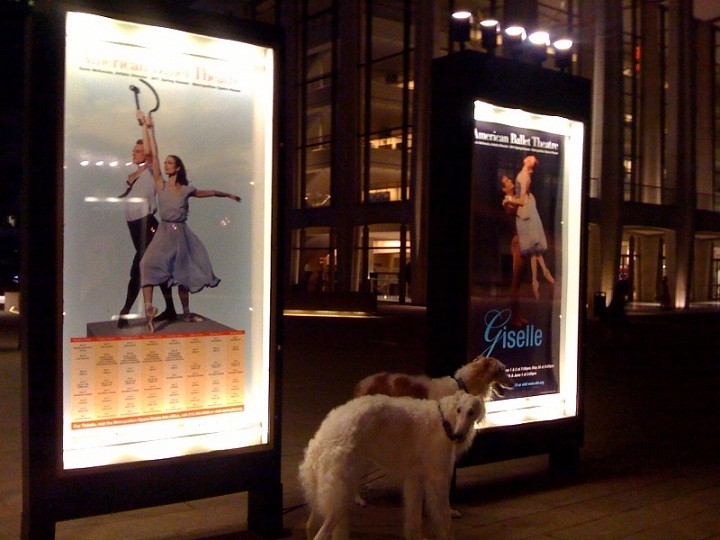
Don’t have time to write a review right now, but last week I saw basically three Giselles (two inside the auditorium, and one on the screen in the lobby 🙂 ). I saw Diana Vishneva and Marcelo Gomes (my favorites), Hee Seo and David Hallberg (it was Seo’s debut as Giselle), and on the lobby screen, I saw Alina Cojocaru (guesting from the Royal) and, again, Hallberg. Anyway, I snapped this picture of the Afghan sheepdogs ABT uses in the first act, outside, during intermission, getting ready to leave with their trainer. So cute – and I thought they deserved attention: they do hard work in that ballet under those harsh lights, trying hard to stifle barks, walking, then sitting when told – behaving so well!

Benjamin Millepied, Christopher Wheeldon, and Alexei Ratmansky Premieres at ABT


Above: Isabella Boylston and Marcelo Gomes in Christopher Wheeldon’s Thirteen Diversions, which premiered at American Ballet Theater two weeks ago. (Photo by Rosalie O’Connor.)

Once again, I’m behind on posts. May was a crazy month, filled with family emergencies, last minute travel, and trying to juggle paying legal work with book industry stuff and blogging. Hopefully June will be a bit quieter, though not likely at the rate it’s going thus far…

Anyway, on May 24th, ABT held a night of premieres, showing three new works by today’s “in” choreographers. Wheeldon’s Thirteen Diversions, set to Benjamin Britten’s Diversions for Piano and Orchestra, was overall my favorite. It seemed to have the most going on in terms of emotions, the most developed sections, the most varied movement, and interesting lighting design (by Brad Fields) to boot, though I know others were bothered by that. Background was lit with different colors each section and began with part of the back darkened, with light slowly encroaching. It created an atmosphere of mystery. I also felt like Wheeldon’s dance allowed the dancers to shine the most. Gillian Murphy and David Hallberg were a duo whose dancing had a sweet, light feel to it, like a relationship in bloom, while Marcelo Gomes and Isabella Boylston kind of went back and forth, with more depth and nuance to their relationship. She’d go from peaceful to needy to wanting to escape him back to needing him. They danced it well.


Above: Michele Wiles and Thomas Forster in Ratmansky’s Dumbarton, which I liked as well. (Photo by Rosalie O’Connor.) Dumbarton, set to Stravinsky’s Dumbarton Oaks, was mostly light and lyrical, with dancers clothed in light-colored contemporary costumes (by Richard Hudson). At times, though, the dance took on a more mournful tone, as the music would grow slower and Misty Copeland would collapse, then be carried off by a group of men. But then she’d reappear again in the next, lighter scene, as if nothing had happened. Then, it would happen again. I wasn’t sure if we were going back and forth in time or if there was a continuity of life kind of motif at play.


Millepied’s Troika was a relatively short dance, for three men, set to Bach.  Above are Sascha Radetsky, Alexandre Hammoudi, and Daniil Simkin (being thrown) in photo by Mikhail Logvinov. I started out really liking it but it kind of lost steam. I thought each man would have a different personality or embody a different mood: Simkin more playful, Radetsky more masculine, Hammoudi more soft and lyrical. To an extent it was danced that way, but then mid-way through they each seemed to be doing the same things. They started to blend into one another. Maybe that was the point. At the end, there was a series of lifts where Radetsky and Hammoudi kind of threw Simkin. He’d playfully try to escape them, but they’d catch him, scoop him up, and toss him. Someone remarked that this reminded them of Tharp. It also reminded me of Millepied’s earlier work for ABT, where Simkin was tossed in the air by a group of men in the midst of trying to escape a group of women. So Millepied repeats his themes over a few times.

Also on the program was a revival of Tudor’s Shadowplay with Craig Salstein and Xiomara Reyes in the leads. Created in 1967 and set to Le Livre de la Jungle by Charles Koechlin, it had a very dated feel and many have noted this is not one of Tudor’s better works. To me, it had a kind of Rite of Spring meets Prodigal Son feel to it. Salstein plays a poetic, monk type of figure who wants to be alone to meditate. But he is constantly bothered by this group of beings who appear to be half human, half primate who swing around gymnastically on a set of tree branches. Eventually they bring to him a woman, who’s very Siren-like, and whose sinister charms the protagonist is ultimately able to ignore. That’s what I saw in it anyway.

I felt a bit underwhelmed by the evening overall. It’s always exciting to see new dances though. And it could just be me and my penchant for full-length story ballets 🙂

One other thing: some of the gossip blogs stated that ABT had stricken Sarah Lane from the performance because of Natalie Portman’s presence. I didn’t know Lane was supposed to be dancing that night so have no idea if that’s at all true. Can’t imagine it is. Boylston still danced, and, as I said, I thought she danced very well.

Alina Cojocaru and Polina Semionova Guest Star in ABT’s DON QUIXOTE

Over the weekend, two European star ballerinas – Alina Cojocaru from the Royal Ballet in London, and Polina Semionova from the Berlin State Opera Ballet – guest starred in American Ballet Theater’s Don Quixote as Kitri.  Cojocaru danced with Jose Carreno, and Semionova with David Hallberg. I saw both performances. Overall, I thought both are beautiful dancers, have an innate sweetness that shines through, are absolute balance queens who can hold balances on one leg on pointe for many many seconds unassisted, and can dance the role nearly perfectly. But I thought that both of them lacked fire; they both played it too safe. Maybe it’s just that Natalia Osipova has ruined me and I just can’t see anyone else in this role now.

One thing I loved about the Cojocaru / Carreno performance were that the two seemed to have a real rapport, a genuine affection for each other. Did they ever dance together at the Royal, does anyone know? Or was Jose there too early for her? Cojocaru never threw herself into his arms with the wild abandon that Osipova did last year, and I missed that. But I don’t think Jose did 🙂 Seriously, he didn’t seem to appreciate Osipova’s theatrics that much. Cojocaru seemed to tone it down and they worked very well together. Also, as I complained about on Twitter ad nauseam, during those insane one-handed overhead lifts, Jose did not go on releve and hold one leg up in arabesque the way Ivan Vasiliev did with Osipova in the Bolshoi’s live-streamed performance. It’s okay; I still love Jose 🙂 But seriously, Vasiliev and Osipova have ruined me! Cojocaru has absolutely gorgeous developpes. She can lift her leg up so high – really stunning. And I mentioned the balances earlier. She held those for so long; crowd went wild. And sweetest thing: Jose kept demanding she return for an encore bow after each of her solos. Made me really love Jose.

Cojocaru was a little shaky during the first act, and she had a little stumble. But it wasn’t memorable. Far more memorable was her strong performance in the third act, her best. That’s when she did the crazy balances.

In the third act fan variation, Cojocaru did a completely different series of steps than I’d ever seen before, which makes me think there are a bazillion ways to do that variation. Or at least three – the American, the Russian, and the British. The Ballet Bag ladies sent me a You Tube link via twitter, of Cojocaru dancing with Johan Kobborg. Around the 7 minute point is where she does this different variation.


Jose is such a great Basilio. He’s a natural flirt, a natural macho Latin guy, and a natural actor who can be a macho and a flirt and still be totally endearing. And it really kind of made me melt when he kept insisting she take more bows.

I really enjoyed Sarah Lane and Isabella Boylston as “the flower girls.” They often weren’t in sync because Boylston danced with more expressiveness, arching her back, taking her time and drawing out the turns, playing with the musicality. Lane was more sharp and precise, hitting poses right on the beat. But I could have cared less that they weren’t perfectly in sync. I loved that each had her own personality, as people do in real life.

I missed Sascha Radetsky as Espada the matador. I’ve never seen him in that role and I think he’d make a good one. He was replaced by Gennadi Saveliev. He was replaced on opening night too, which worries me that he’s injured.

I thought Polina Semionova was really beautiful, and, where Cojocaru had a few wobbles, Semionova had none. She was very very near perfect. Like Cojocaru, the third act was the one that most brought her to life. She kind of veered all over stage on her third act series of fouettes but she threw several multiple pirouettes in, and her balances were even more stunning than Cojocaru’s, as, during her final balance, she took her leg out of arabesque and straightened it out in front of her, without ever holding Hallberg’s hand to steady herself. Audience went absolutely crazy with applause. They really loved her, and called her and David out for several curtain calls.

In the third act, she did “the American” fan variation. She’s Russian and dances in Berlin, so I really think each ballerina just chooses whichever version looks better on her body and feels most comfortable to her. I thought the little hopping “horse steps” on pointe were really sweet on her.

She and David seemed to like each other as well. The partnering was a little off at points, though, and he almost dropped her in a fish dive. She played it very safe with the second act swan dives into his arms as well, and he didn’t try any Vasilievs on the one-handed lift.

David is a beautiful dancer on his own though, and, as a critic said to me during intermission, it’s sometimes hard to focus on anyone else when he’s onstage. His movements were absolutely perfect, both the more balletic and those kind of side to side matador-looking movements. His jetes are beautiful – he’s just the most beautiful male dancer and you can completely lose yourself in the story of the ballet just watching him.

Acting-wise, I think David is wonderful in the romantic scenes. He’s definitely a romantic. But the rest of the time I think he should just be himself, make Basilio his own, and not try to be so cocky and macho. In him, I find it comes across as anger, an an intimation of violence even, like he’s really going to go off and whack someone. He’s not a natural cocky flirty Latin shit like Jose and Marcelo Gomes 🙂 And so it loses its charm with him. My thoughts anyway.

It probably won’t come to a surprise to anyone who’s read my blog for some time that Veronika Part (here as Mercedes, the “street dancer”) stood out to me. In the first two acts, I found her even more captivating than Semionova. One thing I love about her is her attempt to make the styling as authentic as possible. Part really looked like a Spanish dancer to me. And in the second act’s dream scene, I found her jetes across the stage really breathtaking – just as much as Semionova’s.

Sarah Lane danced the part of Amour in the white scene. I always want to call that character Cupid. Anyway, before the performance began, I overheard one teenage girl behind me say to another, “Sarah Lane! She was the one in Black Swan!”

All in all, really lovely performances, but I do think Cojocaru makes a better Sleeping Beauty and Giselle than Kitri. She’ll be dancing Giselle this Saturday night. She’ll also be dancing Don Quixote again with Jose tomorrow night (Monday, the 23rd). I’m excited to see Semionova in Swan Lake later in the season.

American Ballet Theater Spring 2011 Opening Night Gala

Last night was ABT’s Spring 2011 opening night gala. Dreary, rainy night … but what else is new for New York these days?

Once inside, I really enjoyed the show though. (I’m hoping to receive photos soon, which I’ll post). The program began with a short preview of Ratmansky’s The Bright Stream, which I’m excited to see next week. Seems to have a lot of humor, some bravura dancing, a cute storyline.


(Photo: The Bolshoi’s production of Bright Stream; Natalia Osipova is jete-ing).

Then, there were introductions by Rachel Moore, executive director of ABT, wearing a beautiful green dress, and Kevin McKenzie (AD), followed by Caroline Kennedy, who introduced the students of the Jacqueline Kennedy Onassis School of American Ballet as they danced a world premiere, Karelia March, by Raymond Lukens. The program says the students are Level 7, which must be the highest level, because some of those dancers looked like ABT principals. I’m not kidding, I swear. They really amazed me. That school is doing incredible things!

Next was Balanchine’s Tchaikovsky Pas de Deux, danced by David Hallberg and Gillian Murphy. Everytime I see David dance I think he must be the most perfect male dancer in the world. Gillian was stunning too.

Then came the Grand Pas de Deux from Ratmansky’s new Nutcracker, danced by Marcelo Gomes and Veronika Part. (No, they’re not performing that ballet during the Met season, but there seemed to be a few excerpts in the program from ballets they’re not performing). I missed seeing this couple – overall still my favorite – when the company premiered Ratmansky’s version in December. They were so sweet. Veronika danced with such wonderment in her eyes, such joy. And Marcelo was her perfect, adoring cavalier, all eyes on her. I don’t have kids, but I’d think they’re the perfect wedding couple to wow very young audiences.

Then came Majisimo, a classical ballet piece with Spanish flourishes created by Georges Garcia for the Ballet Nacional de Cuba in 1965 and set to Jules Massenet’s Le Cid. This piece was mainly meant to highlight Jose Manuel Carreno, who of course retires from ABT later this season. But it was really a dance for eight couples, and he danced only the male part of one of them – there were very few solos. He danced with Paloma Herrera. Xiomara Reyes was paired with Reyneris Reyes, guesting from Miami City Ballet. The other couples were comprised of Cuban dancers guesting from other companies as well: Lorena Feijoo and Joan Boada from San Francisco Ballet, and Lorna Feijoo and Nelson Madrigal from Boston Ballet. The dancers were spectacular, but I didn’t think that much of the choreography, which reminded me of a more bland version of an ensemble scene from Don Quixote. Jose had a series of turning jumps, and a really beautiful multiple pirouette that wowed the audience – drawing those turns out are what he’s most known for. And Xiomara really took my breath away with this crazy fast series of traveling turns in a diagonal down the stage. I’ve never seen her dance like that!


(Photo: Jose Carreno dancing with Polina Semionova in Diana e Acteon)

After intermission came two pas de deux from Swan Lake. A Twitter follower asked me why they needed to perform two scenes from the same ballet. I think that ABT, same as everyone else, is just trying to benefit from the Black Swan craze. They should have had Sarah Lane dance one of the pdd though! 😀 Anyway, first pas de deux – White Swan- was Paloma Herrera and Alexandre Hammoudi, which was good. But the second – the Black Swan – I found surprisingly magnificent! It was danced by Michele Wiles and Cory Stearns. There have been so many guest stars from Europe lately gracing ABT’s stage, I’d forgotten how perfect an Odile Michele Wiles is. And Cory really impressed me as well. Whatever he may lack in dance ability (I can’t imagine he’ll ever be a David Hallberg or Marcelo Gomes), he more than makes up for in acting and stage presence. He’s really good at bringing you into the world of the ballet and creating a character you can sympathize with.

Sandwiched in between the two SLs was Jessica Lang’s Splendid Isolation III, danced by Irina Dvorovenko and Maxim Beloserkovsky. I joked on Twitter that Max earned the hot guy of the night award for that, but seriously – he did! Irina was really beautiful as well. And her party dress, which she came out in for the final stage bow, was, as usual, gorgeous. She has such impeccable fashion taste, imo.


Following that was the highlight of the night, for me – Diana Vishneva and Marcelo Gomes in the Act I pdd from Manon. Such a perfectly choreographed pas de deux – beautifully romantic and full of love / lust but with so many breathtaking but capriciously executed, dangerous-looking lifts you sense something out of control. As beautiful as it is, this story isn’t going to have a happy ending. I am liking Diana Vishneva more and more. I’ve always thought she was a great dancer but she always seemed to play too much to the audience for the story ballets. She didn’t take me into the world of the character as much as I want an actor to. But the last two seasons she’s been doing just that: really developing the character and dancing to her partner – Marcelo here and in Lady of the Camellias last season, which is the first time she really blew me away – instead of the audience. This – the Manon pdd – was the audience favorite last night as well. The two got a storm of whoots and bravos at their curtain call, and practically had a standing ovation the audience was so loud in their applause. “So beautiful,” exclaimed the woman beside me. “Okay, we can go home now,” she joked.


(Couldn’t find a photo of Diana and Marcelo, but here is Diana dancing Manon with Manuel Legris. With all photos I post now, I’m linking to the original site via a click on the photo.)

Here are Marcelo and Diana in Lady of the Camellias:


Then, Alina Cojocaru, one of the European guest artists this season, danced the Rose Adagio from Sleeping Beauty. I’m not a huge fan of this ballet in general, but she was lovely. Patrick Ogle replaced Sascha Radetsky as one of the cavaliers.

Second to last was the Act II pdd from Lady of the Camellias danced by Julie Kent and Cory Stearns. Again, Cory did a very good acting job – and physically he fits the character perfectly, as Julie does hers, but I think some of those lifts are so difficult-looking… I just worry about the dancers. Isn’t that how Roberto Bolle got hurt last season – performing this role?

And the evening ended with another ensemble excerpt from Ratmansky’s Bright Stream. People who stood out most to me were Daniil Simkin and, again, Xiomara Reyes. I really am excited to see this ballet.

Tonight Don Quixote begins and runs through the beginning of next week. I’m excited to see Alina Cojocaru dance with Jose Carreno on Friday night, and Russian ballerina Polina Semionova guesting in the Saturday matinee with David Hallberg.

Photos of ABT’s New Nutcracker

As promised, here are some photos of Ratmansky’s new Nutcracker for ABT.

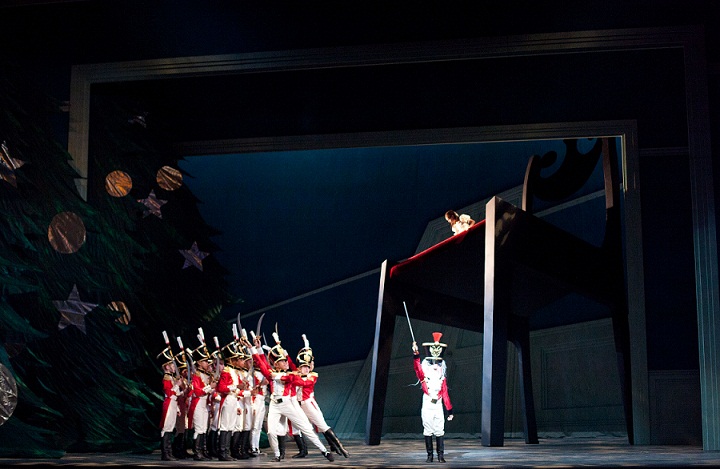
I forgot to mention in my last post how much I loved the Alice in Wonderland-like high chair for Clara to sit atop to watch the mice / nutcracker & soldier battle scene. Really brilliant sets. Richard Hudson is a genius.

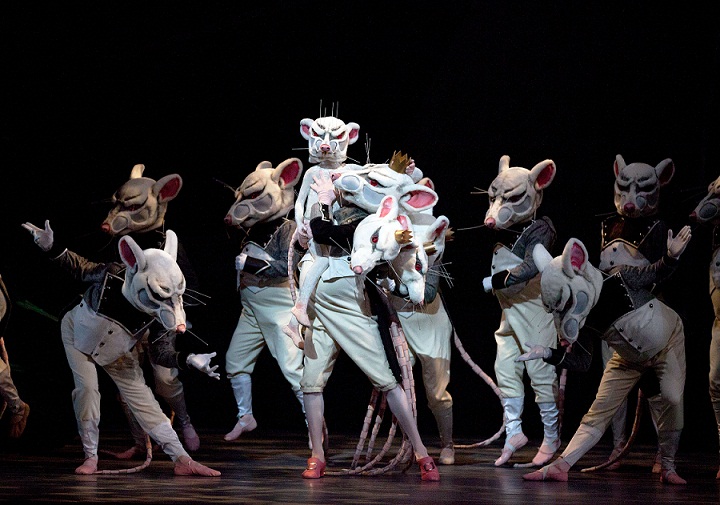
The battle scene and the many-headed mouse king.

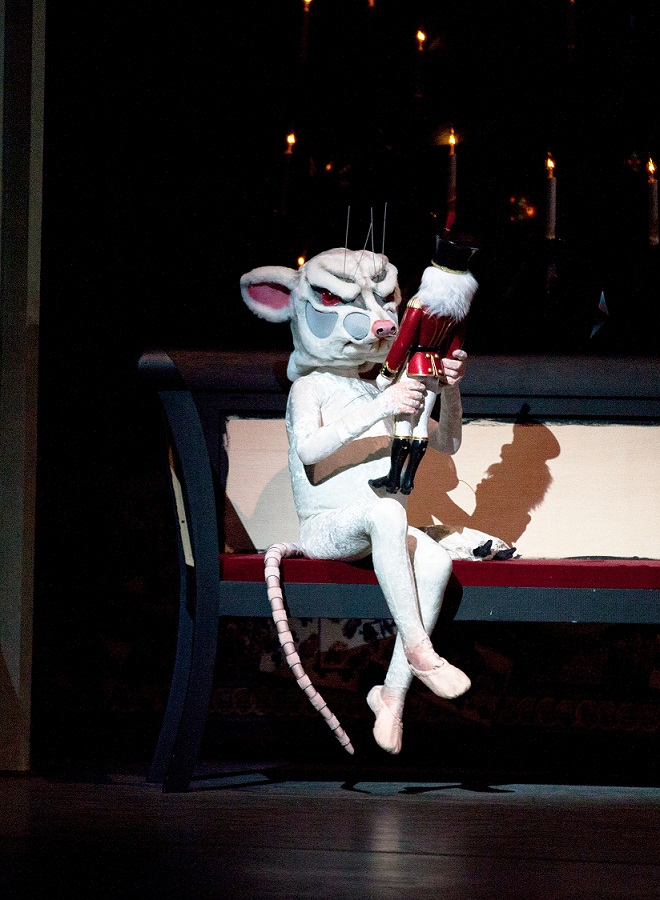
The mischievous little mouse (Justin Souriau-Levine) holds the nutcracker doll.


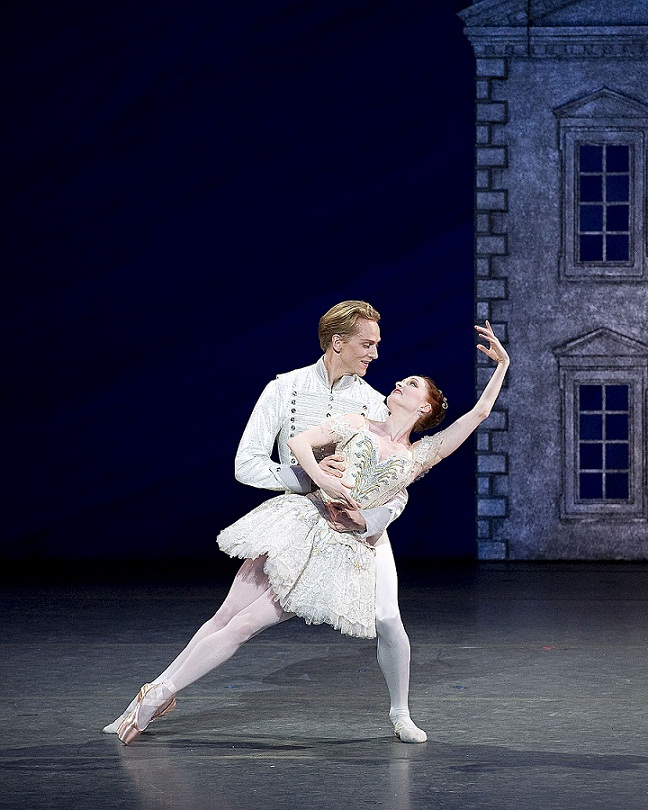
David Hallberg and Gillian Murphy as the Nutcracker Prince and grown-up Clara. I forgot to mention that they do get married in this version.

David and Gillian in the final pas de deux.

Top four photos by  Rosalie O’Connor; bottom two by Gene Schiavone, courtesy of ABT.

American Ballet Theater’s Original New Nutcracker


More photos coming soon. This one (of Gillian Murphy and Catherine Hurlin as the two versions of Clara) is taken from culture.wnyc.org.

Last night was the official opening of ABT’s much awaited new Ratmansky-choreographed Nutcracker at BAM. I loved almost every single second of it. I’ve only seen about six different versions of this ballet, but this one to me seems most original. It’s very entertaining, very humorous at points, and can somehow maintain the attentions of small children while being clever and witty – and beautiful – for adults. It’s very theatrical and it’s not as “dancy” as the one I just saw from the Bolshoi (Grigorovich’s version)- there’s more non-balletic jumping and playing around in Act I at the party, but there’s plenty of beautifully choreographed classical ballet during the grown Clara and Nutcracker Prince pas de deux and the ensemble snow scene and waltz of the flowers.

It opens with the cooks and maids in the kitchen preparing Christmas dinner. They’re going about their merry preparations when suddenly their space is invaded by mice. The mice completely take over, chase out the cooks, jump up on the tables and grab for the hanging meats. Adorable and hilarious. There’s one very cutely mischievous little mouse who appears throughout.

Then the party scene happens and Drosselmeyer (a non-dance role here) presents the children with two sets of life-sized dolls. The dancing was very good, but there were no sharp, stunted staccato movements as in the Bolshoi’s, so the dancers didn’t look like real dolls to me. I loved the costumes for Harlequin and Columbine though. They looked the most commedia dell’arte that I’ve seen. All costumes were brilliant – one of the most excellent things about ABT’s production. They, and the equally brilliant sets, were made by Richard Hudson, of Lion King fame.

When the dolls are ordered to return to their boxes, the children do a group dance that looks more like fitful stomping than anything balletic. But it’s still musical and evocative and cute, and it got a lot of laughs. The nutcracker that Drosselmeyer then gives Clara (danced brilliantly by Catherine Hurlin) is half-doll, half-human. He’s danced by a boy (Tyler Maloney) but he has a full nutcracker head, so he can’t do as much as the Bolshoi’s human nutcracker doll – his movements are much more limited. Once Clara’s dream begins, the boy removes his doll head before escorting her off to the Kingdom of the Sweets. I have to say, I really liked the boy who danced Clara’s bratty brother, Fritz – Kai Monroe. He was very entertaining, did a good job with both the acting and the dancing (high jumps!), and I think he will be one to watch for.

The Battle scene between the mice and the nutcracker and his soldiers was good, and, again, the costume for the mouse king (Thomas Forster) was fantabulous. I couldn’t even count the heads he had there were so many. I think of all battle scenes, I like Balanchine’s the best. I love how a mouse will scurry ominously across the floor right in time with a flute chord. Then the mice begin to gather and organize right in time with the flute ensemble so that it seems like the mice are talking. And Balanchine’s battle scene seems the most theatrical. Balanchine’s growing tree is also magnificent. Here, the tree only grows a bit, but soon they multiply and trees begin to eat up the wings, which was also spectacular.

The snow scene was really beautiful and this is where we first meet the grown-up Clara and her nutcracker prince (last night they were Gillian Murphy and David Hallberg, but there are many casts – see James Wolcott’s review of a preview starring Veronika Part and Marcelo Gomes here). Their first pas de deux is a beautiful waltz, and it’s made very clear that this is Clara’s grown-up vision of herself and her prince. The child Clara and Nutcracker boy waltz alongside Gillian and David until the classical ballet steps takes over, and the children stop dancing and gaze longingly at their grown-up selves as they finish the pas de deux. There’s a really beautiful Viennese waltz-type of lift where he spins around with her perched on his shoulders.

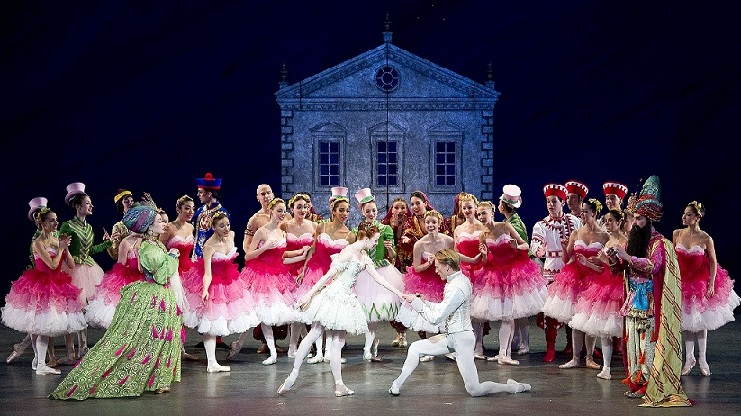
The Kingdom of the Sweets is really different from other versions. The “Sugar Plum Fairy” or “Nanny” as she is alternately called here, is not a dance role, but more of an escort through this kind of tour of It’s a Small World. She dons an absolutely gorgeous ancient Indian costume, as does her male companion. The dancer representatives from various countries are not dolls; they are real, but most of the dances are very different. The Arabians, for example, are danced by one man (last night, Sascha Radetsky) and four women, and the women are all cutely chasing the one very wickedly flirtatious man. It reminded me a bit of Kevin McKenzie’s von Rothbart deviously flirting with all the court women at the beginning of the Black Swan pas de deux. At the end of this dance, though, the tables are turned and the women come into their own and no longer need him. Now of course, he’s not very happy about that. It’s great fun and I loved this dance the best.

The Russians (Mikhail Ilyin, Craig Salstein and Arron Scott) were more folksy than bravura ballet, which was fine, because they later did a circle of barrel turns as their part of the final ensemble dance.

And we see Mother Ginger again (or who, as a child, I called The Fat Lady with the big skirt). I haven’t seen her since Balanchine! And there’s an added element of hilarity here involving the mischievous little mouse from the kitchen!

The only dance I didn’t really care for was the Chinese. As I’d expected, these roles were danced by Daniil Simkin and Sarah Lane. But Ratmansky didn’t really use them for what they are known for and the dance is very tame compared to this dance in the other Nut versions. I really wanted to see Daniil go flying around the stage in those crazy million times-overrotated turning leaps that he’s known for. There weren’t even any high jumps. It’s just that I look to the Russian and Chinese dances for the bravura parts and it’s okay if they’re lacking in one dance, but not both! The Chinese weren’t as goofily portrayed though as in other versions, so I appreciated that.

And I loved the waltz of the flowers. Included here are some very charming bees, but they’re not used in a slapstick way at all, which I thought they would be when I initially saw them. They dance is very classical and there’s a beautiful part where the four male bees toss the red and pink-clad ballerinas into each others’ arms in a circular rotation. That received a lot of audience applause.

And then is the ending pas de deux again between Gillian and David. I’d written before, when I saw an excerpt at the Guggenheim, that it looked more modern lyrical than classical, but last night it looked very classical to me. Ratmansky used my favorite lift from the Grigorovich Bolshoi version where the prince lifts and holds Clara up by one lower leg and carries her all around stage like that. The solo variations were nice. David didn’t seem to have the height he normally does on his jetes (I was told later at dinner though, by a dancer – not from ABT – that that choreography was crazy hard) but he made up for it in a series of spins. I know in ballet they’re called turns, but he was going so fast they looked more like ice-skating spins to me!

The only thing I found bothersome was the acoustics in the BAM opera house. Maybe I’ve just never heard live music played there but it just seemed like the orchestra was playing so softly. The sounds of the toe shoe-clad feet and the sounds of children coughing dominated.

Oh, one final thing: when David Koch, who financed a good part of the production, gave his opening speech, he accidentally called Kevin McKenzie “Peter.” Got a lot of ooooohs from the audience. I couldn’t hear through the ooooohs what he said after that – I assume it was an apology – but whatever it was it elicited even more ooooooohs. Funny.

Overall it’s a brilliant new ballet, a very original new production. Definitely get out to BAM if you can! Go here for the rest of the schedule.