The Bolshoi’s Nutcracker

So of course I went yesterday to see the Bolshoi’s Nutcracker, live-streamed into movie theaters all over the world, though, judging by the opening remarks made by announcers and intermission interviews, I think most of the audience was in France. Anyway, there was a pretty good turn-out at the Big Cinema in Manhattan – bigger than turn-outs for the two recorded Emerging Pictures ballet films I saw earlier (the Royal Ballet’s Nutcracker and the Bolshoi’s Flames of Paris). Still, the theater wasn’t packed, as it should have been.

Anyway, this was the best Nutcracker I’ve seen so far. I really loved it. I don’t think anyone puts on a show, makes ballet into theater, quite like the Bolshoi. And their dancers have got to be among the most talented in the world. The things they can do… I think every single woman had a point like Veronika Part and every man like David Hallberg.

This production, by Yuri Grigorovich, had no Sugar Plum Fairy, but instead the grand pas de deux was danced by Marie (so-called here instead of Clara), and her nutcracker, turned into a prince in her dream. I like it so much better this way than having a Sugar Plum Fairy. It just makes more sense in the story to have the young girl imagining herself as a grown-up princess. It makes that final pas de deux so much sweeter. And here, they actually get married, Marie and her prince.


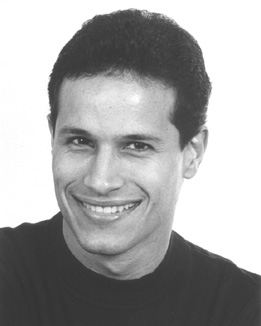
The same ballerina – the exquisite Nina Kaptsova (who I remembered immediately from her role in Flames of Paris as the delicate and sympathetic Marquis’s daughter; photo above from dance.net) – danced both the young and grown-up princess versions of Marie and she was surprisingly believable as both. You’d have to have a small dancer with a very youthful physique to be able to dance both parts. (San Francisco Ballet has grown-up Clara dancing the final pdd too, but two different dancers dance the young and older Clara). Kaptsova’s prince was Artem Ovcharenko, who was also very good though he didn’t stand out quite as much as she. For ABT fans, he reminded me a lot of Maxim Beloserkovsky.

What I really, really loved about this Grigorovich production, though, was all of the dancing. It begins with the guests en route to the party, and they dance across the stage. There are really no non-dance moments as there are in most Nutcrackers I’ve seen, where you have the party with children scurrying about and the grown-ups chasing after them and chatting with each other, and Clara and her brother fighting over the little nutcracker, who is actually a doll. Here, the children aren’t really children but dancers in the company (one reason why there’s so much more dancing), and, magnificently, the “toys” are all dancers as well! I don’t think I’ve ever seen a real dancer play the little nutcracker doll. And s/he (not sure which gender, as unfortunately the name isn’t listed in the program) was brilliant  – one of the best parts of the first Act. A shame there’s no name – unless it’s Anna Proskurnina, who’s listed as Marie’s brother? I’ll have to look it up.

The other two toys in the first Act – Harlequin and Columbine – were danced brilliantly as well, by Vyacheslav Lopatin and Anna Tikhomirova. Those dancers were the most doll-like dolls – with their stunted, sharp staccato movements – that I’ve ever seen.

After the snow scene, Marie and her Nutcracker (now, in his human version, danced by Ovcharenko) didn’t really go to a Land of Sweets but more like a land of toys, as male / female pairs of dolls from various parts of the world entertain them. I went to the performance with my a Chinese friend and of course I was really embarrassed by the Chinese dolls. He thought they were funny though, and we both agreed they were danced very well, by Svetlana Pavlova and Denis Medvedev. I can really see Daniil Simkin dancing this role in ABT’s production, if Ratmansky does it the same way. ( I know Simkin will also have a turn as the Nutcracker Prince / Cavalier at ABT). I also hope Ratmansky doesn’t resort to stereotypes in creating these roles, as virtually every other choreographer has.

As the Indian dolls, Victoria Osipova (relation to Natalia?) and Andrei Bolotin had a bit of a slip and she fell, but I didn’t think it was that big of a deal. She got up immediately and there was no sign of injury. This is usually the dance most of us in the US know as “coffee” or the Arabian part, but here the costumes are very different – more classical, no bare midriff and tiny top – and the dancing more conservative.

I loved the grand pas de deux. It was both sweet and innocent (like you’d expect of a young girl’s dream of her older self being swept off her feet by a handsome prince), and stunning in its athleticism. Some of those lifts are the most breathtaking I’ve ever seen. At one point, he held her up by her calf and she’s upright, and he carried her all over the stage that way. There are many overhead lifts where he’s holding only her waist, with her legs in the air, feet delicately crossed, and she looks down at him, crossing her hands beatifically. And at the end of the wedding, he carries her off in a cradle lift. So sweet. The solo variations for each were equally breathtaking. Kaptsova had a series of super-fast chaine turns but with all kinds of additional footwork thrown in. Watching her dance, at points I couldn’t believe my eyes.

Oh and also Drosselmeyer was much more of a dance part than most other Drosselmeyers I’ve seen. He was danced very well by Denis Savin.

Overall brilliant production. I feel spoiled now, like I’m never going to be able to see another Nutcracker again. But I will this Thursday – when Ratmansky’s opens at BAM!

OSIPOVA AND HALLBERG IN ROMEO AND JULIET

Here are a couple of photos of Natalia Osipova and David Hallberg at curtain call yesterday after her debut as Juliet, taken by Len Zernov from The Faster Times. I’m hoping to receive more photos soon and will post them asap! Read Marina Harss’s review of Osipova (she compares Osipova with Paloma Herrera) here.

THE DUELING JULIETS: NATALIA OSIPOVA VERSUS DIANA VISHNEVA


So Saturday was another double feature for me, as for many ABT fans. And it was a fun double-header with the Russian women – the Bolshoi versus the Kirov, if you will – kind of going at each other 🙂  Natalia Osipova (top photo) made her debut as Juliet, opposite David Hallberg’s Romeo during the matinee, and in the evening, Diana Vishneva and Marcelo Gomes took the leads.

I can’t say I liked one over the other, though they were very very different. It was Osipova’s debut and Vishneva has performed it many times so the evening Juliet was a bit more sophisticated. But Osipova will grow into it and eventually make it her own. I think Osipova’s Juliet was much more girlish, cuter, particularly at the beginning, than I’ve seen her danced before. She practically ran from Paris when her parents first introduced them. Vishneva was girlish too but not as much; she knew it was time for her to be married and she was trying to be mature and ready herself.

Osipova tried hard to act the part well though, and I love that about her. She always does that. It’s not just about the dancing; she’s an actress too. And one huge thing I love about her is how well she works with David Hallberg.

Continue reading “THE DUELING JULIETS: NATALIA OSIPOVA VERSUS DIANA VISHNEVA”

LAST WEEK AT ABT: ROMEO AND JULIET


So, this is the last week of ABT’s Met season, and they are closing out with my favorite, Kenneth MacMillan’s Romeo and Juliet. My recommended casts are both performances on Saturday – Natalia Osipova is debuting as Juliet in the matinee, dancing opposite David Hallberg, and that evening is the lovely Diana Vishneva (who has really been blowing me away this season), with Marcelo Gomes as her Romeo. (Angel Corella was originally scheduled to be Vishneva’s Romeo but he is injured). Also, the Wednesday afternoon cast is good — Hee Seo, who is one of my current favorite Juliets, dances with Corey Stearns. Tonight is your only chance to see Herman Cornejo as Mercutio — he’s my favorite for that part. The leads are Marcelo and Juliet Kent. Go here for the full schedule.

Here is a recently-added YouTube of various clips of La Scala’s production of the same ballet, starring Corella and Alessandra Ferri (my favorite ballerina ever in that role).

Photo at top of David Hallberg as Romeo and Herman Cornejo as Mercutio, by Fabrizio Ferri.

WEEKEND VIEWING: JOSE MANUEL CARRENO


(Middle photo of Fancy Free – with Sasha Radetsky and Herman Cornejo – taken from Ballet.co; other photos from ABT website)

Jose Carreno is my dancer of the season this ABT season, mainly because I love him and am trying to see him in everything possible so in case, as people are surmising, he retires next year or the year after. I’m trying to get my fill. Not that you can ever really get your fill of a dancer like him. But it seems to be what everyone is doing — I’m hearing, “Oh, I’m trying to see Jose as much as I can!” everywhere around the Met right now.

This season, I’ve seen him in La Bayadere with Julie Kent, Sleeping Beauty with Alina Cojocaru, of course Don Quixote with Natalia Osipova (twice if you include the night honoring Alicia Alonso) and a host of mixed rep fare including Fancy Free — he’s by far my favorite cocky Latin sailor EVER, Tharp’s Brahms-Haydn Variations which would have been a great deal more boring without him, he was still a real standout among a cast full of huge principals the day I saw it, and what else have I seen him in? Seems like something else, but maybe it’s just that I’m looking forward to tomorrow night’s Manon pas de deux with Diana Vishneva.

If and when he retires I’m going to be a hysterical wreck. He’s 42 this year and dancing, in my eyes, as well as he ever has, so I don’t know why it even needs to be an issue at this point. But he’s said years ago that he planned to retire at 40, and it seems most ABT men stop dancing in their early 40s at the latest (Julio Bocca was only 39) so … whatever… He’s the most advanced artist at ABT, the most advanced artist I know of currently dancing; he’s a legend. And he’s the only dancer who’s ever brought me to tears (with his Romeo).

So, since this is a long weekend, here are some videos so you can enjoy him too:

Dancing with Irina Dvorovenko in Le Corsaire:

In Coppelia:

Diana and Acteon:

With Gillian Murphy in Don Quixote:

And rehearsing for a Kings of Dance performance with David Hallberg, Joaquin De Luz and Nikolai Tsiskaridze:

Happy 4th everyone!

SWALLOW ON CRYSTAL REVIEWS

Swallow has received another positive blog review 🙂

I was out at ABT last night (Sascha Radetsky and Hee Seo’s Thais Pas de Deux is, I think, the most beautiful thing I’ve seen all season. I’d seen them in rehearsal and it was well worth waiting for, and I enjoyed this cast of The Dream – David Hallberg as Oberon, Gillian Murphy as Titania and Herman Cornejo as Puck – much better than the first, and Maria Riccetto for the first time really caught my eye in both The Dream and Ashton’s Birthday Offering – she was really lovely).

Anyway, I was out late last night (actually was working all night on this, which was unbelievably hard to write, that case is so complicated). Am just now getting around to watching So You Think You Can Dance. I’ll post a review as soon as I’ve watched it. I hope it was good!

DAY OF SLEEPING BEAUTIES: ALINA COJOCARU AND NATALIA OSIPOVA


Alina Cojocaru and Jose Carreno in Sleeping Beauty, photo by Gene Schiavone. (My favorite pose in all of life – no hands fish dive 🙂 )


And Natalia Osipova and David Hallberg as Aurora and Prince Desire, photo by Rosalie O’Connor.

So, I spent another Saturday at Lincoln Center, watching back-to-back Sleeping Beauties. This is probably my least favorite ballet — neither the story nor the choreography really speaks to me – but I was curious to see Alina Cojocaru in the role (it’s supposed to be her best and she’s was guesting for only one day from the Royal Ballet in London), and now that I’m an official Natalia Osipova fanatic, I must see her in everything she’s in.

So, matinee was Cojocaru. I thought overall she was really lovely and did as much as she could with what to me is a bland role. She was fresh, girlish and inquisitive in the first part when she’s meeting all the cavaliers and before she pricks her finger, then is more beatific and ethereal in the vision scene (where Prince Desire, out hunting, envisions her and then is led by the Lilac Fairy to her bed where he’ll kiss and awaken her – I don’t know how many people know the ballet), and then is full of grown-up, sophisticated charm in the third part when she marries the prince. A lot of ballerinas don’t really distinguish between the various stages of the ballet – their Auroras are the same throughout, so I liked that Cojocaru did this.

I just have to say, I’m sorry but for the first part of the Rose Adagio (where four cavaliers present her with roses, at the beginning) I couldn’t stop focusing on her feet.

Continue reading “DAY OF SLEEPING BEAUTIES: ALINA COJOCARU AND NATALIA OSIPOVA”

ALL DAY AT ABT: ALL AMERICAN AND ALL ASHTON PROGRAMS

Last Saturday I had my first crazy ABT day where I spent the whole day at Lincoln Center, seeing both matinee and evening performances. I’ll do the same tomorrow with two Sleeping Beauties – can’t miss Alina Cojocaru (who I’ve never seen before) guesting from the Royal Ballet in the lead, and then in the evening the spectacular Natalia Osipova.

Anyway, last Saturday the matinee was their All-American program; the evening was the All-Ashton. The All-American opened with Twyla Tharp’s Brahms-Hayden Variations, which I’m sorry to say is the first Tharp that’s bored me. I just couldn’t connect to it. It had none of her trademark thrilling throws and lifts and clever partnering or dramatic, actable parts, and none of her enlightening contrasts between ballet and other forms of dance. Not that I saw anyway. I think the excerpt the company performed during the opening night gala was the only part I liked. There were good dancers – Marcelo Gomes, Stella Abrera, Herman Cornejo – but they didn’t seem to have that much to work with. It was just kind of lyrical gaiety. Like Mark Morris.


Then was Paul Taylor’s Company B, which is always fun – especially when Craig Salstein dances the hotly dorky guy in “Oh Johnny Oh” and Herman Cornejo the flashy “Boogie Woogie Bugle Boy,” but somehow it lost some of its magic on the large Met stage. I don’t know – I think it plays better at City Center – you somehow miss the silhouettes in the back at the Met, or you don’t connect them to what’s happening center stage as well.


And last was my favorite of the day, Robbins’ Fancy Free, this time starring Sascha Radetsky (image above, from here) as the cocky, sexy Latin sailor, Carlos Lopez as the dreamier one, and Daniil Simkin as the little acrobatic one. The two main women were Maria Riccetto as the girl in yellow whom the guys originally approach, and then Isabella Boylston as the girl in pink who momentarily gets interested in hot cocky Latin guy. Well, Sascha Radetsky completely took my breath away here. Before he had his momentary hiatus in with Netherlands Ballet, I’d always thought he was cute and a very solid, precise dancer, but he couldn’t act. I think he must have taken acting lessons in the Netherlands because he’s just so much better now. I really believe him in each role I’ve seen him in. And he really inhabited this sailor. He was really so compelling to watch; I couldn’t even focus on Daniil and his crazy sky-high jumps with Radetsky on the same stage.

Hehe, but one thing that really stood out for me was Isabella Boylston’s back-leading! All throughout ballroom training we were yelled at ad nauseam  — not just me but all the women — for constantly back-leading. And that’s because grown women generally pick up dance steps a lot faster than grown men (not necessarily true for girls versus boys but definitely true for men vs women for some reason). Anyway, it’s only now I really know why. It looks horrible. I know this is ballet with choreographed steps and not ballroom, but their characters are doing social dance so it really had to look like he was leading her in the steps, not like she was anticipating what he’d so and then turn herself or make the move before he led her to do it. It ended up looking like she was in control, and he’s supposed to be seducing her here. I’m sure they’ll get it with more practice, it just looked obviously wrong and out of character. But maybe that’s just my ballroom training talking because they definitely got the most applause.


The Ashton program opened with Birthday Offering (image above from Dance View Times), which ended up being my favorite piece of the night. Absolutely gorgeous costumes (by Andre Levasseur) and what lovely variations with fast, fancy, very original footwork for the women. Stella Abrera, Simone Messmer, and Gemma Bond in particular stood out to me. Hee Seo (my favorite Juliet) danced as well – not in love with the choreography for her variation as much but she has the most beautiful Alessandra Ferri feet. She and Veronika Part both!

Then came the Thais Pas de Deux, which was performed by Jared Matthews and Diana Vishneva. I can’t wait to see Hee Seo and Sascha Radetsky perform this at the end of the month. I saw them in rehearsal and they really took my breath away. They’re so sweet together, and they really bring out the beauty of the choreography in a way that Diana and Jared as a partnership just didn’t, in my mind. Diana and her melodramatic curtain calls really crack me up. At first they annoyed me but I’m beginning to accept that they’re part of the performance for her and they’re just her. Who knows, maybe someday I’ll find it endearing.

But as far as her dancing, she’s hit or miss with me. I haven’t gotten around to writing about it yet, but I absolutely loved her in Lady of the Camellias. She brought so much more to the role than Julie Kent had the day before and she really brought me into the drama of it all – she and Veronika Part both (who danced the Manon role). And her dancing was gorgeous. She and Marcelo were excellent in that. A performance to see again and again (if ABT would only make a DVD of it…)

Then was The Awakening Pas de Deux from Ashton’s Sleeping Beauty, danced by Veronika Part and David Hallberg. It’s funny but choreography can look so completely different on different bodies and it looked like a wholly different piece than when Paloma Herrera and Cory Stearns danced it on opening night.

Finally, was The Dream, Ashton’s version of Midsummer Night’s Dream. Honestly, I was getting really tired by this point and I’ll have to see it again. I did really like Cory Stearns as Oberon. He is another dancer who’s a hit or miss with me but I found his Oberon was endearing while still being rather demanding with Titania up front. He did a good job, and he dancing was beautiful. Alexei Agoudine was a lot of fun as Bottom (who’s on pointe here, unlike in the Balanchine version and has a lot more to do), and Daniil Simkin was Puck. I enjoyed his Puck but found myself unable to get Daniel Ulbrich’s Puck out of my mind. I’ve been told I have to see Herman Cornejo in this role. And so I hope to before the season ends.

In between performances I had ice cream in the park behind Lincoln Center cinemas, where I saw Blaine Hoven and Marcelo, and then I went and had a glass of wine in the outside patio area of the newish Alice Tully Hall cafe. It’s nice out there when it’s warm, which it was for part of the time. So far we seem to be having another chilly summer. Tomorrow I have two friends who, happily, are as crazy as I am, so I will have people to hang with instead of just my book 🙂

ABT’S LADY OF THE CAMELLIAS NOT VULGAR!


Photo by Gene Schiavone, of Roberto Bolle and Julie Kent in Lady of the Camellias, taken from ABT website.

I was so busy last week carting pounds and pounds of books back and forth from the Javits Center – and killing my back and shoulders in the process, that I haven’t had time yet to figure out how to reinstall my Disqus system, which means you still can’t comment here, unfortunately. Sorry! I was going to wait to write about ABT’s Lady of the Camellias (and their other ballets I’ve seen) until I had the comments system up again, and until I’ve seen the second Lady cast, but I just have a few things to say now, mainly prompted by the critics, as usual.

This ballet, by John Neumeier, the artistic director of the Hamburg Ballet, is based on – and closely follows – the 1848 novel by Alexandre Dumas, Fils, which in turn is based on the tragic true story of a beautiful and rather famous Parisian courtesan, Marguerite Gautier, who falls in love with a young rich Frenchman, Armand Duval. The story is told in flashback and through various viewpoints and utilizes a play within a play to create theme (or a ballet within a ballet — in this case Manon, which tells the same doomed story of a prostitute and her lover), but this complicated structure doesn’t seem to confuse since the basic story is pretty clear. Though she initially rejects him when they meet at a performance of Manon, Marguerite eventually falls for Armand, and is torn between her role in society and her love for him. Armand is by turns angry, jealous, smitten, in love, and finally devastated when Marguerite terminates her relationship with him, due to pressures from the powerful Duke and Armand’s upright father, then dies of tuberculosis. Neumeier, an American who, like William Forsythe, has for most of his career worked in Germany, made the ballet in 1978, but this is the first time ABT has performed it. The novel has previous incarnations in the opera La Traviata and the Greta Garbo movie Camille.

I saw not Tuesday’s opening night but Thursday’s performance, by the same cast as opening night: Roberto Bolle as Armand, Julie Kent as Marguerite, and Gillian Murphy and David Hallberg as the “ballet within the ballet” dancers from Manon, Manon and Des Grieux. My first thoughts are: I loved Neumeier’s Death in Venice (based on the Mann novel) and I loved this as well. He really knows how to make a theatrical ballet, how to grab you and make you feel like you’re in these characters’ story. The settings are extravagant and specific, evocative of the 19th Century, the costumes are plush, and good use is made of the front edges of the stage, where the dancers come to reflect on the onstage action or to carry on with their own drama outside of the main action. The music is all Chopin, both orchestral and piano, and often the pianist is onstage; at times he actually becomes a character in the drama, interacting with the others, making music while they dance, and whom the characters may tease, or stop from playing to create a commotion. There were so many things to watch — the characters on the front side of the stage, the ensemble dancing in the middle, the pianist. It created a world. And the ballet within the ballet was done very well too: a red curtain masking the back half of the stage parted to reveal David and Gillian in heavy makeup and 18th Century garb, and they danced a Manon pas de deux as the others reacted — Armand falling for the beautiful Marguerite as Marguerite began to identify with Gillian’s Manon.

And then the beautiful partnering between Marguerite and Armand becomes front and center whenever it happens. Many critics are finding the choreography vulgar and crass but I didn’t. I thought the many sweeping lifts were beautiful and evocative of that world – this isn’t Romeo and Juliet, it’s the story of a courtesan and her very passionate lover, so it makes sense for Armand to lift Marguerite high above his head in adulation one moment then bring her down and place her on the floor the next. At times it reminded me of Kenneth MacMillan (both his versions of Romeo and Juliet and Manon) without copying him; the lifts were original. At one point, Armand holds his arms out in a T shape and Marguerite wraps her arms around his from behind. It looks like she’s on a cross. Or at times he’ll pick her up by holding onto her lower arms, which she’ll hold down. It looks like she’s a prisoner and can’t move – which she is in a way. And then there are lifts where she’s lying on her side, like he’s glorifying her.

Also, some of the choreography reminded me of Tudor, such as when Marguerite is begging for acceptance from Armand’s father and she circles around him repeatedly on pointe, or where a character will show hesitation and conflicted feelings with the almost Swan Lake-like rapid fluttering of a foot or by going in one direction, then with intentionally awkward rapidity, stopping and going in the opposite.

And I loved some of the floor choreography. At one point, Marguerite and Armand are sitting opposite each other, back to back, legs extended out, and they lean back and lovingly wrap their necks around each other’s side to side. So sweet.

I don’t know, look at some of these NYTimes slides and see if you think “vulgar” or original, evocative. Critics are also saying the choreography is severely lacking in musicality. To be honest, I didn’t pay much attention to that. I thought Chopin was evocative of that era, that world, as was the choreography, but I didn’t pay attention to the ways that the movement complemented the music. In general I don’t think a certain movement has to hit a certain beat; sometimes movement can play with a rhythm, question it, or work against it for effect. I don’t even think movement needs music. But I’ll pay attention to the music and movement when I see the ballet again next week.

I’ll also write more about the dancers’ interpretations after I’ve seen the second cast.