NEW YORK CITY BALLET OPENING NIGHT GALA: NAMOUNA AND WHY AM I NOT WHERE YOU ARE


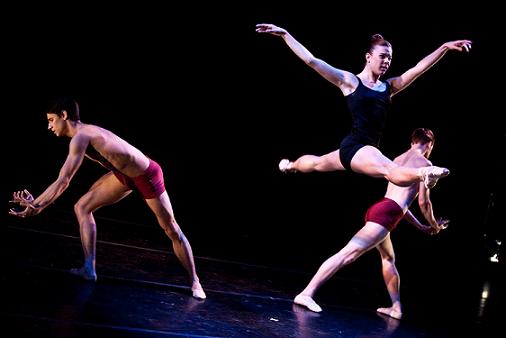
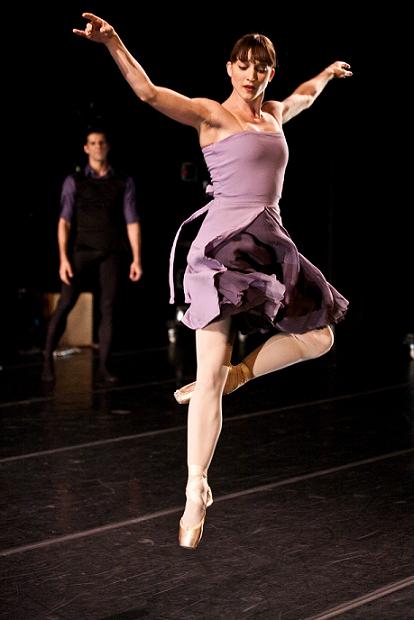
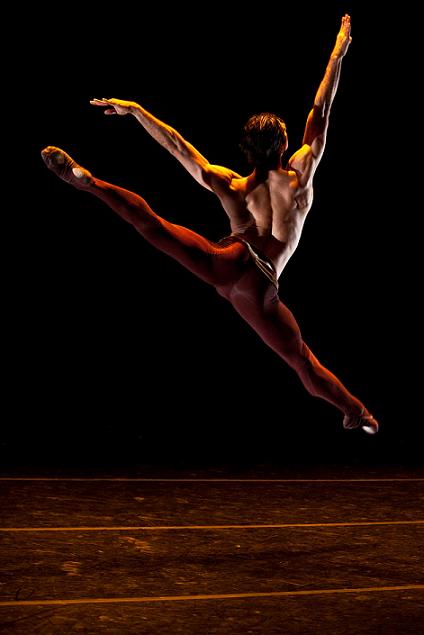
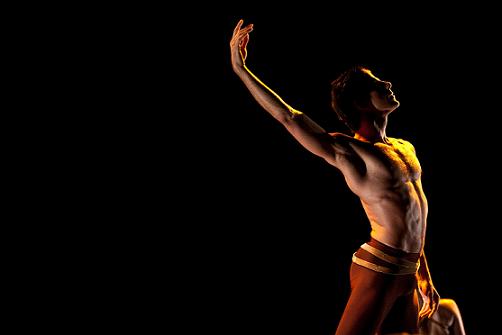
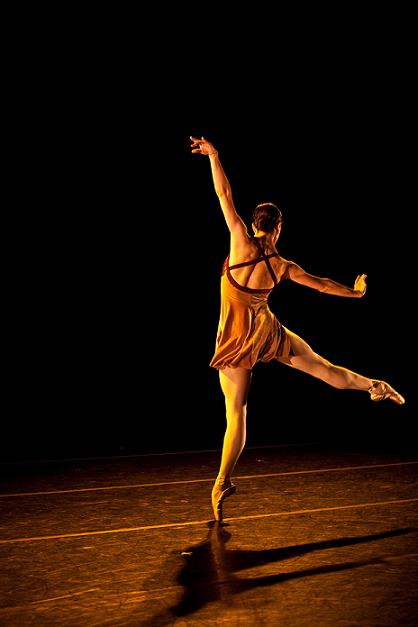
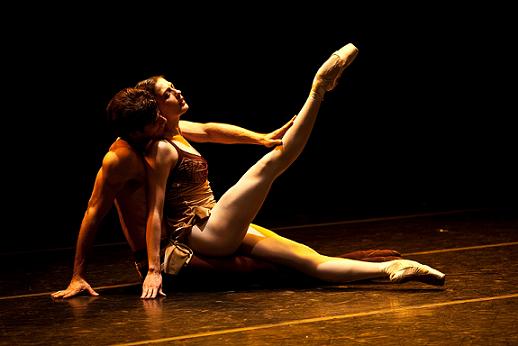
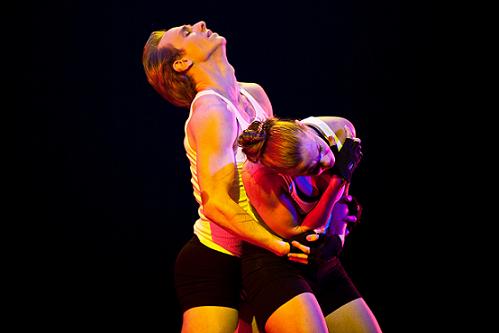
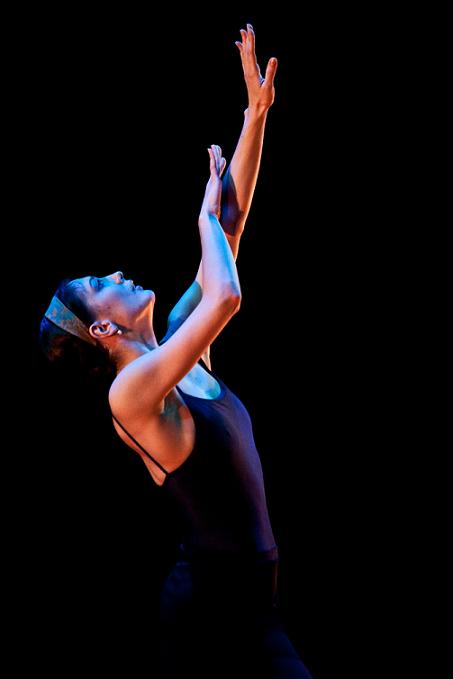
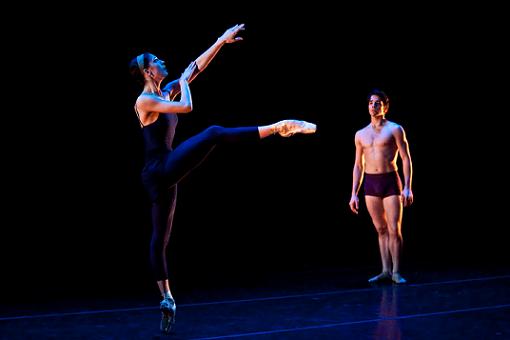
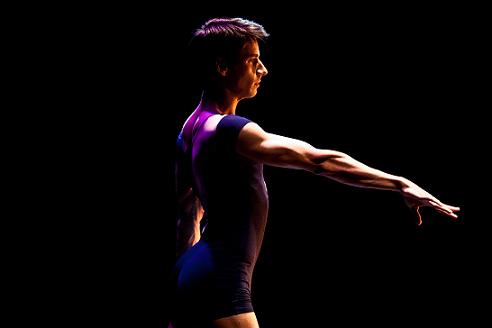
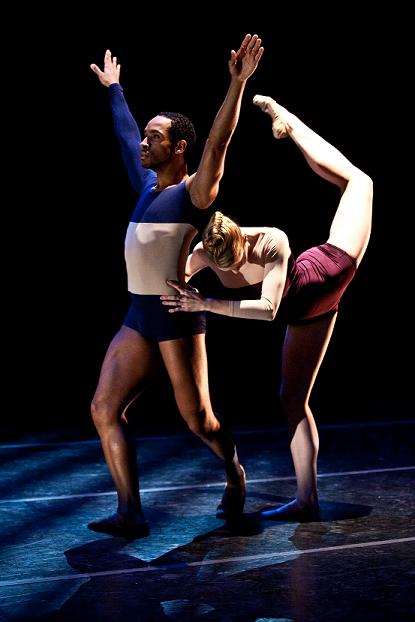
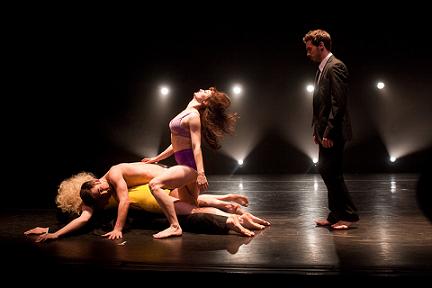
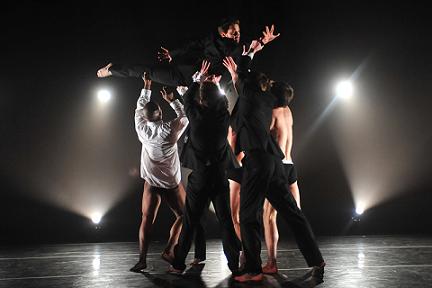
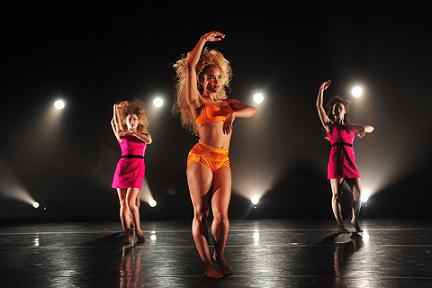
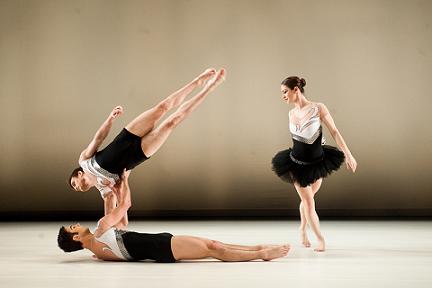
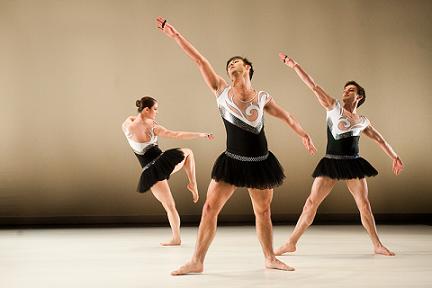
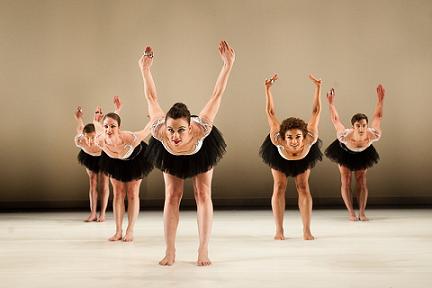
All photos by Paul Kolnik. Top two are of Benjamin Millepied’s new Why am I not where you are, and bottom two are from Alexei Ratmansky’s new Namouna: A Grand Divertissement.


Sorry I’m late with this post — I had serious internet problems over the weekend and they’d better not continue today or I may kill someone from Time Warner. Anyway, Thursday night was the opening night of New York City Ballet’s Spring / Summer season, and there were two world premieres: first Millepied’s Why am I not where you are, followed by Ratmansky’s Namouna, A Grand Divertissement.  I thought both were good and entertaining, if nothing earth shattering. And maybe it’s just that I’m getting to the point where I’ve seen so much ballet but it seems that everything is a combination of several other things, which isn’t bad. Millepied’s kept me more engrossed, only because Ratmansky’s was just too long.

Millepied’s reminded me by turns of Balanchine’s La Valse (which everyone seems to have thought), Robbins’s West Side Story, and even Balanchine’s version of Swan Lake, particularly where Siegfried frantically tries to find Odette through the swarm of swans who run around her in circles, frighteningly, creating a kind of hurricane.  It seemed there were also parts of the White Swan pas de deux between Sara Mearns (who danced gorgeously, as always), and her “love interest” Amar Ramasar. There even seemed thematically to be elements of Angelin Preljocaj.

The main character is Sean Suozzi who, wearing all white, seems to be a lost in time, or a human searching for other earthlings and who runs into this lot of ethereal creatures all dressed in colorful Romantic tutus. But instead of being beautifully beguilingly ethereal, they are more frightening, like aliens. There’s a very modern set by architect Santiago Calatrava (who collaborated with many of the choreographers who are premiering ballets this season and to whom the season is devoted — he was toasted by Peter Martins at the beginning of the evening), that to me gave the sense that someone — either Suozzi or the others — were from another place. Music, by Thierry Escaich, is unsettling as well. Suozzi falls for Kathryn Morgan, but in their initial pas de deux Morgan can’t see him. She seems to be blind to him. But he tries. The group of men do a kind of intense West Side Story dance, and eventually, Suozzi manages successfully to fit in, to become one of them, as is made clear by Ramasar’s giving him several articles of colorful clothing (a la La Valse) to don. Afterward, he dances again with Morgan but now it is he who cannot see her. Soon, the others swarm around her, violently plucking pieces of her tutu off. Eventually she’s the one wearing nothing but white undergarments, and she’s left devastated, alone and alienated. It was intense and enthralling and I definitely want to see it again, perhaps with Janie Taylor in the female lead (she withdrew due to injury).

Ratmansky’s reminded me of a cross between Branislava Nijinksa’s Les Biches and his own Concerto DSCH with elements of Balanchine’s Midsummer Night’s Dream thrown in. It’s harder to describe than the Millepied because there wasn’t much of a through story, just abstract portions combined with smaller stories that didn’t seem to merge into a larger whole. It’s set to really lovely music by Eduoard Lalo, which in places sounded like Glass’s In the Upper Room. I can’t remember the whole thing but Robert Fairchild is this guy dressed in white sailor garb. At one point, he happens upon some women dressed in 1930s beachy-seeming clothes and wearing hair caps and kind of taunting him with their humorously sexy cigarette smoking. Jenifer Ringer did a fabulous job of playing the main cigarette-bearing “taunter.” She’d puff in his face and he’d look enraptured but confused. Later, a group of people run toward him, carrying a passed-out Ringer and one man bows at Fairchild, as if for forgiveness. The other women haughtily puff on at the front of the stage. Everyone laughed. This cigarette girl part was my favorite. Then, there were some bravura parts for Daniel Ulbricht, dressed in kind of Puck-ish Midsummer Night‘s garb and doing the same high jumping, running through the air leaps as Puck. If I can remember correctly he was accompanied by some cutely impish female elfs, in the form of Abi Stafford and Megan Fairchild. There are sections where a lot of women in long yellow dresses do various port de bras and rather humorous (to me anyway) jumps in place a la Concerto DSCH, and toward the end Wendy Whelan emerges and is this kind of bride for Fairchild. They do a pas de deux filled with lots of classical ballet lifts and then they get married and supposedly live happily ever after.

I liked the Ratmansky and would be happy to see it again if it weren’t so blasted long! It felt like it went on for about an hour and a half! Before seeing it, I recommend taking a walk at intermission to stretch your legs, and go to the bathroom!

REBECCA KELLY BALLET


Over the weekend I went to see my friend Taylor Gordon (dear Lord, I almost typed @taylorgordon — my writing brain is becoming Twitterfied) dance with the Rebecca Kelly Ballet in the Alvin Ailey theater. I’d never seen the Rebecca Kelly Ballet before — it’s been around since the late 70s — and I was very pleasantly surprised. Sometimes with very small ballet companies (modern companies too) you see dancers of varying ability, but here, all of the dancers were very skilled. Ms. Kelly’s movement language was original — a combination of ballet and modern with movement by turns lyrical and balletic and more angular and staccato.

There were three pieces on the program: Trouve Moi (making its NY premiere), The Travelers (from 2001), and Desire (NY premiere). Trouve Moi was a short sweet pas de deux performed by Raul Peinado and the very engaging and dramatic Therese Miyoshi Wendler (probably my favorite dancer in the troupe — besides Taylor of course!). The Travelers (pictured above), which has understandably received good reviews over the years and was probably my favorite on the program, was abstract but intense and suspenseful with dancers traveling around the stage in pairs, alone, and in ensemble, at times seemingly fleeing a crisis, sometimes coming together, forming various liaisons. I also liked Desire, evoking the many faces of desire, at times conveying emotional turbulence, at times becoming more mellow. Kelly uses not only classical music but contemporary as well, which goes along with her balletic / contemporary mix of movement. Her dances always seem intense and laden with meaning even if abstract — I mean when do you see barrel turns used to signify emotional turbulence rather than used simply as a stunning trick?!

BETTER THAN BEING GUILLOTINED: LAURA PAWEL DANCE COMPANY

Reviewed by Christopher Atamian, SLSG Experimental Dance Critic

Watching the delightfully down-to-earth Laura Pawel Dance Company is an intensely comforting experience, like sitting down to a meal with an old friend, or in this case, seven old friends as it were.  Better than being guillotined?  Most definitely!

A graduate of Sarah Lawrence at a time when the school produced a cadre of dance pioneers including Lucinda Childs and Meredith Monk, Pawel has been on the New York City dance scene since the late 1960’s, part of the post-Judson Church movement that was more interested in everyday movement and dialogue than virtuoso jumps or classical dance technique.  The company members are all well above forty today and a few have what can only be considered eccentric day jobs for a dancer: Emily Kistler, for one, is an operating room nurse…

Continue reading “BETTER THAN BEING GUILLOTINED: LAURA PAWEL DANCE COMPANY”

WHO'S ZOOMING WHOM?: ZVIDANCE AT DANCE THEATER WORKSHOP

Reviewed by Christopher Atamian, SLSG Experimental Dance Critic

I recently caught ZviDance’s charming if somewhat superficial “Zoom” at DTW.  I was particularly interested in seeing this performance as I had written a very positive preview of the company and its DTW run in the Jewish Daily Forward (www.forward.com/authors/christopher-atamian/). Israeli choreographer Zvi Gotheiner has been a presence on the New York scene for over twenty years now and he continues to develop interesting, intellectually engaging performances.

Overall, I wasn’t disappointed though I can’t say that the choreography presented anything revolutionary or distinctive.  It was all fun and jazzy and engaging—a light, perfectly enjoyable night of dance.  My colleague Gia Kourlas at The New York Times compared some of the dancing to the old PBS children’s series of the same title “Zoom” (remember they spoke ubbaduhbah language and wore fabulous striped tops à la Agnès B?)…Kourlas may have been slightly unfair in juxtaposing the two, but I see her point—through much of the performance, you felt as if you were  watching sketches for a deeper, more mature presentation.

As a meditation on technological change, the internet and cell phones, “Zoom” hints at many interesting directions: how does technology mediate the human touch and body?  What happens to our notions of intimacy and the way we perceive time in an age of supposedly instantaneous connectivity?

After a few introductory group pieces and solos, one of the Zvi dancers sat on stage with a laptop and communicated with the audience, whose members sent in text messages from their blackberries etc…The messages appeared on a large white screen on stage. Predictably—and unfortunately—they alternated between humor (“Do the kicky thing again” or “Can you do the worm?”), to sexual encomia (“You are hot!”) and repeated fart references by one audience member.  The performance then lost me a bit when audience members were invited on stage, LOL, OMG I just couldn’t follow.

Tal Yarden’s videos, which were also projected onscreen, were lovely eerie transformations of low-resolution images, also e-mailed by audience members.  The most affecting part of “Zoom” came at the very end of the performance—the dancers had already moved off stage and a series of new messages appeared onscreen: “Guess I missed you…” “Talk to you soon.” The real message, and one that I think warrants further investigation, is perhaps the growing alienation that technology has foisted on society.  Information isn’t synonymous with knowledge and it certainly doesn’t always translate into wisdom.  Perhaps in a future incarnation of “Zoom,” Gotheiner will give the latter some more thought.

AVI SCHER & DANCERS' FIRST FULL SEASON A SMASHING SUCCESS

Here are some photos of Avi Scher’s first full season at Alvin Ailey theater, sent to me by the amazing ABT dancer-turned-photographer Matt Murphy. Visit Matt’s blog, and his photographer website.

Savannah Lowery (from NYCB) who, for the first time, completely blew me away, flying over Ralph Ippolito (also from NYCB) and Eric Tamm (from ABT), in Touch.

Ashley Bouder (NYCB principal), who replaced Sara Mearns, who had a minor foot injury. Marcelo Gomes (ABT principal, of course!) in the background. This was my second favorite piece of the evening, Utopia. It was interesting because as much as I love Sara Mearns and was disappointed I wouldn’t be seeing her, I couldn’t imagine this role being formed on anyone other than Ashley. There was so much quick-footed, high-spirited allegro dancing and Ashley is the queen of allegro. She and Marcelo were perfect together. She replaced Sara last minute and I can’t believe how quickly she learned that dance because the choreography was, like all of Avi’s choreography, rather complex and original.

Marcelo in Mystery in the Wind, my favorite ballet of the evening. It was a neoclassical piece (Avi’s style ranges between neoclassical — like Balanchine — and contemporary), that reminded me a bit of Apollo, a bit of La Bayadere, with a main love story between Marcelo and Veronika Part, and three female dancers doing solo parts, and kind of acting as muses. In addition to Marcelo and Veronika I really loved watching Abi Stafford in this (I linked to her NYCB profile since I don’t have a picture of her for Saturday night). She had several solos, some of which were kind of sweetly folksy / flirtatiously tango-y, combined with these crazy fast balletic chaine spins across and around the perimeter of the stage. She did really well and she looked really beautiful. I brought my friend Alyssa with me, who doesn’t know much about ballet, and she said she could tell right away who all the big principals were (and she was correct in her guesses)– and Abi immediately caught her eye.

Marcelo again.

Veronika Part in that same piece. She was beautiful, it goes without saying. Every single part of her body makes such a perfect shape, my friend said, and she was so wholly into the character and the music (which is completely typical of Veronika!).

Marcelo and Veronika in Mystery again. I loved the central pas de deux – so sexy and passionate!

Another of my favorites: the “Our Love’s Defense” duet from Little Stories, with NYCB’s Christian Tworzyanski and, again, the kick-ass Savannah Lowery. Savannah has a very athletic body, she’s very muscular and toned, and she looked so good in these athletic costumes and in some of Avi’s more heavy-hitter choreography. (In this piece she and Christian have this fun, sexy wrestling match/ lovers’ quarrel.) I think more of the modern choreographers when they do work for NYCB should use her – Benjamin Millepied and Jorma Elo, etc. I think modern ballet suits her body and dance strengths more than Balanchine — I really felt like she came alive to me as an artist in Avi’s work like never before. And she’s a very good actor as well!

Veronika in Touch.

And with ABT’s Arron Scott in the same.

NYCB’s Ralph Ippolito in No Matter What. Ippolito is a corps member of NYCB and I’d never noticed him before, but he really stood out to me here. He’s very intent in everything he does, and he’s very good at using his body, his limbs, to express, to make meaningful, evocative shapes.

Ja’Malik and Victoria North in No Matter What.

The theater was completely packed on Saturday night, opening night, and I’m told it was the same at yesterday’s matinee, despite it being Easter. There’s one last performance of this short season tonight, at 8p.m. that I heard is pretty sold out as well. How excellent for this young choreographer!

Here are some of the many other reviews: Oberon’s Grove, the NY Times, Dance View Times.

KEIGWIN + COMPANY'S CAPTIVATING "RUNAWAY"

Here are some photos of Keigwin + Company’s recent season at the Joyce in Chelsea. Above is Larry Keigwin’s absolutely stunning Runaway, which I loved, and below is his Bird Watching, which had its premiere at the start of the season. All photos by Christopher Duggan.

My friend and I were blown away by Runaway. It began with a woman onstage wearing a 60s-style dress and a huge bouffant hairdo, checking herself in a mirror held by two male tecchies. The program had advertised that there was to be a “scene change” between the former piece and this one, and it was soon made clear this “scene change” was part of the performance. As stage guys ripped up the floor matting and the back wall drop and laid new ones, this woman primped and posed in the handheld mirror, while men came onstage dressed in briefs, and began climbing into their black suits.

At one point a half-dressed woman ran across the stage, followed by a half-dressed man, running the other way. It was funny; everyone cracked up.

Then, the lights went down, and as the high-energy music (Jonathan Melville Pratt’s Thirteen) began to pump, several men dressed in suits began to walk quickly  across stage. The woman with the bouffant hairdo began to dance, her body making sharp angular movements. Soon several woman dressed like her joined the men, walking back and forth across the stage.As the music grew faster, the walking became more urgent, at times turning into a run, a sprint even. Then they began walking into the audience, using the aisles like catwalks.

Soon, they were joined by men who were dressed only in black briefs and women in colored underwear and bras, their hairdos also ratted beehives. The stage was aflutter with people walking or running back and forth, some stopping to dance in the middle, mimicking the first woman’s sharp angular movement. Throughout the whole, everyone had these straight-ahead stares, like zombies. Their walks meant business but their stares were vacant. It was like runaways on a runway. Very cool and not a dull moment! My friend, an emerging choreographer, was so inspired!

James Wolcott, equally fascinated and calling Runaway “what Nine should have been”, wrote about the piece here, and Oberon here. And you can see part of the action in their promo video, which I embedded in my earlier post, here.

Bird Watching was interesting though it didn’t sustain my attention the way Runaway did. It was more lyrical, set to classical music (Hayden’s Symphony No. 6 in D Major). I liked but didn’t love it I think mainly because I couldn’t tell the extent to which it was kind of riffing on certain classical motifs and meant as a funny commentary on them, and the extent to which it was meant to be taken seriously and on its own. Everyone — men included — were dressed in white tops and black tutus, and at one point I could see some movement patterns very similar to Swan Lake‘s White Swan pdd — performed by the men. It wasn’t so funny, though, as it was pretty, which was perhaps the point: that anyone can do anything without it being some kind of statement. I feel like I need to see it again though, and concentrate harder!

Also on the program were Mattress Suite, which I really liked. It was comprised of six vignettes, all involving a mattress, each set to different music and danced by a different set of characters. The story was the progress of a relationship: woman (the brilliant Nicole Wolcott) dancing around in her wedding dress elated and excited but slightly apprehensive, man (Keigwin, who, as a dancer, is often very funny, always charming) in his tux looking excited and lustful but a bit worried, then they’re together on the mattress, then they fight and she lifts the mattress erecting it between them like a barrier, she leaves, he has a fling — with two guys — the mattress getting a bit cramped there toward the end, and then she returns and is alone, struggling with her aloneness on the mattress. It’s by turns humorous, cute, sad, bittersweet. What I love about Keigwin is that his choreography is evocative of human behavior without being obvious or unoriginal. His movement is evocative but original and clever, in other words. And there’s plenty of room for the dancers to act their own drama.

And opening was the high-energy Caffeinated, from 2007, set to Philip Glass’s percussive Akhnaten, which I’ve seen before and is always fun.

But Runaway really blew me away. If you ever get the chance to see it, or his Bolero, or his lamentation in honor of Martha Graham, or anything by him really, go! Their Joyce season was short and is now over, but they’re always around.

PAUL TAYLOR


Before Corella Ballet moved into City Center, Paul Taylor Dance Company had their month-long season there, in celebration this year of Paul Taylor’s 80th birthday. I didn’t go to as many performances as last year, but went to see the two new dances premiering this season: Also Playing (pictured above) – a sweetly funny tribute to Vaudeville, and Brief Encounters, by turns sensual, mysterious, unsettling, and funny, and danced all in black underwear with golden lighting by James Ingalls. I also saw Piazzolla Caldera, not a new piece but from 1997, but new to me. I loved it — very sexy Argentine tango but in places also humorous. This is typical Paul Taylor: humor mixed with sensual / sexy / musicality, athleticism, etc. I don’t have time to write a full review but here are some photos, all by Tom Caravaglia.

These next two are from Also Playing:


These are from Brief Encounters:


(above photo by Gloria Wright, taken from here)

And this one, again by Tom Caravaglia, of Piazzolla Caldera:


CORELLA BALLET OPENING NIGHT NYC


Photos top to bottom: Angel and Carmen Corella in Solea, Herman Cornejo and Adiarys Almeida in Sunny Duet, and Corella Ballet cast in Christopher Wheeldon’s DGV. All photos by Rosalie O’Connor.

Last night Corella Ballet Castilla Y Leon made their U.S. debut. It was one of the best evenings I’ve had at the ballet since ABT ended their Met season last July. Angel Corella (beloved ABT principal and founder of this company) is known of course for his bravura dancing, his ability to form a character on the stage even in the few storyless ballets ABT does, his passion, his charisma, his sweetness, his charm, but mostly of course his virtuosity. And even though he himself only danced in two pieces last night (with only a small duet in the Wheeldon), the whole evening had that same overall brilliance. It’s like he managed to find a company of dancers exactly like himself. I don’t know how he did that because I thought there was only one of him, but even the corps members seemed to have all of those qualities.

The night began with Angel’s own String Sextet, his first piece of choreography, set to Tchaikovsky’s String Sextet “Souvenir of Florence.” It was very allegro, very fast-paced, with lots of brilliant partnering — a ballerina would spin at lightning speed into her partner, they’d go into assisted pirouettes or a supported arabesque penchee (with the ballerina’s legs always in a perfect split), another would jump into her partner’s arms and he’d catch her in a variety of positions. Kazuko Omori and Yevgen Uzlenkov completely blew me away, as did all of the couples but those two in particular. It’s like, where did he find these people and how did I not know they existed?! Omori is a brilliant allegro dancer but she also had the qualities of an adagio ballerina, with lots of expression in her upper body. Then, in the third movement, Joseph Gatti blew everyone away with his bravura, Angel-esque solo replete with jetes and fouettes and crazy high tornado jumps. The crowd went wild for him, as expected. Both the duets and solos and the ensemble parts were equally captivating. Toward the end everyone did a fish dive in unison and it’s so sweet. It was like all the best parts of classical ballet — or at least my favorites 🙂

Next was Walpurgisnacht, by Leonid Lavrovsky, which reminded me of the Corsaire pas de trois between Ali the slave, Conrad the pirate, and ballerina. Again the beautifully expressive, lightning-footed Omori and high jumping Gatti starred, and the stunning Kirill Radev danced the part that reminded me of Conrad. He had this series of scissor jumps but the splits were forward-facing, straddle position, rather than long-wise, like usual. And then he’d do these multiple pirouettes with these seemingly impossible held-out endings. The crowd was nearly screaming with applause, which doesn’t often happen in New York.

Then was Sunny Duet, from 1973, by Vladimir Vasiliov and Natalia Kasatkina, danced by our Herman Cornejo and Adiarys Almeida. Everyone applauded for Herman when he took the stage 🙂 This ballet was sweetly romantic, like man in adoration of his woman, with Arabian / Bayaderesque styling. Herman really blew me away last night with his partnering. The pdd began with this extended overhead lift where he looked up at her for what seemed to be minutes, in the end making it into a single-handed lift. I’ve always thought he was a brilliant soloist but that he had some trouble in the partnering, but not last night! He was also very dramatic, and, at one point, where they go into their bravura solos, he played off of her, giving her this “oh yeah, well this is how I feel!” look before doing a bunch of crazy turns or jumps. The original, archived music, by Arno Babajanyan, was played on tape. There was a note in the program stating, “The company is committed to the revival of worthy pieces that have had an important influence on classical ballet. The piece will be performed as it was originally created by the legendary Russian choreographers Natalia Kasatkina and Vladimir Vasiliov. The artists will be performing to Arno Babajanian’s archival recording, as this specially commissioned score no longer exists.”

Next was Solea, choreographed by Flamenco dancer and choreographer Maria Pages, and performed by Angel and his sister Carmen. I was happy to see Carmen back onstage; I was sad when she left ABT. This was an absolutely beautiful combination of ballet and Flamenco, though I often see Paso Doble in what people call Flamenco, being a ballroom person — still not sure of the difference… For example, at one point, they would come at each other, she swirling her long skirt about, cape-like, he coming at her like a matador — that’s Paso — but instead of rushing toward each other, hips thrust forward, they’d do chaine spins — she on pointe, spinning right past each other, balletically. Then they’d approach each other again, she’d retreat quickly back with supercharged bourrees. I love it! I’ve always wanted to see a Paso Ballet, but most ballroom dancers don’t seem to know how to choreograph such a thing, even if they have extensive ballet background. Then, during the Flamenco taps (which you can hear in the recorded music), Angel would do his trademark lightning fast fouettes, or else entrechats, or just crazy fast footwork; and she’d do the same on pointe. Flamenco taps on pointe! And each of them had the perfect Flamenco styling. And there was a kind of back and forth “competition”, which I guess is called “Bulerias” in the world of Flamenco, which was kind of like a set of “variations” or solos in ballet, with him doing the trademark jetes around the perimeter of the stage and she responding with her own thing. And at the end, they came together and she stood behind him and he wrapped her arms around him. Sweet. Audience gave them a standing ovation.

Last was Christopher Wheeldon’s DGV: Danse a Grand Vitesse, which was I think the most intense, spellbinding Wheeldon ballet I’ve ever seen. It was premiered in 2006 by the Royal Ballet and was nominated for an Olivier Award. Set to music by Michael Nyman, which was commissioned by the French railway company TGV in 1993 to commemorate their opening of a new high-speed train line, there were several large pieces of twisted metal in the background — between which the dancers would weave in and out from time to time. The music had a very “locomotive” rhythm to it and the whole thing — both music and movement — had a kind of eerie feel to it. Movement was trademark Wheeldon — very modern, lots of angularity, sharp jagged lines, unique partnering. Women were often carried overhead and upside down with their legs in a split or sideways with their knees bent outward and toes together, creating an intentionally awkward shape. At times the music would stop completely while the dancing continued — creating some of the most intense moments. This is the first time the piece has been performed outside of the Royal, the program notes say, and, with its intensity, it was a perfect choice for this company.

So, the evening was a celebration of classical ballet, fusing classical ballet with traditional Spanish dance, and contemporary ballet, which seems to be what this company is about. Excellently done!

There’s one other piece on the program, Epimetheus, which will show Saturday afternoon. It’s by a young choreographer / dancer with the company, Russell Ducker. Will report back as soon as I’ve seen it!

JEWELS


Janie Taylor and Benjamin Millepied in “Rubies.” All photos are by Paul Kolnik.


Sterling Hyltin and Gonzalo Garcia in “Rubies.”


Jonathan Stafford and Sara Mearns in “Diamonds.”


Maria Kowroski and Charles Askegard and cast in “Diamonds.”


Abi Stafford and Jason Fowler in “Emeralds.”

So New York City Ballet ended its Winter season with Balanchine’s Jewels, his three-act abstract ballet in homage to three different styles of classical ballet: “Emeralds” set to Gabriel Faure in honor of the French style; “Rubies” set to Stravinsky in honor of the American jazzy / showgirl-y style; and “Diamonds” set to Romantic Tchaikovsky and in the imperial, celebratory Russian style.

“Diamonds” has long been my favorite part, but the more I see of the full-length ballet (“Rubies” is often performed apart from the rest, in mixed rep programs), the other two are growing on me, particularly “Emeralds” with its complex patterns, its subtlety and nuance. And of course I like “Rubies” because I think, through this part of the ballet, new audiences unfamiliar with Balanchine can best see how he created a certain kind of “Americanized” ballet for his adopted country.

There were several debuts in the various roles: Janie Taylor and Gonzalo Garcia in “Rubies,” and I think Sterling Hyltin in “Rubies” as well (it was my first time seeing her anyway). Janie was an absolute blast to watch. She doesn’t really have the proper hips for this heavily hip-jutting, hip-swaying role — she’s so tiny and waify — but she was putting everything she had into it, taking every single movement, every jump and stretch and supported penchee and pose as far as it could possibly go and you just couldn’t take your eyes off her. It was the best performance of that part that I’ve seen since Ashley Bouder debuted in it a couple years ago. What was also so stunning about Janie’s performance was her commitment to perfecting every little detail in making a certain shape — it reminded me of her absolutely captivating performance as the Novice in Robbins’ The Cage. Except this wasn’t a creepy male-devouring insect, but a fun flirty showgirl. And yet there was a certain darkness to it — I think there always is with her (Alastair Macaulay has noted the same), but that darkness somehow worked here. She made the role her own, which is what a great interpretive artist must always do.

Janie Taylor danced with Benjamin Millepied, who was very good as well — the most animated I’ve seen him lately, actually. Maybe Natalie Portman was in the audience? I didn’t see her though.

When Gonzalo debuted he danced with Sterling. Of course I always love Gonzalo and, as always, he was very animated and dramatic, making a little story out of every little interaction with Sterling. Which is what I always love about him and what I find so engaging. They did have a few kinks to work through though – -sometimes it seemed like they’d nearly missed hands in connecting, like they weren’t completely in sync with each other. But that was only physical and was likely something you might have only caught if you were sitting up close (as I was). Emotionally they connected perfectly — which to me is more important — unless of course a physical mis-connection results in a fall or something. Hyltin does have the hips for this role and she seemed like she was having a lot of fun with it too. She was really stunning.

Of course I loved Sara Mearns in “Diamonds,” which I knew I would. This was my first time seeing her in the role and she was perfect. It was just like Swan Lake all over again. Sir Alastair in his end of the season review calls her the best ballerina in NYCB and perhaps all of New York and I generally agree, especially regarding her adagio. I guess the perfect ballerina would be someone with her or Veronika Part’s adagio technique and Gillian Murphy or Paloma Herrera’s allegro — I would have preferred for Mearns, for example, to be a tiny bit more seductive with the fouettes in the SL Black Swan pdd — but I don’t know if that ballerina exists today. I don’t know if she’s existed ever. Maybe Gelsey Kirkland? I don’t know, I never saw her dance live, but judging by what I hear from those who did, and from my own video-watching, she seems to have had everything…

Anyway, “Emeralds”: I liked Abi Stafford in the solo; I liked her port de bras — very beautiful arms, very well-articulated gesturing. Her performance was sweet. I also liked Jenifer Ringer as the second girl who does what I call “the courtship walk” with the male dancer. Her performance was full of subtlety and charm; I sensed a kind of  sweet shyness as she tip-toed en pointe along with the boy, first going in his direction, then kind of changing direction and walking around him in circles, making him kind of follow her.

At my final performance of the season, I sat next to James Wolcott and Laura Jacobs, who introduced me to several Ballet Review people. Ballet Review seems like such an excellent publication and it’s really too bad the articles aren’t available online because Jacobs has a very interesting scholarly piece on this ballet, arguing that it’s more about Balanchine’s love of Suzanne Farrell than anything else. If you can get your hands on it, I highly recommend that article!

NYCB CLOSES ITS FIRST CLASSICAL SEASON WITH BALANCHINE AND ROBBINS


(photo of Liebslieder Walzer by Paul Kolnik, taken from Washington Post review).

New York City Ballet is closing out its Winter season — and first ever Classical season — this week. Tomorrow begins Balanchine’s masterpiece (imo), Jewels (which continues through Sunday); last week were two programs of mixed rep, which included Balanchine’s Liebeslieder Walzer and Tschaikovsky Piano Concerto No. 2, and Jerome Robbins’s Dances at a Gathering and West  Side Story Suite.


Making his debut in Liebeslieder was corps member Justin Peck (headshot above by Paul Kolnik, from NYCB website); he danced the part that Nilas Martins is dancing in the photo at top, along with Jennie Somogyi (who is also in that photo). I thought they really did well, and they stood out the most to me of the four couples.

This ballet is divided into two sections: it begins with the ballroom section where the women are in ballgowns and dancing in regular heeled ballroom shoes, and the section section where they are in long skirts made of tulle, and toe shoes. The men remain in tuxedos throughout. Balanchine has said that in the first section, it is the couples who dance; in the second it is their souls.

And that sentiment is really beautiful. But I don’t see a real difference, except for the obvious — the women’s costumes and shoes. I still thought each section was lovely though, particularly the opening ballroom section, but that could be because I’m trained in ballroom.

Critics have also said that each couple is supposed to represent a man and woman at a different stage in their romantic lives (one couple was supposed to be young love — which I thought would be Justin and Jennie; another more mature love, etc. — so I thought Darci Kistler and Philip Neal). But I didn’t really see that — I thought at points Justin and Jennie represented young, sprightly love, but then at other points their movement is slower and more deliberate and less scoop-me-off-my-feet — and at one point he picks her up and carries her horizontally, as if she’s collapsed, either from fainting or from sleep or perhaps sickness? It’s a beautiful lift whatever it means. And then at points Darci will run playfully and let Philip chase her. It’s sweet and made me fall in love with them momentarily and become involved in their story. But it didn’t seem then like they were this more mature couple. Not that you can’t run and jump and be excited and playful if you’re not “the young ones” of course, but I mean, the couples didn’t really seem different to me. And the fact that I couldn’t discern any particular story behind any of their actions made me less involved in the ballet than I wanted to be. But I still found the movement and the music (Brahms Opus 52 and 65) relaxing and engaging. Maybe I need to see it a few more times.

Every time I see Tschaikovsky Piano Concerto No. 2 on the program I think I’ve never seen this Balanchine / Tchiakovsky piece before, and then once it begins, I realize it is the ballet ABT calls Ballet Imperial. I think ABT has a set though, which resembles a palace, which makes it seem more “imperial.” At NYCB the stage is bare. This is the ballet with all the beautiful brises for the main man — the jumping from side to side with many beating together of the feet in the air. Here, that man was Stephen Hanna and he did an excellent job. Teresa Reichlen and Kathryn Morgan were the female leads. Hanna was most memorable to me though. Hanna partnered Reichlen very well, and I’m thinking he and Jared Angle are probably two of the strongest male partners in the company.

The Dances at a Gathering production on Sunday afternoon (Feb. 21) was the best I’ve ever seen of that ballet. SLSG favorite Gonzalo Garcia (!) was the guy in brown, and he did an excellent job. That character really sets the ballet in motion as, at the end of his opening solo, he looks out with a bit of nostalgia at the stage, surveying it, kind of preparing the audience for all of the characters who will appear on it — who seem to be people from his life, his memories. It’s like he’s taking you on a journey with him and Gonzalo set that up perfectly. And then everyone else was just so on! Maria Kowroski was the carefree, independent girl in green cutely shrugging off male onlookers, Jenifer Ringer and Abi Stafford were the younger, frolicking girls; when Jenifer partnered with Jared Angle those two did some of those lifts with the most sweep I’ve ever seen — the audience exclaimed practically in unison.

And Jared Angle was stunning with his tour jetes and his series of corkscrew jumps flowing right into the Russian folk-steps afterward. He is definitely one of the best men overall at NYCB right now — in terms of his technique, his form, his ability to both partner strongly and dance those bravura solos perfectly. You don’t think of him as a bravura dancer, and he’s not really — he’s more of a great partner, which is probably why I’m just now recognizing his brilliance, during this classical season where strong partnering is essential for being a successful romantic lead.

Sara Mearns was brilliant (again) as the dreamy, pensive woman in mauve, and I realized at one point what it is that makes her a favorite of mine. She was dancing alongside two other women — all three were partnered by men and they were all doing supported slides with the women in a dipped position, the men sliding the women across the floor like that. Well, the two other women immediately brought their free arm down at the beginning of the slide and held it in that position, which was pretty and created a nice line. But Sara brought hers down slowly and made a fuller, kind of half-circle motion, nearly brushing the floor with it. She doesn’t seem to strike poses so much as she is always moving and I think that’s what makes her so captivating — she’s always doing something, carrying out the line and extending the shape, and embellishing the music.

As for the other dancers: Antonio Carmena was very on with all of his jumps and turns, as was the fast-moving Megan Fairchild, and Jonathan Stafford and Amar Ramasar stood out in their roles as well. Amar always looks good in those strutting walks and that Russian folk-like movement Robbins uses in many of his ballets.

And that day ended with West Side Story Suite, which the audience went wild over. A woman behind me exclaimed that it was better than what she’d seen on Broadway. This ballet is always a romp, though I think it starts to lose some of its thrill the more times you see it. Still, I always love Andrew Veyette as the leader of the Jets and watching Georgina Pazcoguin do all those gorgeously high kicks and belt out the tune to America. I can’t imagine ever seeing anyone else in that role. And of course she gets loads of applause at curtain call. Benjamin Millepied danced Tony, which I’ve seen him dance before. He did fine, as always, but I wondered what Gonzalo might be like in this part?

Okay, on to Jewels!

KINGS OF THE DANCE SHOWS HOW DANCER-RICH BUT CHOREOGRAPHY-IMPOVERISHED BALLET IS IN THE BALANCHINE-INUNDATED U.S.


Photo of Desmond Richardson by Andrea Mohin, taken from NYTimes.

So, “Kings of the Dance” made the New York stop of its international tour this weekend at City Center. I was there Friday night. The last time this show toured here several years ago (it is produced by Russian dance promoter Sergei Danilian) there were only four male dancers — Angel Corella, Ethan Stiefel (both of American Ballet Theater), Johan Kobborg of the Royal Ballet in England, and Nikolay Tsiskaridze of the Bolshoi. This year, there were many more dancers and Tsiskaridze was the only one who returned (and, funny, but I totally didn’t recognize him). The others were: David Hallberg, Marcelo Gomes and Jose Manuel Carreno from ABT, Joaquin De Luz from NYCB, Guillaume Cote from Canada, Denis Matvienko from Ukraine, and Desmond Richardson from NY-based Complexions Contemporary Ballet (So You Think You Can Dance fans may recognize his photo above, since he has guest performed on the show a couple times).

What I liked about this program the last time it toured here was that there were fewer dancers, and that way you kind of “got to know” them better, by seeing them each perform several different pieces. Here, you basically only saw many dancers once, and a few twice. If you weren’t familiar with them (as my two friends who came with me weren’t), you could easily get them confused. They played a short movie at the beginning where each dancer (besides Desmond Richardson; I think he may have been a late addition to the American tour) talked a bit and you saw them dance. Jose’s cute Cuban accent seems to have gotten more pronounced 🙂 — I think he did it on purpose, knowing how many female fans would be in the audience! David’s voice somehow sounded a bit deeper than it does in person. Matvienko (who, for ballroom dancers, looks A LOT like former US champ Andrei Gavriline) and Tsiskaridze spoke in Russian and their words were translated.

What I loved about this program though was that there were so many solos that exposed us to so many different choreographers whose work I’d never seen (and some of whom I’d never even heard of) before. Every company in this country is obsessed with Balanchine, so it’s a wonderful wonderful change when we actually get a taste of something else. But more on that in a moment.

As with every Danilian production, there were lots and lots of Russians in the audience, and I think Desmond Richardson and Joaquin De Luz in particular grew a new fan base. Poor Joaquin — well, maybe: after the performance and during intermission I kept hearing, “That little guy was great!”, “That little guy was just incredible,” “Where can I see that little guy dance?” So, Joaquin is the great “little guy” whom everyone is seeking out now. And everyone went wild after Richardson’s solo, Lament, choreographed of course by Dwight Rhoden, an absolute master at presenting his friend’s spellbinding combination of gracefulness and masculinity. My friends were floored, along with the rest of the audience judging by the exclamations.

After the movie, they opened with Christopher Wheeldon’s For 4, for four dancers, which is a carry-over from the last performance. On the night I went it was performed by Matvienko, Carreno, De Luz, and Cote (but the cast varied each night). It’s an adagio lyrical piece, as with the vast majority of Wheeldon’s work, and I wished there would have been some more allegro parts with bravura solos. But that’s just not Wheeldon’s thing.

Then, after intermission, we saw a solo performed by each man, ending with a drop dead gorgeous duet danced by Cote and Gomes choreographed by French choreographer Roland Petit, from his Proust ou les Intermittances du Coeur. The men were dressed in skin-toned unitards, which almost made them look naked, and the duet to me seemed to be about a man obsessed with his reflection, or another side of himself, as each’s movement was mainly a reaction to the other’s. But at some points there was some really beautiful partnering, some really beautiful lifts and it seemed like a man dancing with his soul. Breathtaking!

Anyway, other highlights of the solo section were: a really beautiful solo for Marcelo choreographed by Adam Hougland, called Small Steps, which was like lyrical iron-pumping — a series of beautiful poses showing off his musculature interspersed with flowing lyrical movement; a beautiful, lyrical piece danced by David Hallberg from Frederick Ashton’s Dance of the Blessed Spirits; a fast, fun, more virtuosity-heavy solo by David Fernandez for Joaquin De Luz called Five Variations on a Theme; Jose Carreno dancing a gorgeous adagio to Ave Maria — a modern version — by Igal Perry (which I’d seen before and fell in love with it all over again); and Rhoden’s Lament for Richardson, which, like Marcelo’s solo, reminded me of lyrical iron-pumping (which I mean in a good way of course) highlighting as it did that seemingly incongruous combination of male elegance and virility.

The only ones that didn’t really work for me well were Boris Eifman’s Fallen Angel danced by Tsiskaridze, which I think just didn’t have enough context, and Vestris by Leonid Jakobson danced by Matvienko, which was by turns a comical and bravura piece first danced by Baryshnikov in 1969. I thought Matvienko was a lovely dancer with really beautiful lines who could really deliver on the jumps and especially turns, but I just think it needed to be better acted because there were some places where it almost seemed like he made a mistake, and then you realized it wasn’t a mistake by the dancer; it was supposed to be the character who humorously screwed up. I heard Baryshnikov was excellent and I wish I could see a video of that.

Then, we saw Spanish choreographer Nacho Duato’s Remanso, which I’d never seen live before, but saw in a video performed by ABT. It involves a wall with three dancers interacting with each other around it, climbing over it, looking around it. It’s sweet, flirtatious in places, and loving and romantic. The night I saw it it was danced by Gomes, Cote, and Hallberg, though this cast alternated each night as well.

The program ended with a bravura “Grand Finale” with each dancer coming out and doing jumps and turns, and all the big fancy “male things” of classical ballet.

But the thing I kept thinking throughout was, wow, that’s really cool choreography, who’s that choreographer? Oh,  I’ve never heard of him, or, oh I’ve heard of him, how cool that I finally got to see something by him! I mean: Roland Petit, Igal Perry, David Fernandez, Adam Hougland, Nacho Duato, Leonid Jakobson. We NEVER get to see choreography by these people here. Petit is a major choreographer. As is Duato (we really see his choreography only when his own company tours here, infrequently), ditto for Eifman, and the others I’ve never even heard of. Why don’t we see more variety here? Why don’t we see more Mats Ek and Pina Bausch and John Cranko? Why do we have to drown in Balanchine over and over and over again? Why do dance companies think that we want to see Balanchine? Why do they think Americans are into this man? As far as I’m concerned, his only truly great work is Jewels. The rest, okay, his footwork is more intricate and there are certain subtle little embellishments in the variations, but really, what was so great about his ballets in their entirety? What was so great that we have to be so completely inundated with him here in the US? I mean, it makes sense that NYCB does his work because they were founded by him but every other major company in the US is likewise obsessed – San Francisco Ballet, Miami City, Boston, Pennsylvania, even the Kirov and POB when they tour here they think we want more of this crap. And whenever ABT doesn’t do classical, there seems to be an overload of Balanchine. Does anyone consider that maybe, just maybe, we might get bored? That he doesn’t speak to younger generations of Americans AT ALL? Did someone tell POB and Kirov that Americans only understand Balanchine so you have to do Balanchine when you come here? I think ballet is dying in this country because of every artistic director’s completely inscrutable obsession with this boring boring man.

Anyway, I greatly thank Mr. Danilian for allowing Americans to see something else for a change.

For a completely different perspective, see Macaulay’s review.

SARA MEARNS’ MOVING ODETTE, A TRIBUTE TO DARCI KISTLER, AND NEW ADAM HENDRICKSON BALLET


Photo of Sara Mearns in Swan Lake, by Paul Kolnik, taken from NY Times.

Last week was the first time I’d seen Peter Martins’ version of Swan Lake. Overall, I wasn’t in love with the production, but I was in love with the dancing, particularly Sara Mearns’ interpretation of Odette, which nearly moved me to tears, which just hardly ever happens with Swan Lake. She is the Veronika Part of New York City Ballet to me and I just love her. She inhabits whatever character she’s dancing with her entire being and she takes you to that place with her; she really creates another universe and she puts you right there and won’t let you leave it! I think here what I loved was that she humanized her Odette. So many ballerinas will focus on getting the fluttering foot just right, waving their arms about with just the proper fluidity that they look like actual wings, and of course totally nailing the chaines and fouettes in the second act. They make the White Swan all about the styling and the Black Swan all about the athletics. And they forget about the story.

But with Mearns — just the way she would wrap Prince Siegfried’s arms around her body, the way she’d nearly dive into an arabesque letting him catch her before turning her, or fall nearly to the floor and arch her back, wrapping herself around his kneeling knee — everything was about the tragic story, about Odette’s loving the prince and longing for him and her need for him, and then his inability to fulfill that need. I’ve honestly never been so moved before, and when she bourreed away from him at the end (there are no suicide swan dives into the lake here), leaving him, it just left me with such a emptiness. I couldn’t stop thinking about that — about her wrapping his arms around her in the pas de deux and then her sorrowful bourrees away from him at the end — for days; I still can’t get over it. I think those images will always be in my mind when I think of this ballet.

And she just had so much stage presence. Sometimes when all the swans are onstage together, I’ll lose Odette, but not with Mearns. I think that may partly be because she has a broad face, allowing her expressions to be more noticeable to the entire house. But of course she makes those expressions that not everyone does — her face, her body, she is always fully immersed in the role.

And Jared Angle was the absolute perfect partner. You can tell he’s a very strong guy and a very solid partner who’s easy to get along with. Because she’d really really throw herself into those arabesques and he’d catch her and she was so off her center of balance — she had to be in order to show the passion and emotion, and the full, expressive line – and he’d promenade her like that, and it was so incredible because you could tell he spent the better part of the ballet supporting a lot of her body weight.

And he acted it well too, and did perfectly on his solos. Very impressive performance by him!

The other cast I saw was on opening night with Maria Kowroski in the lead and Stephen Hanna making his debut as Siegfried. Hanna was very good — he’s a strong guy too, and that night, he performed a major save! Toward the beginning Kowroski went to jump into his arms, on her way into a shoulder-high lift, and she slipped before she ever got to him. He somehow reached out and caught her anyway, and took her up into that lift beautifully. The whole audience went “ahhhhhh”! I think it threw Kowroski a bit though because she seemed nervous and a bit shaky throughout the rest of the ballet. She might also have been a bit anxious because Hanna was debuting in the role, so they obviously hadn’t performed it together yet. At intermission, someone mentioned she might have been less nervous dancing with her usual Charles Askegard. Maybe that’s true. I thought Hanna did a very good job overall.

But I’m not in love with the production. Like Martins’ Romeo + Juliet, the sets are very modern, and the costumes for Siegfried and Benno and his friends are bright, color-coded, and basic with minimal embellishments. But the sets are the worst. In the beginning, you can’t even tell they’re in a palace. In the second act, the sets are not only minimal, but what’s there is so incredibly modern, just a few brown and beige slashes on some backboards. And yet, the people are dressed in Elizabethan costumes. Either set it in modern times completely or go with the historical thing, but don’t do half and half?…

And the production just moves way too fast, in my opinion. This worked for Sleeping Beauty (the paring down of all the miming and the boring court dances, in favor of getting right to the point and to those gorgeous variations), but it didn’t work here because there’s too much story up front missing. We see all these people dancing — we don’t know they’re in a palace, so we just see them all dance, and next thing we know, Siegfried’s all bouncing around with a bow and arrow. Then he runs offstage and a moment later, on comes Odette. Then Siegfried runs back out and they do a pas de deux, and after that’s over, Odette runs one way, Siegfried runs the other, and on come the swan ensemble. And — and maybe this is conductor Karoui’s doing — but you don’t even realize Odette’s run away from Siegfried because she’s afraid of Von Rothbart, and that now Siegfried is running around madly trying to find her. Instead, it just looks like a bunch of running. There should be pauses so that you know exactly what’s happening and why– the pacing is way way too fast. I never really did see Siegfried fall for her. I first realized there was something between them when Mearns’ Odette wrapped Siegfried’s arms around her in the White Swan pdd.

The other thing is the ending, which I both like and don’t like. In this ending, there is no suicide with the two lovers  ending up together in eternity. Instead, since Siegfried has betrayed Odette with Odile, they can’t be together. The problem is that Martins still has Von Rothbart die — he melts into a puddle and dies once he realizes their love is undying and real. But then, if he dies, the spell should be broken and Odette can resume human form. So, the ending then loses its mysticism and becomes a human ending — Odette leaves him because he’s betrayed her, and even though he’s horribly sorry, the damage is done and can’t be undone. So, basically she just can’t forgive him. But why not? It doesn’t really have the resonance to me that it should. I think Martins should just not have Von Rothbart die. That way the lovers can’t be together because of Siegfried’s betrayal. But she still loves him, so that when she bourrees away from him, letting go of him little by little, her arms still reaching out toward him as she disappears into the wings, it just makes you want to bawl your eyes out the same way as the Giselle ending.

One other thing: Martins has some children dance in the beginning courtly scene, which I love. It’s very Balanchine to put the children in, and they were very sweet. And I could tell the people around me thought the same.

Oh and one final other thing: there’s no real dancing for Von Rothbart — it’s really just a character part. But I missed the seductive Marcelo making all the women swoon with his sexy jumps, and then tossing his Odile all about!


Anyway — sorry, I’m behind on blogging and have to blog about these things all together — but earlier in the week, I attended a daytime tribute to retiring Balanchine ballerina Darci Kistler (above photo from the front of the program). She danced the Preghiera passage from Mozartiana beautifully, with some children from School of American Ballet, then the White Swan pas de deux with Jared Angle. And then Kathryn Morgan danced the Sleeping Beauty wedding pas de deux with Tyler Angle, which was sheer perfection. They also showed some excerpts of interviews with Kistler from a 1989 documentary, Dancing For Mr. B, and there was a short panel discussion where Bob Craft from the NYCB Board interviewed her. Later, the two were joined by Peter Martins, Philip Neal (who seems very polite and well-mannered), and the hilarious Albert Evans, who you can tell is the type of guy who puts everyone at ease. He got up there and immediately started reminiscing about a blue sweater Darci’d wear to rehearsals all the time and how much he wanted it (she ended up saying he could have it!) and some rather amusing (in retrospect) goof-ups they had together, and she just really burst into genuine laughter.

Oh and at the beginning, Kathryn Morgan presented Kaitlyn Gilliland with the 2010 Janice Levin Award (Morgan was the 2009 recipient). Both gave little speeches, and Gilliland (who seems like a natural speaker) prefaced hers by pronouncing Kathryn’s recent Sleeping Beauty debut “historical,” which nearly brought tears to my eyes. Can’t think of a more apt description!

And finally, earlier last week, I saw the debut of a new ballet by corps member Adam Hendrickson. It was presented in a small downstairs auditorium at Carnegie Hall and was part of a program featuring newly discovered Prokofiev music performed by students and faculty of Yale’s School of Music. Hendrickson’s ballet was set to his Music For Athletic Exercises, and it was fast, flirty, and fun. It was performed by three dancers — Matthew Renko (who is really a stand-out dancer — I kept wondering why he wasn’t with a major ballet company, and then realized later in the week he’s a corps member at NYCB), Elysia Dawn, and Colby Damon and one pianist — Boris Berman — and Hendrickson’s original, clever choreography had elements of Ratmansky’s Concerto DSCH as well as Jerome Robbins. At one point, Dawn’s feet are moving so fast and furiously, and the pianist just keeps at it and won’t let up, and she kind of stops and shoots him a look. It reminded me of Robbins’ Suite of Dances — it was cute and the crowd loved the joke. This is the second work I’ve seen of Hendrickson’s and I found both to be engaging and memorable. I think he may have a real future as a choreographer. Anyway, here is Philip’s account of the evening, and here is an article on the music.