HELP, ALICIA ALONSO IS FLYING THIS PLANE!


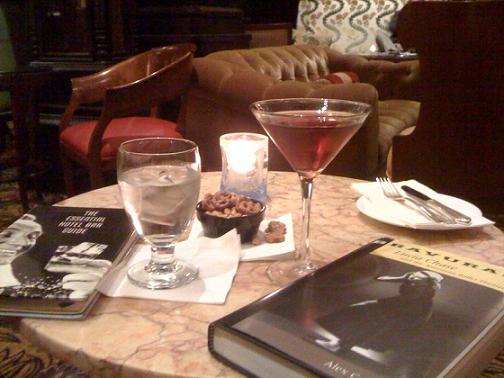
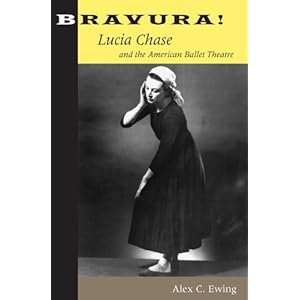
I’ve been reading this book, which was given to me by the publicist for purposes of review. It’s by Alex Ewing, about his mother, Lucia Chase, who basically founded what is now American Ballet Theater.

I’m about halfway through it now (I tend to read non-fiction a lot more slowly than fiction) and it’s very informative and very entertaining in places. I thought this following passage was particularly amusing. It’s 1950 and ABT (then called Ballet Theatre) is embarking on its first European tour when, unexpectedly, the Korean War breaks out, making a mess of, amongst other things, international travel:

“…Although the Air Force had officially agreed to provide the transatlantic travel, suddenly all government planes were diverted to the Pacific. The company took off instead on a commercial flight to Brussels, then proceeded on to Frankfurt where army buses transported them to Wiesbaden for their first performances. When it came time a few days later to fly behind the Iron Curtain to Berlin, an outpost city occupied by the four Allied powers, the approach into Tempelhof Airport had to be made through ‘the corridor,’ a narrow strip between Russian gun emplacements. The Russian government, in order to prevent spying on the surrounding sector that it controlled, required all arriving flights to come in at frighteningly low altitude, and the dancers were told to don heavy parachutes for the flight into Berlin.

“As recounted by Charles Payne, then editor and publisher of the Ballet Theatre Annual, the company was flown ‘in a transport plane equipped with bucket seats suspended from the inner walls, with parachute tracks leading to the escape hatches.’ Understandably, everything was much less formal than a standard commercial flight. The pilot even invited the dancers to visit the cockpit a few at a time, and at one point Nora Kaye emerged from up front, greenish-white in the face, to scream back at the others, ‘Do you know who’s flying this plane? Alicia Alonso! Do something about it!'”

Can you imagine?!

The great Alicia Alonso is turning 90 this year and ABT will honor her during the Met season, on June 3rd. ABT turns 70 this year. Image of Alonso above taken from here.

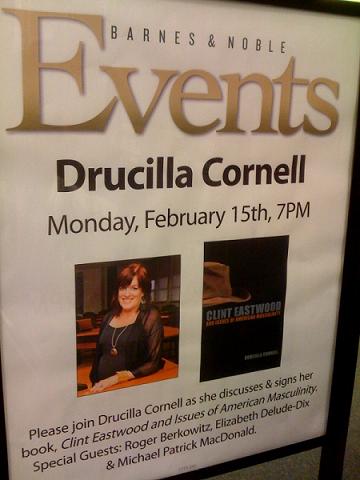
DRUCILLA CORNELL AT TRIBECA BARNES & NOBLE TONIGHT


I was in the Tribeca Barnes & Noble yesterday and saw this poster. Tonight, at 7:00, my former Feminist Jurisprudence professor is giving a talk about her latest book, about Clint Eastwood (as director) and contemporary American masculinity. I think it sounds fascinating. Unfortunately, I have a prior commitment and can’t go, but if you have no plans and you’re in NY, please don’t miss her. She is one of the smartest people I’ve ever met in my life and I’m sure it will be well worth it to hear her speak.

BOOK BREAK

Just FYI, I’ve finally managed to reduce my novel’s Amazon price from $17.99 to $14.99. That’s the print price; the Kindle is $9.99. The endlessly wonderful James Wolcott has given me yet another shout-out — thank you Mr. Wolcott! And how sweet is this, and this!

I haven’t participated in a meme for a long time and so thought I’d take the one posted by Laurel-Rain in her Seasons blog (the last link above). The rules are to find the book nearest you, turn to page 56 and write the 5th sentence (and maybe a sentence or two after that for context, if you like). For me, that book is

Bravura! Lucia Chase and the American Ballet Theatre by Alex C. Ewing (Chase’s son), which I received for review purposes. I’m about a quarter of the way through; so review coming soon. Here’s the passage:

“Lucia would have had to be blind not to see that Mordkin was being pushed out of the picture. Yet she was most decidedly not the author of the early plans for Ballet Theatre, nor was she calling the critical shots. Other than providing the seed money for Pleasant to proceed with his grand design, Lucia had made a strict and unequivocal effort to stay out of management.”

So far, my favorite parts have been more about Lucia’s personal life than the details of setting up the company — such as her relationship with her husband, who died tragically young, when the couple’s two children were still babies. For years after his death, she would write him notes, telling him what she was doing, thinking, about her life. A way of keeping him around, I guess. So heartbreaking. Right now I’m reading about her love / hate relationship with Agnes de Mille — delicious fun!

That’s nonfiction. Here is a novel, Picking Bones From Ash, that was just about the same distance away from me. It’s by my friend, Marie Mutsuki Mockett, and I recently finished it and wrote a review of it on Goodreads. I absolutely loved it; I learned so much — about Japanese culture, European culture, Japan itself, Buddhism, classical music, historical artifacts, how to discern the period in which a piece of art was made — just read it, it’s filled with such beautiful detail and the story is so suspenseful you really won’t be able to put it down after a certain point. Anyway, here is page 56’s fifth sentence:

“We continued to spend time together on the weekends and during the holidays when I was home in Hachinohe. In the middle of my second year of college, however, Masayoshi began to act a little bit strange again. It all started when his father had a small stroke around the same time that I was caught up in preparing for the annual Messiah concert.”

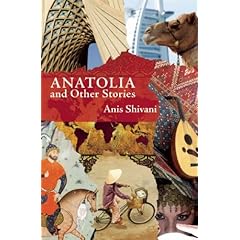
One other book I just received in the mail and am currently reading is this:

Anatolia and Other Stories is a collection of short stories by Anis Shivani, whose work I became familiar with in the literary journal Boulevard. According to a quote by award-winning novelist Laila Halaby on the inside cover, the collection “takes us around the globe in stories that juxtapose old and new, east and west, with characters that do their best to navigate the generational / religious / cultural / socioeconomic tensions inherent in our global economy. Shivani’s observations are dead-on, especially when dealing with themes of loss, family dynamics, and subtleties of power.”

Finally, here’s another book related to dance that I didn’t have time to review, but that is getting good reviews.

The Sugarless Plum, by Zippora Karz, details the New York City Ballet dancer’s struggles coping with the dangerous  and life-altering Type 1 Diabetes, which she was diagnosed with at age 21, while still a corps member in the company. Despite the disease she nevertheless managed to rise through the ranks and enjoy a solid, 16-year ballet career.

If anyone wants to participate in the meme, just link back to this post on your blog, or, if you don’t have a blog, you can write the book’s passage in a comment here.

SWALLOW REVIEWED AGAIN!

Another positive review for Swallow from an Amazon top 500 reviewer! (Scroll all the way down until you see the reviews; the newest is at the bottom.)

This is my first novel and I really value people’s thoughts and reactions — what affected people the most and what affected them the least (because it’s definitely not always what I’d think). I’m so grateful to everyone who’s supported me by buying it and reading it and thinking about it, and then commenting or writing on the Amazon page. So grateful!

MERRY CHRISTMAS

to everyone who celebrates is. I found this video from my friend, the great writer Michael Northrop 🙂 I love it.

It reminds me of a scene in my favorite novelist Andrei Makine’s Once Upon the River Love, where two Siberian boys wake up to find their entire town covered in snow, as they often do during winter there, and they have a blast burrowing their way up and out.

JUDGING A BOOK BY ITS COVER

scan0005

Sorry posting has been kind of lame over the past week. I’m working really hard on finishing the final read-throughs of my novel and, as always, it’s more involved than I expected. I have several exciting Fall For Dance programs still to write about — a puppet-performed Petrushka, Bronislava Nijinska’s Les Biches, the fabulous Trocks, Dance Brazil’s unique capoeira / samba / modern blend, Tiler and Gonzalo 😀 , the best Afternoon of a Faun (involving two fauns actually) I’ve ever seen — this is by far the best FFD Festival I can remember — and I plan to write about it all at the end of the weekend or early next week; after, hopefully, I’ve finished my rewrites.

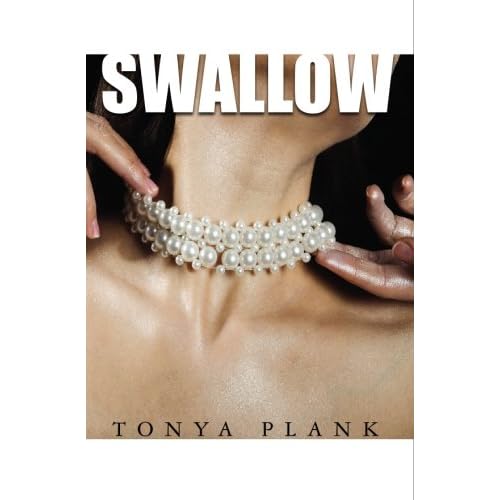
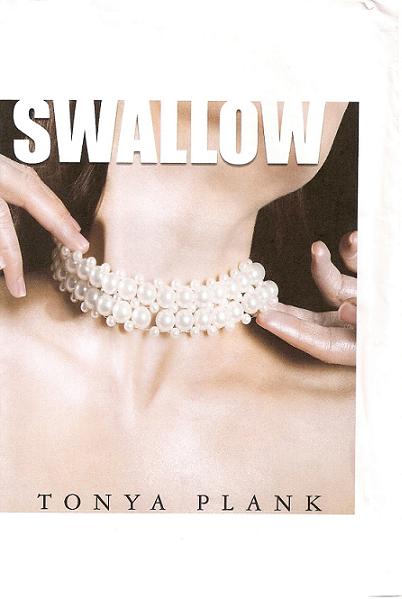
In the meantime, above is my final cover. Took me forever to okay something I was happy with. At first I was going to go with this one:

scan0006

But then I had dinner with a gay male friend, who said of this bottom one, “Okay. This looks like it’s about a girl who goes around New York giving blow jobs.”

Which my novel is NOT about! I sought others’ opinions — nearly drove all of my friends crazy — and most people agreed that, since it’s about a young woman with a disorder, the cover should indicate that. It’s just that the disorder she develops is due in part to her moving into the city — a city she feels largely alienated by — and so it’s partly about her ability to make her own home here. Which is why I thought an arty cityscape would work.

But apparently not with this title!

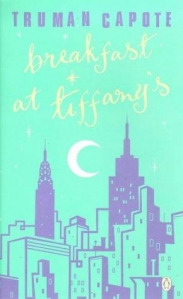
breakfast-at-tiffanys

I’d gotten the idea for the arty cityscape cover from my favorite Breakfast at Tiffany’s edition.

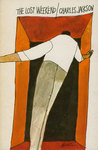
I also love this cover, for Charles Jackson’s The Lost Weekend:

the-lost-weekend-lg

This is as large as I could blow it up, but it’s one of my very favorite covers. I’d asked my design team to come up with something similar (with a woman looking into the abyss), and they couldn’t. I showed a friend and she kind of burst out laughing and told me I’d need to hire an artist to make me something wholly original if I wanted something approaching it. I have that Lost Weekend edition (which I found at a rare bookstore in Durham, NC) and the cover is an actual piece art — it’s actually painted onto the cover, which is made of a sturdier material than regular covers — the result being that once the years go by and the cover ages, you literally can’t open the book without breaking it. So, the irony is that that book is unreadable; it must simply sit on my bookshelf facing out, to showcase the piece of visual art that it’s now solely become.  In any event, even if I did want a book that could only be enjoyed for its cover, I don’t have the money to hire my own artist.

But I think my design team came up with something that works anyway.

My biggest problem with having a photo of a woman on the cover is that I was afraid it’d be taken for Chick-lit, a moniker I think every female writer has some kind of issue with, or at least thinks about. I thought an illustration would make it look like it’s about art — which it partly is: one of the protagonist’s friends is an artist and he’s an important character. And I thought a photo of a woman would alienate male readers. But then a friend who works as an artistic director of a magazine said illustrations don’t sell; you gotta have a photo, which she insisted was pertinent to books as well as magazines (and she has two published books of her own out). She’s one of four or five people (as I said, I drove all of my friends stark raving nuts) who helped me come up with the idea for my final cover.

…which I’m happy with — I think it hints at what the book is about and is dramatic and somewhat provocative without being over the top. I just hope it doesn’t alienate potential male readers. But then, as practically everyone I know (of both sexes) have told me ad nauseam, men don’t read anyway — especially fiction; women read and Chick-lit sells. So just embrace it.

Anyway, there are many other issues involved in the whole Chick-lit quandary, and in book cover art, but I’ve blabbered for too long. Have to get back to my rewrites… And I need to go out for my Friday cupcake.

Have a good weekend everyone!

DISGRACE: IT’S JOHN MALKOVICH WHO DESERVES A NOBEL


Oh how I wish Anthony Lane would have reviewed this film; unfortunately the New Yorker didn’t assign him. I always value his insights, particularly on movies I find disturbing. And I found this one so not because of the subject matter (race and gender-based violence in post-apartheid South Africa), but because of the way men, women, blacks and whites are all depicted, the extremely outmoded essentialist terms in which women and men are portrayed (ie: I am man, therefore I desire to rape women; I am woman therefore I love children and won’t have an abortion, etc. etc.)

The film is based on the Booker-prize-winning novel of the same name by Nobel-winning writer, J.M. Coetzee, a white man from South Africa who currently lives in Australia.

David Lurie (Malkovich) is a 52-year-old white professor at a Cape Town university who’s attracted to younger biracial women. As the movie opens, we see him soliciting a prostitute who fits such description, and shortly thereafter he becomes taken with one of his students, Melanie, and the two begin having an affair. It’s not clear how Melanie feels about him though. She seems completely dead during their sex scenes, and whenever she leaves his house, she always looks sad and violated. But it’s not like he’s raping her; she’s there of her own volition and she’s an adult and went into the affair knowingly. Nor is it made clear that he’s committing quid pro quo sexual harrassment — telling her he’ll fail her if she doesn’t do as he pleases; in fact it’s later revealed that the opposite is true — he passes her even though she’s truant and fails to show up for exams.

Eventually her young black boyfriend finds out about them and exposes Lurie. Students drop his classes and the disciplinary committee calls him for a hearing. Lurie seems to agree with the committee that he’s done something wrong (though it’s not clear to me what this is — again, she’s an adult and the sex seems consensual), but won’t defend himself because he can’t apologize for what he considers his (male) “nature.” The disciplinary committee dismisses him from his post and he moves to the country, into his daughter’s farmhouse.

His daughter, Lucy, is a lesbian whose lover has just left her. She shares the farm with a black man, Petrus – -he lives not in the main house but in a shed — who’s worked part of the land, installing pipelines and a well, and who, because of his labor, now owns part of the land. I wish the film had done more to educate viewers about this practice. It’s not clear, in post-apartheid S.A., whether Lucy is trying to help Petrus (she’s clearly liberal-minded and believes in righting historical wrongs) or whether this is the way the new system works to enable black South Africans to gain land ownership. In any event, Petrus is depicted early on as someone who’s up to no good. He’s nearly drooling at the mouth when we (and Lurie) first meet him (like a dog, I guess, since that seems to be the main — totally overdone — metaphor here).

So the dogs: Lucy houses several out back in a cage, partly for humane purposes — apparently there’s an over-population of dogs in S.A. and Lucy’s friends with a female veterinary nurse who catches them, tries to adopt them out and then euthanizes them when she can’t — and partly for protection. We’re made aware up front it’s very dangerous out on the farm — there’s been a lot of pillagings. She also keeps a loaded rifle in the house. At one point, she and Lurie are walking one of the dogs and Lurie tells her dogs are “creatures of habit.” He tells her a story of his childhood neighbor’s dog. The dog (a male) would always go nuts when the bitch next door was in heat. He’d dig holes in the yard, tear things up, etc. — create chaos basically. So his owner would punish him every time this happened. Eventually, the minute the female dog went into heat, the male dog would crouch and whine and walk around with his tail between his legs. The horror of this Pavlovian game, Lurie says, is that the dog eventually learned to deny his own nature. This is why, Lurie says, he shouldn’t be expected to deny his own nature (screwing around with young women, presumably to their detriment).

One day, Lucy and Lurie return to the farm after walking some of the dogs, to find three young black men taunting the caged dogs. Lucy approaches them and asks them to stop. They give her a story about one of the boys being stranded and ask if he can come inside and use her phone. She cages the dogs she’s walked and tells him yes; he alone can come inside. This is a ruse and after she’s caged her dogs, the boys drag her and Lurie into the house, gang rape her, lock Lurie in the bathroom where they douse him with gasoline and set him on fire, and use Lucy’s gun to shoot and kill all of the caged dogs. They also loot the place and cart off Lucy’s possessions in Lurie’s car. Lurie manages to save himself with toilet water but he’s still badly burned.

Lurie tries to get Lucy to go to police but for some nonsensical reason she won’t. Ludicrously, she tells him he doesn’t know what happened because he didn’t witness “the crime” — ie, he wasn’t in her bedroom, which, ridiculously, he doesn’t argue with. Her friend echoes her — he “wasn’t there” during “the crime.” He tells her he’d like to talk to the police, but she tells him there’s no information he could give them that she can’t, which he also inexplicably doesn’t argue with.

So a man is bludgeoned and set on fire and almost killed, but he isn’t the victim of a crime? He sees the attackers as they kill the dogs and pour gasoline on him, then throw a match at him, while Lucy is still in the bedroom, but he has “no information” of “the crime” that she doesn’t have?

Sadly, there are still parts of the world where women are considered male property, and therefore her rape is seen as the worst possible thing that could ever happen to her (or her “owners”). Worse than being set on fire. Worse than being shot and killed. I find it beyond shocking that the rape is seen as the only crime here.

It turns out Lucy is pregnant with the child of one of the rapists. Lurie tries to get her to have an abortion but she responds with, “I’m a woman. I don’t hate children because of where they came from.”

Petrus, who was suspiciously missing during the time of the break-in and whom Lurie suspects of having set the whole thing up so that he could scare Lucy away and own the farm himself, returns to the farm, with a new wife, and throws a party in the shed. At this party, Lucy and Lurie discover that one of the boys who raped her is the son of Petrus’s new wife. Lurie wants to call the police but Lucy forbids him from doing so, saying she needs to get along with these people since they’re now co-owners of the farm.

Lurie goes to talk to Petrus. Petrus insists his new son is not one of the rapists, but tells Lurie because of what’s happened, he would still make him marry Lucy but for the fact that he is too young for her. Petrus then tells Lurie he will marry Lucy himself (I don’t know if the filmmakers forgot that Petrus is already married or whether in S.A. bigamy is legal). Lurie delivers this message to Lucy and she accepts Petrus’s marriage proposal. Lurie thinks she is completely nuts (as does most of the audience, I’d venture to say) and tries to plead with her but to no avail.

Eventually, through all of this trauma, Lurie realizes the wrongness of his ways (because, apparently, in this world, rape is equal to sex with prostitutes and consensual sex with adults). He visits the father of the student he seduced to apologize. It’s a testament to Malkovich’s enormous talents that this climactic scene actually works, based in nonsense though it is since he’s really done nothing wrong to this supposedly full-grown woman.

Lurie begins having an affair with Lucy’s friend, the humane euthanizer, and helps her put the dogs down. In the second climactic moment, Lurie sacrifices his favorite dog in order to show that he’s finally has decided to disavow his own male / dog “nature.”

By the end of the movie, Lurie has learned to accept his daughter and her pregancy. In the last shot, the camera slowly pans across the land (like in Howard’s End) to reveal the entire farm. The bright new house Petrus has built himself is a marked contrast from the shabby, broken home housing Lucy. So, through rape and pillage, black South Africans have “taken over.”

The biggest problem with the movie (apart from the bad metaphors, the infantalizing of women and the equating of sex with rape) is that all the black South Africans are portrayed either as evil or easily taken advantage of. I’m sure it can be very dangerous for whites on those farms, particularly for women living alone, and I’m sure there are many rapes. But the film doesn’t present the perspective of any of the black South Africans, the historical oppression, the conditions creating the severe inequality that have led to such hatred and violence. The film is one-sided and in my mind comes across as feeding into racist stereotypes.

The film’s only redeeming quality, to me (apart from some beautiful shots of South Africa), is Malkovich, who — I have no idea how — was able to make his way through all the aforementioned problems and create a truly sympathetic, memorable portrait of this man. He always does that though, no matter how unlikeable the character. The man is a genius.

Has anyone else seen the movie? Or read the book? I have the book, but haven’t gotten around to reading it yet. I didn’t like Diary of a Bad Year and so was putting it off but I probably should now because I have a feeling there was a lot left out. I hope there was anyway.