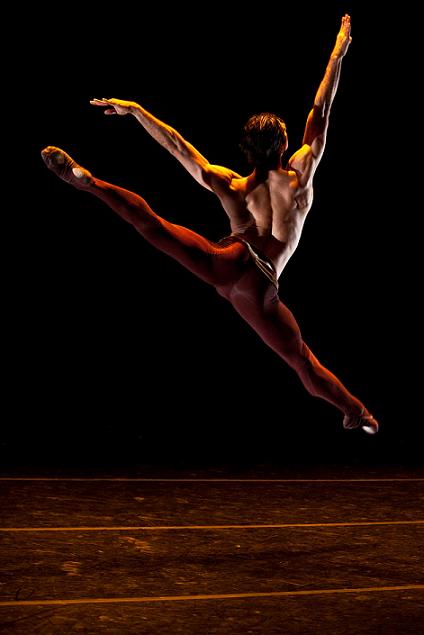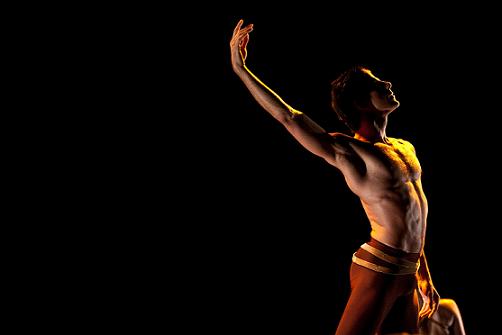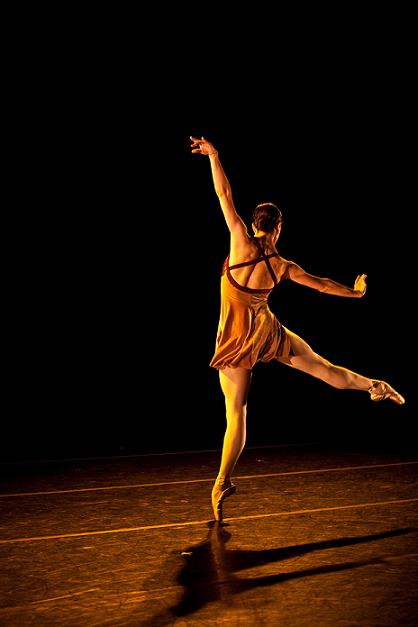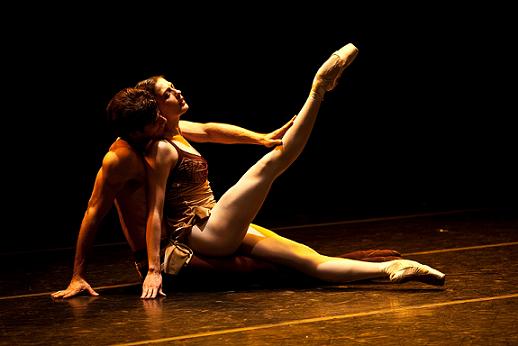
American Ballet Theater’s Original New Nutcracker


More photos coming soon. This one (of Gillian Murphy and Catherine Hurlin as the two versions of Clara) is taken from culture.wnyc.org.

Last night was the official opening of ABT’s much awaited new Ratmansky-choreographed Nutcracker at BAM. I loved almost every single second of it. I’ve only seen about six different versions of this ballet, but this one to me seems most original. It’s very entertaining, very humorous at points, and can somehow maintain the attentions of small children while being clever and witty – and beautiful – for adults. It’s very theatrical and it’s not as “dancy” as the one I just saw from the Bolshoi (Grigorovich’s version)- there’s more non-balletic jumping and playing around in Act I at the party, but there’s plenty of beautifully choreographed classical ballet during the grown Clara and Nutcracker Prince pas de deux and the ensemble snow scene and waltz of the flowers.

It opens with the cooks and maids in the kitchen preparing Christmas dinner. They’re going about their merry preparations when suddenly their space is invaded by mice. The mice completely take over, chase out the cooks, jump up on the tables and grab for the hanging meats. Adorable and hilarious. There’s one very cutely mischievous little mouse who appears throughout.

Then the party scene happens and Drosselmeyer (a non-dance role here) presents the children with two sets of life-sized dolls. The dancing was very good, but there were no sharp, stunted staccato movements as in the Bolshoi’s, so the dancers didn’t look like real dolls to me. I loved the costumes for Harlequin and Columbine though. They looked the most commedia dell’arte that I’ve seen. All costumes were brilliant – one of the most excellent things about ABT’s production. They, and the equally brilliant sets, were made by Richard Hudson, of Lion King fame.

When the dolls are ordered to return to their boxes, the children do a group dance that looks more like fitful stomping than anything balletic. But it’s still musical and evocative and cute, and it got a lot of laughs. The nutcracker that Drosselmeyer then gives Clara (danced brilliantly by Catherine Hurlin) is half-doll, half-human. He’s danced by a boy (Tyler Maloney) but he has a full nutcracker head, so he can’t do as much as the Bolshoi’s human nutcracker doll – his movements are much more limited. Once Clara’s dream begins, the boy removes his doll head before escorting her off to the Kingdom of the Sweets. I have to say, I really liked the boy who danced Clara’s bratty brother, Fritz – Kai Monroe. He was very entertaining, did a good job with both the acting and the dancing (high jumps!), and I think he will be one to watch for.

The Battle scene between the mice and the nutcracker and his soldiers was good, and, again, the costume for the mouse king (Thomas Forster) was fantabulous. I couldn’t even count the heads he had there were so many. I think of all battle scenes, I like Balanchine’s the best. I love how a mouse will scurry ominously across the floor right in time with a flute chord. Then the mice begin to gather and organize right in time with the flute ensemble so that it seems like the mice are talking. And Balanchine’s battle scene seems the most theatrical. Balanchine’s growing tree is also magnificent. Here, the tree only grows a bit, but soon they multiply and trees begin to eat up the wings, which was also spectacular.

The snow scene was really beautiful and this is where we first meet the grown-up Clara and her nutcracker prince (last night they were Gillian Murphy and David Hallberg, but there are many casts – see James Wolcott’s review of a preview starring Veronika Part and Marcelo Gomes here). Their first pas de deux is a beautiful waltz, and it’s made very clear that this is Clara’s grown-up vision of herself and her prince. The child Clara and Nutcracker boy waltz alongside Gillian and David until the classical ballet steps takes over, and the children stop dancing and gaze longingly at their grown-up selves as they finish the pas de deux. There’s a really beautiful Viennese waltz-type of lift where he spins around with her perched on his shoulders.

The Kingdom of the Sweets is really different from other versions. The “Sugar Plum Fairy” or “Nanny” as she is alternately called here, is not a dance role, but more of an escort through this kind of tour of It’s a Small World. She dons an absolutely gorgeous ancient Indian costume, as does her male companion. The dancer representatives from various countries are not dolls; they are real, but most of the dances are very different. The Arabians, for example, are danced by one man (last night, Sascha Radetsky) and four women, and the women are all cutely chasing the one very wickedly flirtatious man. It reminded me a bit of Kevin McKenzie’s von Rothbart deviously flirting with all the court women at the beginning of the Black Swan pas de deux. At the end of this dance, though, the tables are turned and the women come into their own and no longer need him. Now of course, he’s not very happy about that. It’s great fun and I loved this dance the best.

The Russians (Mikhail Ilyin, Craig Salstein and Arron Scott) were more folksy than bravura ballet, which was fine, because they later did a circle of barrel turns as their part of the final ensemble dance.

And we see Mother Ginger again (or who, as a child, I called The Fat Lady with the big skirt). I haven’t seen her since Balanchine! And there’s an added element of hilarity here involving the mischievous little mouse from the kitchen!

The only dance I didn’t really care for was the Chinese. As I’d expected, these roles were danced by Daniil Simkin and Sarah Lane. But Ratmansky didn’t really use them for what they are known for and the dance is very tame compared to this dance in the other Nut versions. I really wanted to see Daniil go flying around the stage in those crazy million times-overrotated turning leaps that he’s known for. There weren’t even any high jumps. It’s just that I look to the Russian and Chinese dances for the bravura parts and it’s okay if they’re lacking in one dance, but not both! The Chinese weren’t as goofily portrayed though as in other versions, so I appreciated that.

And I loved the waltz of the flowers. Included here are some very charming bees, but they’re not used in a slapstick way at all, which I thought they would be when I initially saw them. They dance is very classical and there’s a beautiful part where the four male bees toss the red and pink-clad ballerinas into each others’ arms in a circular rotation. That received a lot of audience applause.

And then is the ending pas de deux again between Gillian and David. I’d written before, when I saw an excerpt at the Guggenheim, that it looked more modern lyrical than classical, but last night it looked very classical to me. Ratmansky used my favorite lift from the Grigorovich Bolshoi version where the prince lifts and holds Clara up by one lower leg and carries her all around stage like that. The solo variations were nice. David didn’t seem to have the height he normally does on his jetes (I was told later at dinner though, by a dancer – not from ABT – that that choreography was crazy hard) but he made up for it in a series of spins. I know in ballet they’re called turns, but he was going so fast they looked more like ice-skating spins to me!

The only thing I found bothersome was the acoustics in the BAM opera house. Maybe I’ve just never heard live music played there but it just seemed like the orchestra was playing so softly. The sounds of the toe shoe-clad feet and the sounds of children coughing dominated.

Oh, one final thing: when David Koch, who financed a good part of the production, gave his opening speech, he accidentally called Kevin McKenzie “Peter.” Got a lot of ooooohs from the audience. I couldn’t hear through the ooooohs what he said after that – I assume it was an apology – but whatever it was it elicited even more ooooooohs. Funny.

Overall it’s a brilliant new ballet, a very original new production. Definitely get out to BAM if you can! Go here for the rest of the schedule.
AVI SCHER & DANCERS' FIRST FULL SEASON A SMASHING SUCCESS

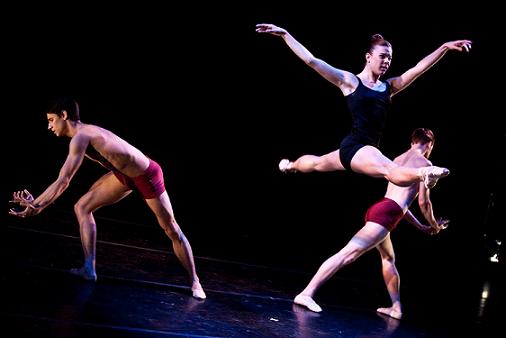
Here are some photos of Avi Scher’s first full season at Alvin Ailey theater, sent to me by the amazing ABT dancer-turned-photographer Matt Murphy. Visit Matt’s blog, and his photographer website.

Savannah Lowery (from NYCB) who, for the first time, completely blew me away, flying over Ralph Ippolito (also from NYCB) and Eric Tamm (from ABT), in Touch.

Ashley Bouder (NYCB principal), who replaced Sara Mearns, who had a minor foot injury. Marcelo Gomes (ABT principal, of course!) in the background. This was my second favorite piece of the evening, Utopia. It was interesting because as much as I love Sara Mearns and was disappointed I wouldn’t be seeing her, I couldn’t imagine this role being formed on anyone other than Ashley. There was so much quick-footed, high-spirited allegro dancing and Ashley is the queen of allegro. She and Marcelo were perfect together. She replaced Sara last minute and I can’t believe how quickly she learned that dance because the choreography was, like all of Avi’s choreography, rather complex and original.

Marcelo in Mystery in the Wind, my favorite ballet of the evening. It was a neoclassical piece (Avi’s style ranges between neoclassical — like Balanchine — and contemporary), that reminded me a bit of Apollo, a bit of La Bayadere, with a main love story between Marcelo and Veronika Part, and three female dancers doing solo parts, and kind of acting as muses. In addition to Marcelo and Veronika I really loved watching Abi Stafford in this (I linked to her NYCB profile since I don’t have a picture of her for Saturday night). She had several solos, some of which were kind of sweetly folksy / flirtatiously tango-y, combined with these crazy fast balletic chaine spins across and around the perimeter of the stage. She did really well and she looked really beautiful. I brought my friend Alyssa with me, who doesn’t know much about ballet, and she said she could tell right away who all the big principals were (and she was correct in her guesses)– and Abi immediately caught her eye.

Marcelo again.

Veronika Part in that same piece. She was beautiful, it goes without saying. Every single part of her body makes such a perfect shape, my friend said, and she was so wholly into the character and the music (which is completely typical of Veronika!).

Marcelo and Veronika in Mystery again. I loved the central pas de deux – so sexy and passionate!

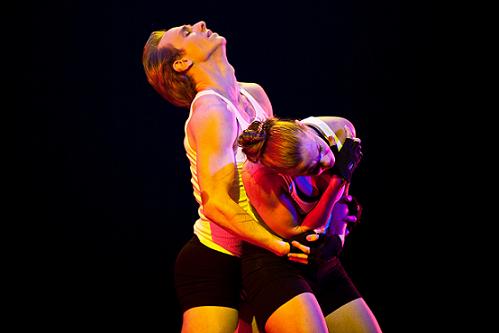
Another of my favorites: the “Our Love’s Defense” duet from Little Stories, with NYCB’s Christian Tworzyanski and, again, the kick-ass Savannah Lowery. Savannah has a very athletic body, she’s very muscular and toned, and she looked so good in these athletic costumes and in some of Avi’s more heavy-hitter choreography. (In this piece she and Christian have this fun, sexy wrestling match/ lovers’ quarrel.) I think more of the modern choreographers when they do work for NYCB should use her – Benjamin Millepied and Jorma Elo, etc. I think modern ballet suits her body and dance strengths more than Balanchine — I really felt like she came alive to me as an artist in Avi’s work like never before. And she’s a very good actor as well!

Veronika in Touch.

And with ABT’s Arron Scott in the same.

NYCB’s Ralph Ippolito in No Matter What. Ippolito is a corps member of NYCB and I’d never noticed him before, but he really stood out to me here. He’s very intent in everything he does, and he’s very good at using his body, his limbs, to express, to make meaningful, evocative shapes.

Ja’Malik and Victoria North in No Matter What.

The theater was completely packed on Saturday night, opening night, and I’m told it was the same at yesterday’s matinee, despite it being Easter. There’s one last performance of this short season tonight, at 8p.m. that I heard is pretty sold out as well. How excellent for this young choreographer!

Here are some of the many other reviews: Oberon’s Grove, the NY Times, Dance View Times.

AVI SCHER, VERONIKA PART, SARA MEARNS AND MARCELO THIS WEEKEND AT ALVIN AILEY THEATER!

Isn’t this a gorgeous rehearsal photo of Marcelo Gomes and Sara Mearns, taken by the excellent Matthew Murphy! They are rehearsing for an upcoming performance of Avi Scher & Dancers, which you must go see if you’re in NY. I don’t know how ticket availability now stands, but this is an excellent opportunity to see some of the world’s greatest dancers up close in the small, intimate Citicorp theater in the Alvin Ailey studios. The show will star these two above as well as Veronika Part (below), and, amongst many others, Abi Stafford, Christian Tworzyanski and Savannah Lowery from NYCB, and Eric Tamm and Arron Scott of ABT. Readers of this blog already know how very much I love Marcelo and Veronika, and how I’ve been going on and on and on about Sara Mearns since last NYCB season. I have long been wanting to see Mearns partner with an ABT dancer — and no one more perfect than Marcelo! So, obviously, I can’t recommend this show enough. It’s this weekend, Saturday, Sunday and Monday.

(Veronika Part, by Matthew Murphy)

Here are the rest of Matt Murphy’s gorgeous rehearsal photos. And see Oberon’s Grove for photos by Kokyat of Veronika rehearsing with Arron Scott.

Visit the Avi Scher Facebook page for more photos and videos, and for more info on the show. For tickets, go here.

MORE ON AMERICAN BALLET THEATER’S AVERY FISHER SEASON


Daniil Simkin and cast in Benjamin Millepied’s Everything Doesn’t Happen at Once in Gene Schiavone photo, courtesy of ABT; all photos by Gene Schiavone (except for Arron Scott headshot below and bottom picture).

Just to let people know, as the photos shows above, the guy who was flinging himself into the group lifts in the first cast of the Millepied was Daniil Simkin; in the second cast it was Arron Scott (below). The program notes only gave a special mention to the two dancers doing the pas de deux and a lot of people were asking who the main soloist was.


Anyway, here are a few more reviews:

Here is James Wolcott on opening night gala (and our fab Shun Lee dinner afterward 🙂 ), here is Apollinaire Scherr’s FT review; and here are more of Apollinaire’s thoughts on her blog, Foot in Mouth. I’m surprised there aren’t more reviews — this was a pretty big season, with three world premieres — but that’s all I can find at the moment. (Update: Robert Greskovic’s WSJ review just went up; thanks to Meg for letting me know.)

Re the Wolcott write-up: I forgot to mention the models — Iman and Veronica Webb, who, instead of A.D. Kevin McKenzie, thanked the gala sponsors and introduced the program — screwing up Benjamin Millepied’s name. It wouldn’t have been such a big deal if they wouldn’t have been so giggly over it. It seemed like they were reading their notes for the first time and were really unprepared. I really don’t know how to pronounce his name either — I’ve always said the last two syllables to rhyme with plie (without the “l”) but have been told that’s wrong. But damn did ABT get a lot of press for signing them on. Just Google “ABT Fall 2009 Season” and it’s all about Iman.


(Gillian Murphy, Cory Stearns and Eric Tamm in Aszure Barton’s One of Three)

Anyway, I saw four of the six programs, saw the Ratmansky and the Millepied ballets four times and the Barton three, and they each grew on me the more I saw them. The Saturday matinee was my last performance and I found it by far the best. I felt like the dancers were finally comfortable with the new dances, knew what they were all about, and really made them meaningful. I described the ballets here.

Oh and regarding SanderO’s comment on that earlier post: yes, I do need to see the story in the dance. The dancer and choreographer won’t pull me in at all if they don’t each tell me some sort of story. That doesn’t mean the ballet has to be a traditional full-length dramatic novel or something with a clearly defined beginning, middle, and end, inciting incident, rising action with crises 1,2, and 3, climax and resolution, etc etc. but there needs to be some kind of story; there needs to be some intention in the abstraction. A lot of critics use the word “evocative” — a dance needs to be evocative of something, and I just mean the same thing. If there isn’t something meaningful going on, there’s no reason for me to see it. I can appreciate the neat geometric patterns and pretty images, but that’s not enough to make me go.

Anyway, I saw more in Millepied’s Everything Doesn’t Happen at Once on further viewings. At first I thought it was kind of everything but the kitchen sink the way Apollinaire kind of describes, but after several viewings I saw more of an evolutionary, battle of the sexes theme throughout, which becomes a more literal battle by the end. The piece starts with the stage looking swimming-pool like with the dancers making broad strokes with their arms. The stage gets over-crowded and eventually someone in charge — looking rather conductor-like, kind of throws his arms up and dismisses everyone.

Then, there’s a pas de trois (two men one woman), which becomes a double pas de trois (same), which turns into the central pas de deux (man-woman). Throughout there seems to be struggle going on — in the pas de trois the men kind of manipulate the woman around, until she’s practically on her side. In the central pas de deux is in places tender, in places more angsty as if the girl is trying to get away from the guy or fight him in some way, and he is struggling to hang onto her.

By the end, the scene has evolved into a kind of battlefield with marching music and the ballerinas doing those Balanchinian marches en pointe. Except they’re more unsettling than cutesy, like in Balanchine. This is the part where Daniil / Arron gets tossed into the crowd, throws himself with wild abandon at the groups of men, who catch him mid-split, then gets caught up with a bunch of grabbing girls.

Interestingly, the audience laughed when this role was danced by Simkin — I think because he is small and a bit long-haired and it kind of looked like he was afraid he’d be taken for one of them and was trying like hell to assert his masculinity. (I think it would have worked better had the girls been chasing him and then he flings himself into the groups of guys rather than the other way around, but not a big deal).

But no one laughed when it was Arron. It looked far more serious with him in the role — it looked like he was practically getting raped by that rabid group of girls.

Also I noticed with Arron that after the rabid group of girls leaves him alone, he kind of internalized the tauning; there was now an invisible fist punching him all about. It really looked like he was getting beaten up by that thing. But the fist was invisible so it was like he’d been driven mad. It was very unsettling, and I think, with the music and the rest of the action, this feeling is more of what Millepied was going for — not all the high air flips, crazy long spins, and windmill jumps that Simkin is known for and did here. Simkin’s character made the end of the ballet more playful than battle-like.

There’s also a short section where there’s all this marching music and there’s more centerstage chaos with all 24 dancers out there at once and suddenly a group of dancers standing at one corner break into partners and go waltzing through the crowd. But it’s really short-lived, like even courtship is a battle.

I don’t know — that’s what I saw on further inspection. But I could be making it all up. It’s kind of fun with abstract ballets (the ones that have a lot going on in them anyway) to make up your own story. I mean, the way dances get made anyway, as I learned at a Guggenheim event last night featuring ABT’s efforts to adapt ballets to different stages (including this small one in AF Hall, meant for concerts), is that things get changed depending on space, depending on the logistics of the stage, depending on dancers. Whoever knows if the end product is what the choreographer originally had in mind anyway.

I don’t think Millepied’s was a perfect ballet — I found a lot of the bird-like patterns from his recent NYCB ballet, Quasi Una Fantasia, to be out of place here – he didn’t need all that; he should have focused more on the battle — but I found his the darkest, the most thematically clear and the most absorbing.


Stella Abrera and Gennadi Saveliev in Alexei Ratmansky’s Seven Sonatas.

The Ratmansky grew on me, as did the Barton. On the last day, Michele Wiles danced the main female character (in the long white ballgown) in the Barton and I loved her. She gave the character a real story. When she comes out onstage she is all bitchy and glamorous, but Michele it’s really an act; she is seeking attention from the main man (in that cast Blaine Hoven) while trying to maintain her haughty demeanor so as not to be shown up by him if he dismisses her. At one point, she extends her arm out to him, as if he’s supposed to kiss it but he turns and runs offstage. She crumbles. It’s heartbreaking.

I also really loved Craig Salstein, Jared Matthews and Daniil Simkin in Barton’s second cast (Matthews and Simkin alternated parts opposite Salstein). They danced a section in the second part and all three made it clear (Salstein most so) that they were in a little competition for the girl’s attention. The girl (Luciana Paris), meanwhile, was just dancing on her own, in her own world, paying them no mind at all. It was hilarious.

But back to Michele Wiles for a minute: a wonderful ABT patron gave me her ticket for a company class, which she couldn’t attend, and Michele seemed so sweet — smiling out and waving at people during the class and even during warm-up.

Also, can some choreographer please please please create a little solo or some kind of dance just for Gillian Murphy! Please! During that company class, during the center floor work when the dancers divided into groups and did turns in a diagonal down the center, Gillian blew everyone completely away. She was like a tornado. But a technically perfect tornado! Everyone in my section literally began to laugh and shake their heads in amazement. She needs something to showcase her technical brilliance and athletic prowess. C’mon ABT!

Each of the dancers brought their own special thing to the Ratmansky. Christine Shevchenko (an up and coming corps member) was gorgeous with the role created by Julie Kent (danced opposite David Hallberg). She was more lyrical than Julie, with flowing, expressive arms that resembled Natalia Makarova in Other Dances. Julie’s arms were more staccato. Hee Seo, who completely blew me away as well, did a combination of the two — by turns feathery and lyrical, and modern and staccato. Alexandre Hammoudi and Jared Matthews both danced David’s original part and they were very different than David. Both connected with their ballerinas much more — when they were left alone onstage they clearly looked about for her, wondering where she was, then accepting they were alone and falling into their solo.

David Hallberg. I can never get enough David Hallberg. He didn’t look around for his ballerina when she left him, but when she returned to the stage, he danced well with her. But when she was offstage, she was out of sight, out of mind with him — he was too busy making Ratmansky’s movement wholly his own. He seems to be a rapidly maturing artist, playing with the music, playing with rhythm, giving some things more emphasis than others. When I first saw him dance this role I thought his “character’s” movement was more modern than classical, but I think that was just because of the way he did one section where he keeps pushing out with his hands, like he’s stopping the air, or stopping something from getting too close. He slowed down that movement a lot, really emphasizing the arms, and then did some ensuing footwork at the speed of light, whereas the others did everything in equal measures -so it didn’t have the same look.


Jared Matthews and Maria Riccetto in Some Assembly Required, photo by Rosalie O’Connor.

ABT also put on Clark Tippet’s Some Assembly Required from 1989, a male-female pas de deux evoking a lovers’ quarral replete with difficult-looking angst-filled lifts, struggling pushes and pulls, then more tender making up. It went on a bit too long; some middle parts that were repetitive could have been taken out, but the cast I saw — Jared Matthews and Maria Riccetto did very well with it. Jared is dancing and dramatizing better than ever before, imo.

And the company also did Robbins’ Other Dances, another male-female pas de deux (this one pretty famous) that was choreographed on Baryshnikov and Makarova. I saw both casts — Marcelo Gomes and Veronika Part, and David Hallberg and Gillian Murphy. I liked both — although I think I honestly prefer Tiler Peck and Gonzalo Garcia’s at NYCB. Gonzalo has a smaller body, more like Baryshnikov’s, and I think some of the gestures — like the placing the hand behind the head, kind of primping, looked sweetest on him. Ditto for Tiler. David is dancing very aggressively these days. He’s making the absolute most of every movement — it can be stunning at times, and at times it seems a bit overdone, which it seemed to me a tad here.

I also think that joke on the Kirov dancers getting dizzy and losing their footing because they don’t spot-turn doesn’t come across as such to new audiences. When Marcelo and Gonzalo did it, many in the audience honestly thought the dancers screwed up for real, not on purpose. David really didn’t do the joke because he’s a cheat 🙂 I’m kidding — he did, but he spun, stopped, got dizzy, shook himself out of it, and started the next phrase all in the blink of an eye, so you didn’t even notice he “got lost.”

Gillian was good but it didn’t seem to be a dance that showcased her talents to their fullest. I’ll say it again — I really think she is the most athletic and technically one of the best female dancers in the world and she desperately needs more roles that prove that!

TULSA BALLET’S MOMENTOUS MANHATTAN DEBUT


Wow — exciting night Monday night when Tulsa Ballet, a small but well-regarded company founded by members of the legendary Ballet Russes and currently run by Naples-born Marcello Angelini, opened its Joyce season. The company, from Tulsa, Oklahoma, hasn’t performed in New York for 25 years and it was their first time in Manhattan. The governor and first lady of OK were there, along with the mayor of Tulsa, and other government officials. A Japanese TV station also covered the event (the troupe is very multi-national; many dancers are from Asian countries), and Oberon, our friend Susan, and I were interviewed by them outside during the first intermission. ABT dancer Arron Scott was interviewed outside as well, after the show. I desperately wanted to walk over there and listen in on what he was saying, but didn’t have the nerve…

Anyway, there were three dances on the program: Sir Kenneth MacMillan’s Elite Syncopations, Nacho Duato’s Por Vos Muero, and a newish dance from 2008 by Young Soon Hue called This is Your Life.

The dance that most captivated me was the first, MacMillan’s, which I guess isn’t surprising since he’s my favorite full-length story ballet choreographer. I hadn’t seen this shorter piece though. In terms of the movement, it’s typical MacMillan with the bravura leaps and turns and inventive partnering dominated by sweeping, crazy-hard-looking lifts. But I didn’t completely understand the character of the dance. It’s set to Scott Joplin and other American ragtime music but it’s performed by what appear to be commedia dell’arte characters, dressed in almost clownish costumes. See photo above.

See also this video, of an excerpt performed by the Royal Ballet, Darcey Bussell introducing it and then performing in one of the main duets. There wasn’t a band in the Tulsa version though — the music was recorded.

You get a sense from the video what the whole was like. The choreography is comical, complex and brilliant. And the Tulsa dancers did very well with it — particularly the acting. Definitely a very lively troupe. I got the sense that this would look very different performed by a company like ABT or the Royal on the large Met stage, but I thought the Tulsa dancers did a very good job with a very (despite the humor) difficult-looking ballet.

Next on was Duato’s Por Vos Muero 


I also really liked this piece. The movement was modern (no pointe shoes): grounded, sharp-lined and expansive. The music consisted of popular Catalonian tunes from the 15th and 16th centuries, with a poem read (in Spanish; Duato is Spanish and his company is based in Madrid) by Spanish music star Miguel Bose (at least he was a star,  in a heart-throbbish sort of way when I took Spanish in high school and college 🙂 )  The dance began on a contemporary note, with dancers dressed in simple nude leotards, then took on a historical flavor, the dancers now in dark costumes evocative of the era of the music. The themes (I think) were love and death; it was overall spiritual and mainly dark, with a few lighter moments interspersed throughout, like the one above, when two men playfully slide a woman between them, and she ends up near the edge of the stage and smiles out to the audience, resting her elbows casually on the floor, her chin in her hands. The two men lift their legs, bent at the knee, as if framing her like a picture.

The third piece, This is Your Life, is named after the American TV show (which I never saw). I have to agree generally with Gia Kourlas on this one. The characters first address the audience, telling you their stories of woe, but they’re mostly caricatures, like the flamboyant gay hairdresser dressed in a woman’s wig, and the businessman who wants to break free of his parents’ expectations and become an actor. The dancing parts are set mostly to Astor Piazzolla’s rich Tango music and much of them are Tango-based, portions of them on pointe. Normally I’d be into a ballroom / ballet mix, but the movement here, the combinations, were nothing I hadn’t seen before, and, honestly, I had a hard time getting over the stereotyped characters. This is a dance that may well get a different reception elsewhere though.

Tulsa Ballet performs at the Joyce through August 15th. Go here for more info. And go here and here for other, very different perspectives on the program.

MARCELO GOMES STILL MY FAVORITE!


I had an insane weekend (out from early evening until not so early next morning both Friday and Saturday at Brooklyn ballroom competition, with ABT Saturday matinee of Sylvia sandwiched in between. Then spent all day today doctoring ballroom photos –mostly frustratingly unsuccessfully– then met with a friend to discuss a possible excursion to Jacob’s Pillow this summer.) Anyway, I haven’t slept in some time and have to get up early tomorrow morning so I have to make this short, but I saw Sylvia Saturday afternoon. Cast was Marcelo as Aminta, Paloma Herrera in the lead, Alexandre Hammoudi as Orion (making his debut in the role I believe), Arron Scott as the god Eros, and Kristi Boone as the goddess Diana. This viewing confirmed that Marcelo is still my favorite dancer, far and above over Roberto Bolle 🙂

Roberto has beautiful lines and a tall, long-limbed, lean-muscled body and all (and of course he’s really handsome) but Marcelo is a better actor, his facial expressions are more visible, he uses movement to convey meaning well, and his movements have more strength and sharpness and are just athletically astounding. Not that it has to be a competition of course! I was just worrying myself that I might be changing favorites 🙂 They’re each very endearing of course in their own special way — Roberto has a sweet boyish shyness about him while Marcelo seems more graciously personable, but all of the principals have a certain quality that endears them to you — that’s why they’re principals.

Anyway, I love how desperately Marcelo was searching for Paloma’s Sylvia at the beginning, how in love with her he was, how he prayed to Eros, how he took Sylvia’s arrow in his heart when running desperately to protect the god, etc. etc.. Even that glimpse we get of him behind the scrim when Eros shows Sylvia, still in Orion’s cave, that Aminta is looking for her — even though he’s just in a static pose, he looks so forlorn it’s just heartbreaking! And his movement is all so enunciated and precise — his jumps were stellar; I noticed for example, that every time he did one of those jumps where he brings the first leg up in attitude (that Roberto is doing in the photo here), he brought the first foot all the way up to the other thigh. But all of the jumps were there to show Aminta’s quiet desperation, not necessarily for show. And of course Marcelo’s swooping fish dives are to die for.


I do have to point out Roberto’s gorgeous feet though. I noticed them as he’d walk, slowly and pensively, tracing the ground with pointed toes. They’re very flexible, like Veronika Part feet.


Paloma Herrera was the most athletic of the Sylvias I saw (I didn’t see Gillian Murphy in this role). I said earlier that those jetes look very difficult — well, not on Paloma; she made them look like cake! She pulled everything off with such ease. I liked her better though in the first act. She really seemed like a nymph elated with success from her hunt, very happy with herself, very independent, and very annoyed at what she perceives as Eros’s intrusiveness into her life. I thought she was less compelling in the second and third acts, where she’s held in captivity by Orion and then is reunited with Aminta. I felt like those parts — particularly the captivity scene — became a bit Corsaire-like, just kind of about the silly theatrics. Apollinaire Scherr mentions that you never really know what you’re going to get with Paloma, how into the character she’s going to be, and I have to agree. I’ve loved her and felt she was really into the character at times and at others just thought she was so so. She’s always a spectacular dancer though.


Alexandre Hammoudi was excellent as Orion, the evil hunter. He acted the part very well, reacted well to Marcelo — I loved his early scene where he does a wicked dance over Aminta’s limp body — and his spectacular jumps with his legs slicing through the air like swords really showed his wickedness and formidableness.

Arron Scott danced Eros as a very good god, smiling a lot, particularly when he whipped off the old man-healer costume. Daniil Simkin’s Eros was a bit mischievous, but Arron’s was all heroic. He danced the bravura solo in the third act with all the nimble-footed kick-flicks very well.

I loved Kristi Boone, again, as Diana. I also thought a lot of Sylvia’s fellow huntress-nymphs stood out: Isabella Boylston for her expressiveness and Romantic touch, Simone Messmer and her completely original style and sense of timing, Sarah Lane for her sweet eagerness, and I liked Jared Matthews and Leann Underwood in the last scene as Ceres and Jaseion. I definitely prefer Jared in more movement-focused, non-dramatic parts. And conversely, I like Cory Stearns in the more dramatic parts. He danced Apollo with Maria Bystrova as Terpsichore, and while both danced well and were very regal, I just think Cory excels in acting parts. Also Anne Milewski and Carlos Lopez gave quite a show as the cute goats, as did Alexei Agoudine and Luis Ribagorda as Orion’s slaves. Very good Fourth of July production!

Oh but only thing — it being a matinee, and a holiday one at that — there were so many little children in the audience. One had a crying fit right during the hardest-looking part of the last act, with all the difficult partnering for Marcelo and Paloma — the huge overhead lifts and the fish dives! And I mean CRYING FIT. The poor mother! But Marcelo and Paloma kept their concentration and delivered same as always. Audience went wild with applause — partly, I’m sure for that reason alone!

BATTLE OF THE BLONDES: ETHAN STIEFEL’S SWAN-CHASING SIEGFRIED AND DAVID HALLBERG’S SEXY SINISTER SORCERER!


Too much fun at American Ballet Theater’s Swan Lake last night. I was so happy Ethan performed. He was injured early in the season and has been replaced in about everything he’s been scheduled for, so I was half expecting there to be an announcement someone else would be filling in, but happily not!


First, I just have to relate the most obnoxious thing I think I’ve ever seen an audience member do, which happened last night. After the fast, fun bravura-heavy Black Swan pas de deux, this man from, it sounded like a box at the top, shouted, and I mean SHOUTED, obviously for everyone to hear, that we should all be quiet and hold our applause until the dancers are done. Most people were astounded, some gave a bemused little laugh, some started clapping but I wasn’t sure whether they were applauding his suggestion or mocking him. Wow, that poor hyper-sensitive person should definitely not go to Russia or Cuba or places where people show their enthusiasm for dance more overtly. In any event, I’m pretty sure there are no formal rules of conduct on audience applause here. NOR FRIGGING SHOULD THERE BE FOR CRYING OUT LOUD! I remember ABT used to have a little page at the beginning of the Playbill asking audience members to please be aware of their neighbors: if they have kids to make sure the kids aren’t kicking the seats in front of them or screaming or what not; no eating in the auditorium; silence all cell phones; etc. — things like that. I haven’t seen that page this season but I don’t remember any rules about when an audience is supposed to applaud.

The other day, the same thing happened, but on a less obnoxious level. I think it was during Sylphide and people clapped before Daniil Simkin had finished his variation and this guy next to me loudly and angrily whispered to all people within earshot of him to wait until Simkin finished.

I think people really need to calm down and let others be and not be so blasted controlling. I know some serious New York City Ballet fans are angry about all the “new audience” conduct and I am as well when that conduct includes checking cell phone messages and texts right during the performance (as a worrying number of young people do these days), freely talking to their neighbors throughout, bringing their own little picnic dinner to the Koch Theater and munching all through the performance, or worst of all taking flash pictures during the performance. They should be reprimanded by the ushers for doing such things, in my opinion. But when someone has an emergency coughing problem (like I sometimes do thanks to season-long allergies that come and go) and they need to take out a lozenge or take a sip of water, and they’re trying to be as quiet as possible while doing so, you just can’t get mad at that. And there was a discussion last year on The Winger where some commenters were outraged at what people were wearing to the ballet — pants, jeans, t-shirts, etc.

I think we all need to be considerate of one another, but I think we must be tolerant of one another as well and let everyone be human. Ballet companies are trying to grow their audiences — I don’t think they want to set rules on what people can wear and when they can applaud and warn them not to have an emergency allergy or else. If they do, then let them put the ground rules up front. They might want to seriously consider saying something about message checking though because a good number of people seem to think that’s okay — I don’t think they realize how brightly that little screen lights up and what a distraction it is to those around them. But in the meantime, until the dance companies figure out how to let audiences know what’s okay and what’s not, let’s just all respect each other.

I mean, absolutely no one has any place making up rules himself and then screaming them out at the whole audience during the performance. That was beyond ridiculous.

Okay diatribe finished!


So Ethan seemed pretty much, though maybe not completely, back in his usual excellent form. Maybe it was just me but I was a bit worried every time he jumped, especially when he landed on one leg, because I know he’s had the continuing problem with his knees. He seemed perfectly fine though. And his turns were excellent — he used them to show confusion and anguish up front when his Siegfried wasn’t so enamored with the ladies he was being presented with or his mother’s insistence he choose a bride now. He acted the part well. One thing I really love about him is how, after he became enamored of Paloma’s Odette, he’d run after her as fast as he possibly could, a speed demon, like if he didn’t catch her his life would crumble. I think Ethan’s the fastest Swan-chaser of a Siegfried I’ve seen 🙂


I really liked Paloma Herrera as Odette/Odile. She was one of the most dramatic Odettes I’ve seen and she used mime to excellent effect — her gestures really related what had happened to her and were very accessible, even to someone not schooled in ballet mime. I think she told Odette’s story to Siegfried better than any other ballerina I’ve seen. She was also very athletic — during the Black Swan pas she was just a blur when she did those turns around the perimeter of the stage. And during the fouette sequence, she threw in triple pirouettes between practically every fouette. She didn’t do the arms like Gillian Murphy, but her multiple pirouettes were stunning.

David Hallberg as von Rothbart stole every scene he was in. At the very beginning, when Paloma first came out onstage, waltzing about girlishly, naively, he was so wickedly devious as he lured her into his arms, then picked her up romantically, and then, as he dramatically tightened his fists around her his evil intentions became clear. I wish he would have done the Black Swan pas the same way. He’s such a miraculous dancer that you can’t take your eyes off him throughout that whole scene, and many in the audience were giggling as the court ladies bowed down to him, almost melting into the floor at the sight of him. He was all wicked sexy seductor. But what makes von Rothbart so villainous is that he’s a trickster. He draws the ladies like Odette into his web by being all romantic and charming, though virilely so, and then when they’re least suspecting, he bites. He’s a classic predator. I think David was a little too evil from the get-go, but only in that scene. And someone, I think Demicontremps, said every time he wants to show an emotion, he widens his eyes. I agree. I’ve seen him do that a lot and I think subtlety can work a lot better. I’ll see Marcelo in this role tomorrow night though (my first time seeing him as von Rothbart!) and I’ll probably have better-formed opinions after that. I haven’t seen a lot of really mesmerizing dancers do this role before, so I really haven’t paid it much attention. Watching David was the first time I thought how powerful — and how entertaining — that role can really be.


To wrap up, I also liked Blaine Hoven, Hee Seo and Melanie Hamrick in the Benno and ladies pas de trois. Blaine is really developing into an artist — he not only executed all of those hard jumps with great precision and articulation, but he also played with the musicality a bit, slowing things down here and holding a line there — it made for more captivating, intriguing dancing. I think he might have picked it up from Ethan because I saw Ethan doing the same. Hee Seo is so beautifully light on her feet. The woman behind me went “Ahhhhh,” when she did those hops on pointe and everytime she began a variation. I also liked Arron Scott and Mikhail Ilyin in the “Neapolitan” ballroom section, as the two high-jumping court jester-types.

NATALIA OSIPOVA AND HERMAN CORNEJO’S LA SYLPHIDE


Monday night, I saw the Bolshoi’s Natalia Osipova guest-star with ABT in their production of La Sylphide. I wrote a little about her and more about Herman Cornejo, at the bottom of my prior post. Just to reiterate, if you ever want to see pure excellence, do see Herman Cornejo in something — anything. He is just pure, unmitigated, supreme, excellence!


August Bournonville’s La Sylphide is the story of a Scotsman, James (Cornejo), who is engaged to be married to a woman named Effie, but is seduced by a sylph (Osipova), who no one but he can see. Gurn, a young man in love with Effie, sees James talking and dancing to the air, and tries to warn everyone that he thinks James has gone mad. But people ignore him. An old witch-like lady, Madge (think MacBeth) prophesies that Gurn will marry Effie. Later, when the wedding party guests perform a fun Scottish folk dance, James continues to be taunted / haunted by the sylph who flies through the air. James chases her but she flies out the window. Later, James is on the verge of marrying Effie, even holding up to her the wedding ring, when the sylph plucks it right from his hand and flies out the window. He chases after her into the forest, her lair. Effie collapses into tears and Gurn leads the groomsmen in search of the missing groom.

The second Act takes place in the forest. The sylph seduces James with food, drink, and dance, but every time he tries to touch her she flies away. James wanders the forest, upset about the sylph’s elusiveness. He happens upon Madge and her mates who are concocting a poisonous brew in which they are soaking a scarf. He tells Madge of his troubles and she tells him the scarf is magic; if he wraps it around the sylph’s wings, he can have her. James takes it. When he next sees the sylph, he seduces her with the scarf’s beauty. She flies toward it, delighted and excited, as he waves it around. But once he wraps it around her wings, she slowly dies.

James, brokenhearted, falls into unconsciousness, as the wedding procession of Gurn and Effie is heard in the distance and the sister sylphs carry the sylphide to heaven.

Neither the story nor choreography are as grand and memorable as Giselle, and I’d written before that I was stunned by Osipova’s athletic prowess but not really moved by her Giselle. Here, I thought that, though I didn’t like the choreography as much, her playful, sky-high jumps made much more sense in this story. Here, she’s not human, she’s not of this world. She’s both a faery and a figure in a man’s dream. So, her unearthly high springing jumps went along with that; they were believable within the story. She is a really beautiful dancer and can certainly jump like no one’s business, but I wished she would have been a bit more tantalizing and playfully vexing, the way Janie Taylor was in Robbins’ The Dreamer. Not like a vixen or an evil spirit; I just mean more forcefully refusing to leave him alone, making him realize what a dull life he’s leading; how he longs for something more. Just like in Giselle, she seemed to be dancing on her own, not really working opposite a partner. It’s probably really hard, though, when there are language barriers, and I think both times either she or her partner (David Hallberg, and Herman) filled in for someone else last minute.

I thought Herman did an excellent job of showing how tormented he was by her, and how confused he was about what to do, how frustrated he was about his life. And his super-charged solo variation expressed that. No one jumps like him. No one. No one turns like Angel Corella and no one jumps like Herman Cornejo. He opened that variation with the best tour jete I’ve ever seen, and I knew — the whole audience knew judging by the gasps — we were in for something huge. Then onto all the high jumps with the fluttering beats of the feet. Everything he does is marked by sheer perfection — perfect sharpness, perfect precision, perfect control, perfect line, perfect clarity, perfect enunciation, beyond perfect height, beyond human height. He’s a god!

My problem with this choreography is that there’s not enough for him to do. And I got really frustrated. I didn’t want that variation to end. Nor did I want Daniil Simkin’s (as Gurn) solo variation to end. There wasn’t enough for him to shine in his either. He had a few kicking jumps, but I need for him to do so much more; Daniil’s too great of a dancer as well! Daniil was hilarious, though, when he imitated to the guests James’s bizarre actions, his weird dancing to the air. In addition to being a superb bravura dancer, he’s a very lively actor too.

On before La Sylphide was Paul Taylor’s light, lyrical Airs. I’m going to write about this more after I’ve seen it a couple more times this weekend, but I love watching ABT dancers do Paul Taylor! I hope no one takes offense and I love Paul Taylor’s dancers, but ABT just brings so much more to “modern dance” than a modern dance company. They bring poetry. Paul Taylor is American modern, and when his dancers dance him it looks celebratory, celebratory of humankind and of the dancing spirit, like something you’d like to get up on stage and do with them. It’s participatory, inviting. Of course you know if you’ve ever tried how hard, how impossible it actually is to dance like them without loads of training. But when you see ABT dancers dance that’s obvious from the get-go. It’s not celebratory and participatory, it’s elevated, awe-inducing dance, dance as an art. You know what I mean? All of the dancers were excellent — particularly Kristi Boone and Misty Copeland, but I loved Arron Scott the most because he so exemplified what I said above: outwardly he looked just like a Paul Taylor dancer, but he starts to move and he’s just so much more!