
Originally uploaded by swan lake samba girl via mobile.
T-Mobile
At June Kelly gallery, showcasing Eccles’s photographs of Alvin Ailey dancers, also included in his new book. This is Briana Reed.

Originally uploaded by swan lake samba girl via mobile.
T-Mobile
At June Kelly gallery, showcasing Eccles’s photographs of Alvin Ailey dancers, also included in his new book. This is Briana Reed.
If you’re having a lazy Sunday afternoon, here’s some reading. Some of these links are a bit old; you may have read them already:
Joan Acocella on San Francisco Ballet (she likes at least two of the same dancers as I, and gives a good overview on the company and reasoning behind its repertoire);
Robert Gottlieb reviews a new book on Balanchine by Nancy Goldner (whose writing sounds comfortably accessible, almost bloggy!) in the NY Review of Books;
Apollinaire Scherr on how to view a Wheeldon ballet, and suggestions for Wheeldon’s future in this troubled economy;
James Wolcott, in his usual hilariously hyperbolical manner, recounts his experience with ABT’s new ballet Citizen;
Alex Ross explains what went wrong between the original Doctor Atomic and the Met’s version of the opera;
Claudia La Rocco laments Gerard Mortier’s decision not to take on the directorship of New York City Opera and wonders what will happen with the planned Brokeback Mountain opera (which I was really looking forward to);
Counter Critic reflects on the passage of Proposition 8 in California.
Happy Sunday, everyone. I’m off to cover my first dance class for Explore Dance. First, meaning, I’ve never written formally about a dance class before… Please wish me luck!
If you haven’t already, make sure to read (and listen to) Claudia La Rocco’s excellent WNYC post containing interviews with several NYC dance artists speaking about the role of race in their work and how they view the election. She apparently came up with the idea to do the interviews after an angry back and forth between Time Out editors and readers over the fact that the magazine’s list of top 40 New Yorkers who’ve made the most impact on the city over the last decade is, as Claudia put it, rather “monochromatic.”
At least things are different in the literary world. Check out the list of recent Whiting Award recipients. Also, Galley Cat is doing a series of author interviews about the election. Here’s one with poet Douglas Kearney over harmful language used in political speeches. His upcoming projects sound very cool.
Today’s such a nice day in NY (70s, woo hoo!), that, although I have an absolute load of work to do inside, I couldn’t resist spending at least a little of the afternoon in the park. I then realized I’d taken a bunch of pictures in Central Park and elsewhere in the city about a month ago and, because of my trip to North Carolina, hadn’t ever had time to post them:

Boaters on the pond.

Water kind of looks a bit Monet, no?
I stopped for a glass of wine in the boathouse bar and sat next to a family of tourists. After the waiter withdrew the cork from their Chardonnay bottle, the woman took it from him, wiped it gently with her napkin, and took a pen from her purse. “Mommy, what are you doing,” the little boy asked. She explained she was saving the cork, as she always does for special events. She still had the Cabernet from the night their father proposed, the Chardonnay from the first honeymoon meal, the Merlot from the family’s first trip to Disneyland, etc. all meticulously labeled and in a glass jar on the fireplace mantle. I thought it was so sweet.
By the way, the Boathouse has an excellent “house” Sauvignon Blanc. It smelled of a dewy morning meadow. I almost didn’t want to drink it…

At the fountain, a man participating in Burning Man festivities (whom I’d recognized as one of my fellow participants in the Judson Movement Research festival) giving a man and his child some bubbles to play with.

They gave me some spicy red Mardi Gras beads, which went well with my scarf.

And this is in the Mall area across from the fountain where they have that retro disco roller derby thing on weekends. This guy’s always there. I love watching.

More disco rollers, or roller-skating disco dancers, or what have you.


Is anyone else kind of annoyed by this new breed of park transportation: the rickshaw bicycle cabbies? They’re everywhere in the park; they come up speeding behind you, nearly run you over. And for the most part, the guys just sit stationary in the tourist areas, waiting to find a customer. If they’re meant as a replacement for the horse-drawn carriages, then I’m all for it (while those are quaint and all, I’ve seen more than one horse go down, especially in the heat, and I think they’re abusive to the animals), but I still see the horse ‘n buggies aligning Central Park South.

Here’s a pic of the Brooklyn Book Festival (sorry; I’m really behind on my posting – -this took place about a month ago).


And here’s Charles Bock reading from his Beautiful Children at the festival. Charles Bock was the Where’s Waldo of my book-reading-going this summer. The man was at practically every literary festival, read on his own several times, had a full-page interview or review in every newspaper… I’m very happy for him though. His book is a poignant expressionistic tale of the underbelly of “the fabulous Las Vegas,” the real Vegas. And I find him very encouraging to new authors. He always mentions how long it took him to write his novel and get it out there (10 years); that it’s all-important to get it right even if it does seem to be taking forever. Art isn’t something to be rushed. He said he revised countless times before even looking for an agent. When he finally had it down as it was meant to be, he found an agent and publisher pretty quickly. I think I’ve done the exact opposite. I started sending it out after I finished my first draft. I have an agent, but am still revising five years later… So, listen to Charles Bock. Obviously.

Here’s a picture I took sitting outside in City Hall Park at night awaiting Ofelia Loret de Mola’s site-specific dance Available Spaces, the last of the season. I get tired of writing about dance all the time, and go to far many more programs than I can review without getting seriously burned out, but here’s the NYTimes review of that. It was basically a Mexican, Halloween-style carnival. I went at night; Roslyn Sulcas, who covered it for the Times, during the day. If you’re interested, the set of photos I took of that begin here.
Okay, back to work. Happy Friday, everyone.
we don’t really need them to, like, communicate intelligently or anything…

(Steve, a ballroom friend of mine, showing me his favorite newspaper for arts coverage last October, during our studio’s “field trip” to see Pasha and Anya on the SYTYCD tour)
For those who haven’t already heard, that paper, The NY Sun, folded the other day (leaving Joel Lobenthal — one of the better dance critics imo — presumably out of a job) along with two other arts-heavy alternative weeklies, The Chicago Reader and the Washington City Paper (via Galley Cat).
Another unfolding drama in the literary arts world is that the Nobel prizes winners are scheduled to be announced soon, but the Swedish head of the literature committee has apparently told Americans we’re being left out of the running; we’re too insular, uninvolved in the world, we “don’t translate enough and don’t participate in the world’s great dialog of literature.” Of course this has angered many, including David Remnick, EIC of The New Yorker; here is Galley Cat’s snarling response.
I seem to buy a lot of translations so it would be nice if Mr. Engdahl was more specific on what is not being translated here, and I don’t know what he means by our failure to participate in the world’s great literary dialog, but I disagree with him that all of our writers are insular, though the ones who come to mind first who are not (Junot Diaz, Colson Whitehead, David Foster Wallace, etc.) are probably too young in their literary careers (tragically of course in Wallace’s case) to be considered for this “body of work” award. Still, this line of his resonates: “U.S. writers are ‘too sensitive to trends in their own mass culture,’ dragging down the quality of their work.” I’m not sure if it’s the writers or the publishers, but I do think we’re far too concerned here with how much money the work will make, which in large part depends on how “trendy” is its topic or author. I do think we’d be hard-pressed to argue with him that a work’s artistic merit is generally more important in Europe, its dollar ‘value’ more so here. And where has this fixation on money gotten us?…
With my favorite essay from that time.
Blogging will resume as soon as a Wednesday deadline passes, I promise!
In the meantime, here are a few things to keep you entertained:
1) Christopher Wheeldon (choreographer and artistic director of Morphoses — upcoming next month at City Center) talks ballet and creativity on Big Think here, here, and here; general Wheeldon link here. (Also, read some Morphoses dancer and choreographer blogs here);
2) check out Cedar Lake Contemporary Ballet‘s Project 52, a year-long documentary on the company in weekly video installments;
3) Claudia La Rocco discusses the new Broadway musical Fela!;
4) a discussion I found interesting about whether J.D. Salinger’s Catcher in the Rye should still be required reading for high schoolers, or whether it no longer has adequate “currency” so as to resonate with young people today, here, here, and here;
and
5) if you’re interested in the writing life, guest blogger Joshua Henkin, author of Matrimony, turned The Elegant Variation into a crash course on creative writing last week. His entries begin here.
Okay, wish me luck!
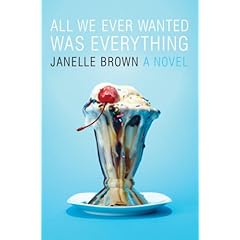
I don’t have much time to write (deadlines loom!) but just want to point you all to a most excellent book I read over the weekend, Janelle Brown’s All We Ever Wanted Was Everything. It’s a biting, point-on satire on the order of Jonathan Franzen’s The Corrections; it’s also what the TV show Desperate Housewives could have been had the originator been allowed to keep his satirical vision, had network television not ridiculously cheesified it, made it into the antithesis of its potential.
AWEWWE is about a Silicon Alley family coming unglued, ironically in the wake of a financial windfall from skyrocketing stock. The patriarch decides his wildly successful IPO makes for the perfect time to abscond with his mistress, who happens to be his wife’s good friend. Matriarch Janice, a prototypical upper middle-class suburban housewife, gave up career and grad school to be a homemaker, raise the family in the highest style her husband’s salary could afford, only to become by turns the pity and laughingstock of her suffocatingly stuffy gated community. Left career- and husband-less at 49, she has nothing, and it’s heartbreaking to watch her drugged up in her bedroom poring over old copies of Parisian gossip mags in an attempt to regain her youth. After college, she was all set to go on postgraduate study abroad, a dream stifled by her first pregnancy.
The youngest daughter, 14-year-old Lizzie, hopelessly overweight, turns to promiscuity to try to reverse the tide of her unpopularity at school. Middle daughter Margaret is the character I personally felt the strongest for — perhaps she is the one whose life most resonated with me. At 29, with several degrees she’s the opposite educationally of her mother, yet she finds herself completely suffocated with debt after trying to make a go of a serious writing career. Problem is she put all her efforts into founding a literary post-modern feminist magazine, which doesn’t do so well, particularly in L.A. So angering to watch her screenwriter and music video-producer friends throw money around the table of a posh restaurant like confetti, while Margaret struggles to come up with her third of the friend’s birthday meal — $350.
This is what you get in these lovely United States for doing well in school, for remaining true to your ideals, for being a good housewife and mother and giving up your career for an unplanned pregnancy, for trying to lose weight and become popular.
Of course it’s not entirely dark. Through crisis the women (all so different) do come to understand each other, or at least try to. My only problem with the book is that the father seems a little too one-dimensional. Satire or not, I think all characters have to have some semblance of believability, of sympathy, even if we strongly dislike them.
Interesting thing though, I was glancing at the customer reviews on Facebook and Amazon and people seemed pretty bewildered, didn’t seem to get that it was a satire. Customer reviews were sharply at odds with those by professional critics. I scrolled down to see that the booksellers were likening AWEWWE mainly to books by Jane Green, Jennifer Weiner, Lauren Weisberger — authors of a genre that has come to be known over the past decade or so as “chick lit,” a term many female writers find demeaning (Weiner doesn’t; I’ve heard her speak on the issue). The biggest problem I find with the term is that, unlike its male counterpart, “lad lit” (think Nick Hornby and progeny), it’s become ludicrously overbroad, has come to apply to anything written by a woman whose main characters are women.
I found this book through The Elegant Variation, whose input I’ve come to trust, and when I saw who’d edited it — Julie Grau — I knew from other books she’s done I’d likely be happy with this one. But when I went searching for it at Barnes & Noble, I found it shelved with “beach reading,” along with the other aforesaid books. I don’t think I would have picked it up if I hadn’t seen it on Mr. E’s blog, and after finding it where I did in the bookstore I questioned whether I wanted to buy it until I saw the editor. If a book is classified a certain way, people expect a certain thing. With “chick lit” I guess they expect a light romantic comedy with pretty, happy people whose crises are slight and common enough that many readers can wholly relate without trying very hard. AWEWWE is a dark satire, much more akin to, as I said, The Corrections, or to Rick Moody’s The Ice Storm or Sam Lipsyte’s Home Land. No wonder people were shocked. But then again, maybe it’s not such a bad thing to “trick” young people into reading literature…
Anyway, here’s an apropos interview Ms. Brown gave to Jezebel.
I found this short story by Alfred Doblin about a ballerina’s struggle with her body in Words Without Borders, whose current issue is devoted to psychiatric themes. (via Maud)
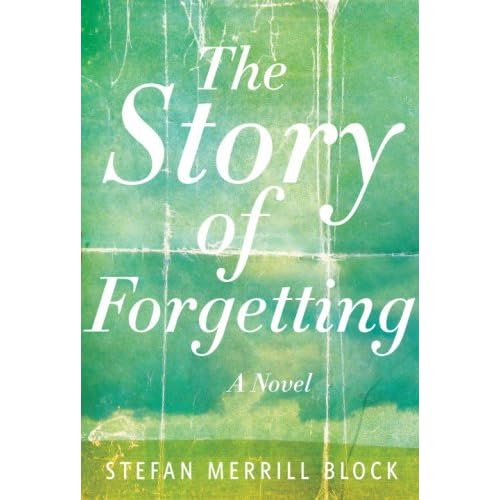
I absolutely loved this novel and highly recommend it. It’s about three generations of sufferers of early-onset Alzheimer’s (which can come on as early as 30, which I didn’t know). It’s partly a portrayal of the disease itself, partly a meditation on memory and its ramifications, but mostly it’s just a beautifully-written story about the need for human connection. I won’t be forgetting Abel Haggard for a long time.
Here is the author’s website. And here‘s a short autobiographical piece, equally compelling, that he wrote the Guardian.

Saturday night I went to Central Park’s Summer Stage to see Israeli choreographer Nimrod Freed’s PEEPDANCE, performed by his new company, Tami Dance Company. The peep-show aspect ended up going along well with the little theme of my weekend, since I’d stayed up till all hours of the morning the night before finishing Charles Bock’s excellent BEAUTIFUL CHILDREN, a dark novel about the underside of “the fabulous Las Vegas.”
Anyway, I loved this show!
They had about six different tents / boxes/ cages — whatever you want to call them — set up on the west side of the field, each housing one dancer apiece, one cage — the most popular one — a couple, male and female. All dancers were clothed, dancing mainly modern-style dance but some more social dance, making various poses, some acting, a couple breaking the fourth wall and engaging with the “audience” — meaning, the sets of eyes looking in on them, but there was of course no actual stripping, unless you consider the shedding of an outer jacket or a monk-type figure taking off and on his hood or a a woman off and on her mask to be such.
But it really made you think about the voyeuristic nature of dance, how dance can be a kind of strip-tease just in its emphasis on the body, the voyeuristic nature of voyeurism in general, and the gendered aspect of all this. In an interview choreographer Freed said audience members would run back and forth between the various cages, but it didn’t matter; you got what you were supposed to get if you simply peered into one box, from various peepholes. After viewing the show twice (they ran it two times) and talking to people during and afterward, I disagree with him. I think what you get out of it depends on which box you look into, whether you look into more than one, and in which order.


I began with this box of the monk (although on looking at my pictures, he looks a bit grim-reaperish; and, now that I look at the picture, those peep holes kind of look like bullet holes, though I didn’t notice that during the performance). He was moving slowly, deliberately, kind of hauntingly, taking on and off his hood, albeit without really letting you see his head. I thought this was interesting, but was curious what was in the other cages, so moved on.

Second cage was a woman making various modern dance moves, contorting here, expanding there. I moved on to another to see a slightly more agitated woman thrashing about, at one point donning a mask. Another box held a woman moving more gracefully, another an older woman doing the same.
One thing I noticed about myself was, when I started peeking in on the first woman, I felt kind of ashamed, like this is perverted. Is this what it feels like to be a man at a real peep show, I wondered. Do they even get embarrassed by what they’re doing? I backed away from my peephole and looked at other people peering through the holes. One woman standing next to me caught my eye and gave a nervous laugh; maybe she felt the same way.
Anyway, by far my two favorite boxes, and the two I kept coming back to were one containing a young woman, speaking Russian, whose dance was the most performance-art-y, and one containing the couple.


Both of these kind of told a little story with their movement, there was variety in their performance. When I first peered in at the couple, they were flirting, or she was trying to flirt with him rather. Later, they fought, later they cuddled lovingly, at one point there was almost an S&M quality, as she hurled herself at his feet, he nearly stepping on her. At one point, she carried him like a baby. He was shirtless, wearing a black faux leather skort, she a black dance top and short bottoms.
What was interesting to me was when he began to play to the audience, making eye contact with the various peeping eyes.

He was very confrontational with people, and it really unnerved me. I backed away when his gaze caught mine. It was then I realized how freakish other people eyeballs peering through those holes looked. All eyes began kind of darting back and forth at each other, seeming to think the same thing, worried this guy was going to come after us. There was a kind of bonding of peepers. The woman in the box with him tried to keep him at bay, but he wouldn’t have it. He sneered at the eyeballs, clawed at us, thrashed himself into one sides, making the whole wobbly box sway precipitously.


At one point, he even began climbing over the side. I ran away!
A woman who arrived late saw all the people standing at the couple’s tent, and walked over. The first thing she saw when she peeped in was him throwing his waist right into the side she was on, near her peep-hole. She backed away quickly, frightened. “I don’t think I like this!” she said to me. I told her not to worry, and to go look in some of the others; they weren’t so nuts!
What was interesting to me though was that he was the only dancer / ‘stripper’ to be so confrontational, to get so angry at the peepers. In fact the only other person to break the fourth wall and acknowledge our presence was the Russian woman.

But she wasn’t confrontational, and definitely not angry; instead she was by turns submissive, playful, humiliated. Here she is pointing jokingly out at a viewer. When someone stuck their camera lens through their peephole to photograph her, she puckered up and posed, then began laughing, at first cracking herself up, then her laugh turning into a cry, a wail, like she was a poor imprisoned animal. She threw herself on the ground, only to get up, brush herself off, and dance.

Then, she walked around the perimeter of her cage, asking in Russian for money, “Pojalsta, pojalsta, dollar,” she’d cry out, holding up a finger. At one point someone gave her one. She thanked him, put it in her mouth, and chewed.


She took it out and tried to give it back to the man who gave it to her, who wouldn’t take it. No one would. No one wanted a chewed spit-laden dollar bill! I thought how hilarious it would be if a real stripper did such a thing.

Then she tried to do what she considered a “sexy dance” — though she was so innocent, it, pretty hilariously, wasn’t strip-tease-like at all. She kept talking throughout, in Russian, which I didn’t understand, but, from the tone of her voice and the questioning look on her face, it seemed like she was asking us if we liked what we saw.
I just found it interesting that the man, the only man (besides the monk guy), was the only one who kind of violently acted out against being “peeped on.”
It was a great turnout. Here they all are onstage for a bow.

I met up with Evan there, who took some great photos and posted her own thoughts here. Also, the Winger’s Deborah Friedes wrote about seeing the show in Israel, here.


The other night, despite my headache, I went out to Lincoln Center to see Midsummer Night Swing — not to participate, just to check out its new location at Damrosch Park (it’s usually held on the Lincoln Center Plaza but with all the construction, they relocated it for this summer). I think it’s actually a much better location than the Plaza. There’s much more space to set up food stands, sell drinks, and there’s even a nice little gelato place in the front. And there’s tons of space in the park’s wide walkways — far more than on the crowded Plaza — to dance without having to pay the $15 to go into the bandshell’s dance floor (which is probably why they don’t normally hold it here).
Anyway, Dance Times Square (Tony Meredith and Melanie LaPatin’s studio) is going to be hosting this Thursday’s lesson and performance. According to the schedule the dance is Swing. Go here for the full schedule.
Also, in preparation for spending the rest of the summer revising my novel yet again (hopefully for the last time) and working on some other smaller things, I’ve been going to readings, many of them outdoors. Here are a few:

A discussion by debut novelists (from left to right) Charles Bock (whose book, Beautiful Children, I’m reading now), Stefan Merrill Block (whose book I want to read next), Sophie Gee, and Ceridwen Dovey moderated by biggie Random House editor (and novelist) David Ebershoff, in the Bryant Park reading room.
Gee had an interesting idea: she’s an English professor at Princeton and teaches 18th Century lit, which most of her students, she said with humorously self-deprecating woe, take only to meet their period requirement. Tired of getting dead stares and snickers when she exclaims how fascinating is some of the literature, like Alexander Pope’s Rape of the Lock, she decided to rewrite the story, for contemporary audiences. Definitely want to check it out.

Jonathan Miles reading from his debut novel Dear American Airlines at The Half King in Chelsea. He is surprisingly soft-spoken and with the acoustics in the pub it was very difficult to hear him. I used to love going to readings there but they’ve got to either turn down or off the pub music while the reading’s going on or get better padding for the door separating the bar from the restaurant reading area (and then prevent people from constantly leaving and entering). I personally think they should just open everything up, turn off the music and put the reader’s mike on all speakers; let the damn boozers listen to a 30-minute reading for cry-eye!

Junot Diaz (Pulitzer prize winner for “The Brief Wondrous Life of Oscar Wao”) and Aleksandar Hemon read together at Central Park’s Summer Stage, and the place was very happily packed. This area’s normally used for bands, so very exciting for a couple of writers to fill it up. That was an excellent reading and discussion (albeit, at a little over two hours in length, a bit short). I think all writers going on book tour should take reading lessons from Diaz; he’s by far the liveliest I’ve ever heard. In response to an audience question about why some authors get so much public attention and seem unfairly more popular than others, he said you can’t worry about how the work is going to be received by the public as you’re writing it; you don’t write for the present, you write for the future.