Dance Critics Association Conference

The annual DCA conference happened last weekend in Washington DC. I had really wanted to go but there was so much going on here and I kind of exhausted my travel budget last month between England and the Caribbean :S

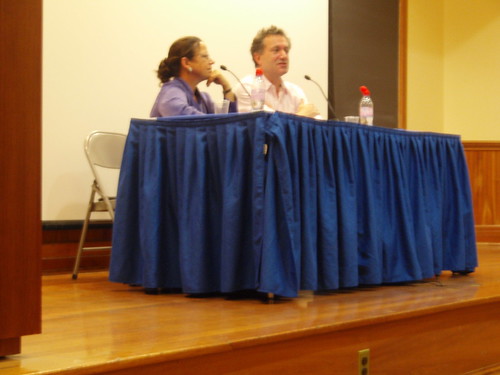
Speakers and panelists included Laura Jacobs (a critic and novelist who writes beautifully lyrically about dance), Doug Fox of Great Dance (who spoke about using the internet to promote dance, his specialty), my friend Apollinaire Scherr (it was her first time speaking there!), and of course Alastair Macaulay (chief critic of NYTimes), among others. Presiding over the event was Robert Abrams, the Association’s President and the founder of Explore Dance (and my editor there — which is probably why my Blackpool review isn’t yet up 🙂 )

Anyway, thankfully Taylor went and she will be writing about it in her next few posts. It appears from Taylor’s first post that it was a fascinating and inspiring weekend and now I’m all the more sad I didn’t go…

Diana Vishneva's "Beauty in Motion" at City Center

I’m writing a review of this for Explore Dance, so will make this short; I wanted to post something quickly since it’s only showing tonight and tomorrow (Sunday) matinee.

It’s funny to me that dance-makers and fans always complain that critics are destroying dance with their negative reviews. I think they often do the opposite, creating loads of hype, sometimes deserved, sometimes not. And you don’t know which it is until you’ve seen the program. In this case, I’d say the program is worth seeing, but not for the reasons the critics say. The highlight to me was the brilliant brilliant Desmond Richardson of Complexions Contemporary Ballet, in the third ballet of the night, “Three Point Turn,” Dwight Rhoden’s exciting piece about the turbulence of male / female relationships. Richardson had two breathtaking solos that brought the crowd, rightly, to its feet. For a ballet-trained dancer he excels at the sharp, angular, staccato movements that are the hallmark of modern. He’s really a marvel.

I also enjoyed in that last piece Kirov danseur Mikhail Lobukhin. He’s a muscular man with a longish blonde mane and highly arched feet that, when he points, enable him to make beautiful lines. He has kind of an androgynous appeal, which works well for this piece in which masculine violent passion and feminine romantic love are often evoked simultaneously.

In the first ballet of the evening, Alexei Ratmansky’s “Pierrot Lunaire,” which aims to put to dance a set of Fifteenth-Century European poems about a clown’s descent into madness and back again, and in which the clown is depicted alternately by four dancers (all from the Kirov), Alexander Sergeev was my favorite. He interpreted his clown’s changing happiness, sadness, sexual fervor, and madness with the most pathos, and I couldn’t take my eyes off of him.

The show is meant to celebrate Diana Vishneva, the Russian ballerina who is currently a principal with American Ballet Theater as well as the Kirov Ballet, or Mariinsky Theater, in St. Petersburg. The middle piece, by Moses Pendleton, the modern, not ballet, choreographer who founded theatrical dance companies, Pilobolus and MOMIX, is the one that most celebrates Vishneva, because it allows her to have the stage entirely to herself. I don’t think she works tremendously well with others (which I’ve noted before), and I have yet to see what all the critics are so orgasmic about with her, but Pendleton gave her some brilliant props to work with — particularly a large mirror upon which she lay in various positions, she and her reflection together evoking a series of imaginative shapes, and a beaded headdress which she wore and spun around repeatedly in, making interesting forms with the material — and the result seemed to be the crowd-pleaser of the night (other than Richardson).

At the end of the last piece, the curtain went down, then rose again. All dancers besides Vishneva were onstage. The dancers linked hands and came forward for a group bow. Then, each came forward one at a time — five in all — then another group bow. The dancers began looking at each other, a bit concerned. The conductor — shaggy-haired and good-looking I might add! — came onstage and took a bow. The dancers took another group bow. The singer came onstage and took a bow. The audience applauded on and on, for a good ten minutes. The dancers looked at each other, more worried. Audience members began to shrug their shoulders. “Is she coming out?” someone whispered. A few began to leave. One dancer, I think it was innocent-faced Sergeev, gave a nod and the dancers walked forward, arms linked, for yet another bow. Vishneva has refused to take bows before: at ABT’s opening night Met gala last year, she wouldn’t come out for her Sleeping Beauty curtain call. Ballet Talk talkers surmised she was upset about her performance. I didn’t see anything lacking in her performance and wondered whether it was just that she had to share the stage with two other dancers who played Sleeping Beauty (at the gala, they had three women dance the part for variety). I turned around to peek at Kevin McKenzie (ABT’s artistic director, who happened to be sitting behind me); he didn’t seem to have a clue as to what might be up either. I turned around and put on my coat. Some other orchestra members came out for some bows. Then another dancer group bow. The lady beside me excused herself and walked past me. I was just about to grab my bag and go when, finally, in what must have been a good fifteen minutes after the end of the last ballet, she emerged from the wings, bedecked in a velvety black, floor length gown with a several-foot-long train. But she didn’t just walk out onstage to the middle of the lined-up dancers; she walked around clear to the back of the stage, proceeded all the way around the row of dancers, went nearly into the opposite wings, and came around in front, prancing to the front of the stage and taking several very long, drawn-out bows. I think by that time all of our standing ovations and applause had long been spent on Richardson, and I heard several harrumphs of annoyance. I know it may be a Russian thing for the prima ballerinas to act like drama queens in taking their bows, and some may see it as a point of amusement for American audiences, but I think people were more confused and annoyed than entertained.

Anyway, the show’s worth seeing for the interesting choreography, the excellent guest dancers from the Kirov, and for Richardson. Go here for tix. Here are a couple of other write-ups from my fellow bloggers, Jolene and Art in California, who have different points of view regarding Vishneva, from me.

Apollinaire and Diana!

My friend Apollinaire Scherr has an excellent article on the bewitching ballerina Diana Vishneva in this week’s New York Magazine! Apollinaire makes me so jealous the way the writes about dance 🙂 And check out the spellbinding photograph by Armen Danilian.

Vishneva will be performing next week at City Center with Desmond Richardson from Complexions Contemporary Ballet. The two will dance choreography by the man everyone in NY is talking about these days, Alexei Ratmansky. Go here for tix and info.

Lobenthal, Tobias and Gladwell

I don’t have much time to write today, so just want to point to a few good articles on the web.

1) Joel Lobenthal’s review of recent Alvin Ailey Dance premiere, “Groove to Nobody’s Business.” I loved this dance, as I wrote earlier, but Lobenthal makes me realize why with his discussion of how choreographer Camille A. Brown carefully worked out what I called the kind of spazzing out of anxious would-be subway riders to the rhythms of the music and orchestrated the dancers’ movements into a coherent whole, so that it only looks like a bunch of spastic frustrated jumping about when it’s really meticulously crafted. Also, he made me realize I’d forgotten to mention the fun centipede shape the dancers all make with their in-sync footwork while seated on the subway!

2) Tobi Tobias’s review of the other Ailey piece I just wrote about, “The Road of the Phoebe Snow.” Scroll down to the bottom of this post: I love how she talks about the advertisements for the railroad and how snow-white Phoebe was portrayed, and how choreographer Talley Beatty, who lived near those tracks and knew well the surrounding area, was showing what really went down along them. I wasn’t familiar with those advertisements and they shed light on Beatty’s work.

3) This has nothing to do with dance, but Malcolm Gladwell has an excellent article / book review in this week’s New Yorker showing how so-called IQ tests measure, basically, class. So all those claims that such tests show one race’s inherent intellectual superiority over another are all enormous mountains of racist idiocy.

Junot Diaz is a Chatty Character, Who Knew?!

Look what Maud Newton found. Apparently, Google has a whole series of authors reading from their books and giving little lectures available for viewing on YouTube. The video embedded in Maud’s post is of Junot Diaz, whose collection of short stories, Drown, I loved, and whose new novel, The Brief Wondrous Life of Oscar Wao, I’m dying to read. Funny how chatty he is; often authors are so shy and introverted. He reads very slowly too, so you can get all the details. Many authors read fast, probably because of the shyness… There are other authors too: Jonathan Lethem, Jeffrey Toobin, Alex Ross… The series makes me very happy because I used to go to a lot of readings, but since I’ve taken to spending my evenings for the past couple of years at either dance performances or dancing myself, I’ve really missed them.

A couple of other things on the net recently: Laura Jacobs has an article about ABT dancer Veronika Part’s “Sleeping Beauty” out in The New Criterion, which isn’t available online for free, but James Wolcott has substantial quotes from it on his Vanity Fair blog. I’m currently reading Jacobs’s Landscape With Moving Figures, a collection of her dance writing in New Criterion covering about a 10-year period, and the first thing I noticed is how poetic she is when speaking about individual dancers. She talks about them so beautifully; it’s like they’re her muses. She has a chapter called “Assoluta,” which is about then current (2004) ballerina assolutas, or prima ballerinas, and she has a lengthy section on Part there. She describes Part as “a snow princess… (with) white white skin, black hair, a young Ava Gardner, a big white rose … (with) lotus-blossom aplomb, … (an) ivory-sceptor extension … pacific delicacy in the wrists and hands” and she calls Part’s developpe (slow lift of the leg, first by the thigh, then extending up and out as the knee straightens) as “not a step … but a glory,” that “comes up like a law of nature, almost animal, and stays like light.” Anyway, go here to read her writing on Part’s Sleeping Beauty.

Also, Ariel has posted several interviews she conducted with four New York City Ballet dancers when they guested recently with her hometown company, Mobile Ballet. The interviews are here and here and here and here.

Finally, there’s an interesting discussion going on between writers, bloggers, and readers about what the internet means for the future of dance journalism. See the comments section here.

And speaking of such, Doug has begun a new blog within his Great Dance blog devoted to dance reviews for each region. He’s started with New York. Anyone who’s written a review may submit.

Critics Becoming Subjects of Art, JP Morgan's Interesting Alternative to Altria, and Nacho Duato at BAM!

I saw Spanish choreographer Nacho Duato’s Compania Nacional de Danza last night at BAM and had an absolute blast — both during the performance and afterward at BAMs audience dialog with the choreographer, which was nearly as well attended as the dance performance — something I don’t think I’ve EVER seen before. Anyway, I have lots and lots and lots to say about both the dances (in particular about the second piece performed, “Castrati,” a gorgeous work about Italian male sopranos) and the talk (the latter not so much for what the choreographer said but for the audience’s scintillating questions and how he responded to them … or not!) It was a thrilling evening, and I don’t know how long it’s going to take me to get the post up and I don’t get a lot of readers on late Friday afternoons, so I’ll just say now that I highly encourage everyone in NY to go out to BAM and see this show: it’s only on tonight and tomorrow. Go here for info.

A couple of other things: experimental choreographer Clare Byrne sent me a couple of videos she put on YouTube in response to chief NYTimes dance critic Alastair Macaulay’s writings (and some of his remarks recently at Barnard), which I think are quite funny, especially the second one (which can apply to some other people I know as well 🙂 ). I once saw a piece at PS122 about the choreographer’s excitement over a cool pair of shoes he saw Gia Kourlas wearing, which was pretty funny. Interesting when critics become the subjects of the art they critique…

And here is something else I found really interesting. JP Morgan is apparently running a writing contest for students. The subject is which non-profit organization do you think is most deserving of funding, and the winner gets a $25,000 grant given to their subject organization. Chris Elam of Misnomer Dance Theater is encouraging students to enter the contest in support of dance.

Finally, Doug Fox is going to be giving a talk downtown next Wednesday on the internet and the future of dance. He found classical music writer (and blogger) Alex Ross’s article in the New Yorker about the internet’s promotion of classical dance thought-provoking. I’d skimmed that article but started to get discouraged because many of the things he highlighted seemed largely inapplicable to dance because of the way music better records than dance (shades of Paul Parish here). Anyway, read Ross’s article and Doug’s post on it yourself and if you have any thoughts write to Doug and he’ll hopefully address it all next week.

And (NYers) don’t forget to go to BAM this weekend (and read my enormous upcoming write-up on castration and female genital mutilation and gender and masculinity and femininity and beauty and drag and all the other deliciously sexy thoughts Duato’s work and discussion of it provoked!) Dance can really be so much fun 🙂

Auspicious Kickoff for Writers Room Reading Series

Last night marked the start of the new season of Writers Room member readings downstairs at the Cornelia Street Cafe in the Village. Turnout was amazing — the best I’ve ever seen! Hey man, it had better be the same for my reading, in January… Last time I read was in late June, when everyone had apparently already taken off for the summer… This was an interesting audience: I’d say about two-thirds were men, yet three of the four readers were women. That’s the way it should be of course: a bunch of men listening to women 😀

It seriously made me very happy to see so many people supporting the written word. Readings are every third Tuesday of the month; cover charge is $7 and includes a glass of wine. What better way to spend a Tuesday evening than drinking wine and hanging out with a bunch of writers, right!

Got home just in time to see Dancing With the Stars. Aw, I was sad boxer guy got eliminated; he was one of the ones whose attempts at the Paso tour jete I was so enjoying Monday night. And I’ll definitely miss my favorite, Karina, although it seem like the pros are returning often to perform on the elimination shows. It was kind of nice that when Gloria Estefan didn’t show, they bumped the backup band to center stage for once. They were pretty good. As for Wade Robson: I’m sorry, I just don’t get him. I’d say his dance was like a circus, but, well… I think he is a great mover himself though. My favorite part was at the beginning when he danced. He kind of reminded me of Walter Dundervill. To be honest, I think I’d like to see more of him, less of his choreography, though it seems everyone else loves the latter, so I must just be weird.

Anyway, a couple of other miscellaneous things: here’s a good article on Christopher Wheeldon in New York magazine; the same issue also has an interesting cover story on huge media blog Gawker and what the writers’ increasing snarkiness says about the have and have-nots in today’s media hierarchy. (Should there be a Gawker for dance? Perhaps that’s part of our friend CC‘s purpose?) And here is a website I just found devoted to Pacific Northwest Ballet company. It’s mostly website as opposed to blog: you can write in and ask your favorite dancers questions, and there’s a little portrait of one dancer at a time (current one is of Carla Korbes), and some photos, but it would be very cool if they could host several of their dancers’ blogs as well. And I can’t seem to find anything on my former favorite NYCB man, Seth Orza yet. Hmmm….

Very Happy Night :)

It’s almost 4 in the morning and I’m very tired, so am just going to post some pictures now and will blog about it (So You Think You Can Dance tour) tomorrow (well, later on today, I guess). In general, it was a lot of fun, the dancing was all excellent — really some of the best I’ve ever seen, the choregraphy so so (some good, some not as good as the rest, but oh well … there was a new group number I hadn’t seen before: the swamp creatures? Was it on a show I missed? Anyway, I really liked it — it was contemporary lyrical mixed with some African moves, very interesting). Dominic is a doll, has THE BEST personality with a great comedic sensibility and I think has a future as an actor, seriously! He also looked awesome break-dancing on that big stage! Danny it goes without saying looked great on a big stage as well, but I still think his solo (same one he did on the show) could be much better — turn some of those grand jetes into barrel turns and do some of the pirouettes on a bent knee going up and down like Angel Corella 🙂 In my opinion Pasha and Anya stole the show with their samba/cha cha, but of course I am biased 🙂 One thing I noticed is that Latin / Ballroom looks better on TV and on a small stage, ballet on a big stage. (Tidwell, by the way, introduced himself as a jazz and contemporary dancer, no ballet.)

My only real criticism of the program is that they had too many flashbacks and too much talk about the show and not enough dancing! They had three big screens erected over the stage and they used them to show all these scenes of early rounds in which bad people were eliminated (why do we need to see this again?), they showed scenes over and over and over again of people falling, they had a bunch of footage of those little off-screen moments between the dancers most of which were already shown on TV, and the judges’ reactions to things, and even some of the dancing on the show. I wish they would have axed all this and just created more original dances for the dancers to perform. I guess it was more of the actual show on tour rather than the dancers on tour. But it was still a very fun night. I’m perturbed at Danny though for not showing up to the backstage “meet and greet”!!!!! Where were you, Danny????

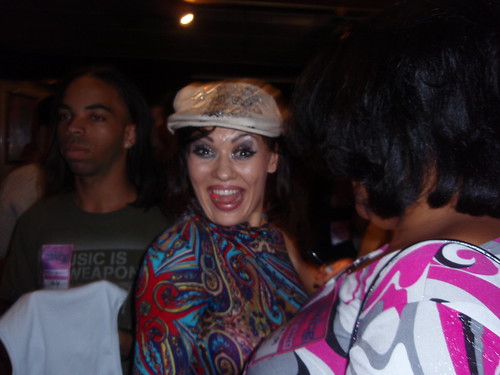
Anyway, here are a few pics (the rest you can find by clicking on the link to my Flickr page, which is that very last link on the right-hand side of the blog):

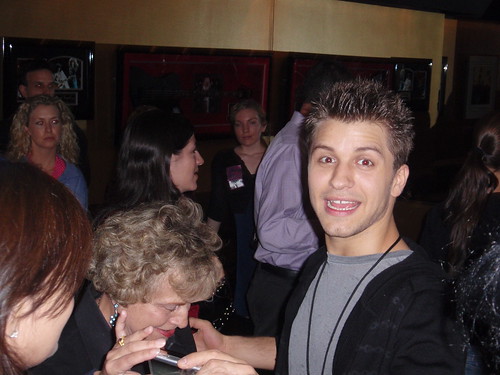
Pasha greeting former student, Elaine, and spotting me!!!

Anya doing the same! (greeting another of Pasha’s former students, Mariana). So many of us 🙂 He sure was popular 🙂


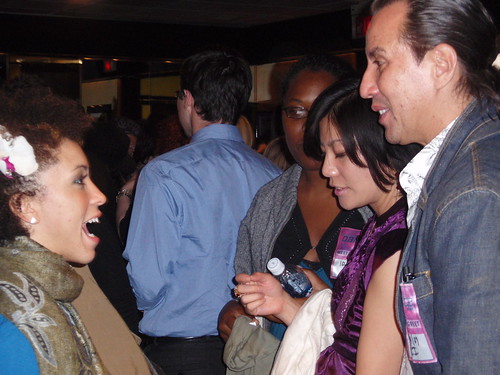
Sabra greeting Tony Meredith.

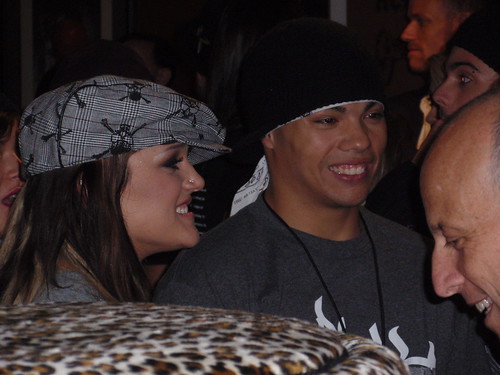
Dominic and Lacey.


Neil greeting what appear to be friends.

Neil and Lacey performing the Mia Michaels choreography dedicated to her father.


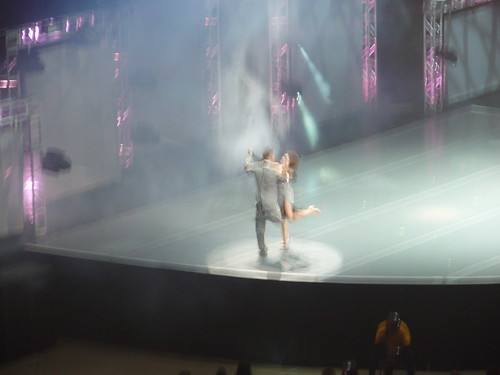
Danny and Neil doing Mia’s “Princes” piece.

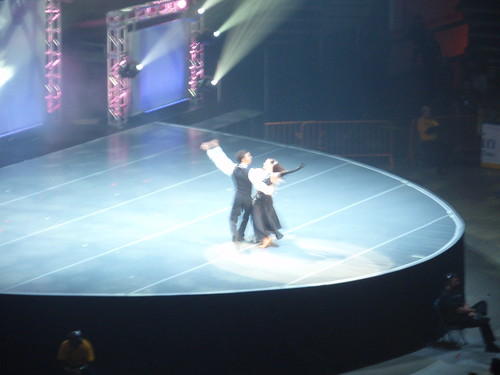
Sorry my pictures are so blurry but I was one of the few who actually obeyed orders and turned off my flash. If you’re a dancer and you’re reading this and you’re thinking of trying out for the show, just be assured that if you make it to the end you’re going to be performing amongst bizillions of flashes going off incessantly! It was crazy — it was like a continuous light show in there!

Pasha’s solo. He used a cape this time, no mannequin 🙂

Group number.


Danny and Anya’s beautiful waltz.

Pasha and Anya’s samba / cha cha.


Pasha and Sabra’s quickstep.

Hehhe, going back in time to the beginning of the trip, when we were just boarding the bus to go out to Long Island, this is Steve, a friend of mine from the studio and Anya’s former student, telling me, apropos of my crazy rampage yesterday against poor Claudia LaRocco and dance criticism in the Times (he assures me he reads my blog, just doesn’t comment 🙂 ), that he enjoys The Sun!


One more of Pasha! Here with former student Mariana. Isn’t he cute!!!!!

Okay, that’s all for now, I have to go to bed. It was a very fun night and I really had a lovely time reuniting with all of my friends from the studio, and of course seeing Pasha and Anya, and of course watching all of these amazing dancers. I am out of my bad mood now 🙂 At least until I read the reviews!!!

Dissing of Kyle Abraham And Shallowness of Ballet World Is Marring My Pasha Excitement

Tonight is the fabulous Dance Times Square escapade to see Pasha et al in the So You Think You Can Dance spectacular. I am really excited about it — have no less than three cameras in my bag just in case of battery outage (though I charged everything anyway — just the neurotic in me) 🙂 I do hope they let us backstage and to take pics; otherwise expect a copious write-up! Good: I was upset this morning after logging onto some of my regular dance websites, and am now feeling better just writing about tonight 🙂 Thanks Pasha, and thanks blogging software 🙂

What I’m really upset about is how shallow the world of ballet seems to be. At the Fall For Dance festival a few days ago I saw a most profound, moving work performed by African American dance-maker Kyle Abraham. As I wrote earlier, to me the piece used a combination of ballet, modern dance and hip hop to explore racial and gender issues and evoke the struggle to break free of prejudices — both those held by others and sometimes subtly taken on yourself. I’m very upset about the complete dismissal and oversight of Abraham’s work by both the press and the blogosphere. NYTimes chief dance critic Alastair Macaulay says only of the work that it was show-offy and involved too much upper-body “archness.” (Macaulay also criticized Wheeldon’s “After the Rain,” which I liked, but I’m not bothered by that because he actually gave it the time of day and analyzed it a teensy tiny bit; I’m far more disturbed by his complete dismissal of the meaning inherent in Abraham with no real analysis to speak of).

Similarly, Justin Peck of the Winger, a NY City Ballet dancer and Columbia University student wrote a little review of the night, perhaps for his class on dance criticism, and in his review of Abraham, he simply names the different dance forms used, then dismisses the piece as lacking “structure” (without further analysis). Neither reviewer seemed even to notice the racial or gender implications of the work. How anyone could fail to hear the loud gunshots and ambulance / police sirens going off at the beginning of the piece is completely beyond me, but I guess I’m a criminal appeals attorney who’s represented poor minorities for the past several years, so such noises may be more resonant to me. (By the way, a bit off topic but important: I think all attorneys should at some point in their careers represent someone whose life is starkly different from their own — even if it’s just pro bono — it expands your universe exponentially).

Then yesterday on The Winger, smart ABT dancer David Hallberg, posted this video of choreography by Mats Ek, whose work he was moved by at the Fall For Dance performance he saw. I thought it was a beautiful, moving portrait of a woman’s sorrow at losing her husband. Others, however, couldn’t see any sorrow, any story, but only focused on dancer Sylvie Guillem’s beautiful feet. Yes, Guillem has great feet. But is an attractive body part what really draws people to this art form? Is that what ballet is all about? Prettiness? Is it not about meaning, about moving people by telling them a compelling story, about making people think? Is ballet really that unintellectual? I have two advanced degrees. If you don’t at least try to stimulate my brain cells with your so-called art, I’m perfectly happy to return to favorite novelists who actually explore the human condition.

The problem isn’t just ballet fans though. I feel sometimes that those entrusted with stimulating public discourse are not even trying. (Here I’m primarily speaking of critics who write for the NYTimes, which I admit, is the only paper I regularly read due to both time and money constraints). Claudia LaRocco’s review of the final night of FFD read something like this: this whole festival is stupid, so it goes without saying that everything I saw that night was stupid. The first piece, in addition to being stupid was ethnically insulting in its “cliched” use of Indian dance to characterize London business culture (no further analysis as to exactly what it was about that piece — a huge crowd-pleaser that I found very intriguing — was cliched); the second piece (a brief excerpt of Camille A. Brown’s evocation of a woman trying to find herself) was bad because Brown moved too fast; the third piece was worthless because it was just there (no further analysis); the fourth piece comes from a choreographer (Jorma Elo) whose work always sucks; and the last piece was bad because it was “pleasurable only at a kinesthetic level and only at times.”

The critic character in Laura Jacobs’s novel, “Women About Town,” which I’ve quoted from before, views her work as deciphering for the public just what it is that makes a performance work or not, and unlocking and illuminating the hidden meaning of a piece (“there’s always a key,” she says at one point, though I’ve returned the book to the library so may be getting the exact quote wrong). I just don’t see any of that going on in the world of dance.

Tellingly, LaRocco begins her review by asserting that these days there is such a plethora of crap the best a critic can hope for is “competence.” These critics are coming from a place of anger, not of analysis. Countercritic led me to this article bemoaning how bloggers are displacing professional critics, which, the author argues, is tragic given critics’ historic role in leading the audience to understand and appreciate something in which they couldn’t previously find value (ie: Beckett’s “Waiting For Godot”). Okay, I understand that. But can someone please tell me when was the last time a dance critic illuminated a work of cultural value that was dismissed by the general public instead of the other way around?

I can’t even begin to describe what that auditorium sounded like after the presentation of Elo’s work (the ‘always sucky’ choreographer). His “Brake the Eyes” which I wrote about earlier, was so stunning, so brimming over with meaning, the audience was buzzing with discussion after the china doll / puppet ballerina snapped her fingers and the lights flicked off. “Was she controlled by the others or was it the other way around?” “That combination of music was so interesting!” “What was that cool music besides the Mozart, it doesn’t say in the Playbill.” “What was she saying in Russian?” were some of the questions I overheard. People are starved for analysis. Some of these people (especially the young and internet savvy) are going to come home and Google “Jorma Elo” or “Brake the Eyes,” and what are they going to find? Certainly not analysis. How can the public find meaning in concert dance, see it as anything other than the movement of attractive body parts if the writers aren’t trying to lead them the right direction?

Of course I know newspaper writers are under very strict word count limitations, making it impossible for them to delve very fully into their subject. But in the age of the internet, can’t at least the web articles be longer? Also writer Paul Parish has an interesting analysis of the newspaper problem (go to the very bottom of this post — scroll all the way down to where the bold reads “Paul to Tonya et al” and then to the paragraph that starts “I still think…” Foot in Mouth posts tend to be delectably gargantuan!!!). I don’t entirely understand what Paul is saying, but it sounds intriguing!

Anyway, the closer it gets to 4 pm (when the magic DTS bus departs for SYTYCD land), the better I am feeling. Hopefully I should have a good dance night: there won’t be any ballet there, after all 🙁

Yay, Christopher Wheeldon Saves Ballet! And Wendy Whelan :) And Pasha!

Okay, Pasha didn’t save ballet; he actually doesn’t have much of anything to do with ballet, other than that he’s touring with Danny Tidwell right now. But he’s on my mind because last night, on my way to Fall For Dance, I stopped by Dance Times Square to pick up my receipt for the long-awaited and highly anticipated “DTS Students And Friends Outing” to the Nassau Coliseum next Tuesday to see Pasha’s tour!!! Er, I mean the So You Think You Can Dance concert tour 🙂 I chatted with Melanie a bit, and she told me that they’re trying hard hard hard, fingers crossed fingers crossed, to get the SYTYCD tour powers that be to allow us all backstage. Apparently they don’t have a problem with a couple of people, but they freaked a bit when she told them we’re a group of, more like … 40. Still! Come on, we’re a bunch of ballroom dancers, how rowdy can we be??? Please SYTYCD people in power, let us in to see our friend and beloved former teacher! We promise to behave! We promise!!

Okay, on to Fall For Dance. This is a most excellent event that’s taken place at City Center in midtown for the past I think three years now. Each night for about two weeks four or five different dance companies perform an excerpt from their repertoire. Tickets are a miraculously low $10 for the whole night. So, audiences — especially young audiences — can be exposed to several new companies for only $10 a night!

Last night marked the very first performance in New York by a promising new ballet company, called Morphoses, whose mission is to bring new life and new audiences to that most poetic of dance forms that many have feared is getting a bit withery and dried up. It’s founded by 34 year-old Christopher Wheeldon, formerly the first-ever resident choreographer at New York City Ballet. Wheeldon doesn’t yet have a permanent group of dancers, but is using guest dancers from several ballet companies, mainly NYC Ballet. I’ve loved so many of Wheeldon’s pieces that I’ve seen at NYCB over the past couple of years, so I have really high hopes, as do, I think, the vast majority of ballet lovers here. Last night the company performed not a brand new work, but one created by Wheeldon a couple of years ago for NYCB, a lovely duet called “After the Rain.” I see it as kind of a bittersweet pas de deux whose theme is a couple’s attempt to patch things up and find some common ground in the aftermath of a bad fight. It was danced by two NYCB dancers, the really cute Craig Hall and celebrated prima ballerina Wendy Whelan, to Arvo Part music composed of a string and piano section, in which the light tapping of high piano keys actually sounds like rain drops. It goes without saying that Wendy is just such an incredible dancer; when I see someone like her perform I realize it’s not just a choreographer who’s responsible for the success of his or her work. She dances with such conviction, with a fully formed thought in her mind of what her movements mean so that even though she dances mostly abstract ballets, as with this one, there’s just such an intensity and drama to her performance, the audience finds a story anyway. Well, listen to her talk about her work herself. I really love that City Center has done this this year — put up these little audiocasts on their website of interviews with several of the artists whose work is being performed at FFD. Go here to see a list of participating companies arranged by date, click on “info” for a breakdown menu of companies performing on that date, then click on that company to be taken to their info page where you can see an interview. Very cool!

So last night was actually my second night at FFD. I went Wednesday night as well but didn’t have time to blog about it yesterday. Highlights for me have been, in addition to Wheeldon, Keigwin + Company, a rather hip, young modern dance ensemble. I really wish Larry Keigwin, the company’s choreographer, would do a piece or two for SYTYCD. He’s so much fun. They performed “Love Songs” — several humorous duets performed by three different couples, pieces of which I’ve seen before. Each couple had its own distinct ‘couple personality,’ and told its own humorous story of relationship angst. On first and last was a youngish charmingly awkward pair who were obviously trying rather desperately to get to know each other better. They danced to a set of Neil Diamond songs. In another set, a more sophisticated couple, danced by Keigwin himself and one of my favorite modern dancers Nicole Wolcott, performed a voluptuous witty tango-y pas de deux to clever-sounding French music. And the third couple, the most wickedly funny imo, evoked, to Aretha Franklin music, the classic struggle between male and female for the upper hand in the relationship, rendered all the cuter by their mismatched sizes — fleshy woman (Liz Riga, my second favorite female modern dancer), smaller man. At times, when the woman wore the pants, she would drag her beau around, at times lifting and carrying him around the floor, and, when Franklin belted out some of her “let me tell you how it is” lyrics, she’d bop her head at him right along with the words. Then the reverse would happen; he’d have her begging. Then tables would turn, she’d have him back in the palm of her hands (literally with those crazy lifts), but he’d become too needy; she realized she should be careful what she wished for. It was so fun, funny, evocative, and very relatable.

The other one I loved Wednesday night (along with the crowd) was Urban Bush Women‘s performance of its most famous piece “Batty Moves.” They tell you in the program notes that Batty is a Caribbean word for rear end, and the piece is a rather fun, raucous celebration of the African-American female form. The women sang rap lyrics, called out to the audience encouraging proud black women to rise, then launched into solo after solo of amazing combination African / modern dance. The audience was on its feet; a perfect ending to Wednesday night’s show.

Unfortunately, I felt really badly for ballet Wednesday night. The audience was filled with young and /or newcomers to dance and people related so much more to Keigwin and Urban Bush Women. The two ballets performed — one by Royal Ballet of Flanders — was a very abstract and rather slow-moving meditation on the passage of time and consisted of four couples dressed in generic pink leotards and white shorts doing abstract movements center stage while others dressed in black simply walked slowly around the stage’s perimeter.

The other ballet performed Wednesday night was NYCB’s small-scale one-man performance of Jerome Robbins’s “A Suite of Dances,” in which a male dancer interacts with an onstage violinist, at times almost cutely competitively. Robbins is my favorite “old time” choreographer, but he did most of his great work in the 1940s and 50s. And even though this particular piece had its premiere in 1994, the movement still had a very 50s feel to it, like Fancy Free. I love many of his ballets (particularly Fancy Free, as it’s often performed by my favorites like him and him), but I feel like every time I go to the ballet nine times out of ten they’re putting on something decades or centuries old. The audience was so much more into the aforementioned two pieces, not the ballet. I left with the feeling that ballet is encountering some serious relevancy problems. Kristin Sloan and I had an interesting little back and forth regarding “Suite” in the comments section on this post. I understand what she is saying, that’s it’s a softer sale, but I don’t know if the audience is really automatically pulled into a man’s own playful encounter with music. At least it doesn’t have the same urgency or speak to the human condition in the same way that glorifying a body Western Culture has long deemed “other” does. I don’t know, perhaps I would have had a different reaction if one of my favorites had performed the piece. There’s something about Marcelo‘s very being that is somehow always contemporary and relatable. It’s an extremely interesting discussion, though, classical ballet’s ability to speak to modern audiences, and I’m very interested to know what others think.

Anyway, that’s why I was so happy last night to see the Wheeldon. It was contemporary, meaningful, relatable, and gorgeously, poetically danced. Also standing out to me in last night’s program was the piece immediately preceding Wheeldon’s, “Inventing Pookie Jenkins” by Kyle Abraham. It began with Abraham, an African American man, sitting in a pile of white tulle, which, when he stood, was revealed to be a long skirt reminiscient to me of Matthew Bourne’s all-male Swan Lake. He moved about, first on the ground, then standing, at times jerky, at times with beautiful lyric fluidity, to a soundtrack of gunshots and ambulance or police sirens. Then the soundtrack changed to a provocative / celebratory hip hop song, “Respect Me” by Dizzee Rascal. Abraham’s movements alternated between hip hop and lyrical modern, as he seemingly tried to break free of … of what? A policeman’s custody, stereotypes superimposed on him, even his own self-image — which took on both a racial and gender significance. It really just blew me away and if you ever get a chance to see him perform, by all means do!

Tomorrow night is, sadly, the last night of the festival. I’ll be looking forward to “Quick” by Indian company Srishti, in which several ‘London businessmen’ use classical Bharantanatyam technique and South Indian rhythms to deal with today’s cut-throat corporate climate. Interesting! I’ll also be looking forward to “The Evolution of a Secured Feminine” by Camille A. Brown, which I’m dying to see just because of its name alone! (go here for Eva Yaa Asantewaa’s audio interview with Brown), Jorma Elo’s Brake the Eyes, which I blogged about before, and South African troupe Via Katlehong Dance.

Finally, I’m very excited about the illustrious Vanity Fair contributing editor James Wolcott’s commenting on my last post on Nureyev!!! Apropos of that post, apparently there was a big book party for author Kavanagh, which he attended and wrote about on his blog. Sounds fun, albeit a bit nerve-wracking! There were many members of the ‘glitterati’ there, including Jay McInerney, an abundance of “New Yorker” people, and even our favorite Sir Alastair 🙂 It made me think of the book parties I’ve been to — only two: one for my former Feminist Jurisprudence professor, Drucilla Cornell, a comparably very academic, toned-down affair, and one for a friend of a friend, Ben Schrank, at which I made a flaming fool of myself in front of favorite author Colson Whitehead, a story which I’ll have to save for another day since this post is now 500,000 words long.

Anyway, while I’m kind of on the subject, for reasons that are too ridiculously complicated to explain, I haven’t been able to set up a “recent comments” column here yet, so just want to point out that artist Bill Shannon whose work “Window” I reviewed earlier, left a comment on that post, along with a YouTube link; and Ruth left a comment on my Suzanne Farrell post inviting interested people to participate in a Farrell fan site she’s set up.

Okay, I’m finally done blabbering. More on my final FFD later this weekend 🙂

Sir Alastair Speaks!

But he didn’t say much. And I should probably stop calling our new(ish) Chief Dance Critic ‘Sir Alastair’ and come up with a different nickname; he came across more as a jolly, down-to-earth commoner than a lord. Anyway Mr. Macaulay, along with dance writer and professor Mindy Aloff, addressed a crowd of mainly students, critics, and dance insiders last night at Barnard College. He spoke of: his move to New York (he’s still not completely moved into his new apartment and has no television, allowing him neatly to evade the question of the moment — what about all this dance stuff on tv?); what he misses about London (his garden, the West End’s plethora of Shakespeare plays); how he felt about becoming the NY Times’ chief dance critic (it was a welcome mid-life change, he and his audience at the Financial Times in London had grown a bit tired of each other, he was worried his appointment wouldn’t be well taken since he was from out of town — and rightly so, why should a critic not be homegrown?– people laughed at this, not sure why); his most trying life moments (serving jury duty and having to announce the verdict to a raucous courtroom, being charged with taking indecent pictures of minors after an officer saw him photographing frolicking children on a beach– don’t worry, it all worked out well as charges were eventually dropped); his dance training (ballroom, reading ballet technique books and sitting in on ballet classes); his favorite artists (Shakespeare and Mozart), etc. etc. — things on that level. It was nice to see his face and hear his voice, and it did make you realize he was human despite his sometimes harsh reviews, which was probably the point of the whole thing, but it was hardly the in-depth discussion of issues important to the dance world that I was hoping for.

During the Q & A, a student asked him if he felt that bad reviews played any part in declining dance audiences. He thought for a moment and answered that he didn’t know how much of an effect reviews really had on audiences. He thought his reviews had absolutely no effect on that of American Ballet Theater, as the Met Opera House was far from packed each week during the their summer season regardless of what he’d said in his most recent review. He also felt as a critic a certain degree of harshness was necessary, as it was the critic’s responsibility to “hav(e) a passionate subjective response” to a work. Wendy Perron, editor in chief of Dance Magazine, after noting that he’d largely written subjective reviews frequently inserting his own voice, asked if he’d ever taken a more objective tone. He responded that he wasn’t sure of the difference between subjective and objective with respect to criticism, but felt that his writing was a combination of the two. He viewed the objective part as describing what he saw, the subjective to tell why it mattered.

Eva sweetly asked him in her beautifully mellifluous voice whether he was going to explore the entire New York City dance scene and all the wonderful things it has to offer. He brightened considerably and said he’d just discovered “downtown” and had gone to a performance entitled something like “Accounting” and really liked it. He sounded authentic and it was actually rather cute. I don’t think he knows he got reemed for his review of that 🙂 Countercritic guy asked him something along the lines of whether he had to consider something beautiful in order to value it. I thought it was an interesting question and Macaulay did too, and even said so. “But I’m not sure how to answer it,” he replied. He said he liked it when a choreographer challenged his notion of beauty as Mark Morris has on occasion. Which I thought was a good answer. He mentioned other such choreographers, but I’ve forgotten who– I’d put my notebook away by then and was packing to go.

Hmm, what else do I have in that notebook?… He takes a few notes during performances but usually they don’t amount to much. He was first seriously impressed with the New York Times when he picked up a copy of the paper in London and saw a review of a classical dance performance on the front page. Such a thing would never have happened in a London paper, he said, as concert dance wasn’t considered “sexy.” He doesn’t regularly read others’ reviews of a piece because he doesn’t want them to influence his own, although his favorite critics are the New Yorker’s Joan Acocella (who has an “engaging” “shrewd” voice that, even if you disagree with, “you really want to spend time with”) and Wall Street Journal’s Robert Greskovic, who has a gift for detailed description (and is his good friend and sends him copies of his reviews). He said dance and music criticism were very challenging because the dialog one had with the piece was not a direct or natural one (as with a play) but forced the critic to translate from one language into another. I thought that was nicely stated.

That’s all. It was about an hour and twenty minutes altogether. It was okay, just wish the discussion would have gone deeper.

I came home and watched the video I’d taped of Dancing With the Stars. I’ll blog about it more tomorrow — am too tired now — but, very briefly: ridiculously, he hasn’t even danced yet and I am totally in love with Helio 😀 Does Marcelo have that same accent 🙂 🙂 😀 Am also in dancerly love with Mark Ballas 😀 How great were the perfs by those “girls” — Cheetah and Spice?! Whoa! And that opening pro number: you can’t say the ballroom dancing, despite Pasha and Anya, is better on So You Think You Can Dance! I wish there were more pro numbers like that! You can tell how different the demographic is for this show as compared with SYTYCD though — they have a lot of older contestants here. I thought Marie Osmond was a bit of a goof, but charming in her own way, and Jane Seymour was sweetheart 🙂 Could some ballroom insider please smack Chmerkovskiy for me for that self-description: “I’m known as the bad boy of the ballroom. But how can I be so bad when it feels so good?” 🙂 Okay, more tomorrow, I’m off to bed…

"The New York City Dance Community"

dance community NY group photo in bryant park

I don’t know who in the dance community annoys me more: those who consider themselves hipper than thou and call themselves “downtown,” or those who consider Ballet the only form of dance.

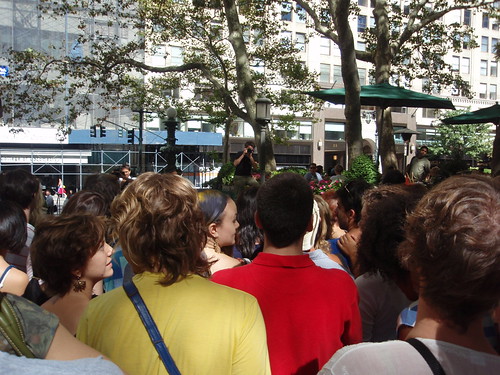
Spurred by Eva’s suggestion, I went to Bryant Park this afternoon to take part in the first ever group photograph of the New York dance community, organized by Belgian online dance initiative Sarma and local dance collective Chez Bushwick. Everyone who considered themselves part of the dance community was invited. Since I’m a dance blogger, ballet and modern fan and amateur ballroom dancer, I decided that included me.

When I arrived I spotted a robust, jovial-looking, curly-haired man wearing a t-shirt that announced he was a member of the photo op, and headed toward him. I kind of look like Sylvia Plath but shorter and with darker hair, or maybe Suzanne Farrell but not anywhere near as pretty 🙂 I have long hair and was wearing a ballet-y black bouncy-skirted sundress bow-tied at the waist by a red silk scarf, and sandals whose straps were topped with embroidered flowers. I was carrying an oversized pink bag bearing books. After making brief eye contact with me, the man peered around me to another woman and began greeting her, until I stopped right in front of him.

“Oh hi,” he said to me, surprised. “Um, we’re actually taking a photograph of the New York dance community here. Would you like to participate?” he asked hesitantly.

“Uh-huh, that’s what I’m here for,” I said.

“Oh. Oh good,” he said handing me a piece of paper announcing the rules (you gave them permission to use the photos of you on the internet and in magazines, yadda yadda). He also told me after the picture was taken, I was to sign my name on a roster of attendees and would receive a sticker entitling me to a free drink at one of the concession stands. He then told me they were running a little behind schedule and directed me to take a seat at one of the tables in an adjacent elevated area along the path.

I did as he suggested. Turned out to be the perfect little perch for me since its elevation gave me a good view of the crowd. I enjoy being an observer. Plus, I was having a bad hair day and was a little worried of running into Marcelo or David or one of my ballet heartthrobs, so could be on the lookout and duck for cover if need be. I had nothing to worry about as it turned out: there wasn’t a soul from the ballet world there.

Many people began arriving, and I didn’t know anyone. Finally, I spotted a fellow blogger in the crowd. As he was making his way to the tabled area after receiving his instruction paper, I waved to him.

“What are you doing all the way over here?” he said as he approached. I didn’t really understand the question so responded with a quizzical look.

“We don’t ever see each other,” he then announced, “because you’re a snobby elitist who only goes to uptown things. I go to all the cool downtown things.”

I just stared at him, not really knowing what to say. He laughed. Apparently I was supposed to take it as a joke.

“Well, I’m going to go around and meet new people while you sit here like a wallflower.” And he was off.

I kind of sat there stupefied. I think I saw Eva, but after that didn’t feel like getting up to say hello. Maybe some other time. I saw Jonah Bokaer, one of the organizers of the event and a dancer with Merce Cunningham. He’s rather cute in person 🙂 He was going around giving people who looked like they belonged small bottles of water. That didn’t include me. He looked right through me when he passed directly in front of my table even though I had my piece of paper with the instructions prominently displayed. A twenty-something woman with dark hair bearing a green “press pass” around her neck was going around with a notepad. She stopped at a table in front of me at which sat a man and two women with really cool-looking dreadlocks. I overheard them tell her they were retired dancers, now choreographers. I wondered if the interviewer was Gia.

About half an hour later, an announcer muttered something over a microphone that barely worked. From the crowd’s actions, I figured he was telling people to line up to his left. I followed suit, but kind of wish I’d just have stayed where I was to take pictures. I got a space all the way in the back of the crowd. I could hear him now telling taller people to move to the back, but apparently the average man over six feet either doesn’t understand English or has no sense of his size in comparison to others. Or else “downtown” male dancers are just rude. Some tiny women in the back brought over some chairs and stood on them. Soon, a security guard was in on the action ordering the people to get off the chairs. They paid him no mind. He yelled louder. They continued to ignore him. I couldn’t believe their audacity. And it did look dangerous: the plastic chairs were very insubstantial and the ground was really rocky and unstable. I wouldn’t stand on such a thing and these were dancers. He walked right up to one of them and yelled in her face to get off the chair or else. This was far more exciting than the photographer up front!

“Oh come on, officer” she whined like a character in Rent. Thankfully the last picture was snapped and the whole experience over, so there was no further trouble.

Good thing about being in the back was I was first in line to record my name. That of course didn’t mean I was actually first to do so. As the man handed me pen and paper, someone reached over my head and snatched the whole right out of my fingers, bumping me on the crown with the back board. Other pens and rosters were handed about, arms flying feet stomping everywhere. About fifteen minutes later I was finally able to scribble my name, identity (blogger), place of birth and email address, and receive my sticker, which I promptly took to the nearest concession stand.

“What’s this thing?” the clerk snapped.

“We’re supposed to get a free drink?” I said.

She laughed shaking her head. “I don’t know nothin’ about this.”

“The dance community gathering, over there,” I pointed to the raucous crowd bombarding the man with the rosters and stickers.

“I don’t know and I don’t wanna know,” she spit.

I guess it was a fitting end to a discomfiting experience. Weird, I was just saying how good it felt to be part of the dance community.