Ratmansky’s Fantastically Funny, Tim Burton-Esque New FIREBIRD

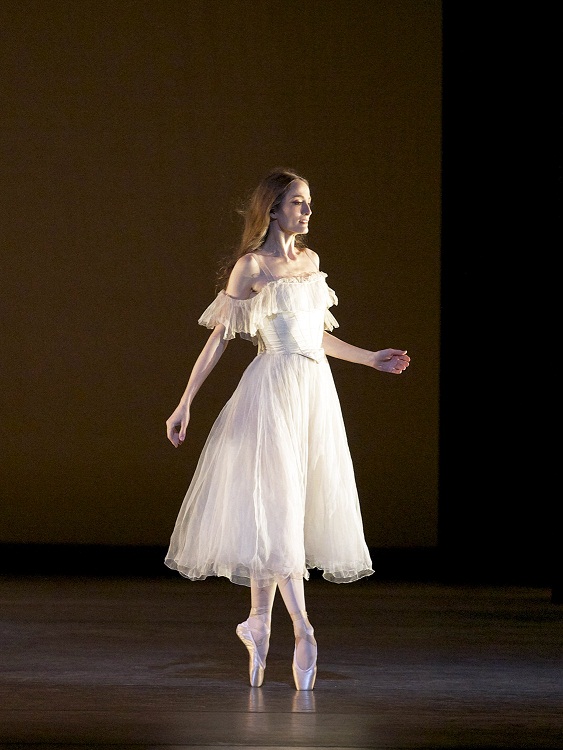
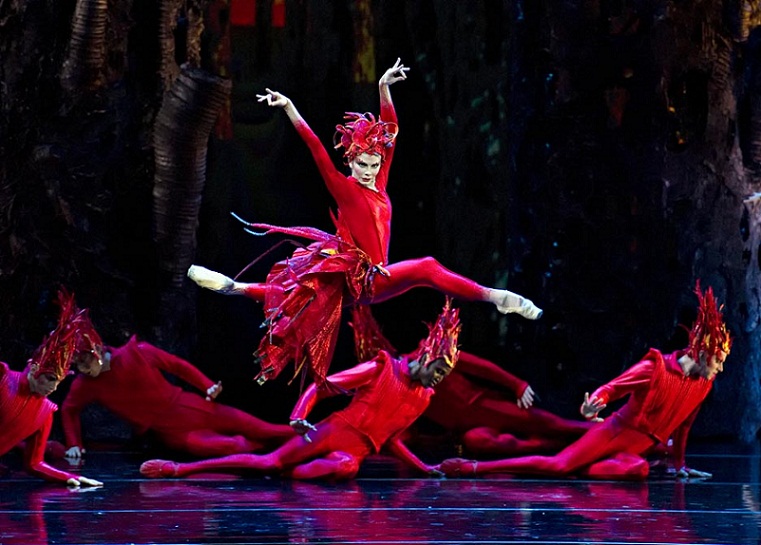
Thursday night I went down to Costa Mesa for ABT’s premiere of Ratmansky’s FIREBIRD at the Segerstrom Center for the Arts. I’m so glad I braved the nearly three hour drive (with traffic; without about fifty minutes) from west L.A. because it was an excellent evening. This is I think Ratmansky’s most theatrical, spectacular ballet – certainly of those he’s done for ABT – and I loved it. (Photo above of Natalia Osipova in the lead role, by Gene Schiavone, courtesy of Segerstrom.)

The curtain opened onto this magnificent set. The prince is supposed to be in a forest searching for his lost beloved, and so strewn about the stage were these fantastically creepy dead tree-trunks with spindly branches that magically sprouted blood red blossoms. I was so enchanted with those tree trunks, which to me resembled a witch’s hand, and the crimson blossoms bright red fingernails. It all had a very fantastical Tim Burton feel.

Then behind a scrim we see the prince, Marcelo Gomes, dressed all in white, searching about frantically for his lost maiden. At one point, he bumps his head into a branch on one of the creepy witch-hand trees. The audience seemed really to appreciate the humor in this; they laughed at this, and laughed pretty frequently throughout.

Soon, a flock of red birds devoured the stage, and Natalia Osipova emerged as their leader, or the most remarkable one, whom the prince became taken with. This was the one problematic part for me. It makes sense to have a flock of birds with a leader rather than one bird, as in I think most versions of this ballet – but the stage here was really too small. Natalia went to take one of her famous leaps but then seemed to hesitate and took it down several notches. There were too many birds, and as she turned to run to one side of the stage, she almost smacked into one of them. I think that set the note for the rest of her performance, because unfortunately, she just seemed to be holding back throughout the whole thing – not only in her solos but also in her pas de deux with Marcelo after her firebird is captured by his prince. I didn’t really see her struggling to be set free, and when she gave him her magical feather, it seemed more an afterthought than in barter for her freedom. Marcelo is ABT’s most dramatic male principal and he kept up the act well, being enthralled with the firebird, but ultimately feeling sympathy for her and setting her free, but you could tell he was also concentrating on making his dance partner feel as assured as possible. I’m sure as they iron out the kinks, Natalia will be perfect though.

Simone Messmer actually stole the show to me. Well, she shared it with David Hallberg (who, judging by the cheers, has quite the fan base in L.A!) Simone danced the role of the maiden who captures the prince’s attention, and she danced it with a really wonderful sense of humor, as she alternated between being controlled puppet-like by a sorcerer’s spell, being annoyed by the prince’s intrusion, then falling for him, then being fought over by him and the sorcerer, who keeps trying to retain his spell on her.

Ditto for David, who danced the part of the sorcerer set on keeping the prince and maiden apart. We first see David’s wicked magician in shadow form, from the back of the stage, which looked both malevolent and funny at the same time. When David emerged, he sported this big green bouffant, and Ratmansky had him chasing the maidens about the stage in this bent-legged run (almost like a Russian folk dancer). He was really both creepy and funny at the same time.

The comedy continued when the firebird returned (after the prince, threatened by the sorcerer, summoned her protection) and compelled everyone to dance themselves silly. It was particularly interesting to watch David here. Ratmansky gave him these rather crazed lightning fast steps danced in place that reminded me of a sequence he danced as the mentally unstable boyfriend in Ratmansky’s earlier ballet, On the Dnieper. There they were meant to convey extreme anger and were frightening because it meant the character was about to become unhinged and violent; but here they’re more funny than scary, and I think that’s what Ratmansky intended. I think Ratmansky is making an actor out of David Hallberg πŸ™‚ He certainly got a great brilliant comedic performance out of Simone.

I wasn’t really a fan of the ending. Prince and maiden danced, sorcerer and firebird, then they switched partners, but the sorcerer tried to reclaim the maiden. Finally the firebird shattered the egg containing the sorcerer’s power and prince and maiden were sweetly reunited. The last scene is of the firebird being held up high by a group of men, in a group lift, heroizing her. I don’t remember the firebird appearing at the very end of other productions, and it felt a little too cutesy to me, or a little too ‘good triumphs over evil.’ I realize that’s the theme of a lot of ballets but I was expecting a bit of a twist here since the whole was more comical and different in tone than other versions.

Other dancers appearing as the firebird later this week are Misty Copeland and Isabella Boylston. I can’t make the trek to Orange County again this weekend unfortunately, but will be really interested to hear what others think of the other casts.

The other two dances performed were Christopher Wheeldon’s Thirteen Diversions and Merce Cunningham’s Duets. At first I’d forgotten I’d seen Thirteen Diversions – it premiered during ABT’s Met season last year. I was charmed by it all over again; definitely one of my favorite Wheeldon ballets. Misty Copeland, Stella Abrera, and Craig Salstein stood out to me. Misty really made that ballet she was so spellbinding as the girl who seems to struggle with herself and her partner. What I like about this Wheeldon dance is that he really allows the dancers to create characters; it’s not just about musicality and creative patterns (although that’s there as well). Craig Salstein was sweetly funny as he kind of flicked his partner off stage and into the wings, so he and his male cohort could have the stage all to themselves.

Duets was first on the program, and it was new to me. It got off to a slow start. It seemed the first two couples were stiff and nervous and just going through the steps without giving them much meaning. But the fourth couple – Xiomara Reyes and Arron Scott – changed the tone when they took one look at each other, as if to say, “let’s go, let’s do it!” and took off on a quick paced, very precisely and charmingly danced sequence of steps. After that, everyone else seemed to unwind and perform more full out and with intention. I’m really beginning to like Xiomara. She and Arron were my favorite couple, but Julie Kent and Jared Matthews got the most applause. At the end of the whole program, David got the most applause – people really love him there.

This was my first time at Segerstrom Center for the Arts. The building is so interesting. The orchestra is on the right half of the theater (if you’re facing the stage) and the mezzanine is a raised portion on the left half. And then the balcony is up above. It’s definitely not as big as the Lincoln Center stages or City Center, but it was packed full of a very enthusiastic audience. It made me wonder if most lived around there or if people often drive down from L.A. I’m sorry, I’m still this stunned New York expat unable to fathom how people can drive three hours a day in gridlock and not go insane!

It was kind of unsettling seeing my favorite N.Y.-based dancers in L.A. I looked around the press section thinking there must be some N.Y. critics there to cover a premiere, but I didn’t recognize anyone and a Facebook friend later told me Macaulay was with her at a N.Y. performance Thursday night. And the one L.A. critic friend I have wasn’t there either. It made me sad. I really miss spotting the writers in the audience, wondering who’s going to write a review, who’s covering for the Times, who’s thinking what, who’ll write what. And most dearly I miss hanging out with my N.Y. dance-goer friends on the Koch Theater promenade during intermissions, or at Ed’s Chowder House or Fiorello’s afterward to discuss a performance, especially a premiere. I guess I’ll eventually make those friends here…
Photos from ABT’s Opening Night Gala

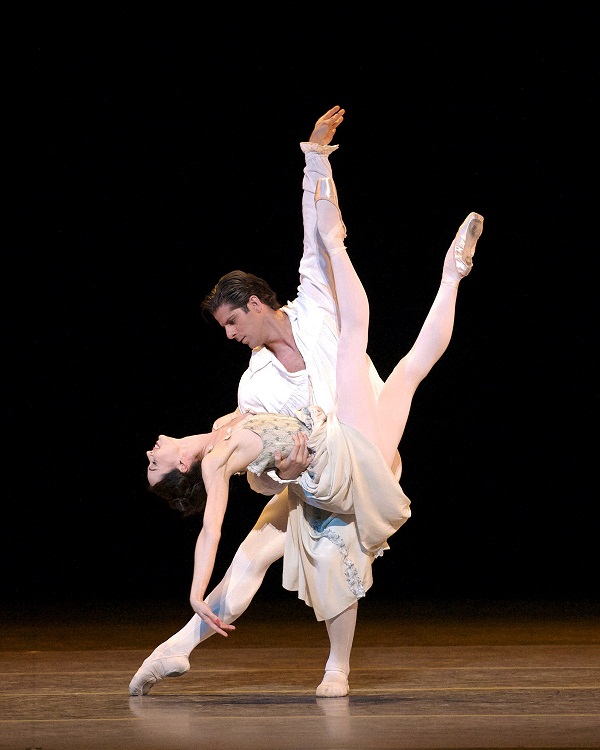
Here are some photos from American Ballet Theater’s opening night gala on May 16th, which I wrote about here. Above, Marcelo Gomes and Diana Vishneva in Manon excerpt, my favorite of the night. All photos by Gene Schiavone.

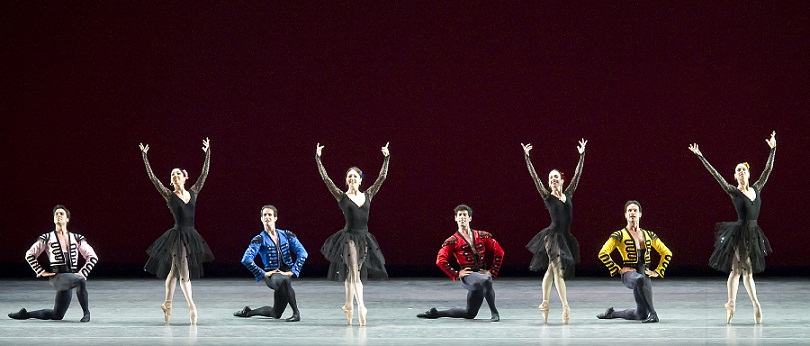
Jose Carreno (in yellow) and cast of Majisimo (including Lorena Feijoo, Lorna Feijoo, Joan Boada, Nelson Madrigal, Reynaris Reyes, Xiomara Reyes, and Paloma Herrera).

Above, Julie Kent in Lady of the Camellias excerpt. Below, with Cory Stearns in LofC.

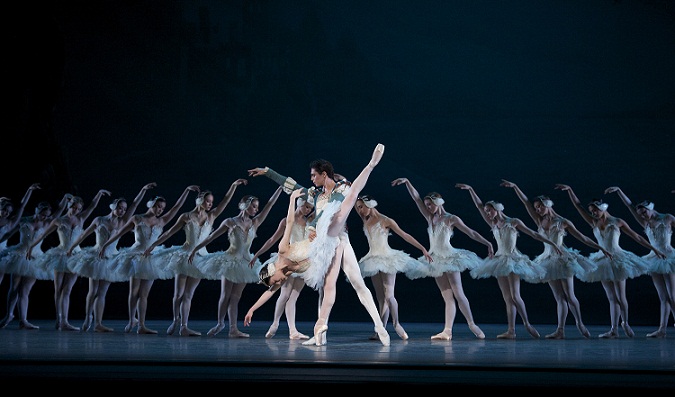
Paloma Herrera, Alexandre Hammoudi, and cast in Swan Lake, from Act II pas de deux.

Photos of ABT’s New Nutcracker

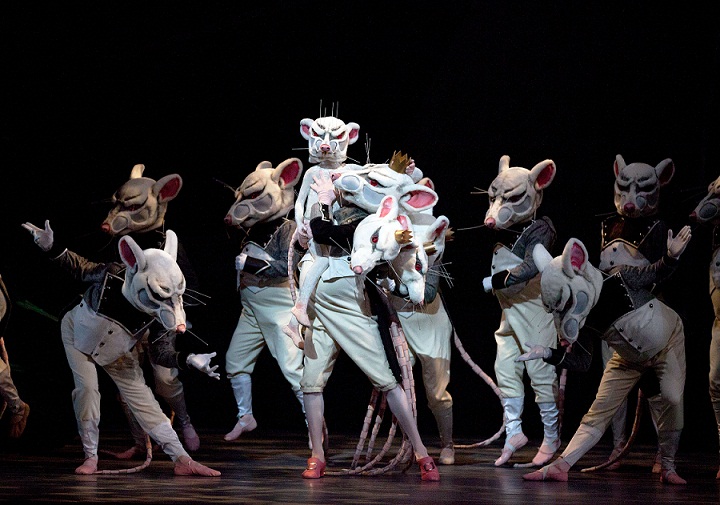
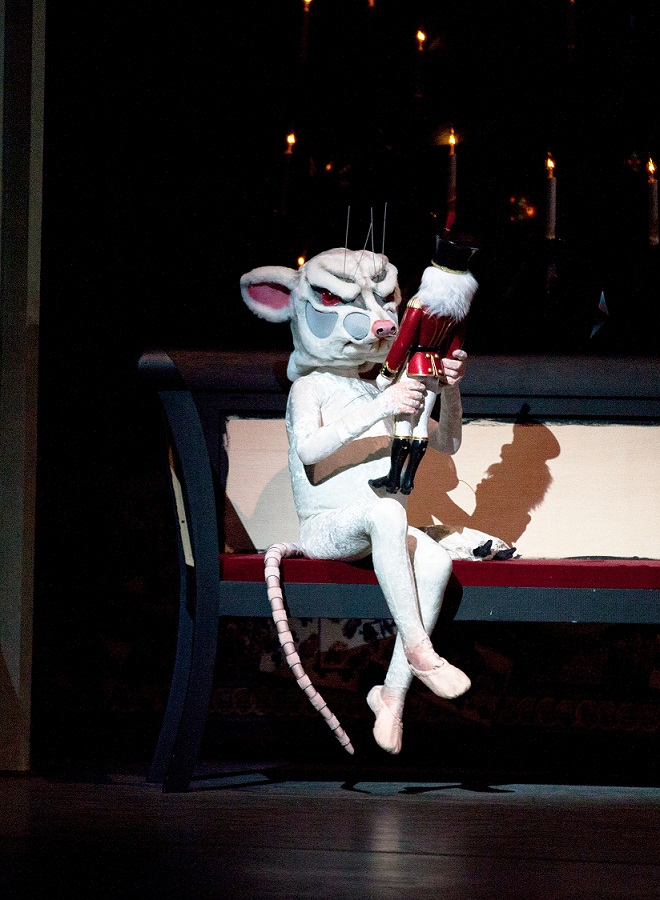
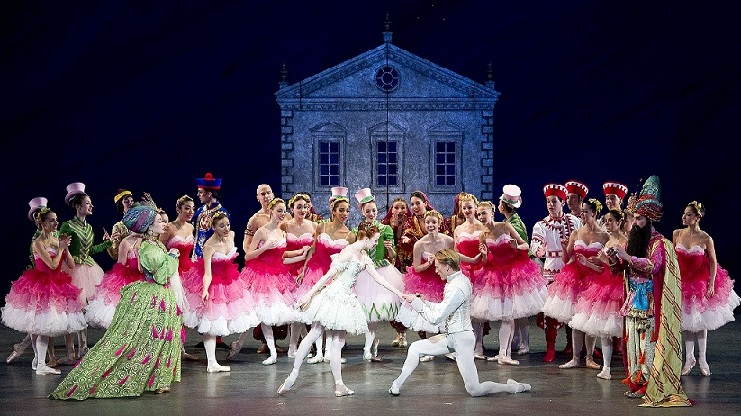
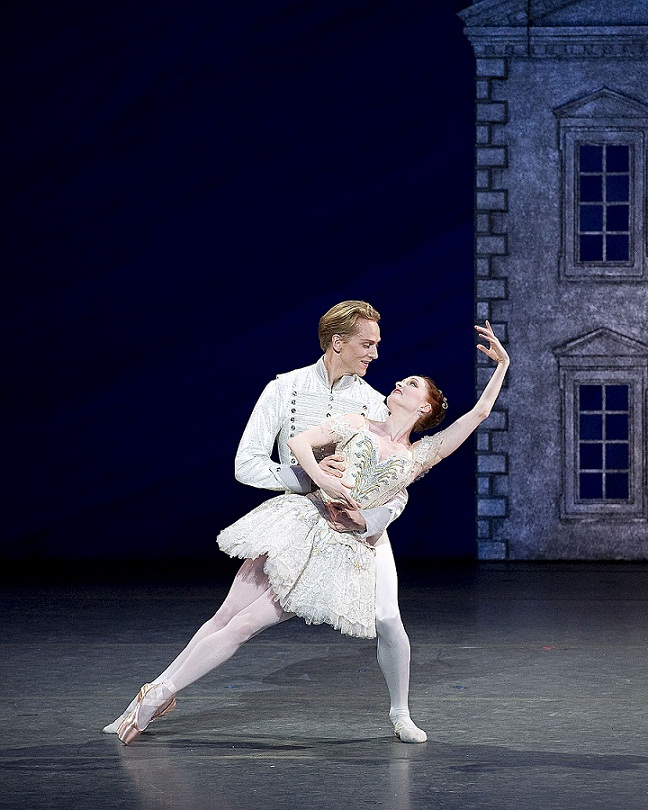
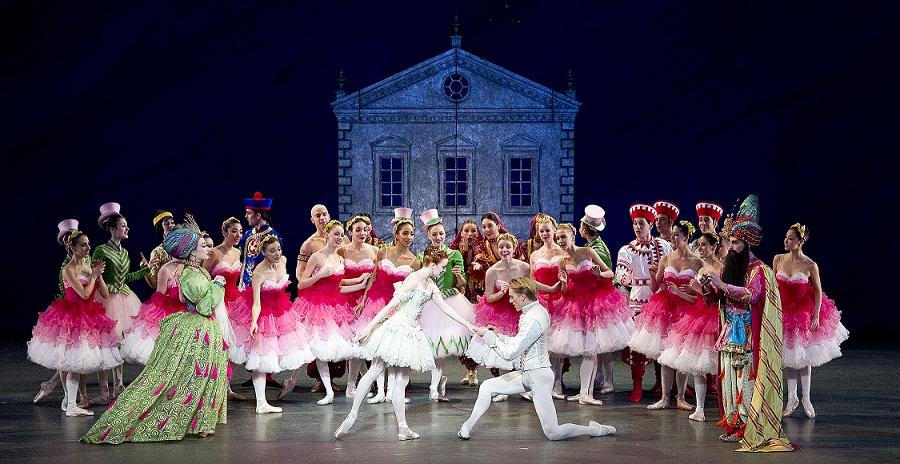
As promised, here are some photos of Ratmansky’s new Nutcracker for ABT.

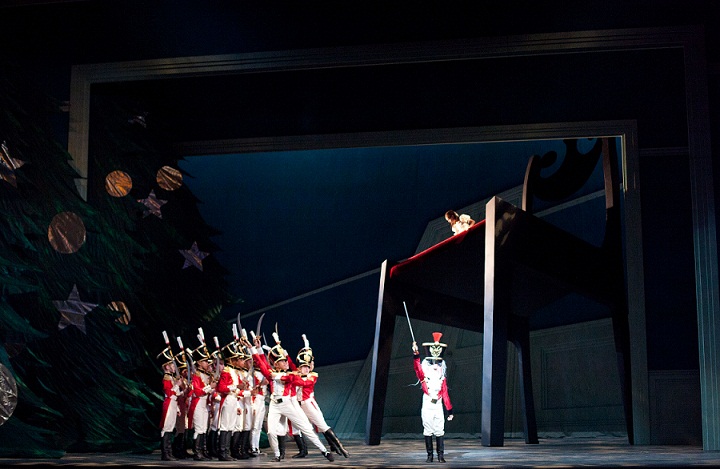
I forgot to mention in my last post how much I loved the Alice in Wonderland-like high chair for Clara to sit atop to watch the mice / nutcracker & soldier battle scene. Really brilliant sets. Richard Hudson is a genius.

The battle scene and the many-headed mouse king.

The mischievous little mouse (Justin Souriau-Levine) holds the nutcracker doll.


David Hallberg and Gillian Murphy as the Nutcracker Prince and grown-up Clara. I forgot to mention that they do get married in this version.

David and Gillian in the final pas de deux.

Top four photos byΒ  Rosalie O’Connor; bottom two by Gene Schiavone, courtesy of ABT.

DAY OF SLEEPING BEAUTIES: ALINA COJOCARU AND NATALIA OSIPOVA


Alina Cojocaru and Jose Carreno in Sleeping Beauty, photo by Gene Schiavone. (My favorite pose in all of life – no hands fish dive πŸ™‚ )


And Natalia Osipova and David Hallberg as Aurora and Prince Desire, photo by Rosalie O’Connor.

So, I spent another Saturday at Lincoln Center, watching back-to-back Sleeping Beauties. This is probably my least favorite ballet — neither the story nor the choreography really speaks to me – but I was curious to see Alina Cojocaru in the role (it’s supposed to be her best and she’s was guesting for only one day from the Royal Ballet in London), and now that I’m an official Natalia Osipova fanatic, I must see her in everything she’s in.

So, matinee was Cojocaru. I thought overall she was really lovely and did as much as she could with what to me is a bland role. She was fresh, girlish and inquisitive in the first part when she’s meeting all the cavaliers and before she pricks her finger, then is more beatific and ethereal in the vision scene (where Prince Desire, out hunting, envisions her and then is led by the Lilac Fairy to her bed where he’ll kiss and awaken her – I don’t know how many people know the ballet), and then is full of grown-up, sophisticated charm in the third part when she marries the prince. A lot of ballerinas don’t really distinguish between the various stages of the ballet – their Auroras are the same throughout, so I liked that Cojocaru did this.

I just have to say, I’m sorry but for the first part of the Rose Adagio (where four cavaliers present her with roses, at the beginning) I couldn’t stop focusing on her feet.

Continue reading “DAY OF SLEEPING BEAUTIES: ALINA COJOCARU AND NATALIA OSIPOVA”

EXCELLENT DANIIL SIMKIN INTERVIEW


There’s an excellent interview with young, newish ABT virtuoso (and very intelligent-sounding) Daniil Simkin at the Ballet Bag. Simkin talks about his experiences thus far with American Ballet Theater, dancing with major stars at the World Ballet Festival over the summer in Japan, and a gala he’s organizing next month in Athens. He also talks about how dance professionals can use social media to connect with fans and what he thinks ballet companies need to do to keep ballet alive. Excellent interview, superb questions, “bag ladies”!

And it gives me the opportunity to post, for people who don’t have the opportunity to regularly see ABT, some of his more astounding YouTube clips. Enjoy:

And The Flames of Paris, the first thing I ever saw him do (but with Sara Lane, at ABT). Look for the barrel turns around the 5:55 mark:

For more clips, go here.
Above photo, by Gene Schiavone, taken from Simkin’s blog.

WAS THAT THE MOST BORING DANCING WITH THE STARS QUARTERFINAL OR WHAT?

Sorry I’ve been so out of it again with blogging, you guys — I can’t believe how many little errors there are in my book to correct… So stressful!

Anyway, I managed to watch DWTS last night. Thing is, I’m really so not into it; even if I wasn’t busy with my book, I’m so not into blogging about the show this season. I think Mya is overall the best contestant on the show right now, and so she probably deserves to win. But she just doesn’t do that much for me. I liked both her Quickstep and 70s Samba last night — I thought her Quickstep was actually pretty basic and technique-focused so I’m not sure why Len didn’t like it, and the Samba was fun — a lot of people dance Samba to disco music since it’s so hard to find good authentic Samba music around here.

I think overall I like Aaron the most though, even though he’s not as good as Mya. Still, he’s getting less and less fun, for some reason, as the season goes on. His over-the-top-ness is not enough to compel me to watch the show anymore. I liked but didn’t love his 90s Latin routine last night — wait, was itΒ  Jive? I don’t even remember? But I was annoyed with Karina that she didn’t let him do his fun boy-band moves. Why did she cut him off like that — I think it would have been hilarious. And what is with everyone getting sick? (Both Karina and Aaron had the flu at various points this week apparently…)

I thought all the Standard routines were pretty bland last night. I thought Donny’s Viennese Waltz was the best, mainly because Kym was so beautifully fluid. But during the Latin round, his 80s Paso wasn’t all that interesting. The costumes and music (I used to love Spin Me ‘Round) were far more fun and flashy than the actual dancing.

And I feel the same way about Kelly as I do Aaron. I liked watching her learn and grow early on but now it seems she’s stagnating and it’s not that interesting anymore. I thought her 60s Jive was cute and I love that Louis, unlike Karina, let her put her own Monkees-esque moves in.

I feel like Joanna really dances like a paper doll. She has no grounding, no weight, no strength or firmness in her body. You need that for ballroom, even for the Standard dances. You need that for any kind of dance. You need that to do fouettes and pirouettes in ballet. Not that I don’t dance exactly like that — that was always my problem: I looked emaciated and completely substanceless. I used to think it was just about being thin, but it’s not. There are very thin dancers who are very rooted and have a great deal of strength in their bodies. She’s a really really pretty paper doll, but a paper doll nonetheless and I can’t for the life of me understand why the judges fawn over her so.


I know, as Katrina had commented earlier, that seasons may collide, but I still so want Yankees to be on the show.Β  Come on, A-Rod can dance with Smirnoff and Derek with … Lacey maybe. The World Series was the most exciting thing to happen since Roberto Bolle (look look, new pic from Weber book!) came to town. I’ve been a bit bored and depressed since it ended… πŸ™

One more thing about the Yankees: they had a little dance segment at the City Hall celebration — did anyone watch it? The dancers were teenaged schoolgirls, apparently, from Staten Island, called the LA Dancers — something like that. They were okay, but you know… Why don’t they have a real dancer, like Ashley Bouder? I think she’d be perfect — she’s cute and extremely athletic and would be very attractive to the average baseball fan. And she’s a NYCBallet dancer… Come on! Next year…


Photo of Bouder by Gene Schiavone, taken from Bailarinas; photos of A-Rod and Jeter taken from here and here respectively.

MORE ON AMERICAN BALLET THEATER’S AVERY FISHER SEASON


Daniil Simkin and cast in Benjamin Millepied’s Everything Doesn’t Happen at Once in Gene Schiavone photo, courtesy of ABT; all photos by Gene Schiavone (except for Arron Scott headshot below and bottom picture).

Just to let people know, as the photos shows above, the guy who was flinging himself into the group lifts in the first cast of the Millepied was Daniil Simkin; in the second cast it was Arron Scott (below). The program notes only gave a special mention to the two dancers doing the pas de deux and a lot of people were asking who the main soloist was.


Anyway, here are a few more reviews:

Here is James Wolcott on opening night gala (and our fab Shun Lee dinner afterward πŸ™‚ ), here is Apollinaire Scherr’s FT review; and here are more of Apollinaire’s thoughts on her blog, Foot in Mouth. I’m surprised there aren’t more reviews — this was a pretty big season, with three world premieres — but that’s all I can find at the moment. (Update: Robert Greskovic’s WSJ review just went up; thanks to Meg for letting me know.)

Re the Wolcott write-up: I forgot to mention the models — Iman and Veronica Webb, who, instead of A.D. Kevin McKenzie, thanked the gala sponsors and introduced the program — screwing up Benjamin Millepied’s name. It wouldn’t have been such a big deal if they wouldn’t have been so giggly over it. It seemed like they were reading their notes for the first time and were really unprepared. I really don’t know how to pronounce his name either — I’ve always said the last two syllables to rhyme with plie (without the “l”) but have been told that’s wrong. But damn did ABT get a lot of press for signing them on. Just Google “ABT Fall 2009 Season” and it’s all about Iman.


(Gillian Murphy, Cory Stearns and Eric Tamm in Aszure Barton’s One of Three)

Anyway, I saw four of the six programs, saw the Ratmansky and the Millepied ballets four times and the Barton three, and they each grew on me the more I saw them. The Saturday matinee was my last performance and I found it by far the best. I felt like the dancers were finally comfortable with the new dances, knew what they were all about, and really made them meaningful. I described the ballets here.

Oh and regarding SanderO’s comment on that earlier post: yes, I do need to see the story in the dance. The dancer and choreographer won’t pull me in at all if they don’t each tell me some sort of story. That doesn’t mean the ballet has to be a traditional full-length dramatic novel or something with a clearly defined beginning, middle, and end, inciting incident, rising action with crises 1,2, and 3, climax and resolution, etc etc. but there needs to be some kind of story; there needs to be some intention in the abstraction. A lot of critics use the word “evocative” — a dance needs to be evocative of something, and I just mean the same thing. If there isn’t something meaningful going on, there’s no reason for me to see it. I can appreciate the neat geometric patterns and pretty images, but that’s not enough to make me go.

Anyway, I saw more in Millepied’s Everything Doesn’t Happen at Once on further viewings. At first I thought it was kind of everything but the kitchen sink the way Apollinaire kind of describes, but after several viewings I saw more of an evolutionary, battle of the sexes theme throughout, which becomes a more literal battle by the end. The piece starts with the stage looking swimming-pool like with the dancers making broad strokes with their arms. The stage gets over-crowded and eventually someone in charge — looking rather conductor-like, kind of throws his arms up and dismisses everyone.

Then, there’s a pas de trois (two men one woman), which becomes a double pas de trois (same), which turns into the central pas de deux (man-woman). Throughout there seems to be struggle going on — in the pas de trois the men kind of manipulate the woman around, until she’s practically on her side. In the central pas de deux is in places tender, in places more angsty as if the girl is trying to get away from the guy or fight him in some way, and he is struggling to hang onto her.

By the end, the scene has evolved into a kind of battlefield with marching music and the ballerinas doing those Balanchinian marches en pointe. Except they’re more unsettling than cutesy, like in Balanchine. This is the part where Daniil / Arron gets tossed into the crowd, throws himself with wild abandon at the groups of men, who catch him mid-split, then gets caught up with a bunch of grabbing girls.

Interestingly, the audience laughed when this role was danced by Simkin — I think because he is small and a bit long-haired and it kind of looked like he was afraid he’d be taken for one of them and was trying like hell to assert his masculinity. (I think it would have worked better had the girls been chasing him and then he flings himself into the groups of guys rather than the other way around, but not a big deal).

But no one laughed when it was Arron. It looked far more serious with him in the role — it looked like he was practically getting raped by that rabid group of girls.

Also I noticed with Arron that after the rabid group of girls leaves him alone, he kind of internalized the tauning; there was now an invisible fist punching him all about. It really looked like he was getting beaten up by that thing. But the fist was invisible so it was like he’d been driven mad. It was very unsettling, and I think, with the music and the rest of the action, this feeling is more of what Millepied was going for — not all the high air flips, crazy long spins, and windmill jumps that Simkin is known for and did here. Simkin’s character made the end of the ballet more playful than battle-like.

There’s also a short section where there’s all this marching music and there’s more centerstage chaos with all 24 dancers out there at once and suddenly a group of dancers standing at one corner break into partners and go waltzing through the crowd. But it’s really short-lived, like even courtship is a battle.

I don’t know — that’s what I saw on further inspection. But I could be making it all up. It’s kind of fun with abstract ballets (the ones that have a lot going on in them anyway) to make up your own story. I mean, the way dances get made anyway, as I learned at a Guggenheim event last night featuring ABT’s efforts to adapt ballets to different stages (including this small one in AF Hall, meant for concerts), is that things get changed depending on space, depending on the logistics of the stage, depending on dancers. Whoever knows if the end product is what the choreographer originally had in mind anyway.

I don’t think Millepied’s was a perfect ballet — I found a lot of the bird-like patterns from his recent NYCB ballet, Quasi Una Fantasia, to be out of place here – he didn’t need all that; he should have focused more on the battle — but I found his the darkest, the most thematically clear and the most absorbing.


Stella Abrera and Gennadi Saveliev in Alexei Ratmansky’s Seven Sonatas.

The Ratmansky grew on me, as did the Barton. On the last day, Michele Wiles danced the main female character (in the long white ballgown) in the Barton and I loved her. She gave the character a real story. When she comes out onstage she is all bitchy and glamorous, but Michele it’s really an act; she is seeking attention from the main man (in that cast Blaine Hoven) while trying to maintain her haughty demeanor so as not to be shown up by him if he dismisses her. At one point, she extends her arm out to him, as if he’s supposed to kiss it but he turns and runs offstage. She crumbles. It’s heartbreaking.

I also really loved Craig Salstein, Jared Matthews and Daniil Simkin in Barton’s second cast (Matthews and Simkin alternated parts opposite Salstein). They danced a section in the second part and all three made it clear (Salstein most so) that they were in a little competition for the girl’s attention. The girl (Luciana Paris), meanwhile, was just dancing on her own, in her own world, paying them no mind at all. It was hilarious.

But back to Michele Wiles for a minute: a wonderful ABT patron gave me her ticket for a company class, which she couldn’t attend, and Michele seemed so sweet — smiling out and waving at people during the class and even during warm-up.

Also, can some choreographer please please please create a little solo or some kind of dance just for Gillian Murphy! Please! During that company class, during the center floor work when the dancers divided into groups and did turns in a diagonal down the center, Gillian blew everyone completely away. She was like a tornado. But a technically perfect tornado! Everyone in my section literally began to laugh and shake their heads in amazement. She needs something to showcase her technical brilliance and athletic prowess. C’mon ABT!

Each of the dancers brought their own special thing to the Ratmansky. Christine Shevchenko (an up and coming corps member) was gorgeous with the role created by Julie Kent (danced opposite David Hallberg). She was more lyrical than Julie, with flowing, expressive arms that resembled Natalia Makarova in Other Dances. Julie’s arms were more staccato. Hee Seo, who completely blew me away as well, did a combination of the two — by turns feathery and lyrical, and modern and staccato. Alexandre Hammoudi and Jared Matthews both danced David’s original part and they were very different than David. Both connected with their ballerinas much more — when they were left alone onstage they clearly looked about for her, wondering where she was, then accepting they were alone and falling into their solo.

David Hallberg. I can never get enough David Hallberg. He didn’t look around for his ballerina when she left him, but when she returned to the stage, he danced well with her. But when she was offstage, she was out of sight, out of mind with him — he was too busy making Ratmansky’s movement wholly his own. He seems to be a rapidly maturing artist, playing with the music, playing with rhythm, giving some things more emphasis than others. When I first saw him dance this role I thought his “character’s” movement was more modern than classical, but I think that was just because of the way he did one section where he keeps pushing out with his hands, like he’s stopping the air, or stopping something from getting too close. He slowed down that movement a lot, really emphasizing the arms, and then did some ensuing footwork at the speed of light, whereas the others did everything in equal measures -so it didn’t have the same look.


Jared Matthews and Maria Riccetto in Some Assembly Required, photo by Rosalie O’Connor.

ABT also put on Clark Tippet’s Some Assembly Required from 1989, a male-female pas de deux evoking a lovers’ quarral replete with difficult-looking angst-filled lifts, struggling pushes and pulls, then more tender making up. It went on a bit too long; some middle parts that were repetitive could have been taken out, but the cast I saw — Jared Matthews and Maria Riccetto did very well with it. Jared is dancing and dramatizing better than ever before, imo.

And the company also did Robbins’ Other Dances, another male-female pas de deux (this one pretty famous) that was choreographed on Baryshnikov and Makarova. I saw both casts — Marcelo Gomes and Veronika Part, and David Hallberg and Gillian Murphy. I liked both — although I think I honestly prefer Tiler Peck and Gonzalo Garcia’s at NYCB. Gonzalo has a smaller body, more like Baryshnikov’s, and I think some of the gestures — like the placing the hand behind the head, kind of primping, looked sweetest on him. Ditto for Tiler. David is dancing very aggressively these days. He’s making the absolute most of every movement — it can be stunning at times, and at times it seems a bit overdone, which it seemed to me a tad here.

I also think that joke on the Kirov dancers getting dizzy and losing their footing because they don’t spot-turn doesn’t come across as such to new audiences. When Marcelo and Gonzalo did it, many in the audience honestly thought the dancers screwed up for real, not on purpose. David really didn’t do the joke because he’s a cheat πŸ™‚ I’m kidding — he did, but he spun, stopped, got dizzy, shook himself out of it, and started the next phrase all in the blink of an eye, so you didn’t even notice he “got lost.”

Gillian was good but it didn’t seem to be a dance that showcased her talents to their fullest. I’ll say it again — I really think she is the most athletic and technically one of the best female dancers in the world and she desperately needs more roles that prove that!

HEE SEO PREPARED FOR JULIET IN PART BY WATCHING FILM ACTING


I knew there was a reason I loved her Juliet so much:

”Watching movies gave me ideas. Dancers tend to exaggerate on stage because they want to make sure that everyone sees their emotions through the movements, but in movies, the acting is very subtle and realistic. I think it’s important to find a balance. You can’t overact just because you want the viewer in the back to notice you, but then you can’t control your feelings too much either,” Seo said, adding that she loved the original play by Shakespeare because the lines were so romantic. She added that such sentiment is ”hard to find these days.”

Later, she says:

”Ballet is art. I may be just dancing, but I’m dancing inside a beautiful set with beautiful music, and that is what makes ballet a synthetic art form. I want to be recognized as an artist. An artist who danced, who appreciated music and understood art.”

Here’s the rest of this sweet interview in the Korean Times.


BERTRAND NORMAND’S "BALLERINA" AT WALTER READE AGAIN


If you’re in New York and you missed it last winter, Bertrand Normand’s 2006 documentary, Ballerina, will show at the Walter Reade again on Monday, August 31 at 1:30 p.m. The doc follows five Kirov ballerinas — Alina Somova, Svetlana Zakharova, Ulyana Lopatkina, Evgenia Obraztsova, and our Diana Vishneva.

If you don’t live in New York (or are one of the lucky who have a job and can’t make the daytime showing), it’s apparently now out on DVD as well (the trailer is here).

Also at the Walter Reade this month, as part of a Natalie Wood retrospective, is Robert Wise and Jerome Robbins’ 1961 film West Side Story. It shows on August 19 at 6:15 p.m., August 21 at 8:50 p.m., and August 23 at 1:00 p.m. Eliot Feld will introduce the August 23rd showing. Go here for more info.

UPDATE: The August 31st screening of Ballerina has been cancelled; the new screening time for that film is Thursday, September 3rd at 9:00 p.m.