ABT is Coming to Orange County with Ratmansky’s New FIREBIRD

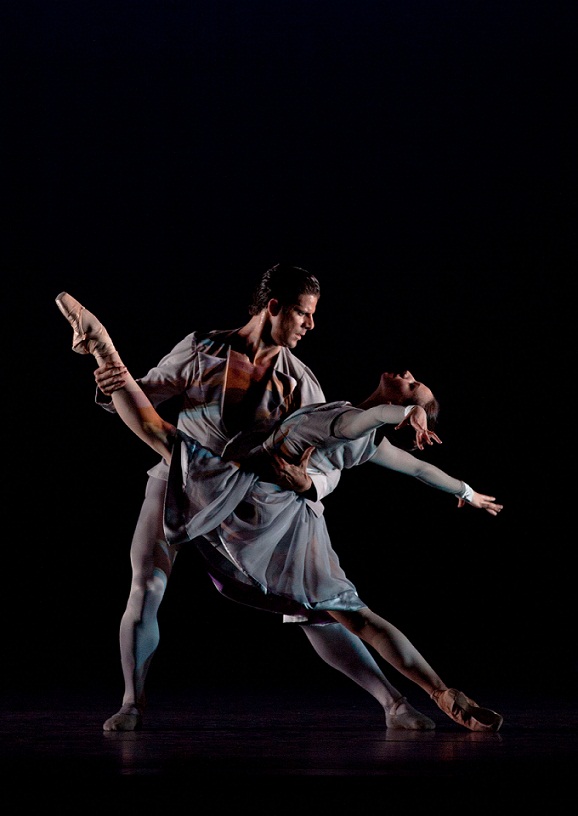
How excited am I! This Thursday through Sunday, my beloved ABT will be performing at the Segerstrom Center for the Arts in Orange County. They’re premiering Ratmansky’s new Firebird – and none other than SLSG faves Marcelo Gomes and Natalia Osipova are scheduled to star! (David Hallberg and Simone Messmer are co-starring.) The two other dances on the bill are Wheeldon’s Thirteen Diversions (photo above, by Rosalie O’Connor, of Marcelo with Isabella Boylston) and Merce Cunningham’s Duets. The latter two I haven’t seen yet since I missed the company’s City Center season last year.

Read a preview of Firebird by Joseph Carman here.

This will be my first time at Segerstrom / Orange County. If any of my Angeleno or former Angeleno readers would like to give me advice on the best way to get down there from Century City on a weeknight, I’d be most thankful πŸ™‚ I will most definitely report back, particularly on the new Firebird!


Benjamin Millepied, Christopher Wheeldon, and Alexei Ratmansky Premieres at ABT


Above: Isabella Boylston and Marcelo Gomes in Christopher Wheeldon’s Thirteen Diversions, which premiered at American Ballet Theater two weeks ago. (Photo by Rosalie O’Connor.)

Once again, I’m behind on posts. May was a crazy month, filled with family emergencies, last minute travel, and trying to juggle paying legal work with book industry stuff and blogging. Hopefully June will be a bit quieter, though not likely at the rate it’s going thus far…

Anyway, on May 24th, ABT held a night of premieres, showing three new works by today’s “in” choreographers. Wheeldon’s Thirteen Diversions, set to Benjamin Britten’s Diversions for Piano and Orchestra, was overall my favorite. It seemed to have the most going on in terms of emotions, the most developed sections, the most varied movement, and interesting lighting design (by Brad Fields) to boot, though I know others were bothered by that. Background was lit with different colors each section and began with part of the back darkened, with light slowly encroaching. It created an atmosphere of mystery. I also felt like Wheeldon’s dance allowed the dancers to shine the most. Gillian Murphy and David Hallberg were a duo whose dancing had a sweet, light feel to it, like a relationship in bloom, while Marcelo Gomes and Isabella Boylston kind of went back and forth, with more depth and nuance to their relationship. She’d go from peaceful to needy to wanting to escape him back to needing him. They danced it well.


Above: Michele Wiles and Thomas Forster in Ratmansky’s Dumbarton, which I liked as well. (Photo by Rosalie O’Connor.) Dumbarton, set to Stravinsky’s Dumbarton Oaks, was mostly light and lyrical, with dancers clothed in light-colored contemporary costumes (by Richard Hudson). At times, though, the dance took on a more mournful tone, as the music would grow slower and Misty Copeland would collapse, then be carried off by a group of men. But then she’d reappear again in the next, lighter scene, as if nothing had happened. Then, it would happen again. I wasn’t sure if we were going back and forth in time or if there was a continuity of life kind of motif at play.


Millepied’s Troika was a relatively short dance, for three men, set to Bach.Β  Above are Sascha Radetsky, Alexandre Hammoudi, and Daniil Simkin (being thrown) in photo by Mikhail Logvinov. I started out really liking it but it kind of lost steam. I thought each man would have a different personality or embody a different mood: Simkin more playful, Radetsky more masculine, Hammoudi more soft and lyrical. To an extent it was danced that way, but then mid-way through they each seemed to be doing the same things. They started to blend into one another. Maybe that was the point. At the end, there was a series of lifts where Radetsky and Hammoudi kind of threw Simkin. He’d playfully try to escape them, but they’d catch him, scoop him up, and toss him. Someone remarked that this reminded them of Tharp. It also reminded me of Millepied’s earlier work for ABT, where Simkin was tossed in the air by a group of men in the midst of trying to escape a group of women. So Millepied repeats his themes over a few times.

Also on the program was a revival of Tudor’s Shadowplay with Craig Salstein and Xiomara Reyes in the leads. Created in 1967 and set to Le Livre de la Jungle by Charles Koechlin, it had a very dated feel and many have noted this is not one of Tudor’s better works. To me, it had a kind of Rite of Spring meets Prodigal Son feel to it. Salstein plays a poetic, monk type of figure who wants to be alone to meditate. But he is constantly bothered by this group of beings who appear to be half human, half primate who swing around gymnastically on a set of tree branches. Eventually they bring to him a woman, who’s very Siren-like, and whose sinister charms the protagonist is ultimately able to ignore. That’s what I saw in it anyway.

I felt a bit underwhelmed by the evening overall. It’s always exciting to see new dances though. And it could just be me and my penchant for full-length story ballets πŸ™‚

One other thing: some of the gossip blogs stated that ABT had stricken Sarah Lane from the performance because of Natalie Portman’s presence. I didn’t know Lane was supposed to be dancing that night so have no idea if that’s at all true. Can’t imagine it is. Boylston still danced, and, as I said, I thought she danced very well.

Alina Cojocaru and Polina Semionova Guest Star in ABT’s DON QUIXOTE

Over the weekend, two European star ballerinas – Alina Cojocaru from the Royal Ballet in London, and Polina Semionova from the Berlin State Opera Ballet – guest starred in American Ballet Theater’s Don Quixote as Kitri.Β  Cojocaru danced with Jose Carreno, and Semionova with David Hallberg. I saw both performances.Β Overall, I thought both are beautiful dancers, have an innate sweetness that shines through, are absolute balance queens who can hold balances on one leg on pointe for many many seconds unassisted, and can dance the role nearly perfectly. But I thought that both of them lacked fire; they both played it too safe. Maybe it’s just that Natalia Osipova has ruined me and I just can’t see anyone else in this role now.

One thing I loved about the Cojocaru / Carreno performance were that the two seemed to have a real rapport, a genuine affection for each other. Did they ever dance together at the Royal, does anyone know? Or was Jose there too early for her? Cojocaru never threw herself into his arms with the wild abandon that Osipova did last year, and I missed that. But I don’t think Jose did πŸ™‚ Seriously, he didn’t seem to appreciate Osipova’s theatrics that much. Cojocaru seemed to tone it down and they worked very well together. Also, as I complained about on Twitter ad nauseam, during those insane one-handed overhead lifts, Jose did not go on releve and hold one leg up in arabesque the way Ivan Vasiliev did with Osipova in the Bolshoi’s live-streamed performance. It’s okay; I still love Jose πŸ™‚ But seriously, Vasiliev and Osipova have ruined me! Cojocaru has absolutely gorgeous developpes. She can lift her leg up so high – really stunning. And I mentioned the balances earlier. She held those for so long; crowd went wild. And sweetest thing: Jose kept demanding she return for an encore bow after each of her solos. Made me really love Jose.

Cojocaru was a little shaky during the first act, and she had a little stumble. But it wasn’t memorable. Far more memorable was her strong performance in the third act, her best. That’s when she did the crazy balances.

In the third act fan variation, Cojocaru did a completely different series of steps than I’d ever seen before, which makes me think there are a bazillion ways to do that variation. Or at least three – the American, the Russian, and the British. The Ballet Bag ladies sent me a You Tube link via twitter, of Cojocaru dancing with Johan Kobborg. Around the 7 minute point is where she does this different variation.


Jose is such a great Basilio. He’s a natural flirt, a natural macho Latin guy, and a natural actor who can be a macho and a flirt and still be totally endearing. And it really kind of made me melt when he kept insisting she take more bows.

I really enjoyed Sarah Lane and Isabella Boylston as “the flower girls.” They often weren’t in sync because Boylston danced with more expressiveness, arching her back, taking her time and drawing out the turns, playing with the musicality. Lane was more sharp and precise, hitting poses right on the beat. But I could have cared less that they weren’t perfectly in sync. I loved that each had her own personality, as people do in real life.

I missed Sascha Radetsky as Espada the matador. I’ve never seen him in that role and I think he’d make a good one. He was replaced by Gennadi Saveliev. He was replaced on opening night too, which worries me that he’s injured.

I thought Polina Semionova was really beautiful, and, where Cojocaru had a few wobbles, Semionova had none. She was very very near perfect. Like Cojocaru, the third act was the one that most brought her to life. She kind of veered all over stage on her third act series of fouettes but she threw several multiple pirouettes in, and her balances were even more stunning than Cojocaru’s, as, during her final balance, she took her leg out of arabesque and straightened it out in front of her, without ever holding Hallberg’s hand to steady herself. Audience went absolutely crazy with applause. They really loved her, and called her and David out for several curtain calls.

In the third act, she did “the American” fan variation. She’s Russian and dances in Berlin, so I really think each ballerina just chooses whichever version looks better on her body and feels most comfortable to her. I thought the little hopping “horse steps” on pointe were really sweet on her.

She and David seemed to like each other as well. The partnering was a little off at points, though, and he almost dropped her in a fish dive. She played it very safe with the second act swan dives into his arms as well, and he didn’t try any Vasilievs on the one-handed lift.

David is a beautiful dancer on his own though, and, as a critic said to me during intermission, it’s sometimes hard to focus on anyone else when he’s onstage. His movements were absolutely perfect, both the more balletic and those kind of side to side matador-looking movements. His jetes are beautiful – he’s just the most beautiful male dancer and you can completely lose yourself in the story of the ballet just watching him.

Acting-wise, I think David is wonderful in the romantic scenes. He’s definitely a romantic. But the rest of the time I think he should just be himself, make Basilio his own, and not try to be so cocky and macho. In him, I find it comes across as anger, an an intimation of violence even, like he’s really going to go off and whack someone. He’s not a natural cocky flirty Latin shit like Jose and Marcelo Gomes πŸ™‚ And so it loses its charm with him. My thoughts anyway.

It probably won’t come to a surprise to anyone who’s read my blog for some time that Veronika Part (here as Mercedes, the “street dancer”) stood out to me. In the first two acts, I found her even more captivating than Semionova. One thing I love about her is her attempt to make the styling as authentic as possible. Part really looked like a Spanish dancer to me. And in the second act’s dream scene, I found her jetes across the stage really breathtaking – just as much as Semionova’s.

Sarah Lane danced the part of Amour in the white scene. I always want to call that character Cupid. Anyway, before the performance began, I overheard one teenage girl behind me say to another, “Sarah Lane! She was the one in Black Swan!”

All in all, really lovely performances, but I do think Cojocaru makes a better Sleeping Beauty and Giselle than Kitri. She’ll be dancing Giselle this Saturday night. She’ll also be dancing Don Quixote again with Jose tomorrow night (Monday, the 23rd). I’m excited to see Semionova in Swan Lake later in the season.

Jose Carreno in “Swan Lake” on Dancing With the Stars

Did you guys see it last night? I don’t know who choreographed but it’s obviously a version created for fans of Black Swan the movie, showing both black and white swans vying for Prince Siegfried’s attention, and shortened for the allotted time. Lorena Feijoo from San Francisco Ballet and her sister, Lorna, from Boston Ballet, danced the white and black swan. Interesting that they didn’t have Jose in tights. I hate it when male ballet dancers don’t wear tights. You can’t see the movement at all; it just doesn’t look like ballet. Still, I think our Jose looked better than Jose Martinez in pants.

Also, regarding yet more Black Swan controversy: E! is now positing that because Sarah Lane and Isabella Boylston are both in ABT, Lane’s statements to Dance Magazine about the amount of dancing she did for the film were motivated by sympathy for Boylston. This is becoming just a little absurdist.

ALL DAY AT ABT: ALL AMERICAN AND ALL ASHTON PROGRAMS

Last Saturday I had my first crazy ABT day where I spent the whole day at Lincoln Center, seeing both matinee and evening performances. I’ll do the same tomorrow with two Sleeping Beauties – can’t miss Alina Cojocaru (who I’ve never seen before) guesting from the Royal Ballet in the lead, and then in the evening the spectacular Natalia Osipova.

Anyway, last Saturday the matinee was their All-American program; the evening was the All-Ashton. The All-American opened with Twyla Tharp’s Brahms-Hayden Variations, which I’m sorry to say is the first Tharp that’s bored me. I just couldn’t connect to it. It had none of her trademark thrilling throws and lifts and clever partnering or dramatic, actable parts, and none of her enlightening contrasts between ballet and other forms of dance. Not that I saw anyway. I think the excerpt the company performed during the opening night gala was the only part I liked. There were good dancers – Marcelo Gomes, Stella Abrera, Herman Cornejo – but they didn’t seem to have that much to work with. It was just kind of lyrical gaiety. Like Mark Morris.


Then was Paul Taylor’s Company B, which is always fun – especially when Craig Salstein dances the hotly dorky guy in “Oh Johnny Oh” and Herman Cornejo the flashy “Boogie Woogie Bugle Boy,” but somehow it lost some of its magic on the large Met stage. I don’t know – I think it plays better at City Center – you somehow miss the silhouettes in the back at the Met, or you don’t connect them to what’s happening center stage as well.


And last was my favorite of the day, Robbins’ Fancy Free, this time starring Sascha Radetsky (image above, from here) as the cocky, sexy Latin sailor, Carlos Lopez as the dreamier one, and Daniil Simkin as the little acrobatic one. The two main women were Maria Riccetto as the girl in yellow whom the guys originally approach, and then Isabella Boylston as the girl in pink who momentarily gets interested in hot cocky Latin guy. Well, Sascha Radetsky completely took my breath away here. Before he had his momentary hiatus in with Netherlands Ballet, I’d always thought he was cute and a very solid, precise dancer, but he couldn’t act. I think he must have taken acting lessons in the Netherlands because he’s just so much better now. I really believe him in each role I’ve seen him in. And he really inhabited this sailor. He was really so compelling to watch; I couldn’t even focus on Daniil and his crazy sky-high jumps with Radetsky on the same stage.

Hehe, but one thing that really stood out for me was Isabella Boylston’s back-leading! All throughout ballroom training we were yelled at ad nauseamΒ  — not just me but all the women — for constantly back-leading. And that’s because grown women generally pick up dance steps a lot faster than grown men (not necessarily true for girls versus boys but definitely true for men vs women for some reason). Anyway, it’s only now I really know why. It looks horrible. I know this is ballet with choreographed steps and not ballroom, but their characters are doing social dance so it really had to look like he was leading her in the steps, not like she was anticipating what he’d so and then turn herself or make the move before he led her to do it. It ended up looking like she was in control, and he’s supposed to be seducing her here. I’m sure they’ll get it with more practice, it just looked obviously wrong and out of character. But maybe that’s just my ballroom training talking because they definitely got the most applause.


The Ashton program opened with Birthday Offering (image above from Dance View Times), which ended up being my favorite piece of the night. Absolutely gorgeous costumes (by Andre Levasseur) and what lovely variations with fast, fancy, very original footwork for the women. Stella Abrera, Simone Messmer, and Gemma Bond in particular stood out to me. Hee Seo (my favorite Juliet) danced as well – not in love with the choreography for her variation as much but she has the most beautiful Alessandra Ferri feet. She and Veronika Part both!

Then came the Thais Pas de Deux, which was performed by Jared Matthews and Diana Vishneva. I can’t wait to see Hee Seo and Sascha Radetsky perform this at the end of the month. I saw them in rehearsal and they really took my breath away. They’re so sweet together, and they really bring out the beauty of the choreography in a way that Diana and Jared as a partnership just didn’t, in my mind. Diana and her melodramatic curtain calls really crack me up. At first they annoyed me but I’m beginning to accept that they’re part of the performance for her and they’re just her. Who knows, maybe someday I’ll find it endearing.

But as far as her dancing, she’s hit or miss with me. I haven’t gotten around to writing about it yet, but I absolutely loved her in Lady of the Camellias. She brought so much more to the role than Julie Kent had the day before and she really brought me into the drama of it all – she and Veronika Part both (who danced the Manon role). And her dancing was gorgeous. She and Marcelo were excellent in that. A performance to see again and again (if ABT would only make a DVD of it…)

Then was The Awakening Pas de Deux from Ashton’s Sleeping Beauty, danced by Veronika Part and David Hallberg. It’s funny but choreography can look so completely different on different bodies and it looked like a wholly different piece than when Paloma Herrera and Cory Stearns danced it on opening night.

Finally, was The Dream, Ashton’s version of Midsummer Night’s Dream. Honestly, I was getting really tired by this point and I’ll have to see it again. I did really like Cory Stearns as Oberon. He is another dancer who’s a hit or miss with me but I found his Oberon was endearing while still being rather demanding with Titania up front. He did a good job, and he dancing was beautiful. Alexei Agoudine was a lot of fun as Bottom (who’s on pointe here, unlike in the Balanchine version and has a lot more to do), and Daniil Simkin was Puck. I enjoyed his Puck but found myself unable to get Daniel Ulbrich’s Puck out of my mind. I’ve been told I have to see Herman Cornejo in this role. And so I hope to before the season ends.

In between performances I had ice cream in the park behind Lincoln Center cinemas, where I saw Blaine Hoven and Marcelo, and then I went and had a glass of wine in the outside patio area of the newish Alice Tully Hall cafe. It’s nice out there when it’s warm, which it was for part of the time. So far we seem to be having another chilly summer. Tomorrow I have two friends who, happily, are as crazy as I am, so I will have people to hang with instead of just my book πŸ™‚

ABT AT 70 AT THE GUGGENHEIM

Last night American Ballet Theatre put on a little celebration of its 70th anniversary and gave a little preview of its upcoming Met season (which begins next Monday, May 17th) at the Guggenheim, as part of the museum’s Works and Process events. Dancers from each decade of ABT’s existence — Susan Jaffe, Susan Jones, Donald Saddler, Lupe Serrano, and Rachel Moore – spoke briefly about what the company was like back in the day, and then there was (happily) a great deal of dancing.

Stella Abrera, Marian Butler, Jared Matthews and Sascha Radetsky performed the Lovers’ Quarrel from Ashton’s The Dream (based on Shakespeare’s Midsummer Night’s Dream), followed by Xiomara Reyes and Alexei Agoudine dancing the Titania / Bottom pas de deux from that ballet. I’ve never seen Ashton’s version of this ballet — only Balanchine’s — and the choreography looks so rich, richer to me, in a way, than Balanchine’s (though I know a lot of NYCB fans will balk at that). So, I’ll be looking forward to that. Audience cracked up, of course.

Then, Abrera, Isabella Boylston, and Yuriko Kajiya performed the Shades Trio from La Bayadere. Stella in particular took my breath away. Veronika Part and Eric Tamm then did a gorgeous pas de deux from John Neumeier’s Lady of the Camellias (which I’ve never seen before and now can’t wait to; it appears to be his version of Manon). Though everyone from ABT looks near perfect, everyone just pales in comparison to Veronika. I just can’t ever take my eyes off her. After last night I’m really really looking forward to her in Lady.

Then came the pas de deux between romantic sailor guy and the girl in pink from Robbins’ Fancy Free, which was danced well by Sascha Radetsky and Isabella Boylston (who has probably developed a fan base among Natalie Portman haters). Judging by the applause and a few words I overheard, the audience really took to them. Part and Abrera then performed the La Bayadere fight scene between Nikiya and Gamzatti (Abrera is an excellent Gamzatti by the way), and the program ended with the final Don Quixote pas de deux danced sweetly by Yuriko Kajiya and Jared Matthews.

As far as the discussion, interesting points to me were when Jaffe said of all the characters she’s danced, she felt closest to Tatiana in Eugene Onegin (I wasn’t a regular ABT-goer when Jaffe danced and didn’t know they’d ever done that ballet — made me desperately want them to bring it back), Lupe Serrano mentioned that there used to be only one cast per ballet (which we’ve talked about before on this blog as being perhaps preferable to the current system of rotating dancers since it’d be more likely to, like opera, create stars), and Saddler (who began with the company in 1939 and performed in its inaugural season) talked a bit about founder Lucia Chase, who wanted a “star system” for the company, and what it was like to dance ballet at a time when there really wasn’t any here. He said Fokine was the greatest influence on him, as, like Tudor (later a great influence on him as well), each step was reflective of character.

NATALIE PORTMAN: "HOMEWRECKER"??

Apparently the New York Post’s Page Six people have found out about Benjamin Millepied’s prior relationship with ABT’s Isabella Boylston (and are finding it newsworthy) because they’re now depicting Natalie Portman as a “homewrecker” who tore the two apart. (Doesn’t that term usually apply to someone who splits a family apart?) They’re saying Millepied and Boylston were together for three years, lived together before Portman moved in on him, and were thinking of marriage. Really? Wasn’t he dating Saskia Beskow until pretty recently? And isn’t Boylston rather young — were they really together for that long? And marriage??? Celeb bloggers are picking the story up as well.

Isn’t it so surreal though that Page Six is interested in this at all? I guess I’ve repeatedly bemoaned that we haven’t had a famous dancer since Baryshnikov — and I think Millepied may be the first since him to date a celebrity. I wonder if more people will actually turn up at NYCB when he’s dancing, or at ABT to see Boylston?

PACIFIC NORTHWEST BALLET MAKES ITS JOYCE DEBUT (and Marco Goecke Steals the Show IMO)


Tuesday night, the Pacific Northwest Ballet opened its 5-day run at the Joyce. This was my first time seeing this company, and it has a reputation as one of the most prestigious in the U.S. Helmed by Peter Boal, a former dancer with New York City Ballet, the company is already familiar to many NYCB fans, but not yet to me.

I really wish they could have brought the whole company and danced at City Center, a more suitable stage for ballet. The Joyce is small and known for modern dance and so they could only bring a small portion of the company. And, the small stage limited their choice of choreography and prevented the dancers from dancing full-out. So I felt it lacked a certain balletic grandeur, although I still greatly enjoyed the evening.

For one thing, I was thrilled to finally be able to see Brazilian ballerina Carla Korbes dance, after being introduced to her on the Winger. She had a part in just about every ballet and she did not disappoint — she has great charisma and dances with great dramatic intention.

I was also happy to be able to see Seth Orza again πŸ˜€ (Everyone who’s read this blog for a while knows how downright devastated I was when he left NYCB…) He’s so sharp and precise, and so strong — I think he definitely needs to be promoted to principal (he’s now a soloist, as he was when he left NYCB).

So, there were four pieces on the program: Opus 111 by Twyla Tharp, Fur Alina by Edwaard Liang, Mopey by Marco Goecke (my favorite, and pictured above, James Moore dancing), and 3 Movements by Benjamin Millepied.

I’ll start with my favorite — Mopey, by Goecke, danced very intensely by Moore.


I’d always been curious about this young German choreographer ever since this little exchange (the “Evan M.” being Evan McKie, a principal with Stuttgart Ballet).

Anyway, Mopey is hard to describe — basically just a solo for a man who by turns twists and contorts his body into awkward shapes, bounces up and down, makes muscle-man poses, waves his arms about gracefully, appears to be possessed and struggling to control his limbs — his fingers bent and curved down somewhat grotesquely, almost monster-like. It was short but really engrossing.Β Β  Here’s a YouTube clip of a dancer from Stuttgart dancing an excerpt from the piece. Unlike in the clip, which is danced only to one piece of music, Moore danced first to silence, then to Bach, then to pop punk by The Cramps.

I also liked Millepied’s 3 Movements, pictured below (dancers are James Moore and Lucien Postlewaite).


All photos by Angela Sterling, by the way.

It was abstract but I thought I detected a bit of a men versus women showdown (I think this is a recurring theme of his — at least in his recent works). It was set to rather unsettling Steve Reich music and filled with original movement, the way the groups of men and women would go at each other at times, almost like they were from separate clans. But the costumes were contemporary: almost casual work attire for the men and little flirty dresses for the women. Costumes were designed by Millepied’s girlfriend, Isabella Boylston, corps dancer at ABT.

I also liked Fur Alina by Liang. It was a man woman pas de deux danced by Carla Korbes and Karel Cruz and it seemed to be the somber story of two lovers slowly deciding to part. It was set to Arvo Part (who it seems, understandably, is becoming the most used composer for contemporary ballet these days — at least for these despairing pas de deux).

Oddly, the Tharp was my least favorite (below: dancers in front are Korbes and Batkhurel Bold).


I’ve never seen Opus 111 before and this one (set to Brahms) didn’t seem to have any of Tharp’s signature comical character roles or her theme of ballet versus other kind of dance (fill in the blank: American social —Β  like in Deuce Coupe, Scottish folk, hip hoppy aerobics —Β  like in Upper Room) or her crazy, almost death-defying lifts. It was pretty and lyrical and the dancers lightly flew around the stage, at times coupling off. But sweet as it was, it just seemed to lack something. Might have been the small stage though and they just couldn’t dance it full-out?… Sir Alastair saw something more in it though.

I hope the company comes to NY again — to City Center.

SOME PHOTOS OF ABT’S FALL ’09 OPENING NIGHT GALA


Above photo by Rosalie O’Connor of Everything Doesn’t Happen at Once by Benjamin Millepied; photos below by Andrea Mohin from the NY Times, of Millepied’s Everything (dancers: Marcelo Gomes and Isabella Boylston), and Alexei Ratmansky’s Seven Sonatas (dancers l-r: Stella Abrera, Xiomara Reyes, and Julie Kent).


Here is Gia Kourlas’s review in the Times.

ABT OPENING NIGHT GALA FALL 2009: THREE PREMIERES IN BLACK AND WHITE, AND WOOD


Photo of Veronika Part in The Dying Swan, taken from Vogue; photos of the three premieres coming as soon as I receive them.

After ABT‘s fall season opening night gala performance last night, the really wonderful James Wolcott and Laura Jacobs took friend Siobhan and me out for dinner at Shun Lee (I’d never been there — but wow, excellent excellent food!) and when Laura asked me if I was going to write about the performance, I kind of rolled my eyes and said, “I’ll try!” We all agreed that dance is absolutely the hardest art form to review, especially on seeing a dance for the first time. Let alone THREE dances seen for the first time. With visual art you can stand there all day and examine at it, with music you have recordings and scores, film critics generally see a movie several times before writing a review. With dance you have one chance — often one split mili-second — to remember a half an hour or so of movement, images, patterns, structure, costumes, music, lighting — everything. It’s impossible. Since starting this blog I have so much more respect for dance critics.

Anyway, there were three premieres last night: Seven Sonatas by Alexei Ratmansky, One of Three by Aszure Barton, and Everything Doesn’t Happen at Once by Benjamin Millepied. Also on the bill was a performance by Veronika Part of Fokine’s The Dying Swan. ABT performed, for the first time, in Lincoln Center’s Avery Fisher Hall, a concert hall not accustomed to housing dance performances. (ABT usually holds its fall season in City Center, but changed venues because of City Center’s renovation plans.)

I’m going to be seeing each premiere a couple more times this season and prefer to write after I’ve seen each more than once. But since the season is so short (it ends October 10, this Saturday), I’ll write something up front. These are only first impressions though, and I’ve found I see so many more things with repeated viewings.

Honestly, everything kind of blended together for me. Part of this was because of the sparseness of the Avery Fisher stage — there were no sets, no wings, no curtains — so dancers warmed up onstage before us, giving each piece a kind of Cabaret-like feel; and part of it was because costumes for each piece were all black and white. I remember lots of black, lots of white and the hardwood of that stage.

1) Ratmansky’s Seven Sonatas was performed to Domenico Scarlatti music by three male-female couples: David Hallberg and Julie Kent, Herman Cornejo and Xiomara Reyes, and Gennadi Saveliev and Stella Abrera. Costumes were all white — flowing dresses for the women, classical tights and 18th-Century tops for the men. The movement was a combination of classical and modern and, though the ballet was generally story-less, each couple seemed to have a little narrative: Cornejo and Reyes were the young, playful couple, Herman full of high jumps with many beats of the feet that really wowed the crowd and Xiomara dizzying rapid multiple turns. At one point Herman did this crazy turn in the air, landed on his back, and caught her. Crowd went wild.

Abrera and Saveliev seemed to be a more mature couple, perhaps in mourning. It seemed Abrera was a woman, possibly a mother, who’d lost a child or something — Saveliev seemed to be trying to console her and keep her from self-destructing. It seemed like she kept trying to break free of him and reach out to some invisible thing.

I’m not sure what Hallberg and Kent were meant to represent except maybe a modern couple — they seemed to have the most modern movement. David appeared to be trapped in a box and he kept pushing out; he had a lot of quick movement with fast stops in different directions and a lot of it in parallel — not turned-out — position. Julie had a lot of sharp, staccato movement. They could’ve also been a courting couple: at one point, David was on one knee and he invited Julie to run at him and jump on him. When she did, he took her into this lovely lift. It’s sweet and many in the audience lightly laughed.

The ballet was broken into duets and solos and bookended by two ensemble movements, the first pretty and lyrical, the latter more chaotic as they all perform their very different movement motifs at once, some trying on others’ movement styles — everyone does the staccato arm patterns for a while, etc. At the end, the women lay on the floor and the men wrapped their bodies over them.

One other thing: our David Hallberg is sporting longish hair these days πŸ™‚ I think it looks good, and fun for a change! Funny thing is, he’s so beautiful and glamorous, I tend to get jealous if him, even though he’s a man… which I guess should be kind of odd…

2) Barton’s One of Three was set to Maurice Ravel’s Violin Sonata in G and danced by a whole slew of tuxedoed men, and three women — Gillian Murphy, Misty Copeland, and Paloma Herrera. Why is it that women choreographers tend to use men so much more! (And female dance-writers tend to focus on male dancers πŸ™‚ — is this feminist?)

Anyway, the piece begins with Cory Stearns walking out dressed in a tux and black jazz shoes. He does a little solo and his movements are all modern, angular, which contrasted in an intriguing way with the tux. I don’t know if it was his being a bit weirded out by the curtainless stage (which forced him to walk out in the dark with all of us watching) or whether it was part of the character, but he seemed to have this loopy smile in the beginning, that was really rather endearing. I chatted with a friend during intermission and she felt just the same.

Anyway, soon Cory was joined by more tuxedoed men, and then by Gillian, who came prancing out in a long white cocktail gown with her radiant red hair tied back into a sleek twist. The men would kind of veer toward her, sideways, their bodies leading their heads in, to me, a rather amusing way. Gillian’s character was very haughty, very glam and posh and she acted like she was ordering the men around with her little finger. The men often seemed led by their bodies, moving first with the back, or at times one leg would take a step, the rest of the body reluctant to follow (I noticed that most with Jared Matthews, who I thought was dancing at his best last night). I found this a very interesting movement motif.

Misty Copeland was the lead character in the second movement. She wore a short black and white dress, her costume and character more flirty and wild. But same thing — she seemed to kind of taunt her tuxedoed men.

And third movement was led by Paloma, wearing a black lacey top and black pants. She smiled a lot more than Misty and Gillian, but she seemed to move in a slinky, sexually-empowered way, like a tanguera.

Now that I think about it, though there were many more men here, the women seemed to have all the power. Fun!

3) Next on was Part’s Dying Swan, which was really poignant, as I knew it would be. It’s a very short piece, but it’s funny how the ballerina can really do it however she wants to; I just saw Diana Vishneva perform this in the Fall For Dance Festival and her Dying Swan was very different. Whereas Diana spent most of the time on her toes, bourreeing, Veronika spent more time on the floor, one leg stretched out before her (like in above picture), then rising again to her toes for one more breath. Diana’s swan seemed to flutter about more, like she was fighting death, she lay down only at the very end. Veronika kept holding her arms up in front of her, her wrists bent and her hands cupped over, as if to foreshadow what would happen to her body. In general, Veronika’s swan accepted and approached death more gracefully or willingly, but Diana’s, with that broad wingspan, at times really looked strikingly birdlike. I don’t know if I can say I liked one interpretation better than the other — both were breathtaking and both very poignant.

Did anyone else see both swans?

4) And the program ended with Millepied’s Everything Doesn’t Happen at Once, set to David Lang music that was at times mellifluous and at times cacophonous or eerie. He used a large group of dancers but Marcelo Gomes, Isabella Boylston and Daniil Simkin had the main parts and so stood out the most (and Kristi Boone shone in a smaller role).

There was a lot going on here — both in the music and in the dance, and I felt that, unlike with Millepied’s earlier piece for ABT — From Here on Out — composed to music by Nico Muhly (who was in the audience) — in this one the movement kept up, didn’t let the music outshine it. The stage is set up to resemble — at least to me — a pool. Dancers would gather around it and watch the people dancing in the lit-up center. At the beginning there seemed to be a swimming motif, with large, rounded arm movements resembling breaststrokes. Movement is also evocative of birds as well though, and some of the same lifts were present as in Millepied’s recent work for NYCB, where the women are perched on the men’s shoulders, their arms outstretched sideways.

In the middle part, Marcelo and Isabella have a rather haunting solo. The ballet is generally story-less but as far as I could make out any narrative, it appeared she was sort of struggling against him. He seemed very careful and gentle with her (in sharp contrast to a later, more hostile duet he has with the super-strong Kristi Boone, who seemed to be either Isabella’s competitor or her double), but she — Isabella — nevertheless kept trying to push away from Marcelo as he held her. The duet ends with them walking toward the back of the stage holding hands, connected, but her body is lunging as far as possible away from his. A rather warped relationship.

Then there’s a rather amusing section where bravura dancer Daniil Simkin is struggling with a bunch of women. He tries to break free of them but then he keeps throwing himself into their arms, making them catch him in these rather breathtaking group lifts — one of them ending in a perfect split in the air. And he has a bunch of crazy multiple pirouettes that had the audience audibly gasping. It all went with his character though, who seemed rather crazed, like he may have just escaped from an asylum or something. I kept wondering who else was ever going to be able to perform that role…

I didn’t go to the gala party but in addition to Muhly, I saw Alessandra Ferri in the audience, one of the Billy Elliots, and apparently Natalie Portman was there.

Anyway, I’ll write more at the end of the season, when I’ve seen these new dances a few more times. Here is Haglund’s review.

MARCELO GOMES STILL MY FAVORITE!


I had an insane weekend (out from early evening until not so early next morning both Friday and Saturday at Brooklyn ballroom competition, with ABT Saturday matinee of Sylvia sandwiched in between. Then spent all day today doctoring ballroom photos –mostly frustratingly unsuccessfully– then met with a friend to discuss a possible excursion to Jacob’s Pillow this summer.) Anyway, I haven’t slept in some time and have to get up early tomorrow morning so I have to make this short, but I saw Sylvia Saturday afternoon. Cast was Marcelo as Aminta, Paloma Herrera in the lead, Alexandre Hammoudi as Orion (making his debut in the role I believe), Arron Scott as the god Eros, and Kristi Boone as the goddess Diana. This viewing confirmed that Marcelo is still my favorite dancer, far and above over Roberto Bolle πŸ™‚

Roberto has beautiful lines and a tall, long-limbed, lean-muscled body and all (and of course he’s really handsome) but Marcelo is a better actor, his facial expressions are more visible, he uses movement to convey meaning well, and his movements have more strength and sharpness and are just athletically astounding. Not that it has to be a competition of course! I was just worrying myself that I might be changing favorites πŸ™‚ They’re each very endearing of course in their own special way — Roberto has a sweet boyish shyness about him while Marcelo seems more graciously personable, but all of the principals have a certain quality that endears them to you — that’s why they’re principals.

Anyway, I love how desperately Marcelo was searching for Paloma’s Sylvia at the beginning, how in love with her he was, how he prayed to Eros, how he took Sylvia’s arrow in his heart when running desperately to protect the god, etc. etc.. Even that glimpse we get of him behind the scrim when Eros shows Sylvia, still in Orion’s cave, that Aminta is looking for her — even though he’s just in a static pose, he looks so forlorn it’s just heartbreaking! And his movement is all so enunciated and precise — his jumps were stellar; I noticed for example, that every time he did one of those jumps where he brings the first leg up in attitude (that Roberto is doing in the photo here), he brought the first foot all the way up to the other thigh. But all of the jumps were there to show Aminta’s quiet desperation, not necessarily for show. And of course Marcelo’s swooping fish dives are to die for.


I do have to point out Roberto’s gorgeous feet though. I noticed them as he’d walk, slowly and pensively, tracing the ground with pointed toes. They’re very flexible, like Veronika Part feet.


Paloma Herrera was the most athletic of the Sylvias I saw (I didn’t see Gillian Murphy in this role). I said earlier that those jetes look very difficult — well, not on Paloma; she made them look like cake! She pulled everything off with such ease. I liked her better though in the first act. She really seemed like a nymph elated with success from her hunt, very happy with herself, very independent, and very annoyed at what she perceives as Eros’s intrusiveness into her life. I thought she was less compelling in the second and third acts, where she’s held in captivity by Orion and then is reunited with Aminta. I felt like those parts — particularly the captivity scene — became a bit Corsaire-like, just kind of about the silly theatrics. Apollinaire Scherr mentions that you never really know what you’re going to get with Paloma, how into the character she’s going to be, and I have to agree. I’ve loved her and felt she was really into the character at times and at others just thought she was so so. She’s always a spectacular dancer though.


Alexandre Hammoudi was excellent as Orion, the evil hunter. He acted the part very well, reacted well to Marcelo — I loved his early scene where he does a wicked dance over Aminta’s limp body — and his spectacular jumps with his legs slicing through the air like swords really showed his wickedness and formidableness.

Arron Scott danced Eros as a very good god, smiling a lot, particularly when he whipped off the old man-healer costume. Daniil Simkin’s Eros was a bit mischievous, but Arron’s was all heroic. He danced the bravura solo in the third act with all the nimble-footed kick-flicks very well.

I loved Kristi Boone, again, as Diana. I also thought a lot of Sylvia’s fellow huntress-nymphs stood out: Isabella Boylston for her expressiveness and Romantic touch, Simone Messmer and her completely original style and sense of timing, Sarah Lane for her sweet eagerness, and I liked Jared Matthews and Leann Underwood in the last scene as Ceres and Jaseion. I definitely prefer Jared in more movement-focused, non-dramatic parts. And conversely, I like Cory Stearns in the more dramatic parts. He danced Apollo with Maria Bystrova as Terpsichore, and while both danced well and were very regal, I just think Cory excels in acting parts. Also Anne Milewski and Carlos Lopez gave quite a show as the cute goats, as did Alexei Agoudine and Luis Ribagorda as Orion’s slaves. Very good Fourth of July production!

Oh but only thing — it being a matinee, and a holiday one at that — there were so many little children in the audience. One had a crying fit right during the hardest-looking part of the last act, with all the difficult partnering for Marcelo and Paloma — the huge overhead lifts and the fish dives! And I mean CRYING FIT. The poor mother! But Marcelo and Paloma kept their concentration and delivered same as always. Audience went wild with applause — partly, I’m sure for that reason alone!

CORY STEARNS AND ISABELLA BOYLSTON IN DESIR


This was the couple I was going on about so in James Kudelka’s Desir; a photo wasn’t available earlier. I found it in Tobi Tobias’s just-posted blog entry, summing up ABT’s eventful season, which is definitely read-worthy. She talks about the two above (like me, she loved Boylston); Alexei Ratmansky’s On the Dneiper; Natalia Osipova guesting (she felt just about the same as I about the Bolshoi ballerina); and Nina Ananiashvili’s farewell performance. I am working on my review of that; in the meantime, see my album. And do read Tobias!