Avi Scher & Dancers, Photos

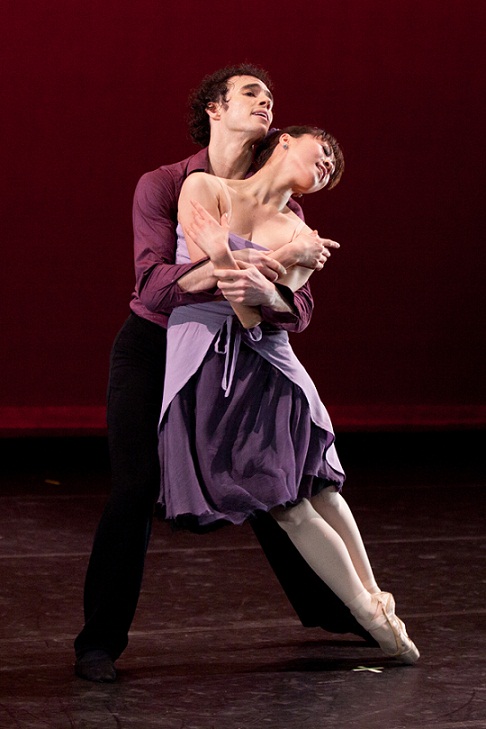
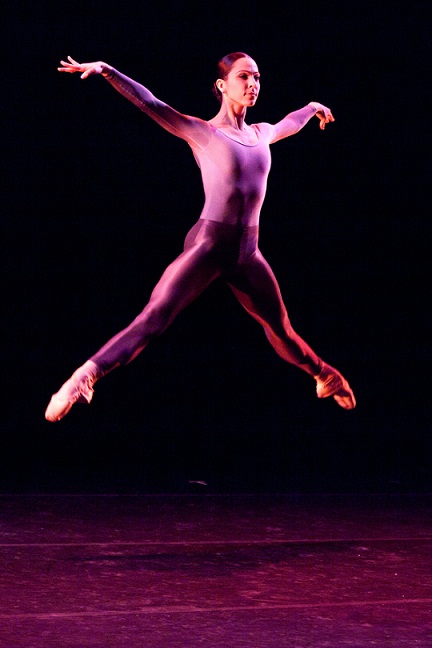
Ack, you guys I’m working 13-hour days right now and have virtually no time for anything but working, eating, and sleeping, but I wanted to get some photos up of the recent performance by Avi Scher & Dancers that I saw at the Alvin Ailey Theater on Sunday afternoon. All photos are by fabulous dancer-turned photographer, Matthew Murphy.

I don’t have much time to write, but as always, I really enjoyed Avi’s choreography, combined with the excellent dancers he gets to perform his work. As always, it’s incredible – really truly incredible – to be able to see such renowned dancers on a small stage in a small, intimate theater.

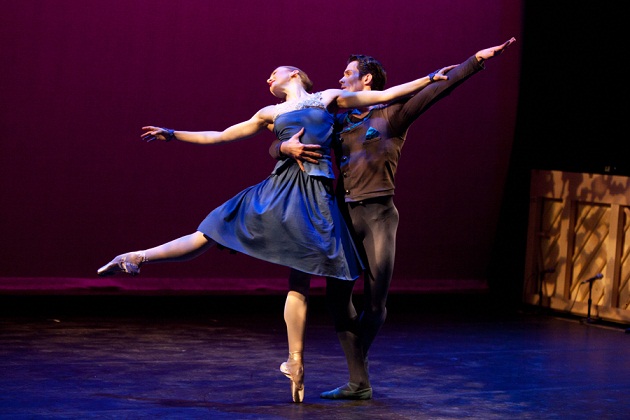
Above are Carla Korbes and Seth Orza, principal dancers formerly with NYCB, now with Pacific Northwest Ballet, in Scher’s Mirrors, a somewhat Jerome Robbins-like piece (it reminded me a bit of Dances at a Gathering anyway), that had its premiere this weekend. Korbes and Orza beautifully danced the romantic pair at the heart of the piece. Also in that piece, ABT’s always entertaining Craig Salstein danced a comical duet with ABT’s Nicole Graniero. I love Craig. I do. As huge a crush as I used to have on Seth when he was with NYCB, I have to say Craig stole the show 🙂

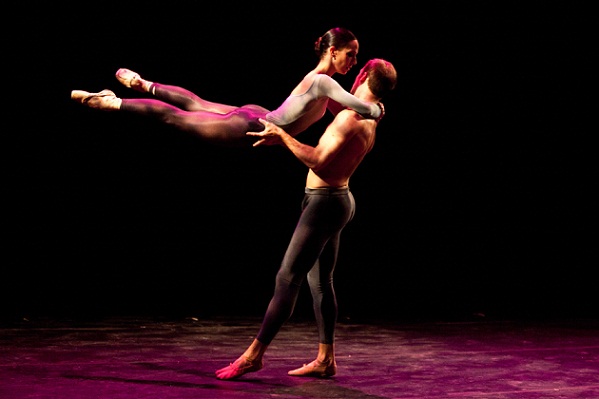
Ooooh, I really loved this couple. It’s Joseph Gatti and Misa Kuranaga from Boston Ballet and they danced the second piece, Utopia. I loved both – and initially couldn’t figure out where I’d seen Gatti before but now I’m thinking it was a Wheeldon Morphoses piece. (Sorry, I don’t have time to look it up!) Kuranaga really took my breath away in this. She was really striking. She had such beautiful lines and danced with such passion. In the end, she threw herself at him ecstatically and he caught her. Sweet.

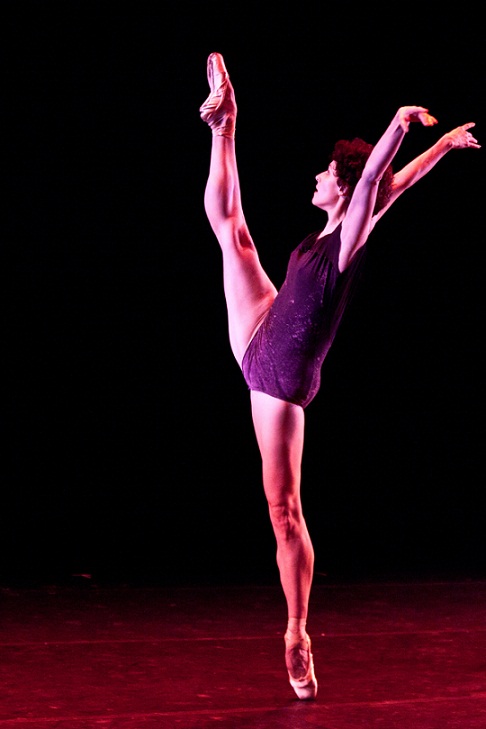
This is Ana Sophia Scheller, NYCB soloist, in Dreamscapes, the fourth piece of the night, which was also having its premiere. She had a fast-moving part up front and she did very well with it. She’s standing out to me more and more lately.

Scheller with Tyler Angle (NYCB principal, and one of my faves of that company). I thought the dancing in this last piece was spectacular. So many really top notch dancers… Sofiane Sylve, formerly of NYCB and now a principal with San Francisco Ballet, was stunning in a late section where she danced an insanely fast-footed allegro duet with with NYCB’s Savannah Lowery. Lowery always amazes me when I see her dance with Avi’s group on a small stage like this. She’s got such an athletic build and Scher always makes her look so good. He gives her choreography and costumes that really suit her. (NYCB’s Janie Taylor did the costumes).

Sofiane Sylve. It was nice to see her in NY again. And Orza 🙂

Scher is a very likable young choreographer who studied at the School of American Ballet. He has lots of NYCB connections and you can see influences of Balanchine, Robbins, and Christopher Wheeldon in his work (the third piece was called Classroom Fantasy, was danced by students of the Manhattan Youth Ballet, and reminded me a bit of Wheeldon’s early Scenes de Ballet albeit more comical). I think Scher is definitely a choreographer to keep an eye on for the future.

Benjamin Millepied’s “Plainspoken”

Last Thursday was NYCB’s Fall gala, during which they presented the New York City premiere of Benjamin Millepied’s Plainspoken (photo at left, of Teresa Reichlen and Sebastien Marcovici, by Paul Kolnik; the ballet originally premiered in Wyoming this August), along with Robbins’ fabulous homage to Fred Astaire and Rita Hayworth, I’m Old Fashioned, and Balanchine’s Tarantella and Western Symphony.

The evening began with the orchestra pit rising and the always lively Faycal Karoui leading the orchestra in a rendition of Leonard Bernstein’s Candide Overture. I love that movable orchestra pit – best thing, in my opinion, about the recent renovations to the Koch Theater.

I was hoping there would be introductions and short speeches, including one by Sarah Jessica Parker, who served as honorary chair for the after-performance party. But no such luck – I guess because it wasn’t the beginning of the season, like galas usually are. I didn’t even get to see Parker come down the red carpet, there were so many paparazzi blocking my view. I certainly heard her though – or, rather, the paparazzi, as they screamed her name like she was the Messiah. I didn’t recognize anyone else. Lots of good-looking people perfectly coiffed and dressed in black tie but no one I recognized. I didn’t see Natalie Portman, though I heard she was there. I never recognize famous people, though. I’m really bad that way.

Anyway, I’m Old Fashioned was, as always, enjoyable, albeit too long. No dance-maker needed an editor more than Jerome Robbins in my opinion- and Tyler Angle stood out to me in his solos and duets with Maria Kowroski. But my favorite part of the evening was the second half of the post-intermission, when Ashley Bouder and Daniel Ulbrich just nailed Balanchine’s super fast-paced bravura-heavy duet, Tarantella (Ulbrich smacked the tambourine so hard one of the little metal things came flying off) and then Sara Mearns just astounded me in the last section of Western Symphony. How in the world does she stand on pointe, on her own unsupported by a male dancer, and lift her other leg in the air into a perfect split, into practically a six o’clock penchee? How how how? She and Charles Askegard really put on a show as tart-y saloon dancer and cowboy. She is really just unbelievable.

Okay, so onto Plainspoken. Well, sometimes I like Millepied, and sometimes the work just falls a bit flat to me. I didn’t much care for this one, though I’ve liked his last several ballets for ABT and NYCB. This was very abstract, no story that I could find, and I’m just not a fan of purely abstract ballets that I can’t find any story in whatsoever. It was a ballet for four couples: Sterling Hyltin and Tyler Angle, Teresa Reichlen and Amar Ramasar, Jennie Somogyi and Sebastien Marcovici, and Janie Taylor and Jared Angle (the last were generally my and my friend’s favorite pair – I think because Janie always brings something dark to her roles, there’s always something beneath the surface with her even if you can’t put your finger on what it is). The couples sometimes changed partners though, and there would be different-sized groupings.

The music was by Pulitzer prize-winning composer David Lang – it was a commissioned score – but to me the music here wasn’t nearly as rich as, for example, that used by Morphoses recently. This was mainly strings and piano and each section seemed emotionally the same. There didn’t seem to be a lot of contrast between the movements or a build-up toward the end. The sections were each differently lit – by a different color and a background curtain that would rise and lower to reveal more or less light than the section before. But the set was nothing very dramatic and the different colors didn’t, for me at least, evoke a different mood.

Movement-wise, there seemed to be a swimming theme. At various points the dancers would sit on the floor and make motions evocative of swimming – sweeping arms through the air, paddling legs – backward, then forward, then all dancers lying on their backs with their feet in the air like a synchronized swim team. At other points, the women would be carried somewhat Chaconne-like across the stage. I remember a slide characterizing Janie’s section, and she made it seem as if she was being taken by the men who slid her, against her will, across the floor.

I also have in my notes that the movement toward the beginning, in the first section, was a combination of robotic and more casual walks, kind of like the ensemble walking across the back of the stage in the second part of Robbins’s Glass Pieces. This kind of movement was interspersed with the swimming-like motions. In later sections, dancers seemed to run in place.

Oh, and during Janie’s section, there was a point where the men all picked her up and hoisted her high above them, like in MacMillan’s Manon or the Balanchine ballet where the woman is carried around the whole time by a group of men and the lone man on the floor keeps reaching up for her (sorry, can never remember the name of that ballet). My friend loved this part, and I did as well, but couldn’t really figure out how it played into the rest of that section.

In general, my first impressions of this ballet were: some interesting movement reminiscent of other ballets that didn’t seem to add up to much and didn’t really make me feel anything.

At the end, Millepied, Lang and the costume designer (Karen Young) and lighting designer (Penny Jacobus) took the stage for a bow. The applause seemed more polite than hearty (in contrast to the crazy applause Wheeldon always gets!), but that could just be me projecting my own thoughts onto everyone else.

What about you guys? I saw some mentions on Facebook of people liking it. Who else saw it and what did you think?

Janie Taylor Debuts in Millepied’s “Why Am I Not Where You Are” Etc.

I’ve been remiss in my New York City Ballet posts! Last week I saw two programs: one featuring three dances to three different violin concertos – Peter Martins’s Barber Violin Concerto, Robbins’ Opus 19 / The Dreamer, and Balanchine’s Stravinsky Violin Concerto. And the other program was another in the “See the Music” series but was also dedicated to Santiago Calatrava, who designed sets for all three of the ballets performed – Benjamin Millepied’s Why Am I Not Where You Are (pictured above, photo by Paul Kolnik), Christopher Wheeldon’s Estancia (pictured below, photo also by Kolnik), and Mauro Bigonzetti’s Luce Nascosta, all of which premiered last season and which I wrote about here, here, and here.

Calatrava was in the theater, and after encouragement by Peter Martins, he rose and took a bow.

Then, as with the first “See the Music” program, before the performance began, the orchestra pit rose and conductor Faycal Karoui gave a humorous little explanation of various parts of the Thierry Escaich score from Millepied’s Why, the first ballet performed.

These explanations are really interesting to me, I have to say. I only took one classical music class in college and now wish I’d taken more. Karoui talked about how there were four main parts to the score: a waltz, a tango, a disco, and a final climactic part, and he talked about the differences in tempo between them, and between them and a typical waltz, tango, etc.. He also talked about how the ballet has a central male character (danced very well by Sean Suozzi – in top picture, being carried by the group of men), and how you can hear that central character’s theme – or voice – throughout each section of the music. But the voice changes with each section: at first, he’s shy and mysterious (and his voice in the first section is portrayed by a violin solo), then as the orchestra grows sharper and stronger in the second, tango, section, so did the character, etc.

When we got to the “disco” section (it sounded nothing like disco to me but just slightly more mechanical and percussive than the preceding sections), Karoui really began rocking out as he led the orchestra. It was like he was actually dancing in a disco, and I nearly cracked up. I’m not sure if that’s what he normally does down in that pit – if he regularly starts to embody the music literally like that, or if he was just being a goof for the audience. He didn’t seem to be hamming it up at that point, though – oddly – so who knows. Anyway, he is very entertaining and I find his musical explanations very educational as well. What more can you ask than to be both entertained and educated, right?

Anyway, Janie Taylor debuted in the Millepied. She was supposed to have debuted when the ballet did last season but she was out with injury and so Kathryn Morgan had filled in. Character-wise I thought she played it the same as Morgan. Except with Morgan it seemed to have a West Side Story feel to it; with Janie it was darker and more La Valse-like. Both were tragic, but in a different way; Kathryn’s character seemed more innocent. Anyway, this was my second time seeing the ballet and it grew on me. It’s very dramatic, not a dull moment in the whole thing, and you’re really on the edge of your seat, both because of the intensity of the music – maintained throughout each section – and the dramatic story of the poor innocent guy who’s drawn into another world by his enchantment by this ethereal creature, only to get trapped and ultimately destroyed, along with her.

To me, Sara Mearns and Amar Ramasar, with their bravura roles, largely stole the show – I think I remember thinking the same last time. She with those crazy fast chaine turns all around stage that almost make you sickly dizzy, and he with his virtuosic leap sequence – they are kind of the sinister characters, seducing Suozzi but also the audience.

Then came Estancia, and it was my first time seeing Ana Sophia Scheller and Adrian Danchig-Waring (pictured above) in the leads. I’m not a huge fan of this ballet – well, I like the ensemble sections, particularly the dancing and taming of the “horses” – but I nearly fall asleep during the middle, romance part, where city boy wins country girl over. I think it’s just the choreography in that middle section (that I found relatively bland) that slows it down – along with the music – but I liked Scheller and Danchig-Waring just as much as the first pair of leads – Tiler Peck and Tyler Angle. In fact, they seemed to fit the roles a bit more. Scheller reminded me of the main character of Agnes de Mille’s Rodeo and there was something more sweetly, playfully tomboyish about her look than Peck’s. And Danchig-Waring perfectly suited the city boy trying to woo her. He acted his part very well. And his movement is always very sharp. Andrew Veyette and Georgina Pazcoquin as the horses who are eventually tamed, were fabulously entertaining.

And lastly was Bigonzetti’s Luce Nascosta (picture at left by Kolnik), which I’ve seen now three times and which I like but think is too long. I missed seeing Craig Hall in the middle section that seems to be softer and looser than the other sections, where the movement is more marked by those extreme shapes with the flexed hands, splayed fingers, and angular balances and slides on pointe. Hall seems to have the ability to move in a more undulating, kind of serpentine way than most of the others and it seems to me to suit that middle section well.

In the previous program, I loved Megan Fairchild again as the “modern” dancer in Barber Violin Concerto, and, as always, Gonzalo Garcia as “the dreamer” in Robbins’ Opus 19!

New York City Ballet’s First Fall Season Opening Night


Tuesday night, New York City Ballet opened its very first fall season with performances of Balanchine’s Serenade, Peter Martins’s Grazioso, and Jerome Robbins’s The Four Seasons. First, before the performance began, Peter Martins came out and introduced each of the principal dancers, who came out onstage one by one, and said this season would be a celebration of them. Tiler Peck in particular was wearing this really gorgeous silky fuchsia dress. Martins said all principals were there except for Benjamin Millepied, who was doing something movie-related “en France,” he said with a funny faux Euro accent. Everyone laughed and gave the dancers a huge round of applause. The house was packed and it was clear how thrilled the company’s many fans are with there being a fall season this year. Martins made fun of himself for being so into toasts and said that during intermission, we’d all be given be given free champagne to toast the principals. Which we were – very fun!

The part of the performance I was mainly looking forward to was Janie Taylor’s debut in Serenade (above headshot and Serenade photo by Paul Kolnik) as the main ballerina. As usual with her, she completely made the ballet her own. I thought the ballet had a somewhat dark element with her, that I’ve never seen before. When she first ran out onstage, late for class, instead of looking like she was all frantic about being late because she’d been held up by a boy, it looked like she was running from something – from him. That man was Charles Askegard and when he danced the middle waltz part with her, the huge size difference between them added to the sense of foreboding, that she was fragile, he was pushing her around, and she’d eventually be hurt by him. At certain parts, it was literally like he was pulling her along. When he lifted her and she raised her legs in a split, it looked almost like she was trying to get away from him. Sara Mearns was the angel and Ask La Cour was the man who I call “blind justice” who take care of Taylor when she falls, and it was interesting how much the two male leads and two female leads looked alike. I almost got Taylor and Mearns mixed up at parts, thinking they were taking on the other’s role. And the end when the men raise Taylor up like pallbearers and she is carried off by them, arching her back, arms outstretched  – so hauntingly beautiful. It reminded me a bit of Balanchine’s La Valse.

I was also looking forward to Martins’s Grazioso, in which three handsome men – Gonzalo Garcia, Andrew Veyette and Daniel Ulbrich – vie for Ashley Bouder’s attention with their bravura moves. I don’t think this ballet has been performed since it premiered a few seasons ago. And I loved it all over again. I love how each guy has his own personality – Garcia is the romantic, Veyette is the manly man one, and Ulbrich is the one with all the high jumping tricks. And Bouder really played the tart, looking at each of them up and down at points kind of lasciviously, really trying to choose. The guy next to me was really giggly over it.

And the evening ended with Robbins’ The Four Seasons, which itself ends with a lovely tribute to fall.

This whole season the Koch theater will open an hour early. The promenade overlooking Lincoln Center Plaza will be open for cocktails, the gift shop will be open, and, for the rest of this opening week, there will also be live jazz performed by the NYCB Orchestra one hour before performance time. They have the promenade and mezzanine area done up nicely, with big plush chairs. Also taking place the rest of this week will be a “meet the artists” session whereby, beginning at 6:45 p.m. in the first ring of the auditorium, the principals dancers will be available to chat with ticket holders. There’s also a photo exhibition of the dancers by photographer HenryLeutwyler on display in the theater throughout the season.

Tomorrow night will be the first of seven “See the Music” performances which will provide a look inside NYCB’s 62-piece orchestra. At the beginning of each performance, Peter Martins and musical director Faycal Karoui will briefly discuss the program’s music, followed by the orchestra performing an excerpt of one of the ballet scores. The subject of tomorrow night’s discussion will be Eduoard Lalo’s score for Ratmansky’s Namouna: A Grand Divertissement, which premiered last season. Additional “See the Music” programs are Sept. 26 matinee, January 20, Feb. 1, Feb. 19 matinee, May 25 and June 11.

NEW YORK CITY BALLET OPENING NIGHT GALA: NAMOUNA AND WHY AM I NOT WHERE YOU ARE


All photos by Paul Kolnik. Top two are of Benjamin Millepied’s new Why am I not where you are, and bottom two are from Alexei Ratmansky’s new Namouna: A Grand Divertissement.


Sorry I’m late with this post — I had serious internet problems over the weekend and they’d better not continue today or I may kill someone from Time Warner. Anyway, Thursday night was the opening night of New York City Ballet’s Spring / Summer season, and there were two world premieres: first Millepied’s Why am I not where you are, followed by Ratmansky’s Namouna, A Grand Divertissement.  I thought both were good and entertaining, if nothing earth shattering. And maybe it’s just that I’m getting to the point where I’ve seen so much ballet but it seems that everything is a combination of several other things, which isn’t bad. Millepied’s kept me more engrossed, only because Ratmansky’s was just too long.

Millepied’s reminded me by turns of Balanchine’s La Valse (which everyone seems to have thought), Robbins’s West Side Story, and even Balanchine’s version of Swan Lake, particularly where Siegfried frantically tries to find Odette through the swarm of swans who run around her in circles, frighteningly, creating a kind of hurricane.  It seemed there were also parts of the White Swan pas de deux between Sara Mearns (who danced gorgeously, as always), and her “love interest” Amar Ramasar. There even seemed thematically to be elements of Angelin Preljocaj.

The main character is Sean Suozzi who, wearing all white, seems to be a lost in time, or a human searching for other earthlings and who runs into this lot of ethereal creatures all dressed in colorful Romantic tutus. But instead of being beautifully beguilingly ethereal, they are more frightening, like aliens. There’s a very modern set by architect Santiago Calatrava (who collaborated with many of the choreographers who are premiering ballets this season and to whom the season is devoted — he was toasted by Peter Martins at the beginning of the evening), that to me gave the sense that someone — either Suozzi or the others — were from another place. Music, by Thierry Escaich, is unsettling as well. Suozzi falls for Kathryn Morgan, but in their initial pas de deux Morgan can’t see him. She seems to be blind to him. But he tries. The group of men do a kind of intense West Side Story dance, and eventually, Suozzi manages successfully to fit in, to become one of them, as is made clear by Ramasar’s giving him several articles of colorful clothing (a la La Valse) to don. Afterward, he dances again with Morgan but now it is he who cannot see her. Soon, the others swarm around her, violently plucking pieces of her tutu off. Eventually she’s the one wearing nothing but white undergarments, and she’s left devastated, alone and alienated. It was intense and enthralling and I definitely want to see it again, perhaps with Janie Taylor in the female lead (she withdrew due to injury).

Ratmansky’s reminded me of a cross between Branislava Nijinksa’s Les Biches and his own Concerto DSCH with elements of Balanchine’s Midsummer Night’s Dream thrown in. It’s harder to describe than the Millepied because there wasn’t much of a through story, just abstract portions combined with smaller stories that didn’t seem to merge into a larger whole. It’s set to really lovely music by Eduoard Lalo, which in places sounded like Glass’s In the Upper Room. I can’t remember the whole thing but Robert Fairchild is this guy dressed in white sailor garb. At one point, he happens upon some women dressed in 1930s beachy-seeming clothes and wearing hair caps and kind of taunting him with their humorously sexy cigarette smoking. Jenifer Ringer did a fabulous job of playing the main cigarette-bearing “taunter.” She’d puff in his face and he’d look enraptured but confused. Later, a group of people run toward him, carrying a passed-out Ringer and one man bows at Fairchild, as if for forgiveness. The other women haughtily puff on at the front of the stage. Everyone laughed. This cigarette girl part was my favorite. Then, there were some bravura parts for Daniel Ulbricht, dressed in kind of Puck-ish Midsummer Night‘s garb and doing the same high jumping, running through the air leaps as Puck. If I can remember correctly he was accompanied by some cutely impish female elfs, in the form of Abi Stafford and Megan Fairchild. There are sections where a lot of women in long yellow dresses do various port de bras and rather humorous (to me anyway) jumps in place a la Concerto DSCH, and toward the end Wendy Whelan emerges and is this kind of bride for Fairchild. They do a pas de deux filled with lots of classical ballet lifts and then they get married and supposedly live happily ever after.

I liked the Ratmansky and would be happy to see it again if it weren’t so blasted long! It felt like it went on for about an hour and a half! Before seeing it, I recommend taking a walk at intermission to stretch your legs, and go to the bathroom!

CASTING FOR OPENING NIGHT NEW YORK CITY BALLET


Ballet season is almost here in NYC! New York City Ballet opens April 29th with a program that includes two premieres — one by Benjamin Millepied and one by Alexei Ratmansky (now ABT’s resident choreographer). The Millepied ballet, set to music by Thierry Escaich, will star several SLSG favorites: Janie Taylor, Sara Mearns, Sean Suozzi and Amar Ramasar.

The Ratmansky, set to a score by Eduoard Lalo, will be danced by Wendy Whelan, Jenifer Ringer, Sara Mearns, Robert Fairchild, Megan Fairchild, Abi Stafford, and Daniel Ulbricht.

The two world premieres will launch this season’s Architecture of Dance – New Choreography and Music Festival, devoted to new work. Acclaimed architect Santiago Calatrava has created scenic designs for five of the season’s premieres, including opening night’s Millepied piece.

Go here for tickets and details.

Above drawing by Santiago Calatrava.

ABT, currently on tour in Chicago, opens its classical season at the Met, in honor of its 70th anniversary this year, later, in May.

ABT, NYCB, Yankees — CLEARLY the best time of the year 😀

JEWELS


Janie Taylor and Benjamin Millepied in “Rubies.” All photos are by Paul Kolnik.


Sterling Hyltin and Gonzalo Garcia in “Rubies.”


Jonathan Stafford and Sara Mearns in “Diamonds.”


Maria Kowroski and Charles Askegard and cast in “Diamonds.”


Abi Stafford and Jason Fowler in “Emeralds.”

So New York City Ballet ended its Winter season with Balanchine’s Jewels, his three-act abstract ballet in homage to three different styles of classical ballet: “Emeralds” set to Gabriel Faure in honor of the French style; “Rubies” set to Stravinsky in honor of the American jazzy / showgirl-y style; and “Diamonds” set to Romantic Tchaikovsky and in the imperial, celebratory Russian style.

“Diamonds” has long been my favorite part, but the more I see of the full-length ballet (“Rubies” is often performed apart from the rest, in mixed rep programs), the other two are growing on me, particularly “Emeralds” with its complex patterns, its subtlety and nuance. And of course I like “Rubies” because I think, through this part of the ballet, new audiences unfamiliar with Balanchine can best see how he created a certain kind of “Americanized” ballet for his adopted country.

There were several debuts in the various roles: Janie Taylor and Gonzalo Garcia in “Rubies,” and I think Sterling Hyltin in “Rubies” as well (it was my first time seeing her anyway). Janie was an absolute blast to watch. She doesn’t really have the proper hips for this heavily hip-jutting, hip-swaying role — she’s so tiny and waify — but she was putting everything she had into it, taking every single movement, every jump and stretch and supported penchee and pose as far as it could possibly go and you just couldn’t take your eyes off her. It was the best performance of that part that I’ve seen since Ashley Bouder debuted in it a couple years ago. What was also so stunning about Janie’s performance was her commitment to perfecting every little detail in making a certain shape — it reminded me of her absolutely captivating performance as the Novice in Robbins’ The Cage. Except this wasn’t a creepy male-devouring insect, but a fun flirty showgirl. And yet there was a certain darkness to it — I think there always is with her (Alastair Macaulay has noted the same), but that darkness somehow worked here. She made the role her own, which is what a great interpretive artist must always do.

Janie Taylor danced with Benjamin Millepied, who was very good as well — the most animated I’ve seen him lately, actually. Maybe Natalie Portman was in the audience? I didn’t see her though.

When Gonzalo debuted he danced with Sterling. Of course I always love Gonzalo and, as always, he was very animated and dramatic, making a little story out of every little interaction with Sterling. Which is what I always love about him and what I find so engaging. They did have a few kinks to work through though – -sometimes it seemed like they’d nearly missed hands in connecting, like they weren’t completely in sync with each other. But that was only physical and was likely something you might have only caught if you were sitting up close (as I was). Emotionally they connected perfectly — which to me is more important — unless of course a physical mis-connection results in a fall or something. Hyltin does have the hips for this role and she seemed like she was having a lot of fun with it too. She was really stunning.

Of course I loved Sara Mearns in “Diamonds,” which I knew I would. This was my first time seeing her in the role and she was perfect. It was just like Swan Lake all over again. Sir Alastair in his end of the season review calls her the best ballerina in NYCB and perhaps all of New York and I generally agree, especially regarding her adagio. I guess the perfect ballerina would be someone with her or Veronika Part’s adagio technique and Gillian Murphy or Paloma Herrera’s allegro — I would have preferred for Mearns, for example, to be a tiny bit more seductive with the fouettes in the SL Black Swan pdd — but I don’t know if that ballerina exists today. I don’t know if she’s existed ever. Maybe Gelsey Kirkland? I don’t know, I never saw her dance live, but judging by what I hear from those who did, and from my own video-watching, she seems to have had everything…

Anyway, “Emeralds”: I liked Abi Stafford in the solo; I liked her port de bras — very beautiful arms, very well-articulated gesturing. Her performance was sweet. I also liked Jenifer Ringer as the second girl who does what I call “the courtship walk” with the male dancer. Her performance was full of subtlety and charm; I sensed a kind of  sweet shyness as she tip-toed en pointe along with the boy, first going in his direction, then kind of changing direction and walking around him in circles, making him kind of follow her.

At my final performance of the season, I sat next to James Wolcott and Laura Jacobs, who introduced me to several Ballet Review people. Ballet Review seems like such an excellent publication and it’s really too bad the articles aren’t available online because Jacobs has a very interesting scholarly piece on this ballet, arguing that it’s more about Balanchine’s love of Suzanne Farrell than anything else. If you can get your hands on it, I highly recommend that article!

NEW YORK CITY BALLET’S SLEEPING BEAUTY IS THOROUGHLY CAPTIVATING FROM START TO FINISH


This past week, New York City Ballet began its two-week run of Sleeping Beauties. I saw the opening night performance, with Ashley Bouder (above with Damian Woetzel, in Paul Kolnik photo) in the lead. She danced opposite Andrew Veyette, as Prince Desire. Both did really, a near-perfect job (just because nothing’s ever completely perfect!). Really, I don’t know what more you could ask for, although I’m waiting to write my full review on the production until later this week, after I’ve seen two more casts: Kathryn Morgan as Aurora and Tyler Angle as PD (with Janie Taylor as the Lilac Fairy!), and then Tiler Peck and Gonzalo Garcia as the leads.

I love NYCB’s production — a lot more than ABT’s — and I can’t really figure out why. In NYCB’s there’s really never a dull moment — there’s no boring court dancing, just all the wondrous ballet, the very intricate and complicately awe-inducing variations for the various faeries (Sara Mearns was gorgeous as Lilac Fairy — in photo below by Paul Kolnik, as were Amanda Hankes, Lauren King, Rebecca Krohn, Erica Pereira, and especially Ana Sophia Scheller as Fairies of Tenderness, Vivacity, Generosity, Eloquence, and Courage respectively), the fun “wedding scene” with all the cute virtuosity-driven duets for the fairy tale characters (once again, loved Sean Suozzi last week — here as Puss in Boots, and Stephanie Zungre as his partner the White Cat; loved Tiler Peck and Daniel Ulbricht as Bluebird and Princess Florine, loved Henry Seth as the Wolf but not sure why they had a little girl dance Little Red Riding Hood…), the “jewels” starring Stephen Hanna :), and of course the beatific Grand Wedding Pas De Deux between Bouder and Veyette.

I don’t know, there’s just never a dull moment: you go from the Rose Adagio with all the virtuosic balances for Aurora (and the handsome cavaliers), to the richly choreographed fairy variations (that seemed to me more Balanchine than Petipa), to the drama of Carabosse’s arrival with her creepy minions and the frightening spell she casts, to the sweet Vision scene, to the quick Awakening (nothing in this production is long and drawn out; each scene gets right to the point), to the Wedding with the entertaining guests, and ending with the beautiful pas de deux between Beauty and the Prince.

I can’t figure out what exactly is different between this version and the others I’ve seen before, but honestly, this hasn’t been one of my favorite story ballets. So I was just really floored by how captivating NYCB’s production was. I can’t wait to see a few more this week. NYCB is good at story ballets! If you’re in NY and you can make it sometime this week, do go!


NEW YORK CITY BALLET OPENS THEIR WINTER SEASON WITH MIDSUMMER NIGHT'S DREAM & GERSHWIN

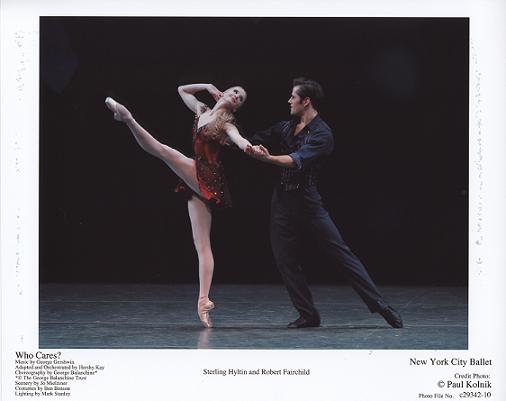
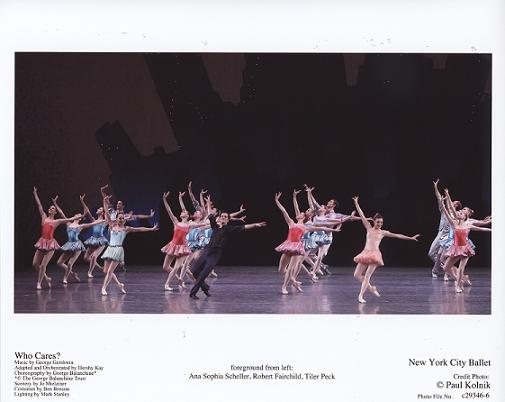
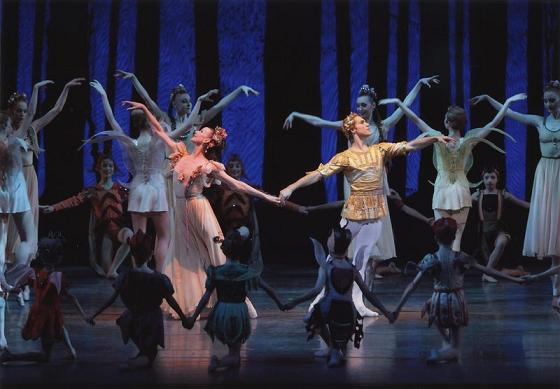
New York City Ballet opened their Winter 2010 season last week with rotating performances of Balanchine’s Midsummer Night’s Dream, and a two-ballet program of his Who Cares?, set to Gershwin music, and Peter Martins’ Naive and Sentimental Music.

I LOVED Who Cares?! (photos above — of Robert Fairchild and Sterling Hyltin, and of the whole cast — by Paul Kolnik.) I’d only ever seen the pas de deux before and didn’t even realize the whole was comprised of a whole slew of Gershwin songs, some danced by the ensemble, some by only the women, others by only the men, with solos and pas de deux mixed in. I particularly loved Tiler Peck’s duet with Robbie Fairchild in The Man I Love. She has such a clean, beautiful line and she’s so expressive and so engaging. She can make a story out of anything. And of course Fairchild is always the perfect romantic male lead 🙂 Crowd went wild over his and Ana Sophia Scheller’s duet to Embraceable You as well as Scheller’s My One and Only solo. Such a fun ballet — I’m going back for more this week.

Also shown in that program was Martins’s new Naive and Sentimental Music, set to John Adams’ score of the same name. I wrote about that ballet when it premiered here and posted pics of it here. Seeing it again evoked a bit of Balanchine’s Jewels, particularly the lovely lyrical white section (my favorite) and the sexy red.

One little thing I have to say: this ballet was created on and is danced only by principals but Adrian Danchig-Waring danced in last week’s production as well, and he is still a soloist (I think he may have been replacing Amar Ramasar, who must be injured because he was replaced a few times over the week…) Anyway, I realize NYCB is top heavy at the moment, but I think Danchig-Waring definitely needs to be next in line for a promotion!

And earlier in the week I saw the best EVER cast of  Midsummer Night’s Dream. I finally got to see my Gonzalo Garcia as Oberon 😀 (photo above by Paul Kolnik, of Garcia as Oberon and Darci Kistler as Titania). I’d missed him in this role at the end of last season. He did very well – -not only with the dancing — particularly that crazy fast scherzo — but also, and less expected for me, with the acting. I thought he’d be a sweet, glowingly endearing Oberon, but, no, he was a pissy, demanding fairy king — just as much as Andrew Veyette last season (cutely pissy and demanding though!) He wanted Titania’s servant boy and he wasn’t letting her say no to him. Only thing regarding the dancing — his legs don’t seem to be as flexible as they once were. It seems like he may have injured an adductor muscle, or else he’s built up so much thigh muscle or something — but his legs when he jumps are not making perfect splits. But his upper body is so fluid and graceful and he exudes such charm that he’s still the perfect lyrical male dancer nonetheless.

Titania was the beautiful Sara Mearns (headshot by Paul Kolnik — a new headshot for her, right?)– and she was the best Titania I’ve personally seen. Oh she’s such a beautiful dancer! She throws herself so fully into every move she makes. If Garcia is the ideal male lyrical dancer she is the ideal female – they were so perfect together.

And I’m so glad Stephen Hanna is back at NYCB (still annoyed with the Billy Elliot directors for not making good enough use of him on Broadway). He was Titania’s cavalier and his pas de deux with Mearns was the best Titania / Cavalier pdd I’ve ever seen. He’s so big and strong — which certainly amps up the romance factor — and his numerous tour jetes just have so much power. Honestly I often get bored during that pdd and just want Oberon to return, but not with Hanna’s cavalier!

And new to the cast of human characters who get their hearts messed with by a mischievous Puck (Troy Schumacher) was Janie Taylor, as Helena. She is another one who excels at story dances, always delving into a character and making clear to the audience what’s going on in her mind. She’s pathetically, endearingly funny from the time she enters the stage all forlorn over Demetrius, to her being completely bewildered by Lysander’s sudden attraction to her, to her searching the forest madly for Demetrius, to her cat-fights with Hermia, etc. She really brought out the humor.

In the section where I was sitting, there were at least three large groups of people you could tell had never seen the ballet before — nor likely the play; they didn’t seem familiar with the story. But they were laughing hysterically throughout the whole thing and were really awed by the dancing, and by some of the tricks (like Puck’s being pulled up to the ceiling via harness at the end). That’s when you can tell with a story ballet that the cast really brought it to life, when the newcomers are enthralled.

WAS THAT MAN BOOBS OR MAN MOVES?: DANCING WITH THE STARS SEASON 9 PREMIERE


Haha! Okay, well after spending much of my evening at the melodramatic (but riveting) Tosca (it was the Metropolitan’s Opera’s opening night gala, with the premiere of a new production of Puccini’s Tosca, by Met newcomer Luc Bondy), it was nice to come home to this rather goofy corny fun – -which is what social dancing mainly is after all! I don’t want to speak too soon, but, to be honest, I wasn’t really looking forward to this season since the last few have been rather blah, but I think with last night’s show, we’re back on track. Lots of characters, some riotously funny, some endearingly sweet, some good dancers, others not so good but serious and hard-working.

For me, the top two (last night was only the men; women compete tonight) were Donny Osmond and, unbelievably, Tom DeLay. I thought DeLay was a natural with the Cha Cha, UNBELIEVABLY! He really nailed it — that slide on the knees, all the faux guitar playing, those awesome New Yorkers, all that hip swaying! The only thing that wasn’t really there were the pelvic rolls. I also thought he was very elegant and polished with the Viennese Waltz and was surprised the judges were hard on him — particularly since none of the guys were that good with VW (except for Aaron). Partner Cheryl seemed annoyed with him in practice though. Well, just so she knows, a lot of people who don’t normally watch this show are watching because of him, so if I were her, I’d snap out of it. She’s been rather short-tempered with her partners lately…

Donny was a total natural – -he nailed both the Foxtrot and the Salsa, which is rare — doing well in both styles of dance I mean. Yeah, I know he has dance training (he “danced as an embryo” I think he said), but still. It’s gonna be a lot o fun watching him dance the season away. And whoa, how much better is he than his sister?!

I also liked Mark (pictured above, with Lacey), the Iron Chef, the martial arts guy. (Sorry, I don’t have all of their last names down yet; too much going on right now in my life; will know them by next week!) I thought his Cha Cha was very good — far from perfect (and he’s doing the dreaded pigeon toes) but he has a natural rhythm and sufficiently loose hips and he clearly knows how to have fun out there and put on a show. But what was he on about with the “man —“? Len accused him of being too martial artsy but having good hips and then he remarked that he’s hiding parts of his body right now, or parts of his dancing, and intends to bring on the “man –” I really thought he said “man moves,” but then Lacey had a rather bemused look on her face and then everyone who quoted him afterward seemed to be saying “man boobs.” Why did he say he was bringing out his “man boobs”? Anyway, quite the character, that one — obviously. I didn’t think his Viennese Waltz was as great — that flexed-footed ronde en l’air almost made me spit out my wine. No flexed feet in rondes en l’air Mark unless you’re trying to be the doll in the Nutcracker.

Okay, I know he’s not popular with the judges, but I totally liked Ashley Hamilton. I think I liked him so because, hello, he was actually a gentleman! I expected a skanky lascivious womanizing perve like his father but no! A total dapper, polished gent! How does a womanizing skank not raise another man to be a womanizing skank? Maybe it’s rebellion — rebellion against one’s parents can take different forms. Hmm. Anyway, I also thought he really looked like Sebastien Marcovici (who we know is not a womanizing skank because Janie would never have any such crap).


Anyway, yeah, Hamilton’s not a natural mover and he has his work cut out for him but I like his personality. I find him endearing and he has a good dance body and I think he can do it if he tries hard. I want him to stay on the show for a while.

Oh poor Chuck, the boxer. Can you say “stiff”? He was seriously nervous during both dances but especially during his first, the Foxtrot. I think he was concentrating very hard, but he needs to loosen up and kind of not think so much.

I thought Aaron (singer, actor) looked stiff as well during his Cha Cha. But he was much better in the Viennese Waltz. Much more polished and very surprisingly smooth. Only thing that wasn’t quite right was it looked like he was literally running at points — particularly during a continuous turn in close handhold. He needs to make it look more like he’s gliding not literally running around in a circle. He didn’t score any points with me when we first met him and he said he was happy Karina’s his teacher because she’s pretty and he wants that. Yeah, that’s definitely what’s important in an instructor.

I thought Louie was so cute! (“I’m small — I’m 5’5, 5’6 on a good day…”) I agree with Len that it’s clear he has no dance training but that he took it very seriously and respected the dance form, trying hard to do all the footwork properly (and nearly succeeding) and be a proper partner. He and Chelsie Hightower looked good together.

And, finally Michael, the footballer who used to be with the Dallas Cowboys, and is Jerry Rice’s former teammate. Cute how he’s all into play competing with Jerry, telling us he just wants to get better scores than Jerry in each of his dances. And he remembers exactly what Jerry got from his first Cha Cha. But it’s clearly all in fun. He’s another one with an endearing personality who I like and want to stay on for a while. He’s not a natural dancer — he’s lacking in grace and polish and form, but he’s got an innate sense of rhythm and he’s used to moving and I think he has the ability to do well. He had some good triple chas in that Cha Cha which I think shows when he really gets going, when he really gets into a groove, he can make it work.

Len annoyed me, for the first time ever I think, or one of the first times. He kept harping on everyone for not doing standard ballroom — Donny’s Foxtrot was too “razz-ma-tazz,” Mark’s was too kung-fu, etc. Well, we know, but it’s only the first week — let the dancers have a first dance that’s not totally out of their territory. And that was totally out of line for him to criticize Louie’s shaggy haircut as not being “ballroom enough.” One’s personal hair style has nothing to do with one’s dance ability and Len should know that. It seemed like he really wanted to put everyone into a box and make them conform to his own non-dance standards. Dance is about freedom of expression. I know he was sort of kidding, but he came across as an old fuddy duddy.

I think of the men Chuck, Ashley and Michael are going to be in the bottom. What do you guys think?

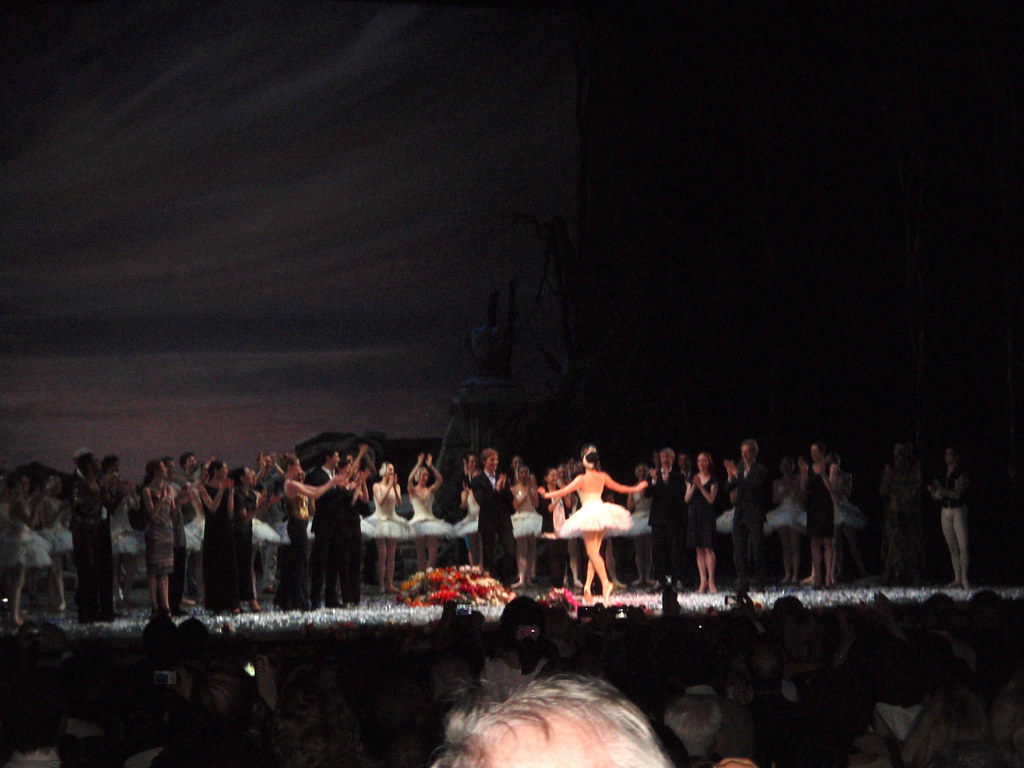
NINA ANANIASHVILI'S FAREWELL PERFORMANCE WITH AMERICAN BALLET THEATER

P6272307

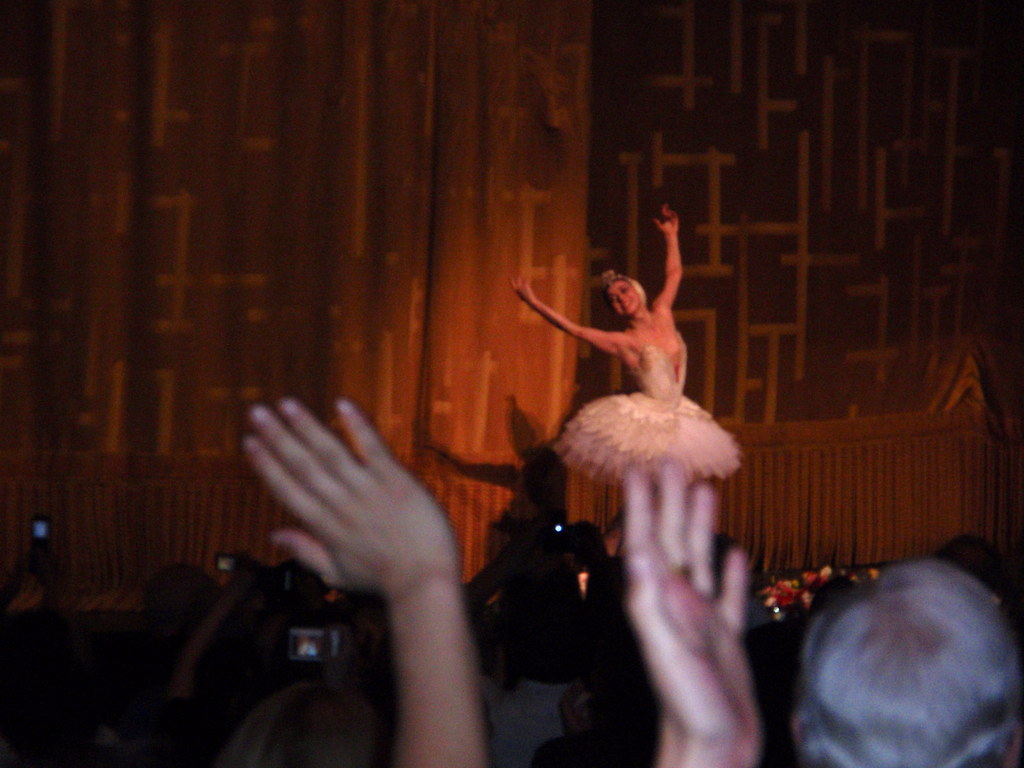
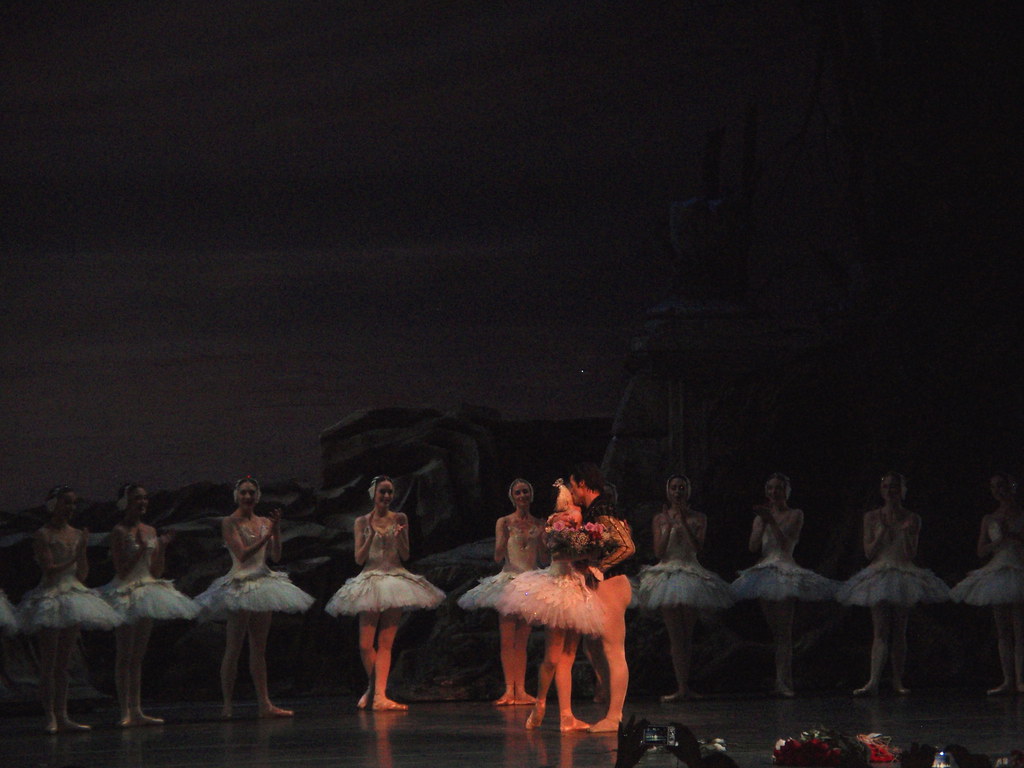
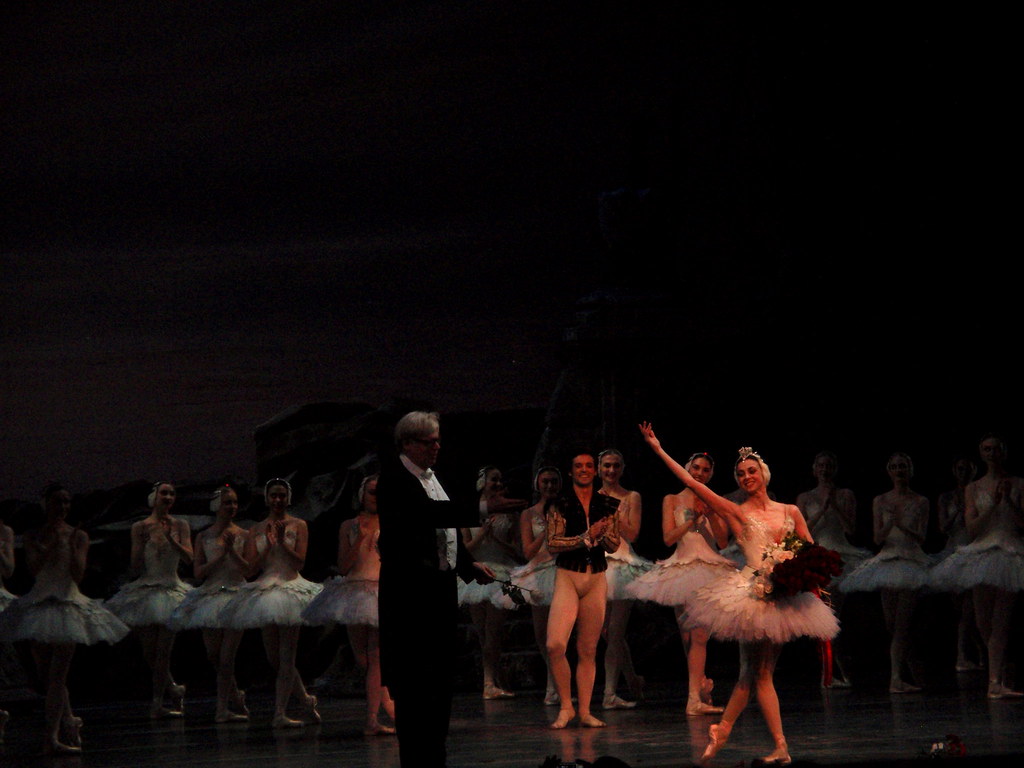
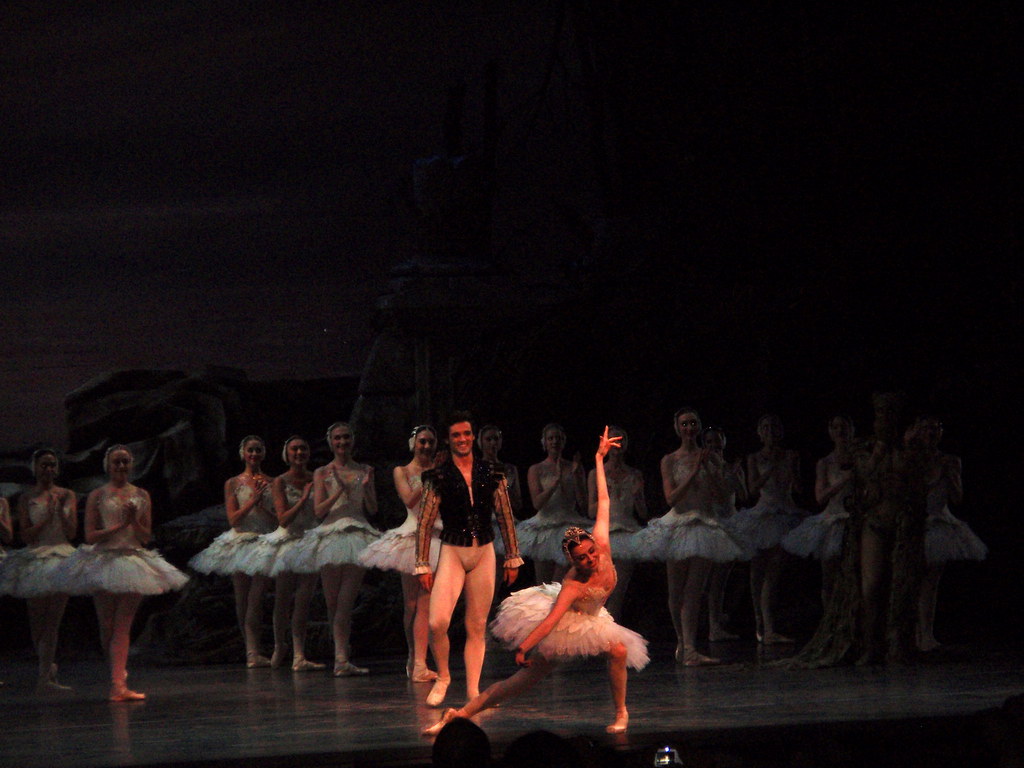
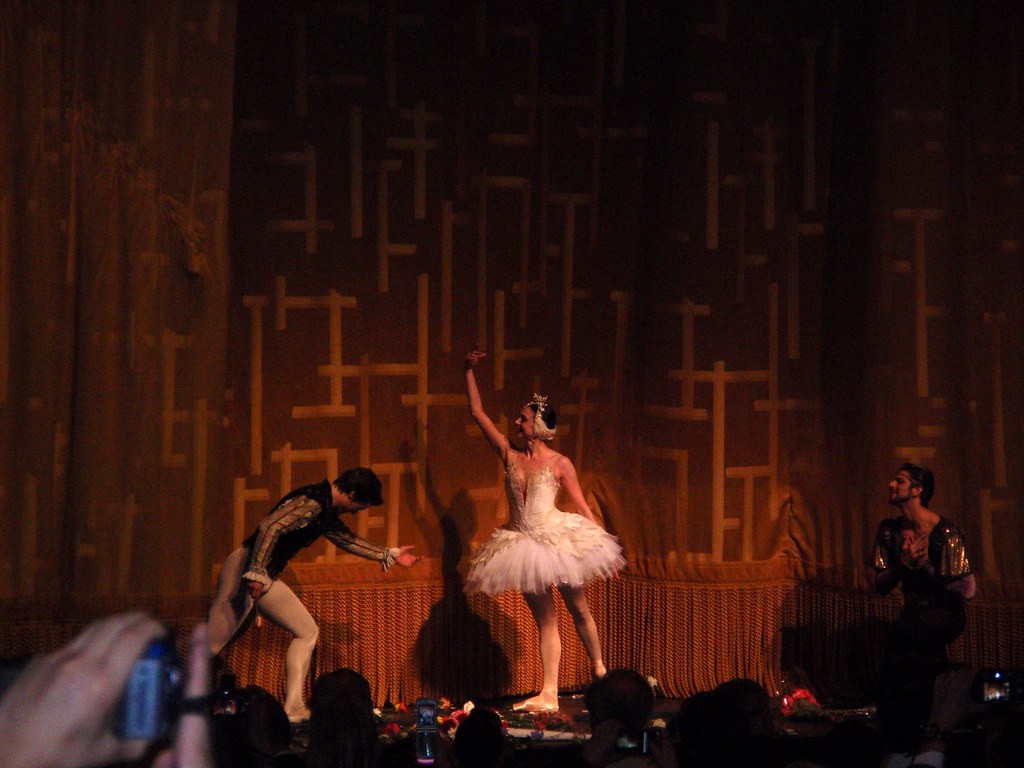
The widely beloved ballerina from the Republic of Georgia gave her farewell performance, of Swan Lake, with ABT to a completely packed house on Saturday night.  Angel Corella danced Siegfried and Marcelo Gomes von Rothbart.

Of course it was a wonderful performance, one her bizillions of adoring fans will never forget. It was my first time seeing her in this role and she was gorgeous. One thing that really struck me was how she’d wave her hands while in the guise of a swan. Not only her arms, like the other ballerinas do, but actually her hands. They looked like feathers they were so light and delicate and fluttering. I’d never seen anyone do that. She also did the rapidly fluttering foot during the White Swan pas de deux better than any ballerina I’ve seen. She is splendid at small details like that that make all the difference in a performance.

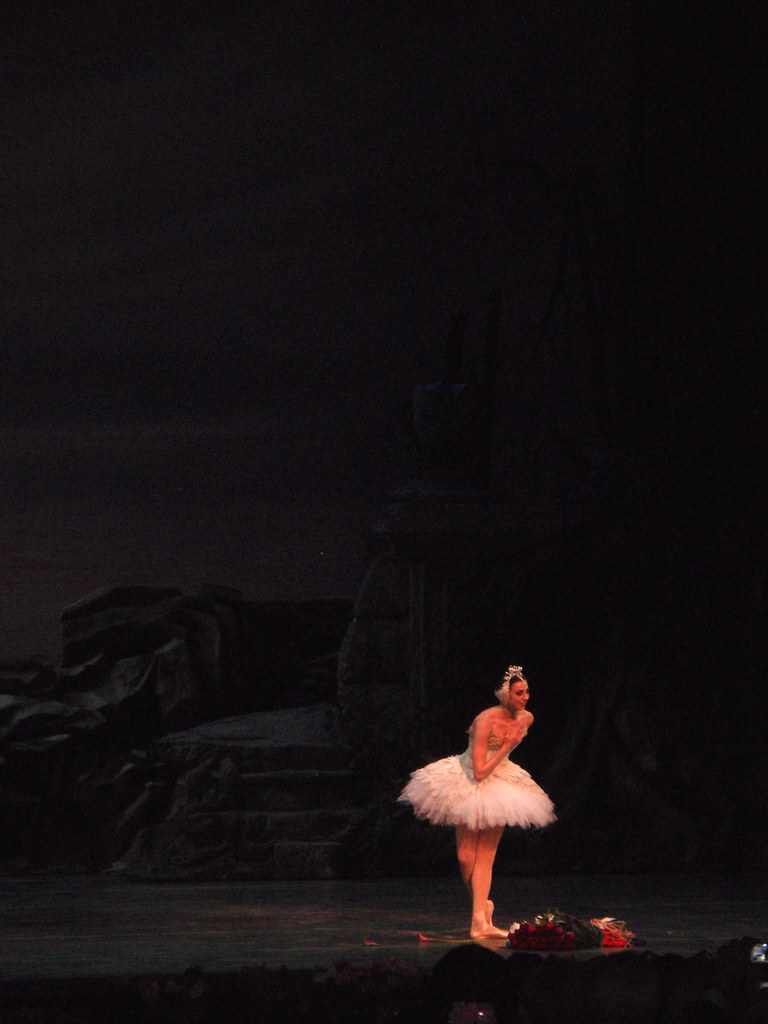
Unlike the others, she faced the audience, instead of the back of the stage, as she bourreed offstage after the end of the White Swan pas. I’m not sure if she always does that or if it was only this time since it was her last and she wanted to see the audience. Her face was full of sorrow but there was also this kind of “that’s life, that’s that, this is my fate” subtext behind her eyes — a thought Odette might have as well as a retiring ballerina. At the end, during bows, she bourreed offstage again, this time with her back to the audience, her face toward her pile of bouquets and the many dancers and former partners lined up onstage who’d come out to issue her her farewell. (Shown in pic below)

P6272300

Of course Angel was his usual passionate Siegfried self, and Marcelo was a mouth-wateringly sexy von Rothbart. I liked the way he picked one court lady up (I think it was Misty Copeland) and tossed her aside, so he could flirt with another. Marcelo’s ultimately too sweet though and his sweetness shines through — I don’t see how anyone’s actually ever completely believed his performances as the quintessential bad guy 🙂 I also like how he jumped up to the throne, taking Siegfried’s princely place next to his mother, in one flying leap. It was acrobatic and eye-catching, and very presumptuous, as von Rothbart is. Actually, watching Marcelo made me like David Hallberg better — David was much like him. They both did the part very well. There were a few more giggles during David’s turn as von Roth, but that could have been because he’s usually “the nice guy.”

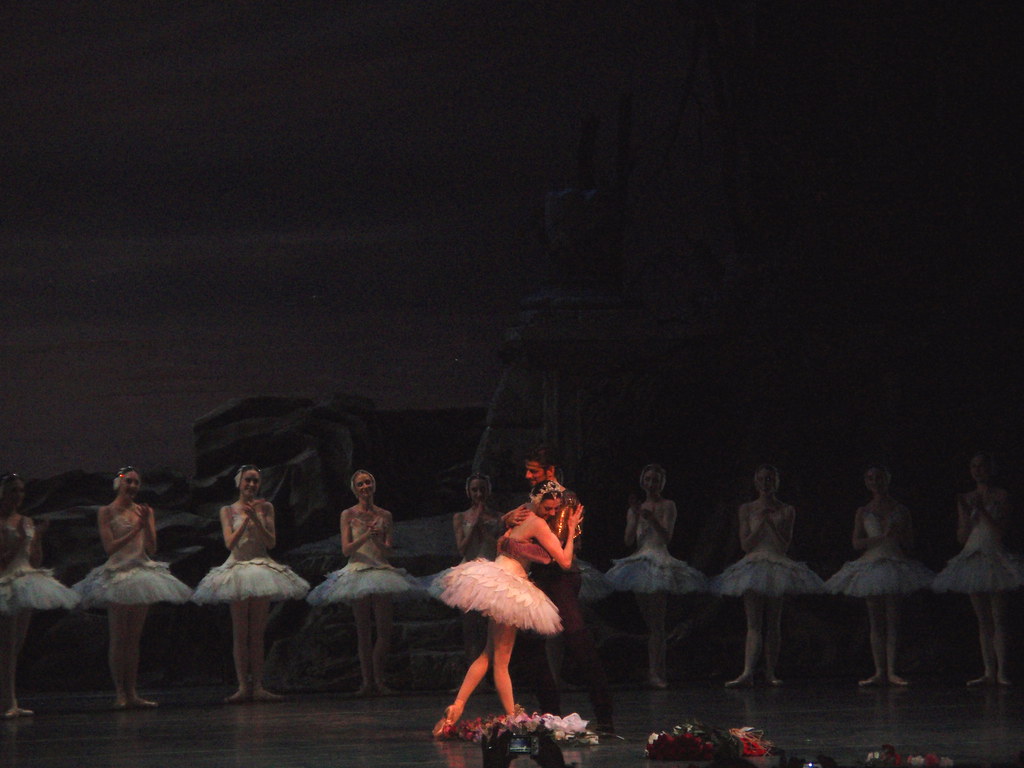
And of course Marcelo and Angel, both of them full of theatrics, had to pull the stunt of the season: at the end of the Black Swan pas de deux, Marcelo picked up Nina and tossed her high, right into Angel’s arms, and he caugh her in a fish dive. Very dramatic, and of course the audience went completely nuts with applause. They performed said stunt again during the curtain calls. I didn’t get a picture of it, but someone caught in on YouTube!!! Oh how I love illegally enthusiastic fans! Thanks to Haglund for finding it!

Here are a few more of my favorite pics:

P6272289

What every girl wants — a hug from Marcelo! Even if he is dressed as evil von Rothbart.

P6272298

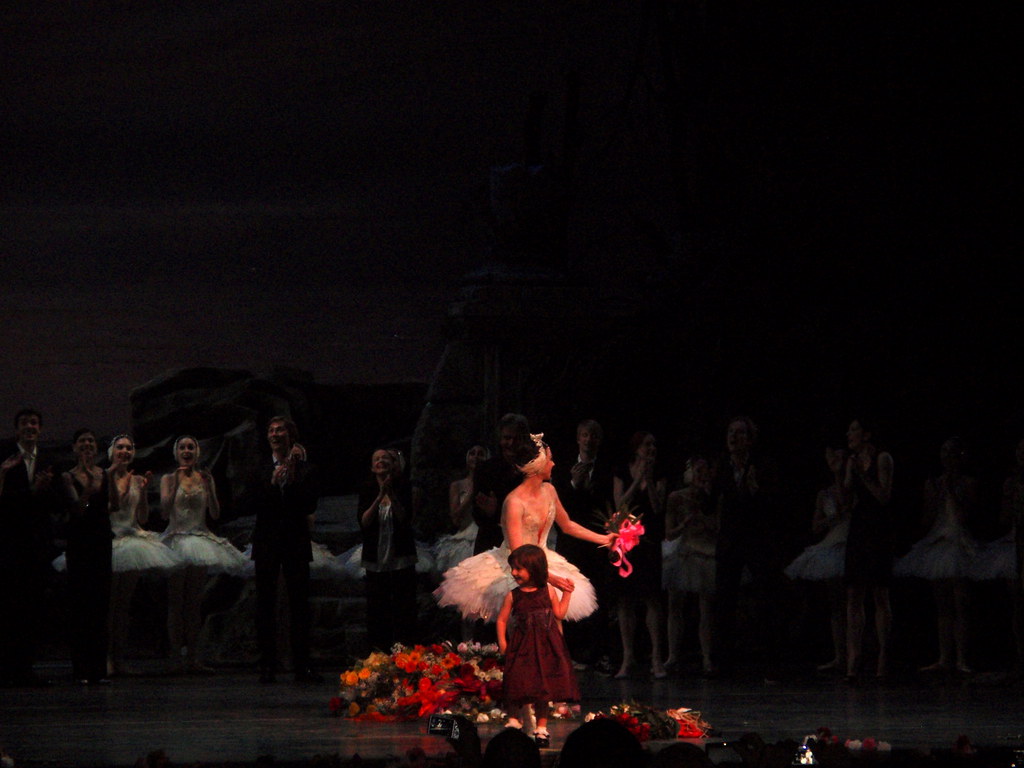
Her little girl was brought out onstage and took a bow with her mother 🙂

P6272291

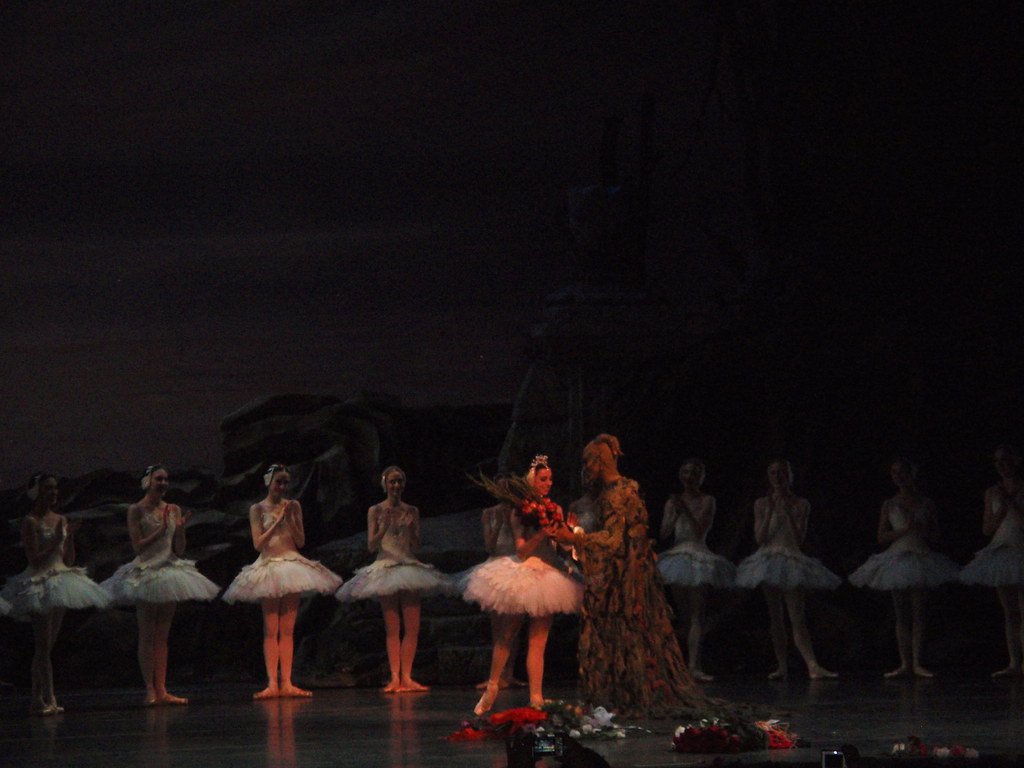
Receiving a hug from Isaac Stappas, who danced von Rothbart in swamp creature form.

P6272286

Getting a kiss from handsome Angel.

P6272279

Giving a dancerly nod to conductor Ormsby Wilkins.

P6272268

I love the arm in the air!

P6272305

In front of the curtain with those two stuntsmen, either right before or right after aforementioned three-way-fish-dive.

P6272283

Those are some of my favorites. See the full album here.

A couple of other hightlights: Blaine Hoven danced one of the Neapolitan high-jumper guys in the court scene. When he did this series of kick jumps, he sent his kicking leg nearly all the way up to his head. Maybe I should begin calling him Blaine Osipova…

And Simone Messmer danced as one of the girls in the Benno pas de trois. Recently I’ve begun to find her very captivating but am not sure why. One of the reasons, I’m now thinking, is that she is so amazingly athletic. She did this series of entrechats (high jumps where the feet change back and forth in front of and behind one another, like a braid) like a man! Seriously — those were damn David Hallberg entrechats! I don’t mean that in a bad way at all — my favorite ballerinas (aside from Janie Taylor 🙂 ) are the most athletic ones.

Trying to think of other things that happened during curtain call. David Hallberg was cute — he bowed down to her several times repeatedly as if to say “I’m not worthy, I’m not worthy.” Audience went wild. Gillian Murphy and Ethan Stiefel came out together. Roberto Bolle came out, all dapper, in a shiny black tux. I remember Paloma Herrera, Diana Vishneva, Maxim Beloserkovsky, Kevin McKenzie (who looked like he may cry). I didn’t see Jose Manuel Carreno (unless I missed him. What’s up with him though — he doesn’t seem to be dancing any more this season??) I didn’t spot Julie Kent, although she just had her baby so that’s understandable. Curtain calls lasted for maybe twenty minutes, although I’m not entirely sure since I had to leave to go to a housewarming party. Anyway, wonderful night. It goes without saying Nina has a huge amount of fans and will be badly missed.