
Who Will Play Romeo in the Film Version of Anne Fortier’s “Juliet”?

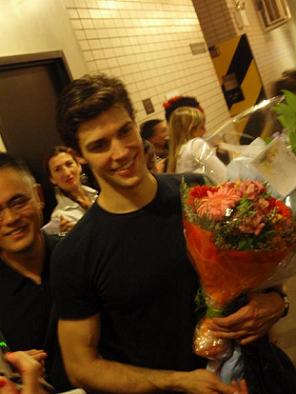
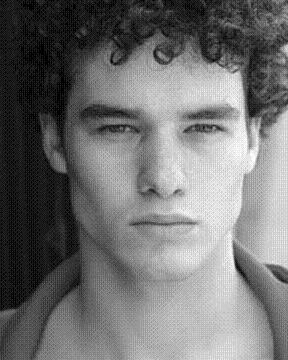
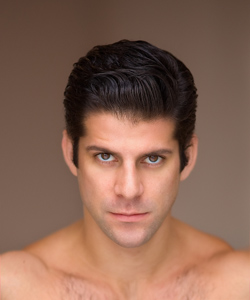
Haha, I don’t even think this book has been optioned yet for film! It should be though – it’s very cinematic. All throughout reading it, I kept “seeing” Romeo – and always as one of my favorite male dancers who’s danced the role. Roberto (top left) is of course the natural choice since he’s Italian and the book’s set largely in Italy. But I feel he may not have enough of the delicious cockiness in him; Roberto’s too nice, at least onstage. Ditto for Cory (top right). Marcelo of course would probably be best … although I don’t know if he has acting skills required for a speaking role in a film. He’s definitely a good stage dancer/actor.

I’m being goofy. I’m sure they would cast Andrew Garfield or Louis Garrel or someone.

Anyway, Anne Fortier’s Juliet, which I recently finished, is a really interesting read, especially for fans of Kenneth MacMillan, and I guess … Shakespeare ๐Ÿ™‚

It’s part historical fiction, part romance, and part mystery / suspense and it shifts back and forth between the present day and the Siena, Italy of 1340, when the two people Shakespeare based his characters on – Romeo Marescotti and Giulietta Tomolei – actually lived. Of course in Shakespeare’s version, the lovers were from Verona, but according to this book, early stories – and there were many tales of Romeo and Juliet; Shakespeare’s was only one of many – had all the action happen in Siena.

The novel starts when 24-year-old American Julie Jacobs receives an inheritance after the death of her great aunt Rose, who raised her after her mother and father were suspiciously killed when she was a child. The inheritance is simply a key to a safe deposit box in Siena, which her mother had originally left with the aunt. Julie is told by her aunt’s butler and his lawyer that it contains a treasure, which she must go to Italy to find. So she sets off for Siena. There she encounters other, less savory types, who are equally interested in her treasure, and so begins the suspense part of the novel.

Julie soon discovers that at the time her mother died, she’d been researching the history of Romeo and Juliet, or Romeo and Giulietta. Julie’s mother’s last name was Tolomei, and it turns out Julie is related to the original Giulietta. I don’t want to give too much away, but the contemporary part of the story consists of the suspense and romance of finding the treasure – which is related to R&J – as well finding Romeo’s descendant.

Julie finds in her mother’s belongings in Italy the earliest version of the story of Romeo and Giulietta, and her reading of that accounts for the historical half of the novel, which was the most compelling and poignant to me. It’s different from the version we all know through Shakespeare. The warring families are the Tolomeis and the Salimbenis, with the Salimbenis being far more vicious and far more financially powerful. At the beginning of the historical story, the Salimbenis have just raided Giulietta’s house and murdered everyone but her. (She was in church at the time.) In a nutshell, Friar Lorenzo is able to sneak Giulietta out to her uncle Tolomei’s estate. Romeo, who is a Marescotti – a historically highly respected military family with connections to Charlemagne but who currently has no financial power – is a hopeless playboy. But once he sets eyes on Giulietta’s portrait, while he is having his own Marescotti-family portrait done, he is in love.

The artist tells Romeo that Giulietta resides at the Tolomei castle. He goes to a ball there in search of her, finds her (she’s a Helen of Troy type and stands far out from the crowd), and follows her into her chamber. She’s still traumatized by what’s happened to her family and so is immune to his flirting. She does tell him though that he can have anything he wants from her if he brings her the heart (or was it the head?…) of the master of the Salimbeni family, who ordered the execution. Romeo’s a bit taken aback, but tells her he’ll do anything.

The next day Friar Lorenzo brings Giulietta to the Marescotti estate and she tells Romeo she doesn’t know what came over her the other day to ask such violence of him; she doesn’t want him to get hurt. He kind of plays with her a bit, she softens, and over the course of this and several other meetings, they fall in love.

Romeo talks his father into asking Tolomei for her hand in marriage. For Romeo I mean. The father is reluctant because he doesn’t want to be seen as “getting involved” in the Tolomei / Salimbeni feud. But seeing how in love his son is, he agrees.

But just as he goes to approach Tolomei that night, old Salimbeni, smitten with Giulietta whom he spies in the distance, reveals that he wants her for himself. This will end the violence between the families once and for all, he claims. The whole crowd gasps, since Salimbeni is old enough practically to be her grandfather, not to mention married (although everyone also knows his wife will soon be dead, as he is starving her, as he’s done to prior wives… Medieval society must have been so lovely…) Of course Tolomei has no choice but to say yes – the Salimbenis are far more powerful – both physically and financially. Saying no to Salimbeni would be family suicide.

Poor Giulietta nearly collapses upon hearing she’s to be the wife of the man who slaughtered her family, and she begs Tolomei not to let the marriage happen. Tolomei refuses. Romeo declares that he will beat Nico, Salimbeni’s son, in the Palio (a Medieval-style horse race that continues to this day), and, if he does, he will win Giulietta’s hand.

At the Palio the following day, Romeo does win, but during the course of the race, Nico kills Tebaldo, Tolomei’s son, but with Romeo’s dagger, making it look like Romeo is the murderer. This is how Romeo gets banished. Although Romeo sneaks back to town with Friar Lorenzo and marries Giulietta in the back of the church where she is at worship, Salimbeni finds them and, well, things don’t go too well for Romeo…ย  Salimbeni’s wife finally starves and he marries Giulietta, then keeps her a prisoner in his country castle.

I should stop there! But the story goes on and there are all kinds of twists and turns. It’s a fascinating narrative and you can see all the same – or many of the same – elements Shakespeare included. But the theme in Shakespeare is the warring families or factions, gangs, what have you – and how innocent individuals get unfairly, tragically caught up in the fighting. In the original, it’s more about the viciousness of one evil, all-powerful man. I found it interesting to see how a great writer manipulated facts to craft a story with themes that would reach far beyond the time and place in which the story was set. I mean, Shakespeare’s version also contained beautiful poetry of course, but his basic story is more powerful and far-reaching than the original. The original does give you a sense of how violent and how absolutely awful Medieval society was for women though.

Anyway, the novel’s very good – at least the historical part. I highly recommend it for that. The contemporary part is cute romance-wise, and definitely suspenseful, but in my opinion not nearly as powerful from a literary perspective as the historical.


Funny, I didn’t really think of who would play Julie / Giulietta. Diana Vishneva or Veronika Part would be good – she has to be Helen of Troy beautiful! But they both have Russian accents and I don’t know if that would work… Hmmm, who else?…

(Photos above, clockwise from top left: Roberto Bolle, taken by me; Cory Stearns, from ABT’s website; and Marcelo Gomes, from ABT’s website.)
THE DUELING JULIETS: NATALIA OSIPOVA VERSUS DIANA VISHNEVA


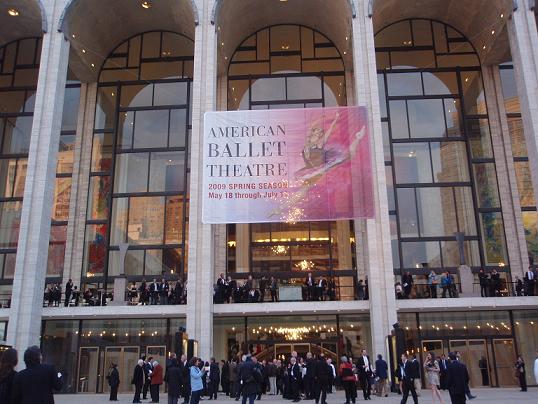
So Saturday was another double feature for me, as for many ABT fans. And it was a fun double-header with the Russian women – the Bolshoi versus the Kirov, if you will – kind of going at each other ๐Ÿ™‚ย  Natalia Osipova (top photo) made her debut as Juliet, opposite David Hallberg’s Romeo during the matinee, and in the evening, Diana Vishneva and Marcelo Gomes took the leads.

I can’t say I liked one over the other, though they were very very different. It was Osipova’s debut and Vishneva has performed it many times so the evening Juliet was a bit more sophisticated. But Osipova will grow into it and eventually make it her own. I think Osipova’s Juliet was much more girlish, cuter, particularly at the beginning, than I’ve seen her danced before. She practically ran from Paris when her parents first introduced them. Vishneva was girlish too but not as much; she knew it was time for her to be married and she was trying to be mature and ready herself.

Osipova tried hard to act the part well though, and I love that about her. She always does that. It’s not just about the dancing; she’s an actress too. And one huge thing I love about her is how well she works with David Hallberg.

Continue reading “THE DUELING JULIETS: NATALIA OSIPOVA VERSUS DIANA VISHNEVA”

LAST WEEK AT ABT: ROMEO AND JULIET


So, this is the last week of ABT’s Met season, and they are closing out with my favorite, Kenneth MacMillan’s Romeo and Juliet. My recommended casts are both performances on Saturday – Natalia Osipova is debuting as Juliet in the matinee, dancing opposite David Hallberg, and that evening is the lovely Diana Vishneva (who has really been blowing me away this season), with Marcelo Gomes as her Romeo. (Angel Corella was originally scheduled to be Vishneva’s Romeo but he is injured). Also, the Wednesday afternoon cast is good — Hee Seo, who is one of my current favorite Juliets, dances with Corey Stearns. Tonight is your only chance to see Herman Cornejo as Mercutio — he’s my favorite for that part. The leads are Marcelo and Juliet Kent. Go here for the full schedule.

Here is a recently-added YouTube of various clips of La Scala’s production of the same ballet, starring Corella and Alessandra Ferri (my favorite ballerina ever in that role).

Photo at top of David Hallberg as Romeo and Herman Cornejo as Mercutio, by Fabrizio Ferri.

MANHATTAN DANCESPORT CHAMPIONSHIPS ARE THIS WEEKEND AT THE BROOKLYN BRIDGE MARRIOTT


And I almost forgot… Friday night is the pro Latin competition, meaning Yulia Zagoruychenko and Riccardo Cocchi will be dancing, but I have a ticket to ABT and I really, really need to see my fave Marcelo Gomes dance Oberon in The Dream and Jose Carreno and Diana Vishneva in the pas de deux from MacMillan’s Manon. I may go to MDC Saturday night for the pro Rhythm and Standard, and the professional showdances. I always like Rhythm and you don’t get to see that in the international competitions. Anyway, here’s the info if you’re in NY and want to go. This is the most prestigious ballroom event in the Northeast; all of the top dancers usually compete. I highly recommend it if you want to see great ballroom.

ABT’S LADY OF THE CAMELLIAS NOT VULGAR!


Photo by Gene Schiavone, of Roberto Bolle and Julie Kent in Lady of the Camellias, taken from ABT website.

I was so busy last week carting pounds and pounds of books back and forth from the Javits Center – and killing my back and shoulders in the process, that I haven’t had time yet to figure out how to reinstall my Disqus system, which means you still can’t comment here, unfortunately. Sorry! I was going to wait to write about ABT’s Lady of the Camellias (and their other ballets I’ve seen) until I had the comments system up again, and until I’ve seen the second Lady cast, but I just have a few things to say now, mainly prompted by the critics, as usual.

This ballet, by John Neumeier, the artistic director of the Hamburg Ballet, is based on – and closely follows – the 1848 novel by Alexandre Dumas, Fils, which in turn is based on the tragic true story of a beautiful and rather famous Parisian courtesan, Marguerite Gautier, who falls in love with a young rich Frenchman, Armand Duval. The story is told in flashback and through various viewpoints and utilizes a play within a play to create theme (or a ballet within a ballet — in this case Manon, which tells the same doomed story of a prostitute and her lover), but this complicated structure doesn’t seem to confuse since the basic story is pretty clear. Though she initially rejects him when they meet at a performance of Manon, Marguerite eventually falls for Armand, and is torn between her role in society and her love for him. Armand is by turns angry, jealous, smitten, in love, and finally devastated when Marguerite terminates her relationship with him, due to pressures from the powerful Duke and Armand’s upright father, then dies of tuberculosis. Neumeier, an American who, like William Forsythe, has for most of his career worked in Germany, made the ballet in 1978, but this is the first time ABT has performed it. The novel has previous incarnations in the opera La Traviata and the Greta Garbo movie Camille.

I saw not Tuesday’s opening night but Thursday’s performance, by the same cast as opening night: Roberto Bolle as Armand, Julie Kent as Marguerite, and Gillian Murphy and David Hallberg as the “ballet within the ballet” dancers from Manon, Manon and Des Grieux. My first thoughts are: I loved Neumeier’s Death in Venice (based on the Mann novel) and I loved this as well. He really knows how to make a theatrical ballet, how to grab you and make you feel like you’re in these characters’ story. The settings are extravagant and specific, evocative of the 19th Century, the costumes are plush, and good use is made of the front edges of the stage, where the dancers come to reflect on the onstage action or to carry on with their own drama outside of the main action. The music is all Chopin, both orchestral and piano, and often the pianist is onstage; at times he actually becomes a character in the drama, interacting with the others, making music while they dance, and whom the characters may tease, or stop from playing to create a commotion. There were so many things to watch — the characters on the front side of the stage, the ensemble dancing in the middle, the pianist. It created a world. And the ballet within the ballet was done very well too: a red curtain masking the back half of the stage parted to reveal David and Gillian in heavy makeup and 18th Century garb, and they danced a Manon pas de deux as the others reacted — Armand falling for the beautiful Marguerite as Marguerite began to identify with Gillian’s Manon.

And then the beautiful partnering between Marguerite and Armand becomes front and center whenever it happens. Many critics are finding the choreography vulgar and crass but I didn’t. I thought the many sweeping lifts were beautiful and evocative of that world – this isn’t Romeo and Juliet, it’s the story of a courtesan and her very passionate lover, so it makes sense for Armand to lift Marguerite high above his head in adulation one moment then bring her down and place her on the floor the next. At times it reminded me of Kenneth MacMillan (both his versions of Romeo and Juliet and Manon) without copying him; the lifts were original. At one point, Armand holds his arms out in a T shape and Marguerite wraps her arms around his from behind. It looks like she’s on a cross. Or at times he’ll pick her up by holding onto her lower arms, which she’ll hold down. It looks like she’s a prisoner and can’t move – which she is in a way. And then there are lifts where she’s lying on her side, like he’s glorifying her.

Also, some of the choreography reminded me of Tudor, such as when Marguerite is begging for acceptance from Armand’s father and she circles around him repeatedly on pointe, or where a character will show hesitation and conflicted feelings with the almost Swan Lake-like rapid fluttering of a foot or by going in one direction, then with intentionally awkward rapidity, stopping and going in the opposite.

And I loved some of the floor choreography. At one point, Marguerite and Armand are sitting opposite each other, back to back, legs extended out, and they lean back and lovingly wrap their necks around each other’s side to side. So sweet.

I don’t know, look at some of these NYTimes slides and see if you think “vulgar” or original, evocative. Critics are also saying the choreography is severely lacking in musicality. To be honest, I didn’t pay much attention to that. I thought Chopin was evocative of that era, that world, as was the choreography, but I didn’t pay attention to the ways that the movement complemented the music. In general I don’t think a certain movement has to hit a certain beat; sometimes movement can play with a rhythm, question it, or work against it for effect. I don’t even think movement needs music. But I’ll pay attention to the music and movement when I see the ballet again next week.

I’ll also write more about the dancers’ interpretations after I’ve seen the second cast.

ABT OPENING NIGHT GALA MET SEASON 2010


Photo from inside the gala tent last night at American Ballet Theater’s opening night gala taken from NY Social Diary, who, sadly, don’t seem to have any pics up of Irina Dvorovenko in her beautiful red gown. It was one of the most beautiful dresses I’ve ever seen — long and many-layered but each layer seemed to be made of a light, sheer piece of fabric, so the whole thing looked light and diaphanous, though it wasn’t really see-through, just looked that way. Anyway, if anyone finds a picture of her, please let me know! Roberto Cavalli probably designed it…

Anyway, so the opening night gala was last night. It was loooong — one of the longest I’ve seen. We didn’t get out until 9:30, and it began at 6:30. It opened with an excerpt from Frederick Ashton’s Birthday Offering, of seven couples waltzing at what seemed to be a party (I haven’t seen this ballet), with Irina Dvorovenko and Maxim Beloserkovsky the main couple.

Following that was a series of introductions and thank yous by Kevin McKenzie (Art. Dir.), Blaine Trump and Caroline Kennedy (the two women were honorary chairs of the evening, along with Michelle Obama, who wasn’t there), and then David Koch who has funded the upcoming production of the company’s Nutcracker this winter.

Then, a group of ABT II dancers performed an excerpt of Edwaard Liang’s Ballo Per Sei, which was a contemporary lyrical piece, set to Vivaldi. I recognized a SLSG favorite — Irlan Silva — right away.

Then came the “Rose Adagio” from Sleeping Beauty, performed by Michele Wiles, with Sascha Radetsky, Craig Salstein, Gennadi Saveliev, and Roman Zhurbin as suitors. I don’t think I’ve ever seen this performed so well. Michele really held those balances, and she was so vivacious! Both she and Paloma Herrera, who danced a later excerpt from SB later in the evening, really embodied a young Princess Aurora very well. Michele got loads of applause – the most thus far of the evening.

Then came David Hallberg and Natalia Osipova’s Olympic version of Giselle — this an excerpt from Act II. People laughed and shook heads in amazement at Osipova’s sky-high ballons and sprightly jumps and leaps. She is really incredible. And then at the end when she jeted off and he followed her, it was really beautiful. But athletically astounding as it was, it was still moving; nearly brought tears to my eyes. I mean, how do you manage to do athletic feats like that and make it seem like you’re a light, other-worldly spirit instead of nearly exhausting yourself to death? I don’t know if I’ll ever be able to see anyone else dance Giselle again besides Osipova now. I saw a couple of etoiles from the Paris Opera Ballet perform it at the Guggenheim a few months ago and all I could think was, “wait, where’s the ear-high develope?” and “that arabesque penchee is nowhere near 6:00!” Natalia Osipova has spoiled me.

Then came Veronika Part and Marcelo Gomes doing my favorite gala fare, the Black Swan pas de deux. They were magnificent. Veronika kept doing these equally astounding crazy penchees, and she was so tantalizing with all of her faux White Swan poses! She was really a bad tease! And perfect fouette sequence for her, and his jetes and all — they got loads of applause too (oh, and so did David and Natalia).

Then was the beautiful Thais Pas de Deux by Ashton, danced by Diana Vishneva and Jared Matthews. I recently saw this rehearsed at a studio visit by Hee Seo and Sascha Radetsky, and it looks so different onstage far away and with costumes and all. It looked a lot more like MacMillan than I remembered. I loved it; Diana and Jared did very well but I still can’t wait to see Hee and Sascha. For her gala gown, Diana was wearing a very interesting-looking Japanese-styled dress.

Ending the first half of the evening was the finale of Tharp’s Brahms-Hayden Variations, danced by a group of seven couples, replete with trademark Tharpian flash and crazy lifts and high energy. Can’t wait to see this now either. I have in my notes, “who is dancing with Hammoudi?!” When I looked at my program, I saw it was Stella Abrera. She is really back and really on!

First dance after the intermission was the “Kingdom of the Shades” scene from La Bayadere.ย  Beautiful as always though it seemed some of the dancers were not completely in unison.

Then came Paloma Herrera and Cory Stearns dancing the Awakening Pas de Deux from Sleeping Beauty, which was followed by the wedding pas de deux from that ballet danced by Herman Cornejo and Xiomara Reyes. I particularly loved Paloma. As I said before, she and Michele Wiles really embodied the sweet, youthful spirit of Aurora. Paloma and Cory danced very well together. They seemed like a real couple.

Then was my second favorite excerpt of the night — the Act III Pas de Deux from Neumeier’s Lady of the Camellias, danced by a very passionate Roberto Bolle (who received a load of applause when the curtain initially opened on him) and a very dramatic Julie Kent. Every excerpt of this ballet makes me want to see the whole. Not much longer now — it begins next week, and I can’t wait. I think they received the greatest applause of the night. Audience really went wild, and it’s partly because he’s so internationally famous, but also I think because they just did so well with it. This seems to be a ballet that requires both good acting and excellent partnering ability because some of those lifts… The pianist, Soheil Nasseri, came onstage too for a bow at the end. He was very good.

Next to last was the Act III Pas de Deux from Don Quixote, danced by ABT audience faves Ethan Stiefel and Gillian Murphy. There was a slight mishap with the lift where he throws her up, she does a crazy twist in the air and then he catches her and the fish dive wasn’t hands free, but they each danced spectacularly on their own. It looked at one point like she was doing quadruple pirouettes between some of her fouettes, and he nearly kicked his leg to his forehead during some of his jumps and then did a flashy little jump during his fouette sequence that had the audience screaming.

The evening ended on a modern noteย  with David Parsons’s Caught, danced by Angel Corella, who, expectedly did an exquisite job. The audience, many of whom hadn’t seen that dance before, seemed so spellbound they almost forgot to clap right away. Angel’s so cute ๐Ÿ˜€

And finally, everyone who danced came out onstage at the end and took a little bow while the orchestra continued to play. Dancers still in costume — Daniil Simkin, Craig Salstein, Gennadi Saveliev come to mind — did a flashy trick, the “Shades” did a little dance in unison, and then dancers who danced in the first half came out in party gown (which is how I fell in love with Irina’s dress).

Fun evening. During intermission I checked my cell-phone and found a text from a friend who saw me sitting in orchestra from the side par terre, where he was sitting. So I texted him to meet me afterward, and we went for martinis, clam chowder and crab cake sandwiches at Ed’s Chowder House across from the Plaza, my favorite post-ballet place to go since it replaced Center Cut mid-NYCB fall season. They have a TV in the bar, and I was happy that the Yankees were still on. So I saw A-Rod hit his game-tying home-run… But how my friend ever saw me in that enormous Met crowd I’ll never know. Though many arrived late, house ended up being packed.

Oh, and I almost forgot: at the beginning of his speech, Kevin McKenzie introduced several dancers – each representing an era of ABT (this being the company’s 70th anniversary)- who all came out and took a bow. Included were Lupe Serrano, Baryshnikov, Nina Ananiashvili (who got a lot of applause), Alessandra Ferri, Natalia Makarova, and cutie Frederick Franklin, who gave a little speech as well. Isabella Rosellini was in the audience, a few rows down from me. I didn’t recognize anyone else in the audience.

LET’S HAVE AN "ELOQUENTLY VIOLENT" MAYERLING FOR ABT, MR. MCKENZIE


The Royal Ballet in London recently opened their fall season with a revival ofย Kenneth MacMillan’s Mayerling (MacMillan of course is a SLSG favorite choreographer). It’s based on the true story of the apparent suicide / murderย in 1889 of Crown Prince Rudolf of Austria and his lover Baronness Mary Vetsera whose bodies were found in Mayerling, Rudolf’s hunting lodge. Prince Rudolf, sole son of Emperor Franz Josef of Austria, was heir to the thrones of Austria, Hungary and Bohemia.

Londoners seem to be loving the ballet. From Neil Norman’s Daily Expressย review:

“Like John Cranko and Michael Corder, MacMillan choreographs for full-blooded men. There is never any doubt about the masculinity and virility of his creatures. The brothel scene that opens Act II reeks of cigar smoke and a sense of political unease is brilliantly conveyed by the huddled quartet of officers who periodically grab Rudolf to whisper into his ear.

“As the tragedy slides inexorably towards its conclusion, Rudolf’s entanglement with his young mistress, Mary Vetsera (Maria Galeazzi) drives him into a paroxysm of violent frustration. Watson’s tortured solo as he clutches his head and writhes in a kaleidoscope of movement had me clutching my kneecaps until my knuckles were white.

“The denouement is terrifying. As Watson duets with Galeazzi in unhinged passion, the stage seems to smoke with some of the most eloquently violent moves in classical ballet. It really doesn’t get much better than this. If you don’t have a ticket, do something dangerous to get one.”

A few other reviews are here, here, and here. For a full list of reviews see here.

And this fromย our friends over at the Ballet Bag, which whom I was chatting on Twitter. They told me they think our Marcelo Gomes would make an excellent Prince Rudolf. I think maybe David Hallberg would as well — may give him a chance to get all of that aggression out of his systemย ๐Ÿ™‚

Here’s a photo they posted of the Royal’s excellent Johan Kobborg in the role.


Photo of Kobborg by Bill Cooper; top photo by Tristam Kenton from the Financial Times.

What do you guys think? Would an American audience take to such “eloquent violence”? Haglund thinks so, as do I — we have with his other ballets. C’mon Kevin McKenzie, give us a Mayerling!

TULSA BALLET’S MOMENTOUS MANHATTAN DEBUT


Wow — exciting night Monday night when Tulsa Ballet, a small but well-regarded company founded by members of the legendary Ballet Russes and currently run by Naples-born Marcello Angelini, opened its Joyce season. The company, from Tulsa, Oklahoma, hasn’t performed in New York for 25 years and it was their first time in Manhattan. The governor and first lady of OK were there, along with the mayor of Tulsa, and other government officials. A Japanese TV station also covered the event (the troupe is very multi-national; many dancers are from Asian countries), and Oberon, our friend Susan, and I were interviewed by them outside during the first intermission. ABT dancer Arron Scott was interviewed outside as well, after the show. I desperately wanted to walk over there and listen in on what he was saying, but didn’t have the nerve…

Anyway, there were three dances on the program: Sir Kenneth MacMillan’s Elite Syncopations, Nacho Duato’s Por Vos Muero, and a newish dance from 2008 by Young Soon Hue called This is Your Life.

The dance that most captivated me was the first, MacMillan’s, which I guess isn’t surprising since he’s my favorite full-length story ballet choreographer. I hadn’t seen this shorter piece though. In terms of the movement, it’s typical MacMillan with the bravura leaps and turns and inventive partnering dominated by sweeping, crazy-hard-looking lifts. But I didn’t completely understand the character of the dance. It’s set to Scott Joplin and other American ragtime music but it’s performed by what appear to be commedia dell’arte characters, dressed in almost clownish costumes. See photo above.

See also this video, of an excerpt performed by the Royal Ballet, Darcey Bussell introducing it and then performing in one of the main duets. There wasn’t a band in the Tulsa version though — the music was recorded.

You get a sense from the video what the whole was like. The choreography is comical, complex and brilliant. And the Tulsa dancers did very well with it — particularly the acting. Definitely a very lively troupe. I got the sense that this would look very different performed by a company like ABT or the Royal on the large Met stage, but I thought the Tulsa dancers did a very good job with a very (despite the humor) difficult-looking ballet.

Next on was Duato’s Por Vos Mueroย 


I also really liked this piece. The movement was modern (no pointe shoes): grounded, sharp-lined and expansive. The music consisted of popular Catalonian tunes from the 15th and 16th centuries, with a poem read (in Spanish; Duato is Spanish and his company is based in Madrid) by Spanish music star Miguel Bose (at least he was a star,ย  in a heart-throbbish sort of way when I took Spanish in high school and college ๐Ÿ™‚ )ย  The dance began on a contemporary note, with dancers dressed in simple nude leotards, then took on a historical flavor, the dancers now in dark costumes evocative of the era of the music. The themes (I think) were love and death; it was overall spiritual and mainly dark, with a few lighter moments interspersed throughout, like the one above, when two men playfully slide a woman between them, and she ends up near the edge of the stage and smiles out to the audience, resting her elbows casually on the floor, her chin in her hands. The two men lift their legs, bent at the knee, as if framing her like a picture.

The third piece, This is Your Life, is named after the American TV show (which I never saw). I have to agree generally with Gia Kourlas on this one. The characters first address the audience, telling you their stories of woe, but they’re mostly caricatures, like the flamboyant gay hairdresser dressed in a woman’s wig, and the businessman who wants to break free of his parents’ expectations and become an actor. The dancing parts are set mostly to Astor Piazzolla’s rich Tango music and much of them are Tango-based, portions of them on pointe. Normally I’d be into a ballroom / ballet mix, but the movement here, the combinations, were nothing I hadn’t seen before, and, honestly, I had a hard time getting over the stereotyped characters. This is a dance that may well get a different reception elsewhere though.

Tulsa Ballet performs at the Joyce through August 15th. Go here for more info. And go here and here for other, very different perspectives on the program.

MORE ON DANNY TIDWELL (AND OTHERS) IN FIRE ISLAND


Here are a couple more breathtaking pics of Danny Tidwell dancing at the Fire Island Dance Festival last weekend, taken by photographer Fred Hecker who graciously sent me a link to them. Visit his full flickr album of the Festival for some gorgeous photos of the other dancers as well. Apparently Keigwin + Company performed “Water” (I love that piece!), and Karole Armitage performed, as did Miami City Ballet (Alex Wong’s company), and Cedar Lake Contemporary Ballet. Danny danced “The Eternal Vow” by Lauren Adams, to music by Tan Dun and Yo-Yo Ma. Thank you so much, Mr. Hecker!

Speaking of Cedar Lake (of which fellow SYTYCD alum Sabra Johnson is, or at least was, a new member – she’s not currently on their dancer roster…), here’s an enticing video of excerpts from their recent performance of Orbo Nova at Jacob’s Pillow, which they’ll repeat in New York at the Joyce Theater in October.

And, speaking of the Joyce Theater, Haglund is excited about the Tulsa Ballet coming there August 10th. I plan to see them too, especially since they’re performing a MacMillan work I haven’t seen! Read up on that company and their upcoming Joyce program on Haglund’s blog.

SO YOU THINK YOU CAN DANCE TOP 8: JANETTE, EVAN AND KAYLA SHINE

Sorry I’m late in posting again. Another problem with Godzilla last night — our run-ins are slowly coming to a head…

Anyway, one highlight to me last night was Mia Michaels echoing my love of Janette! She pronounced Janette “my favorite, favorite, favorite this season”! I of course love Janette too. There’s nothing she hasn’t been able to do. I don’t think she’s really received a single criticism yet on the show. Since this show honors versatility, at this point she is my favorite to win.

I also think though that Evan and Kayla are two of the best things to come out of this season. I honestly feel that the past two seasons generally have been duller than the first three, and sometimes I wonder what good this show really does for the dancers who appear on it. American Idol contestants go on to do huge things — acting in movies (and winning awards for their work), going on Broadway and becoming sensations, and of course becoming recording superstars — but I haven’t seen the dancers from this show reap those kinds of rewards. I do think with Evan and Kayla, Broadway could have found some new stars. I could see both of them up there on the Broadway stage, especially if, as Mia Michaels told Kayla, they can sing and act. I thought Kayla and Jasons’ Broadway routine was the hit of the night. The judges didn’t all agree with me and I think Nigel said they were “flat” but I thought it was fantastic. I thought Kayla in particular showed real star potential.

To me, Evan always shows that star potential. Another great Gene Kelly-ish solo from him last night. He reminds me so much of ABT’s Craig Salstein.

Continue reading “SO YOU THINK YOU CAN DANCE TOP 8: JANETTE, EVAN AND KAYLA SHINE”

PROKOFIEV AND CLASSICAL BALLET ON SO YOU THINK YOU CAN DANCE!


Well, I am sad and surprised that Nigel Lythgoe did not give any kind of tribute to Pina Bausch last night, the way he did Michael Jackson, Farrah Fawcett and Ed McMahon last week. Pina Bausch is a legend in the dance world; how can you have a serious show about dance and not mention something as huge as her passing?

I did of course love that the show had its first ever classical ballet routine– performed by ballerina Melissa and her partner Ade to Prokofiev’s Romeo and Juliet, a version of the famous balcony scene choreographed by Thordal Christensen. It was more Peter Martins than Kenneth MacMillan, but I mean, come on! Am I complaining ๐Ÿ™‚ I keep forgetting what Ade’s dance style is, which is perhaps a testament to how well he excels at everything. But I do know it’s not classical ballet! She was beautiful it goes without saying. Those overhead lifts were difficult-looking and perfectly executed, the slide (that NYCB’s Robert Fairchild and Sterling Hyltin admitted they could never get down and so took it out when they performed ๐Ÿ˜‰ ) was likewise perfect, beautiful continuous super-charged chaine turns for her, really gorgeous lines and pointe work. She was really lovely. And Ade did quite well too. I mean, I don’t think he landed the jumps in perfect position and he wasn’t turned out, but come on, he’s not a ballet dancer and I don’t know if he even has any ballet training. He did miraculously well with all of those jetes and twisty turning jumps. And he was the perfect partner with those lifts. As Mia Michaels pronounced, “GORGEOIS!”

I also of course love the newly-established Dizzy Feet Foundation scholarship for dance training for underprivileged kids. Can’t wait to see Katie Holmes dance on July 23rd. Love how Judith Jamison appeared in an interview to talk about the scholarship. Just like her to be involved in something like this!

Okay, the other couples:

Janette and Brandon’s Cha Cha choreographed by Jean Marc and France Genereux was excellent, I thought. Particularly Janette. That one can do anything. Like Mary said, she’s a salsa dancer and, though people may not realize it, salsa technique is far different from cha cha. Salsa’s much more bent-kneed and free-form, less stylized. Cha Cha has to have the straight knees and the super quick leg action, the quick hip shifting. She did so well with it; I really thought she was a competitive ballroom dancer. I actually didn’t like Brandon as well as I liked her or as well as the judges did. He looked a bit robotic, he didn’t have enough hip action. It looked to me more like a hip hop version of cha cha.

Kayla and Kupono’s contemporary Sonya Tayeh routine: so, they said up front she’s supposed to be trying to escape death and he’s trying to draw her to it? Wouldn’t it work better the other way? Like she’s attracted to the dark and he’s trying to help her out? Anyway, I thought it was so so. I thought she had very good lines and very good form. I don’t like Kupono though; I just don’t. I thought his lines in his jumps were clumsy, his form wasn’t good — especially compared to hers. They partnered well though, seemed comfortable together. And good in sync dancing.

I actually really liked Randi and Evan’s Broadway routine, choreographed by Joey Dowling. They danced to Rich Man’s Frug from Sweet Charity, which I love. I thought they did really well getting the character down, both of them. I thought the bent wrists were sufficiently pronounced; I thought the lines were all there; the character, the sexiness, the attitude, the sharpness — it was great fun. I don’t know what the judges were on about. Then again, I don’t see a lot of Broadway. Oh, my favorite part was when he lifted himself out of the chair. How did he do that like that? It looked like he used no leg muscles at all to get up! Like he raised himself straight from his center. Amazing!

I wasn’t into Jason and Caitlin’s Brian Friedman jazz routine. She was supposed to be an alien who’d blown up earth and destroyed all of humanity and was coming back to use him, the last remaining man alive, to impregnate her? Sounds fun! She was sufficiently robotic, great isolations for the both of them. I love when she was smacking him about, and his face reacted to her imaginary slaps of the hand. He had a good jump and she an astounding gymnastic flip. Not sure what the flip was doing there though. Like the judges, I wasn’t so into the choreography — sounded a lot more fun than it was. But the dancing was good.

Phillip and Jeanine’s hip hop routine choreographed by Tabitha and Napoleon. So, they’re supposed to be chained together by the ankles and said chain is to show how on the show you’re locked into a partnership — for better or for worse. I thought they had some great isolations — especially with the shoulders and chests, which I think the judges pointed out. I thought the chain could have been used to better effect, actually. It was so long, they really didn’t seem chained together. I just remember a ballroom routine — I think it was performed by Max Kozhevnikov and Yulia Zagoruychenko way back when and they were connected by their costumes, which wrapped around each other. They could unwrap themselves to an extent, but the fabric was connected, so they could only unwrap so far. It was mesmerizing watching how they worked that fabric, doing lifts even, connected the way they were. This was just not at that level, in terms of the prop.

And Karla and Vitolio’s Quickstep, choreographed by Jean Marc and France. I agree with the judges on this — one of Jean Marc and France’s best pieces on the show ever. Wow! That had everything — a couple of balletic jumps performed side-by-side with the batting of the feet (one of my favorite jumps in ballet), beautiful lifts, traditional Quickstep with all its fast, super-charged footwork with some fun social Charleston thrown in, excellent concept of him being a statue at a museum, she bringing him to life, and he placing her on the pedestal at the end. And of course excellent costume trick with one dress changing into another with the simple pull of a spaghetti strap. I thought they did very well with it too.

Except for the lack of a Pina Bausch tribute, I really enjoyed the show this week.

AMERICAN BALLET THEATER OPENING NIGHT!

p5182145

Yay, the season has offically begun! This picture was taken during intermission; that’s why it doesn’t look that crowded. I was sprinting in, nearly late, as usual, so didn’t have time to snap some pics before the performance but fortunately it was still light outside during intermission.

Anyway, Michelle Obama (who served as one of the gala’s honorary chairs) looked smashing in a sleek dark grey sleeveless, knee-length dress with tiny black ruffles lining the bottom. I’m sure there will be beaucoup des pictures seeing as how many blasted camera people there were; I’ll be sure to steal some when they’re posted on all the society websites ๐Ÿ™‚ (Oh, look, here it is in the NYTimes already)


It was just about the craziest thing I’ve seen on the Met Opera stage: after Veronika Part’s mouthwatering Mozartiana opened the show, artistic director Kevin McKenzie came out and thanked everyone who needed thanked — all the donors, designer Caroline Herrera who funds the gala, etc., and Senator Chuck Schumer came out and gave a little talk about the importance of funding for the arts, etc. Then, Schumer disappeared behind the curtain and moments went by. Everyone kind of looked around at each other like “what’s going to happen next?!”

Soon, the curtain was pulled back to allow some people to carry out a podium with a banner “American Ballet Theater” draped over its front. The doors to the lobby opened and a flock of people bearing weapon-sized cameras blasted in. Several men dressed in black promptly rose from their aisle seats and followed the flock of weapon-camera-bearers to the front of the aisle, near the stage. Caroline Kennedy was announced. She came out, everyone applauded, and she mentioned that the school of ballet associated with ABT, the Jacqueline Kennedy Onassis School, would be performing on the Met Opera stage for the first time ever tonight. Everyone ooohed and aaahed. Then, she announced First Lady Michelle Obama.

The curtain pulled back again and out she came. Of course everyone gave a standing ovation. She smiled radiantly, then, after a moment, directed us to be seated. Then she gave a short speech. It was a little hard to focus on what she was saying with everyone — both professional photographers and audience members with cell phone and digital cameras alike — flashing away as they were, but she talked about the necessity of the Arts for a culture to flourish, the importance of arts education, etc. Then she introduced the Jacqueline Kennedy Onassis School students.

As soon as she disappeared behind the curtain, the auditorium remained still pending the exit of the flock of pro camera wielders. It’s funny because there were all these non-dance writers in the press section. You could hear the sighs of relief, the sinking down into the chairs, and the putting away of pens and paper — and cell phones, which they’d used to light their writing paper during Mrs. Obama’s speech, which would have been extremely annoying had it not been for all the flashing bulbs anyway. But it made me wonder how they’d ever survive as performing arts critics! I mean, who needs light to see to write!

Anyway, the students were excellent. They performed Le Defile (The Procession) by Raymond Lukens. There were three large groups of them, in three levels — the very little ones, a medium-age / level group, and the older, very advanced ones. The choreography was basically a showcase of classical ballet steps, much like a very advanced ballet class — jumps, jumps with changing feet, jumps with changing feet that went on forever performed by a set of advanced boys (which drove the audience to wild applause), jetes, chaine turns, multiple pirouettes, fouttes, etc., and then a bit of partnering. It gave the students a chance to show what they could do — and the advanced ones could do a great deal! Extremely impressive, and great fun.

Then on were Xiomara Reyes and Herman Cornejo doing an excerpt from August Bournonville’s La Sylphide. This was the most dramatic I think I’ve ever seen Xiomara. I was sitting in the back of the orchestra and she really projected. She was really sweet. And Herman as always amazed with his virtuosity, his jumps, his razer-sharp precision, his astounding clarity of line.

The corps in both this, La Sylphide, and Swan Lake, later in the evening, were absolutely amazing, by the way. Not a head arched back more than the others, not a leg raised higher. They were all so on. When they work together like that, in perfect unity; it’s really visually breathtaking.

Then was Balanchine’s Tchaikovsky Pas de Deux danced by Ethan Stiefel and Gillian Murphy. Ethan and his strutting around stage, taking his own good time after their duet and before beginning his solo, making the conductor wait for him! And his high jumps with all miraculously many beats of the feet. I wished my friend Alyssa could have come so she could see he’s not just Mr. Sexy; he’s a superb dancer. And Gillian was radiant, and a perfect foil with her speed-of-light chaine turns. They enjoyed a long, slow kiss during the curtain call. The audience went mad!

Then was the hunt scene from Sylvia danced by Michele Wiles followed by a piece d’occasion (the first of two of the night), by Alexei Ratmansky, for Nina Ananiashvili, called Waltz Masquerade. It was set to the Waltz from Aram Khachaturian’s Masquerade Suite and it was cute and comical. She was dressed in this long, red dramatic, Carmen-like dress with a sexy black lace overlay on the top. There were four tuxedoed men, each bearing a gold candlelabra, one at each corner of the stage. These men turned out to be: Jose Carreno at the front left corner; Marcelo Gomes, at back left; Angel Corella back right; and a blonde on the front right who I initially thought was David Hallberg (I was sitting FAR back from the stage!) until the fun began and he shook his head about like a sassy mop and I realized DH just does not have enough goofball in him to do such a thing, even if he tried. So, I decided it was either Ethan or Maxim Beloserkovky. Anyway, Nina’s character was supposed to be dancing about the stage in a melodramatic solo — but it was purposefully melodramatic, and so comical. Like a silly, cartoon version of an upcoming swan song, really, which, is of course, what’s coming up for her later in the season (and will be much more sobering when it does). At one point, she just passionately crashes to the ground and remains there, in a heap. Nothing happens. The men, obviously her servants, start looking at each other like, what now? They shrug, slowly walk over to her. Then, Marcelo starts imitating her melodramatic dance, but far more cartoonishly, and of course it’s hilarious. The others join in. Max (I think it was Max, not Ethan) does his thrashing hair thing. I couldn’t see facial expressions but I assume they were making fun of their master. Then she wakes up, catches them, and they’re sent back to their posts.

After intermission was the balcony pas de deux from MacMillan’s Romeo and Juliet, danced by Marcelo and Diana Vishneva. At first, Diana approaches her balcony with all the drama of a ballerina playing Juliet, rather than Juliet herself. I rolled my eyes. This is what I don’t like about her. She’s an excellent dancer but she’s all about the pomp and circumstance and not about the character. Maybe it’s a Russian thing, but I don’t see that in Veronika Part or Irina Dvorovenko. Anyway, she eventually lightened up, thankfully, and I felt like I was watching not a prima ballerina being a prima ballerina but Juliet herself, falling hopelessly in love. When she runs around him one foot solid on the ground, the other on pointe, it’s so girlish, so real yet so poetic. Those are the best — I don’t know what to call them — runs around kneeling Romeo — that I’ve ever seen — not even Alessandra Ferri’s were that sweet. Still, I felt some of the lifts lacked the beauty and magic ofย  those Marcelo and Julie Kent do together when they dance this scene. I don’t feel she dances that well with a partner; she’s more into herself. Marcelo’s leaps around the stage and big high passionate jumps were thrilling. He got some good bravos for those.

Then were Paloma Herrera and Max Beloserkovsky in the Act II pas de deux from Swan Lake. I was hoping it’d be the Black Swan pdd, but no. I guess the program was pretty bravura-heavy already. I don’t see him dance much, but Max is really quite good. He’s really a character and he’s the perfect Prince Siegfried, regal yet vulnerable and tragically in love. And he’s a good partner.

Then was the mad fun of Le Corsaire, with Irina Dvorovenko, David Hallberg as Conrad, and Angel Corella as Ali. Except something happened at the beginning and I hope David’s okay. The tallest guy in the entire opera house had to sit in front of me and I was trying to navigate my way around his enormous head just as a bunch of people up front went “Oooooooh!” When I was finally able to see the stage, Irina was standing in front of David, face toward the audience. She didn’t seem to have any particular expression on her face, but, then, I was light years away from her. Then David did an assisted pirouette with her and everyone applauded, so it must have been a lift that didn’t quite happen or something. Anyway, I hope he’s okay; I know his shoulder sometimes comes out of socket. Anyway, all seemed to be fine after that: all three were brilliant. Of course. Angel astounded, as always, and I started giggling during his first solo and couldn’t stop all the way through the second. I love Irina. She was radiant. She did those continuous turning kicks on pointe like they were nothing. She has the drama and the virtuosity when needed and the always beautiful, graceful lines. And David’s leaps all over the stage were magnificent. I could see this goofy ballet over and over and over again, as long as no one gets hurt ๐Ÿ™‚ Angel did not leap out from behind the curtain during curtain call, sadly.

Then there was another piece d’occasion. Herbie Hancock played piano, onstage, while first Jose Carreno, then Stella Abrera, danced to his music. This was cute and comical as well, and kind of reminiscent of Jerome Robbins’s Other Dances or Suite of Dances, where the dancer(s) connect mainly with the musician. At one point, Hancock went nuts with the keys, obviously way too fast to be danceable, and Jose stopped in his tracks, looked over at him, and lifted his hands, like what gives, dude? He sat down near the base of the piano and just rested. The same happened with Stella. She danced, then stopped and gave Hancock a look when he began another little virtuoso section. She finally sat down beside him on the piano bench, and eventually, he ended on a romantic note, she snuggling next to him softly, sweetly.

The evening ended with the finale of Balanchine’s Theme and Variations. The leads were danced by Sarah Lane and Daniil Simkin. It was a nice way to end the program, but with the likes of Simkin, I wondered why they only did that group finale, where he and Sarah are basically leading a processional, instead of some of the earlier bravura parts with all the corkscrew turns for the man. An opening night gala performance is meant at least in part to showcase the dancers doing what they do best, and he is best at the bravura stuff, not leading processionals.

Anyway, the whole night, as usual, was magic. Saw Sigourney Weaver and Kelly Ripa in the audience.

Oh, for my Dancing With the Stars readers, I taped the show, but for lord knows what reason it was somehow muted. I have no idea how on earth I managed to do such a thing, but it was pretty amusing watching the show in pure silence — no words, no music. Needless to say, I’ll have to watch online tomorrow.

But now, dead tired, must sleep. Goodnight.