Palm Springs Film Festival, With a Stop at Cabazon

I spent this past weekend with my dad in Palm Springs. He came down with a group and invited me to meet them, which, now that I’m in L.A., was pretty easy. It was the last weekend of the two week-long film festival there, so we caught a few movies. Unfortunately, I wasn’t able to see either of the two dance films showing. One was Pina, by German filmmaker Wim Wenders, a biopic – in 3D – about Pina Bausch, which I know is coming to L.A. and which I definitely plan to see. The other was a Russian movie called My Father Baryshnikov, about a Soviet era student at a strict Russian dance academy who pretends that his father is Baryshnikov. It looks like that one toured the arthouse film circuit in N.Y. in October, but that was my moving month, so no wonder I missed it. Did anyone see it?

But I did see a film that involved dance – namely Allegra Kent. Bert Stern: the Original Madman is a pretty good documentary of the photographer, who is most known for having taken the last pictures ever shot of Marilyn Monroe (for Vogue). He photographed numerous famous women, like Audrey Hepburn, Elizabeth Taylor, Kate Moss, Twiggy – the list goes on and on and on… and Allegra Kent, to whom he was married for a time and with whom he has three children (two of whom were interviewed in the film, along with Kent). He is also, I guess somewhat infamously, known for taking those Marilyn Monroe-esque photos of Lindsey Lohan for New York Magazine a few years ago. Finally – and most interesting to me – he’s also known as a great innovator in advertising for some now iconic photos he took for Smirnoff Vodka, mainly of the Egyptian pyramids, very coolly reflected upside down through a martini glass.

I guess it’s no surprise that Allegra Kent was attracted to him – he came across in the film as a huge womanizer, much like Balanchine. He calls women saints and man their slave. How Balanchine is that! And his womanizing is of course what led to their divorce… He says in the movie that the moment he saw Kent, he thought she would make a wonderful mother, and she did indeed become the mother of his only children. But he didn’t really want the children, he later admits. He didn’t know what to do with children.

He also admits he was greatly drawn to the beauty of the women he photographed, and wanted to have sex with (or “make out with” as he called it) the vast majority of them. But he admits he seldom wanted anything more; he never wanted to marry them, or be more to them than a lover. This is what, he says, made him the photographer he was.

It’s a very honest film. A very straight depiction of a man who seems very shallow emotionally, but was an artistic genius.

Anyway, I tweeted a bit about the film, and one of my friends, who’s a dancer, said he’s reading Allegra Kent’s biography and, according to it, Stern is a horror. I can believe he must have been a horror as a husband. But interestingly Kent says only nice things about him in the film.

It’s really Stern who makes himself look bad regarding Kent. When she confronted him about his relationships with other women, he remembers, he threw it back on her saying she let men (in the form of dancers) touch her all day. When she finally asked for a divorce, he thought how dare she; she couldn’t do that to him.

Their oldest daughter tells the filmmaker (Shannah Laumeister, formerly one of Stern’sĀ  models as well) that she is really a daddy’s girl, and her daughters – still small children – echo her, giggling that they are grandpa’s girls too. But the younger daughter, who also seems very genuine, and a bit more shy than the other daughter, tells Laumeister she never really got along well with her father. She had a bit of a weight problem, though I still thought she was a lovely young woman. But I wonder if that has something to do with her father not getting along well with her, given the way he seemed to think about women.

Anyway, very interesting film and definitely worth seeing if you have the chance. I found Stern to be annoying, shallow, and very unlikeable as a person, and still a genius, an artist and an innovator.

I also saw Haywire, Steven Soderberg’s latest, starring Gina Carano, Ewan McGregor, Michael Douglas, Antonio Banderas, Michael Fassbender, and Channing Tatum. This was almost the complete antithesis of the Bert Stern film. Women here are all powerful but not because of their looks. I loved loved loved this movie! Finally, a female James Bond! And Ms. Carano supposedly did all her own stunts! But I don’t think I will ever stop loving Ewan McGregor, even when he plays the “bad guy.” šŸ™‚ This one’s opening all over the U.S. very soon.

Finally, I saw a Belgian film called The Invader, by visual artist Nicolas Provost. I joked on Twitter that it was one of those European films filled with gratuitous nudity, gorgeous cinematography and no plot whatsoever. A friend from graduate school promptly reminded me via Twitter that those were exactly the kinds of films I used to love (and would make her watch ad nauseam with me). I do still love them! It’s kind of funny though because now that I’m a writer (or trying to become a writer or whatever) I wonder how one pitches that kind of thing…

Seriously, I really enjoyed The Invader – about an African immigrant trying to create a new life for himself in Belgium, and meeting women, and having fantasies (I think) and getting into fights with men who were trying to manipulate him (the outcomes of which may or may not have been fantasies), etc. Beautifully shot, which I guess makes sense since Provost is a visual artist. And the actor playing the main character, Issaka Sawadogo, is absolutely captivating.

Anyway, Palm Springs itself was really lovely – it was the first time I’ve actually been there, though I’ve driven by many many times on Interstate 10. Here are some photos (it was a bit overcast, so they didn’t come out all that well):

A very popular diner called Sherman’s near the main theater and festival center.
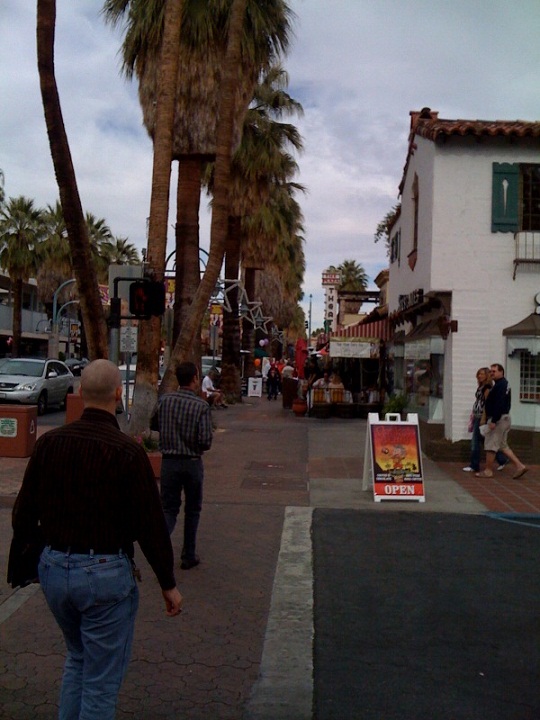
The main street – Palm Canyon Drive.

I was very attracted to this cute little smiley face atop a yogurt restaurant.
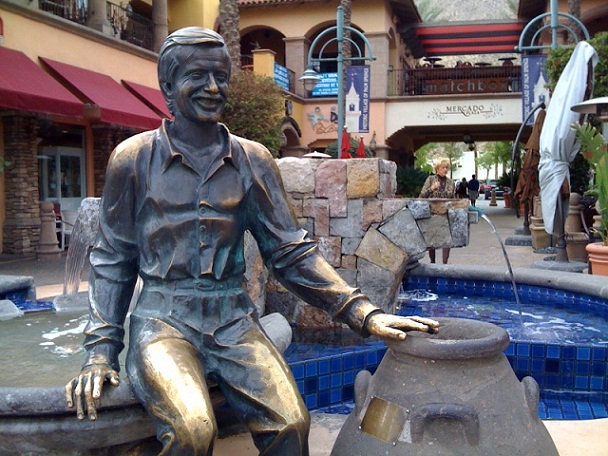
Sonny Bono was the major of Palm Springs. Here is a statue of him on Palm Canyon Drive.

You can tell you’re getting close to Palm Springs when driving on I-10 because you begin to see these modern windmills.


On my way back to L.A., I couldn’t help stopping at Cabazon, a town just west of Palm Springs that boasts the largest dinosaur replicas in the world, designed by Knotts Berry Farm sculptor Claude Bell. I remember Dinny, the apotosaurus above, so fondly as a child. We took many vacations to L.A., Anaheim, or San Diego, and on the drive over from Phoenix, I’d always be on the lookout for him. Whenever I saw him, I knew we were almost there.

Inside Dinny’s belly there’s a little gift shop.

Mr. Rex was built years later, so I don’t remember him. I think he might have scared the wits out of me as a child though.

When I tweeted photos of the dinosaurs, a friend told me they were featured in the movie PeeWee’s Big Adventure, which I haven’t seen.

There’s also a creationist museum off to Mr. Rex’s side, which I didn’t have time to visit. A strand of creationism postulates that dinosaurs co-existed with humans.


And there’s a little place to eat in front of Dinny. Ominous-looking clouds, huh? Unbelievably, I didn’t hit any rainstorms on the way back to L.A.
Maira Kalman at the Jewish Museum

Last week my friend, Alyssa, who’s an independent art curator, invited me to an art / law celebration at the Jewish Museum. The Jewish Museum really knows how to put on a party! They had the most splendid array of hors d’oeuvres, two big carving and sushi stations, and a full bar (not just wine and champagne). I hadn’t been to the Jewish Museum since I saw a Marc Chagall exhibit there I don’t know how many years ago. So, in between nibbling on mini Tuscan pizzettes and sipping Glenmorangie, I wandered into the main exhibit, which is currently featuring the work of Maira Kalman.

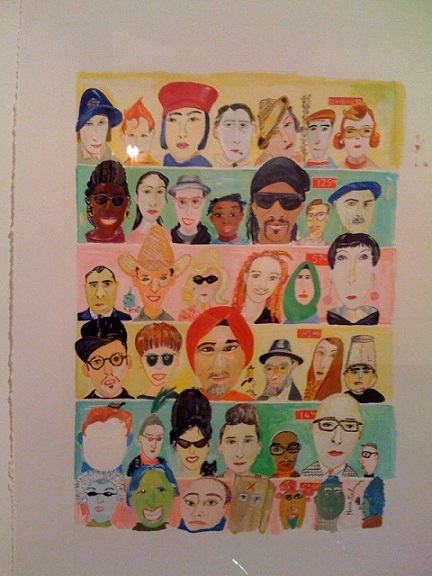
Kalman’s mainly a painter and illustrator but is also an essayist and performance artist; kind of an artist at large. She illustrates a lot for the New Yorker. The top picture is from an illustration from that mag.

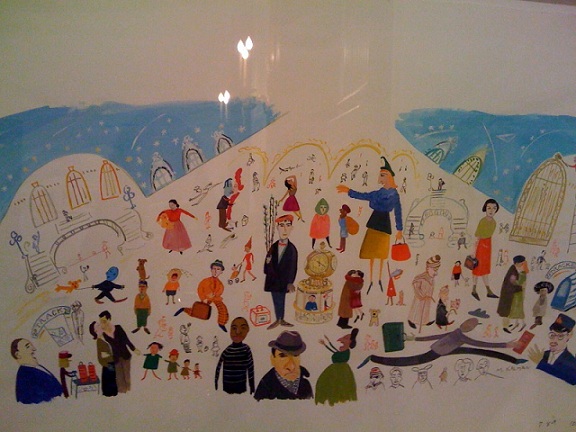
I really love this one, though. It’s called Grand Central Station. I love it because it evokes the kind of sentiment I was going for in the closing line of Swallow (which I’m not giving away šŸ™‚ )

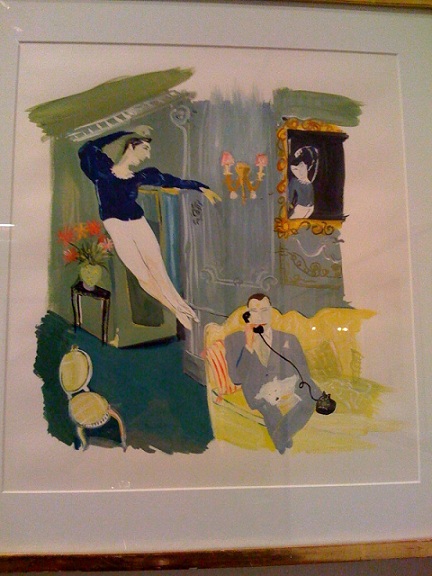
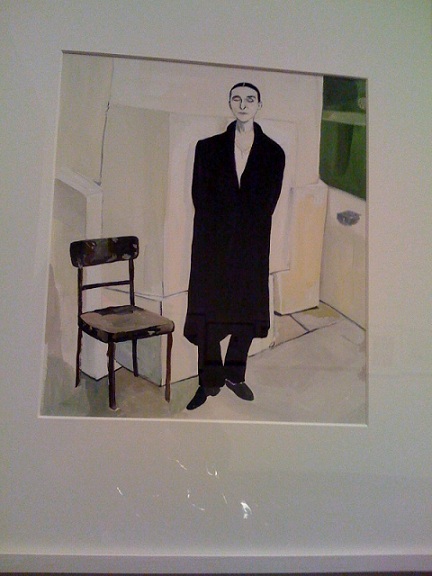
Then I came across a couple of illustrations of dancers, which of course excited me.

I don’t know who the dancer in the first illustration is, but the bottom is of Pina Bausch. The little explanatory caption below the illustration said that Kalman had a deep admiration for Bausch, got along well with her, and, before Bausch’s death, had wanted to collaborate with her on a dance.

As I walked through the exhibit, I happened upon a couple of sets of videos. In one Kalman, who seems to be quite a character, was collaborating on a performance piece with Nico Muhly and an opera star (whose name I forgot). Muhly was his usual slightly whacked self. Fun! Kalman’s also been involved in a lot of social projects, such as helping to design and create art work for a new library in Harlem. And, much of her work features her dog (below).

Hehe, I was so excited when I saw this. I actually have this picture, clipped from a old New Yorker copy, hanging above one of my bookcases at home. That’ll teach me to look at the name of the illustrator more often!

Anyway, it’s a very good exhibit, and I recommend it. It’s at the Jewish Museum through the end of July.

SINCE SEEING WISEMAN’S "LA DANSE" I HAVE NOT BEEN ABLE TO GET LAETITIA PUJOL OUT OF MY MIND


(photo taken from here)

Since seeing Frederick Wiseman’s excellent film La Danse a couple days ago — a documentary about the Paris Opera Ballet — I have not been able to get the fascinating etoile (star, highest level of dancer over there), Laetitia Pujol, out of my mind. The film is basically a series of rehearsals with some actual performance footage thrown in, and, unbelievably, it’s absolutely mesmerizing. If anyone’d described it that way to me beforehand — a bunch of rehearsal footage — I would’ve thought I’d be bored out of my mind, but it’s so incredibly interesting watching these dancers rehearse with top choreographers like Wayne McGregor and Angelin Preljocaj and Mats Ek. And the performances — omg – -that company does everything from the aforementioned contemporary choreographers, to Pina Bausch’s Tanztheater, to Petipa to Balanchine. Parisians are so damn lucky! We get either Petipa or Balanchine over here… not at all fair…

Anyway, Pujol blew me completely away. I’d never seen her dance before and somewhere in the middle of the film she’s rehearsing and she does the most mind-blowing series of turns all over the damn room. I’ve spent the past couple hours searching YouTube and, yay, finally found what she was doing! It’s Etudes, here:

For some reason, the spins looked a slight bit faster in the film, but you get the idea.
Here are a couple of others of Pujol:
The first, Le Baiser, which I love,

And Giselle, with Nicolas Le Riche:

One odd thing about the movie is that it’s a documentary, but there are no captions, so you have to try to guess who all the choreographers and dancers are. There are credits at the end, but you can’t possibly figure out who is who at that point, when there are all these names filling up the screen. At first I thought this was kind of a discredit to the artists not to list their names and titles or bios when they are shown in the film, but then I thought, well, it would kind of interrupt the flow of the action; this made it seem more like a narrative film, like one of those narrative films that’s shot with a handheld camera or the like to make you think you’re eavesdropping on someone’s actual life — which, it turns out, you are! Interesting filming device…

The real-life rehearsals do have their moments of (probably unintentional) humor, such as when one of the choreographers is describing to a young dancer learning the role of Medea that she’s portraying a god, a person whose intense, other-worldly powers make loving fraught with danger, and she says “Oh, like Edward Scissorhands.” At times, though, people laughed at seemingly odd things, like when a young dancer new to the company tells the director she longs to dance like Pujol and the director tells her, “Well, she has her own personal intelligence.” People in the audience seemed to think that was funny, but clearly, Pujol does have “her own personal intelligence”; dancing isn’t just about excellence of technique, it’s about using your brain. And these dancers are so fascinating because they’re so clever, they’re such powerful performers.

Go see this movie if you at all can. In NY, it’s at Film Forum.

MERCE CUNNINGHAM HAS DIED


My friend Deborah just alerted me to this horrible news. One of the world’s great pioneer choreographers has just died (last night; the news was released this morning). We all knew this was coming at some point; he was 90 (and still choreographing, often from his bed). But I think many thought he was one of those who’d make it to 100 or past. This on the heels of news of Pina Bausch is devastating to the dance world. So, his recent program at BAM is his last…

Cunningham’s work was groundbreaking in its use of technology, its questioning whether dance needs music (he collaborated with music pioneer John Cage and his works were often danced to silence or to sound that the dancers heard for the first time during the first performance), its questioning of what “performance” is (he would often use chance encounters), and in creating an original (and sometimes controversial) movement language.

But others, like NY Times chief critic Alastair Macaulay, knew his work much better than I (Macaulay was a great admirer of Cunningham, as was Mikhail Baryshnikov), so I’ll await his full Times obituary.

How awful.


PROKOFIEV AND CLASSICAL BALLET ON SO YOU THINK YOU CAN DANCE!


Well, I am sad and surprised that Nigel Lythgoe did not give any kind of tribute to Pina Bausch last night, the way he did Michael Jackson, Farrah Fawcett and Ed McMahon last week. Pina Bausch is a legend in the dance world; how can you have a serious show about dance and not mention something as huge as her passing?

I did of course love that the show had its first ever classical ballet routine– performed by ballerina Melissa and her partner Ade to Prokofiev’s Romeo and Juliet, a version of the famous balcony scene choreographed by Thordal Christensen. It was more Peter Martins than Kenneth MacMillan, but I mean, come on! Am I complaining šŸ™‚ I keep forgetting what Ade’s dance style is, which is perhaps a testament to how well he excels at everything. But I do know it’s not classical ballet! She was beautiful it goes without saying. Those overhead lifts were difficult-looking and perfectly executed, the slide (that NYCB’s Robert Fairchild and Sterling Hyltin admitted they could never get down and so took it out when they performed šŸ˜‰ ) was likewise perfect, beautiful continuous super-charged chaine turns for her, really gorgeous lines and pointe work. She was really lovely. And Ade did quite well too. I mean, I don’t think he landed the jumps in perfect position and he wasn’t turned out, but come on, he’s not a ballet dancer and I don’t know if he even has any ballet training. He did miraculously well with all of those jetes and twisty turning jumps. And he was the perfect partner with those lifts. As Mia Michaels pronounced, “GORGEOIS!”

I also of course love the newly-established Dizzy Feet Foundation scholarship for dance training for underprivileged kids. Can’t wait to see Katie Holmes dance on July 23rd. Love how Judith Jamison appeared in an interview to talk about the scholarship. Just like her to be involved in something like this!

Okay, the other couples:

Janette and Brandon’s Cha Cha choreographed by Jean Marc and France Genereux was excellent, I thought. Particularly Janette. That one can do anything. Like Mary said, she’s a salsa dancer and, though people may not realize it, salsa technique is far different from cha cha. Salsa’s much more bent-kneed and free-form, less stylized. Cha Cha has to have the straight knees and the super quick leg action, the quick hip shifting. She did so well with it; I really thought she was a competitive ballroom dancer. I actually didn’t like Brandon as well as I liked her or as well as the judges did. He looked a bit robotic, he didn’t have enough hip action. It looked to me more like a hip hop version of cha cha.

Kayla and Kupono’s contemporary Sonya Tayeh routine: so, they said up front she’s supposed to be trying to escape death and he’s trying to draw her to it? Wouldn’t it work better the other way? Like she’s attracted to the dark and he’s trying to help her out? Anyway, I thought it was so so. I thought she had very good lines and very good form. I don’t like Kupono though; I just don’t. I thought his lines in his jumps were clumsy, his form wasn’t good — especially compared to hers. They partnered well though, seemed comfortable together. And good in sync dancing.

I actually really liked Randi and Evan’s Broadway routine, choreographed by Joey Dowling. They danced to Rich Man’s Frug from Sweet Charity, which I love. I thought they did really well getting the character down, both of them. I thought the bent wrists were sufficiently pronounced; I thought the lines were all there; the character, the sexiness, the attitude, the sharpness — it was great fun. I don’t know what the judges were on about. Then again, I don’t see a lot of Broadway. Oh, my favorite part was when he lifted himself out of the chair. How did he do that like that? It looked like he used no leg muscles at all to get up! Like he raised himself straight from his center. Amazing!

I wasn’t into Jason and Caitlin’s Brian Friedman jazz routine. She was supposed to be an alien who’d blown up earth and destroyed all of humanity and was coming back to use him, the last remaining man alive, to impregnate her? Sounds fun! She was sufficiently robotic, great isolations for the both of them. I love when she was smacking him about, and his face reacted to her imaginary slaps of the hand. He had a good jump and she an astounding gymnastic flip. Not sure what the flip was doing there though. Like the judges, I wasn’t so into the choreography — sounded a lot more fun than it was. But the dancing was good.

Phillip and Jeanine’s hip hop routine choreographed by Tabitha and Napoleon. So, they’re supposed to be chained together by the ankles and said chain is to show how on the show you’re locked into a partnership — for better or for worse. I thought they had some great isolations — especially with the shoulders and chests, which I think the judges pointed out. I thought the chain could have been used to better effect, actually. It was so long, they really didn’t seem chained together. I just remember a ballroom routine — I think it was performed by Max Kozhevnikov and Yulia Zagoruychenko way back when and they were connected by their costumes, which wrapped around each other. They could unwrap themselves to an extent, but the fabric was connected, so they could only unwrap so far. It was mesmerizing watching how they worked that fabric, doing lifts even, connected the way they were. This was just not at that level, in terms of the prop.

And Karla and Vitolio’s Quickstep, choreographed by Jean Marc and France. I agree with the judges on this — one of Jean Marc and France’s best pieces on the show ever. Wow! That had everything — a couple of balletic jumps performed side-by-side with the batting of the feet (one of my favorite jumps in ballet), beautiful lifts, traditional Quickstep with all its fast, super-charged footwork with some fun social Charleston thrown in, excellent concept of him being a statue at a museum, she bringing him to life, and he placing her on the pedestal at the end. And of course excellent costume trick with one dress changing into another with the simple pull of a spaghetti strap. I thought they did very well with it too.

Except for the lack of a Pina Bausch tribute, I really enjoyed the show this week.

ROBERTO BOLLE AND VERONIKA PART IN ABT’S SWAN LAKE


It’s kind of hard for me to be my usual enthusiastic self after hearing about the death of Pina Bausch earlier today, but I’m getting too far behind on blog posts to take the rest of the day off, so I’ll try.

Of course, I should have written about this performance earlier, but I was too busy at the stage door that evening, and then I’ve had a ballet every night since then. Anyway, hope I can make sense of my notes!

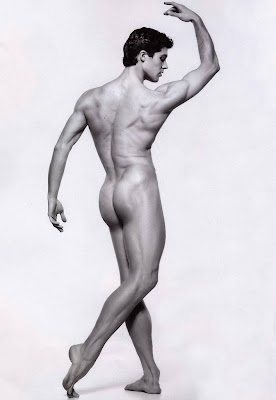
Overall impression was that they both — Veronika and Roberto — gave a beautiful, stunning performance, that he did very well when dancing on his own, that she did very well both on her own and when being partnered by him, and that she out-acted him. By a long shot. I have been told that (despite posing for photos like this) he is actually rather shy, though, and it did kind of seem like that at the stage door, so I think maybe he needs to get used to a ballerina for a while, and will do much better the more comfortable he gets. The reason I say that is because I loved him so much in Romeo and Juliet two years ago, and he danced wonderfully and completely comfortably with Alessandra Ferri. I think it’s just a matter of getting used to our ballerinas and perhaps American audiences.

Whenever he was on his own, his dancing and acting were solid. I really felt like I saw Odette flying away after Siegfried’s encounter with her, as Bolle’s sad eyes traced her imaginary path along the ceiling. And his early solo, when Siegfried is at the party, pre-Odette, and he’s feeling alone and ill at ease with his mother’s demands that he choose a wife, Bolle really conveyed that mixed emotion, confusion, loneliness. Later, his jumps were stellar. It just seemed that whenever he partnered Veronika, he was concentrating so hard, he had no time for emotion. So, Angel, Ethan, and Marcelo (when I last saw him as Siegfried, a year ago, anyway), were more passionate. But others think differently. Read Haglund (an excellent newish ballet blog by the way!) for a different take on Bolle’s performance.


Veronika was just gorgeous, and so passionate. She did her usual thing of taking me on her character’s journey with her, of making me feel Odette’s plight and pain, and Odile’s desires as well. She has such sweep and breadth, when he’d take her down into an arabesque penchee on pointe, her arms brushed the floor. And her extensions are always so breathtaking, and the overhead lifts — they are both so tall they were just spectacular, she just touched the sky. In the Black Swan Pas de Deux, she did the straight fouettes, as did Nina Ananiashvili the following night (review coming soon!) She has such height she moves a bit slower than other ballerinas and she didn’t really make the 32 fouettes, but who cares. She really devoured the stage with those fouettes, and when she did her turns around its perimeter. What’s important in that scene is how you eat up all the space around you and command the attention of the audience and poor Siegfried, and you can do that in a variety of ways — a ridiculous number of turns is only one. She had a really wicked smile all throughout that scene! I really love her!

Hehe, one other thing: poor Roberto. No one told him that, thanks to a certain David Hallberg, New York audiences are accustomed to an all-out Olympic gold medal-level Swan Dive off the cliff and into the lake at the end šŸ™‚ Or perhaps he didn’t want to out swan dive his lady, because Veronika just kind of tossed herself off the cliff. Either way, Roberto followed her with a slight jump, not even really a jump — almost like he was falling into the water as well. Of course I’m partly joking about the need for an extravagant suicide jump, but I do have to say, in my quest to see casts other than my regulars this season, I did so miss that Hallberg dive!

A couple of other things: I have a bunch of stars next to Craig Salstein’s name in my Playbill so he must have done something I liked… Oh yes, he was one of the two Neapolitan high-bouncing jumping jack guys in the court scene. I also have written “violins ***” which reminds me that I thought the violinist was very good during von Rothbart’s seduction of the court ladies scene. I always forget about the hard-working orchestra!

PINA BAUSCH DIES OF CANCER


Oh my gosh you guys, I just heard about this on PinballPeople. I’m so shocked. I didn’t even know she was sick (apparently she was only diagnosed with cancer days ago). I’m so upset. We’re never going to have any new work from her again. I didn’t see enough of her. I’m sorry, this is so much more shocking to me than the deaths last week… She was just at BAM a few months ago and she seemed fine.

Here is a good piece on Bausch by Guardian’s Judith Mackrell. Here is the Bausch archive on YouTube.

I was just reading a group of tributes to David Foster Wallace in the Sonora Review last night and now I’m thinking this loss is on that level. This is one of those artists we will all suffer without, whether you’re aware of it or not. This is huge.

Pina Bausch’s Sensuous, Mysterious, Funny, Sexy, Playful, Violent "Bamboo Blues"


Last night I went to see Pina Bausch’s Bamboo Blues at Brooklyn Academy of Music. This was my first time seeing something by Bausch live (I’d only ever seen her work in film and on YouTube, and of course in Almodovar’s Talk To Her), and I see why she is so popular. She really knows how to create a provocative spectacle. Performed by her Tanztheater Wuppertal, it, like I think all of Bausch’s work, is not pure dance but a combination of dance and theater with spoken word, little acted-out vignettes, and video installations.

Being so visual and composed of many sub–pieces, the work is hard to describe, but basically several women dressed in gorgeous, richly textured ballgowns danced, mostly alone or with one or two men, who were, in contrast, dressed in rather mundane white sheets wrapped around their waists like towels. Much of the music was Indian-based and -inspired, but with a Western beat, and at times with lyrics in English or French. The movement in the solos was Indian-inspired as well, with beautifully flexed wrists and feet, splayed fingers and toes. Not surprisingly, the dancer who had the most pronounced gestures in this regard was Shantala Shivalingappa, who is Indian and trained in classical Indian and modern dance. See NYTimes article on her here.

The women wore their hair (all of it long, long, long) down and repeatedly swung their heads about, creating generally a very sensuous effect, that turned a bit violent at times, when it became aggressive. The men were the same.


But then the duets and ensemble dancing was more comical, at times also violent. After one woman performed a solo, a sensual dance, in front of white, billowing curtains, her dress billowing along with them, several women took the stage, coming out one by one. Dressed in the exquisite gowns though they were, their gait was more an aggressive strut than a stylized walk, and they all seemed to be chomping on something — tobacco perhaps? They all took a position, and lay, making sexy poses, directed at the audience. But of course the sexiness was undermined by that exaggerated chomping.


Then the women left and the men came out in their towel-sheets, walking in a more sexy, more feminine manner, which caused the audience to laugh. I laughed too, but wondered if I was the only one who questioned why this, the gender juxtapositioning, was necessarily funny.

And there was a kind of battle of the sexes / battle of the self undercurrent, as women and men paired happily — for example in the picture at top where a woman and man rocked themselves to sleep in each others’ arms; but at times violently, when, for example, a man would repeatedly pick up a woman and throw her aggressively over his shoulder in a dangerous-looking lift, or when a man would grab a woman’s hand, run around the stage pulling her along, put a chair in her path, and rush her toward the chair, forcing her to run atop and jump off of it, falling — or crashing more like — into his arms. At times the women seemed to enjoy this aggression, at times their faces would show strain and unease.

Sometimes it was actually kind of confusing how much the women were willing participants in this, how much they controlled the men, or how much they were being controlled by them. At one point a woman took the straps of her gown down over her shoulders, as if she was going to do a strip tease. She didn’t. Instead she began rubbing, caressing her shoulders with her hands, criss-crossed over her chest. A man came up and angrily began smudging her chest with red paint, his strokes like slices of a knife. She didn’t see him, but moaned in pleasure as his hand sliced her chest. The more he “stabbed” the more she ecstatic she seemed to become.

Some of those images and vignettes with their contradictions and twists and turns from sexy, sensual, and playful, to manipulated and violent, won’t be leaving me for a while. The dance shows through December 20th; for info and to see a video go here.

Happy Happy Night Tonight At Alvin Ailey

Okay, here is what I was writing last night when my internet crashed:

I’m always so happy when I come out of an AA performance; I could just dance home! Tonight was Maurice Bejart’sƂ Firebird, which was more breathtaking than the first time I saw it last year; Clifton is beyond belief — just this huge guy who’s so amazingly graceful. Ditto for Jamar — the only person who I can imagine being able to lift him, and those lifts at the end when Jamar’s bringing Clifton back to life are so stunning.


Then, on second, was the new Hope Boykin piece, Go in Grace, which was kind of a play without words, utilizing the singers — Sweet Honey in the Rock — along with the dancers, the singers acting as a kind of chorus and interacting with the dancers throughout. It told, in expressionistic pieces, the story of a family, the father and mother good, upstanding people trying to keep their daughter and son from going astray. They’re successful with the daughter but the son kind of gets involved with the wrong crowd (namely, Antonio and Kirven!) Eventually he comes back, but only after the father dies, which is really heartbreaking. Amos J. Machanic danced the father and I noticed from last night (which I still have to write about!) and tonight that he is the most expressive, emotive dancer, and such a great actor, he really pulls you into the dance, and creates such sympathy for his characters. He broke my heart both last night as a junkie in Masekala Language, and tonight as the dying father who wanted nothing but the best for his children in Boykin’s ballet.


And last on was Revelations, which I’ve written about here. Yannick LeBrun blew me away as the second Sinner Man!


He was, yes, even better than Clifton! He is definitely one to watch. And Antonio Douthit was mesmerizing tonight as well, as the guy getting baptized in Wade in the Water. Funny though, he had some kind of large tattoo — a cobra or some kind of winged creature perhaps — creeping out of the top of his pants in back, which was kind of funny given his character here šŸ˜€ But I love it — & am sure I’m the only one who noticed such a thing… Also, someone’s big church hat flew off and created a bit of a funny nuisance onstage in Rocka My Soul. Always very funny when something goofy happens with a prop šŸ™‚

Anyway, I have to upload and post pictures from last night and write about the night before — Masekela Language and Suite Otis, but will have to do it when I get back from Pina Bausch at BAM.

Complexions @ Joyce Chelsea & Foniadakis’s Rite of Spring @ Joyce SoHo


Sorry, am very behind again on my review posts — so busy with all manner of stuff to get done before Thanksgiving! Anyway, both of these two programs — Complexions Contemporary Ballet at the Joyce’s Chelsea theater, and Andonis Foniadakis’s new version of “Rite of Spring” at its SoHo location — were both danced brilliantly — big huge kudos to all of the dancers, but especially to Ioanna Toumpakari (below, in photo I swiped from Oberon’s Grove), who did what appeared to be an extremely emotionally intense and physically vigorous 40-minute solo in “Rite.”


I didn’t feel as strongly about the choreography of either though.

Complexions (I saw program A; there is also a program B) included five pieces, my favorite of which by far was “I Will Not Be Broken,” choreographed by Dwight Rhoden and having its world premiere this season. This ballet is on both programs, by the way. It began with S. Epatha Merkerson (an actor on Law & Order) first speaking the words of a poem, then breaking out into song — a set of slavery spirituals. Desmond Richardson — who is amazing beyond belief — sat on a bench at the front of the stage, body contorted, hunched over, then arms moving quickly, waving something off, brushing off shackles — binds not only physical but mental — then fanning himself with quick flicks of the wrists, like cooling himself down from being taken by the spirit. He’d lift his feet flexed-footed, as if tense, very alive, a body occupied by another force — then kick out violently, fall to the ground, jump up into an amazing flexed-footed split, come up for air. More jumps, then he’d sit on the bench again, cover his eyes, cradle himself.

While he rested, another couple — a man and woman sitting on another bench — danced a duet. But I just found myself unable to wait for Richardson to catch his breath, start up again. I’m not even sure what each specific movement meant or was intended to evoke, but overall I got the sense of a man being lifted out of himself, out of his pain, to freedom, letting the spirit free him — which is of course what slavery spirituals were all about. He brought the words Merkerson spoke and sang vividly and compellingly to life, to say the least.

The rest of the program was so-so choreographically, though danced very well. “Ave Maria” was performed by a couple — Hiroko Sakakibara and Simon Sliva — who lifted and wrapped their limbs around each other lovingly and with beautiful intensity; “Rise”, a set of dances set to U2 music; “Routines” a piece that started out with a group of dancers warming up, then donning exaggerated Forsythian ballet costumes — the women in saucer-like tutus, the men in short skirts danced to a collage of industrial music (with clanking bells, train whistles, etc.); and “Constructs for 4” a nice lyrical piece for three men and one woman to soft violin music by Bach.

I guess my main issue with Rhoden’s choreography (aside from “Broken”) is that the dancing, while very rhythmic and musical, doesn’t really amount to a discernible theme or create a specific feeling. For example, the “Rise” music was great fun, it was like traveling through time, remembering all those U2 songs from when I was in college. But the songs are all about something and that’s their genius — the sentiment they convey, not just that they’re danceable. For example, “I Still Haven’t Found What I’m Looking For” is in part about race relations and our society’s continual failure to achieve social justice. I didn’t see anything evoking that here — bodies moving rhythmically – jumping happily, skipping, running, doing brilliantly high battemants — but nothing that made the song’s lyrics, its spiritual rhythm, come alive. And it was that way with the rest as well — not only the piece danced to U2 songs, but Ave Maria, the one danced to the violins (though this one was choreographed by Igal Perry) — yes, the lifts were lovely, but neither created an atmosphere for me or told a story or made me really feel anything. Still, I have to say, Complexions is worth seeing for “Broken” alone. And for the dancers and their sculpted muscularity — some are quite built — and which they somehow spectacularly combine with hyper flexibility and an air of feathery lightness. And the other dances are fun — the music is great, and the dancing is rhythmic, just not evocative enough or emotionally all there to me.

And same with the Foniadakis. Actually, I was going to wait until I had some time to do research on the history of “Rite of Spring,” and watch some of the other versions (there are many!) but then my post wouldn’t go up until the run is long over. I know the original Stravinsky music and Nijinsky dance involve violence, sexuality, fertility rites, and depictions of young girls dancing themselves to death. And I know many versions — like that by Pina Bausch, and the Joffrey — are danced by an ensemble. This was danced by one woman — the seemingly indefatigable Toumpakari. She was dressed only in a tribal thong, a grassy-looking fabric lining the waist, with paint marks on her forearms, calves and forehead.

Before the music began, she walked around stage, with kind of a prancing limp, as if performing a tribal custom. When the Stravinksy began, she seemed on the verge of a sexual awakening, her hip-jutting, pelvis-rolling movements and facial expressions very sexually suggestive. Then, she began performing more of an African dance, throwing her arms and shoulder over her waist, kicking out with flexed feet. She began fighting an imaginary person, lashing out, scratching, growling at him. This was followed by more frenzied movement, until she worked herself up so she nearly collapsed. She fell to the floor, slowly rose, bent over deeply from the waist, looked at her hands, horrified — they appeared to be turning into claws before her eyes, she couldn’t control the fingers. Finally, she gained control over her body and began the African-like movement again, running around stage with the limp, starting the process anew. Each phase seemed to repeat several times until, finally, at the end, out of breath, she slowly looked over to the side of the room, where her street clothes lay, walked over very slowly and calmly, and changed from costume into jeans and white t.

I feel like I’d need to do more research on the dance history to form a better judgment of the choreography, but I was highly impressed by Toumpakari.

For other perspectives, here is Roslyn Sulcas and here Christopher Atamian on Complexions; here is Claudia La Rocco and here and here Oberon on Foniadakis.

Complexions shows through November 30; “Rite of Spring” through this Sunday.

Danny Tidwell and David Hallberg (and CounterCritic) in the Same Room(!): Cedar Lake Ballet Blogger Shindig

Fun fun night! Big understatement! I didn’t even need to get drunk šŸ™‚

Please excuse the Gawkerish, 15-year-old voice of this post. I waited until this morning to blog in hopes that the euphoria would dissipate and Kristin Sloan might post the group photo her boyfriend, Doug Jaeger, took, but as of yet neither has happened.

I must begin by calling myself a big fat hypocrit. I’ve laughed and rolled my eyes at Philip whenever he’s nearly fainted in front of the New York City Ballet stage door upon receiving a smile and hello from Jock Soto or Albert Evans or Wendy Whelan. Last night Danny Tidwell smiled and said hi to me and I promptly choked on my wine. Of course he doesn’t know me; I was just standing there staring gape-mouthed at him when he walked by with … oh crap I’m so bad, I think it was Jamie??… He was there with a girl from SYTYCD, but I’m not exactly sure who. Since the pre-show party was for bloggers, I was half-expecting his boyfriend to come (whom I was very much hoping to meet!) but Benaym was a no-show. I didn’t expect Danny though!!! Oh he’s so cute, and his smile is so warm and charming and sweet, it really just melted me. I can easily see why he is such a star. I got there earlier than everyone else and was nearly alone inside when the earth-shattering hello happened; each time one of my friends walked in, they greeted me only to get in return, “Omigod, omigod, Danny Tidwell said hi to me, Danny Tidwell said hi to me!!!” He’s so much smaller than he looks on TV or onstage. I couldn’t believe it. He’s always appeared to me the size of Carlos Acosta, but he’s well under six feet. It’s just the proverbial larger than life stage and screen presence I guess… And I’m very very very sorry for any SYTYCD fan who’s reading, but I just couldn’t bring myself to snap pics of him. In New York there’s an ironclad rule against “starf***ing.” Everyone does it, but everyone pretends they don’t and to break the pretense is practically illegal, a violation of the NYC social contract. Taylor and Evan and Ariel all agreed with me that I would definitely be immediately kicked out and may even be executed if I so much as tried surreptitiously to get a cell phone pic. So sorry!!! But Mr. Jaeger had a humongoid camera and was shooting up the place, so I’ll keep checking his site and see if he got any.

When Caleb Custer from Cedar Lake sent out the email announcing the blogger party, I had no idea who all was going to show. I was still swooning over Danny when who should breeze up his hair billowing in the wind but the beautiful one himself! When I spotted him pass by the large garage window (Cedar Lake’s studio is actually housed in a big garage, according to Philip, once used by photographer Annie Liebowitz), I couldn’t help myself. I screamed uncontrollably, “Look, there’s David Hallberg!” Doug (Fox), Philip, Ariel and probably about 75 other people in the lobby followed my point. David looked in at us, horrified. He promptly pretended to get a call on his cell phone and spent the next 20 minutes outside pacing up and down the street affecting a phone conversation, every so often peeking in the window to see if all the commotion at his arrival had died down. Meanwhile Danny remained huddled in a back corner with Jamie. Dancers are weird the way they sometimes crave and are other times embarrassed by attention.

Finally David braved the storm and ventured in. He is soft-friggin-spoken to make a massive understatement! He extended his hand to me and said something I couldn’t hear, I said simply, “hi, I’m Tonya,” feeling like a total ass, and he again said something I couldn’t make out. Soft-spoken or not, he clearly either had no idea who I was or was terrified of me. Ariel thinks it’s the latter, because of things like this and this. I wouldn’t be surprised if it was the former though; he and Marcelo have got to be two of the only dancers on the face of the earth who never Google themselves. Anyway, the awkwardness was soon quelled by his sighting of Philip, who is apparently a friend of his through Craig Salstein. Philip was standing beside me. David doesn’t need to act at all; his natural reactions to things are so sweetly touching. You could see his recognition of Philip visibly register as his face brightened and he went bouncing toward Philip like a dog when it sees a regular playmate, practically rubbing his pelvis up against him when embracing. He then saw Ariel, standing beside Philip, whom he met when he was guesting once in Mobile, Alabama, and hugged her as well. I was feeling like the consummate dog crap, being the only one who didn’t receive a hug. But I guess that’s what I get for posting naked pictures and yelling at him for not blogging often enough on the Winger šŸ™‚

Another highlight for me was meeting CounterCritic, whose original blog (critiquing the critics) I love. He’s such a fantastic writer whether he’s wickedly taunting critics or writing performance reviews himself, which are always spot-on (almost always anyway!) And he’s the only dance blogger who’s on Alex Ross’s blogroll. Oh jealously uncontained… Anyway, he’s so nice in person; all that blog pissiness is a total cover! I can’t really rib David for his puppyish behavior toward Philip because I followed CC around all night like a little dog, sitting next to him even during the show.

Speaking of which, could I talk a bit about the actual performance? Artistic director Benoit-Swan Pouffer, who by the way is really good-looking and personable and used to dance with my beloved Alvin Ailey, held a little Q&A with the bloggers afterward. He said he loves blogs: existing in a sphere so apart from traditional media, they bring something fresh and original to the dance world; they bring balance and new voices, and, though you never know what take you’re going to get from each one, it’s always interesting to see… I’m sure he never thought he’d be getting a blog post all about the pre-show hysteria of meeting Danny Tidwell and David Hallberg.

I want to look more at the (extensive!) press materials and the DVD they included (always an immense plus from dance companies), but for now I want to say how much I love dancer Jon Bond. Everything he does is so full-out, his lines are so sharp and even intense if that makes sense. Just little things like flexing a hand or foot, when he does it, it’s so pronounced that it looks all the more edgy in its awkwardness.

We saw three ballets: “Symptoms of Development,” by choreographer Jacopo Godani, a harsh, unsettling piece which dealt with technology and how it works against human interaction (Evan remarked to me afterward that it was an interesting inclusion in the rep they showed us, since we’re bloggers); “Ten Duets on a Theme of Rescue,” by Crystal Pite, my favorite duet being one in which Bond struggled to reach the female dancer in front of him, palm open and fingers extended to the max, running in place to catch up with her, but in vain, as she, running in place as well, was always too far ahead; and “Rite” by Stijn Celis, another take on a dance to Stravinsky’s “Rite of Spring,” nearly all of which — of the ones I’ve seen anyway — evoke in different ways the chaos bordering on horror of the rite of passage of boys and girls into men and women. If you’re interested, here’s a YouTube clip of Pina Bausch’s take on the theme, and here’s Maurice Bejart’s, which I’m partial to. Celis’s “Rite” was different in that all characters were androgynous, so there was no real distinction between male and female. All dancers — about four men and four women — were dressed in Asian-looking strapless mini-dresses and wore heavy, almost operatic facial makeup. It actually reminded me of Nacho Duato’s Castrati, which I wrote about here, except both sexes were included, though not both genders (that I saw anyway; others may have different interpretations). The dancers darted, leaped over, and ran atop these three long log-looking sets, covered with green material and meant, I think, to evoke a primitive landscape. The dancers almost looked like nymphs as they interacted: regarding each other quizzically, examining the powder and sweat left on the ‘log landscape’ by each other in a somewhat grotesquely sexual way; performing dangerous run-and-jump catches with each other; it was kind of “Afternoon of a Faun“ish (original Nijinsky version) as well. All pieces were abstract, and all unsettling, but I think this was my favorite because it seemed to have the most going on that I could latch onto and make something of, and, because of the other “Rite’s” I’d seen, I had something to compare it to.

This is a new company, only four years old, and this is the third time I’ve seen them. They tend to take on edgy, visually striking and thought-provoking work and their dancers are very unafraid and do everything full force. For more info on their season, go here. Thank you so much to Cedar Lake for organizing this most fun, and thus far original, event. I’ll post pictures taken by the pro photographers if Caleb sends any my way…

For now, here’s a picture of Ariel taken in The Half King around the corner, where we afterward went to discuss the performance. Okay, where we went to discuss David and Danny šŸ™‚

My First Pina Bausch Experience, Dance On Camera, and Writing (Slightly) Negative Reviews

Just quickly before I go out to meet Ariel (who’s now living in NY :D), here’s my review of “Rhythm of Love” on Explore Dance. Basically the same as what I said here on my blog, but more critical. I sometimes feel badly being critical (especially when reviewing ‘small people’ — biggies like Christopher Wheeldon and Jerome Bel can handle it), but I tried to be constructive and respectful.

Also, for people in New York, the Dance On Camera Festival is currently underway at the Walter Reade Theater in Lincoln Center. A lot of the films are experimental, and most programs have a combination of shorts with small documentaries. On opening night I saw Program 2, which included, most excitingly for me, a 45-minute documentary about (in)famous (depending on your perspective) German choreographer Pina Bausch. This was my first Bausch experience and I definitely can see what people both love and hate about her. Funny because, according to the critics, she doesn’t seem to talk much about her work, so to big Bausch fans the fact that she was actually talking was the draw. To me, though, I wanted her to shut up so I could see more of the excerpts of her work the film provided! In one excerpted piece, women wearing very flimsy nightgowns were violently thrasing their bodies about from the waist down, their hair flying about wildly. It was both beautiful and disturbing. In another, one woman screamingly commanded another woman to smile, the woman being yelled at tried but her smile wasn’t big enough to please the first woman, so woman #1 violently dunked the second woman’s head into a bucket of water several times. You can hear the audience’s upset. In another excerpt, a man reaches down under a woman’s dress and lifts her up, seemingly by the crotch. In its awkwardness, it is both unsettling and comical. If you saw the film “Talk To Her” by Pedro Almodovar, her choreography is performed at the very beginning, but from what I saw on Wednesday, that seems to be a very watered-down version of her work.

Anyway, I am now dying to see her dance group (Tanztheater Wuppertal), if they ever make it to NY. Art had his first Bausch experience this year as well, live at UCLA, and he seems as smitten as I! Here’s dance writer Eva Yaa Asantewaa’s take on the Bausch doc and another short in Program 2, and here is a post on the same by Anna Brady Nuse (who is a dance filmmaker). For a good, detailed break-down of the whole festival, visit Anna’s blog post here.