
Janie Taylor Debuts in Millepied’s “Why Am I Not Where You Are” Etc.

I’ve been remiss in my New York City Ballet posts! Last week I saw two programs: one featuring three dances to three different violin concertos – Peter Martins’s Barber Violin Concerto, Robbins’ Opus 19 / The Dreamer, and Balanchine’s Stravinsky Violin Concerto. And the other program was another in the “See the Music” series but was also dedicated to Santiago Calatrava, who designed sets for all three of the ballets performed – Benjamin Millepied’s Why Am I Not Where You Are (pictured above, photo by Paul Kolnik), Christopher Wheeldon’s Estancia (pictured below, photo also by Kolnik), and Mauro Bigonzetti’s Luce Nascosta, all of which premiered last season and which I wrote about here, here, and here.

Calatrava was in the theater, and after encouragement by Peter Martins, he rose and took a bow.

Then, as with the first “See the Music” program, before the performance began, the orchestra pit rose and conductor Faycal Karoui gave a humorous little explanation of various parts of the Thierry Escaich score from Millepied’s Why, the first ballet performed.

These explanations are really interesting to me, I have to say. I only took one classical music class in college and now wish I’d taken more. Karoui talked about how there were four main parts to the score: a waltz, a tango, a disco, and a final climactic part, and he talked about the differences in tempo between them, and between them and a typical waltz, tango, etc.. He also talked about how the ballet has a central male character (danced very well by Sean Suozzi – in top picture, being carried by the group of men), and how you can hear that central character’s theme – or voice – throughout each section of the music. But the voice changes with each section: at first, he’s shy and mysterious (and his voice in the first section is portrayed by a violin solo), then as the orchestra grows sharper and stronger in the second, tango, section, so did the character, etc.

When we got to the “disco” section (it sounded nothing like disco to me but just slightly more mechanical and percussive than the preceding sections), Karoui really began rocking out as he led the orchestra. It was like he was actually dancing in a disco, and I nearly cracked up. I’m not sure if that’s what he normally does down in that pit – if he regularly starts to embody the music literally like that, or if he was just being a goof for the audience. He didn’t seem to be hamming it up at that point, though – oddly – so who knows. Anyway, he is very entertaining and I find his musical explanations very educational as well. What more can you ask than to be both entertained and educated, right?

Anyway, Janie Taylor debuted in the Millepied. She was supposed to have debuted when the ballet did last season but she was out with injury and so Kathryn Morgan had filled in. Character-wise I thought she played it the same as Morgan. Except with Morgan it seemed to have a West Side Story feel to it; with Janie it was darker and more La Valse-like. Both were tragic, but in a different way; Kathryn’s character seemed more innocent. Anyway, this was my second time seeing the ballet and it grew on me. It’s very dramatic, not a dull moment in the whole thing, and you’re really on the edge of your seat, both because of the intensity of the music – maintained throughout each section – and the dramatic story of the poor innocent guy who’s drawn into another world by his enchantment by this ethereal creature, only to get trapped and ultimately destroyed, along with her.

To me, Sara Mearns and Amar Ramasar, with their bravura roles, largely stole the show – I think I remember thinking the same last time. She with those crazy fast chaine turns all around stage that almost make you sickly dizzy, and he with his virtuosic leap sequence – they are kind of the sinister characters, seducing Suozzi but also the audience.

Then came Estancia, and it was my first time seeing Ana Sophia Scheller and Adrian Danchig-Waring (pictured above) in the leads. I’m not a huge fan of this ballet – well, I like the ensemble sections, particularly the dancing and taming of the “horses” – but I nearly fall asleep during the middle, romance part, where city boy wins country girl over. I think it’s just the choreography in that middle section (that I found relatively bland) that slows it down – along with the music – but I liked Scheller and Danchig-Waring just as much as the first pair of leads – Tiler Peck and Tyler Angle. In fact, they seemed to fit the roles a bit more. Scheller reminded me of the main character of Agnes de Mille’s Rodeo and there was something more sweetly, playfully tomboyish about her look than Peck’s. And Danchig-Waring perfectly suited the city boy trying to woo her. He acted his part very well. And his movement is always very sharp. Andrew Veyette and Georgina Pazcoquin as the horses who are eventually tamed, were fabulously entertaining.

And lastly was Bigonzetti’s Luce Nascosta (picture at left by Kolnik), which I’ve seen now three times and which I like but think is too long. I missed seeing Craig Hall in the middle section that seems to be softer and looser than the other sections, where the movement is more marked by those extreme shapes with the flexed hands, splayed fingers, and angular balances and slides on pointe. Hall seems to have the ability to move in a more undulating, kind of serpentine way than most of the others and it seems to me to suit that middle section well.

In the previous program, I loved Megan Fairchild again as the “modern” dancer in Barber Violin Concerto, and, as always, Gonzalo Garcia as “the dreamer” in Robbins’ Opus 19!
MISSING ARIZONA


I haven’t been to Phoenix since early 2001 and I’ve been getting a bit homesick for the desert. Everything seems to be reminding me of the Southwest lately – even last night’s NYCB program with Melissa Barak’s new ballet, Call Me Ben, set in Vegas with its Santiago Calatrava-designed desert-themed backdrops, and then Balanchine’s Western Symphony with the cowboys, saloon girls and Old Tombstone-looking stage piece.


Albert Evans and cast in earlier NYCB Western Symphony production, taken from Explore Dance. Photo above that of the main street in Tombstone, AZ, taken from the city’s website.

I have to get out there soon.

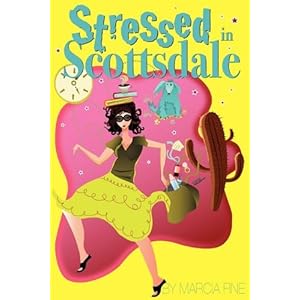
In the meantime, just ordered this book, which looks like the perfect proverbial beach read.

The photo of the little guy at the top of the post, by the way, is taken from the Facebook page of my childhood friend who operates a kind of traveling zoo featuring reptiles native to Arizona, exposing children to and creating respect for their unique little charms.

MORE PHOTOS OF CALATRAVA’S AWESOME MIRAGE SET


Above are a couple more photos of Peter Martins’ new Mirage ballet, which I wrote about here, that better showcase Santiago Calatrava’s stunning architectural set. I’d described how it closed at one point, and you can see that in the bottom photo, and I’d forgotten to mention that in the end it radiated a rainbow of color (top photo). Photos are by Paul Kolnik and are taken from Marina Harss’s excellent write-up in The Faster Times.

Funny, I recently discovered The Faster Times (I know Marina but I know her as a New Yorker writer) and was really amused to see that my very first ballroom teacher (the one who’s ultimately responsible for the title of this blog) is their ballroom critic!

PETER MARTINS’ NEW "MIRAGE"


Photos by Paul Kolnik. Top: Robert Fairchild and Kathryn Morgan under Santiago Calatrava’s magnificent set; bottom: Erica Pereira and Anthony Huxley.

Earlier this week NYCB put on its last premiere of the season, artistic director Peter Martins’s Mirage. The ballet is set to music by Finnish composer Esa-Pekka Salonen, which was commissioned especially for this ballet, as was another set by architect Santiago Calatrava. Before the performance Mr. Martins and Mr. Salonen were awarded Letters of Distinction from the American Music Center for this ballet.

To be honest, I was kind of preoccupied with something and will need to see the ballet again to focus my attention more fully, but at first glimpse I found the music to be rich (Salonen actually conducted the orchestra for this ballet only)- particularly the violin parts (the violin soloist, Leila Josefowicz took a bow with the dancers at the end and received huge, well-deserved applause) and the Calatrava set to be awesome. Choreographically, I was particularly struck with an image that kept recurring where a man partnering a woman would hold her out to his side, and she’d begin facing the audience with her back leg up in arabesque, her arms outstretched like a plane, then would slowly rotate underneath her partner’s arm and end up facing the ceiling. The theme seemed to be aviation, flight, birds maybe, and I found that particular movement pattern to be original and compelling, and, judging by the “ooohs!” in the audience whenever it happened, I’m thinking I’m not alone.

There were three main pairs: Robert Fairchild (filling in for an injured Chase Finlay) and Kathryn Morgan, Jennie Somogyi and Jared Angle, and Erica Pereira and Anthony Huxley, and an ensemble. Everyone danced really well. I’m always particularly struck by Robert Fairchild and his brilliant, full-out lines.

The set, though, kind of stole the show in my opinion. It began as a bird-like structure with outstretched wings at the back of the stage behind the dancers. Throughout the ballet it slowly changed form, rising and moving above them, then lowering its “wings” until it resembled a crab’s claw, then closing into a circle, then opening back up again and rotating so that now its front piece, resembling a beak, looked out at the audience, as if the giant bird was preparing to fly out at us. I found myself entranced by that huge, ever-changing structure. And its movement seemed to coordinate well with the music, which was at times eerie, at times more mellifluous, and then would soar into a climax. I’m just not as sure that the choreography was as accordant, and that’s why I need to see this ballet again.

Also on the program were Balanchine’s moving Prodigal Son, starring Joaquin De Luz as the prodigal and Maria Kowroski as the siren, and the fun and flashy Western Symphony in which Rebecca Krohn, Craig Hall, Robert Fairchild, and Sara Mearns stood out. Such a fun ballet with those crazy cowboys and saloon girls, and the Tombstone-like set made me homesick for Arizona. I had to make myself Mexican food for a late-night snack.

TWO MORE NYCB PREMIERES: "LUCE NASCOSTA" AND "CALL ME BEN"


It’s been a season of new ballets and principal dancer farewells at New York City Ballet, and, between that and all the goings-on at ABT, it’s hard to keep up! I realized when meeting a blog reader yesterday at Philip Neal’s farewell performance (so nice to meet you, Vanessa!) that I hadn’t yet written about the last two premieres and people were waiting. I was going to wait until I’d seen each once again, but at least with one of them I won’t get that chance since there was a programming change.


Anyway, Maura Bigonzetti’s Luce Nascosta (two photos above, cast in top, Teresa Reichlen and Adrian Danchig-Waring directly above. All photos by Paul Kolnik): I really don’t know what to think of it. The title is translated in the program notes as “Unseen Light”. The stage was very dark except for a Santiago Calatrava moon-like disc, which throughout the course of the ballet expanded into multiple discs. Everyone was in black (costumes by Marc Happel), the men in flare-legged pants and the women in tight black tops and big ruffled skirts that resembled trendy Latin ballroom costumes from a couple years back.

The dancing was at times in ensemble, at times in pairs, but the partnerships changed. It seemed that Tiler Peck and whoever she was partnered by were kind of the leaders, and Maria Kowroski and whoever was partnering her at the moment, kind of concluded the action, with everyone else in between.

The music was gorgeous – by Bruno Moretti, but I didn’t think it accompanied the choreography well at all. The music was like something you’d see in an action-packed movie, like Mission Impossible, at times dark and eerie, at times melodramatic with crescendos like you’d hear when the hero’s coming to save the day. Seriously, perfect for a big summer blockbuster. Here … dunno? And weird because they collaborated closely, the choreographer and the composer…

I thought there were some interesting moments and some original movement, but overall I didn’t feel it added up to much of a whole. My favorite part of the choreography was when all the men were dancing in ensemble. Craig Hall began this rather African-looking movement sequence, then Sean Suozzi joined him, making the movement look more balletically lyrical than African, which made it all the more interesting to me – how the same movement looked on different bodies. Then, other men began to join until it looked ritualistic and celebratory. The women had less interesting movement — one recurring theme was when the women went on pointe, their legs splayed intentionally awkwardly, and they’d hold the balance on pointe while the men kind of darted around them, like the women were frozen. In another recurring theme toward the end, the women went sliding across stage into the men’s arms. The several times Tiler Peck slid like this into Gonzalo Garcia it made a loud, slapping sound. But that didn’t happen with any of the others. I didn’t know if that was intentional or not. The whole thing had a kind of threatening vibe. At times it seemed the women were the threat to the men, at other times the opposite.

The whole thing made me think black widows in the moonlight…

I’m interested to know what others thought of this one. Any thoughts? Critics seem genuinely divided, which I find exciting – often they all hate or all love the same thing.

And the premiere before Luce was Melissa Barak’s Call Me Ben, a story ballet about Benjamin “Bugsy” Siegel, the gangster, and his founding of the Flamingo, the first Vegas nightclub.


Robert Fairchild played / danced the part of Bugsy or Ben – the ballet sought to humanize him, focusing on the person and his ideals rather than the gangster, and it did so simply by having endearingly sympathetic Fairchild play the lead! Jenifer Ringer, who looked like a true Hollywood leading lady throughout, played his girlfriend, the one who swindles him, making other gangsters think he’s taken the money himself and fled, eventually leading them to kill him.

I thought the duets were really beautiful. Robert and Jenifer looked really good together, like a leading romantic couple in a movie. And the ballroom-y period costumes (by J. Mendel) were absolutely gorgeous. I really liked the sets, again by Calatrava, as well. More than his sets for any of the premiere ballets I’ve seen thus far this season (well, with the exception of Wheeldon’s Estancia), these seemed particularly suited for this ballet, evoking warm starry nights, palm trees, the Vegas-y climate, basically.


I think where the ballet fell apart for me was with all the speaking. Barak has said in interviews that she didn’t think she could tell the story purely through dance so she used spoken word as well. But there was too much spoken word, and the dancers were often so out of breath from dancing it took them a while to begin their lines. And that didn’t look natural. Something like this would work in a movie, obviously, where there are separate takes of each scene, but onstage with seriously exhilarating dancing, it took away from the realism. Plus, besides Vincent Paradiso, none of the male dancers really evoked gangster. Tyler Angle and Daniel Ulbricht, great as they are as dancers, just did not convince me that they were hit men. And at the end, when Ulbricht came out for his bow, it was funny but it seemed like people began their usual hearty applause then let up when they realized they didn’t really see Daniel Ulbricht. He didn’t do Daniel Ulbricht things.

And that makes me think maybe she didn’t need to have any talking. Why couldn’t Ulbricht have done his usual pyrotechnics as his expression of his character’s murderous nature?

It seems from interviews Barak has given, that she was given a score (by Jay Greenberg) that she really didn’t know what to do with, and since the score had already been commissioned she had to come up with something in a short period of time. It’s interesting how these ballets are being commissioned because when I heard Benjamin Millepied speak about his new ballet at a Guggenheim Works & Process event recently, he mentioned that he and his composer, Thierry Escaich, worked together, talking about what the music evoked and how that would be visualized, but that Calatrava designed his set for that ballet independently. So, all throughout Why Am I Not Where You Are, I was wondering whether Millepied meant for his color-clad dancers to be hailing from another world, mainly because of that space-like object of Calatrava’s. But Millepied hadn’t meant for that at all — it was just the set he got, which had nothing really to do with his ballet.

Is this how collaborations used to work in Diaghlev’s day though? I just assumed Stravinsky and Balanchine and Chagall all worked together to create a work of performance art. I mean, how else could Firebird have been created?

CHRISTOPHER WHEELDON’S ESTANCIA


Last Saturday night was the premiere of Christopher Wheeldon’s new ballet, Estancia, at New York City Ballet. Everyone in the audience seemed to go wild over it. When it ended, I overheard people saying they didn’t want it to end, and others saying they thought it was his best work, and in the lobby, several of my friends said they really liked it. I thought it was so so. And definitely a departure from Wheeldon’s usual.

Estancia is a story ballet, set to to music by Alberto Ginastera, that takes place on a ranch (Estancia is Spanish for ranch) in the Argentine Pampas (countryside). A young city man (Tyler Angle) is smitten with country life, and a girl he meets there (Tiler Peck), particularly after he watches her tame a horse (Andrew Veyette). The ballet is his attempt to woo her, and of course at the start she wants nothing to do with him and his annoying urbanity (he wears a suit throughout), but eventually she overcomes her prejudices and lets herself fall for him. He ends up proving his adroitness at being a rancher by taming another horse (Georgina Pazcoguin).

The dancing was all very good — Pazcoguin and Veyette were wonderful as the wild horses, and the T(i)ylers were perfect for these roles. Tyler Angle is always so good at those deep longing romantic lunges toward his partner. For the most part, though, the choreography was a bit blah, I thought. Except for some interesting backwards walks, that looked at bit like moonwalks, performed by the “horses,” the choreography seemed like nothing I hadn’t seen before, which is unusual for Wheeldon. The romantic pas de deux  between the leads were pretty but the lifts were rather basic.

The Ginastera score was originally commissioned in 1941 by Lincoln Kirstein for a ballet to be made by Balanchine to be shown when Kirstein’s American Ballet Caravan toured Buenos Aires. But the Caravan disbanded and the ballet was never made. I feel like Wheeldon, or someone at NYCB, felt the need for closure on the project. It had the feel of something out of a bygone era, particularly with the horses – you really don’t see dancers galloping around stage these days in horse costumes. But it doesn’t seem as corny if you think back to Firebird, for example, with all the forest creatures.

The sets were designed by architect Santiago Calatrava (and NYCB is showing a short film about his work and his collaboration with the choreographers every time his sets are used this season). They consisted of water-color-looking paintings displayed on the back wall, one of a countryside, another more abstract one of horses (I think – because of the storyline, but maybe they were bulls … they seemed to have horns).  Anyway, all in all, it was a fine ballet but didn’t blow me away like it did many others.

Two other ballets were performed, both by Balanchine — Danses Concertantes, with my favorite, Gonzalo Garcia and Sterling Hyltin in the leads, and Brahms-Schoenberg Quartet in which Yvonne Borree danced particularly well partnered by Benjamin Millepied. It’s going to be sad to see her retire this Sunday afternoon.

Above photo by Paul Kolnik.

NEW YORK CITY BALLET OPENING NIGHT GALA: NAMOUNA AND WHY AM I NOT WHERE YOU ARE


All photos by Paul Kolnik. Top two are of Benjamin Millepied’s new Why am I not where you are, and bottom two are from Alexei Ratmansky’s new Namouna: A Grand Divertissement.


Sorry I’m late with this post — I had serious internet problems over the weekend and they’d better not continue today or I may kill someone from Time Warner. Anyway, Thursday night was the opening night of New York City Ballet’s Spring / Summer season, and there were two world premieres: first Millepied’s Why am I not where you are, followed by Ratmansky’s Namouna, A Grand Divertissement.  I thought both were good and entertaining, if nothing earth shattering. And maybe it’s just that I’m getting to the point where I’ve seen so much ballet but it seems that everything is a combination of several other things, which isn’t bad. Millepied’s kept me more engrossed, only because Ratmansky’s was just too long.

Millepied’s reminded me by turns of Balanchine’s La Valse (which everyone seems to have thought), Robbins’s West Side Story, and even Balanchine’s version of Swan Lake, particularly where Siegfried frantically tries to find Odette through the swarm of swans who run around her in circles, frighteningly, creating a kind of hurricane.  It seemed there were also parts of the White Swan pas de deux between Sara Mearns (who danced gorgeously, as always), and her “love interest” Amar Ramasar. There even seemed thematically to be elements of Angelin Preljocaj.

The main character is Sean Suozzi who, wearing all white, seems to be a lost in time, or a human searching for other earthlings and who runs into this lot of ethereal creatures all dressed in colorful Romantic tutus. But instead of being beautifully beguilingly ethereal, they are more frightening, like aliens. There’s a very modern set by architect Santiago Calatrava (who collaborated with many of the choreographers who are premiering ballets this season and to whom the season is devoted — he was toasted by Peter Martins at the beginning of the evening), that to me gave the sense that someone — either Suozzi or the others — were from another place. Music, by Thierry Escaich, is unsettling as well. Suozzi falls for Kathryn Morgan, but in their initial pas de deux Morgan can’t see him. She seems to be blind to him. But he tries. The group of men do a kind of intense West Side Story dance, and eventually, Suozzi manages successfully to fit in, to become one of them, as is made clear by Ramasar’s giving him several articles of colorful clothing (a la La Valse) to don. Afterward, he dances again with Morgan but now it is he who cannot see her. Soon, the others swarm around her, violently plucking pieces of her tutu off. Eventually she’s the one wearing nothing but white undergarments, and she’s left devastated, alone and alienated. It was intense and enthralling and I definitely want to see it again, perhaps with Janie Taylor in the female lead (she withdrew due to injury).

Ratmansky’s reminded me of a cross between Branislava Nijinksa’s Les Biches and his own Concerto DSCH with elements of Balanchine’s Midsummer Night’s Dream thrown in. It’s harder to describe than the Millepied because there wasn’t much of a through story, just abstract portions combined with smaller stories that didn’t seem to merge into a larger whole. It’s set to really lovely music by Eduoard Lalo, which in places sounded like Glass’s In the Upper Room. I can’t remember the whole thing but Robert Fairchild is this guy dressed in white sailor garb. At one point, he happens upon some women dressed in 1930s beachy-seeming clothes and wearing hair caps and kind of taunting him with their humorously sexy cigarette smoking. Jenifer Ringer did a fabulous job of playing the main cigarette-bearing “taunter.” She’d puff in his face and he’d look enraptured but confused. Later, a group of people run toward him, carrying a passed-out Ringer and one man bows at Fairchild, as if for forgiveness. The other women haughtily puff on at the front of the stage. Everyone laughed. This cigarette girl part was my favorite. Then, there were some bravura parts for Daniel Ulbricht, dressed in kind of Puck-ish Midsummer Night‘s garb and doing the same high jumping, running through the air leaps as Puck. If I can remember correctly he was accompanied by some cutely impish female elfs, in the form of Abi Stafford and Megan Fairchild. There are sections where a lot of women in long yellow dresses do various port de bras and rather humorous (to me anyway) jumps in place a la Concerto DSCH, and toward the end Wendy Whelan emerges and is this kind of bride for Fairchild. They do a pas de deux filled with lots of classical ballet lifts and then they get married and supposedly live happily ever after.

I liked the Ratmansky and would be happy to see it again if it weren’t so blasted long! It felt like it went on for about an hour and a half! Before seeing it, I recommend taking a walk at intermission to stretch your legs, and go to the bathroom!

CASTING FOR OPENING NIGHT NEW YORK CITY BALLET


Ballet season is almost here in NYC! New York City Ballet opens April 29th with a program that includes two premieres — one by Benjamin Millepied and one by Alexei Ratmansky (now ABT’s resident choreographer). The Millepied ballet, set to music by Thierry Escaich, will star several SLSG favorites: Janie Taylor, Sara Mearns, Sean Suozzi and Amar Ramasar.

The Ratmansky, set to a score by Eduoard Lalo, will be danced by Wendy Whelan, Jenifer Ringer, Sara Mearns, Robert Fairchild, Megan Fairchild, Abi Stafford, and Daniel Ulbricht.

The two world premieres will launch this season’s Architecture of Dance – New Choreography and Music Festival, devoted to new work. Acclaimed architect Santiago Calatrava has created scenic designs for five of the season’s premieres, including opening night’s Millepied piece.

Go here for tickets and details.

Above drawing by Santiago Calatrava.

ABT, currently on tour in Chicago, opens its classical season at the Met, in honor of its 70th anniversary this year, later, in May.

ABT, NYCB, Yankees — CLEARLY the best time of the year 😀