“Giselle Revisited” Live Chat

So did anyone here participate in yesterday’s live chat? I thought it was a tremendous success, especially since it was the first time the Guggenheim had done it. At one point, there were 364 participants, which the Works & Process people noted was a larger audience than could fit inside the Guggenheim’s actual auditorium. It was fun to see some familiar names from the past – several Winger bloggers, old Winger message board members, and some new dance Twitterers. One commenter (chatterer?) said, it was nice to be able to “talk” throughout the performance, as well as snack! I agree!

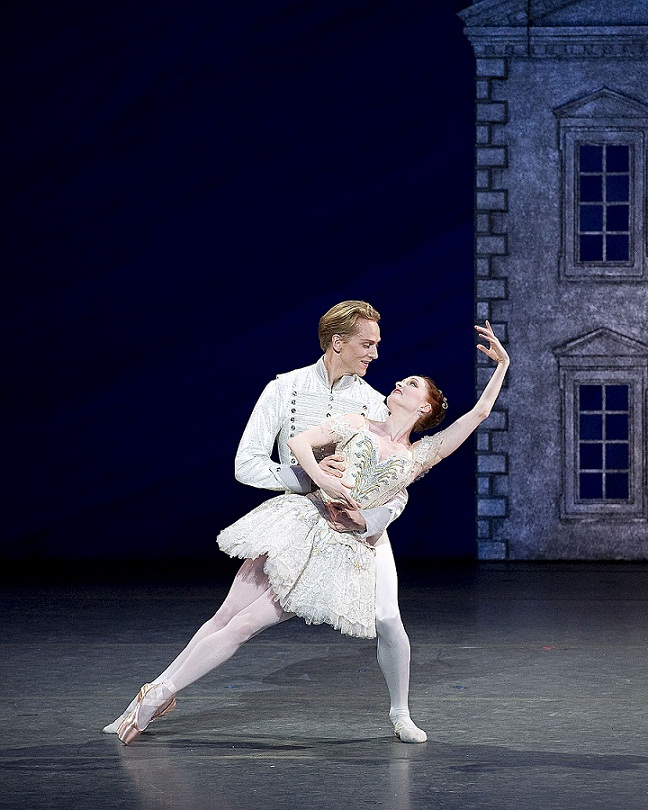
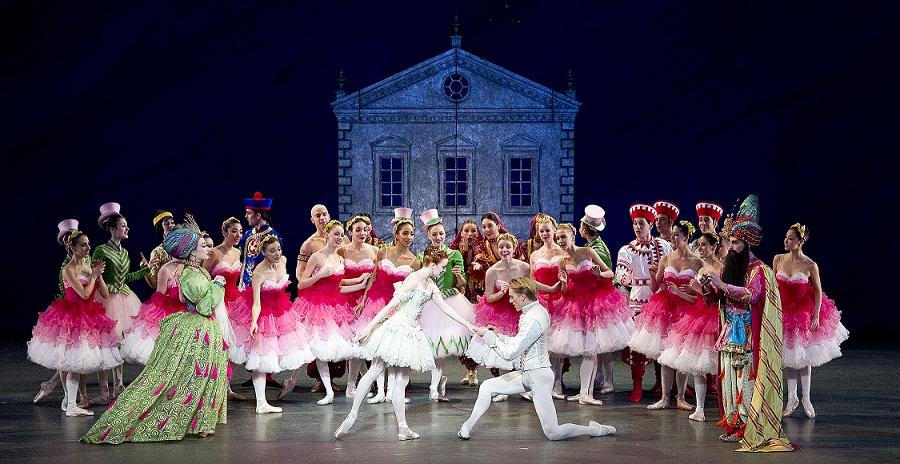
If you missed it, the program is archived here in its 90 minute entirety – so have a look.  Peter Boal, Doug Fullington, and Marian Smith from Pacific Northwest Ballet talked about where they found the original sources for Giselle – the choreography and the music, and how they reconstructed it. Boal noted this is the first time an American company has attempted to mount a production of the work as it was originally done in 1841. I found the music section most interesting – the music sounds exactly like the action or the words the characters would speak – as well as of course the dancing. One thing I found fascinating was how the original choreography called for dancing that was much faster, though much closer to the ground. So lots of small jumps instead of high leaps. But some of this crazy fast choreography (that one dancer even had a hard time doing) illustrates that there was once another kind of virtuosity than we’re familiar with today. The longer, higher leaps we see so much of today are, Boal said, the Bolshoi’s influence.

All four dancers were excellent. I’d seen Carla Korbes, James Moore, and of course Seth Orza before, but never Carrie Imler, and she really amazed me. She was one of the few who could actually pull off all those insanely fast steps. I must see more of her.

The full production will take place in Seattle in June. How nice would it be if PNB could live-stream that too?

SLSG’s Dance Highlights of 2010

Instead of trying to remember which were my favorite performances of the year, I’m just going back through my blog archives from January of this year and linking to the most memorable posts. More fun that way! A lot happened in a year…

January

Pacific Northwest Ballet made their debut at the Joyce; it was my first time seeing them live.

The Post‘s Page 6 announced that you know who and you know who are dating, and the ridiculous homewrecker attacks began.

Baryshnikov and Annie Liebovitz starred in a very cool Louis Vuitton ad.

February

I totally fell for New York City Ballet’s Sleeping Beauty.

…and Mark Sanchez 🙂

I found myself quoted in Colin Jarman’s book, Dancing With the Quotes.

I also fell for Sara Mearns’s Odette in Peter Martins’s Swan Lake.

On a personal note, my former judge, the esteemed Honorable Sylvia Pressler, passed away.

The Kings of Dance came to town.

Morphoses shocked the ballet world by announcing that Christopher Wheeldon was leaving the company.

March

My friend’s organization, Art for Change, held a benefit for Haiti after the earthquake.

Rasta Thomas’s Bad Boys of Dance announced that Danny Tidwell and SYTYCD’s Jacob Karr were joining the company.

Corella Ballet Castilla y Leon finally made their NYC debut!

I found myself actually getting press for liking Kate Gosselin – or for not hating Kate Gosselin rather – on Dancing With the Stars.

I fell for Keigwin + Company’s Runaway.

I was delighted to receive an email from NYCB ballerina Yvonne Borree’s aunt regarding of all things, my novel.

April

I had my first experience as a dance writer panelist! Thank you, Marc, from TenduTV!

Tiler Peck appeared on Dancing With the Stars in a Travis Wall routine, which everyone was so excited about. But it ended up amounting to not a whole lot…

Roberto Bolle danced a naked Giselle, in Italy of course.

May

New York City Ballet opened their spring season with premieres of Millepied’s Why Am I Not Where You Are and Ratmansky’s Namouna, both of which I liked, though Ratmansky’s had to grow a bit on me.

Baryshnikov returned to the stage.

I greatly enjoyed ABT’s new production, Lady of the Camellias, though most critics panned it.

June

ABT celebrated Alicia Alonso’s 90th birthday with three all-star Latin American casts (plus Natalia Osipova) dancing in Don Quixote.

Yvonne Borree gave her farewell performance at NYCB.

Bill T. Jones won a Tony for best choreographer for Fela!

Philip Neal gave his farewell performance at NYCB.

Natalia Osipova was mugged right outside of Lincoln Center.

Two of the greatest ballerinas in Europe – Osipova, and Alina Cojocaru – gave back to back Sleeping Beauty performances at ABT.

Albert Evans gave his farewell performance at NYCB.

Tap great Savion Glover made headlines by voicing his annoyance with Alastair Macaulay’s NY Times criticism of him – onstage, during a show.

Conductor Maurice Kaplow gave his farewell performance with NYCB.

Darci Kistler officially ended the era of the Balanchine-trained dancer with her farewell performance with NYCB.

July

Carlos Acosta announced his retirement from ballet and his foray into modern dance.

Alex Wong, probably the second greatest contestant ever on SYTYCD was injured and unable to finish the show.

My friend, Taylor Gordon, was profiled as a freelance ballet dancer in a New York Times article 🙂

Alvin Ailey American Dance Theater’s beloved Denise Jefferson passed away.

Nilas Martins retired from NYCB oddly sans fanfare, sans criticism, sans a performance.

August

I interviewed tWitch about his role in the movie Step It Up. Fun fun interview!

I had a blast covering Ailey Camp.

I nearly fell over when Wendy Perron, esteemed E-I-C of Dance Magazine recommended Swallow on Twitter!

September

NYCB began their excellent “See the Music” series.

October

I loved Ashley Bouder’s Serenade.

Emerging Pictures’s awesomely exciting Ballet in Cinema series began with the Bolshoi’s Flames of Paris.

This cool new Lincoln Center-area street art sprouted up.

One of my favorite posts of the year, though it received no comments, was about Anne Fortier’s novel, Juliet. I jokingly daydreamed about it being made into a film, and which of my favorite ballet stars might take the lead.

November

ABT made an historic visit to Cuba and oh how I wished I could have gone with them.

I think I was the only person in the entire dance world to sympathize with Bristol Palin on Dancing With the Stars.

I had a blast covering New York So You Think You Can Dance auditions.

All of a sudden Black Swan was everywhere.

Nearly fell over again upon hearing Riccardo Cocchi and Yulia Zagoruychenko took the world Latin ballroom title – making them the first U.S. couple ever to do so.

December

My take on SugarPlumpGate.

Black Swan finally premiered which I didn’t love but was happy to have ballet brought back into the spotlight.

I was in awe of Alvin Ailey’s 50-dancer Revelations, staged in honor of the 50th anniversary of that dance. I also loved several other dances in their City Center season – Ailey’s Cry, Ronald K. Brown’s Dancing Spirit, and Geoffrey Holder’s The Prodigal Prince – just to name a few.

Robert Wilson / Roberto Bolle’s Perchance to Dream exhibit in Chelsea was a lot o’ frightening fun.

ABT’s new Nutcracker premiered, which I really enjoyed, almost as much as the Bolshoi’s.

Portman and Millepied revealed they are now engaged and expecting.

I had great fun, despite the crazy snowstorm, going down to Wall Street and covering Judith Jamison’s ringing of the closing bell at the NYSE.

Pretty busy year.

Happy New Year, everyone!

Photos of ABT’s New Nutcracker

As promised, here are some photos of Ratmansky’s new Nutcracker for ABT.

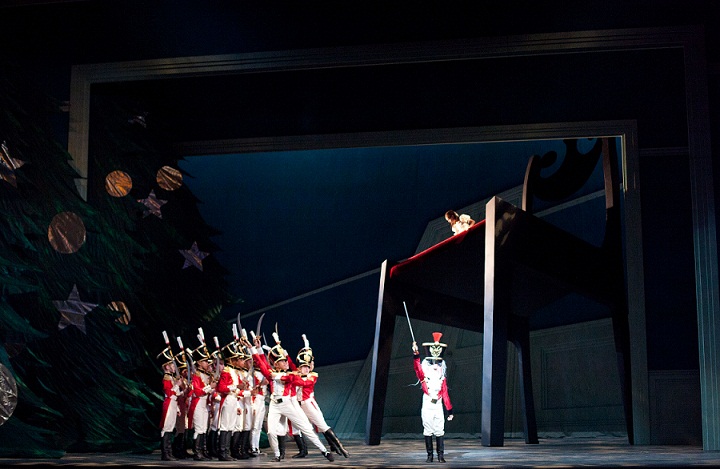
I forgot to mention in my last post how much I loved the Alice in Wonderland-like high chair for Clara to sit atop to watch the mice / nutcracker & soldier battle scene. Really brilliant sets. Richard Hudson is a genius.

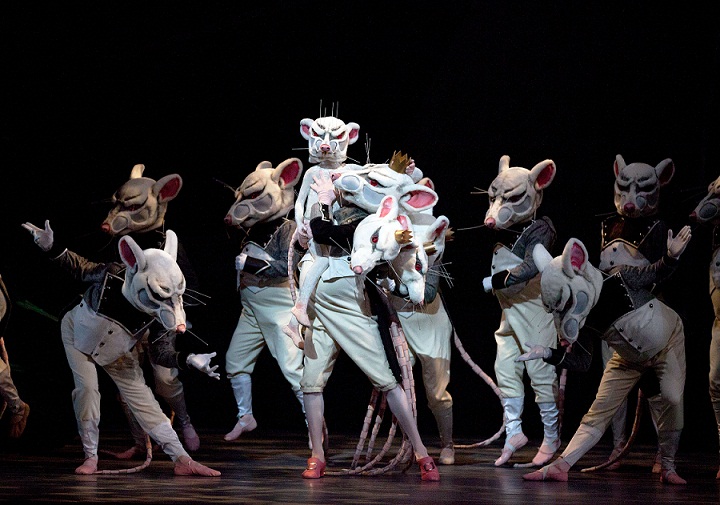
The battle scene and the many-headed mouse king.

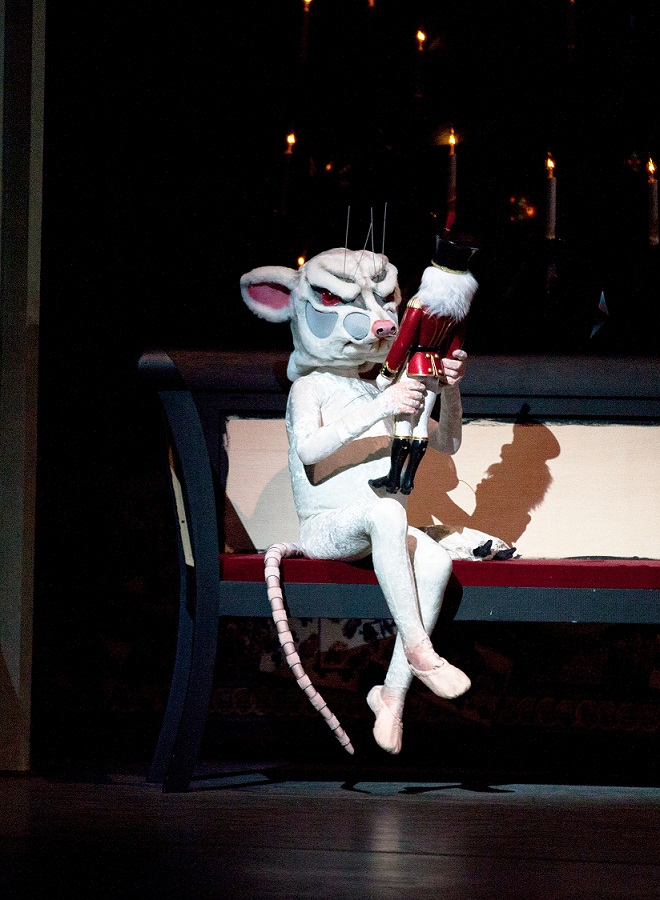
The mischievous little mouse (Justin Souriau-Levine) holds the nutcracker doll.


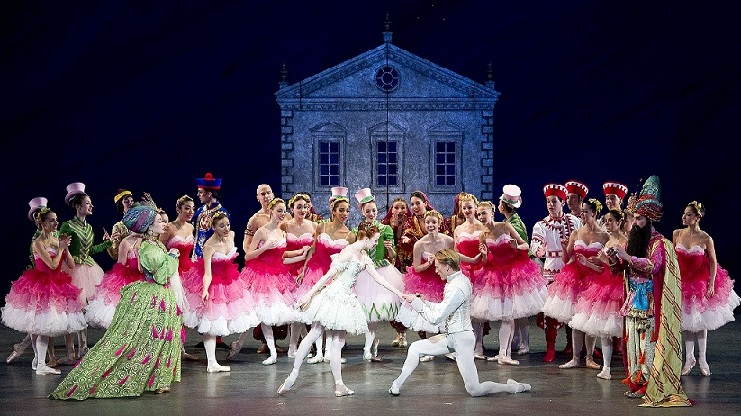
David Hallberg and Gillian Murphy as the Nutcracker Prince and grown-up Clara. I forgot to mention that they do get married in this version.

David and Gillian in the final pas de deux.

Top four photos by  Rosalie O’Connor; bottom two by Gene Schiavone, courtesy of ABT.

American Ballet Theater’s Original New Nutcracker


More photos coming soon. This one (of Gillian Murphy and Catherine Hurlin as the two versions of Clara) is taken from culture.wnyc.org.

Last night was the official opening of ABT’s much awaited new Ratmansky-choreographed Nutcracker at BAM. I loved almost every single second of it. I’ve only seen about six different versions of this ballet, but this one to me seems most original. It’s very entertaining, very humorous at points, and can somehow maintain the attentions of small children while being clever and witty – and beautiful – for adults. It’s very theatrical and it’s not as “dancy” as the one I just saw from the Bolshoi (Grigorovich’s version)- there’s more non-balletic jumping and playing around in Act I at the party, but there’s plenty of beautifully choreographed classical ballet during the grown Clara and Nutcracker Prince pas de deux and the ensemble snow scene and waltz of the flowers.

It opens with the cooks and maids in the kitchen preparing Christmas dinner. They’re going about their merry preparations when suddenly their space is invaded by mice. The mice completely take over, chase out the cooks, jump up on the tables and grab for the hanging meats. Adorable and hilarious. There’s one very cutely mischievous little mouse who appears throughout.

Then the party scene happens and Drosselmeyer (a non-dance role here) presents the children with two sets of life-sized dolls. The dancing was very good, but there were no sharp, stunted staccato movements as in the Bolshoi’s, so the dancers didn’t look like real dolls to me. I loved the costumes for Harlequin and Columbine though. They looked the most commedia dell’arte that I’ve seen. All costumes were brilliant – one of the most excellent things about ABT’s production. They, and the equally brilliant sets, were made by Richard Hudson, of Lion King fame.

When the dolls are ordered to return to their boxes, the children do a group dance that looks more like fitful stomping than anything balletic. But it’s still musical and evocative and cute, and it got a lot of laughs. The nutcracker that Drosselmeyer then gives Clara (danced brilliantly by Catherine Hurlin) is half-doll, half-human. He’s danced by a boy (Tyler Maloney) but he has a full nutcracker head, so he can’t do as much as the Bolshoi’s human nutcracker doll – his movements are much more limited. Once Clara’s dream begins, the boy removes his doll head before escorting her off to the Kingdom of the Sweets. I have to say, I really liked the boy who danced Clara’s bratty brother, Fritz – Kai Monroe. He was very entertaining, did a good job with both the acting and the dancing (high jumps!), and I think he will be one to watch for.

The Battle scene between the mice and the nutcracker and his soldiers was good, and, again, the costume for the mouse king (Thomas Forster) was fantabulous. I couldn’t even count the heads he had there were so many. I think of all battle scenes, I like Balanchine’s the best. I love how a mouse will scurry ominously across the floor right in time with a flute chord. Then the mice begin to gather and organize right in time with the flute ensemble so that it seems like the mice are talking. And Balanchine’s battle scene seems the most theatrical. Balanchine’s growing tree is also magnificent. Here, the tree only grows a bit, but soon they multiply and trees begin to eat up the wings, which was also spectacular.

The snow scene was really beautiful and this is where we first meet the grown-up Clara and her nutcracker prince (last night they were Gillian Murphy and David Hallberg, but there are many casts – see James Wolcott’s review of a preview starring Veronika Part and Marcelo Gomes here). Their first pas de deux is a beautiful waltz, and it’s made very clear that this is Clara’s grown-up vision of herself and her prince. The child Clara and Nutcracker boy waltz alongside Gillian and David until the classical ballet steps takes over, and the children stop dancing and gaze longingly at their grown-up selves as they finish the pas de deux. There’s a really beautiful Viennese waltz-type of lift where he spins around with her perched on his shoulders.

The Kingdom of the Sweets is really different from other versions. The “Sugar Plum Fairy” or “Nanny” as she is alternately called here, is not a dance role, but more of an escort through this kind of tour of It’s a Small World. She dons an absolutely gorgeous ancient Indian costume, as does her male companion. The dancer representatives from various countries are not dolls; they are real, but most of the dances are very different. The Arabians, for example, are danced by one man (last night, Sascha Radetsky) and four women, and the women are all cutely chasing the one very wickedly flirtatious man. It reminded me a bit of Kevin McKenzie’s von Rothbart deviously flirting with all the court women at the beginning of the Black Swan pas de deux. At the end of this dance, though, the tables are turned and the women come into their own and no longer need him. Now of course, he’s not very happy about that. It’s great fun and I loved this dance the best.

The Russians (Mikhail Ilyin, Craig Salstein and Arron Scott) were more folksy than bravura ballet, which was fine, because they later did a circle of barrel turns as their part of the final ensemble dance.

And we see Mother Ginger again (or who, as a child, I called The Fat Lady with the big skirt). I haven’t seen her since Balanchine! And there’s an added element of hilarity here involving the mischievous little mouse from the kitchen!

The only dance I didn’t really care for was the Chinese. As I’d expected, these roles were danced by Daniil Simkin and Sarah Lane. But Ratmansky didn’t really use them for what they are known for and the dance is very tame compared to this dance in the other Nut versions. I really wanted to see Daniil go flying around the stage in those crazy million times-overrotated turning leaps that he’s known for. There weren’t even any high jumps. It’s just that I look to the Russian and Chinese dances for the bravura parts and it’s okay if they’re lacking in one dance, but not both! The Chinese weren’t as goofily portrayed though as in other versions, so I appreciated that.

And I loved the waltz of the flowers. Included here are some very charming bees, but they’re not used in a slapstick way at all, which I thought they would be when I initially saw them. They dance is very classical and there’s a beautiful part where the four male bees toss the red and pink-clad ballerinas into each others’ arms in a circular rotation. That received a lot of audience applause.

And then is the ending pas de deux again between Gillian and David. I’d written before, when I saw an excerpt at the Guggenheim, that it looked more modern lyrical than classical, but last night it looked very classical to me. Ratmansky used my favorite lift from the Grigorovich Bolshoi version where the prince lifts and holds Clara up by one lower leg and carries her all around stage like that. The solo variations were nice. David didn’t seem to have the height he normally does on his jetes (I was told later at dinner though, by a dancer – not from ABT – that that choreography was crazy hard) but he made up for it in a series of spins. I know in ballet they’re called turns, but he was going so fast they looked more like ice-skating spins to me!

The only thing I found bothersome was the acoustics in the BAM opera house. Maybe I’ve just never heard live music played there but it just seemed like the orchestra was playing so softly. The sounds of the toe shoe-clad feet and the sounds of children coughing dominated.

Oh, one final thing: when David Koch, who financed a good part of the production, gave his opening speech, he accidentally called Kevin McKenzie “Peter.” Got a lot of ooooohs from the audience. I couldn’t hear through the ooooohs what he said after that – I assume it was an apology – but whatever it was it elicited even more ooooooohs. Funny.

Overall it’s a brilliant new ballet, a very original new production. Definitely get out to BAM if you can! Go here for the rest of the schedule.

More Revivals at Alvin Ailey – THE PRODIGAL PRINCE is Electrifying!


Last night was, sadly, my last Alvin Ailey performance of the season. They performed two revivals – Geoffrey Holder’s The Prodigal Prince from 1968 (which was astounding), and Judith Jamison’s Forgotten Time, from 1989. They also performed Christopher Huggins’ new Anointed, which I saw earlier in the season and wrote about here.  (Photo above, by Paul Kolnik, is of Samuel Lee Roberts in Prodigal Prince).

I liked Jamison’s Forgotten Time. As you can see in the photos below, she created some very beautiful images with the partnering. Photos below are by Paul Kolnik. In the first and last, the dancers are Jamar Roberts and Antonio Douthit; in the middle two, they are Linda Celeste Sims and Clifton Brown.


It was very spiritual and I loved the ending image, with the ensemble of dancers – about 13 in total – all looking up and waving their arms back and forth. At many points the dancers would look up toward the sky, into the light, as if searching for something, some spiritual being. At points the men would lift the women on their shoulders so they could gaze even higher. And there was as stunning solo between the two main men in the middle. Last night that solo was performed by Glenn Allen Sims and Jermaine Terry, who were very good. The audience gave them huge applause at the end.

The music was hauntingly beautiful. It was by Le Mystere des Voix Bulgares, and sounded like Bulgarian spirituals. I also loved the costumes (by Jamison and Ellen Mahlke).

I really loved The Prodigal Prince, as did the whole audience. I didn’t know when we were going to get out of there after the performance was over, the dancers received so many curtain calls. By Geoffrey Holder (who’s won Tony awards for The Wiz and Timbuktu), from 1968, the company revived it this season. I think they should do it every season though. It’s a good dance to end the evening with, so they could alternate more often between it and Revelations.

The subject of The Prodigal Prince is Haitian painter Hector Hyppolite (see some of his images here). According to the program notes, Hyppolite was also a houngan – a high priest of Voudoun, the religion of the Haitians. In 1943 St. John the Baptist and the Voudoun Goddess Erzulie came to him in a vision which inspired him to take a sojourn to Africa (which he may have imagined) and paint the Voudoun loas – or African gods. His paintings became celebrated after leading surrealist Andre Breton discovered them and brought them to Europe.

Most of the choreography consists of Haitian and African dance; I’d never seen Haitian before and I found it spellbinding. It’s amazing all that the Ailey dancers can do, and do superbly. The music, also by Holder, was very drum-heavy, very rhythmic, very African – the type of music that makes you want to take up African dance. Samuel Lee Roberts’ depiction of Hyppolite, as he encountered Erzulie (danced by Akua Noni Parker) and Saint John the Baptist (in African form, danced by Jamar Roberts), then dreamed of Africa and was taken with the African spirit (danced by Michael Francis McBride), was excellent. Samuel Lee Roberts is so good at roles that require the dancer to act as well as dance. Earlier in the season, he danced the role of Lazarus in Mary Lou’s Mass and he was the highlight of that entire dance. He’s very entertaining and can bring out the humor in a story without reducing its depth.

The whole dance was so mesmerizing, the costumes brilliant, and the beat of that music so infectious. Definitely one of the highlights of the season. Here are more pictures, all by Paul Kolnik.


(Lee with Briana Reed as Erzulie.)


All photos from AlvinAiley.org.

The company still has about two weeks left of their City Center season. Go here for the schedule.

The Bolshoi’s Nutcracker

So of course I went yesterday to see the Bolshoi’s Nutcracker, live-streamed into movie theaters all over the world, though, judging by the opening remarks made by announcers and intermission interviews, I think most of the audience was in France. Anyway, there was a pretty good turn-out at the Big Cinema in Manhattan – bigger than turn-outs for the two recorded Emerging Pictures ballet films I saw earlier (the Royal Ballet’s Nutcracker and the Bolshoi’s Flames of Paris). Still, the theater wasn’t packed, as it should have been.

Anyway, this was the best Nutcracker I’ve seen so far. I really loved it. I don’t think anyone puts on a show, makes ballet into theater, quite like the Bolshoi. And their dancers have got to be among the most talented in the world. The things they can do… I think every single woman had a point like Veronika Part and every man like David Hallberg.

This production, by Yuri Grigorovich, had no Sugar Plum Fairy, but instead the grand pas de deux was danced by Marie (so-called here instead of Clara), and her nutcracker, turned into a prince in her dream. I like it so much better this way than having a Sugar Plum Fairy. It just makes more sense in the story to have the young girl imagining herself as a grown-up princess. It makes that final pas de deux so much sweeter. And here, they actually get married, Marie and her prince.


The same ballerina – the exquisite Nina Kaptsova (who I remembered immediately from her role in Flames of Paris as the delicate and sympathetic Marquis’s daughter; photo above from dance.net) – danced both the young and grown-up princess versions of Marie and she was surprisingly believable as both. You’d have to have a small dancer with a very youthful physique to be able to dance both parts. (San Francisco Ballet has grown-up Clara dancing the final pdd too, but two different dancers dance the young and older Clara). Kaptsova’s prince was Artem Ovcharenko, who was also very good though he didn’t stand out quite as much as she. For ABT fans, he reminded me a lot of Maxim Beloserkovsky.

What I really, really loved about this Grigorovich production, though, was all of the dancing. It begins with the guests en route to the party, and they dance across the stage. There are really no non-dance moments as there are in most Nutcrackers I’ve seen, where you have the party with children scurrying about and the grown-ups chasing after them and chatting with each other, and Clara and her brother fighting over the little nutcracker, who is actually a doll. Here, the children aren’t really children but dancers in the company (one reason why there’s so much more dancing), and, magnificently, the “toys” are all dancers as well! I don’t think I’ve ever seen a real dancer play the little nutcracker doll. And s/he (not sure which gender, as unfortunately the name isn’t listed in the program) was brilliant  – one of the best parts of the first Act. A shame there’s no name – unless it’s Anna Proskurnina, who’s listed as Marie’s brother? I’ll have to look it up.

The other two toys in the first Act – Harlequin and Columbine – were danced brilliantly as well, by Vyacheslav Lopatin and Anna Tikhomirova. Those dancers were the most doll-like dolls – with their stunted, sharp staccato movements – that I’ve ever seen.

After the snow scene, Marie and her Nutcracker (now, in his human version, danced by Ovcharenko) didn’t really go to a Land of Sweets but more like a land of toys, as male / female pairs of dolls from various parts of the world entertain them. I went to the performance with my a Chinese friend and of course I was really embarrassed by the Chinese dolls. He thought they were funny though, and we both agreed they were danced very well, by Svetlana Pavlova and Denis Medvedev. I can really see Daniil Simkin dancing this role in ABT’s production, if Ratmansky does it the same way. ( I know Simkin will also have a turn as the Nutcracker Prince / Cavalier at ABT). I also hope Ratmansky doesn’t resort to stereotypes in creating these roles, as virtually every other choreographer has.

As the Indian dolls, Victoria Osipova (relation to Natalia?) and Andrei Bolotin had a bit of a slip and she fell, but I didn’t think it was that big of a deal. She got up immediately and there was no sign of injury. This is usually the dance most of us in the US know as “coffee” or the Arabian part, but here the costumes are very different – more classical, no bare midriff and tiny top – and the dancing more conservative.

I loved the grand pas de deux. It was both sweet and innocent (like you’d expect of a young girl’s dream of her older self being swept off her feet by a handsome prince), and stunning in its athleticism. Some of those lifts are the most breathtaking I’ve ever seen. At one point, he held her up by her calf and she’s upright, and he carried her all over the stage that way. There are many overhead lifts where he’s holding only her waist, with her legs in the air, feet delicately crossed, and she looks down at him, crossing her hands beatifically. And at the end of the wedding, he carries her off in a cradle lift. So sweet. The solo variations for each were equally breathtaking. Kaptsova had a series of super-fast chaine turns but with all kinds of additional footwork thrown in. Watching her dance, at points I couldn’t believe my eyes.

Oh and also Drosselmeyer was much more of a dance part than most other Drosselmeyers I’ve seen. He was danced very well by Denis Savin.

Overall brilliant production. I feel spoiled now, like I’m never going to be able to see another Nutcracker again. But I will this Thursday – when Ratmansky’s opens at BAM!

More Highlights From Alvin Ailey Season

Some more highlights of Alvin Ailey season, which goes until January 2nd:

First, from now through December 19th the company is joined onstage by Wynton Marsalis and the Jazz at Lincoln Center Orchestra. Live music always makes the evening so much richer. I was there last night, when they played music by Duke Ellington and Dizzy Gillespie from Ailey’s Three Black Kings and Billy Wilson’s The Winter in Lisbon. Try to go if you can to one of these live-music performances. See the City Center schedule here.

Also, on January 2nd, the company will close the season, and Judith Jamison’s tenure as artistic director, with special performances by surprise guest artists and special dances including David Parsons’s popular Caught (performed by an Ailey dancer). And, on New Year’s Eve, Sweet Honey in the Rock will perform live with the company.

Okay highlights (mainly in photos):

Ronald K. Brown’s Dancing Spirit. This is a beautiful dance that premiered last season and grew on me even more this year. It’s set to music by Duke Ellington, Wynton Marsalis, Radiohead, and War and combines American modern dance with movement from Cuba and Brazil. It depicts a community of people whose dancing suggests that they’re each doing their own thing, each embodying their own spirit through dance, but also coming together for ritual. The dance takes place at night, as the background depicts first a starry night, and ends with a fully-visible moon. I love its energy, and how it builds. It’s simply mesmerizing. (Above photos by Paul Kolnik, and Christopher Duggan, respectively.)

Jamar Roberts dancing Robert Battle’s brief but compelling solo, In/Side. Wow. Audience went wild with applause. I think the company should consider showing this on So You Think You Can Dance – it’s akin to many of the contemporary pieces danced on that show. (Samuel Lee Roberts is pictured above, though, not Jamar. Photo by Paul Kolnik.)

Alvin Ailey’s Night Creature. This is not a new production, but it grows on me every year. I love the structure – how there’s a jazzy section, followed by a balletic one, then returning to jazz. I love the little story in the middle with the main woman – the jazz diva – getting a little carried away with herself.

But for me personally, I love how much the movement resembles samba. So many of the steps are the same exact steps I learned in ballroom, but of course they’re danced much differently. Here they’re much slower, slinkier, jazzier, with the upper body much looser. It always makes me wonder about the origins of American jazz dance. Samba is a merging of African and Latin dance – it’s Brazilian. So jazz dance must have origins in African and Latin. Yet, it’s also balletic. I always thought there was something balletic about samba too and if that were emphasized it would be all the more beautiful. My ballroom teachers always rolled their eyes at me when I said that. But I feel like Mr. Ailey had the same idea, because this is that dance! You can see the samba-like movement in some of his other dances too, like at the beginning of the “Honor Processional” in Revelations. (Photo by Nan Melville.)

Memoria by Alvin Ailey. This is not a new production but for some reason I don’t remember seeing it before. It’s a tribute to one of his friends who died, a choreographer named Joyce Trisler. I love how the first part of it is like a memorial service – slow, somber, and spiritual. Then in the second half, the momentum builds into a rhythmic celebration of her life. The night I saw it, Briana Reed (who’s not pictured above) danced the lead very powerfully. (Photo by Andrew Eccles.)

Camille A. Brown’s three-part solo, The Evolution of a Secured Feminine. It’s a short, clever piece, by turns funny and sad, filled with lots of spastic-looking movement that doesn’t always seem to accompany the lyrics. But that is part of its humor and wit. I like the third section the best because it tells a little story. (Briana Reed is in Paul Kolnik’s photo above).

Uptown, by Matthew Rushing. This piece is just as much theater as dance and it takes you on a little tour of the Harlem Renaissance. You visit the Cotton Club and the Savoy, and Zora Neale Hurston, WEB DuBois, Josephine Baker, Ethel Waters, and Florence Mills all make appearances. But it was Clifton Brown’s portrayal of the central character in a Langston Hughes poem that really touched me. He’s really good at those kinds of solos, Clifton. He’s really good at finding and expressing the deepest interior of a character, and really dramatizing it. I can’t find any photos of him in this, but above is a photo by Paul Kolnik of Amos J. Machanic as Victor, the hilariously wacky tour guide, along with the cast. This year, I saw that character danced by Abdur-Rahim Jackson, who had a lot of fun with it, really brought it to life.

Okay, I have to stop now, but more to come, especially on the new pieces!

All photos from the Alvin Ailey website.

The Royal Ballet’s Nutcracker


Yesterday I was invited to a pre-screening of a filmed version of the Royal Ballet’s Nutcracker, which will be shown later this month at cinemas in New York and around the country by Emerging Pictures’ Ballet in Cinema series. Check their website for local schedules.

The Royal Ballet version was very good, albeit different from what I’m used to (which, as a New Yorker, is basically Balanchine’s). The Royal’s was directed and choreographed by Peter Wright (after Ivanov), the orchestra conducted by Koen Kessels, and was originally shown at the Royal Opera House in Convent Garden in December 2009.

The biggest difference between this and Balanchine’s is that Clara and the Nutcracker Prince dance all throughout the second half, the Land of the Sweets (here called the Sugar Garden). They participate in the Arabian dance, the Russian dance, the Chinese dance, and the flower dances. The dancer who dances Clara (unfortunately, I don’t have a full cast list and didn’t get her name from the quickly scrolling credits at the end of the film, so I don’t know her name) was older – not a child – and she was a really beautiful dancer. Very fluid, light, willowy, with an innocence in her movement. Very child-like (in a good way, because it was called for here). At first I didn’t like that they danced throughout because I thought at points it almost looked like they were making fun of the various styles of dance. But then I realized, no they weren’t doing that at all; they were playing and having fun, like children would, and like audiences composed heavily of children would want to see them do, and would want to do themselves. The Nutcracker Prince’s name I do have – Steven McRae, and he was very good.

The Sugar Plum Fairy and the Prince were danced brilliantly by Miyako Yoshida and McRae. The ending pas de deux was a traditional one and it was danced just about the best I’ve ever seen it. Yoshida in particular was really stunning. She’s a small dancer but has a lot of power – particularly in her developes –  her leg just seems to shoot up there! Her assisted pirouettes and her fouettes done in a diagonal line were also stunning. She’s a fast, spirited dancer with great clarity in her lines, which were never over-extended and which she always finished with zest. But even with all the demanding athletics of that pas, she didn’t turn into an Olympic performance; she remained sweet and princess-like. It was really magical. It’s a performance I could have watched over and over again.

Drosselmeyer, the magician, really blew me away too. He is a main character here – he doesn’t just appear at the beginning to present the toys and give Clara her nutcracker doll; he acts as a guide all throughout the second half, bringing Clara and her prince on a tour through the Sugar Garden, presenting the various national dances to them. He’s clearly in charge of Clara’s dream, although at the end, there’s a little twist on that. You’ll have to see the production to find out what it is 🙂 And Drosselmeyer was portrayed very well by Gary Avis. It’s not a dance role, but requires a big stage presence and Avis really came through on that. He received lots of applause at the end and took all the curtain calls with all the main dancers.

The only thing I have to say – and this is not at all bad – but did Macaulay ever review dance in the U.K.? He was a theater critic for most of his career there, right? Because if he ever reviewed the Royal, I’d think he would have had to remark on the weight of some of the dancers. Some of them made Jenifer Ringer look like a twig. Not that they danced badly because of it. I think for a while I’m always going to be thinking “hey, she’s bigger than Jenifer Ringer, she’s bigger, she’s way bigger”…

Anyway, if anyone reading this is in the U.K. and / or has seen this production, I’d love to hear your thoughts!

Photo taken from the Ballet in Cinema website.

Alvin Ailey: New Dances and New Productions

Alvin Ailey season is upon us! I attended two performances over the weekend and, of course, they made my weekend. I’m always so happy when I come out of an Alvin Ailey performance. Particularly with their new, 50-dancer Revelations, which I think is only for this year because it marks the dance’s 50th year anniversary. I’ve always thought of this dance as the quintessential American dance, and it’s so stunning seeing the stage completely filled with dancers. For some of the solo sections like “I Wanna Be Ready,” they triple up the number of dancers, and they often use students from the Alvin Ailey School and from the Ailey II company for the larger sections like “Pilgrim of Sorrow” and the “Honor Processional” from “Take Me To the Water.” So, please, if you’re in New York, try to see one of the 50-dancer versions. They’re only showing that production of Revelations on certain dates, so make sure you check the City Center schedule. I hope they consider doing this a few times a season in the future, though, because (expensive as it probably is) it’s really so brilliant.

Also, my new second favorite dance is now Cry. I’ve seen it twice this season, and don’t really know now if I’ve ever seen the whole thing. Maybe I’ve only seen Judith Jamison dance it on video and I’ve seen the individual sections before onstage, never in whole. It was created by Mr. Ailey in 1970 but this is a new production. This year they have three different dancers dancing the three solos. The first solo is set to Alice Coltrane’s “Something About John Coltrane,” and was danced the nights I saw it by Linda Celeste Sims on the first night, and Rachel McLaren on the second. They were equally spellbinding. This section, to me, is very powerful, the movement is very modern, with lots of sharp staccato movements meant to convey strife and longing and fear and a whole host of emotions – along with clever, ironic uses of a towel-like sheet – and it requires very powerful dancers.

The second section, the adagio set to Laura Nyro’s “Been on a Train,” which often nearly brings me to tears, was danced both nights by Constance Stamatiou, who is really growing on me this season. She’s a really beautiful, very “womanly” dancer, and she is really growing to have a great stage presence.

The third section, the more rhythmic African section, set to the Voices of East Harlem’s “Right On, Be Free,” was danced both nights by Briana Reed, who’s always been one of my favorite dancers in the company. She was out of most last season and I’m so glad she’s back. Mr. Ailey dedicated this dance to “all Black women everywhere – especially our mothers.” I love how it begins with a powerful evocation of oppression and ends with a celebration of African roots. I hope they perform it every season.

The two new dances I’ve seen so far (there are many to come in the next few weeks), are Christopher Huggins’s Anoited (which is a world premiere this season), and incoming artistic director Robert Battle’s The Hunt (which is new for Alvin Ailey this season).

The Hunt is great fun! I loved it. I could see that one every night, just like Revelations. All six dancers are men and it depicts, as the name implies, the rituals involved in preparation for a hunt. It conveys how physically and mentally grueling the hunt will be as a test the men’s limits, and it also showcases the athletic power of Ailey’s male dancers. And the music is mad fun! It’s Les Tamours du Bronx, wildly percussive, so much fun! I joked on Twitter that I needed to get it for a workout tape. Seriously!

It’s certainly a male moment in dance! This dance received loads of applause and a full-audience standing ovation. In Revelations, which followed, “Sinner Man” then received huge whoops and hollers from the crowd. As they should have. But the women of Cry deserved a full-audience standing ovation too! Not fair!

Christopher Huggins’s Anoited is really beautiful. Huggins is a former member of Ailey and this dance is a tribute to the leaders of the company, both past and present. The first section is a really lovely duet by Jamar Roberts and Linda Celeste Sims, with the two meant to depict Alvin Ailey and Judith Jamison.

Over the music we hear Jamison’s words to Ailey, when he told her he was sick and asked her whether she would take over the company. “And I said, ‘Of course!'” she repeats many times. At the end of the duet, he lies down, and she sadly kneels over his body. These two dancers are perfect to represent Ailey and Jamison. If this company does have a “star” right now it’s Linda Celeste Sims, and Jamar Roberts, with his physicality and stage presence is larger than life.

In the second section, set to more percussive music by Sean Clements, Jamison is joined by four other women known for keeping Ailey’s legacy alive over time: Sylvia Waters (director of Ailey II), Denise Jefferson (director of the Ailey School, who recently passed away), Nasha Thomas Schmitt (director of Ailey’s arts in education program), and Ana Maria Forsythe (director of the Ailey / Fordham BFA program). The women are all dressed in celebratory purple and they dance a rhythmic, high-charged African / modern combo.

In the third and final section, entitled “52 and Counting,” the dancers all come together and are joined by others, all dressed in red. They dance to a fast-paced beat, sometimes in ensemble, and breaking into duets replete with thrilling lifts. It reminded me a bit of the second section of Love Stories, or of Tharp’s The Golden Section and it stood for me as a celebration of some of the more contemporary pieces the company is known for. Amidst all this, the figures of Alvin Ailey and Judith Jamison return, and perform another beautiful lift-heavy duet, this time with Roberts dressed in white.

I’ll write more as the season continues. As I said there are many more premieres to come (check out City Center’s website for the schedule). For now, I’m off to a Nutcracker by the Royal Ballet. I love the diversity of dance 🙂

All photos from AlvinAiley.org. Top photo by Christopher Duggan; all other photos by Paul Kolnik.

Benjamin Millepied’s “Plainspoken”

Last Thursday was NYCB’s Fall gala, during which they presented the New York City premiere of Benjamin Millepied’s Plainspoken (photo at left, of Teresa Reichlen and Sebastien Marcovici, by Paul Kolnik; the ballet originally premiered in Wyoming this August), along with Robbins’ fabulous homage to Fred Astaire and Rita Hayworth, I’m Old Fashioned, and Balanchine’s Tarantella and Western Symphony.

The evening began with the orchestra pit rising and the always lively Faycal Karoui leading the orchestra in a rendition of Leonard Bernstein’s Candide Overture. I love that movable orchestra pit – best thing, in my opinion, about the recent renovations to the Koch Theater.

I was hoping there would be introductions and short speeches, including one by Sarah Jessica Parker, who served as honorary chair for the after-performance party. But no such luck – I guess because it wasn’t the beginning of the season, like galas usually are. I didn’t even get to see Parker come down the red carpet, there were so many paparazzi blocking my view. I certainly heard her though – or, rather, the paparazzi, as they screamed her name like she was the Messiah. I didn’t recognize anyone else. Lots of good-looking people perfectly coiffed and dressed in black tie but no one I recognized. I didn’t see Natalie Portman, though I heard she was there. I never recognize famous people, though. I’m really bad that way.

Anyway, I’m Old Fashioned was, as always, enjoyable, albeit too long. No dance-maker needed an editor more than Jerome Robbins in my opinion- and Tyler Angle stood out to me in his solos and duets with Maria Kowroski. But my favorite part of the evening was the second half of the post-intermission, when Ashley Bouder and Daniel Ulbrich just nailed Balanchine’s super fast-paced bravura-heavy duet, Tarantella (Ulbrich smacked the tambourine so hard one of the little metal things came flying off) and then Sara Mearns just astounded me in the last section of Western Symphony. How in the world does she stand on pointe, on her own unsupported by a male dancer, and lift her other leg in the air into a perfect split, into practically a six o’clock penchee? How how how? She and Charles Askegard really put on a show as tart-y saloon dancer and cowboy. She is really just unbelievable.

Okay, so onto Plainspoken. Well, sometimes I like Millepied, and sometimes the work just falls a bit flat to me. I didn’t much care for this one, though I’ve liked his last several ballets for ABT and NYCB. This was very abstract, no story that I could find, and I’m just not a fan of purely abstract ballets that I can’t find any story in whatsoever. It was a ballet for four couples: Sterling Hyltin and Tyler Angle, Teresa Reichlen and Amar Ramasar, Jennie Somogyi and Sebastien Marcovici, and Janie Taylor and Jared Angle (the last were generally my and my friend’s favorite pair – I think because Janie always brings something dark to her roles, there’s always something beneath the surface with her even if you can’t put your finger on what it is). The couples sometimes changed partners though, and there would be different-sized groupings.

The music was by Pulitzer prize-winning composer David Lang – it was a commissioned score – but to me the music here wasn’t nearly as rich as, for example, that used by Morphoses recently. This was mainly strings and piano and each section seemed emotionally the same. There didn’t seem to be a lot of contrast between the movements or a build-up toward the end. The sections were each differently lit – by a different color and a background curtain that would rise and lower to reveal more or less light than the section before. But the set was nothing very dramatic and the different colors didn’t, for me at least, evoke a different mood.

Movement-wise, there seemed to be a swimming theme. At various points the dancers would sit on the floor and make motions evocative of swimming – sweeping arms through the air, paddling legs – backward, then forward, then all dancers lying on their backs with their feet in the air like a synchronized swim team. At other points, the women would be carried somewhat Chaconne-like across the stage. I remember a slide characterizing Janie’s section, and she made it seem as if she was being taken by the men who slid her, against her will, across the floor.

I also have in my notes that the movement toward the beginning, in the first section, was a combination of robotic and more casual walks, kind of like the ensemble walking across the back of the stage in the second part of Robbins’s Glass Pieces. This kind of movement was interspersed with the swimming-like motions. In later sections, dancers seemed to run in place.

Oh, and during Janie’s section, there was a point where the men all picked her up and hoisted her high above them, like in MacMillan’s Manon or the Balanchine ballet where the woman is carried around the whole time by a group of men and the lone man on the floor keeps reaching up for her (sorry, can never remember the name of that ballet). My friend loved this part, and I did as well, but couldn’t really figure out how it played into the rest of that section.

In general, my first impressions of this ballet were: some interesting movement reminiscent of other ballets that didn’t seem to add up to much and didn’t really make me feel anything.

At the end, Millepied, Lang and the costume designer (Karen Young) and lighting designer (Penny Jacobus) took the stage for a bow. The applause seemed more polite than hearty (in contrast to the crazy applause Wheeldon always gets!), but that could just be me projecting my own thoughts onto everyone else.

What about you guys? I saw some mentions on Facebook of people liking it. Who else saw it and what did you think?

Morphoses at the Guggenheim

Over the weekend, Morphoses had its first NYC program sans former artistic director Christopher Wheeldon. They presented two pieces, at the Guggenheim, as part of the museum’s Works and Process program. They commissioned two choreographers – American Jessica Lang and Swedish dancemaker Pontus Lidberg- to each make a different dance set to a score by Pulitzer Prize-winning composer David Lang.

(I wrote about seeing an early rehearsal here).

Using most of the same dancers (most of whom are from American Ballet Theater now, instead of New York City Ballet, as they were when Wheeldon was A.D.), the two came up with vastly different dances, both very engaging.

Lang’s (top four photos – all photos by Richard Termine) was more a study of gravity, as she explained (hence Misty Copeland here “climbing the wall”), and of contrasts between the masculine and feminine (indicated, to her, in the music by percussion and chimes).

Interestingly Lidberg heard the music differently and used the percussion section first, melting into the chime section, so apparently the music had no prearranged order. His dance was more lyrical, with the visual theme of a night-blooming flower.

I love that Morphoses now seems to be using a lot of ABT dancers – all soloists or standout corps members — Misty Copeland and Kristi Boone, Eric Tamm, Blaine Hoven, and Isaac Stappas – because I really connect with them. Other dancers included Melissa Barak, Laura Feig, Gabrielle Lamb, Rachel Sherak, Andrea Spiridonakos, and Matthew Prescott. And Lang mentioned that she also used her husband, modern dancer Kanji Segawa (the man doing the floor work on the right-hand side in the photo third from the top), in her piece, which worked well since the aesthetic of modern dance is more “grounded” than ballet.

To hear the music and see some of the dance, here is an excellent video made by the Guggenheim:

NYCB Brings Back “The Magic Flute” and Ashley Bouder Astounds in “Serenade”

On Thursday evening, New York City Ballet performed for the first time since 1982 Peter Martins’s The Magic Flute (pictured below – both photos by Paul Kolnik). But first on was Balanchine’s Serenade, with Rebecca Krohn (in the photo at left, the ballerina the farthest left) debuting in the role of the “angel.” Jenifer Ringer (center) was the “lost girl,” and Ashley Bouder (on the right) the dancer who dominates the first section.

Every time I see this ballet I see something new and though she wasn’t debuting in the role, this was my first time seeing Ashley Bouder. She completely blew me away and brought to life a “character” I never really even noticed before. I use quotes because of course Balanchine insisted that this is a story-less ballet and he didn’t create any such characters, but over time viewers have come to create their own story and now, for example, everyone calls the ballerina whose actions seem to bless and save the woman who falls and seems distraught over a man, the “dark angel.” Anyway, I realized for the first time when I saw Ashley dance that her character is supposed to be the A-student, the one who can do all the astounding feats and just flies all over the stage in those jetes. I kept thinking of Natalia Osipova. Wow. That’s always been my least favorite part of the ballet – that “class section” at the beginning; I always long for the final, more poetic part when what can most be read as a story takes place, with the angel and a male figure representing to me blind justice save the tragic woman’s soul.

Anyway, for the first time I really didn’t want the first part to end. Ashley was just so spellbinding. It wasn’t just that her jetes were so stunning though; it was that she created a character who ate up the stage, but not out of competitiveness and need for attention, but simply because she was so good she couldn’t help it. That’s what her dancing conveyed to me anyway, and then I couldn’t take my eyes off her.

Rebecca Krohn did very well in her debut as the angel. Only thing was that she was so much shorter than tall Ask la Cour (in photo above) that when followed him from behind with her hands wrapped around his eyes, she really had to stretch.

Jonathan Stafford also made his debut in this ballet, as the “distraught girl’s boyfriend,” if you want to call him that. I thought he danced very well, but I think I personally prefer Charles Askegard in this role because I see that man as tantalizing her, tormenting her, and responsible for her downfall, and there is just something innately cocky about Askegard. Jonathan Stafford is too sweet 🙂

Okay, so The Magic Flute. NYCB as I said hasn’t performed this in a while and it’s kind of obvious why: it just doesn’t seem to fit at all in their repertoire. It was a short story ballet filled with slapstick and cutesy characters. It was danced very well – and Megan Fairchild and Andrew Veyette are two of the company’s best actors and they did in my mind as much as could possibly be done it. Everyone did well, actually, and it seems the dancers enjoyed the opportunity to do something they never get a chance to.

The story bears no relation whatsoever to the Mozart opera. It’s the story of a farm girl (Megan) who likes a peasant boy (Andrew) but she is betrothed to this incredibly hilariously dorky older man, the town’s Marquis (played well by Adam Hendrickson).This is where most of the slaptick comes in – in trying to seduce them the Marquis falls all over the village women, goes to kiss Megan’s hand but ends up with Andrew’s, literally falls all over poor Megan, etc. etc. Eventually, a strange hooded character indicates to the peasant boy that everything will be all right, he will get the girl, but he must watch for something to fall from the sky. That something is a flute, which comes bearing a huge sign for all the audience to see: “If you play this flute, people will dance against their will.” Audience cracked up at this of course.

So, Andrew grabbed the flute and tried it out on his friends, realizing it works! I have to say Andrew’s flute playing was very believable. Of course the flutist is in the orchestra pit but damn did it look like Andrew was making that music!

So, now every time the Marquis tried to grab Andrew and toss him off Megan, Andrew would starting playing the flute and the Marquis would start hopping around like a madman. Angry at his lack of control, he pulls his men on peasant boy, eventually tries to get the court involved, and soon everyone is madly hopping about. There’s no choreography for the uncontrollable dancing – everyone just hops about punching the air at random. Eventually everything works itself out and Andrew and Megan end up happily together.

The costumes were cute and the sets were very well done (it was suggested at intermission that ABT might want to hire set designer David Mitchell for their productions), I’m just not sure this ballet really belongs at NYCB. But it’s nice for a change.

The program ended with Balanchine’s patriotic Stars and Stripes set to Sousa. Savannah Lowery had the lead in the second section – the “second campaign” – and she fell during her stage entrance. It looked like just a slip but then she didn’t dance her part full out at all – jetes were very low and she looked very concerned going on pointe. It soon became clear she’d really hurt herself when she didn’t return for her solo seconds later. The company didn’t have time to replace her with another ballerina right then, so the corps members just kind of looked on and sweetly smiled as they stood still during what should have been Lowery’s solo. It was kind of like that experimental Jerome Bel film where the camera focuses solely on the corps members while the Swan Lake music swells.

Anyway, by the end, after the fourth campaign when all campaigns return, she’d been replaced by trooper Gwyneth Muller, who my companion noticed seemed not to have much makeup on. There probably aren’t too many emergencies like this where a dancer who thinks she’s done for the night (she’s played Megan’s mother in The Magic Flute) but hasn’t yet left the building has to get in costume and run back out onstage for a main solo! Anyway, she did well. I hope Savannah’s okay though.