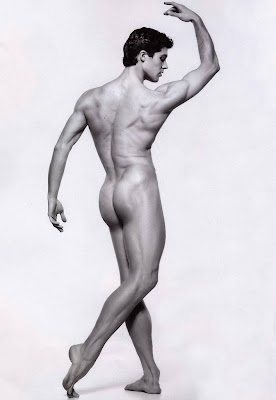
Photo of Desmond Richardson by Andrea Mohin, taken from NYTimes.
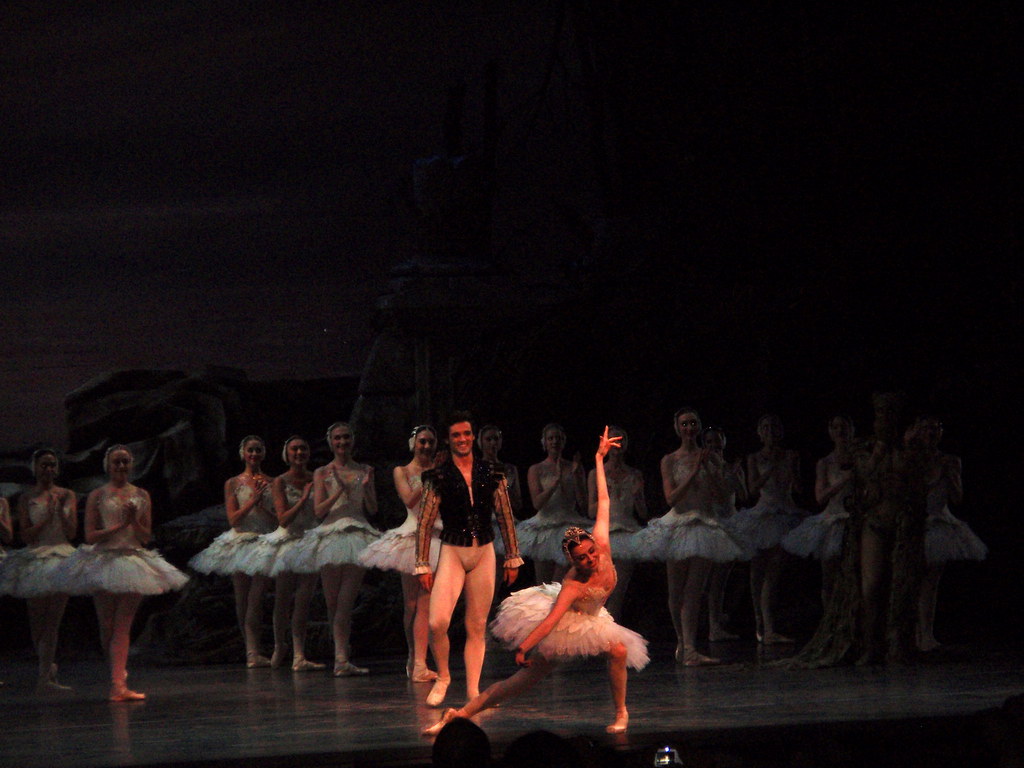
So, “Kings of the Dance” made the New York stop of its international tour this weekend at City Center. I was there Friday night. The last time this show toured here several years ago (it is produced by Russian dance promoter Sergei Danilian) there were only four male dancers — Angel Corella, Ethan Stiefel (both of American Ballet Theater), Johan Kobborg of the Royal Ballet in England, and Nikolay Tsiskaridze of the Bolshoi. This year, there were many more dancers and Tsiskaridze was the only one who returned (and, funny, but I totally didn’t recognize him). The others were: David Hallberg, Marcelo Gomes and Jose Manuel Carreno from ABT, Joaquin De Luz from NYCB, Guillaume Cote from Canada, Denis Matvienko from Ukraine, and Desmond Richardson from NY-based Complexions Contemporary Ballet (So You Think You Can Dance fans may recognize his photo above, since he has guest performed on the show a couple times).
What I liked about this program the last time it toured here was that there were fewer dancers, and that way you kind of “got to know” them better, by seeing them each perform several different pieces. Here, you basically only saw many dancers once, and a few twice. If you weren’t familiar with them (as my two friends who came with me weren’t), you could easily get them confused. They played a short movie at the beginning where each dancer (besides Desmond Richardson; I think he may have been a late addition to the American tour) talked a bit and you saw them dance. Jose’s cute Cuban accent seems to have gotten more pronounced 🙂 — I think he did it on purpose, knowing how many female fans would be in the audience! David’s voice somehow sounded a bit deeper than it does in person. Matvienko (who, for ballroom dancers, looks A LOT like former US champ Andrei Gavriline) and Tsiskaridze spoke in Russian and their words were translated.
What I loved about this program though was that there were so many solos that exposed us to so many different choreographers whose work I’d never seen (and some of whom I’d never even heard of) before. Every company in this country is obsessed with Balanchine, so it’s a wonderful wonderful change when we actually get a taste of something else. But more on that in a moment.
As with every Danilian production, there were lots and lots of Russians in the audience, and I think Desmond Richardson and Joaquin De Luz in particular grew a new fan base. Poor Joaquin — well, maybe: after the performance and during intermission I kept hearing, “That little guy was great!”, “That little guy was just incredible,” “Where can I see that little guy dance?” So, Joaquin is the great “little guy” whom everyone is seeking out now. And everyone went wild after Richardson’s solo, Lament, choreographed of course by Dwight Rhoden, an absolute master at presenting his friend’s spellbinding combination of gracefulness and masculinity. My friends were floored, along with the rest of the audience judging by the exclamations.
After the movie, they opened with Christopher Wheeldon’s For 4, for four dancers, which is a carry-over from the last performance. On the night I went it was performed by Matvienko, Carreno, De Luz, and Cote (but the cast varied each night). It’s an adagio lyrical piece, as with the vast majority of Wheeldon’s work, and I wished there would have been some more allegro parts with bravura solos. But that’s just not Wheeldon’s thing.
Then, after intermission, we saw a solo performed by each man, ending with a drop dead gorgeous duet danced by Cote and Gomes choreographed by French choreographer Roland Petit, from his Proust ou les Intermittances du Coeur. The men were dressed in skin-toned unitards, which almost made them look naked, and the duet to me seemed to be about a man obsessed with his reflection, or another side of himself, as each’s movement was mainly a reaction to the other’s. But at some points there was some really beautiful partnering, some really beautiful lifts and it seemed like a man dancing with his soul. Breathtaking!
Anyway, other highlights of the solo section were: a really beautiful solo for Marcelo choreographed by Adam Hougland, called Small Steps, which was like lyrical iron-pumping — a series of beautiful poses showing off his musculature interspersed with flowing lyrical movement; a beautiful, lyrical piece danced by David Hallberg from Frederick Ashton’s Dance of the Blessed Spirits; a fast, fun, more virtuosity-heavy solo by David Fernandez for Joaquin De Luz called Five Variations on a Theme; Jose Carreno dancing a gorgeous adagio to Ave Maria — a modern version — by Igal Perry (which I’d seen before and fell in love with it all over again); and Rhoden’s Lament for Richardson, which, like Marcelo’s solo, reminded me of lyrical iron-pumping (which I mean in a good way of course) highlighting as it did that seemingly incongruous combination of male elegance and virility.
The only ones that didn’t really work for me well were Boris Eifman’s Fallen Angel danced by Tsiskaridze, which I think just didn’t have enough context, and Vestris by Leonid Jakobson danced by Matvienko, which was by turns a comical and bravura piece first danced by Baryshnikov in 1969. I thought Matvienko was a lovely dancer with really beautiful lines who could really deliver on the jumps and especially turns, but I just think it needed to be better acted because there were some places where it almost seemed like he made a mistake, and then you realized it wasn’t a mistake by the dancer; it was supposed to be the character who humorously screwed up. I heard Baryshnikov was excellent and I wish I could see a video of that.
Then, we saw Spanish choreographer Nacho Duato’s Remanso, which I’d never seen live before, but saw in a video performed by ABT. It involves a wall with three dancers interacting with each other around it, climbing over it, looking around it. It’s sweet, flirtatious in places, and loving and romantic. The night I saw it it was danced by Gomes, Cote, and Hallberg, though this cast alternated each night as well.
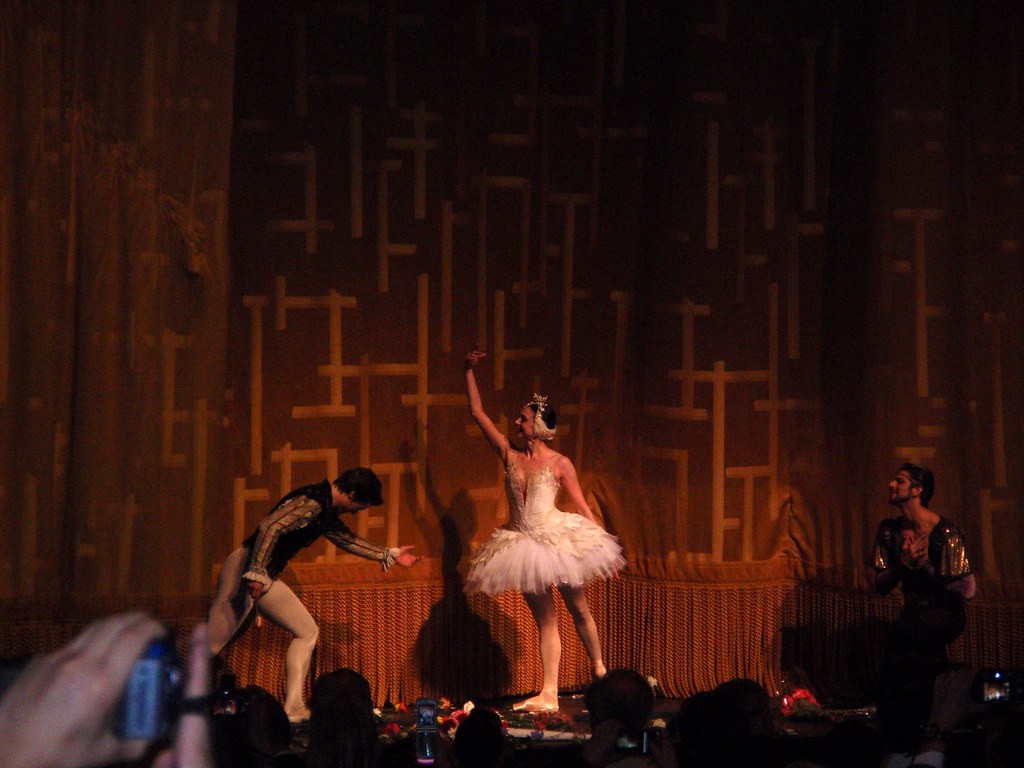
The program ended with a bravura “Grand Finale” with each dancer coming out and doing jumps and turns, and all the big fancy “male things” of classical ballet.
But the thing I kept thinking throughout was, wow, that’s really cool choreography, who’s that choreographer? Oh, I’ve never heard of him, or, oh I’ve heard of him, how cool that I finally got to see something by him! I mean: Roland Petit, Igal Perry, David Fernandez, Adam Hougland, Nacho Duato, Leonid Jakobson. We NEVER get to see choreography by these people here. Petit is a major choreographer. As is Duato (we really see his choreography only when his own company tours here, infrequently), ditto for Eifman, and the others I’ve never even heard of. Why don’t we see more variety here? Why don’t we see more Mats Ek and Pina Bausch and John Cranko? Why do we have to drown in Balanchine over and over and over again? Why do dance companies think that we want to see Balanchine? Why do they think Americans are into this man? As far as I’m concerned, his only truly great work is Jewels. The rest, okay, his footwork is more intricate and there are certain subtle little embellishments in the variations, but really, what was so great about his ballets in their entirety? What was so great that we have to be so completely inundated with him here in the US? I mean, it makes sense that NYCB does his work because they were founded by him but every other major company in the US is likewise obsessed – San Francisco Ballet, Miami City, Boston, Pennsylvania, even the Kirov and POB when they tour here they think we want more of this crap. And whenever ABT doesn’t do classical, there seems to be an overload of Balanchine. Does anyone consider that maybe, just maybe, we might get bored? That he doesn’t speak to younger generations of Americans AT ALL? Did someone tell POB and Kirov that Americans only understand Balanchine so you have to do Balanchine when you come here? I think ballet is dying in this country because of every artistic director’s completely inscrutable obsession with this boring boring man.
Anyway, I greatly thank Mr. Danilian for allowing Americans to see something else for a change.
For a completely different perspective, see Macaulay’s review.